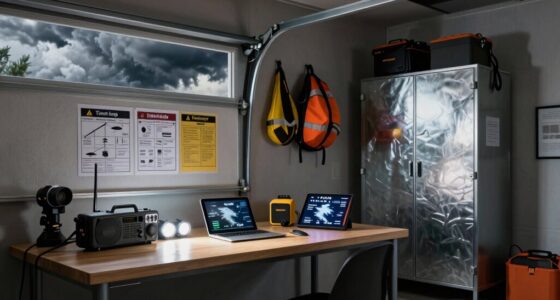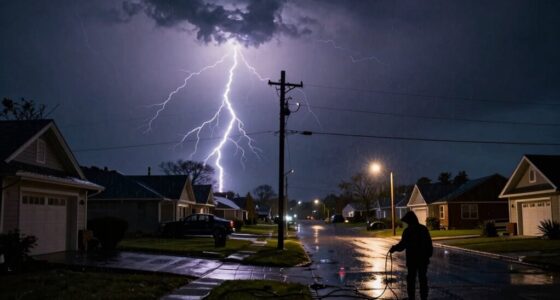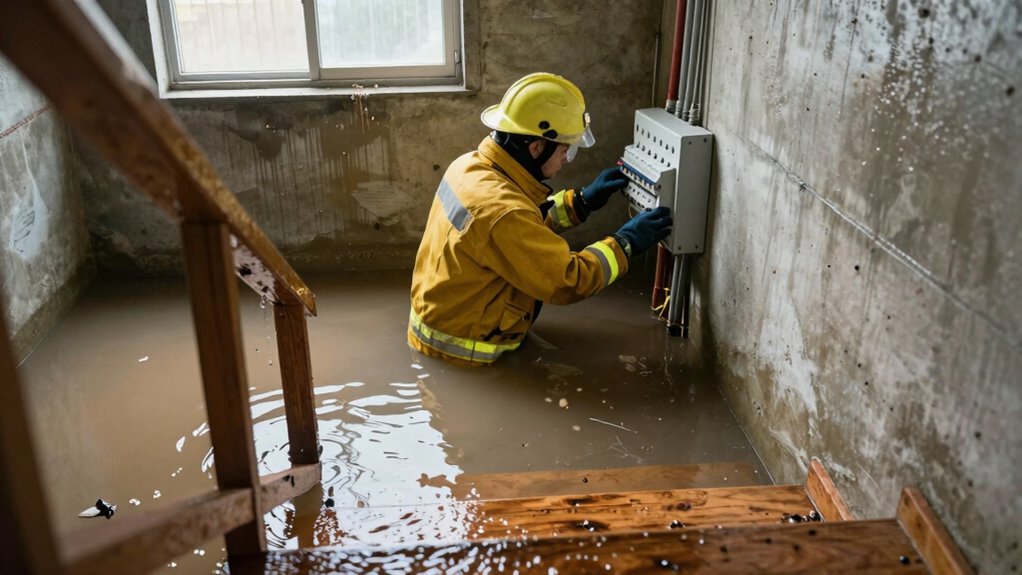

When handling wet basements after a flood, always prioritize safety by turning off the main power before entering. Use non-conductive tools to check for energized circuits and inspect electrical panels carefully for water damage or corrosion. Avoid re-energizing any system until utility companies confirm that wiring, breakers, and appliances are dry and safe. Following these steps reduces electrocution and fire risks while ensuring safe recovery—continue to learn how to protect your home and loved ones effectively.
Key Takeaways
- Always disconnect power before inspecting or working on electrical systems in a flooded basement.
- Contact utility companies to confirm main power and gas are shut off before starting cleanup.
- Inspect for water damage, corrosion, and debris in panels, outlets, and appliances before re-energizing.
- Replace water-exposed breakers and damaged electrical components under professional supervision.
- Use nonconductive tools, wear rubber footwear, and have safety gear during electrical assessments and repairs.

KAIWEETS Voltage Tester/Non-Contact Voltage Tester with Signal Percentage, Dual Range AC 12V/70V-1000V, Live/Null Wire Tester, Electrical Tester with LCD Display, Buzzer Alarm, Wire Breakpoint Finder
SAFETY FIRST: It will send out multiple alarms through sound and light. When the voltage is detected, the…
As an affiliate, we earn on qualifying purchases.
As an affiliate, we earn on qualifying purchases.
Recognizing Immediate Electrical Hazards in Flooded Basements

When your basement floods, recognizing immediate electrical hazards is essential for safety. Water conducts electricity, so any contact with energized circuits can cause fatal shocks. Look out for hidden energized sources like sump pumps, outlets, HVAC equipment, or appliances submerged below water. Even if you don’t see sparks or smell burning, water may still be energized, posing serious risks. Damaged wiring, corroded panels, or shorted circuits can also be dangerous. Remember, wet wiring and components can remain energized hours after water recedes, increasing the risk of shock or fire. Never assume equipment is safe just because it appears dry. Always treat standing water as potentially energized until a qualified electrician confirms it’s de-energized. Proper electrical safety procedures are crucial for preventing accidents during flood emergencies, especially since water can conceal hazards that are not immediately visible. Recognizing hidden electrical hazards and understanding their dangers is vital for safe recovery. Additionally, understanding the importance of natural pool filtration systems can help in planning safer backyard spaces after flooding. Being aware of electrical system vulnerabilities can further aid in preventing future hazards and ensuring home safety during floods. Safety begins with cautious awareness and proper professional inspection.

GHTCLDF Modern Decorative Breaker Box Cover—Waterproof Flip-top Electrical Panel Cover for Hiding Fuse/Meter Boxes, Aluminum & Crystal Film Design for Living Room Home Office (15.7×23.6in)
Stylish Concealment & All-round Protection: This decorative electrical panel cover perfectly hides unsightly fuse/breaker/meter boxes, while shielding them…
As an affiliate, we earn on qualifying purchases.
As an affiliate, we earn on qualifying purchases.
Steps to Safely Confirm Utility Disconnection Before Entry

Before entering a flooded basement, you must verify that all utility services are safely disconnected to prevent electrical hazards. This step is vital to avoid shocks or further damage. To do this:
Always disconnect utility services before entering a flooded basement to prevent electrical hazards.
- Contact your utility company to confirm if the main power and gas have been shut off. If possible, turn off the main breaker yourself.
- Check for visible signs of water contact on the electrical meter, service panel, or outdoor utility connections. Do not rely solely on visual cues; verify with professionals if unsure.
- Use a non-conductive tool or tester to ensure circuits are de-energized before touching any wires or equipment. Always treat standing water as energized until confirmed safe.
- Consider the benefits of energy-efficient cloud servers that promote sustainable safety measures during emergencies.
- Be aware of potential electrical hazards in flooded areas and prioritize safety by consulting qualified electricians when in doubt. Additionally, understanding the role of contrast ratio in projectors can help in setting up a safe and effective viewing environment once the area is secured.
- Remember that proper testing equipment is essential to confirm de-energization and avoid accidental shocks.
- Always keep a battery-operated emergency flashlight nearby to assist in safe inspection if the power remains uncertain.

MAGID Rubber Insulating Electrical Safety Gloves, Class 0 ASTM Compliant, Size 8, 11" Cuff, Lineman Electrician Voltage Protection, M011B8
Professional Electrical Safety: Rubber insulating gloves engineered for lineman work, electrical contractors, utility workers, and high-voltage machine operations;…
As an affiliate, we earn on qualifying purchases.
As an affiliate, we earn on qualifying purchases.
Proper Inspection and Handling of the Electrical Panel After Flooding

After a flood, inspecting your electrical panel requires caution and thoroughness, as water exposure can cause significant damage and pose serious safety hazards. Turn off the main breaker before opening the panel to prevent electrical shock. Do not operate or reset any breakers that were submerged or show signs of water damage; they may be unsafe even if they seem functional. Check for corrosion, moisture, or debris inside the panel and on the breakers. Label any tripped circuits clearly and avoid repeated resets, as this can worsen damage or cause arcing. Replace water-exposed breakers, fuses, and damaged components following a professional’s advice. Coordinate with your utility company for inspection and re-energization. Never bypass safety procedures—professional assessment is essential before restoring power. Additionally, understanding electrical safety procedures can help prevent accidents during the inspection process.
flood damage electrical breaker replacement kit
As an affiliate, we earn on qualifying purchases.
As an affiliate, we earn on qualifying purchases.
Guidelines for Dealing With Flooded Appliances and Electrical Devices

When appliances and electrical devices get flooded, you need to assess their damage carefully before attempting any use. If you’re unsure whether equipment is safe, it’s best to discard it rather than risk electrocution or further damage. Follow proper cleanup procedures, including thorough drying and inspection, to prevent hazards and guarantee safety. Additionally, understanding the importance of affiliate disclosure can help you make informed decisions about purchasing replacement items or safety equipment. Recognizing the electricity safety hazards associated with wet appliances is crucial for avoiding injury or fire risks. Being aware of proper maintenance practices can also prevent future electrical issues after flooding incidents.
Assess Appliance Damage Carefully
Flooded appliances and electrical devices can pose serious safety risks, even after the water recedes. You must assess their damage carefully before attempting to use or restore them. First, inspect appliances for visible signs of water exposure, corrosion, or burnt components. Second, avoid plugging in or powering devices until a qualified technician confirms they’re safe. Third, discard porous items like microwaves, TVs, and small electronics, as they often harbor contamination and corrosion. Additionally, consider smart appliance technology that can detect internal water damage or corrosion to prevent hazards. Always prioritize safety by consulting professionals for thorough inspections. Do not assume that an appliance looks fine just because it powers on. Water damage can compromise internal parts and insulation, creating hidden dangers. Proper evaluation prevents future hazards and ensures safe restoration. Remember that water damage assessment is an essential step in preventing electrical fires or shocks after flooding. Incorporating advanced diagnostics can further help identify internal issues that aren’t visible externally.
When to Discard Equipment
Determining whether to discard flooded appliances and electrical devices depends on the extent of water exposure and internal damage. If water has entered the device or it shows signs of corrosion, corrosion-related damage, or a lingering musty odor, it’s safest to discard it. Porous items like microwaves, televisions, and small electronics are generally unsuitable for repair and should be replaced, as contamination and corrosion pose health risks. Motors, pumps, and sealed appliances may be salvageable if professionally inspected and cleaned, but only if the technician confirms they’re safe. When in doubt, follow manufacturer and insurer guidance. Understanding electrical safety and avoid plugging in or using devices that have been immersed or heavily soaked, as hidden damage can lead to electrical hazards or fire risks. Safety always comes first. Additionally, consulting specialized repair services can help determine whether certain equipment such as motors or pumps might be salvageable after proper cleaning and inspection. Remember that water damage assessment is crucial before attempting to restore or reuse electrical devices. It’s also important to consider the health risks associated with water damage, which can include mold and bacteria growth in contaminated appliances. Properly assessing the extent of contamination helps prevent health issues and ensures safe operation of restored equipment.
Proper Cleanup Procedures
Proper cleanup of flooded appliances and electrical devices is essential to guarantee safety and prevent further damage. First, turn off the main power supply and wait for a qualified electrician to inspect all items before handling or restoring power. Second, follow these steps:
- Disconnect and Remove: Unplug appliances and remove submerged devices carefully, wearing nonconductive footwear and insulated gloves. Using the appropriate electrical safety guidelines, ensure that all actions adhere to best practices to avoid risk. Additionally, verify that your actions are compliant with affiliate disclosure standards to maintain transparency during the process.
- Dry and Clean: Thoroughly dry all components with towels or air drying; clean corrosion-prone areas with appropriate solutions.
- Inspect and Replace: Check for damage, corrosion, or water intrusion. Replace all water-exposed breakers, fuses, and damaged parts per professional advice.
- Document and Report: Take photos of damages for insurance claims and consult with electrician safety protocols to ensure proper procedures are followed.
Never attempt to restore power to wet or damaged equipment yourself. Always prioritize safety and professional assessment.
Coordinating With Utility Services for Power Restoration
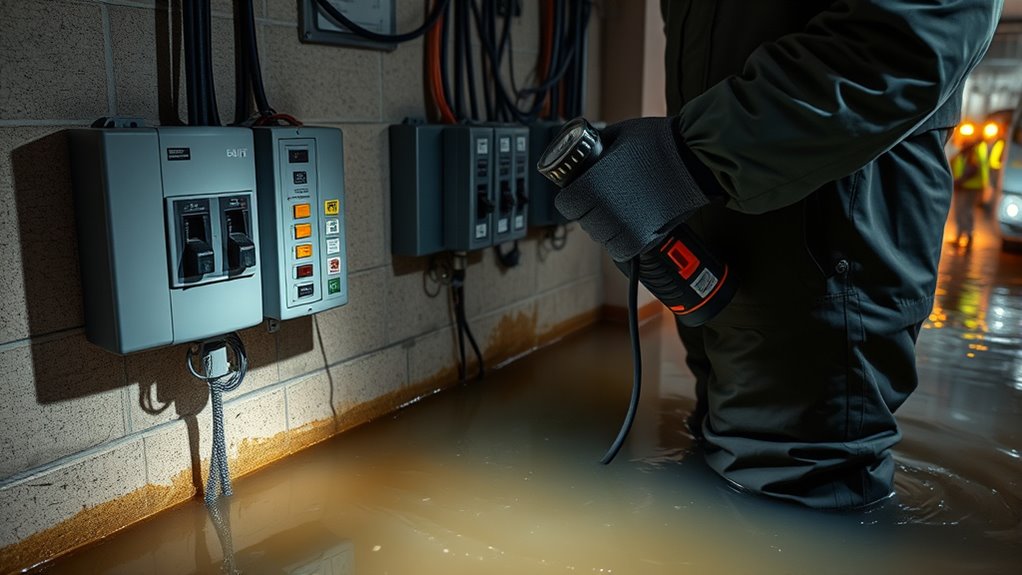
You need to notify utility services as soon as possible to guarantee safe power restoration. They will conduct inspections and safety checks before re-energizing the system, so coordination is essential. Working closely with utilities helps prevent hazards and speeds up the recovery process.
Utility Notification Procedures
When flooding occurs, timely coordination with utility services is essential to guarantee safe power restoration and prevent further hazards. You should follow these steps:
- Contact your utility provider immediately to report the flooding and potential electrical hazards. Provide details about the extent of water intrusion and any visible damage.
- Confirm that the main power has been shut off at the utility’s request before entering the basement, and ensure the utility inspects the site before restoring service.
- Keep detailed records of all communication, including dates, times, and instructions received from utility personnel. This documentation supports safety and insurance claims.
Following these procedures helps secure safe, coordinated power restoration and reduces the risk of electrical accidents.
Inspection and Safety Checks
Coordinating with utility services is essential before beginning any inspection or safety checks following a flood. You should verify that the main breaker or service disconnect has been turned off by a utility or qualified electrician. Never attempt to inspect or handle electrical components while standing in water or if you’re unsure about their safety. Use nonconductive tools and wear rubber-soled footwear to reduce risk. Before re-energizing any circuits, ensure a licensed electrician inspects the electrical panel, wiring, and appliances for water intrusion or corrosion. Do not reset submerged or damaged breakers, as they may still be energized or unsafe. Document all inspections and communicate with utility providers to confirm that power is safe to restore, minimizing risk of shocks, fires, or further damage.
Power Restoration Coordination
Effective power restoration after flooding requires close communication with utility companies to guarantee safety and proper procedures. You should coordinate with utility providers before turning the power back on to prevent accidents. Here are key steps to follow:
- Confirm Utility Disconnection: Ensure the utility has de-energized your service and that a licensed electrician has inspected your electrical system for water damage and corrosion.
- Schedule Inspection and Testing: Work with the utility to evaluate the meter, service entrance, and main breaker, and determine if repairs or replacements are needed before reconnection.
- Document All Communications: Keep records of de-energization notices, electrician reports, and utility instructions to support insurance claims and safety verification.
Following these steps helps prevent electrical hazards and guarantees a safe, smooth power restoration process.
Understanding the Risks of Re-energizing Flood-Damaged Circuits

Re-energizing circuits that have been exposed to floodwaters poses serious safety risks because water can cause electrical components to become energized even after the water recedes. You might think the breakers are fine, but submerged or wet equipment can hide corrosion, insulation damage, or shorts. Resetting these circuits without proper inspection can result in shocks, electrical fires, or further damage. Always have a licensed electrician assess the system before restoring power. Use the table below to understand common flood-related electrical hazards:
| Hazard | What to Watch For | Action Needed |
|---|---|---|
| Water in electrical panels | Signs of corrosion or moisture | Do not operate; call a pro |
| Submerged breakers | Rust, charring, or sticking handles | Replace before re-energizing |
| Damaged wiring | Frayed, corroded, or damp insulation | Inspected and repaired by a pro |
| Sensitive appliances | Visible water marks or corrosion | Discard or professionally restore |
| GFCIs and outlets | No trip or corrosion visible | Test and replace if needed |
Always prioritize safety—never re-energize flood-damaged circuits yourself.
Protecting Your Health During Extended Power and Water Outages

Extended power and water outages after flooding can markedly threaten your health and safety. Without proper precautions, you risk exposure to contaminated water, electrical hazards, and disease. To protect yourself:
- Avoid contact with floodwater—it may contain bacteria, chemicals, or live electrical currents. Wear waterproof gloves and boots if you must handle anything.
- Use safe drinking water—boil or treat water before consumption to prevent waterborne illnesses, especially if your supply has been compromised.
- Keep food safe—discard perishable items if the power outage lasts more than four hours, and store food in coolers with ice if possible. Stay informed about water and power status through official updates to minimize risks.
Best Practices for Post-Flood Electrical Safety and Inspection

After a flood, ensuring electrical safety requires careful inspection and adherence to strict protocols before restoring power. You must verify that the main breaker or service panel has been turned off by a qualified professional before entering the basement. Never attempt to operate or reset breakers submerged or damaged by water, as they may still be energized or compromised. Inspect the electrical panel, meters, and wiring for signs of corrosion, water intrusion, or damage, and replace any affected components as recommended. Avoid plugging in or powering on wet appliances until fully inspected and deemed safe. Document conditions with photos before disturbance. Always coordinate with utility companies for inspections and re-energization. Prioritize safety to prevent electrocution, fire, or further damage during the recovery process.
Frequently Asked Questions
How Can I Identify Hidden Electrical Hazards in a Flooded Basement Safely?
You can identify hidden electrical hazards by never entering a flooded basement until utility services are confirmed shut off by a professional. Always treat standing water as energized, and avoid walking through it with conductive tools or footwear. Look for signs like sparking, burning smells, or visible damage around outlets, appliances, and wiring. If in doubt, call a licensed electrician to inspect and assess any potential risks before proceeding.
What Signs Indicate Electrical Equipment Needs Professional Repair After Flooding?
If your electrical equipment looks like it’s auditioning for a horror movie—corroded, waterlogged, or visibly damaged—it’s screaming for professional help. Sparks, burning smells, or tripped breakers are clear signs. Don’t play hero with these hazards; instead, call a licensed electrician. Remember, a soggy breaker box isn’t just sad; it’s dangerous. Trust the pros to inspect, repair, and restore safely, so you don’t end up as part of the horror story.
When Is It Safe to Attempt Re-Energizing Circuits After a Flood?
You should never attempt to re-energize circuits after a flood until a licensed electrician has inspected the entire system. Wait until they confirm all water and moisture are removed, breakers and wiring are dry, and no corrosion or damage exists. Only then can you safely restore power. Never reset or turn on submerged breakers or damaged equipment yourself, as doing so risks electrocution or fire. Always prioritize professional assessment first.
How Do I Verify if Appliances Are Safe to Reuse Post-Flood?
You should have a qualified electrician or appliance technician inspect your appliances before reusing them. Never plug in or turn on wet devices. Discard porous items like microwaves and TVs, and evaluate motors and pumps for repair. Confirm GFCIs and residual-current devices are tested and replaced if affected. Only after professional inspection confirms safety should you reconnect appliances, preventing electrical shocks, fires, or further damage.
What Steps Should I Take if I Suspect My Electrical System Was Damaged by Flooding?
If you suspect your electrical system was damaged by flooding, first verify the main breaker is turned off before touching anything. Avoid entering the basement if water or debris is present. Contact a licensed electrician to inspect your panel, wiring, and appliances for water intrusion or corrosion. Never attempt repairs yourself. Follow their advice on replacing damaged components and wait for official clearance before restoring power to prevent hazards.
Conclusion
Remember, handling a flooded basement is like steering through treacherous waters—you need to stay calm and cautious. I once saw a homeowner carefully turn off a breaker after a flood, avoiding disaster. Just 10% of electrical fires start after floods when proper safety steps aren’t followed. By respecting the hazards and following safety guidelines, you can weather the storm safely and restore power without putting yourself at risk. Stay vigilant, and safety will keep you afloat.