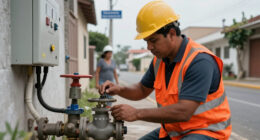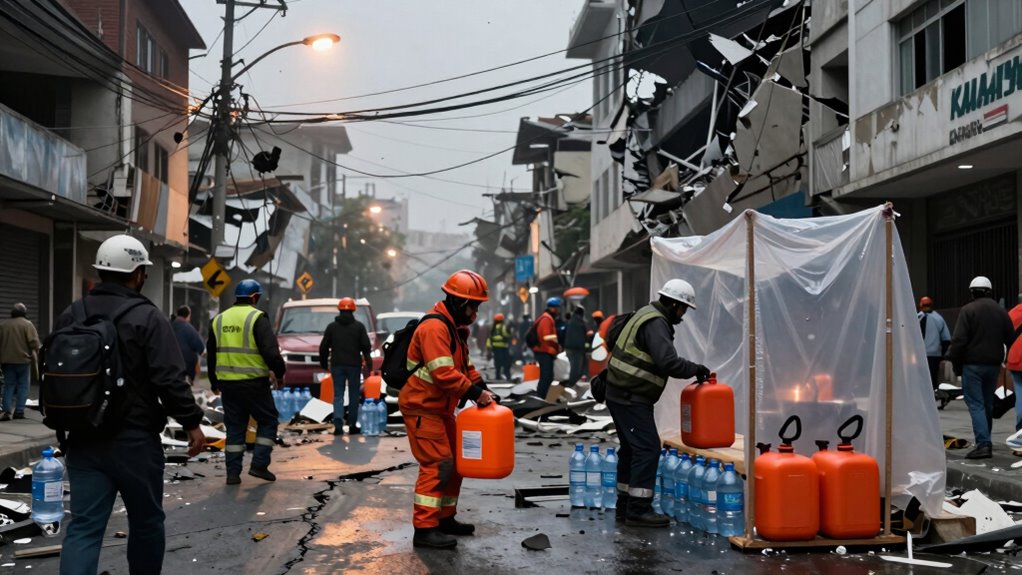

In the first hour after an earthquake, your top priorities should be ensuring power reaches critical water systems and securing essential infrastructure like hospitals, emergency services, and communication networks. Focus on restoring power to water pumping stations to maintain supplies and prevent shortages. Protect transmission lines and pipelines through proactive measures and quick repairs. Staying informed and prepared helps minimize disruptions and keeps your community safe—if you keep going, you’ll discover key strategies to enhance your resilience.
Listen free for 30 days with Audible
Thousands of audiobooks and originals — cancel anytime.
As an affiliate, we earn on qualifying purchases.
Key Takeaways
- Prioritize restoring power to water pumping stations to ensure continued water supply and firefighting capabilities.
- Secure critical infrastructure like hospitals, emergency centers, and fire stations by restoring power and water first.
- Establish clear communication channels to coordinate emergency response and share information on safe water sources.
- Check for structural damage to pipelines and water systems, and implement rapid repairs to prevent contamination.
- Mobilize repair crews promptly, focusing on underground cables, damaged pipelines, and essential power and water facilities.

Basepump RB750-EZ Premium Water Powered Backup Sump Pump System
- Water Powered Operation: Automatically runs on home water pressure
- No Electricity Needed: Operates without batteries or power supply
- Complete Installation Kit: Includes instructions and plumbing parts
As an affiliate, we earn on qualifying purchases.
As an affiliate, we earn on qualifying purchases.
Immediate Challenges to Power and Water Systems Post-Earthquake

Earthquakes immediately threaten power and water systems by causing widespread structural damage. You might see transmission lines snapped, substations knocked offline, and pipelines ruptured, leading to instant outages. Critical infrastructure like power plants and gas lines often suffer severe damage, disrupting energy supplies for days or weeks. Water systems face similar risks, as pumping stations can be knocked out, cutting off water access for communities. Ground vibrations may cause pipelines to burst or leak, contaminating supplies and making repairs urgent. These disruptions hinder emergency response efforts, strain hospitals, and cut communication networks, complicating recovery. Understanding infrastructure vulnerabilities helps in planning effective disaster response. Additionally, rapid assessment of system resiliency is crucial to minimize downtime and restore services swiftly. Implementing emergency preparedness strategies beforehand can significantly reduce the impact of such outages. Conducting damage assessments immediately after an event is vital to allocate resources and prioritize repairs effectively. The immediate aftermath demands rapid assessment and response to prevent further deterioration, ensuring essential services are prioritized to support rescue and relief operations. Recognizing structural weaknesses in infrastructure can inform targeted reinforcement efforts to better withstand future earthquakes.

Jackery Explorer 300 Portable Power Station,292Wh
- Lightweight Design: Only 7.5 lbs with 292Wh capacity
- Portable Handle: Integrated handle for easy carrying
- Multiple Device Charging: 2 AC outlets, USB-C, USB-A, car port
As an affiliate, we earn on qualifying purchases.
As an affiliate, we earn on qualifying purchases.
Prioritizing Critical Infrastructure for Rapid Restoration

Rapid restoration of critical infrastructure after an earthquake hinges on prioritizing systems that support public safety, communication, and emergency response. You should identify essential facilities such as hospitals, emergency operation centers, and fire stations, ensuring they receive power and water first. Next, focus on restoring communication networks to coordinate recovery efforts effectively. Power must be directed toward critical water pumping stations to restore water supply quickly, since water is indispensable for firefighting, sanitation, and health. You also need to assess and secure transportation routes to facilitate repair crews’ access. Additionally, system reliability plays a crucial role in maintaining continuous operation of essential services during recovery efforts. Ensuring backup power systems are in place can significantly reduce downtime and prevent secondary failures. Incorporating redundant infrastructure can further enhance resilience and ensure backup systems activate seamlessly during outages. Implementing emergency response protocols that are well-practiced can streamline decision-making and resource allocation during the initial response phase. Conducting regular training exercises can improve coordination among response teams and reduce delays during actual emergencies. By concentrating resources on these priorities, you minimize the impact on public safety and accelerate overall recovery. Proper planning and rapid decision-making are pivotal to restoring essential services efficiently and reducing long-term societal disruptions.

EARTHQUAKE 15073 Border-Edger Attachment Kit for Cultivators
- Easy to Install: Replace tines with included pin
- Universal Compatibility: Fits all Earthquake cultivators
- Reliable Performance: Delivers consistent edging results
As an affiliate, we earn on qualifying purchases.
As an affiliate, we earn on qualifying purchases.
Strategies for Protecting Utility Networks During Ground Shaking
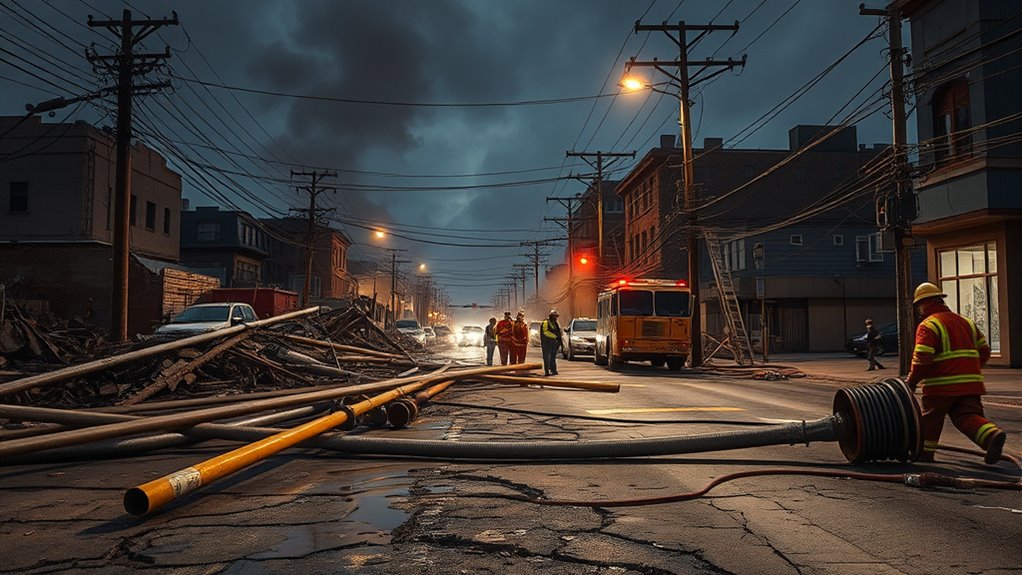
Have you considered how strengthening your utility networks can withstand ground shaking during earthquakes? To protect critical infrastructure, focus on seismic-resistant design standards for power lines, substations, and pipelines. Install flexible connections and shock absorbers to absorb ground movements, reducing damage. Use underground cabling where feasible to shield electrical lines from surface shaking. Reinforce critical structures with earthquake-resistant materials and retrofit existing facilities to meet modern seismic codes. Regular inspections and maintenance identify vulnerabilities before an earthquake strikes. Implement early warning systems that alert crews to impending shaking, enabling rapid shutdowns and safeguards. Prioritizing seismic resilience by securing loose equipment and ensuring backup power supplies are protected against seismic impacts can significantly reduce outage risks. Incorporating nanotechnology-based materials can further enhance the resilience of utility components against seismic stress. Additionally, employing seismic monitoring systems can provide real-time data to better anticipate and respond to ground movements. Understanding ground movement patterns can also improve the planning and placement of critical infrastructure, reducing potential damage. Recognizing historical seismic activity in vulnerable regions allows for more targeted reinforcement and preparedness efforts. These strategies minimize damage, reduce outage durations, and enhance overall resilience during ground shaking.

2000 Plumbing Plug Tool Kit, Water Stopper for Pipes 1/2", 3/4" and 1", Plumbing Plugs for Fast Water Line Repairs, Prevent Pipeline Leakage and Facilitate Solder Rated for High Temperatur
- 【Pipe Water Stopper Kit –3 pcs】The plumbing kit…
- 【High-quality aviation aluminum】The plumbing tools kit is crafted…
- 【Rated at 65 PSI maximum】The plumbing repair tool…
As an affiliate, we earn on qualifying purchases.
As an affiliate, we earn on qualifying purchases.
Community Preparedness and Response in the First Hour

How quickly communities respond in the first hour after an earthquake can determine the extent of damage and the effectiveness of recovery efforts. You need to act fast: check yourself and others for injuries, and guarantee everyone is in a safe location. Communicate immediately with emergency services and neighbors to assess needs and hazards. Use pre-established plans to prioritize securing critical infrastructure like water and power sources. Share essential information about safe water sources, shelter locations, and potential hazards. Mobilize community volunteers and first responders swiftly to assist vulnerable populations. Establish clear command and communication channels to coordinate efforts. Community resilience and organized coordination during this crucial period can significantly improve recovery outcomes. Your prompt, organized response helps prevent secondary disasters, reduces damage, and accelerates recovery, ultimately saving lives and safeguarding essential resources during this vital first hour. Building community preparedness and familiarity with emergency procedures can further enhance your response effectiveness. Developing emergency response plans ensures your community is ready to act swiftly and efficiently, with effective communication being a key component to success. Incorporating natural hazard knowledge can help identify potential risks and tailor response strategies accordingly.
Leveraging Resilience Planning to Minimize Disruptions
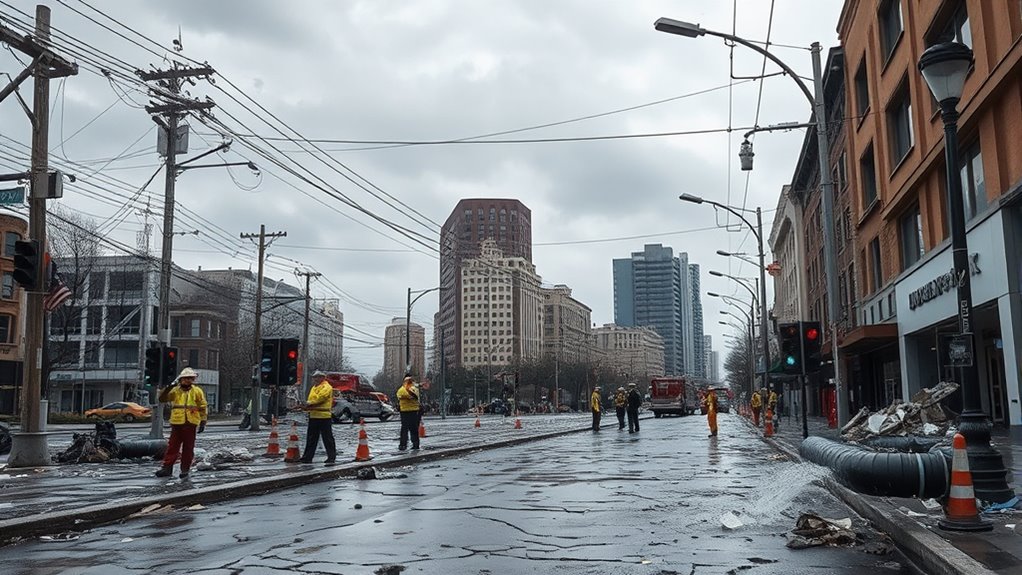
Leveraging resilience planning is essential for minimizing disruptions caused by earthquakes and related outages. You should focus on integrating robust infrastructure upgrades, such as undergrounding power lines and strengthening pipelines, to reduce vulnerability. Developing exhaustive emergency response plans that include backup power sources, mobile generators, and rapid repair protocols helps speed recovery. Engage communities in resilience efforts by educating them on early warning systems and safe sheltering practices. Collaborate with utility providers to prioritize critical infrastructure and implement smart grid technologies that detect faults instantly. Incorporating local knowledge and community feedback into planning processes enhances the effectiveness and acceptance of resilience measures. Additionally, conducting regular vulnerability assessments helps identify emerging risks and adapt strategies accordingly. Utilizing monitoring technologies can provide real-time data to better prepare and respond to incidents, further strengthening system resilience. Implementing comprehensive risk assessments and integrating early warning systems ensure that communities can respond swiftly to impending hazards. Incorporating resilience-focused design principles into infrastructure projects further reduces the impact of future events. These proactive measures ensure critical services like water and power are restored swiftly, minimizing societal impacts and enhancing overall system resilience.
Frequently Asked Questions
How Do Earthquake Magnitudes Correlate With Outage Durations?
You’ll find that higher earthquake magnitudes generally lead to longer outage durations. When seismic activity is strong, it causes more extensive damage to infrastructure, including power plants, transmission lines, and pipelines. This results in more complex repairs and delays in restoring services. So, as the magnitude increases, expect outage durations to lengthen, making recovery efforts more challenging and requiring more resources to fully restore power and water systems.
What Technologies Are Most Effective for Early Utility Damage Detection?
You should focus on deploying sensor networks like fiber-optic sensing and smart meters that detect vibrations and structural shifts in real-time. Use remote monitoring systems with AI algorithms to analyze data quickly, identifying damage early. Drones equipped with thermal imaging can inspect infrastructure swiftly after quakes. Combining these technologies enables you to pinpoint issues faster, minimizing downtime and improving response efficiency during emergency repairs.
How Can Utilities Improve Rapid Response in Densely Populated Areas?
You can improve rapid response in densely populated areas by deploying real-time monitoring systems that detect damage instantly. Use advanced sensors on infrastructure like power lines and water mains to identify issues early. Establish dedicated rapid response teams trained for quick repairs. Collaborate with local authorities and communicate clearly with the community. Regular drills and pre-planned contingency strategies guarantee swift action, minimizing outages and restoring services faster.
What Role Does Real-Time Data Play in Outage Management?
Real-time data acts as your lightning-fast radar, guiding your outage management efforts with precision. It helps you spot issues as they happen, like a detective uncovering clues in a bustling crime scene. With instant updates, you can prioritize repairs, deploy resources efficiently, and minimize downtime. This real-time intelligence transforms chaos into control, allowing you to respond swiftly and keep communities connected when they’re needed most.
How Are Vulnerable Communities Prioritized for Utility Restoration?
You prioritize vulnerable communities by evaluating their needs quickly, ensuring they receive restoration services first. You use real-time data to identify areas with the most critical needs, like hospitals, nursing homes, or low-income neighborhoods. You coordinate with utility crews, communicate clearly, and deploy resources efficiently. By focusing on these groups, you help minimize hardships and protect those most at risk during outages, ensuring equitable recovery efforts.
Conclusion
In those first pivotal moments after an earthquake, your quick actions can make all the difference—saving lives, preventing chaos, and restoring order faster than you ever imagined. Prioritizing water and power isn’t just smart; it’s vital to avoid a catastrophe that could dwarf any disaster. Stay prepared, stay vigilant, and remember: your response in that first hour could be the difference between chaos and calm in the face of nature’s fury.
Pool season Picks
robotic pool cleaners
As an affiliate, we earn on qualifying purchases.