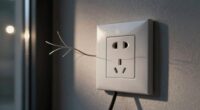
If your wall outlet feels warm or hot, it’s a serious warning that you may have an overload, loose wiring, or internal damage. Ignoring this can lead to fires, shocks, or costly repairs. Discolored or melting covers, flickering lights, and frequent circuit trips are signs to act swiftly. To stay safe, learn how to identify these issues and when to call a professional—you’re about to discover vital tips to protect your home.

Get backup power and energy gear delivered free — and shop member deals
- Fast, free delivery on millions of items
- Access to Prime Big Deal Days deals on October 6–7
- Prime Video, Amazon Music and more included
Key Takeaways
- Warm or hot outlets indicate potential overload or internal wiring issues that require prompt inspection.
- Burning smells or discoloration around outlets are signs of insulation melting from excessive current.
- Frequent circuit breaker trips signal overcurrent conditions and should not be ignored.
- Overloading power strips or daisy-chaining cords can cause overheating and increase fire risk.
- Immediate action, including unplugging devices and contacting a licensed electrician, is essential to prevent fire hazards.
electrical outlet overload protector
As an affiliate, we earn on qualifying purchases.
As an affiliate, we earn on qualifying purchases.
Recognizing the Signs of Overheating Outlets
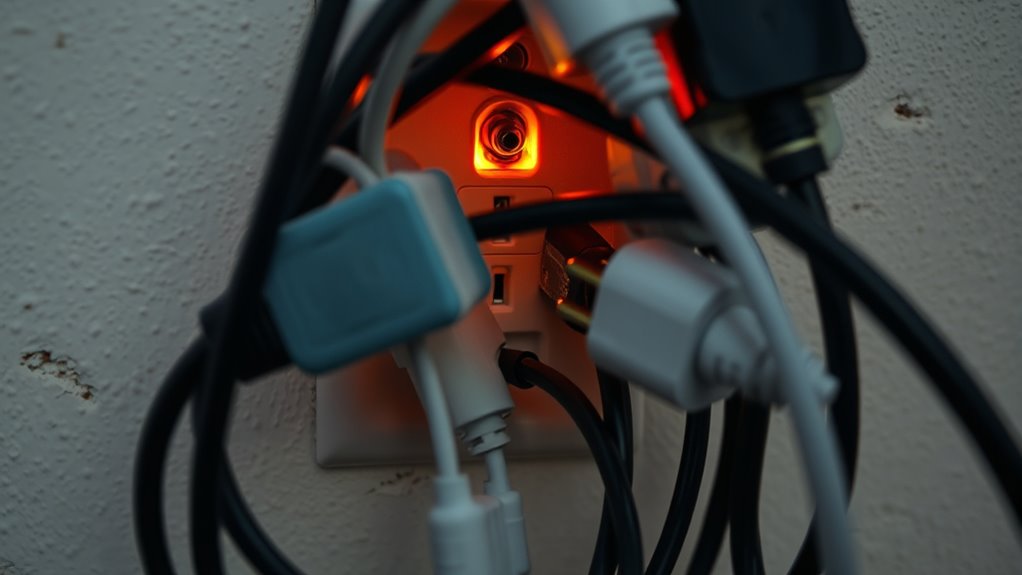
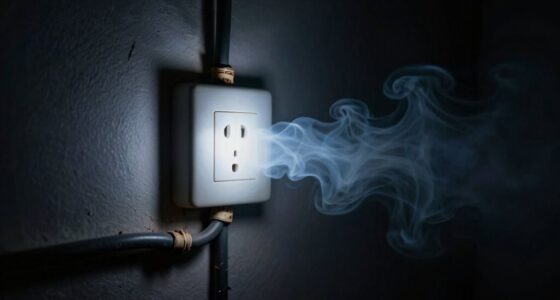
How can you tell if an outlet is overheating? First, pay attention to any burning, acrid, or rubbery smells near the outlet or wall. These odors often indicate insulation melting or wiring overheating. Feel the outlet faceplate or plug—if it’s warm or hot to the touch during normal use, that’s a red flag. Visually inspect the outlet for discoloration, cracks, or melted covers, which show prolonged heat exposure. You might also notice flickering lights or intermittent power, suggesting poor connections or voltage drops caused by excessive heat. Repeated circuit breaker trips or blown fuses when using specific outlets are additional warning signs. Recognizing these signs early can prevent serious hazards like electrical fires or shock risks. Never ignore warm outlets; they need professional evaluation immediately. Proper electrical maintenance and regular inspections can help catch issues before they become dangerous. Additionally, understanding electrical load capacity can help prevent overloading outlets and causing overheating. Being aware of home wiring safety principles can further reduce the risk of electrical problems related to outlet overheating. Monitoring outlet design and quality can also influence the likelihood of overheating issues. Paying attention to electrical safety standards and ensuring your outlets meet them is crucial for overall safety.
As an affiliate, we earn on qualifying purchases.
Why Warm Outlets Are a Red Flag
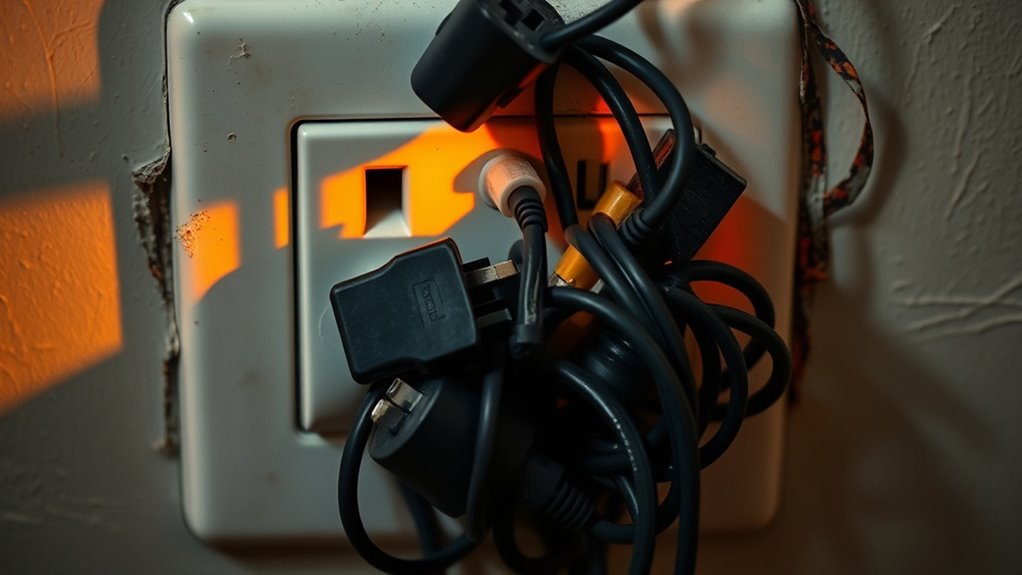
A warm outlet isn’t just uncomfortable—it’s a sign that something’s wrong inside. Overheating increases the risk of electrical fires and can hide damage that you might not see. Ignoring warmth at the socket could put your home and loved ones in serious danger. Additionally, persistent warmth may indicate electrical overload, which can compromise the integrity of your wiring over time. Recognizing the signs of electrical issues early can help prevent costly repairs and ensure safety. Being aware of potential hazards associated with electrical outlets can further aid in preventing accidents before they occur. Regular inspection and understanding electrical safety fundamentals are essential for maintaining a secure environment. Understanding proper electrical maintenance can further reduce these risks and protect your household.
Overheating Risks Increase
Warm outlets are a clear warning sign that something is wrong with your electrical system. When outlets feel hot, it indicates excessive heat buildup from poor connections, overloaded circuits, or damaged wiring. This heat can cause insulation to melt, increasing the risk of electrical fires. Over time, continuous overheating damages components, leading to short circuits or complete failure. The elevated temperature also accelerates wear on outlets and plugs, making them more prone to arcing and sparking. If you notice warmth or heat coming from an outlet, don’t ignore it. The danger isn’t just the heat itself—it’s a sign that your system is under stress and could fail at any moment, putting your home and loved ones at risk. Addressing these issues promptly can prevent disaster. Regular electrical system inspections can help identify underlying problems before they escalate into hazards. According to the Value of Home Security Systems, increased safety measures can also include inspecting your electrical systems regularly to prevent hazards.
Signs of Hidden Damage
When outlets feel warm to the touch, it often indicates more than just surface heat; it’s a warning sign of hidden damage within your electrical system. Warmth suggests increased resistance in the wiring or contacts, which can cause internal degradation or loose connections. Over time, this hidden damage weakens the outlet’s integrity, raising the risk of arcing or final failure. Discoloration, cracking, or melting around the outlet cover or plug are clear visual signs of prolonged overheating and internal damage. Flickering lights or intermittent power can also point to compromised connections or worn components. Recognizing these signs early and electrical safety awareness can prevent more severe problems. A proper inspection by a qualified electrician can identify underlying issues before they escalate. Ignoring these signs allows hidden damage to worsen, increasing the danger of electrical fires or shock hazards. Addressing overheating promptly is crucial to prevent electrical hazards and ensure safety in your home. Having a qualified electrician evaluate the outlet before more serious damage occurs is essential.
Potential Fire Hazards
Detecting warmth around an outlet shouldn’t be ignored, as it signals a potential fire hazard lurking beneath the surface. Warmth indicates overheating in the wiring, contacts, or insulation, which can ignite if left unaddressed. Overloaded circuits cause excessive heat buildup, increasing the risk of melting components or igniting nearby materials. This heat can lead to electrical fires that may start behind the wall, spreading before detection and causing extensive damage. Continuing to use a warm outlet raises your risk of shock and fire. If you notice any warmth, unplug devices, turn off the circuit, and seek professional help immediately. Addressing these signs promptly can prevent a small problem from transforming into a devastating fire. Never ignore the warning signs of overheating, especially in older wiring systems, as they can be more prone to failure. Understanding electrical safety is crucial for recognizing and preventing these hazards before they escalate. Being aware of warning signs of electrical issues helps you stay proactive and protect your home from potential dangers. Recognizing signs of wiring problems early can save lives and property.
As an affiliate, we earn on qualifying purchases.
The Dangers of Discolored or Melting Outlet Covers
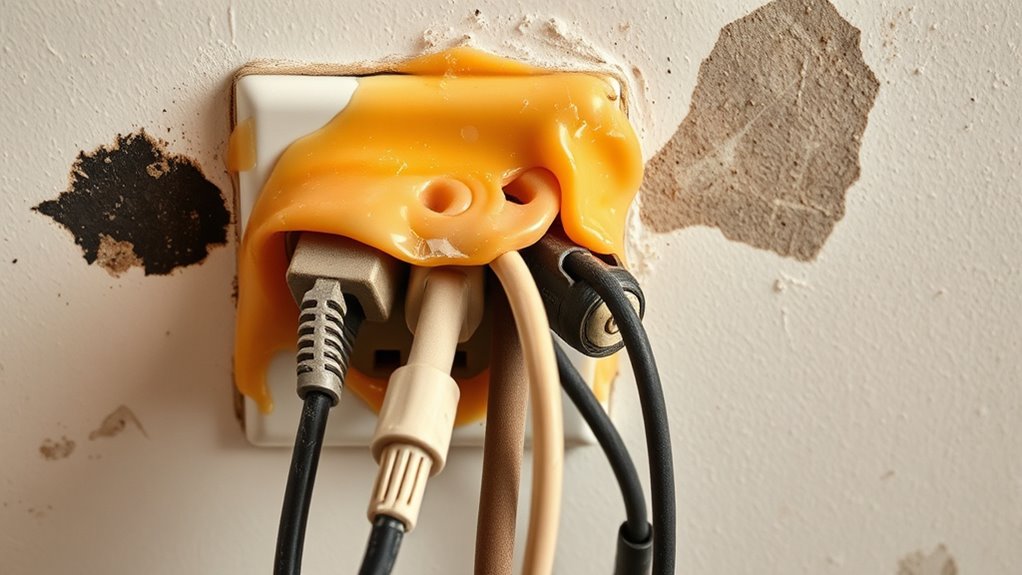
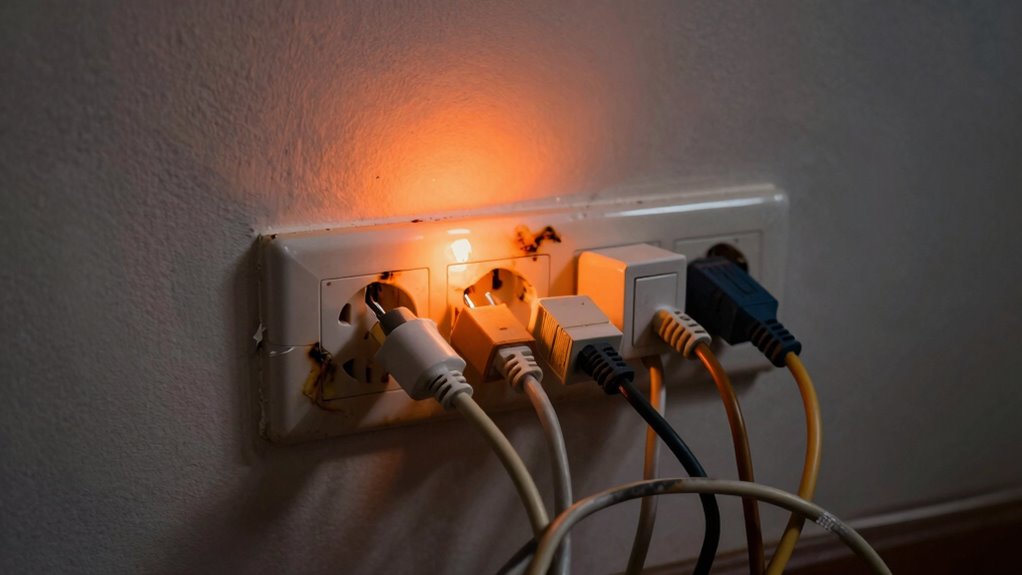
Discolored or melting outlet covers are clear signs of overheating, which can pose serious electrical hazards in your home. When these covers change color, crack, or melt, it indicates excessive heat buildup often caused by overloaded circuits or loose connections. Over time, this damage can weaken the outlet’s insulation and expose live wires, increasing the risk of electrical shocks or fires. Ignoring these signs can lead to more severe damage behind the wall, making repairs costly and dangerous. If you notice discoloration, melting, or cracking around your outlets, stop using them immediately. Unplug devices, shut off the circuit, and contact a licensed electrician to inspect and address the problem. Prompt action helps prevent potential fires and keeps your home safe. Regularly performing electrical safety checks can help identify issues early before they become dangerous. Being aware of warning signs like overloaded circuits and understanding how electric bike technology works can also enhance your home safety awareness and prevent future electrical problems. Additionally, understanding circuit capacity can help you avoid overloading outlets in the first place.
As an affiliate, we earn on qualifying purchases.
How Repeated Circuit Trips Signal Overload Problems

When your circuit breaker trips repeatedly, it’s a clear sign that your circuit is overloaded. This response occurs because the breaker detects excessive current flowing through the wiring, prompting it to shut off power to prevent damage. Recognizing these trips early can help you identify and address underlying overload problems before they cause serious hazards.
Circuit Breaker Responses
Repeated trips of your circuit breaker are a clear warning sign that your electrical system is overloaded. When you see the breaker trip repeatedly, it’s your system’s way of protecting itself from excessive current. Each trip indicates that the circuit is reaching or surpassing its rated capacity, often due to overloaded outlets or devices pulling more power than the circuit can handle. This frequent shutting off is a safeguard against overheating and potential fires. Ignoring these responses can lead to damaged wiring, melted insulation, or even electrical fires. If your breaker trips often, it’s time to evaluate your power loads, unplug unnecessary devices, and consult an electrician. Proper assessment and adjustments help prevent hazards and ensure your system operates safely and efficiently.
Signaling Overcurrent Conditions
Circuit breakers trip to signal that your electrical system is experiencing an overcurrent condition, often caused by overloaded outlets or devices drawing more power than the circuit can safely handle. Repeated trips indicate persistent overloads, which can be signs of overloaded circuits, faulty wiring, or devices drawing excessive current. When you notice circuit trips happening frequently, it’s a clear warning that something’s wrong. Ignoring these signals can lead to overheating, damage, or even fires. Pay attention to the pattern—if the breaker trips every time you use a specific outlet or appliance, it’s time to investigate. Reducing load, redistributing devices, or consulting an electrician can prevent further damage and guarantee your home’s safety. Don’t dismiss these warning signs—they’re crucial alerts from your electrical system.
The Risks of Using Multiple Power Strips and Extension Cords
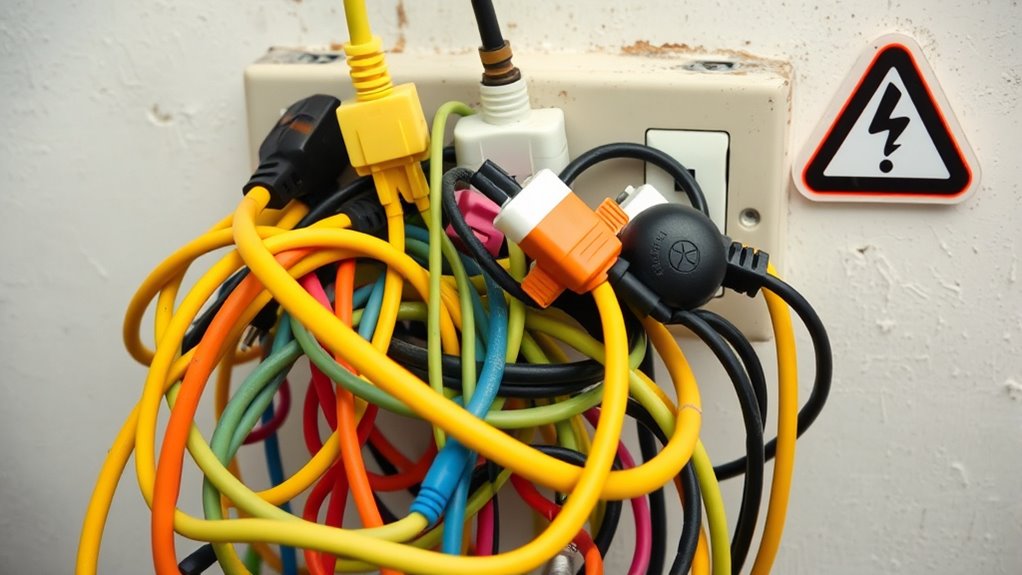
Using multiple power strips and extension cords may seem like a convenient way to expand your outlet access, but it considerably increases the risk of overloads and electrical hazards. When you daisy-chain cords or overload a strip, you’re pushing the circuit beyond its safe capacity. Here are some dangers to watch out for:
- Overheating and fire risk: Excess current causes cords and outlets to heat up, potentially igniting nearby materials.
- Damaged wiring and insulation: Continuous overloading accelerates wear, increasing shock and short-circuit risks.
- Power fluctuations and equipment damage: Surges and drops can harm sensitive electronics and appliances.
Stick to single, properly rated power strips, avoid daisy-chaining, and regularly check for signs of overheating or damage.
Preventive Measures to Safeguard Your Home’s Electrical System
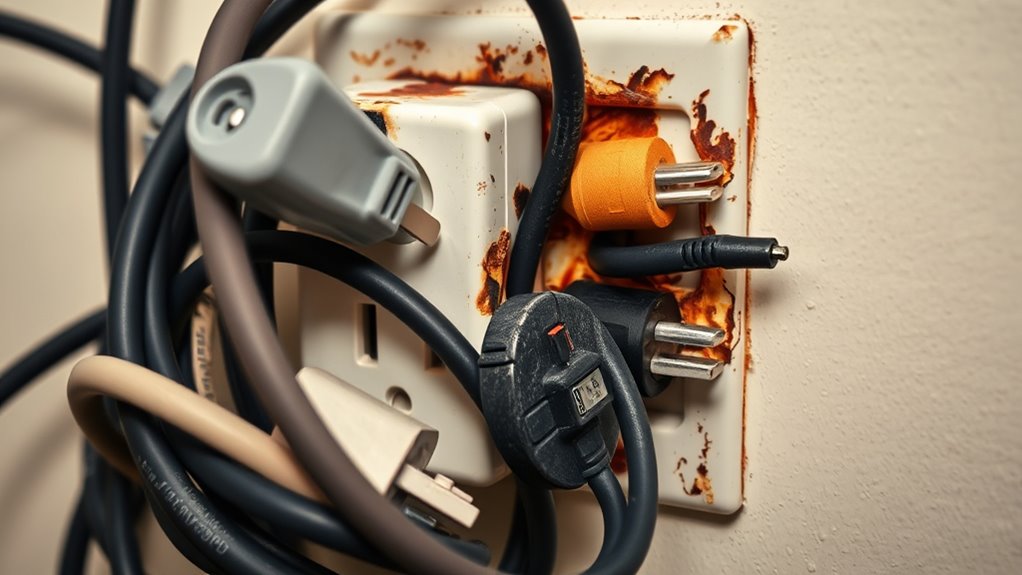
Implementing preventive measures can considerably reduce the risk of electrical overloads and fires in your home. Start by identifying circuits that handle high-demand appliances like kitchen equipment, HVAC, or space heaters, and consider installing dedicated circuits for them. Use AFCI and GFCI outlets where recommended to prevent fires and shocks. Regularly inspect outlets for signs of damage, such as cracks, discoloration, or warmth, and replace or repair as needed. Avoid daisy-chaining power strips and only use surge-protected, thermal-fuse-equipped strips when necessary. Distribute appliances across multiple circuits to prevent overloading. Keep an eye on power consumption, and unplug unused devices. When in doubt, consult a licensed electrician for assessments, upgrades, or to install new circuits—safety starts with proper load management.
Steps to Take When You Spot a Hot or Burning Outlet
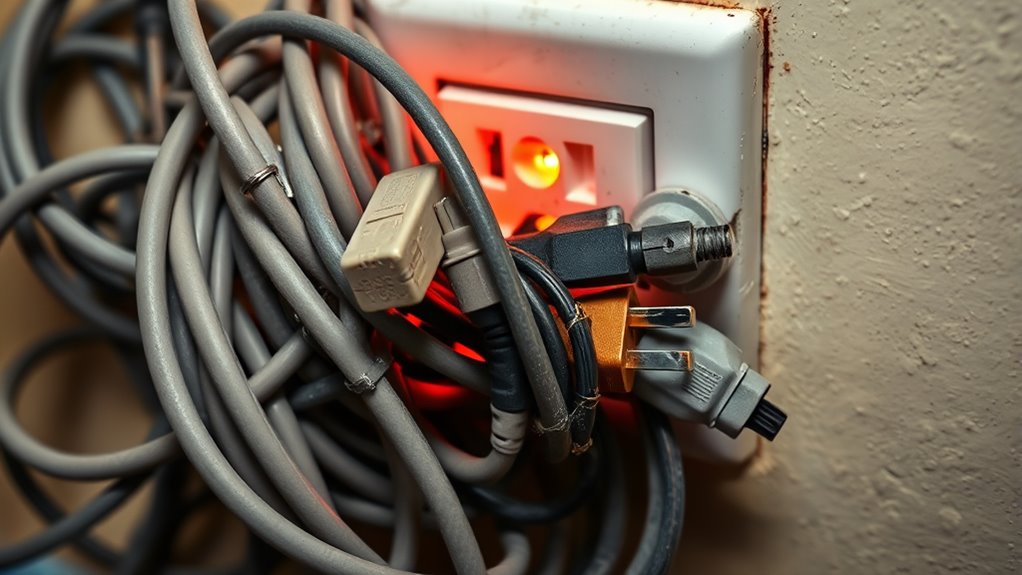
If you notice an outlet emitting a hot or burning smell, acting promptly can prevent a potential fire hazard. First, unplug all devices connected to that outlet immediately to reduce heat and prevent further damage. Next, keep clear of the outlet and avoid using it until it’s inspected. Finally, follow these steps:
- Turn off the circuit breaker controlling that outlet to stop power flow.
- Visually inspect for signs of damage, such as discoloration, melting, or burning smells.
- Contact a licensed electrician to evaluate the outlet, wiring, and circuit load, and perform necessary repairs or upgrades.
Don’t attempt to repair or replace the outlet yourself if you’re unsure. Prioritize safety to protect your home and loved ones.
When to Call a Professional Electrician

Recognizing when to call a professional electrician is essential for maintaining safety after noticing signs of outlet trouble. If an outlet is warm or hot to the touch, or if you smell burning or see visible damage like melting or discoloration, stop using it immediately and get a pro’s help. Repeated circuit breaker trips or flickering lights also indicate underlying issues that require expert assessment. Don’t attempt to fix wiring problems yourself, especially if outlets are showing signs of overheating or burning smells. Call an electrician if you notice outlets with burning odors, warmth, or visible damage, or if appliances lose power intermittently. A licensed professional can evaluate your system, identify hazards, and perform necessary repairs or upgrades to ensure safety and code compliance.
Frequently Asked Questions
How Can I Safely Test if an Outlet Is Overloaded?
To safely test if an outlet is overloaded, start by unplugging all devices from it. Use a plug-in watt meter to measure the total current draw of connected devices. Check the wattage against the circuit’s capacity (typically 1,800 watts for a 15-amp circuit). If the load exceeds 80% of the limit or the outlet feels warm, immediately unplug everything and consult a licensed electrician for further inspection.
Are There Specific Signs That Indicate an Outlet Is at Risk of Fire?
You’ll notice signs like burning smells, discoloration, or melted outlet covers, which indicate overheating. If the outlet feels warm or hot during use, it’s a clear warning. Flickering lights or appliances losing power also suggest electrical issues. If you see or smell these signs, unplug devices immediately, avoid using the outlet, and call a professional electrician. Addressing these signs promptly can prevent fires and guarantee your safety.
What Are the Best Ways to Reduce Outlet Overload in My Home?
Imagine plugging in multiple devices, each humming louder as they draw more power. To reduce outlet overload, you should distribute loads across different circuits, avoid daisy-chaining power strips, and unplug unused devices. Install dedicated circuits for high-draw appliances, upgrade aging outlets, and use surge-protected strips with built-in safety features. Regularly check for signs of heat or damage, and consult an electrician for professional load assessments and upgrades to keep your home safe.
Is It Safe to Continue Using an Outlet That Feels Warm?
You shouldn’t keep using an outlet that feels warm. Warmth indicates overheating, which can lead to electrical fires or damage. Unplug all devices from it immediately, and avoid plugging anything back in until a professional inspects it. Contact an electrician to assess the wiring, replace the outlet if necessary, and verify your home’s electrical system is safe. Never ignore warm outlets—they’re a serious warning sign.
How Often Should I Have My Electrical System Inspected for Overloads?
Think of your electrical system as a garden hose; over time, leaks and blockages can build up. You should have it inspected every 3 to 5 years, especially if you notice flickering lights, tripped breakers, or warm outlets. Regular inspections catch hidden issues early, preventing fires and damage. An electrician can identify problems before they become costly, ensuring your home stays safe and flowing smoothly.
Conclusion
Ignoring a warm outlet is like ignoring a warning sign on a sinking ship—you risk everything. Last summer, a friend dismissed her overheated socket, only to face a fire that destroyed her living room. Don’t wait for disaster; your home’s electrical system is delicate. Stay vigilant, address signs early, and call a professional if needed. Protect your home and loved ones—because a small sign today can prevent a big catastrophe tomorrow.
Fall Picks
fall essentials
As an affiliate, we earn on qualifying purchases.