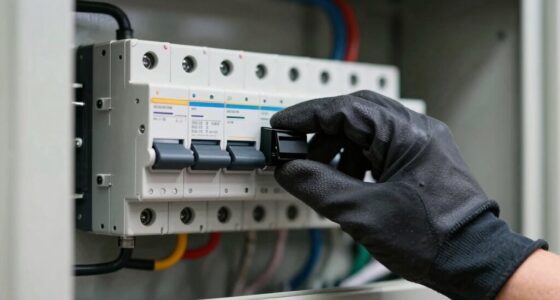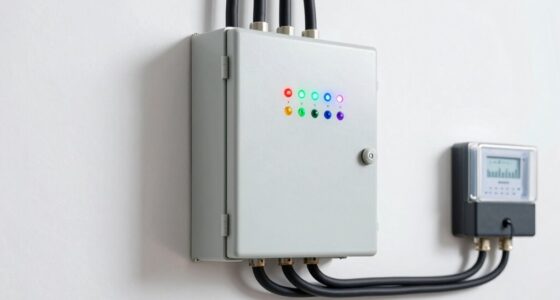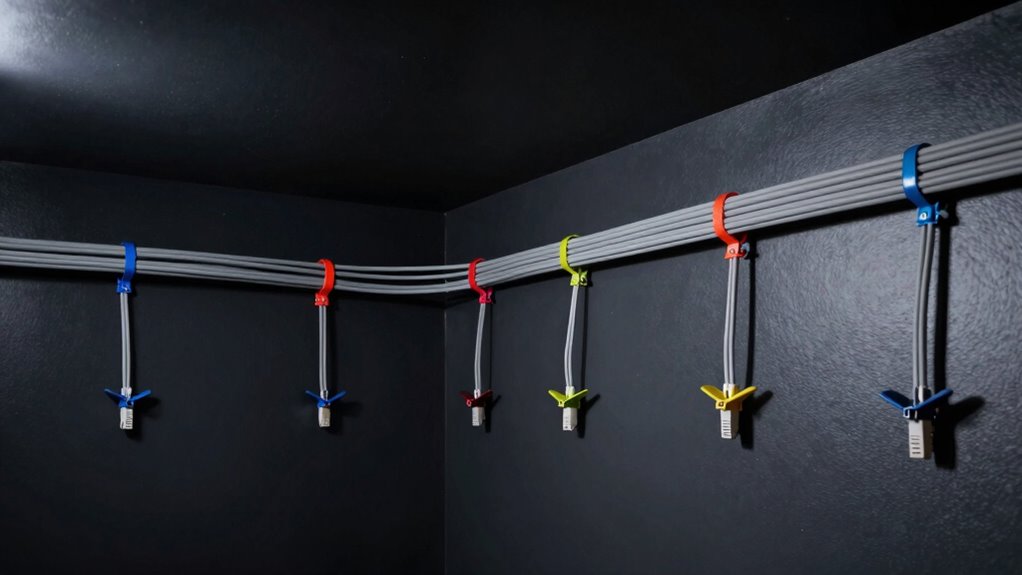

During a blackout, trip hazards from loose or poorly routed cables can cause falls and injuries. To prevent this, keep cables along walls or baseboards, avoiding crossing walkways. Use ramps, clips, or tape to secure cords and stop loops from snagging. Mark pathways with glow-in-the-dark or reflective tape to improve visibility in darkness. Taking these simple steps will help you maintain safe walkways — more tips await if you continue exploring.

Get backup power and energy gear delivered free — and shop member deals
- Fast, free delivery on millions of items
- Access to Prime Big Deal Days deals on October 6–7
- Prime Video, Amazon Music and more included
Key Takeaways
- Route cables along walls or baseboards to keep walkways clear during blackouts.
- Use cable covers or ramps at crossings to create flush, stable walking surfaces.
- Secure loose cords with clips, ties, or tape to prevent loops and snagging hazards.
- Mark pathways with glow-in-the-dark or reflective tape for enhanced visibility in darkness.
- Regularly maintain and clear pathways to minimize clutter and reduce trip risks during power outages.
Understanding the Risks of Trip Hazards During Blackouts
During blackouts, the risk of slips, trips, and falls increases sharply because visibility drops, making it harder to see hazards on the ground. Without proper lighting, common obstacles like cords, furniture, and uneven flooring become hidden threats. This can lead to sudden accidents, especially when moving quickly in unfamiliar or cluttered spaces. The lack of lighting can also cause individuals to miss potential dangers such as wet floors, loose rugs, or other hazards that could lead to slips. The danger is especially high in busy or cluttered environments, where quick movement is often necessary. Recognizing how reduced lighting raises the risk helps you stay alert and take proactive steps to manage cables and clear pathways, reducing the chances of injury during a blackout. Proper cable routing and trip hazard prevention are essential to maintaining safety in such situations. Implementing innovative cable management solutions can further help prevent accidents and ensure safer environments during power outages. Being aware of the importance of home safety measures can also make a significant difference in reducing risks during power failures. Additionally, incorporating smart safety devices can alert you to potential hazards even in darkness, further enhancing safety. Paying attention to lighting options and ensuring backup power sources are available can also greatly reduce these risks.
Common Sources of Trip Hazards in Power-Outage Situations
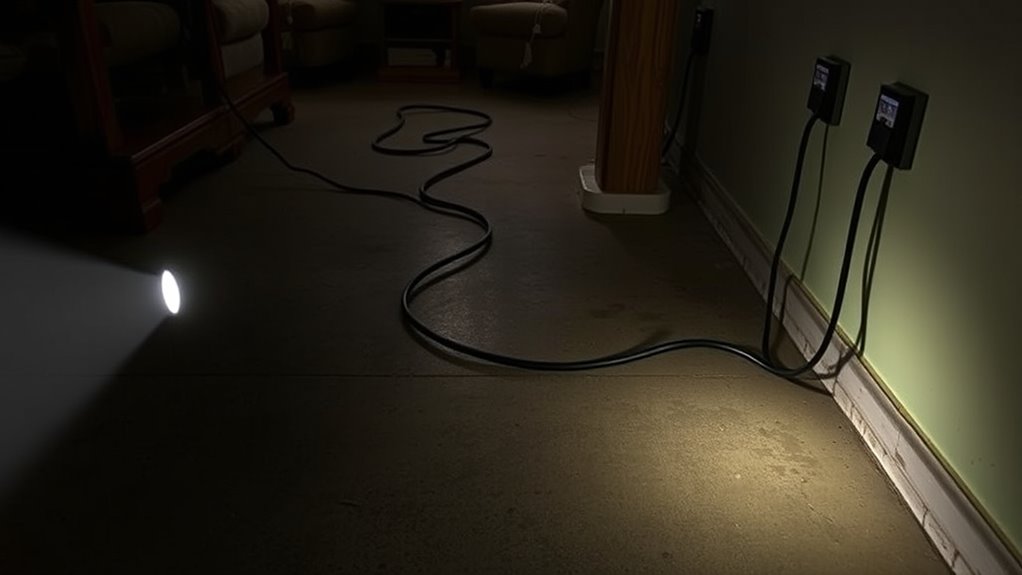
In power-outage conditions, the layout of your environment often changes rapidly, creating new trip risks. Portable cords, extension leads, and fixed cables routed across walkways become major hazards when lighting is unavailable. Emergency lighting, generator lines, and battery packs strewn in hallways or thresholds can unexpectedly block paths. Furniture, boxes, and loose items shift out of place, turning into trip points. Wet floors from leaks, firefighting, or condensation add slip hazards, especially when obstacles aren’t visible. Uneven thresholds, rugs, and loose floor coverings that rely on visual cues become dangerous when illumination is lost. Additionally, cable organization plays a vital role in reducing clutter and preventing accidents during outages. Properly secured cables prevent unnecessary movement and reduce the risk of falls in low-light situations. Ensuring safe cable routing minimizes clutter and keeps pathways clear is essential during power outages. Regular cable maintenance helps identify potential hazards before they become problematic, especially in unpredictable blackout scenarios. These common sources of trip hazards can cause falls and injuries, making proper cable management essential during outages to maintain safe pathways. Proper cable routing and organization are critical in emergency scenarios, similar to how field-of-view considerations are important for reliable imaging setups.
Principles of Effective Cable Routing for Safety

To prevent trip hazards during a blackout, you should keep walkways clear by routing cables along walls or baseboards instead of across walking paths. Using visible markers like reflective tape or glow-in-the-dark strips helps identify cable routes in low light. Securing cables properly guarantees they don’t form loops or snag, reducing the risk of falls when visibility is limited. Employing effective cable management techniques can further enhance safety and prevent accidents.
Keep Walkways Clear
Keeping walkways clear is essential for safety during blackouts, as cluttered or poorly routed cables can quickly become trip hazards in low visibility conditions. To prevent this, route cables along walls or baseboards, avoiding crossing pedestrian paths. Use cable covers or low-profile ramps over necessary crossings to keep surfaces flush and visible under emergency lighting. Secure cables with tape, clips, or ties at regular intervals to prevent loops and snags that could catch feet in the dark. Bundle multiple cables into a single, secured run to reduce the number of crossing points. Mark cable routes with high-contrast reflective tape or glow-in-the-dark markers so they’re visible in low light. Incorporating local automation tools can help monitor and manage cable safety proactively. Proper cable management techniques minimize clutter and make it easier to identify hazards quickly, especially in emergency situations. Additionally, using visual indicators such as reflective tape enhances visibility and safety during blackouts. Implementing effective cable routing practices reduces the risk of trips and falls during blackout conditions, and adopting preventative measures further ensures that hazards are minimized before emergencies occur.
Use Visible Markers
Using visible markers on cables and routing paths substantially enhances safety during blackouts by making potential trip hazards easier to identify in low-light conditions. You can quickly distinguish cords from walkways, reducing accidental trips. High-contrast reflective tape and glow-in-the-dark markers are effective visual cues, especially when emergency lighting is limited. To envision this, imagine a hallway with cables outlined in bright, reflective strips, clearly visible against the dark. Here’s how it looks:
| Pathway | Markers | Visibility |
|---|---|---|
| Along baseboards | Reflective tape | Bright, catches light |
| Crossing thresholds | Glow-in-the-dark tape | Glows softly in darkness |
| Over cables | High-contrast tape | Easily distinguished |
| Near stairs | Reflective strips | Enhances safety |
| Around equipment | Marked with glow strips | Clear, visible at night |
Proper markers ensure pathways stay visible, preventing falls during blackouts. Incorporating cable management principles can further improve overall safety and organization. Additionally, understanding contrast ratio helps select markers that are most effective in low-light conditions, ensuring maximum visibility and safety.
Tools and Materials for Quick Cable Management
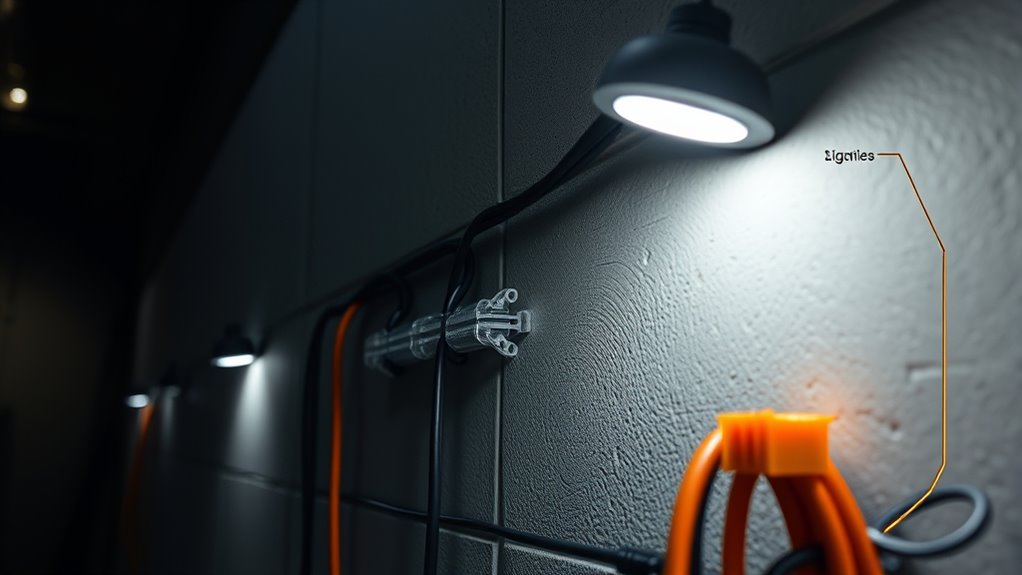
To quickly manage cables during a blackout, you need effective tools and materials on hand. Heavy-duty cable ramps and adhesive-backed raceways make routing safer and more stable in low light. Using reflective and glow-in-the-dark markers helps reveal cable paths when visibility drops, reducing trip risks. Incorporating ambient-light considerations ensures your setup remains safe and visible even in complete darkness. Additionally, understanding air purifier maintenance dos and don’ts can help ensure the air quality in your space remains high, especially when power outages disrupt normal ventilation. Considering natural lighting options or backup illumination methods can further enhance visibility during emergencies. Proper cable routing techniques are essential to prevent trip hazards, particularly when lighting conditions are compromised. Having a clear understanding of cable management techniques can also streamline setup and ensure safety.
Quick-Install Cable Ramps
Are you looking for a fast, reliable way to manage cables during blackout emergencies? Quick-install cable ramps are your best solution. These heavy-duty rubber ramps are flat and low-profile, protecting cords while providing a stable walking surface. They can be placed over cables crossing walkways, preventing trips without blocking foot traffic. Installation is simple—just position the ramps over cords at key crossing points. They’re designed for rapid deployment, requiring no tools, making them perfect for emergency setups. Use adhesive-backed cable raceways for wall or baseboard routing that can be installed quickly and removed easily. Pair these ramps with high-visibility reflective tape or glow-in-the-dark markers to ensure cables are visible even in low light. Proper cable management techniques can further enhance safety during outages. Additionally, selecting durable materials ensures the ramps withstand heavy foot traffic and environmental conditions. With quick-install ramps, you create safer pathways in blackout conditions efficiently and effectively.
Reflective and Glow Markers
Reflective and glow markers are essential tools for quick cable management during blackout conditions because they enhance visibility and help prevent trip hazards. By applying high-contrast reflective tape along cable runs and edges, you make cords more noticeable under emergency lighting or low-light situations. Photoluminescent strips or glow-in-the-dark markers provide a persistent glow that reveals pathways without power, guiding foot traffic safely. These markers are quick to install and reusable, offering an immediate visual cue for safe navigation. Use them to outline cable routes, mark thresholds, or identify potential trip points. Combining reflective and glow markers ensures that even in complete darkness, cables stay visible, reducing the risk of falls and keeping walkways clear during outages.
Strategies for Securing Cables in Emergency Settings
Securing cables effectively in emergency settings is essential to prevent trips and falls during blackouts. Proper cable management minimizes hazards by keeping pathways clear and stable. Start by routing cables along walls or baseboards instead of across walkways. Use cable covers or ramps over crossings to keep surfaces flush and visible under low light. Secure cables with tape, clips, or ties at regular intervals to prevent loops and snags. Bundle multiple cords together and run them as a single secured line to reduce clutter. Mark routes with reflective tape or glow-in-the-dark markers so emergency lighting highlights safe paths. These strategies create a safer environment, reducing the risk of falls when visibility is compromised.
Visual Aids and Markers to Enhance Path Visibility
Visual aids and markers considerably improve pathway visibility during blackouts by making hazards easier to see in low-light conditions. You can quickly identify cables, steps, and obstacles, reducing trip risks. Use high-contrast reflective tape or glow-in-the-dark markers along cable routes and at thresholds. These markers remain visible even in minimal light, guiding you safely through dark environments. Proper placement ensures pathways are clearly defined, preventing accidental trips over cords or furniture. To deepen understanding, consider this:
| Benefit | Example |
|---|---|
| Increased visibility | Reflective tape on cables |
| Quick identification | Glow-in-the-dark markers |
| Safe navigation | Clear pathway markings |
| Reduced accidents | Highlighted trip zones |
| Ease of use | Markers visible in darkness |
Organizational Practices to Minimize Trip Risks
Implementing effective organizational practices during blackouts is crucial to reducing trip hazards and ensuring safe movement. You need to establish clear routines and assign responsibilities to keep pathways safe. Regularly review and update cable management plans, and train staff on best practices for emergency conditions. Keep walkways free of clutter and ensure cables are routed along walls or baseboards to prevent crossing paths. Use high-visibility markers like reflective tape or glow-in-the-dark strips to guide movement in darkness. Maintain quick-access tools such as cable ties, ramps, and tape to secure cords rapidly. Assign floor marshals or torch carriers to lead occupants safely through dark areas. By integrating these practices, you minimize risks and promote a safer environment during blackouts.
Integrating Cable Management Into Emergency Preparedness
Integrating cable management into emergency preparedness guarantees that safety measures are effective and readily deployable during blackouts. Proper planning guarantees cables won’t become trip hazards when lighting fails. You should map out designated routes, routing cables along walls or baseboards, and use cable covers or ramps for crossings. Secure loose cables with tape, clips, or ties, creating a single, organized run. Mark routes with reflective tape or glow-in-the-dark markers to help visibility in low light. Use quick-install devices like cable ramps and adhesive-backed raceways to streamline setup. Regularly check and update your cable routes during emergency drills. Proper integration minimizes chaos and reduces fall risks, ensuring safe movement even in darkness.
| Strategy | Tool/Method |
|---|---|
| Route cables along walls | Cable raceways |
| Secure loose cables | Cable ties/tape |
| Mark pathways in low light | Reflective tape or glow markers |
Best Practices for Maintaining Safe Walkways During Power Failures
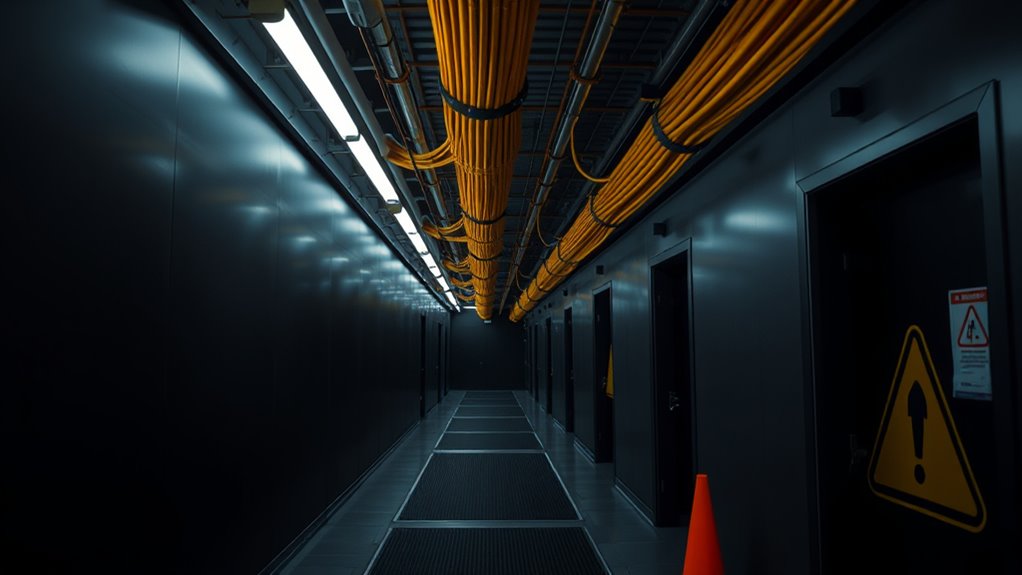
During power failures, maintaining safe walkways becomes essential to prevent trips and falls. You should prioritize clear, obstacle-free paths, especially in low lighting. Use high-contrast tape or glow-in-the-dark markers to highlight cables and thresholds. Secure loose cords with clips, ties, or ramps to prevent loops or snagging. Route cables along walls or baseboards, avoiding crossing pedestrian routes. Keep walkways dry and free of clutter, ensuring loose items are stored securely. Assign personnel to lead or monitor navigation during outages, and have emergency lighting ready. Consider these practices:
- Route cables along walls or baseboards
- Use cable covers or ramps over crossings
- Secure cables with tape or ties
- Mark pathways with reflective or glow-in-the-dark tape
- Keep walkways dry and clear of clutter
Frequently Asked Questions
How Can I Quickly Identify and Eliminate Trip Hazards During a Blackout?
During a blackout, you can quickly identify and eliminate trip hazards by shining a flashlight or using glow-in-the-dark markers to illuminate pathways. Look for loose cords, clutter, and uneven flooring. Secure cables with tape or clips, bundle multiple cords, and add reflective tape for visibility. Clear walkways by moving obstacles and rerouting cables along walls or baseboards, ensuring safe, obstacle-free pathways for everyone.
What Are the Most Effective Methods for Securing Cables in Emergency Situations?
Ever wonder how you can prevent someone from tripping in the dark? Secure cables using heavy-duty tape, clips, or Velcro straps at regular intervals to prevent loops and snagging. Bundle multiple cables together and run them as a single, secure line. Use cable covers, ramps, or raceways for crossing points, and mark routes with reflective or glow-in-the-dark tape. These methods keep cables stable, visible, and safe during emergency situations.
Which Tools Are Essential for Rapid Cable Management During Power Outages?
You need flat rubber cable ramps, adhesive-backed raceways, and high-visibility reflective tape for quick cable management during power outages. Use Velcro straps or reusable ties to secure cords rapidly, preventing loops and snags. Incorporate glow-in-the-dark markers for visibility, and keep a blackout kit with tape, ties, and ramps handy. These tools help you swiftly organize cables, reduce trip risks, and ensure safe, efficient movement in low-light emergency conditions.
How Should Emergency Lighting and Path Markings Complement Cable Routing?
Emergency lighting and path markings should complement cable routing by clearly illuminating designated pathways and hazard zones. Use high-visibility reflective tape or glow-in-the-dark markers along routed cables, ensuring they’re easily seen even in darkness. Install floor-level emergency lights that highlight key walkways and cable crossings, guiding occupants safely. Combining these visual cues minimizes trip risks, helping everyone navigate confidently during power outages while reducing accidental falls and injuries.
What Organizational Strategies Can Prevent Chaos and Accidents During Blackout Responses?
Think of yourself as a conductor guiding an orchestra through a blackout. You assign clear roles, establish pre-planned routes, and guarantee everyone knows their cues. By organizing emergency procedures, practicing drills, and designating leaders, you create harmony amid chaos. Securing cables, marking pathways, and maintaining communication prevent accidents. This disciplined approach ensures everyone moves safely, avoiding confusion and injuries when the lights go out.
Conclusion
Remember, a well-planned cable route is like a clear trail through a forest—you won’t trip over hidden roots or tangled branches. During a blackout, taking simple steps to safeguard cables can prevent falls and keep everyone safe. Just like a seasoned hiker checks their path before stepping forward, you can ensure safe walkways by organizing and marking cables properly. Your quick action could be the difference between a safe passage and a trip hazard.
Fall Picks
fall essentials
As an affiliate, we earn on qualifying purchases.