Cold temperatures make extension cord jackets brittle, which leads to cracks and damage. When jackets crack, internal wires can be exposed, increasing the risk of electrical shocks and fires. Moisture from snow or ice can enter through these cracks, worsening deterioration and causing short circuits. Over time, damaged cords become more dangerous as they can spark or overheat. If you want to stay safe and prevent fire hazards, keep an eye on your cords—more tips follow.
Key Takeaways
- Cracked jackets expose live wires, increasing the risk of sparks and heat buildup that can ignite nearby materials.
- Damage allows moisture entry, causing corrosion and electrical faults that may lead to fires.
- Cold temperatures make insulation brittle and prone to cracking, compromising safety and increasing fire hazards.
- Exposed internal wires from cracks can cause short circuits, sparks, and overheating, raising fire risk.
- Damaged cords in freezing conditions deteriorate faster, significantly elevating the chance of electrical fires.

CyberPower ST425 Standby UPS Battery Backup and Surge Protector, 425VA/260W, 8 Outlets, Compact, UL Certified
425VA/260W Standby Battery Backup Uninterruptible Power Supply (UPS) System uses simulated sine wave output to safeguard home office...
As an affiliate, we earn on qualifying purchases.
The Impact of Cold Temperatures on Extension Cords
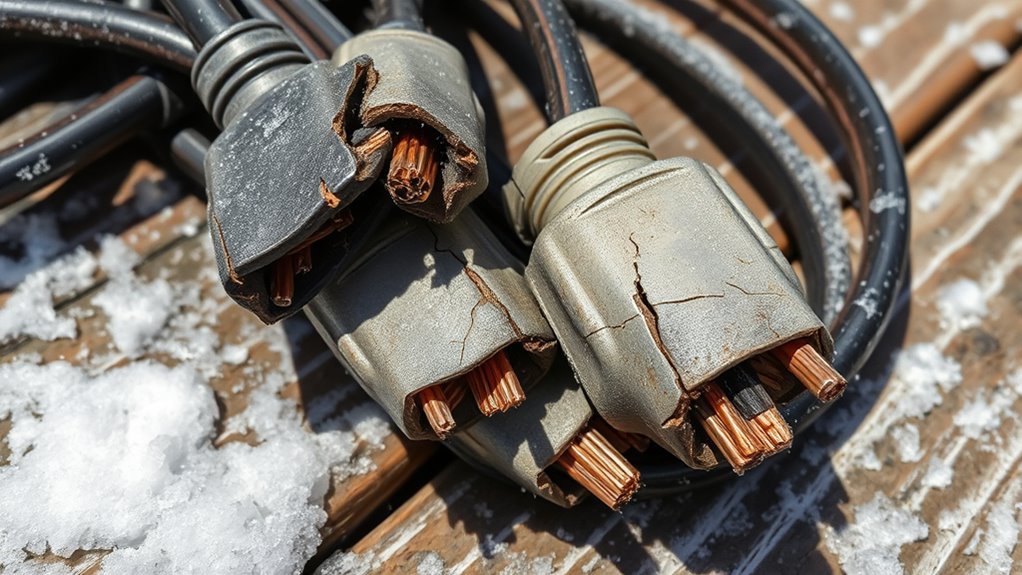
Cold temperatures considerably weaken extension cords by making their jackets brittle and prone to cracking. When it’s freezing outside, the jacket’s flexibility diminishes, increasing the risk of cracks and tears. These cracks expose wires, elevating shock and fire hazards. Frost and repeated freeze-thaw cycles accelerate jacket deterioration, especially if cords aren’t rated for cold weather. If you use outdoor extension cords in freezing conditions, they’re more likely to become brittle and crack. Over time, this damage can lead to exposed wiring, which is a serious safety concern. To prevent accidents, always check cords for damage before use in cold weather. Use cords rated for low temperatures, and replace any that show signs of cracking or wear. Proper maintenance ensures safer use during winter months. Regularly inspecting and understanding weather-rated cords can help prevent unexpected failures and hazards, especially in cold weather conditions.

ALLPOWERS R1500 Portable Power Station, 1152Wh LiFePO4 Battery Backup UPS Solar Generator for Camping, Emergency, RV, Home Use
【650W Solar Fast Charging】: The ALLPOWERS R1500 has an integrated MPPT charge controller for up to 650W solar...
As an affiliate, we earn on qualifying purchases.
How Cracks Develop in Cord Jackets During Winter
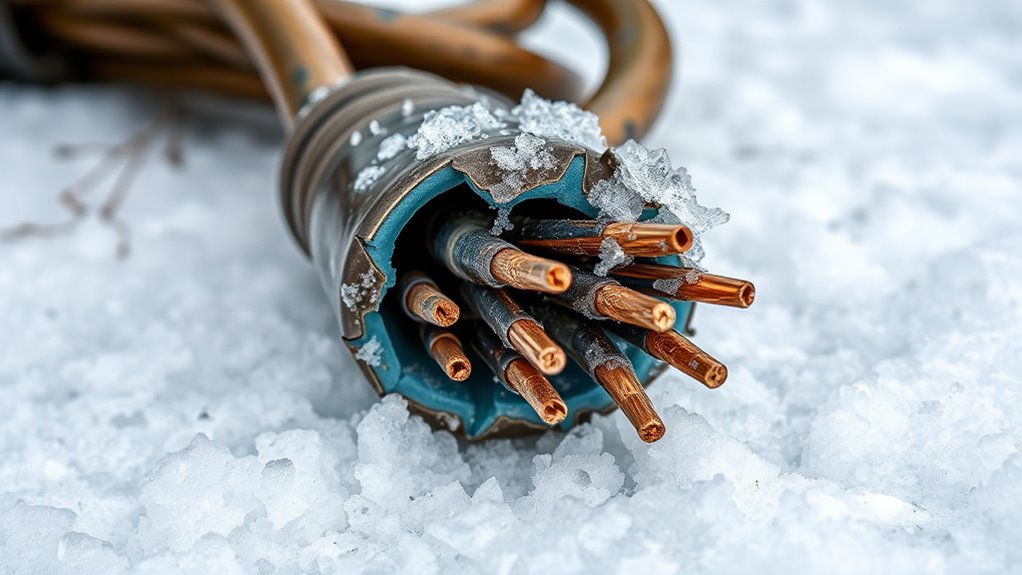
During winter, extension cord jackets develop cracks primarily because low temperatures cause the materials to become brittle and less flexible. When exposed to freezing conditions, the outer insulation loses its elasticity, making it prone to cracks from minor stresses. Repeated cycles of cold and warmth weaken the jacket further, accelerating deterioration. You might notice cracks forming where the cord bends or near staples and staples. Over time, these cracks expose internal wires, increasing shock and fire risks. To illustrate, consider this table:
| Cause | Effect |
|---|---|
| Cold temperatures | Material becomes brittle |
| Repeated freeze-thaw cycles | Jacket weakens and cracks |
| Bending or twisting | Causes stress points and cracks |
| Physical damage (staples, foot traffic) | Accelerates cracking |
Proper inspection and timely replacement prevent hazards.

Amazon Basics UPS Battery Backup & Surge Protector, 400VA/255W, 6 Outlets, Uninterruptible Power Supply, Small Compact Size, Black
Standby uninterruptible power supply (UPS) with 400VA / 255W battery backup; ideal for home networks, IoT devices, and...
As an affiliate, we earn on qualifying purchases.
Risks Associated With Damaged and Frayed Cords
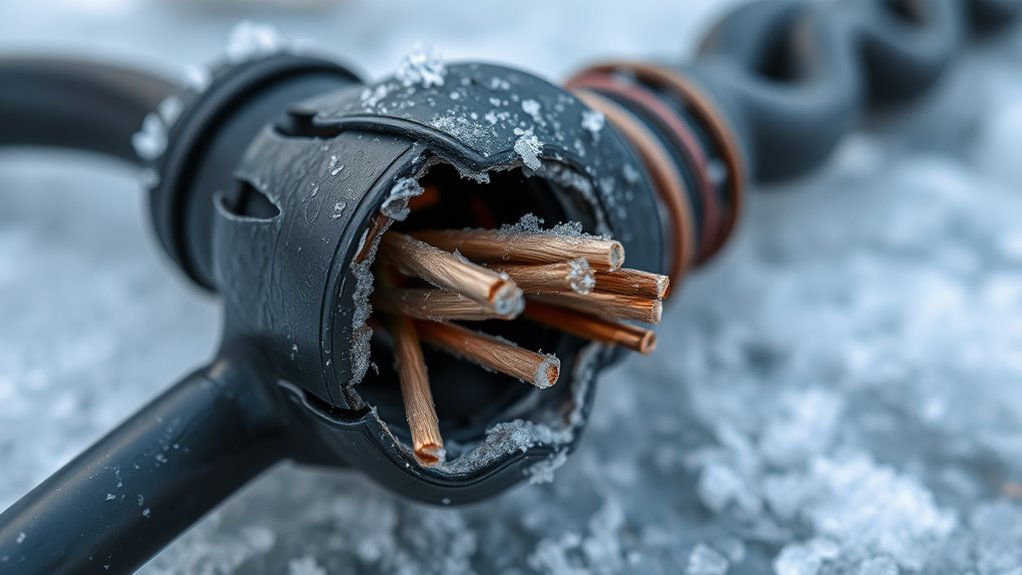
Damaged and frayed extension cords pose significant safety risks because exposed wires can lead to electrical shocks and fires. When the outer insulation wears down or cracks, live wires become accessible, increasing the chance of accidental contact, especially in high-traffic areas or around children. Frayed cords can also overheat due to poor insulation, risking sparks or fires. Loose or bare wires inside the cord may cause short circuits, damaging connected devices or starting fires. Over time, repeated bending or pulling weakens the cord’s integrity, making it more prone to failure. Incorporating fire safety considerations when choosing extension cords can help ensure better safety and visibility during use. Proper cord inspection is essential to identify early signs of damage and prevent hazards. Regularly inspecting cords for signs of wear and tear can help catch issues before they become dangerous, and using quality cords from reputable manufacturers can reduce the risk of failure. In addition, understanding the electrical load capacity of your extension cords helps prevent overloads that could lead to overheating. Discarding damaged cords promptly reduces these dangers. Always inspect cords regularly, and replace any with visible cuts, fraying, or exposed wiring to protect yourself and your property from electrical hazards.
The Connection Between Jacket Cracks and Fire Hazards

Cracks in the jacket of an extension cord considerably increase fire hazards because they expose live wires, creating a direct pathway for sparks and heat buildup. When the outer insulation is compromised, the internal wires can touch each other or surrounding objects, elevating the risk of short circuits. These sparks can ignite nearby materials like furniture, rugs, or dry debris, especially if the cord is under load or near flammable surfaces. Cracks also allow moisture or dirt to penetrate, which can cause corrosion or electrical faults that lead to overheating. Over time, weakened jackets from cold or wear make cracks more likely, increasing the chance of a fire starting unexpectedly. Proper maintenance of electrical cords can significantly reduce the risk of accidents caused by jacket cracks. Additionally, material durability plays a crucial role in preventing jacket deterioration and ensuring safety over the cord’s lifespan, as wear and tear accelerates the formation of cracks and other damages. Environmental conditions such as exposure to moisture, extreme temperatures, or physical stress can further hasten jacket deterioration, emphasizing the importance of proper storage and handling. Regular inspections and cord quality are essential for maintaining a safe and reliable electrical setup.
Signs That Your Extension Cord Is Compromised
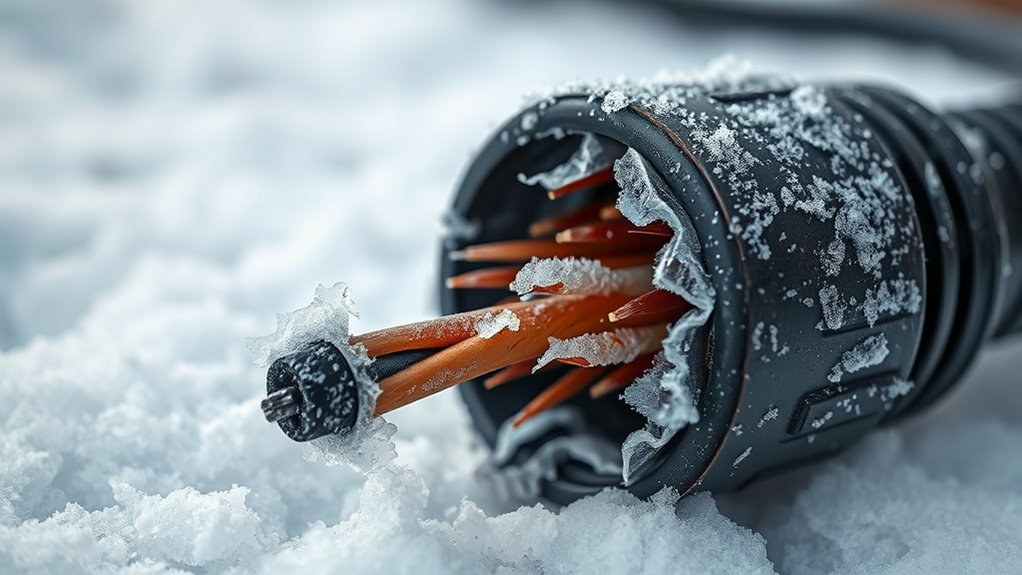
You should regularly check your extension cords for visible damage like cracks, frayed wires, or scorch marks, as these are clear signs they’re compromised. Cold temperatures can make the jacket brittle, leading to cracks or splits that expose wires and increase shock risks. If you notice any of these issues, it’s safest to replace the cord before using it again. Additionally, damaged cords can pose electrical hazards that could be mitigated by proper extension cord maintenance. Ensuring your cords are in good condition helps prevent vehicle tuning misconceptions about safe usage practices and electrical safety standards.
Visible Cord Damage
Visible damage on an extension cord is a clear warning sign that it may be unsafe to use. Cracks, cuts, or exposed wires indicate compromised insulation, increasing shock and fire risks. Frayed areas from wear or biting pests weaken the cord’s structure, making it prone to overheating. Discoloration or burn marks suggest overheating or electrical faults. Always inspect cords carefully before plugging in. Damaged cords should be replaced immediately to prevent accidents. Understanding insulation integrity can also help you choose safer, high-quality accessories that last longer and perform better. Additionally, regularly checking for cord safety can help prevent potential hazards before they occur. Incorporating proper maintenance routines ensures that your extension cords remain in good condition and reduces the likelihood of failure. Being aware of electrical standards can further guide you in selecting reliable cords that meet safety regulations.
Temperature-Related Wear
Cold temperatures can weaken your extension cord’s jacket, making it brittle and more prone to cracks. When exposed to freezing conditions, the outer insulation loses flexibility, leading to cracks that expose wires. This damage increases shock and fire risks. To recognize temperature-related wear, look for:
- Cracks or splits in the jacket that appear after cold weather.
- Brittle or stiff insulation that feels less pliable.
- Exposed wires or fraying near damaged areas.
- Discoloration or hardening of the outer layer, indicating aging from temperature stress.
If you notice these signs, replace the cord immediately. Using damaged cords in cold conditions can lead to dangerous electrical failures, fires, or shock hazards. Always inspect your extension cords after exposure to freezing temperatures.
Proper Inspection and Maintenance of Outdoor Cords
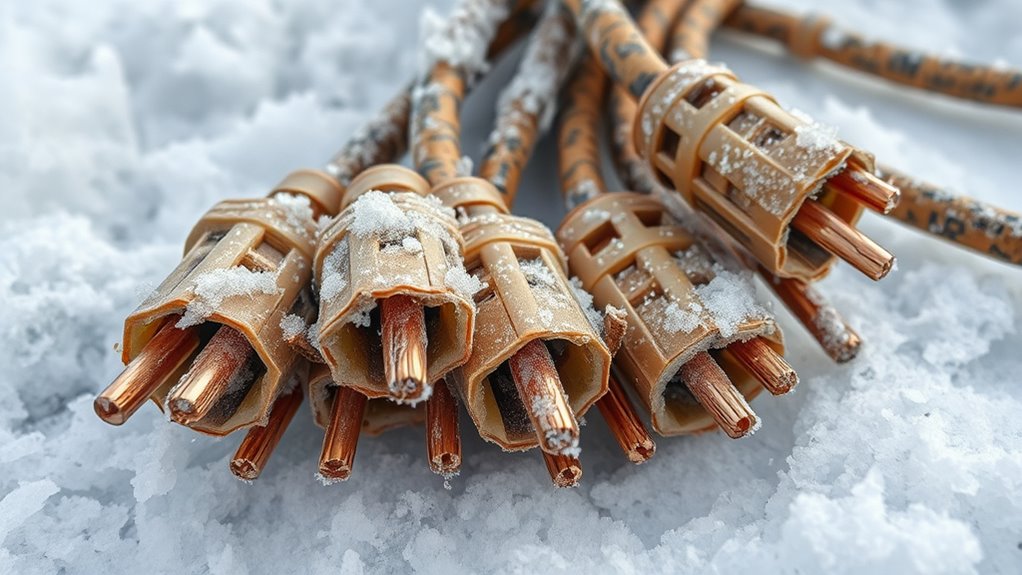
Regularly inspecting outdoor extension cords is essential to guarantee safety and prevent fire hazards. Check cords for cracks, fraying, or exposed wires before each use. Look for signs of damage caused by cold weather, furniture, or foot traffic, especially on jackets and plugs. Verify the cord’s insulation remains flexible; brittle or cracked jackets increase shock and fire risks. Test outlets and connections for secure fit and proper grounding. Keep cords off the ground and away from water, snow, and debris. Maintain a clean, organized setup, avoiding tangles or pinched areas. Replacing any damaged cords immediately—do not attempt repairs—is crucial to prevent hazards. Store cords properly when not in use, coiled loosely in a dry, cool place. Regular maintenance minimizes accidents and prolongs your cords’ lifespan. Staying informed about electric safety standards and proper maintenance techniques can also help prevent unforeseen risks associated with electrical safety and compliance. Additionally, understanding material durability helps identify cords more prone to cracking or deterioration over time. Being aware of environmental factors such as temperature fluctuations and exposure to moisture can further aid in maintaining cord integrity.
Safety Tips for Using Extension Cords in Cold Weather
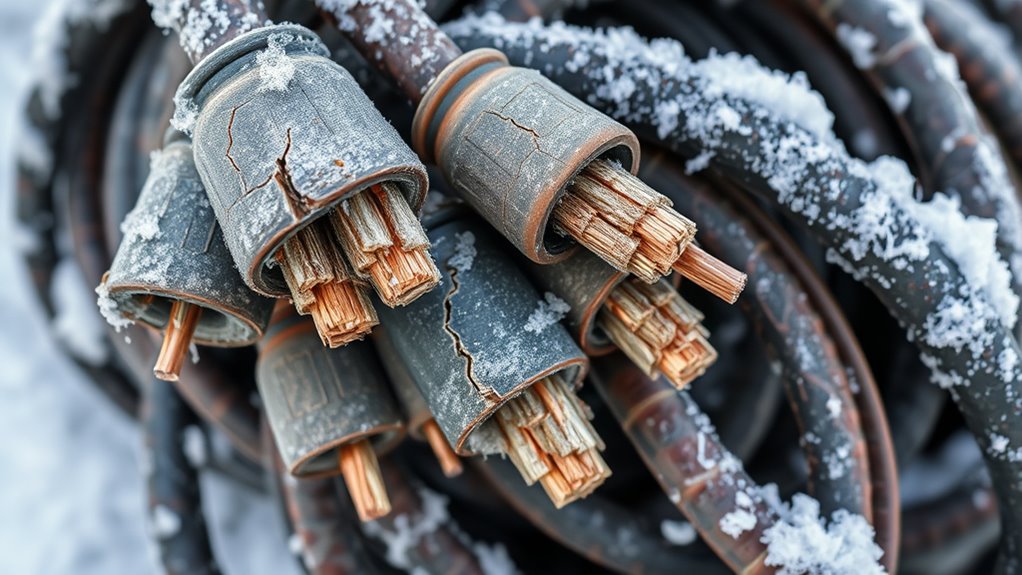
When using extension cords in cold weather, it’s crucial to take extra precautions because low temperatures can weaken the cord’s insulation and increase the risk of cracks or damage. To stay safe, follow these tips:
- Inspect cords thoroughly for cracks or wear before use, and discard any damaged ones.
- Use outdoor-rated cords designed to withstand freezing temperatures.
- Avoid coiling or covering cords with snow, ice, or clothing, which can cause overheating.
- Connect cords directly to grounded GFCI outlets outdoors and never overload them.
Choosing the Right Cords for Freezing Conditions
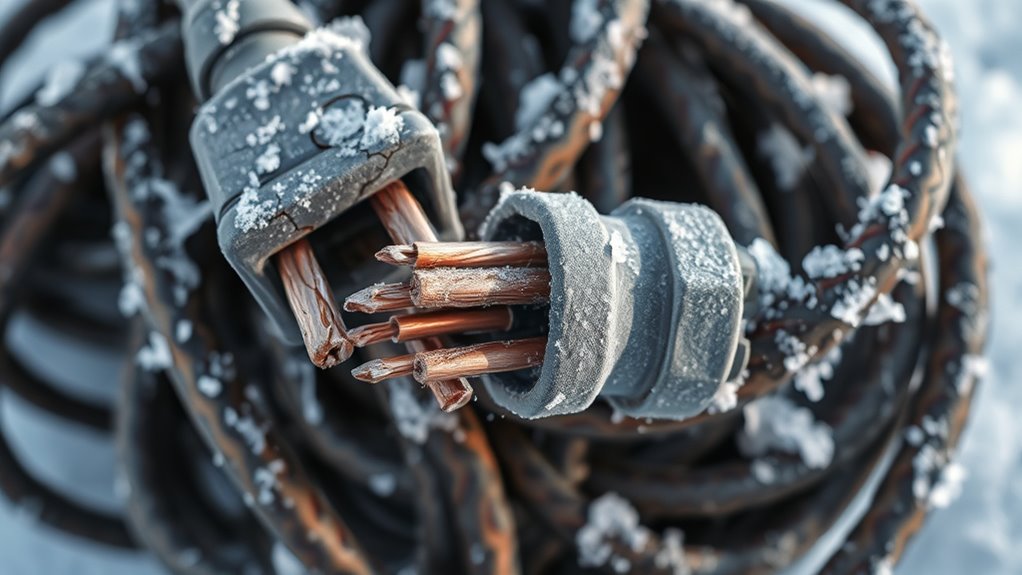
Choosing the right extension cords for freezing conditions helps prevent accidents and damage. Look for cords rated specifically for outdoor and cold-weather use. These cords feature insulated jackets that resist cracking and brittleness. Check the cord’s gauge; a heavier gauge (like 16 or 14 AWG) handles higher loads and reduces overheating risks. Verify the cord has a UL or ETL certification to guarantee safety standards. Use cords with a grounded plug for extra protection. Avoid using indoor cords outside, as they lack cold resistance. Refer to the table below to compare key features:
| Feature | Best For |
|---|---|
| Cold-rated insulation | Freezing temperatures |
| Heavy gauge (14-16 AWG) | High wattage devices |
| Grounded plug | Safety |
| Certification (UL/ETL) | Reliability |
| Outdoor markings | Weather resistance |
Preventing Overloading and Overheating in Winter

To stay safe this winter, don’t connect multiple devices to a single extension cord or power strip, as it can easily overload. Always opt for heavy-duty cords designed for outdoor use when needed, especially in freezing temperatures. Remember, overloading power strips increases the risk of overheating and fires, so limit the number of devices plugged in at once.
Avoid Multiple Devices on One Cord
Overloading extension cords with multiple devices can quickly lead to overheating and increase the risk of fires, especially during winter when cold temperatures can weaken cord jackets. To prevent this, avoid plugging in too many devices into one cord. Overloading can cause short circuits and damage the cord’s insulation, increasing fire hazards.
Here are four key tips:
- Use a separate extension cord for high-wattage appliances like space heaters.
- Check the cord’s rating; don’t exceed its maximum wattage.
- Limit the number of devices connected at once.
- Never daisy-chain multiple extension cords, as this multiplies overload risks.
Sticking to these practices helps prevent overheating and keeps your home safer in winter.
Use Heavy-Duty Cords Outdoors
Using heavy-duty extension cords outdoors helps prevent overheating and overloading during winter months. These cords are designed to handle higher wattage loads safely, reducing the risk of sparks or fires caused by overworked wires. When you choose a cord rated for outdoor use, look for one labeled with a higher gauge, such as #14 or #12 AWG, which can support more power without overheating. Avoid plugging in multiple high-wattage devices into a single cord, and never daisy-chain cords together. Keep cords away from snow, ice, and moisture, which can cause insulation damage and increase shock risk. Regularly inspect your cords for cracks or damage before use, and replace any worn or cracked cords immediately to maintain safety during cold weather.
Do Not Overload Power Strips
During winter, it’s especially important to avoid overloading power strips, as doing so can quickly lead to overheating and fire hazards. When you connect too many devices or high-wattage appliances, you risk exceeding the strip’s capacity, especially in cold weather when cords are brittle. To stay safe, consider these guidelines:
- Check the power strip’s maximum load rating and never exceed it.
- Avoid plugging multiple high-wattage devices like heaters or space heaters into a single strip.
- Do not daisy-chain multiple power strips together; this increases the risk of overload.
- Regularly inspect cords and strips for damage or signs of overheating, replacing damaged ones immediately.
Following these steps helps prevent overheating and reduces fire risks during the winter months.
What to Do If You Discover a Cracked or Damaged Cord

If you notice a crack, fray, or other damage on your extension cord, it’s crucial to act immediately to prevent potential fire or shock hazards. First, unplug the cord carefully, avoiding any contact with exposed wires. Do not attempt to repair the damage yourself, as improper fixes can worsen the risk. Dispose of the damaged cord safely—cut the cord’s plug and wires if necessary to prevent reuse. Replace it with a new, rated extension cord suitable for your needs, especially if used outdoors or with high-wattage devices. Always inspect cords regularly for damage, and never use a cord that shows signs of cracking, fraying, or exposed wiring. Prioritizing safety ensures you reduce the risk of electrical fires and injuries.
Frequently Asked Questions
Can a Cracked Jacket Cause an Electrical Fire?
Yes, a cracked jacket can cause an electrical fire. When the outer insulation is damaged, exposed wires may overheat or spark, especially if the cord is overloaded or used outdoors in cold weather. The cracks allow moisture and debris to reach internal wiring, increasing the risk of short circuits. Always inspect your extension cords, discard damaged ones, and avoid using cords with cracks to prevent fire hazards.
How Do Cold Temperatures Weaken Extension Cord Jackets?
You might notice that cold temperatures weaken extension cord jackets because, just like ice makes everything brittle, freezing causes plastic and rubber to lose their flexibility. When it’s chilly outside, the jackets become more fragile and prone to cracking, especially if they’re already worn. This damage exposes wires, increasing shock and fire risks. So, in cold weather, always check your cords and consider using ones rated for low temperatures.
Are Outdoor Extension Cords Rated for Winter Conditions?
Yes, outdoor extension cords are rated for winter conditions. You should look for cords labeled specifically for outdoor use, as they’re designed to withstand cold temperatures and moisture. These cords have insulated jackets that resist cracking and brittleness caused by freezing weather. Always check for proper rating and follow safety instructions, like using GFCI outlets outdoors, to prevent fire hazards and electrical shocks during winter.
What Are the Safety Risks of Overloading Cords in Winter?
Overloading cords in winter increases the fire risk because it causes overheating, especially when jackets are cracked or brittle from cold. When you plug in high-wattage devices beyond the cord’s capacity, it heats up and can melt insulation or cause sparks. Cold weather makes cords less flexible, raising chances of damage. Always check your cords’ ratings, avoid daisy-chaining, and don’t overload to prevent potential fires and injuries.
How Often Should I Inspect Outdoor Extension Cords?
You should inspect outdoor extension cords before each use and regularly during prolonged use, especially in winter. Check for cracks, fraying, or exposed wires, as cold weather weakens jackets and increases risks. Look for signs of damage like discoloration or overheating. If you notice any issues, discard the cord immediately. Regular inspections help prevent fires and electrical shocks, keeping you and your loved ones safe during winter outdoor activities.
Conclusion
To stay safe this winter, inspect your cords regularly, avoid overloading them, and replace cracked jackets immediately. Recognize the signs of damage, prevent hazards before they happen, and choose cords designed for cold conditions. By staying vigilant, by taking precautions, and by prioritizing safety, you protect yourself, your home, and your loved ones. Keep safety in mind, keep cords in check, and enjoy winter’s beauty without risking fire or injury.