
Many believe lithium battery fires only happen during charging, but in reality, they can ignite anytime due to damage, manufacturing faults, or impacts. Fires often occur during use, storage, or after physical harm, not just while charging. Safety measures help but don’t eliminate risks entirely. Understanding what causes thermal runaway and how external factors influence fires is vital. If you want to uncover the truth behind these myths and facts, keep exploring to learn more.
Prime for Young Adults — start your free trial
Fast free delivery, streaming and member deals for eligible 18–24 year olds.
As an affiliate, we earn on qualifying purchases.
Key Takeaways
- Lithium battery fires can occur anytime, not just during charging or unplugging.
- External impacts, damage, or mishandling can trigger fires without any charging activity.
- Manufacturing defects and internal faults significantly increase fire risk, even in undamaged, properly handled batteries.
- Proper safety measures reduce but do not eliminate the chance of fires; incidents can still happen.
- Specialized firefighting techniques are required, as lithium battery fires involve intense heat and flammable gases.
Common Misconceptions About When Lithium Batteries Fire

Many people believe that lithium batteries only catch fire while charging, but in reality, fires can happen at any time, even when the device isn’t plugged in. You might assume that unplugging your device means it’s safe, but damage, manufacturing flaws, or modifications can cause thermal runaway unexpectedly. Fires often occur during use, storage, or after impact, not just during charging. For example, lithium-ion fires in devices like e-bikes or power tools can ignite hours after use. Also, external factors such as overheating or physical damage can trigger fires without any connection to charging activity. Understanding the risks associated with lithium batteries helps you stay vigilant and handle batteries more safely, regardless of their current state. Additionally, the contrast ratio of a projector influences how well dark scenes are rendered, which is unrelated to battery safety but important for overall image quality. Recognizing the thermal runaway process, which can be initiated by internal defects or external stress, is essential in assessing fire risks. Proper handling and storage practices further reduce the likelihood of unexpected fires, as improper storage can lead to internal damage or chemical reactions that increase fire risk.
How and When Lithium Battery Fires Actually Occur
Lithium battery fires often happen when damage or manufacturing faults compromise the internal components, making them prone to thermal runaway. You should also be aware that improper handling, such as charging or discharging incorrectly, can trigger fires even when the device isn’t actively charging. Additionally, external heat sources or impacts can damage batteries and set off fires unexpectedly. Understanding Rhythm Failure can help in recognizing the importance of proper maintenance and safety precautions for lithium batteries. Proper battery management and adherence to safety guidelines are essential in preventing these incidents. Being aware of manufacturing defects can further aid in understanding potential fire risks and how to mitigate them. Regular inspections for signs of wear or damage can help prevent internal short circuits, which are a common cause of battery fires. Recognizing signs of thermal runaway early can significantly reduce the risk of a fire escalating.
Damage and Manufacturing Faults
Fires often occur when batteries sustain damage or suffer from manufacturing faults, rather than solely during charging. Physical damage from drops, punctures, or impacts can compromise the internal structure, causing internal short circuits. Manufacturing defects—like poor electrode assembly, contaminated materials, or faulty separators—can lead to weak spots that ignite under normal use. These faults may remain hidden until stress or damage triggers a thermal runaway. Damaged cells release flammable gases and heat uncontrollably, increasing fire risk. Sometimes, manufacturing flaws cause uneven heat distribution, accelerating degradation. In these cases, the fire isn’t about user error but structural issues within the battery itself. Recognizing that damage and manufacturing faults are primary triggers helps you understand why some batteries fail unexpectedly, even without external misuse. Additionally, AI Ethicist Jobs play a crucial role in developing safety standards and regulations to prevent such faults and enhance battery safety. Moreover, improvements in battery manufacturing quality control are essential to minimize these risks and ensure safer energy storage.
Charging and Handling Risks
While a common myth suggests that lithium battery fires only happen during charging, in reality, these incidents can occur at any time, often due to damage, manufacturing flaws, or improper handling. You might think that only charging poses a risk, but batteries can ignite from physical damage or mishandling even when not in use. Overdischarging, puncturing, or exposing batteries to rough treatment increases the chance of thermal runaway. Modifying or attempting DIY repairs can introduce faults, leading to fires later. Additionally, improper storage—like keeping batteries in extreme temperatures or humid environments—raises risks. Even a seemingly harmless drop or rough transport can damage internal components, making fires possible at any moment, not just during charging. Proper storage practices are essential to minimize these risks and ensure battery safety. Maintaining awareness of battery integrity and avoiding physical impacts are crucial steps in preventing accidents. Always handle, store, and dispose of lithium batteries carefully to prevent these unpredictable incidents. Furthermore, regular inspection can help detect early signs of damage or wear that might lead to failures. Being aware of manufacturing flaws and sourcing batteries from reputable suppliers can also significantly reduce fire risks. Avoiding improper handling and ensuring correct charging procedures are equally vital to prevent potential hazards.
External Heat and Impact
External heat and physical impact are common triggers for lithium battery fires, often occurring unexpectedly during everyday use or transport. When a battery is exposed to high temperatures—like leaving a device in the sun or near a heat source—the risk of thermal runaway increases sharply. Impact from drops, crushes, or collisions can damage internal cells, causing short circuits or internal faults that ignite fires. For example, accidents involving e-bikes, scooters, or power tools frequently involve impact damage leading to fires. Even minor impacts or external heat sources can compromise battery integrity if the device is already weakened or damaged. Recognizing these risks helps you prevent fires by avoiding exposure to extreme heat and impacts, especially during transport or handling. Additionally, support breakfast options at accommodations can ensure you’re energized and alert, helping you stay vigilant against potential hazards.
The Truth About Charging and Lithium Battery Fires
Many believe charging causes most lithium battery fires, but that’s not always true. Damage, manufacturing faults, or modifications often trigger incidents, even when devices aren’t charging. Understanding these factors helps you better assess real risks and stay safer. Understanding battery safety is crucial for preventing avoidable accidents and ensuring proper maintenance. Additionally, proper handling techniques can significantly reduce the likelihood of fires caused by mishandling or accidental damage. Being aware of battery composition and how it affects fire risk can further enhance your safety practices. Recognizing the role of manufacturing quality can also help identify potential hazards before they lead to incidents. Furthermore, manufacturing defects are a common root cause that often goes unnoticed until failure occurs.
Charging Not Always Risky
Charging a lithium-ion battery doesn’t automatically mean danger. In fact, most fires aren’t caused solely by charging but by damage, manufacturing faults, or modifications. Proper charging practices greatly reduce risk. For example, using certified chargers and avoiding extreme temperatures helps prevent thermal runaway. Here’s a quick look at factors influencing safety:
| Factor | Common Issue | Risk Level |
|---|---|---|
| Charger Quality | Using counterfeit or damaged | High |
| Charge Rate | Overcharging or fast charging | Moderate |
| Battery Age | Old or degraded cells | Moderate |
| Environmental | High temps or humidity | High |
| Damage | Physical impact or puncture | Very High |
Proper handling and awareness of battery safety can significantly mitigate risks.]
Damage Triggers Fires
Damage to lithium-ion batteries is the primary trigger for fires, often occurring even when devices aren’t charging. When a battery is physically compromised—through punctures, drops, or fractures—the internal cells can short-circuit, leading to thermal runaway. This process releases intense heat, igniting flammable gases and causing fires. Manufacturing defects, such as faulty separators or compromised electrolytes, can weaken battery integrity, making them more vulnerable to damage and subsequent fires. Modifications or impacts during use also increase risk. Importantly, damage doesn’t need to come from charging; physical harm alone can set off dangerous reactions. Recognizing that external damage is a significant fire trigger helps you understand why handling devices carefully and avoiding impacts is *vital* for safety. Additionally, battery architecture plays a crucial role in how susceptible a battery is to damage and thermal events, highlighting the importance of quality manufacturing standards.
Manufacturing Faults Play Role
Manufacturing faults considerably contribute to lithium battery fires, often more than you might expect. Defects during production, like internal short circuits or poor sealing, can cause thermal runaway even without external damage or charging issues. These faults can remain hidden until the battery is used, increasing fire risk unexpectedly. To highlight this, consider the table below:
| Fault Type | Impact |
|---|---|
| Internal Short Circuits | Cause rapid heat buildup, risking ignition |
| Poor Sealing or Insulation | Allow moisture or contaminants that trigger failure |
| Defective Cell Assembly | Lead to uneven heat distribution and failure |
| Quality Control Lapses | Increase likelihood of hidden faults |
Manufacturing quality directly affects safety, underscoring the importance of rigorous standards to prevent fires.
Device Types Most Frequently Involved in Fires
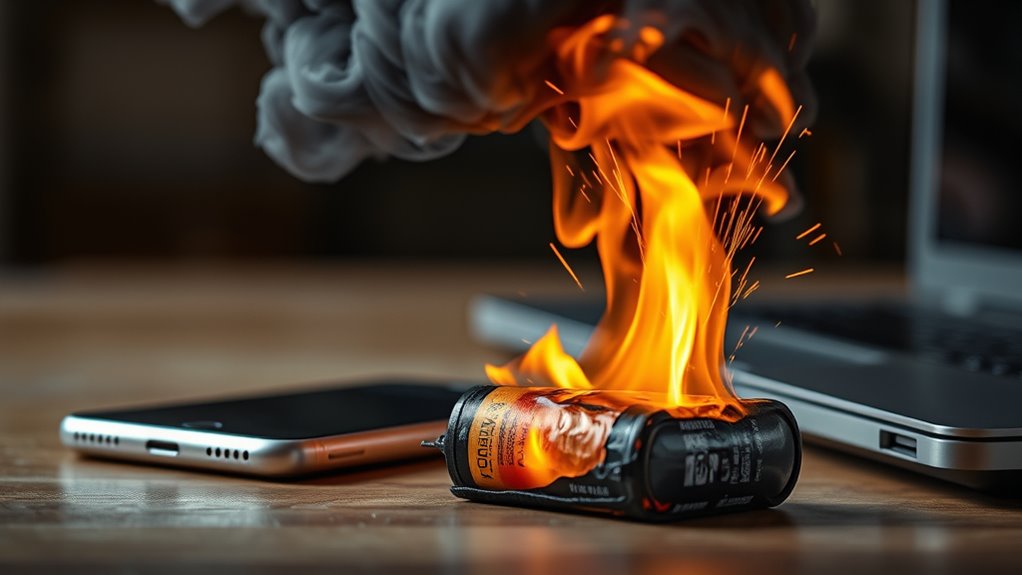
Lithium-ion batteries are most often involved in fires from devices you might use daily, such as laptops, smartphones, and power tools. These common items are responsible for many incidents due to frequent charging, damage, or manufacturing defects. You should be aware that certain device types are more prone to fires:
- Micromobility devices like e-bikes, scooters, and hoverboards, involved in several incidents.
- Portable electronics such as laptops, tablets, and smartphones, frequently linked to overheating and fires.
- Power tools, especially when damaged or improperly used, have caused multiple fires.
While these devices are essential, their lithium-ion batteries can pose risks if mishandled or damaged. Staying cautious about charging practices and device condition helps reduce fire hazards.
The Real Risks of Lithium Battery Thermal Runaway
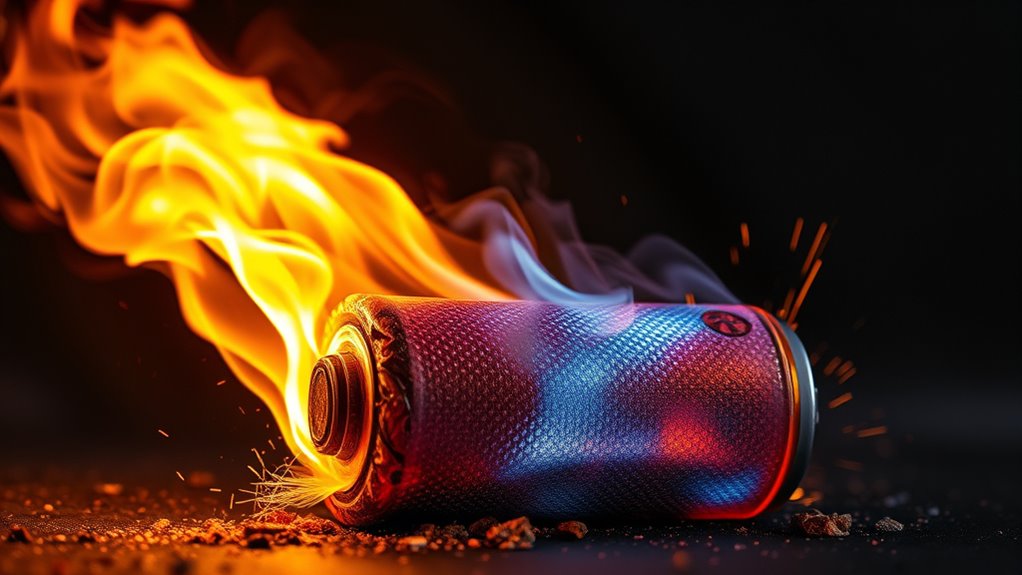
Thermal runaway is a dangerous process that can occur suddenly when a battery’s internal temperature spirals out of control, risking fires or explosions. When this happens, the chemical reactions inside the battery accelerate rapidly, releasing intense heat and flammable gases. You might see smoke, sparks, or even flames, but the real danger lies beneath the surface—damaged cells can reignite, and the energy stored can cause violent reactions. The high temperatures, sometimes reaching thousands of degrees Fahrenheit, can melt or ignite surrounding materials, spreading the fire. If you’re nearby, you face risks like burns, inhalation of toxic fumes, or electric shock from energized fragments. Understanding these risks helps you appreciate why thermal runaway is a critical safety concern with lithium batteries.
Firefighting Realities: How Lithium Fires Are Extinguished
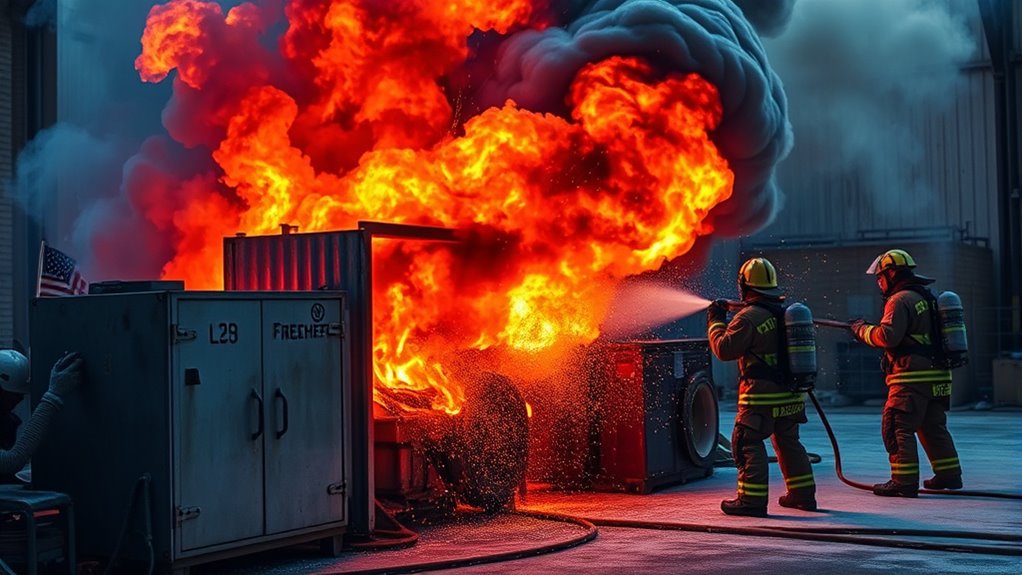
Firefighters rely on specialized water techniques, like large quantities of water or foam, to cool lithium battery fires effectively. Managing reignition risks is essential, as damaged cells can reignite even after initial suppression. Understanding these firefighting realities helps you respond safely and prevent further damage.
Specialized Water Techniques
Extinguishing lithium battery fires requires specialized water techniques because these fires behave differently from conventional flames. Standard methods can worsen the situation, as lithium fires produce flammable gases and intense heat. To effectively control such fires, you must:
- Use large volumes of water, often thousands of liters, to cool the battery and suppress thermal runaway.
- Apply water slowly and continuously to prevent splashing or spreading molten lithium.
- Dispose of burning debris safely, avoiding contact with water until cooled, to prevent reignition or explosions.
These techniques help isolate the heat and contain the fire, reducing risks to responders and surroundings. Proper water application is essential because lithium fires can reignite or escalate if not managed correctly.
Managing Reignition Risks
Managing reignition risks in lithium battery fires requires careful attention because these fires can reignite even after initial suppression. You must guarantee that all hot spots are thoroughly cooled and that no residual thermal energy remains. Water alone often isn’t enough; specialized techniques like large-volume water application or foam can help suppress re-ignition. You need to monitor the area continuously for signs of rekindling, especially in damaged batteries where stranded energy can cause sudden flare-ups. Properly disconnecting power sources and using non-conductive tools reduce shock hazards to responders and prevent reignition. Keep in mind that damaged batteries can release flammable gases, which can ignite if exposed to heat or sparks. Vigilance and extensive cooling are key to preventing fire recurrence and ensuring safety.
Impact of Battery Chemistry and Size on Fire Severity
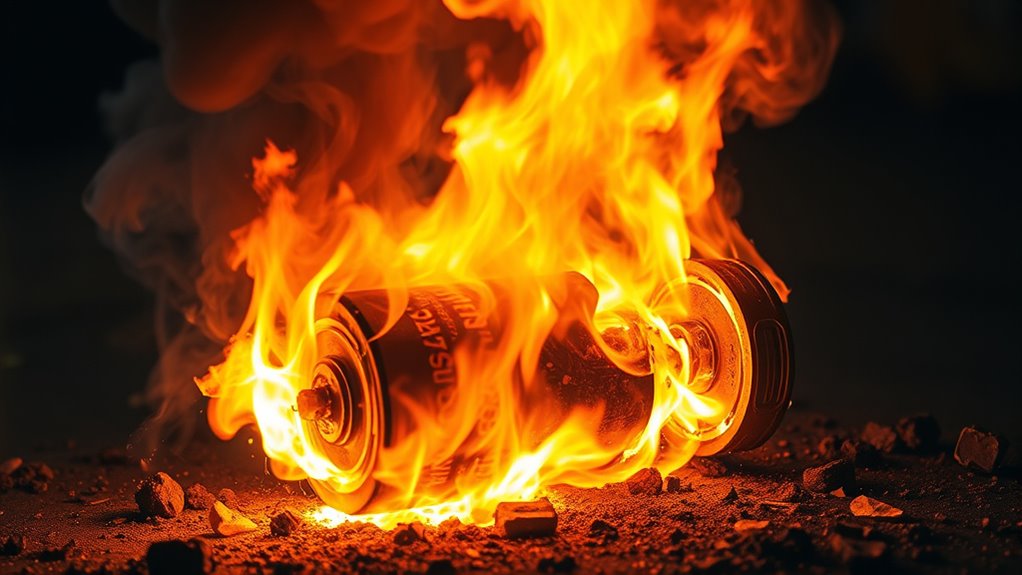
The chemistry and size of lithium-ion batteries directly influence the severity of fires they can cause. Different chemistries, like NMC or LFP, burn differently—some produce more heat or toxic gases. Larger batteries store more energy, increasing the potential for intense fires and explosions. You should know:
Battery chemistry and size significantly impact fire severity and safety risks.
- Larger batteries release more energy, intensifying fire severity.
- Certain chemistries, such as NMC, tend to burn hotter and faster than others like LFP.
- High-capacity batteries in electric vehicles pose greater risks due to their size and energy density.
Understanding these factors helps you grasp why some batteries are more dangerous in fires and why size and chemistry matter in fire response and safety planning.
Myths Surrounding Safety Measures and Lithium-Ion Batteries
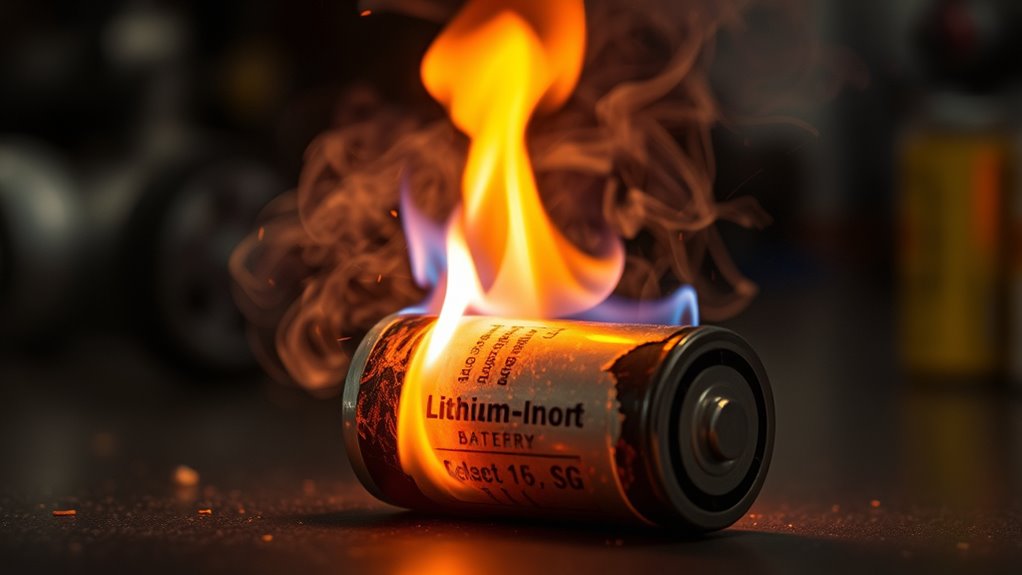
Many people believe that existing safety measures fully prevent lithium-ion battery fires, but this is a dangerous myth. While safety protocols like thermal management, fire-resistant casings, and safeguards in chargers help reduce risks, they don’t eliminate the danger completely. Fires can still occur due to manufacturing defects, damage, or improper handling. You might assume that new technology or regulations make fires impossible, but incidents happen even in well-regulated environments. Overconfidence in safety measures can lead to complacency, increasing risk. It’s important to understand that safety measures are designed to mitigate, not prevent, all potential failures. Staying vigilant, following proper charging protocols, and regularly inspecting devices are your best defenses against lithium-ion battery fires.
Sector-Specific Fire Incidents and What They Reveal

Sector-specific fire incidents reveal important patterns about lithium-ion battery risks across different environments. These incidents highlight how certain device types and situations pose higher dangers. For example, you should note:
- Micromobility devices like e-bikes and scooters are involved in numerous fires, often causing injuries and fatalities.
- Fires frequently occur indoors, especially in campus settings, with over 78% happening inside buildings.
- Many incidents happen when devices are not charging, contradicting the myth that chargers are the primary cause.
Understanding these patterns helps you recognize where risks are greatest, whether in transportation, workplaces, or urban areas. This knowledge can guide safety practices, improve protocols, and dispel misconceptions about the actual sources and conditions of lithium-ion battery fires.
How Lithium Battery Fires Are Changing Industry and Safety Protocols

As lithium battery fires become more frequent and severe, industries are rapidly updating safety protocols to prevent incidents and protect people and assets. Manufacturers now implement stricter testing for damage, manufacturing defects, and charging faults. Fire suppression systems are evolving, with many facilities adopting advanced suppression technologies designed specifically for lithium fires, such as foam or specialized agents. Regulations are tightening, requiring improved battery design standards and safer packaging. You’ll see more emphasis on proper handling, storage, and charging procedures across sectors, especially in transportation and urban environments. Companies are also investing in training responders to handle lithium fires safely. These changes aim to reduce incidents, limit damage, and enhance overall safety in a landscape where lithium battery use continues to grow rapidly.
Frequently Asked Questions
Do Most Lithium Battery Fires Happen During Charging?
Most lithium battery fires don’t happen during charging. In fact, over half of incidents in Massachusetts occurred when devices weren’t charging. Many fires are caused by damage, manufacturing faults, or modifications, not charging alone. You should stay cautious and monitor devices, but remember that fires are often linked to damage or faults rather than just charging. Proper handling and maintenance considerably reduce fire risks.
Are Lithium-Ion Batteries More Likely to Catch Fire After Damage?
Yes, lithium-ion batteries are more likely to catch fire after damage. When batteries are damaged, their internal structure is compromised, increasing the risk of thermal runaway. Physical impacts, manufacturing faults, or modifications can create weak points that lead to overheating, sparking, or smoking. You should be especially cautious with damaged batteries, as they can unexpectedly ignite even when not charging, posing serious safety risks.
Can Lithium Battery Fires Be Safely Extinguished With Water?
While it might seem tempting to use water for lithium battery fires, you should know it’s not the safest choice. Water reacts violently with burning lithium, causing dangerous flare-ups or explosions. Instead, you’d want to use a Class D fire extinguisher designed for metal fires or smother the flames with a fire blanket. Safety first—know the right methods to handle these unique fires effectively and avoid hazards.
How Does Battery Size Influence Fire Severity?
You should know that larger batteries, like those in electric vehicles, tend to cause more severe fires because they store more energy, leading to higher heat and potential explosions. When these batteries catch fire, they release intense heat, sometimes reaching thousands of degrees Fahrenheit, making suppression difficult. The bigger the battery, the greater the risk of extensive damage, making it vital to handle and extinguish these fires with specialized techniques.
Are All Lithium Batteries Equally Risky Regardless of Chemistry?
Not all lithium batteries are equally risky, and chemistry plays a big role. For example, lithium cobalt oxide batteries are more prone to thermal runaway than lithium iron phosphate ones, which are safer and more stable. You should know that fires involving lithium-ion batteries can reach temperatures of 4,900°F, requiring thousands of liters of water to extinguish. So, understanding the chemistry helps you gauge the actual risk and handle devices more safely.
Conclusion
Don’t let myths scare you into avoiding lithium batteries altogether. The truth is, with proper use and safety measures, risks are minimal. Many fires happen due to mishandling or damage, not the batteries themselves. By staying informed and following recommended guidelines, you can safely enjoy the benefits of these powerful batteries. Don’t let fear hold you back—knowledge is your best tool for safe, confident use.
NFL season / tailgating Picks
team gear
As an affiliate, we earn on qualifying purchases.