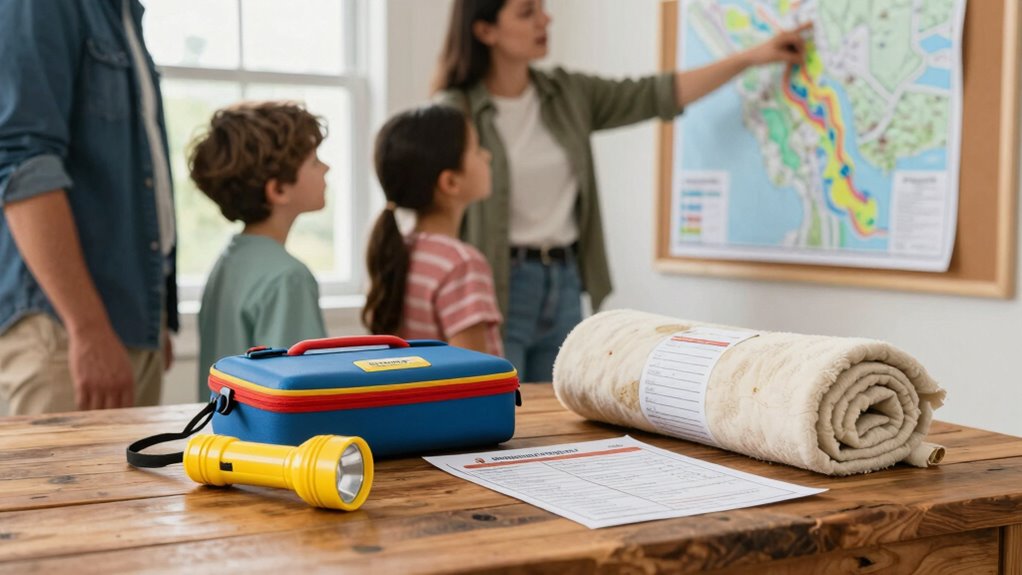

To build a family safety briefing for storm season, gather your loved ones to discuss emergency plans, including communication methods, evacuation routes, and designated meeting spots. Prepare and review emergency kits, assigning roles for each family member. Practice safety procedures regularly and update your plans based on local weather patterns and resource info. Ensuring everyone understands and practices these steps keeps your family prepared; if you continue exploring, you’ll learn how to make your plan even more effective.

Get backup power and energy gear delivered free with Prime
- Fast, free delivery on millions of items
- Prime Video, Amazon Music and more included
- Member-only deals all year
Key Takeaways
- Outline clear emergency procedures for different storm scenarios, including evacuation, sheltering, and communication plans.
- Assign specific roles and responsibilities to each family member to ensure coordinated action.
- Include important safety information, such as shelter locations and home security tips, in the briefing.
- Practice the safety plan regularly through family drills to reinforce understanding and confidence.
- Keep the briefing updated with current contact info, emergency kit details, and local resource information.
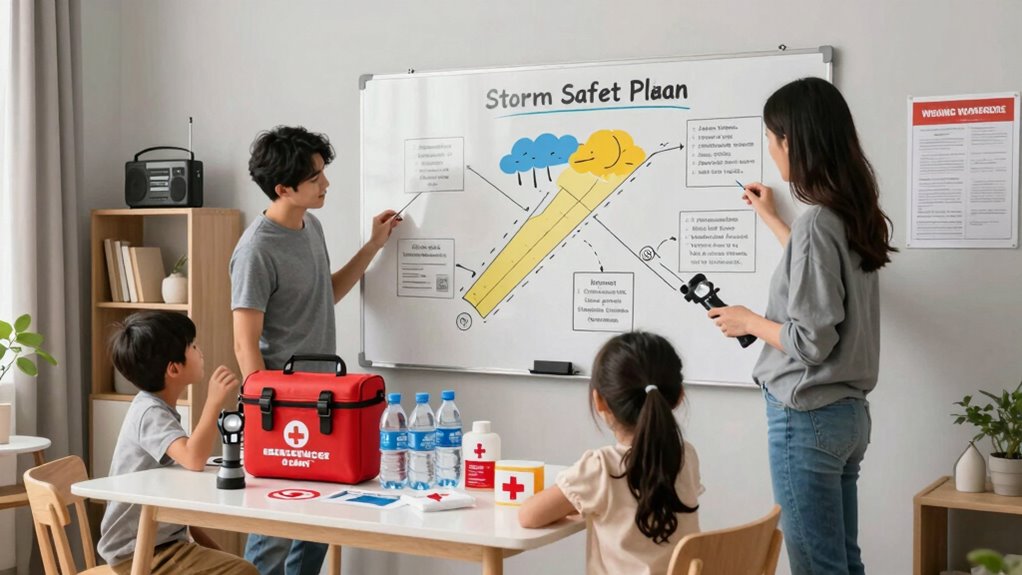
Storm season can catch families off guard if you’re not prepared, but creating a thorough safety briefing can make all the difference. The key is to develop a plan that’s clear, practical, and easy for everyone to follow, especially in stressful situations. Start by assembling emergency kits with essential supplies like water, non-perishable food, flashlights, batteries, first-aid supplies, and necessary medications. These kits should be stored in accessible locations, ideally in your home and your vehicle, so you’re ready to evacuate or shelter in place if needed. Make certain each family member knows where the kits are kept, and update them regularly to replace expired items.
Next, you need a solid communication plan. Storms can knock out power and phone lines, so it’s vital to have multiple ways to stay connected. Designate an out-of-town contact person everyone can check in with, and ensure your family members know how to reach them. Consider investing in walkie-talkies or portable chargers for cell phones to maintain contact if traditional lines go down. Establish a meeting point outside your home in case you’re separated during an emergency, whether it’s a neighbor’s house, a local park, or another safe location. Practice these communication routines regularly so everyone feels confident sticking to the plan when it counts. Incorporating biodiversity-aware practices, such as choosing a safe outdoor meeting spot that minimizes environmental impact, can also be beneficial. Additionally, understanding local emergency shelters** and the available evacuation routes is crucial for effective planning. Having knowledge of climate patterns** in your area can help anticipate the types of storms most likely to occur and prepare accordingly. Being aware of local weather alerts**** and how to interpret them can further enhance your preparedness.
In your safety briefing, include information about local emergency shelters, evacuation routes, and the specifics of how to secure your home ahead of a storm. Cover what to do during different storm scenarios, like hurricanes or tornadoes, and emphasize the importance of staying informed through weather alerts on your phone or radio. Make sure each family member understands their role: who gathers the emergency kits, who contacts emergency services, and who assists younger children or elderly relatives.
Finally, review your safety plan periodically, especially before the storm season begins. Hold family drills to simulate real scenarios, so everyone knows what to do without hesitation. Keep your emergency kits stocked, update your communication plans, and ensure your entire family is familiar with the procedures. When you take these steps, you minimize chaos and maximize safety, giving your family the best chance to stay secure during storm season. Preparedness isn’t just about reacting—it’s about proactively safeguarding your loved ones with clear, practiced plans.
As an affiliate, we earn on qualifying purchases.
Frequently Asked Questions
How Often Should I Update the Safety Briefing?
You should update your safety briefing at least once a year, especially before storm season begins. Regularly review and practice emergency drills with your family to guarantee everyone stays prepared. Keep your safety checklist current by adding new information or addressing any changes in your family’s needs. Staying proactive helps everyone stay calm and ready, reducing panic during actual storms and ensuring your family’s safety.
What Are the Best Communication Methods During a Storm?
You might think cell phones are your best bet during a storm, but emergency kits and communication devices often prove more reliable. Use battery-powered radios, satellite phones, or two-way walkie-talkies to stay connected if power and cell service fail. Keep emergency kits stocked with essential supplies, including extra batteries and chargers, to guarantee your family can communicate and stay safe even when traditional methods stop working.
How Can I Include Pets in the Safety Plan?
You should include pet evacuation plans and animal safety measures in your storm safety plan. Identify pet-friendly shelters or safe areas in advance, and keep a pet emergency kit ready with food, water, and medications. Make certain everyone in your family knows how to handle pet evacuation calmly and quickly. Regularly update and review these plans to guarantee your pets stay safe during storm season.
What Should I Do if Someone Has a Medical Emergency?
If someone has a medical emergency, act quickly by calling emergency services and providing clear details. Use your family’s emergency contacts to inform others and get additional help if needed. Keep a well-stocked kit with medical supplies nearby, including bandages, antiseptics, and necessary medications. Stay calm, monitor the person’s condition, and follow basic first aid steps until professional help arrives. Your preparedness can make all the difference.
How Do I Ensure All Family Members Understand the Plan?
You guarantee your family understands the plan by practicing emergency drills regularly and reviewing safety procedures together. Make sure everyone knows where safety kits are stored and how to use them. Use clear, simple language and ask questions to confirm understanding. Repetition helps, so go over the plan often, especially during storm season. This way, everyone stays prepared and confident in their roles during an emergency.
storm safety communication devices
As an affiliate, we earn on qualifying purchases.
As an affiliate, we earn on qualifying purchases.
Conclusion
By preparing your family safety briefing, you’re not just planning for storms—you’re building confidence, fostering communication, and creating peace of mind. By knowing what to do, who to call, and where to go, you guarantee everyone’s safety and security. By practicing your plan regularly, reviewing updates, and staying informed, you turn uncertainty into preparedness. In storm season, your proactive approach becomes your family’s greatest shield, empowering everyone to face nature’s challenges with resilience and reassurance.
portable emergency radio with weather alerts
As an affiliate, we earn on qualifying purchases.
As an affiliate, we earn on qualifying purchases.
walkie talkies for family communication
As an affiliate, we earn on qualifying purchases.
As an affiliate, we earn on qualifying purchases.
Columbus Day / Indigenous Peoples' Day Picks
long weekend sales
As an affiliate, we earn on qualifying purchases.