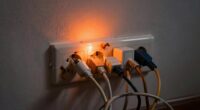
To quickly spot damaged cords, look for frayed, cracked, or melted insulation, especially near connectors or plugs. Check for discoloration, burn marks, or signs of overheating. Wiggle the cord gently to feel for internal breaks, and look for loose or corroded connections. Unusual smells, flickering devices, or shocks also signal issues. Recognizing these warning signs early can prevent hazards—continue exploring to learn more about proper inspection and safety tips.
Key Takeaways
- Look for frayed, cracked, or missing insulation exposing copper conductors on the cord.
- Check for melted, blistered, or deformed jacket sections indicating heat damage.
- Inspect plugs and connectors for cracks, corrosion, or loose prongs.
- Detect discoloration, burn marks, or soot stains suggesting overheating or electrical faults.
- Gently wiggle the cord and plug while powered off to identify internal breaks or loose connections.

Gardner Bender GTK-2 Safety Kit, GVD-3504 Non-Contact Voltage Tester and GFI-3501 GFI Tester, 2-Piece
Non-Contact Voltage Tester senses AC voltage from 50-600V
As an affiliate, we earn on qualifying purchases.
As an affiliate, we earn on qualifying purchases.
Recognizing Visible Insulation Damage
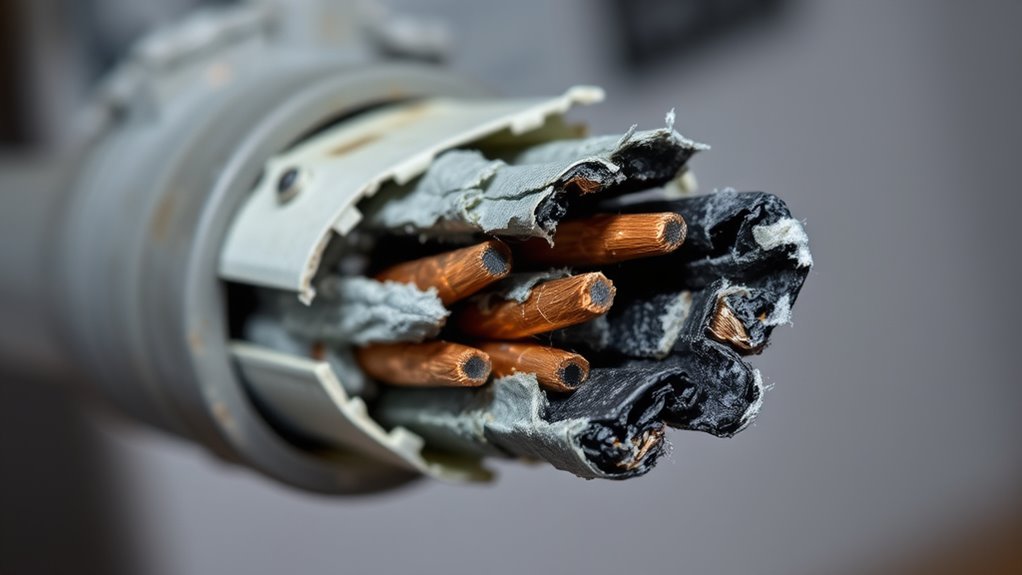
Recognizing visible insulation damage is essential for ensuring electrical safety. You should regularly inspect cords for frayed or cracked insulation along their length, which indicates wear or aging. Look for areas where the insulation is missing, exposing copper conductors that pose shock risks. Check for cuts, abrasions, kinks, or crushed sections that suggest repeated bending or pinch points. Melted, blistered, or deformed jacket sections point to heat damage from overloads or high temperatures. Also, watch for bite marks or rodent gnawing that cause breaches and contamination. These damages compromise the cord’s integrity, increasing the risk of electrical shock, short circuits, or fire hazards. Conduct visual inspections before each use to catch issues early and maintain safety. Additionally, understanding how modern appliances integrate safety features can help prevent accidents caused by damaged cords. Regularly testing cords with a visual inspection is a simple yet effective step to identify potential hazards early, especially considering cord insulation integrity is vital for overall electrical safety. Staying informed about waterproofing and insulation standards can further reduce the risk of electrical hazards in various environments. Incorporating knowledge of fire-resistant materials can also provide an added layer of safety in environments prone to electrical risks.

Voltage Continuity & Current Tester – 6-12 V DC – 24 V AC – Heavy Duty – 54" Cord – Indicator Light – Electrical Tester
TEST LIGHT TOOL – This test light automotive tool with an incandescent bulb provides a bright and reliable…
As an affiliate, we earn on qualifying purchases.
As an affiliate, we earn on qualifying purchases.
Identifying Connector and Plug Flaws
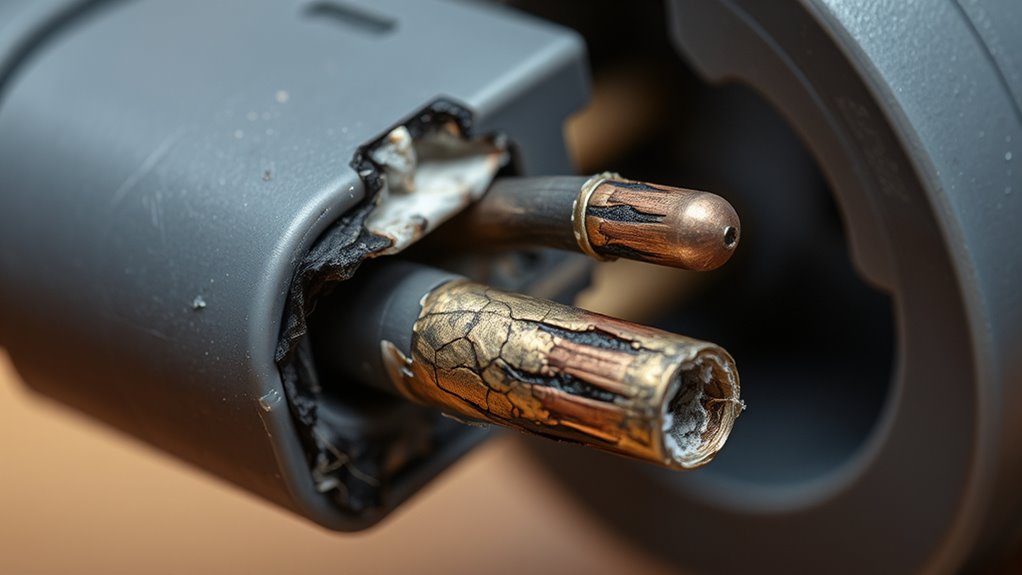
Check your connectors and plugs carefully for visible cracks or breaks, as these weaken the housing and risk electrical faults. Look for loose or corroded contacts that can cause poor connections or arcing. Address any signs of damage immediately to prevent potential shock hazards or equipment failure. Additionally, inspecting electrical safety features can help ensure your appliance remains safe to use. Regularly testing your safety devices can further reduce the risk of accidents and ensure proper functioning. Staying informed about security zone info can also provide guidance on safe electrical practices. Incorporating home safety checks into your routine can help identify potential issues early and maintain overall electrical safety. Performing seasonal maintenance tasks can further help prevent damage and promote electrical system reliability.
Visible Cracks or Breaks
Visible cracks or breaks in connectors and plugs are clear signs of physical damage that can compromise electrical safety. You should inspect for any fractures in the plastic housing, as these weaken the structural integrity and strain relief. Look for missing or damaged parts that could expose internal components or conductors. Cracks often indicate the plug has been dropped or forced, increasing the risk of internal arcing or short circuits. Check for deformed or discolored areas, which suggest overheating or melting. If you see any visible damage, avoid using the cord until it’s properly tested or replaced. Maintaining a thorough visual check helps prevent electrical shocks, fires, and further damage to connected devices. European cloud innovations emphasize the importance of rigorous safety standards in electronic components. Being aware of fire hazards caused by damaged cords can help prevent serious accidents.
Loose or Corroded Contacts
Loose or corroded contacts can substantially impair the safety and reliability of electrical connections. You should inspect the plug and connector for signs of looseness, such as wobbly prongs or a wiggling connection. Corrosion appears as green, white, or rust-colored deposits on the pins or contact points, which can increase resistance and cause poor conductivity. Check if prongs are bent or misshapen, as this reduces contact area and can lead to arcing. Tap or gently wiggle the plug while the device is off; any looseness or movement indicates a faulty connection. Discoloration or pitting on contact surfaces suggests corrosion or overheating. Address these issues promptly by replacing or repairing the cord to prevent electrical failures or potential hazards.

HUANCHAIN Indoor Outdoor Black Extension Cord 50 ft Waterproof, 16/3 Gauge Flexible Resistant Appliance Extension Cord Outside, 13A 1625W 16AWG SJTW, 3 Prong Electric Cable, ETL Listed
Extra Size for Safety: Extra size Male NEMA 5-15P power plug and Female NEMA 5-15R power socket for…
As an affiliate, we earn on qualifying purchases.
As an affiliate, we earn on qualifying purchases.
Spotting Signs of Overheating and Heat Damage
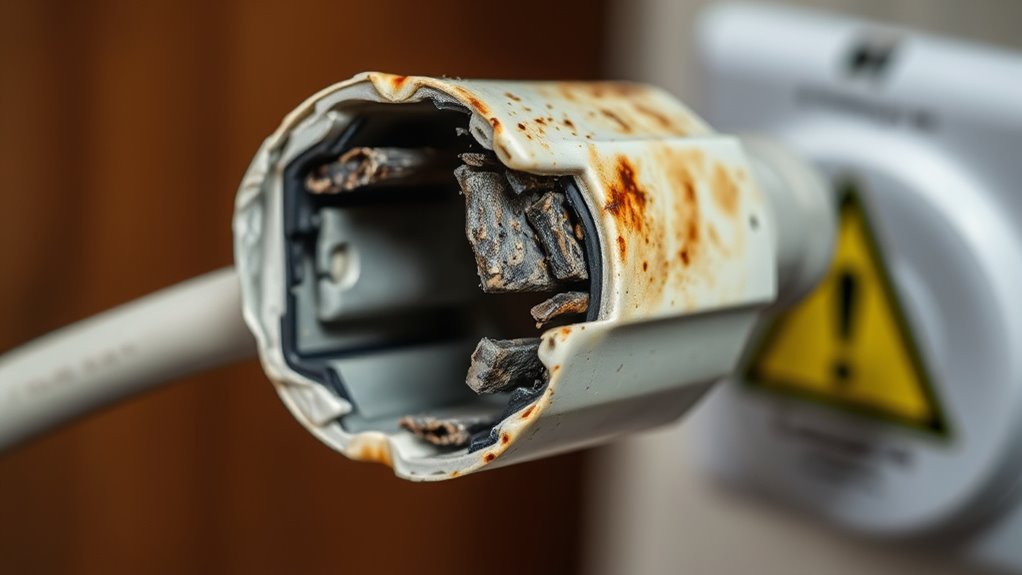
Look for discoloration or burn marks on the cord and plug, as these are clear signs of overheating. Melted or warped insulation indicates heat damage that could compromise safety. If you notice any of these signs, it’s best to replace the cord before it causes a hazard. Being aware of quality assurance practices can help prevent electrical issues from arising due to improper handling of appliances. Regularly inspecting cords can also help identify early signs of wear that might lead to fire hazards or malfunction. Additionally, understanding proper maintenance procedures can extend the lifespan of electrical cords and reduce risks. Implementing routine checks aligns with best safety protocols and helps ensure ongoing electrical safety.
Discoloration and Burn Marks
Discoloration and burn marks on cords and plugs are clear indicators of overheating that can compromise safety. You should check for darkened or blackened areas, which suggest past electrical arcing or excessive heat. Yellowing or browning may show prolonged exposure to high temperatures, weakening the insulation. Burn marks, charring, or soot near connectors or along the cord indicate recent or ongoing heat damage. These signs often mean internal components have been stressed or compromised, increasing the risk of failure or fire. If you notice any discoloration or burn marks, avoid using the cord immediately. Remove it from service and have it inspected or replaced by a qualified technician. Addressing these visual cues promptly helps prevent potential electrical hazards and guarantees safety during operation. Recognizing heat damage signs early can help prevent more serious electrical failures. Regular inspections and understanding of electrical safety principles are essential for safe operation.
Melted or Warped Insulation
Melted or warped insulation is a clear sign that a cord has experienced excessive heat, often from overloads or internal faults. When insulation appears soft, deformed, or blistered, it indicates the polymer has been compromised by high temperatures. You might notice sections that are visibly deformed or have a shiny, plastic-like appearance where heat has caused melting. This damage weakens the insulation’s protective barrier, increasing the risk of electrical shock or short circuits. Warping or blistering can also be accompanied by a burnt smell. If you see these signs, do not use the cord. It’s essential to replace it immediately or have a qualified technician inspect and repair it to prevent potential hazards. Recognizing heat damage helps keep you safe from electrical failures.

Extension Cord Cover Outdoor, Cord Connector Protector IP54 Water-Resistant, Indoor Electrical Safety Box for Plug Outlet Tool Holiday Light Black
★High Quality Material: The extension cord cover is made of heavy duty weather-resistant plastic with large compartment, firm…
As an affiliate, we earn on qualifying purchases.
As an affiliate, we earn on qualifying purchases.
Detecting Electrical Performance Anomalies
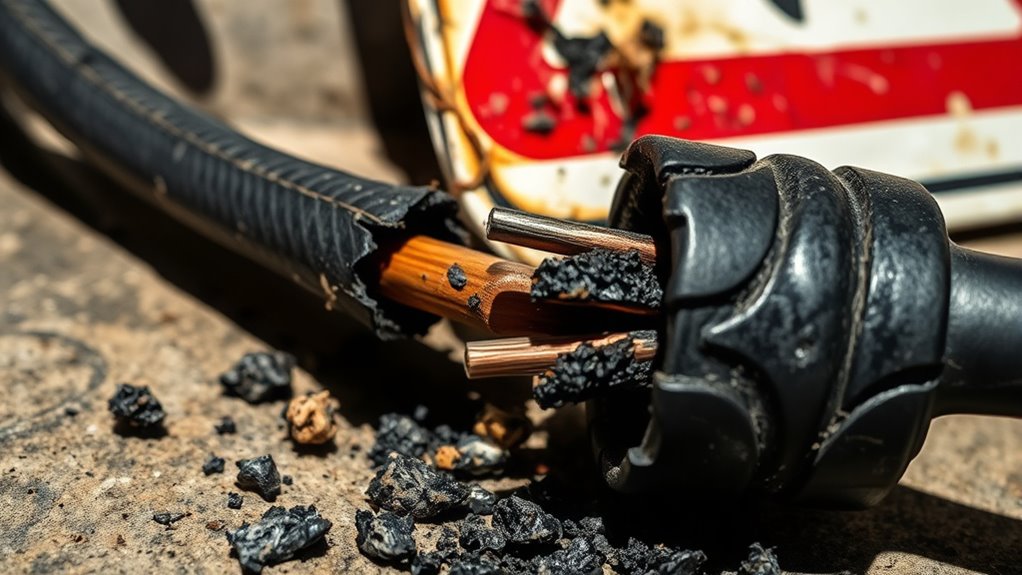
Electrical performance anomalies often manifest as flickering lights, intermittent device operation, or unusual noises near the cord or outlet. If you notice flickering or dimming lights, it suggests a poor connection or partial circuit break. Listen for buzzing, crackling, or arcing sounds, which indicate loose contacts or internal faults. Feel for unexpected shocks, tingling, or static discharges from the appliance, signaling insulation leakage. Check if devices heat up excessively or operate erratically when plugged in, pointing to voltage or connection issues. Use a multimeter to perform continuity and resistance tests, which can help identify internal damage. High resistance or open circuits confirm internal damage and highlight the importance of proper testing techniques. Always perform a visual sweep first, noting any irregularities. Any anomalies should prompt you to remove the cord from service and consult a qualified technician. Regularly inspecting cords for visible damage or wear can help prevent electrical failures and hazards. Conducting routine visual inspections and understanding electrical performance anomalies can greatly enhance safety. Additionally, being aware of proper testing techniques ensures accurate diagnosis and safe handling during inspections.
Noticing Environmental Contamination Indicators
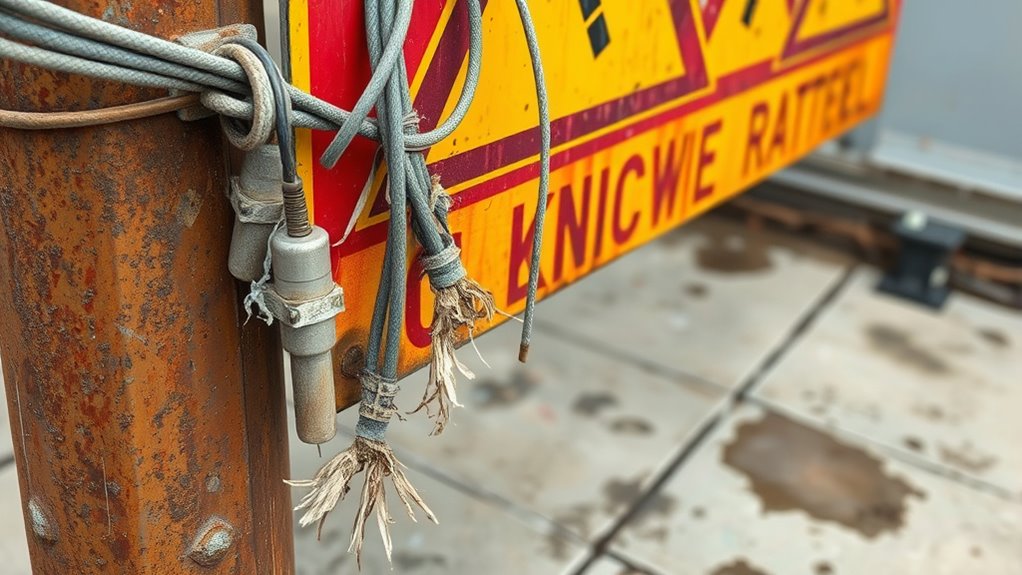
Environmental contamination can considerably compromise a cord’s safety and performance. Look for signs like corrosion, rust, or greenish deposits on pins and connectors, which indicate exposure to moisture and degrade contact points. Oil, chemicals, or solvents stained on the cord or insulation can soften or embrittle the material, increasing failure risk. Dirt, debris, or condensed moisture trapped in connectors promote shorts and resistance issues. UV exposure may cause surface cracking, brittleness, or fading, reducing insulation integrity. Coastal or outdoor environments can lead to salt deposits that accelerate corrosion. These contamination indicators weaken the cord’s structure and electrical reliability, increasing shock, short, or fire hazards. Regularly inspect for such signs, as they often precede more serious damage and safety concerns.
Performing Effective Visual Inspection and Testing
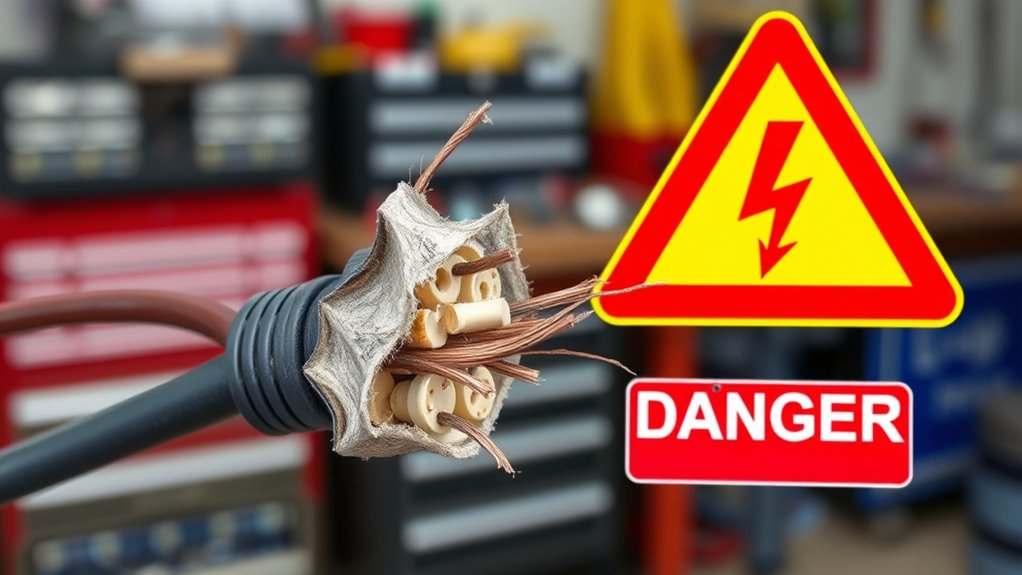
To perform an effective visual inspection and testing of damaged cords, start by carefully examining the entire length of the cord and its connectors for obvious signs of damage. Look for frayed, cracked, or melted insulation, and check for exposed copper conductors. Inspect plugs and connectors for cracks, corrosion, or loose prongs. Observe for discoloration, burn marks, or deformation that indicate overheating. Test the cord’s electrical integrity with a multimeter to verify continuity and resistance, ensuring there are no open circuits. Gently wiggle the cord and plug while powered off to detect looseness or internal breaks. Smell for burnt odors, which signal internal damage. Tag and remove any cords with visible damage, excessive wear, or suspicious signs, and replace or repair them before further use.
Frequently Asked Questions
How Often Should I Inspect My Cords for Damage?
You should inspect your cords before each use to catch any damage early. Regular visual checks help identify frayed insulation, exposed conductors, or cracked plugs. Wiggling the cord while testing guarantees connection stability. If you notice any burnt odors, discoloration, or loose fittings, remove the cord from service immediately. Frequent inspections prevent accidents, so make it a routine part of your safety checks to keep your devices and environment safe.
Can a Cord With Minor Damage Still Be Used Safely?
Think of a damaged cord as a cracked foundation—initially minor but risky over time. You shouldn’t use a cord with even minor damage because it can worsen, causing shocks, fires, or device failure. Always perform a quick visual inspection before use. If you notice any cracks, discoloration, or loose parts, replace the cord immediately. Your safety depends on recognizing these subtle warning signs early and acting promptly.
What Tools Are Best for Testing Cord Continuity at Home?
You should use a multimeter to test cord continuity at home. Set it to the resistance or continuity mode, then connect the probes to each end of the cord’s conductors. If the multimeter beeps or shows a low resistance value, your cord has good continuity. If there’s no beep or a high resistance reading, the cord may be damaged and needs replacing. Always unplug the cord before testing for safety.
How Do I Differentiate Between Superficial and Serious Damage?
You can’t ignore superficial damage like minor scuffs or slight discoloration; they’re like warning signs on a safe! Serious damage, on the other hand, shows up as exposed wires, melted or cracked insulation, burnt smells, or loose plugs—these are clear signals your cord is a ticking time bomb. Always perform a thorough visual inspection, and if you notice any of these serious issues, replace the cord immediately to avoid danger.
When Should I Replace a Cord Instead of Repairing It?
You should replace a cord instead of repairing it whenever you see visible damage like exposed conductors, melted insulation, or cracked plugs. If the cord shows signs of overheating, burn marks, or frequent electrical issues like flickering or shocks, replace it immediately. Repairs are only safe for minor superficial damage, but serious damage or safety concerns require replacing the entire cord to prevent hazards.
Conclusion
By regularly inspecting your cords, you catch damage early—like a detective finding clues before trouble strikes. Look for obvious signs like frayed insulation, melted spots, or discolored connectors. If something seems off, don’t ignore it; taking quick action can prevent accidents. Remember, a damaged cord is like a ticking time bomb—only visible until it’s too late. Stay vigilant, test often, and keep your electrical safety in check.