
Watts measure how fast a device uses or produces energy at any moment, like the flow of water, while watt-hours tell you the total energy used over time, like the amount of water in a bucket. To avoid confusion, remember that power (watts) shows instant demand, and energy (watt-hours) reflects the total consumed. Understanding this difference helps you manage devices better; exploring more will give you even clearer insights.

Get backup power and energy gear delivered free with Prime
- Fast, free delivery on millions of items
- Prime Video, Amazon Music and more included
- Member-only deals all year
Key Takeaways
- Watts measure the instant rate of energy use or production; watt-hours measure total energy consumed or stored over time.
- Power (watts) indicates how quickly a device uses energy, while energy (watt-hours) shows the total amount used during operation.
- To convert watts to watt-hours, multiply the wattage by the number of hours the device runs; for example, 50W for 2 hours equals 100Wh.
- Watt-hours help determine actual energy costs and battery capacity, clarifying energy consumption over time.
- Understanding the difference prevents misinterpretation of device specifications and improves energy management.
As an affiliate, we earn on qualifying purchases.
What Are Watts and Watt-Hours?
Have you ever wondered what the difference is between watts and watt-hours? Watts measure power, which is the rate at which energy is used or produced. Think of it as how fast a device consumes energy. Watt-hours, on the other hand, measure energy itself—the total amount used over time. For example, a solar panel’s wattage indicates its power output, while the battery capacity, often in watt-hours, shows how much energy it can store. If you have a 100-watt solar panel, it produces 100 watts of power at any moment. If a battery has a capacity of 500 watt-hours, it can supply 100 watts for five hours or 50 watts for ten hours. Understanding this distinction helps you grasp how devices and energy sources work together. Additionally, knowing the contrast ratio of a projector can significantly impact your home cinema experience by improving image quality in dark scenes. Recognizing the difference between power and energy is essential for making informed decisions about energy consumption and storage solutions. Being aware of these differences can also assist in the proper sizing of energy storage systems to meet your specific needs. Familiarity with energy units can help you better interpret specifications and optimize your energy usage.
As an affiliate, we earn on qualifying purchases.
How Power and Energy Differ
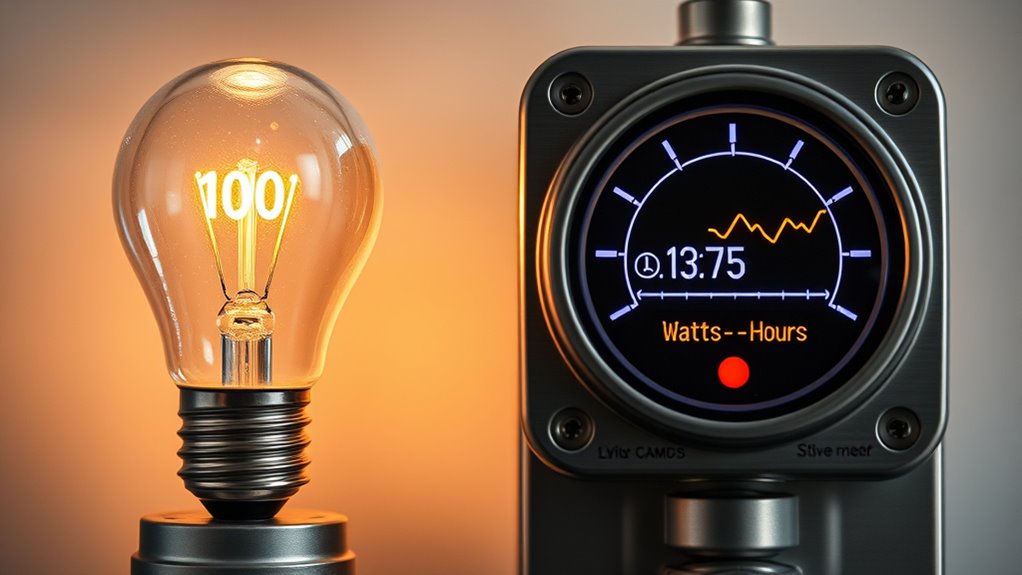
While power and energy are related concepts, they serve different roles in understanding how devices use and store energy. Power, measured in watts, indicates how quickly a device consumes or produces energy at a specific moment. Energy, measured in watt-hours, reflects the total amount stored or used over time. For example, a solar panel’s efficiency affects how much energy it can generate, which depends on its power output and sunlight duration. Battery chemistry also influences how much energy a battery can store, impacting overall device runtime. Recognizing this difference helps you choose the right components, whether evaluating the power needed for immediate operation or the energy capacity required for extended use. Understanding these measurements involves unit conversions, which are essential for accurate comparisons and calculations. Passive voice detection is an essential tool for improving clarity and precision in technical explanations. Grasping the fundamental differences between power and energy ensures better decisions in energy management and device performance.
As an affiliate, we earn on qualifying purchases.
Understanding the Power Rating of Devices
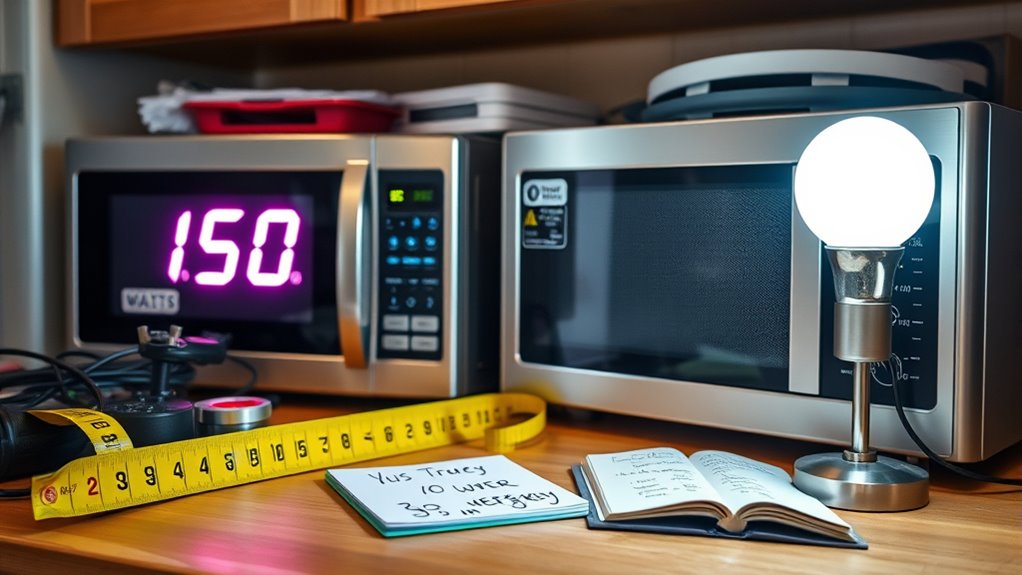
Understanding the power rating of a device is essential because it tells you how much energy the device consumes or delivers at any given moment. This rating, usually in watts, helps you gauge the device’s demand on your power source. For example, a device with a higher wattage requires more energy to operate, impacting your battery capacity and solar panel output. If you’re using a battery, knowing its capacity in watt-hours helps you estimate how long the device can run before recharging. Similarly, understanding the wattage of a solar panel allows you to determine how much power it can generate under best-case conditions. By grasping these ratings, you can better plan your energy needs and ensure your devices operate efficiently without overloading your system. Understanding power ratings is crucial for optimizing your energy use and avoiding system overloads, especially since knowing the difference between watts and watt-hours helps prevent confusion when managing energy sources. Being aware of power consumption also enables you to select the most appropriate devices for your setup and avoid unexpected energy costs. Recognizing the distinction between power and energy is fundamental for effective energy management and system design. Additionally, understanding these concepts helps prevent energy waste and ensures your setup functions reliably over time.
As an affiliate, we earn on qualifying purchases.
Calculating Energy Consumption Over Time
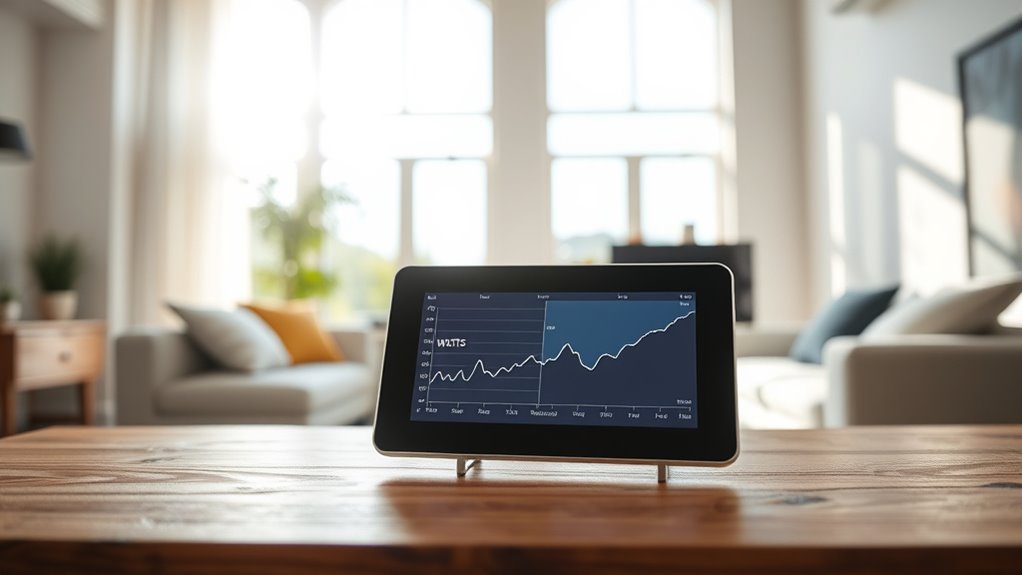
To accurately calculate energy consumption, you need to understand how power rates and time work together. When you know how long a device runs, you can determine the total energy used in watt-hours. This helps you see the real impact of your device’s usage over different periods. Understanding power measurements is key to making informed decisions about your energy use and costs. Additionally, recognizing that sound vibrations can influence cellular health offers insight into holistic approaches to well-being. Being aware of lease terms impact total costs can also help you manage your energy and financial planning more effectively. Knowing how energy efficiency and device specifications relate can further enhance your understanding of total energy consumption and savings. tax implications related to energy expenses can further support responsible financial management.
Power Rate Determination
Calculating energy consumption over time involves understanding how power usage translates into actual energy costs. To determine your power rate, consider your device’s wattage, battery capacity, and voltage levels. Higher voltage levels can deliver more power, affecting overall energy use. For example, a device with a 12V battery and a 2A current consumes 24W. Use this table to clarify:
| Parameter | Explanation |
|---|---|
| Battery Capacity | Total energy stored, affects how long a device runs |
| Voltage Levels | Higher voltage can increase power output |
| Power Rate | Calculated as Voltage × Current (W) |
| Energy Cost | Power rate × usage duration in hours |
Additionally, understanding the impact of power efficiency can help optimize energy consumption and reduce costs.
Time Duration Effects
Have you ever wondered how the length of time a device runs impacts its energy consumption? It’s simple: the longer a device operates, the more energy it uses. To understand this better, consider these points:
- A device’s power rating (watts) multiplied by the runtime (hours) gives you watt-hours, the total energy consumed. Energy measurement
- If your battery capacity is 100 watt-hours, running a 50-watt device for 2 hours consumes 100 watt-hours.
- For solar panels, output varies with sunlight duration; longer exposure increases total energy generated.
- Running devices beyond their typical time affects your energy budget, especially if you rely on renewable energy sources or limited battery capacity.
- Understanding plant properties of herbs like valerian and chamomile can enhance the efficiency of herbal remedies, just as understanding energy units helps optimize device use.
- Regular monitoring of auditory processing can help improve device functionality and energy management.
- Utilizing technological integration, such as smart energy meters, can provide real-time data to optimize energy consumption and prevent waste.
Actual Energy Used
Understanding how much energy a device truly uses involves more than just knowing its power rating; you need to account for how long it runs. To estimate energy consumption accurately, multiply the device’s power (in watts) by the time it operates (in hours). This helps with cost estimation and assesses device efficiency. Consider this table:
| Power (W) | Usage Time (hours) | Energy Used (Wh) |
|---|---|---|
| 100W | 5 | 500 Wh |
| 200W | 2 | 400 Wh |
| 150W | 3 | 450 Wh |
Additionally, understanding energy units can help clarify how consumption translates into actual costs and efficiency. Recognizing the difference between watts and watt-hours is essential for accurate energy measurement and management. Learning about power ratings can also aid in selecting more energy-efficient devices and optimizing usage. Being aware of energy consumption calculations ensures you can better manage your electrical devices and reduce unnecessary energy waste, ultimately leading to more calm and organized homes.
Practical Examples of Watts and Watt-Hours

Ever wonder how watts and watt-hours show up in everyday situations? Here are some practical examples:
- A smartphone charger might use 12 watts, meaning it consumes that power when charging.
- Your laptop’s battery capacity could be 60 watt-hours, indicating how much energy it stores.
- A solar panel with an output of 300 watts produces power when sunlight hits it, but over time, the energy it generates depends on hours of sunlight, like 2 hours equaling 600 watt-hours.
- A small refrigerator might run on 100 watts, but if it runs for 8 hours daily, it consumes 800 watt-hours of energy.
These examples help you understand how watts reflect power at any moment, while watt-hours measure total energy used or produced over time.
Why Watt-Hours Matter for Your Electricity Bill
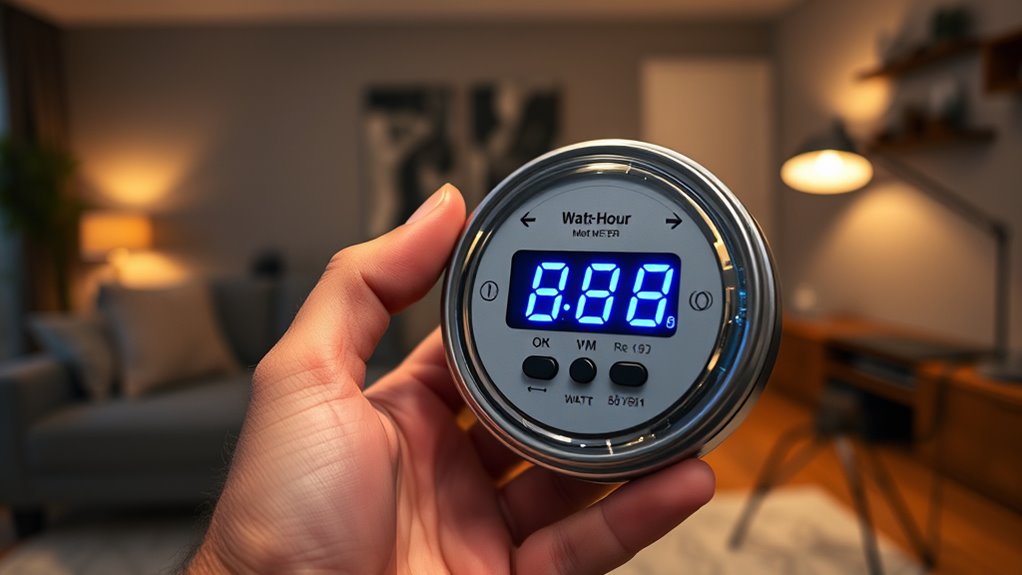
Understanding watt-hours helps you see how much energy your devices actually utilize over time. This makes billing calculations clearer and more straightforward. Recognizing the difference between power and usage ensures you’re better informed about your electricity costs.
Energy Consumption Clarified
While watts measure how powerful an appliance is, watt-hours reveal how much energy you actually use over time. This understanding helps you see your real electricity costs. For example:
- Using energy-efficient appliances reduces watt-hour consumption, saving you money.
- If you install renewable energy systems, knowing your watt-hour use helps optimize solar or wind setups.
- Battery storage allows you to store excess watt-hours from renewable sources for later use.
- Tracking watt-hour consumption makes it easier to identify high-energy devices, so you can cut back and lower your bill.
Billing Calculations Simplified
Your electricity bill is based on the total amount of energy you consume in watt-hours, not just the power of your appliances. When you use renewable energy sources like solar panels, the energy generated is measured in watt-hours, which directly affects your bill. If you have battery storage, it stores excess energy in watt-hours, allowing you to use it later and reduce reliance on the grid. Billing calculations take into account the total watt-hours consumed over billing periods, not just the instantaneous wattage. This means efficient use of energy, managing your battery storage, and understanding watt-hour consumption can lower your costs. By focusing on watt-hours, you get a clearer picture of how your energy habits impact your bill, especially in systems with renewable energy and storage solutions.
Power vs. Usage
Many people confuse the power of an appliance with how much energy they actually use. Power, measured in watts, shows how quickly an appliance consumes energy, but watt-hours reveal the total energy used over time. To understand your bill, consider these points:
- A 100-watt bulb running for 10 hours uses 1,000 watt-hours (1 kWh).
- A device’s battery capacity tells you how much energy it can store, affecting how long it lasts without charging.
- Solar panel output indicates how much energy it produces, influencing your energy savings.
- Your energy consumption in watt-hours impacts your bill more than the appliance’s wattage alone.
Knowing the difference helps you manage usage better, especially when considering solar options or battery storage.
Converting Between Watts and Watt-Hours
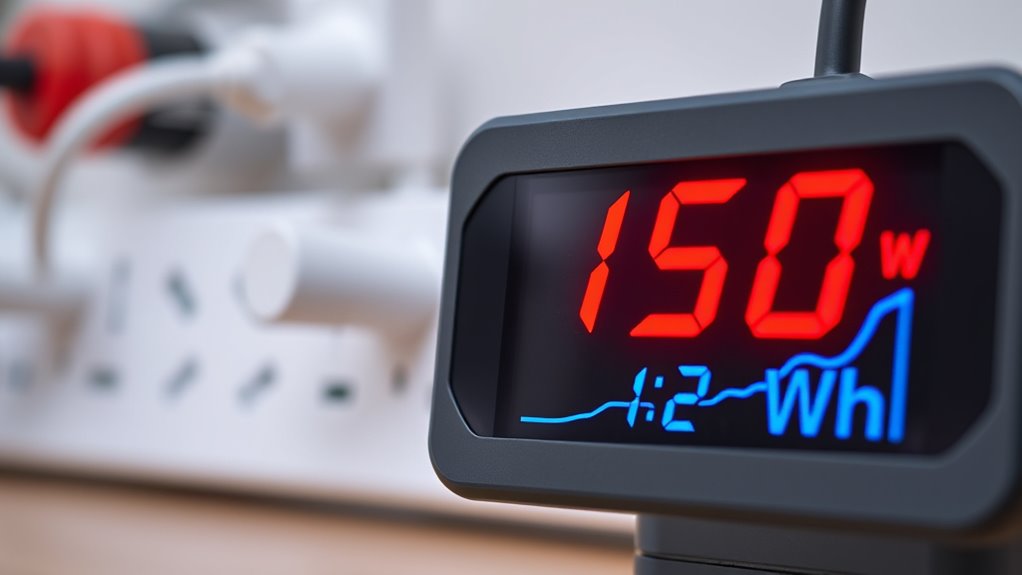
Converting between watts and watt-hours is straightforward once you understand their relationship. Watts measure power, while watt-hours measure energy over time. To find watt-hours, multiply the power in watts by the duration in hours. For example, a device using 50 watts for 2 hours consumes 100 watt-hours of energy. This conversion is essential when evaluating battery capacity or solar energy systems. If your battery has a capacity of 300 watt-hours, it can supply 100 watts for 3 hours or 50 watts for 6 hours. Similarly, understanding how much solar energy your panels generate involves converting their wattage into energy over time. This simple calculation helps you better grasp energy needs and system performance without confusing power with energy.
Common Mistakes When Reading Electrical Labels
Reading electrical labels can be tricky because the information is often presented in ways that lead to misunderstandings. Common mistakes include misreading voltage ratings, which can cause incorrect assumptions about voltage effects on appliances. Second, you might confuse wattage with watt-hours, risking damage or shortened appliance lifespan. Third, ignoring voltage requirements can lead to overloading or underperforming devices. Fourth, overlooking the importance of current ratings may cause safety hazards or equipment failure. Always check labels carefully: understanding voltage effects helps you choose compatible appliances, and knowing wattage ensures proper power management. Misinterpretations can not only damage your devices but also impact their lifespan. Stay vigilant, read labels thoroughly, and avoid these mistakes to keep your appliances running safely and efficiently.
Tips for Managing Your Energy Use
To manage your energy use effectively, start by tracking your power consumption to see where most of your energy goes. Choose energy-efficient devices that reduce wattage without sacrificing performance, and pay attention to your daily usage patterns. These steps help you make smarter choices and cut costs on your electricity bill.
Track Your Power Consumption
Wondering how to better manage your energy bills? Tracking your power consumption is a great start. First, monitor your daily usage with a smart meter or energy monitor. Second, note the battery capacity of your backup system to understand how long it can power your essentials. Third, check your solar panel output regularly to see how much energy you’re generating versus using. Fourth, keep a log of peak usage times to identify when appliances draw the most power. This helps you adjust habits and optimize your solar and storage systems. By understanding these details, you can make smarter decisions about energy use, avoid surprises on your bill, and ensure you’re making the most of your renewable resources.
Choose Energy-Efficient Devices
Choosing energy-efficient devices can substantially reduce your overall power consumption and lower your bills. When selecting appliances, check their ratings to guarantee they meet high efficiency standards. Look for labels like ENERGY STAR, which indicate appliances use less energy without sacrificing performance. Consider devices that utilize renewable sources or are designed to minimize energy waste. Upgrading older appliances with newer, energy-efficient models can make a significant difference over time. Pay attention to the wattage and estimated energy use to compare options effectively. Investing in efficient devices not only saves money but also supports sustainability efforts by reducing reliance on non-renewable sources. Making informed choices about appliance ratings helps you manage your energy use more wisely and contributes to a greener future.
Understand Usage Patterns
Monitoring how and when you use your appliances can make a big difference in managing your overall energy consumption. By tracking patterns, you can identify peak usage times and optimize your energy-saving efforts. For example:
- Use appliances during off-peak hours to reduce strain on your grid.
- Adjust your device settings to lower energy use without sacrificing performance.
- Consider the battery capacity of your renewable energy system to match your consumption habits.
- Schedule high-energy tasks when your renewable energy production is at its peak.
Understanding these patterns helps you avoid unnecessary watt-hour consumption and makes your renewable energy system more efficient. It also helps you better estimate your energy needs, ensuring your battery capacity meets your household’s demands without overpaying or wasting energy.
Visualizing Power and Energy in Everyday Life
Understanding the difference between power and energy can be made clearer by visualizing how they appear in everyday life. When you see voltage fluctuations, it’s a sign of changing power levels in your home’s electrical system. These fluctuations can strain circuit protection devices like circuit breakers, which are designed to prevent overloads. Think of power as the rate at which your devices use energy—like a water flow rate—while energy is the total amount consumed over time, like the water collected in a bucket. Visualizing this helps you grasp why a high-wattage appliance uses more energy over time, even if its power rating stays the same. Recognizing this distinction makes it easier to understand your electricity bills and the importance of proper circuit protection.
Frequently Asked Questions
How Do I Determine the Wattage of My Household Appliances?
To determine your appliance’s wattage, check its power rating usually found on a label or in the user manual. This rating indicates the wattage, showing the appliance’s capacity to consume power. If only the watt-hour (Wh) is listed, divide it by the hours of operation to find the wattage. Knowing this helps you understand energy use and manage your household’s power consumption effectively.
Can Watt-Hours Be Used to Compare Different Types of Energy Sources?
Yes, watt-hours help compare different energy sources, including renewable energy and energy storage systems. They measure the total energy produced or stored over time, making it easier to evaluate efficiency and capacity. For example, a solar panel’s energy output in watt-hours shows how much renewable energy it generates, while a battery’s watt-hours indicate its storage capacity. Comparing watt-hours allows you to understand each source’s contribution and suitability for your needs.
Why Do Some Devices List Only Watts Without Watt-Hours?
Imagine you’re choosing a new lamp, and it only lists watts. You see it consumes 60 watts, which tells you its power consumption. Devices list only watts because they focus on device ratings, indicating how much power they draw at any moment, not total energy used over time. Watt-hours measure energy over time, but for quick comparisons of power consumption, watts give you the essential info.
How Does Energy Efficiency Relate to Watts and Watt-Hours?
Energy efficiency relates to watts and watt-hours by showing how well a device uses power consumption to produce work or output. Lower wattage means less power is used, which indicates higher efficiency, while watt-hours measure total energy used over time. If your device consumes fewer watt-hours for the same task, it’s more energy-efficient. This helps you understand how effectively your device manages energy measurement and power consumption.
Are Watt-Hours More Important Than Watts for Estimating Energy Costs?
Watt-hours are more important than watts for estimating energy costs because they measure total energy consumption over time. Power consumption in watts shows how much energy a device uses at any moment, but watt-hours reveal the actual energy used during operation. When calculating costs, you need to know the total energy measurement, so watt-hours give a clear picture of your energy expenses and usage.
Conclusion
By mastering the difference between watts and watt-hours, you can avoid confusion that’s more tangled than a spider’s web. Now, you’re equipped to read electrical labels confidently and manage your energy use wisely. Think of this knowledge as a superpower—empowering you to save money, reduce waste, and avoid being overwhelmed by technical jargon. With clarity on these concepts, you’ll navigate your energy choices with the precision of a laser beam—no more guessing, just smart, informed decisions.
Halloween Picks
halloween
As an affiliate, we earn on qualifying purchases.