
The key number that predicts your backup power’s success is watt-hours. This measurement combines voltage and current over time, revealing the total energy your battery can store and deliver. Knowing watt-hours helps you estimate how long your devices can run during an outage, ensuring your system meets your needs. If you want to understand how to maximize your backup time and make smarter choices, there’s plenty more to explore below.
Key Takeaways
- Watt-hours measure a battery’s total energy capacity, directly indicating backup runtime potential.
- It combines voltage and current to provide an accurate comparison of different backup power sources.
- Higher watt-hour ratings mean longer device operation during outages.
- Watt-hours help plan and size backup systems effectively for specific energy needs.
- Focusing on watt-hours ensures reliable prediction of backup power success over voltage or amperage alone.

DaranEner Portable Power Station 60,000mAh, 192Wh LiFePO4 Battery Backup w/2 300W (Surge 600W) AC Outlets, 2H Fast Charging, Power Bank for Hurricane Emergency/Home/Outdoor Camping/RVs Use
【192Wh Capacity, 300W Pure Sine Wave Output】This portable power station delivers a reliable 300W (600W surge) output, perfect…
As an affiliate, we earn on qualifying purchases.
As an affiliate, we earn on qualifying purchases.
Understanding Watt-Hours and Their Importance

Have you ever wondered how to compare different backup power sources effectively? One key factor is watt-hours, which measures the total energy a battery can store. Understanding watt-hours helps you determine how long a backup power source can keep your devices running during an outage. When evaluating batteries, consider their battery lifespan and charging cycles, as these impact overall performance and longevity. A battery with more charging cycles typically lasts longer, providing consistent power over time. Watt-hours give you a clear picture of capacity, enabling you to compare different options accurately. This allows you to select a backup power source that not only meets your immediate needs but also offers durability and reliability over years of use. Battery performance is also influenced by factors such as temperature and usage patterns, which can affect how well the battery maintains its capacity over time. Additionally, understanding energy capacity helps in planning for long-term reliability and ensures your backup system remains dependable when needed. Monitoring battery health can further optimize your system’s performance and lifespan. Properly managing power consumption can also extend the operational time of your backup system during outages. Moreover, being aware of charge rate fluctuations can help prevent damage and prolong battery life.
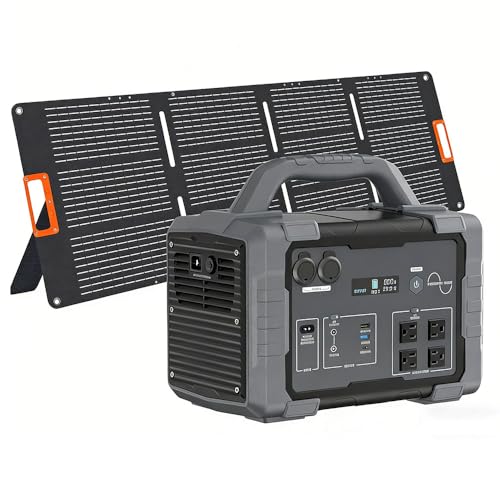
STARYLINE Solar Generator 1800W (3600W Surge) with 200W Solar Panel, 1024Wh LiFePO4 Portable Power Station Kit, 1.5H AC Fast Charge, Clean Energy for Home Backup, RV Camping, Emergency Outages
⚡ 1800W POWER ON THE GO: Experience true 1800W continuous AC output (3600W Surge). This heavy-duty solar generator…
As an affiliate, we earn on qualifying purchases.
As an affiliate, we earn on qualifying purchases.
The Difference Between Voltage, Amperage, and Watt-Hours
Understanding the difference between voltage, amperage, and watt-hours is key to choosing the right backup power system. Voltage measures the potential difference, while amperage indicates the current flow, and watt-hours show the total energy stored. Grasping how these elements work together helps you determine your power capacity needs accurately. Additionally, knowing how to evaluate load requirements ensures your backup system can reliably handle your household’s energy needs. Recognizing the role of energy capacity in backup systems can prevent under- or overestimating your power needs. Being aware of power measurement units further enhances your ability to select an appropriate system. Familiarity with battery specifications can help you compare different energy storage options effectively. Moreover, understanding power consumption patterns can help optimize your backup system’s performance and longevity.
Voltage vs. Power Capacity
Voltage, amperage, and watt-hours are all essential but distinct aspects of electrical capacity that can often confuse beginners. Voltage measures the electrical potential difference, impacting voltage stability and how reliably your backup system operates. Amperage limits determine the maximum current a device can handle safely, affecting overall power capacity. While voltage indicates the electrical pressure, it doesn’t directly tell you how much energy a battery can store. Power capacity depends on watt-hours, which combine voltage and capacity to show how long your backup can run. Understanding this distinction helps you select a system that maintains voltage stability without exceeding amperage limits. Proper system sizing ensures your backup power is reliable and efficient, preventing overloads and ensuring continuous operation during outages. Additionally, knowing the energy storage capacity of batteries helps in planning for longer backup durations, especially when considering battery runtime and overall energy needs. It’s also important to recognize that power capacity influences how well your system can handle sudden load demands, such as starting a motor or running high-power appliances. An understanding of electrical measurements can further optimize your system’s performance and longevity.
Watt-Hours Explained
Ever wonder how watt-hours differ from voltage and amperage? Watt-hours measure the total energy stored or used by a battery, combining voltage and current over time. Voltage is the electrical pressure, while amperage indicates the flow of current; together, they determine watt-hours. Battery chemistry affects how efficiently a battery stores and releases energy, influencing its watt-hour capacity. Charging cycles, or how many times a battery can be charged and discharged, impact the longevity and performance of that capacity. Understanding watt-hours helps you gauge how long a backup power system can run during an outage. It’s a more precise way to compare batteries, as it reflects actual energy storage rather than just electrical pressure or current flow. Additionally, battery capacity can vary based on how the battery is used and maintained over time.

APC UPS 600VA / 330W UPS Battery Backup & Surge Protector, 7 Outlets (NEMA 5-15R), USB Charging Port, BE600M1 Uninterruptible Power Supply for Computers, Wi-Fi Routers, and Home Office Electronics
KEEP YOUR COMPUTER, WI-FI AND ROUTER RUNNING THROUGH POWER OUTAGES: Supplies short‑term battery power during outages to maintain…
As an affiliate, we earn on qualifying purchases.
As an affiliate, we earn on qualifying purchases.
How Watt-Hours Affect Backup Power Duration

Watt-hours directly determine how long your backup power system can keep devices running during an outage. The higher the watt-hours, the longer your system can supply power. Factors influencing this include the capacity of your batteries, the energy demands of connected devices, and whether you’re utilizing renewable sources like solar. To understand the impact, picture:
- Your backup powering a laptop, refrigerator, and lights for several hours
- The importance of monitoring energy consumption to extend backup duration
- How combining renewable sources can recharge batteries and prolong operation
- The need for safety precautions when handling high-capacity batteries
- The balance between capacity and safety to ensure reliable, long-lasting backup power
- Effective navigation and mapping of your backup system can optimize energy use and ensure proper operation during outages
- Regular maintenance and inspection of batteries and connections can prevent unexpected failures and extend system lifespan, especially when considering battery management techniques.
- Proper storage of batteries in a cool, dry environment can help maintain optimal performance and longevity. Additionally, understanding the watt-hour capacity of your system allows for better planning and ensures your backup power meets your needs during emergencies.

Energizer Ultimate Lithium AA Batteries, 24 Pack, 1.5V Long-Lasting for High-Drain Devices, Cameras & Flashlights
Energizer Double A Lithium batteries are the world's longest lasting AA batteries.
As an affiliate, we earn on qualifying purchases.
As an affiliate, we earn on qualifying purchases.
Calculating Watt-Hours for Your Backup System
To guarantee your backup system meets your needs, start by estimating how much power your essential devices use daily. Then, calculate how long your system can run by considering its watt-hour capacity. This process helps you determine the right size of your backup to keep things running smoothly when the power’s out. Additionally, regularly checking the filter indicators on your air purifier can ensure optimal performance and longevity of your system. Understanding your battery capacity is crucial for selecting a backup system that adequately supports your power requirements. Knowing your power consumption patterns can also assist in fine-tuning your backup setup for efficiency and energy efficiency. Recognizing your watt-hour needs allows for more accurate sizing and better performance of your backup solution.
Estimating Power Needs
Estimating your power needs is a crucial step in designing an effective backup system. To do this accurately, you need to contemplate the energy consumption of your devices and appliances. Focus on your most critical items and their power requirements, factoring in energy efficiency and current battery technology. Here’s what to keep in mind:
- List high-priority appliances and their wattage
- Determine daily usage hours for each device
- Calculate total watt-hours by multiplying wattage by hours used
- Account for energy losses during power conversion
- Add a buffer for unexpected power spikes
- Understanding industry trends can help you select the most reliable and efficient backup solutions. Staying informed about advancements in battery technology can further optimize your backup system’s performance.
Calculating Backup Duration
Understanding how long your backup system can sustain your devices requires calculating the total energy storage needed. First, determine your device’s power consumption in watts and multiply by the hours you want to run them. Next, consider solar efficiency, which affects how effectively your solar panels charge the system. Higher solar efficiency means more watt-hours stored for the same solar input. Additionally, verify your inverter capacity matches or exceeds your peak power needs, as an undersized inverter can limit runtime. To find your backup duration, divide your total watt-hours of stored energy by your devices’ wattage. This calculation helps you understand how long your backup system can support your essential devices during an outage, ensuring you have enough energy stored to meet your needs.
Comparing Battery Options Using Watt-Hours
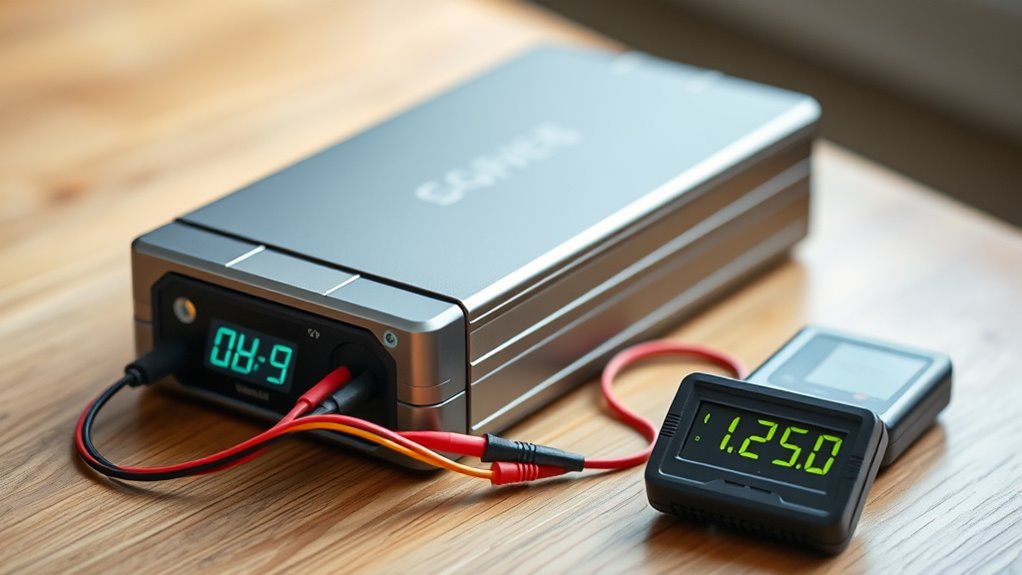
When comparing different battery options, watt-hours provide a straightforward way to gauge their energy capacity. This helps you understand which battery can power your devices longer. Look beyond voltage and amperage; watt-hours reveal the true energy potential. Consider these factors:
- Larger watt-hours mean longer backup times
- Battery lifespan impacts how many charging cycles you get
- Higher watt-hours often correlate with increased durability
- Battery chemistry can influence longevity and performance
- Capacity should match your power needs for reliability
Why Watt-Hours Matter More Than Voltage or Amperage Alone

While voltage and amperage are important when selecting a battery, they don’t tell the whole story about how long your devices will run. That’s where watt-hours come in, offering a clearer picture of total energy capacity. Battery chemistry influences how efficiently energy is stored and released, affecting overall energy efficiency. Different chemistries, like lithium-ion or lead-acid, can deliver varying levels of watt-hours for the same size or voltage. Focusing on watt-hours helps you understand the true runtime potential, rather than just peak voltage or current. This makes watt-hours a more reliable metric for predicting backup power performance. Ultimately, knowing the watt-hour capacity guarantees you choose a battery that can sustain your devices longer during an outage.
Real-World Examples of Watt-Hours in Action

Real-world examples of watt-hours demonstrate how this measurement directly impacts backup power reliability. For instance, upgrading your batteries increases watt-hour capacity, ensuring longer-lasting power during outages. Portable power devices with higher watt-hours can keep essential devices running longer without needing frequent recharges. Imagine a small generator with 1,000 watt-hours powering your fridge and Wi-Fi for hours, or a portable solar charger with 200 watt-hours recharging your phone multiple times. Other examples include:
- Battery upgrades in home UPS systems
- Portable power banks for camping trips
- Solar-powered backup systems for remote locations
- Emergency radios with substantial watt-hour ratings
- Electric vehicle batteries used for backup power during outages
These examples show how watt-hours determine the effectiveness of backup power solutions, whether through improved battery capacity or portable power options.
Tips for Maximizing Your Backup Power With Watt-Hours
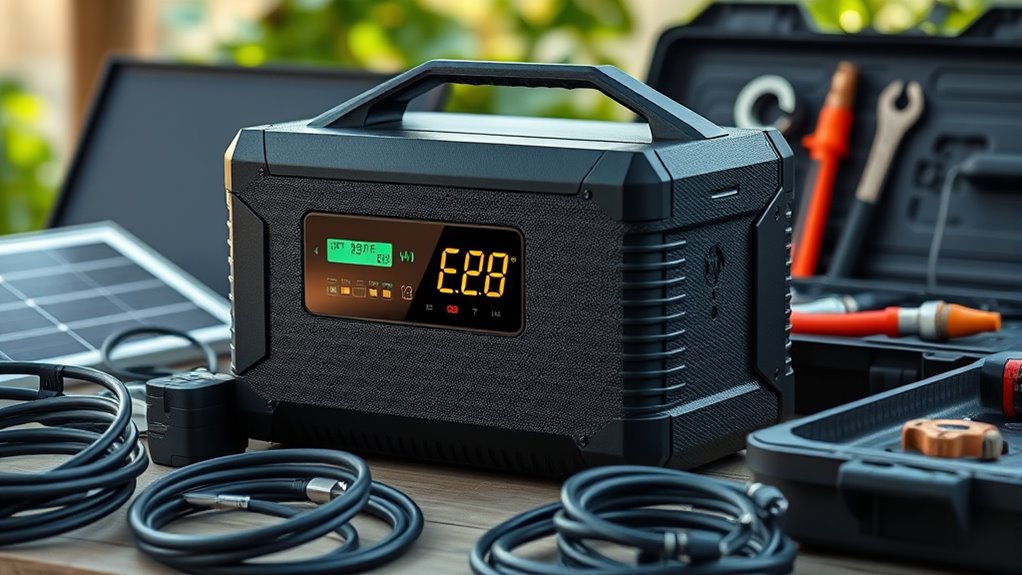
Maximizing your backup power starts with understanding and optimizing watt-hour capacity. To do this, focus on proper battery maintenance, ensuring your batteries stay healthy and efficient. Regularly check connections, keep terminals clean, and avoid deep discharges that can damage your system. Improving energy efficiency also makes a big difference; use energy-saving devices and minimize unnecessary power use during outages. Here’s a quick emotional overview:
| What You Gain | What You Risk Losing |
|---|---|
| Reliable power when needed most | Unexpected outages leaving you helpless |
| Peace of mind | Wasted energy and money |
| Longer-lasting backup system | Sudden failures during emergencies |
| Confidence in your preparedness | Vulnerability in critical moments |
Taking care of your batteries and maximizing efficiency ensures your watt-hours work harder for you when it counts.
Making Informed Decisions Based on Watt-Hours
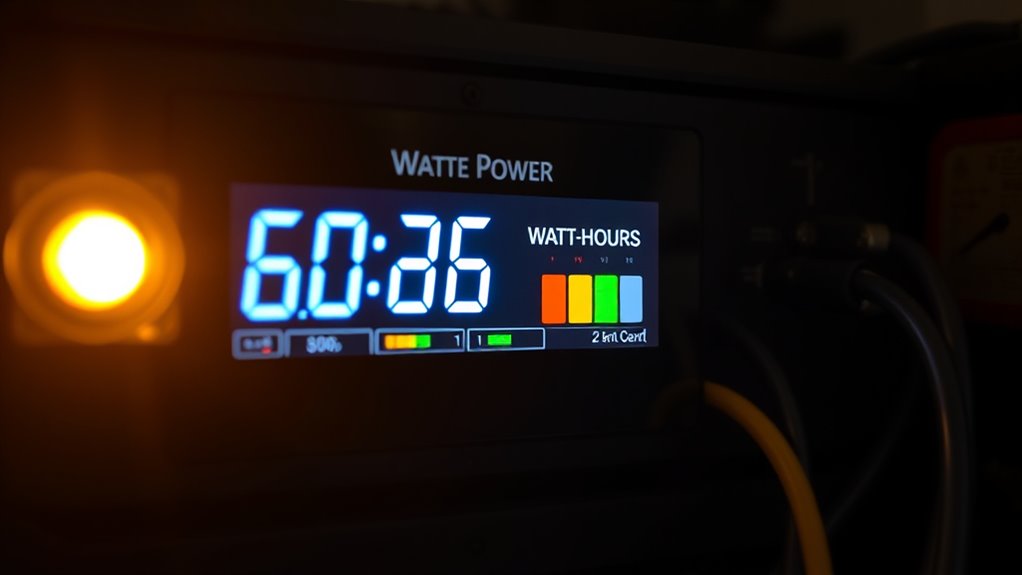
Understanding your watt-hour capacity is essential for making smart backup power decisions. It helps you evaluate your energy storage needs and guarantees reliable power during outages. When considering watt-hours, think about:
- How much energy your essential devices require daily
- The capacity of your energy storage system
- Your power regulation needs to prevent overloads
- The duration you want backup power to last
- The efficiency of your system in converting stored energy
Frequently Asked Questions
How Do Watt-Hours Relate to Overall Backup Power Reliability?
Watt-hours directly affect your backup power reliability by indicating how long your system can run during an outage. Higher watt-hours mean better battery longevity and sustained power, reducing the risk of failure. With efficient use of power, you get more runtime from each charge. So, when evaluating backup systems, look for higher watt-hours to guarantee your setup offers dependable, long-lasting power when you need it most.
Can Two Batteries With the Same Watt-Hours Have Different Backup Durations?
Yes, two batteries with the same watt-hours can have different backup durations because of differences in battery chemistry and charge cycles. For example, lithium-ion batteries typically last longer and handle more charge cycles than lead-acid types, resulting in longer backup times even if watt-hours are identical. Your backup duration depends not just on watt-hours but also on how efficiently the battery chemistry manages energy and withstands repeated charges.
Is Watt-Hour Capacity More Important Than Battery Type for Backup Systems?
Watt-hour capacity matters more than battery chemistry or energy density because it directly determines how long your backup system lasts. While battery chemistry affects factors like lifespan and safety, the energy density influences size and weight, not backup duration. You should prioritize watt-hours to guarantee your system provides sufficient backup time, regardless of whether you choose lithium-ion or lead-acid batteries.
How Do Temperature and Age Affect Watt-Hour Performance?
Did you know that batteries lose about 20% of their capacity over five years due to aging effects? Temperature greatly impacts watt-hour performance; high heat accelerates thermal degradation, reducing capacity, while cold temperatures slow chemical reactions, temporarily lowering output. As batteries age, their ability to hold charge diminishes, so maintaining ideal temperature and replacing old batteries are vital to guarantee reliable backup power.
Are Watt-Hours a Good Indicator for Future Battery Upgrades?
Watt-hours can be a useful indicator for planning future battery upgrades because they reflect the battery’s capacity. As your battery ages and undergoes more charge cycles, its lifespan decreases, and watt-hours diminish. Monitoring watt-hour performance helps you understand when your battery might need an upgrade to maintain backup power reliability. Keep an eye on capacity trends over time to ensure your system stays prepared and efficient.
Conclusion
Think of watt-hours as the heartbeat of your backup system, pulsing with the promise of power when you need it most. By understanding and prioritizing watt-hours, you’re wielding a key that unleashes reliable energy in a storm or outage. Don’t let your backup fall silent—embrace watt-hours as your guiding star, ensuring your power stays steady, your lights stay bright, and your peace of mind remains unshaken amid any storm.