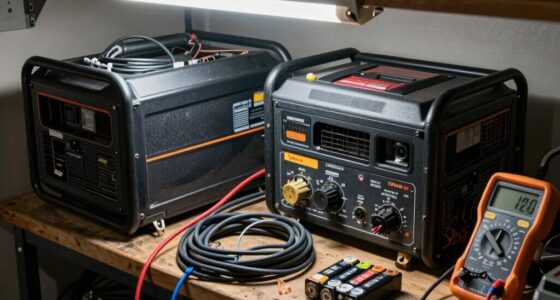

To avoid sizing backup power incorrectly, comprehend that continuous ratings show the max power your system can run indefinitely, while surge ratings handle short bursts like motor startup. Many overlook surge demand, risking equipment failure or damage. Properly matching both ratings ensures your system can handle inrush currents without tripping or overheating. Keep in mind the difference, and you’ll improve your backup setup; stay tuned for more tips to get it right.
Key Takeaways
- Surge ratings cover short-term peak power, essential for starting motors; continuous ratings reflect steady-state operation.
- Proper backup sizing must account for both continuous load and transient surge demands to prevent startup failures.
- Relying only on continuous ratings risks underestimating initial inrush current, causing equipment failure.
- Match surge capacity of backup power sources to the maximum startup surge of connected devices.
- Incorporate surge protection devices and staggered startup methods to protect equipment during transient power demands.

OUPES Mega 1 Portable Power Station 2000W (Surge 4500W), 1024Wh LiFePO4 Battery Solar Generator, Expandable to 5kWh, UPS, for Home Backup Power, Camping & Road Trips (Solar Panel Optional)
REVOLUTIONARY FAST-CHARGING TECHNOLOGY: Experience industry-leading recharge speeds with 0-80% capacity in just 36 minutes via AC, or an…
As an affiliate, we earn on qualifying purchases.
As an affiliate, we earn on qualifying purchases.
Understanding the Difference Between Surge and Continuous Power Ratings
Understanding the difference between surge and continuous power ratings is essential for selecting the right power source for your equipment. Continuous rating is the maximum power your device can deliver indefinitely without overheating or tripping protections. Surge rating, on the other hand, is the short-term peak power the source can provide during startup or transient loads, typically lasting seconds. Surge capacity often exceeds the continuous rating by 150% to 300%, enabling equipment like motors and compressors to start properly. If you overlook this difference, your backup power may fail to start critical loads or trip under high inrush currents. Properly matching power ratings ensures your backup system can handle transient demands without failure. Additionally, recognizing how power supply specifications influence equipment performance helps prevent unexpected failures during operation. Understanding electrical load management is also crucial to avoid overloads and ensure system reliability. Being aware of the net worth of your backup components can also inform your capacity planning and ensure you choose equipment that meets your needs.
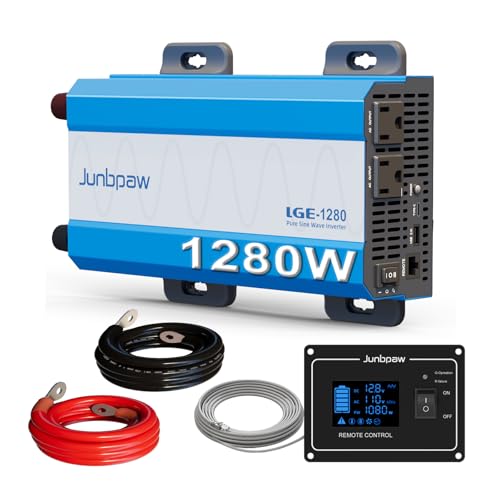
1280W Pure Sine Wave Power Inverter – 3600W Surge, Game-Changing Design | 12V to 120V AC Converter for Home, RV, Camping, Off-Grid & Outdoor Adventures
【1280W Continuous Rated Power Inverter】The Junbpaw DC 12V to AC 120V inverter delivers a continuous 1280W output with…
As an affiliate, we earn on qualifying purchases.
As an affiliate, we earn on qualifying purchases.
Why Surge Capacity Is Critical for Motor-Driven Equipment
Motor-driven equipment, such as pumps, compressors, and refrigerators, often requires a surge capacity that far exceeds their running power. When starting, these devices draw a high inrush current—sometimes 3 to 8 times their normal operating load—that lasts for milliseconds to a few seconds. If your backup power source can’t supply this surge, the equipment won’t start, leading to operational failures or mechanical stress. Insufficient surge capacity can cause nuisance trips, prevent equipment from engaging, or damage internal components over time. Ensuring your inverter or generator can handle these short-term peaks is essential for reliable operation. Proper sizing of surge capacity protects your equipment, avoids downtime, and extends the lifespan of your power system. Understanding power requirements is crucial for selecting the right backup solution and preventing unexpected failures. Additionally, power system capacity should be carefully matched to the specific surge demands of your equipment to avoid underperformance. Recognizing the difference between surge rating and continuous rating helps ensure your backup power can meet both immediate start-up needs and ongoing operational loads, especially considering the importance of surge capacity in protecting motor-driven devices. To achieve this, it’s important to understand the load characteristics of your equipment and how they influence the required surge capacity.

Zebra Instruments, # VZPRO ECM Motor Protector Surge Protection for 120-240V GE & GENTEQ 5-PIN ECM Motors
Package dimensions: 5.1 cms L x 7.2 cms W x 21.2 cms H
As an affiliate, we earn on qualifying purchases.
As an affiliate, we earn on qualifying purchases.
Common Mistakes When Matching Backup Power to Load Surges
One common mistake is relying solely on the continuous rating of your inverter or generator without considering the surge capacity needed for startup. Many underestimate the importance of matching surge ratings to the initial inrush loads, especially for motors and compressors. This oversight causes failures to start or frequent trips. To avoid this, understand the difference between surge and continuous ratings and ensure your backup power can handle short-term peak loads. Additionally, recognizing the thermal behavior of your system helps prevent overheating during these high-demand moments.

CyberPower CP1500PFCLCD PFC Sinewave UPS Battery Backup and Surge Protector, 1500VA/1000W, 12 Outlets, AVR, Mini Tower, UL Certified
1500VA/1000W PFC Sine Wave Battery Backup Uninterruptible Power Supply (UPS) System designed to support active PFC and conventional…
As an affiliate, we earn on qualifying purchases.
As an affiliate, we earn on qualifying purchases.
Practical Steps for Properly Sizing Your Power System
To properly size your power system, start by calculating the total continuous load you expect to operate and then add a safety margin—typically 25%—to account for derating and future expansion. Next, identify the highest startup surge among your loads. Confirm your inverter or generator’s surge rating meets or exceeds this peak for the required duration. Consider the following practical steps:
- List all devices with their running and startup watts.
- Separate resistive loads from inductive loads with high inrush.
- Stagger the startup times of large loads to reduce simultaneous surges.
- Verify the surge duration spec matches your equipment’s startup profile.
- Include surge protection devices with adequate joule ratings for transient spikes.
- Understanding your power needs and ensuring your backup system can handle both steady-state and transient demands is crucial for preventing failures and equipment damage.
- Always consult manufacturer specifications to understand the inrush current characteristics of your devices, as this can significantly impact your system sizing.
Tips for Protecting Your Equipment From Surge-Related Damage
Surge-related damage can occur when transient voltage spikes overwhelm your equipment’s ability to withstand sudden energy surges. To protect your gear, start by installing high-quality surge protectors rated for your equipment’s voltage and energy levels. Use MOV-based suppressors with adequate joule ratings, and place them at key points—main panels, outlets, or appliances. Ensure your backup power system’s surge rating exceeds the maximum startup surge your equipment requires. Stagger the startup of large loads to avoid simultaneous inrush currents. Consider adding soft-start devices or VFDs to reduce inrush demands. Regularly test and replace surge protectors to maintain effectiveness. Maintaining proper grounding and shielding also helps dissipate transient energy safely. Proper surge ratings are essential to prevent damage, extend equipment lifespan, and guarantee reliable operation. Additionally, understanding the importance of surge capacity can help you select the right protective devices for your specific needs. Proper grounding techniques and circuit protection strategies further enhance your system’s resilience against transient voltage events. Incorporating transient voltage suppression devices can provide an extra layer of defense against unexpected voltage spikes.
Frequently Asked Questions
How Do Surge Duration and Energy Impact Equipment Start-Up Success?
Surge duration and energy directly affect whether your equipment starts successfully. If the surge energy isn’t enough for the required duration, the motor or compressor may fail to start, causing stalls or damage. Longer surge durations allow equipment with higher inrush currents to begin smoothly. Confirm your power source’s surge rating and energy capacity match or exceed the startup demands of your loads to prevent startup failures and protect your equipment.
What Are Typical Surge Ratings for Different Inverter Types?
You’ll find that transformer-based, low-frequency inverters typically have surge ratings around 200% to 300% of their continuous power, making them suitable for high-startup loads. High-frequency inverters usually offer lower surge ratings, around 150% to 200%, due to smaller transformers. Generator surge capacities vary, often labeled as “starting watts,” which can be 2 to 3 times their continuous power. Always verify surge ratings match your load’s startup requirements for reliable operation.
How Can I Accurately Determine My Load’s Startup Surge Requirements?
Your startup surge demands are the most critical factor in sizing backup power, and ignoring them is like playing with fire. To determine these requirements, list all loads and their wattages, then identify the highest startup surge, often from motors or compressors. Check each device’s datasheet for startup current or surge ratings, and add any simultaneous startup loads. Use this data to select equipment with adequate surge capacity, ensuring reliable startup every time.
Why Do Some Devices Have Extremely High but Short Surges?
Some devices have extremely high but short surges because their motors or components need a quick, powerful burst of energy to overcome initial inertia or startup resistance. This surge is caused by inrush currents required to energize inductive loads like motors and compressors. These short, intense peaks happen within milliseconds to seconds, enabling the device to start properly without damaging internal parts or circuit elements.
How Does Simultaneous Multiple Load Startup Affect Surge Capacity Needs?
When multiple loads start simultaneously, it can turn your power system into a fireworks display of surges, drastically increasing the surge capacity needed. Each device adds to the overall startup demand, often multiplying the initial inrush current. To keep everything running smoothly, you must size your inverter or generator to handle the combined surge, or risk catastrophic failure — like trying to hold back a tidal wave with a teacup.
Conclusion
Understanding surge and continuous ratings is like knowing the difference between a quick spark and a steady flame. By sizing your backup power correctly, you prevent your equipment from being caught in a damaging surge—like a boat avoiding rocks in choppy waters. Take these practical steps to protect your gear, ensuring your power system runs smoothly and reliably. Don’t let misjudged ratings be the storm that sinks your equipment; instead, steer confidently with the right knowledge.