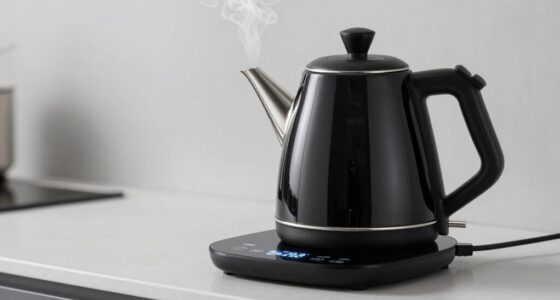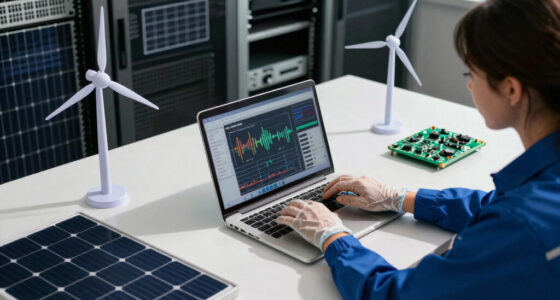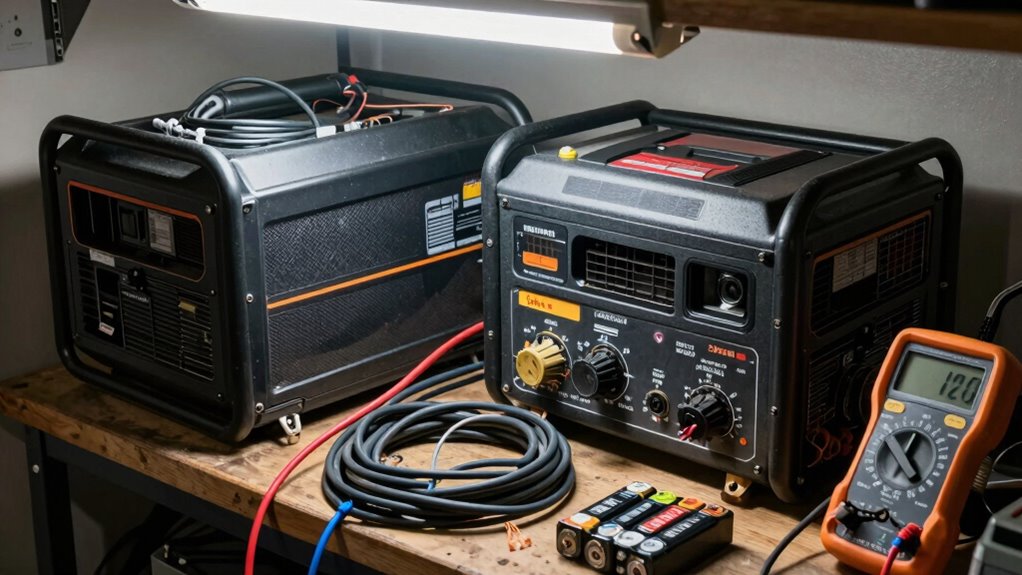

The main appliance math mistake that leads to overspending on backup power is relying solely on wattage ratings without considering actual energy efficiency and real consumption. Many people underestimate how much energy their appliances truly use, leading them to size backup systems too large and costly. By focusing only on wattage, you miss the true energy needs, causing unnecessary expenses. Keep going to find out how to accurately estimate your backup power and avoid this costly mistake.

Get backup power and energy gear delivered free with Prime
- Fast, free delivery on millions of items
- Prime Video, Amazon Music and more included
- Member-only deals all year
Key Takeaways
- Relying solely on wattage ratings instead of actual energy consumption skews backup capacity estimates.
- Underestimating appliance efficiency causes larger-than-necessary backup systems and higher costs.
- Ignoring real-world energy data leads to overspending on backup power.
- Overestimating backup needs from inaccurate size assumptions results in unnecessary expenses.
- Focusing only on appliance size without considering efficiency and usage patterns inflates backup system costs.
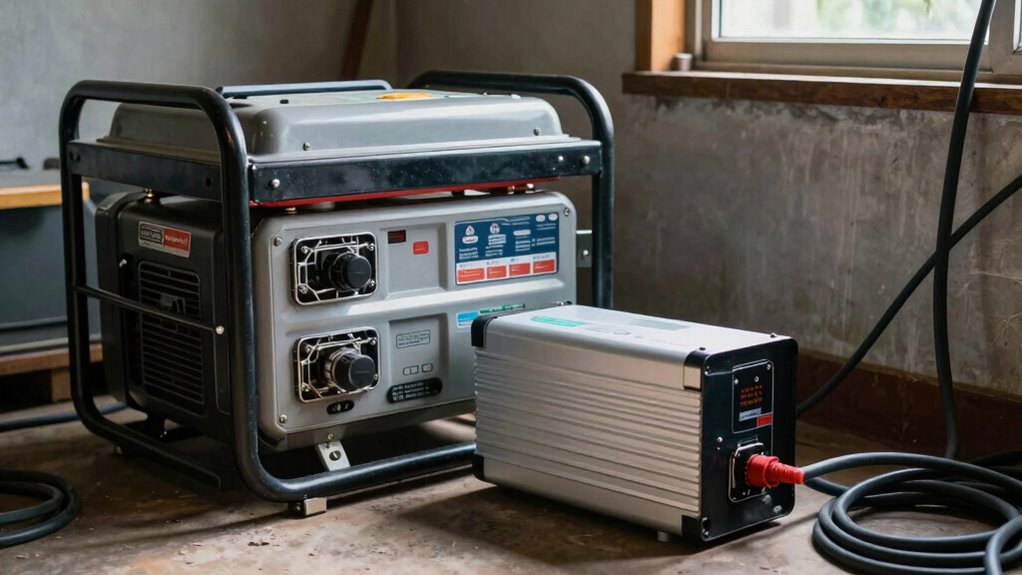
Have you ever miscalculated the size of an appliance and ended up with a surprise? It’s a common mistake that can lead to unnecessary expenses, especially when planning for backup power. When you underestimate or overestimate an appliance’s size, your entire energy setup can become inefficient and costly. To avoid this, you need to focus on precise cost calculation and consider energy efficiency from the start.
First, understanding how appliances consume power is essential. Many people overlook the fact that not all devices with similar wattages are equally energy efficient. Two appliances might have the same power rating, but one could be designed to use less energy over time. This is where energy efficiency plays a critical role. When calculating your backup power needs, you should consider the actual energy consumption, not just the wattage rating. Otherwise, you risk overestimating the amount of backup capacity needed, which leads to overspending on a larger, more expensive system than necessary. Additionally, paying attention to the energy efficiency ratings of appliances can significantly impact the overall size and cost of your backup system. Recognizing the true energy usage of appliances helps tailor your backup system more accurately. Incorporating real-world energy data can further refine your estimates and ensure your system is appropriately scaled. Understanding the long-term costs associated with energy-efficient appliances can also influence your decision-making process for backup power investments.
Not all appliances with the same wattage are equally energy efficient—consider actual energy use for accurate backup planning.
Your cost calculation should include the total power your important appliances require during outages. This means looking beyond the initial purchase price of backup generators or batteries. You must factor in the long-term costs, including maintenance and fuel or electricity consumption. If you underestimate your needs, your backup system may be insufficient, forcing you to upgrade sooner and spend more later. Overestimating, on the other hand, results in paying for capacity you don’t really need, which is a waste of money.
When planning your backup power, pay attention to the energy efficiency ratings of the appliances you want to support. For example, energy-efficient refrigerators or LED-powered devices consume less power, which means your backup system can be smaller and less costly. Instead of simply adding up wattages, use detailed energy consumption data to make more accurate cost calculations. This approach ensures you’re investing in capacity that aligns with your actual needs and avoids unnecessary expenses. This way, you’ll avoid overspending on unnecessary capacity, saving money in the long run.
Ultimately, the key is balancing your energy efficiency considerations with precise cost calculation. Don’t just rely on the appliance’s label or wattage; dig deeper into their energy profiles. Being aware of actual energy consumption can help you make more informed decisions. By doing so, you’ll guarantee your backup power system is tailored to your actual needs, preventing costly mistakes. This careful planning helps you avoid the trap of overspending on backup power, making your investment smarter and more efficient.
energy-efficient backup generator
As an affiliate, we earn on qualifying purchases.
As an affiliate, we earn on qualifying purchases.
Frequently Asked Questions
How Do I Accurately Calculate My Home’s Total Backup Power Needs?
To accurately calculate your home’s total backup power needs, list all essential appliances and their power consumption. Focus on their battery capacity and power efficiency, and determine how long you want them to run during an outage. Add up their energy requirements to find the total. This way, you avoid overspending by choosing a backup system with the right capacity, ensuring it meets your needs without excess.
What Common Misconceptions Lead to Overestimating Backup Power Requirements?
You might be barking up the wrong tree if you overestimate your backup power needs due to misconceptions about energy efficiency and power surges. Many assume every device consumes more power than it actually does, leading to overspending. In reality, understanding how energy-efficient appliances are and factoring in typical power surges helps you avoid overbuying. Focus on your actual usage patterns to get an accurate estimate, and save money while staying prepared.
How Can I Compare Different Backup Power Options Effectively?
To compare backup power options effectively, start by checking each system’s wattage estimates for your essential appliances. Consider battery lifespan to understand long-term costs and reliability. Look at the capacity, runtime, and efficiency of each system, and guarantee the wattage meets your needs without overestimating. Comparing these factors helps you choose a solution that balances affordability, longevity, and power capacity, avoiding overspending on unnecessary backup power.
Are There Specific Appliances That Should Always Be Prioritized?
You might think all appliances are equally important, but appliance prioritization is vital during outages. Always prioritize essential devices like medical equipment, refrigerators, and communication tools to guarantee safety and essential functions. This focus helps you avoid overspending on backup power by allocating resources wisely. By identifying and powering just your critical devices first, you maximize your backup system’s efficiency and protect what truly matters during emergencies.
What Are the Long-Term Cost Implications of Oversizing Backup Systems?
Oversizing your backup system can lead to higher long-term costs, affecting energy efficiency and increasing maintenance expenses. A larger system consumes more power even when running at partial loads, wasting energy. Additionally, bigger systems often require more frequent maintenance and parts replacement, raising ongoing costs. To avoid unnecessary expenses, size your backup system appropriately, considering your actual power needs, which helps keep energy use and maintenance costs manageable over time.
As an affiliate, we earn on qualifying purchases.
Conclusion
By understanding the true power needs of your appliances, you can avoid costly backup power mistakes. Did you know that over 60% of homeowners overspend on generators because they underestimate their energy requirements? Don’t let that be you. Instead, do the math carefully, account for surge wattages, and choose a system that matches your actual needs. This simple step saves money, prevents overloads, and makes certain your backup power is reliable when you need it most.
As an affiliate, we earn on qualifying purchases.
appliance energy efficiency ratings
As an affiliate, we earn on qualifying purchases.
As an affiliate, we earn on qualifying purchases.
Halloween Picks
halloween
As an affiliate, we earn on qualifying purchases.