Electric kettles are among the highest power appliances in your home, with wattages from 800W to over 3,000W, making them rapid but energy-intensive. They draw significant power during each boil, which can bump up your energy bills if not managed properly. Faster heating saves time but may increase immediate energy use, while leaving the kettle plugged in wastes standby power. To discover how to optimize your kettle’s efficiency and save money, keep exploring more details.

Get backup power and energy gear delivered free — and shop member deals
- Fast, free delivery on millions of items
- Access to Prime Big Deal Days deals on October 6–7
- Prime Video, Amazon Music and more included
Key Takeaways
- Higher wattage kettles (2000W+) draw more immediate power, making them high-current appliances during use.
- Their fast heating reduces boiling time but increases peak power demand, impacting household electrical load.
- Despite faster heating, total energy per boil is similar across wattages, so hidden high draw relates mainly to instant power surge.
- Leaving high-wattage kettles plugged in consumes standby power, contributing to hidden energy waste.
- Choosing energy-efficient models with features like auto shut-off helps minimize hidden high power draw.
energy efficient electric kettle with auto shut-off
As an affiliate, we earn on qualifying purchases.
As an affiliate, we earn on qualifying purchases.
Understanding Wattage Ratings and Power Ranges of Electric Kettles
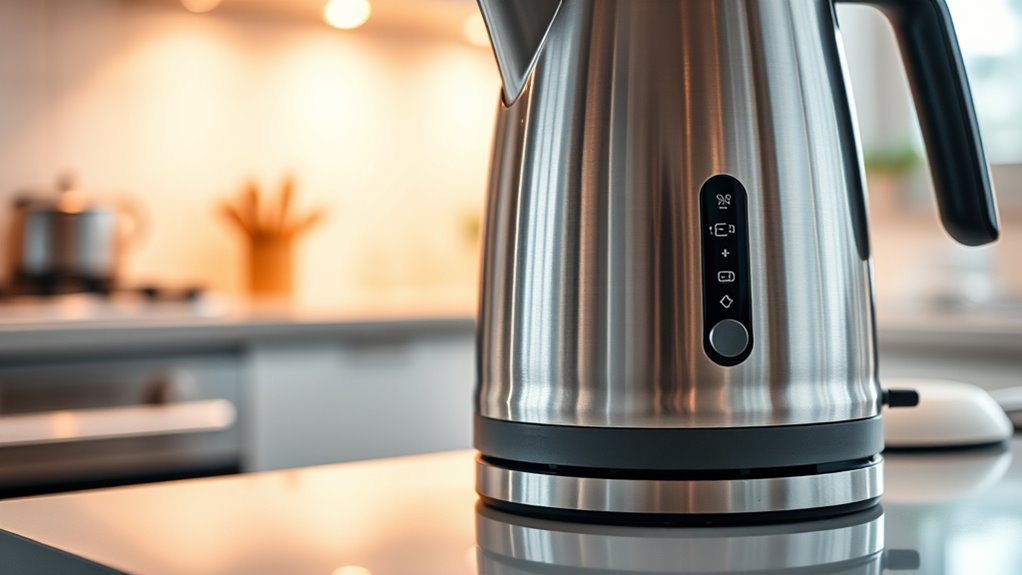
Understanding the wattage ratings and power ranges of electric kettles is essential for choosing the right model for your needs. Most kettles operate between 800 and 3,000 watts, with common household options falling in the 1,200 to 1,500-watt range. Lower-wattage kettles, around 800W, heat water more slowly but use less energy, making them suitable for light use or energy conservation. Higher-wattage models, such as 2,000W or more, boil water faster but consume more electricity in a shorter time. Typically, kettles in the 1,200 to 1,500W range balance speed and energy efficiency for everyday use. Additionally, considering the wattage range can guide you in choosing a model that aligns with your household’s power capacity and usage habits. Being aware of the energy consumption of different wattage levels helps in making smarter choices for both cost savings and environmental impact. Understanding power ratings can also help prevent overloads on electrical circuits in your home. Recognizing the power demands of various appliances enables safer and more efficient household energy management. Understanding these ratings helps you select a kettle that matches your boiling speed needs and energy preferences, ensuring smarter, more efficient choices.
high wattage electric kettle 3000W
As an affiliate, we earn on qualifying purchases.
As an affiliate, we earn on qualifying purchases.
How Wattage Influences Boiling Time and Energy Usage
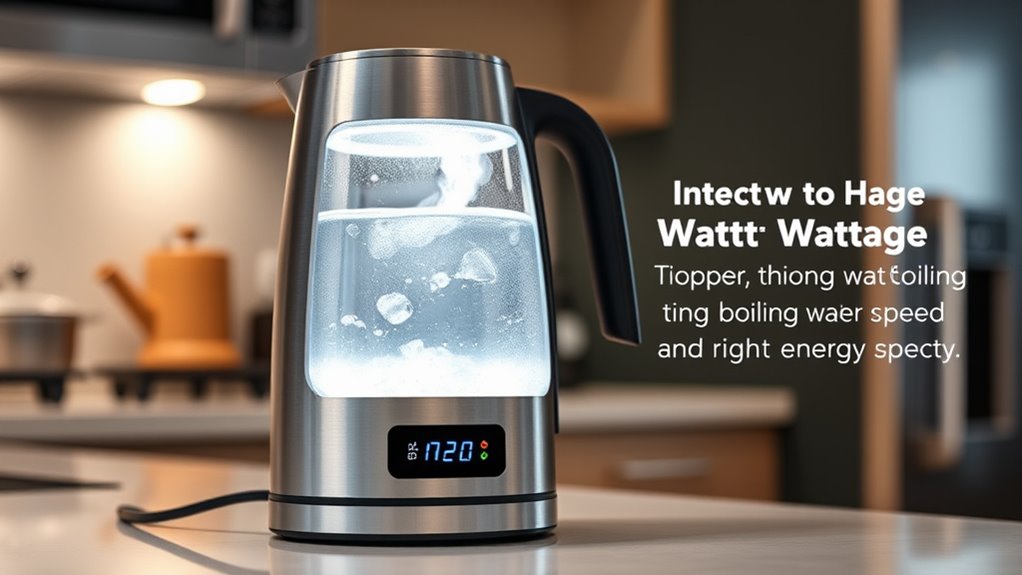
Higher wattage kettles heat water faster, cutting down your boiling time. But, they also consume more electricity in the short term, which can impact your energy costs. Understanding this balance helps you choose a kettle that’s efficient for your needs. Being aware of energy consumption patterns can also help you understand the sometimes mysterious reasons behind energy consumption patterns. Additionally, considering the power draw of your appliance can prevent unexpected increases in your utility bills.
Faster Boiling Times
Wattage directly impacts how quickly your electric kettle boils water, with higher wattage models heating water faster by delivering more power in a shorter time. If you choose a higher wattage kettle, you’ll notice quicker boiling times, making your mornings more efficient. For example, a 3,000W kettle can boil water in about 2.5 minutes, compared to a 1,500W model taking around 4-5 minutes. This means you spend less time waiting and more time on other tasks. Keep in mind:
- Higher wattage reduces waiting time substantially
- Faster boiling can improve daily efficiency
- It may lead to increased energy draw during use
Choosing the right wattage balances convenience and energy consumption, helping you optimize your daily routine. Additionally, understanding filtration and pump protection can help maintain your appliances’ performance and longevity, ensuring consistent results and avoiding unnecessary repairs.
Energy Efficiency Trade-offs
Ever wondered how choosing a more powerful kettle affects your energy bills? Higher wattage kettles heat water faster, saving you time, but they also draw more power during use. This increased power draw means that, per minute, a 2,500W kettle consumes more energy than a 1,200W model. However, since it boils water in less time, the total energy used per boil may be similar across different wattages. If you’re mindful about efficiency, a higher wattage kettle can reduce overall energy consumption by minimizing the time it’s actively heating. Additionally, power consumption patterns can vary depending on how often and how long you leave the kettle plugged in or overfill it, which impacts energy waste regardless of wattage. Understanding electric kettle efficiency and your usage habits is essential for optimizing your energy efficiency and managing costs. Recognizing energy usage patterns helps in making more informed choices about appliance operation and conservation.
Power Consumption Patterns
The wattage of your electric kettle directly impacts how quickly it boils water and how much energy it uses during the process. Higher wattage kettles heat water faster, saving you time, but they consume more power per cycle. You’ll notice:
- Faster boiling times with 2,000W or higher models
- Slightly increased energy use per boil, around 0.125 kWh or more
- Consistent energy consumption across wattages when boiling similar volumes
While a 3,000W kettle boils water in about 2.5 minutes, a 1,500W model takes roughly 4-5 minutes. The key is balancing wattage with your daily needs to optimize energy use without sacrificing convenience. Understanding these patterns helps you choose the right kettle for both efficiency and speed.
best electric kettle for fast boiling
As an affiliate, we earn on qualifying purchases.
As an affiliate, we earn on qualifying purchases.
Comparing Energy Consumption Across Different Kettle Power Levels
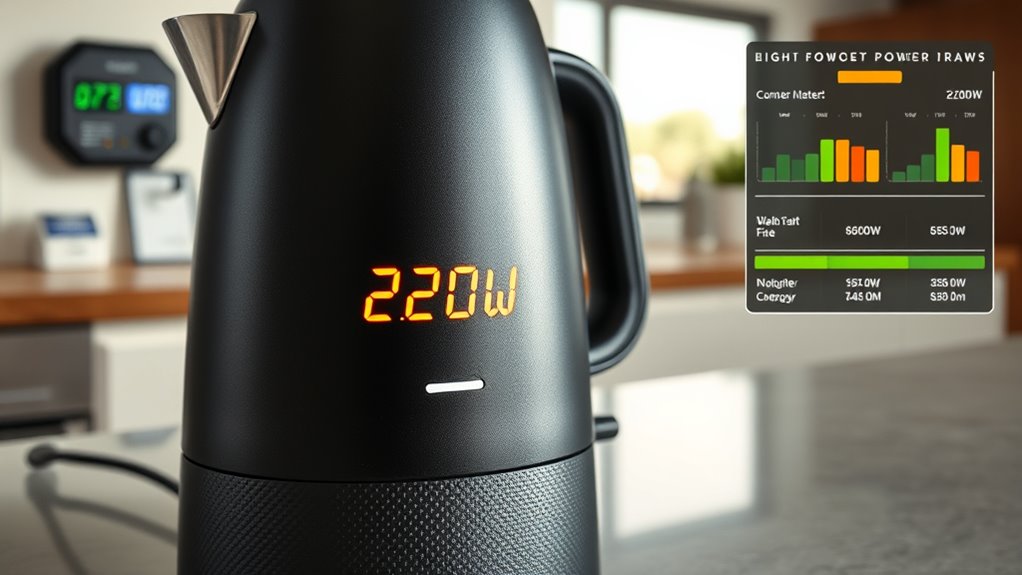
When comparing different kettle wattages, you’ll notice that higher power models boil water faster, saving you time. However, their energy use per cycle stays fairly consistent, meaning faster boiling doesn’t always mean higher overall consumption. Understanding these differences helps you choose the most efficient kettle for your needs. Additionally, considering the power level of your kettle can influence your overall energy efficiency and utility costs over time. When selecting a kettle, it is also helpful to look for models with energy-saving features that can further reduce electricity use. Since modern kettles often include smart features that optimize energy use, selecting the right wattage can further enhance your kitchen’s automation and efficiency. Being aware of the energy consumption of different wattages enables you to make more sustainable choices in your household.
Boil Time Variations
Boil time varies considerably across kettle power levels, with higher wattage models heating water faster than lower wattage ones. For example, a 3,000W kettle can boil a liter in about 2.5 minutes, while a 1,200W model takes roughly 4 to 5 minutes. Faster boiling means less waiting, but it also uses more energy in a shorter period. Consider these points:
- Higher wattage kettles typically boil water in 2-3 minutes.
- Lower wattage models may take up to 5 minutes or more.
- The difference in boil time impacts how quickly you get hot water, especially during busy mornings.
- Energy consumption varies with wattage and boil time, affecting overall efficiency.
- Wattage selection can influence the total energy used per boiling cycle, depending on your usage habits.
- Understanding power ratings helps you choose a kettle that balances speed and energy efficiency for your needs.
- Being aware of electric load is important for safe home electrical system management, especially if multiple high-wattage appliances are used simultaneously.
- Additionally, knowing the power capacity of your electrical system can help prevent overloads when selecting higher wattage appliances.
Energy Use Efficiency
Is higher wattage always more energy-efficient for boiling water? Not necessarily. Although faster boiling saves time, it doesn’t mean it uses less energy overall. A 1,500W kettle and a 3,000W kettle may both consume about 0.125 kWh per boil, despite different times. Higher wattage models heat water quickly, but the total energy used remains similar because they spend less time heating. Lower wattage kettles take longer but often use about the same energy per cycle. To maximize efficiency, avoid overfilling the kettle and only boil the amount of water you need. Using a kettle with appropriate wattage for your household’s needs helps balance quick heating with minimal energy waste, making your water boiling both efficient and cost-effective. Additionally, understanding SmartCR innovations in energy management can further optimize your appliance usage.
electric kettle with standby power saving
As an affiliate, we earn on qualifying purchases.
As an affiliate, we earn on qualifying purchases.
Common User Habits That Lead to Hidden Energy Waste
Many users unknowingly waste energy by overfilling their kettles, boiling more water than necessary. This habit wastes electricity and increases costs without added benefit. To avoid this, consider these common habits that lead to hidden energy waste:
Avoid overfilling your kettle to save energy and reduce unnecessary costs.
- Filling the kettle beyond the needed amount for a single use
- Repeatedly boiling small amounts of water multiple times a day
- Leaving the kettle plugged in when not in use, incurring standby power consumption
These behaviors cause unnecessary energy draw and higher bills over time. Small adjustments, like boiling only what you need and unplugging the kettle when not in use, can considerably cut down on wasted energy. Being mindful of your habits helps maximize efficiency and reduces your environmental impact.
The Role of Standby Power and Its Impact on Electricity Bills
Ever considered how much standby power your electric kettle consumes when it’s plugged in but not actively boiling? That small amount, often around 50 watts, might seem insignificant, but it adds up over time. When your kettle stays plugged in continuously, this standby power contributes to your overall energy bill, especially if you have multiple appliances in standby mode. Although it’s a tiny fraction of total consumption per day, over months and years, it becomes a noteworthy cost. For example, leaving your kettle plugged in 24/7 could add a few extra kilowatt-hours annually. To save money, unplug your kettle when not in use or choose models with lower standby power ratings. Small habits can considerably reduce unnecessary energy waste.
Tips for Choosing an Efficient Kettle to Minimize Power Draw
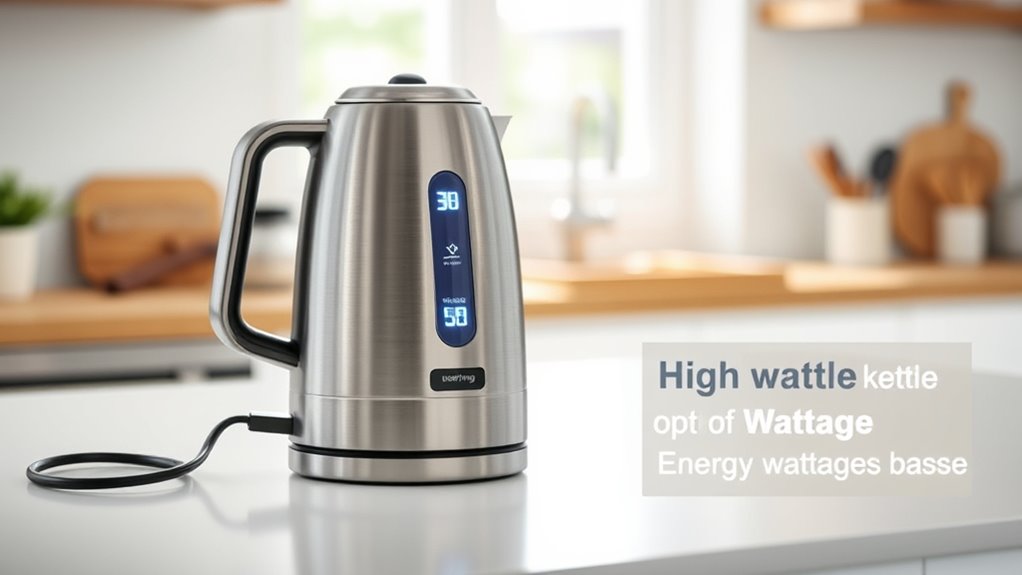
Choosing an energy-efficient electric kettle involves more than just picking a model with a lower wattage; it requires considering features that help reduce unnecessary power draw. To maximize efficiency, look for kettles with insulation to keep water warm longer without reboiling. Choose models with auto shut-off to avoid wasting energy when water reaches boiling point. Additionally, select kettles with variable temperature settings to heat only the amount of water you need.
- Insulation to retain heat and reduce reboiling
- Auto shut-off to prevent unnecessary power use
- Variable temperature controls for targeted heating
Frequently Asked Questions
Do Higher Wattage Kettles Have Higher Overall Energy Costs?
Yes, higher wattage kettles can have higher overall energy costs if used inefficiently, like overfilling or boiling multiple times a day. However, they often boil water faster, reducing total energy per cycle. If you use them wisely, the increased wattage doesn’t necessarily mean higher costs. Focus on proper usage, like only boiling the amount of water you need, to keep energy expenses low regardless of wattage.
How Does Kettle Material Affect Energy Efficiency?
Kettle material impacts energy efficiency by influencing heat retention and transfer. Stainless steel kettles often heat water faster because they retain heat well, reducing energy loss. Glass or plastic models might take longer to boil, using slightly more energy. You can save energy by choosing a well-insulated kettle, as it keeps heat longer, minimizing unnecessary reheating. Overall, material choice affects how quickly and efficiently your kettle boils water.
Are Cordless Kettles More Energy-Efficient Than Corded Models?
Cordless kettles are generally as energy-efficient as corded models, with most using similar wattages around 1,500 watts. Interestingly, a study shows that over 67% of people overfill kettles, wasting energy regardless of cord type. Since energy consumption depends more on boiling habits than cord design, choosing a cordless kettle won’t substantially save energy. Focus on efficient usage, like only boiling the water you need, to cut costs effectively.
Does the Kettle’s Insulation Impact Standby Power Consumption?
Yes, the kettle’s insulation impacts standby power consumption. When your kettle has good insulation, it retains heat longer, reducing the need for the heating element to stay active constantly. This means less standby energy is used, saving you electricity and money. Conversely, poorly insulated kettles may draw more power while waiting to maintain water temperature, increasing overall standby energy use. Choosing well-insulated models helps improve efficiency during idle periods.
Can Using a Smaller Kettle Save More Energy Than a Larger One?
Think of your kettle like a race car—smaller ones are lightweight and quick, while larger ones are bulkier and slower. Using a smaller kettle can save energy because it heats only the water you need, reducing wasted power. You’re not just boiling water; you’re racing against energy waste. So, choose a smaller kettle for efficiency, especially if you typically make small amounts, to cut down on unnecessary electricity use.
Conclusion
By choosing a kettle with the right wattage, you can turn your kitchen into an energy-efficient oasis. Imagine your mornings, steam rising like a gentle cloud, as you boil water swiftly without wasting power. Being mindful of standby modes and habits helps keep your electricity bill in check, turning everyday routines into small acts of savings. So, pick wisely, and make your kitchen a haven of smart, eco-friendly choices.
Halloween Picks
halloween
As an affiliate, we earn on qualifying purchases.