Your coffee maker’s power spikes happen because its heating element and pump operate simultaneously during brewing, causing sudden surges beyond the machine’s usual wattage. Heating water requires high wattage briefly, and pumps pressurize the system quickly, creating quick power peaks. Extra features like frothers or grinders can add to these surges. If you want to understand how to manage these spikes and save energy, keep exploring for more tips.
Key Takeaways
- Power spikes occur mainly when the heating element activates to rapidly heat water during brewing.
- Pump operation during brewing causes sudden surges in electrical current.
- Additional features like frothers, grinders, and displays contribute to transient power increases.
- Larger water volumes require higher wattage, leading to more significant power spikes.
- Off-grid systems need inverter capacities sized 20–25% above peak wattage to handle these surges.
As an affiliate, we earn on qualifying purchases.
Understanding Wattage Ranges for Different Coffee Makers
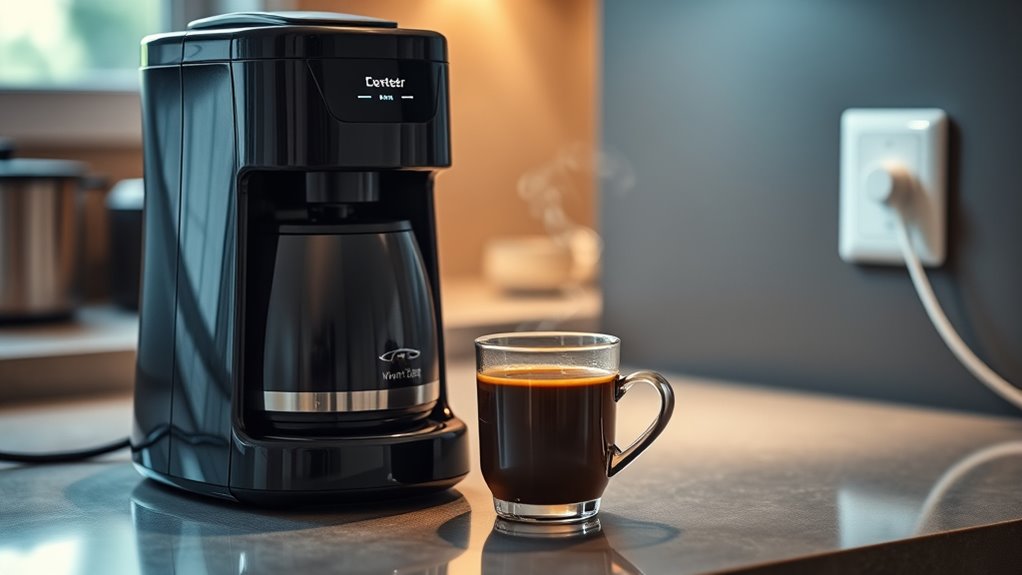
Different types of coffee makers have distinct wattage ranges based on their design and brewing functions. Drip machines typically draw between 550 and 1200 watts, depending on size and features like heating elements and pumps. Single-serve pod brewers, such as Keurig or Nespresso, usually operate within 900 to 1500 watts during brewing cycles, mainly due to rapid water heating. Automatic espresso machines and super-automatic units often require 1000 to 1500 watts to power their heating elements, pumps, and grinders. Smaller 2-cup or travel coffeemakers use as little as 300 to 600 watts, making them energy-efficient options. Overall, most household coffee makers fall within the 550 to 1500-watt range, with wattage driven by their specific design, capacity, and additional features. European cloud innovation emphasizes energy-efficient solutions that can help reduce power spikes during appliances’ operation. Additionally, newer models incorporate energy-saving technologies that optimize power use during operation and standby modes.
coffee maker power surge protector
As an affiliate, we earn on qualifying purchases.
As an affiliate, we earn on qualifying purchases.
When and Why Power Spikes Occur During Brewing

Power spikes happen during brewing when the heating element suddenly activates to rapidly raise water temperature, often reaching the machine’s rated wattage. You’ll also see short surges when the pump cycles on to move water through the system or pressurize components. These brief spikes are normal but can vary based on the machine’s design and additional features. Additionally, some models may incorporate power regulation to manage and minimize these fluctuations during operation.
Heating Element Activation
Heating element activation typically causes power spikes during brewing because the device’s heater demands a surge of energy to rapidly raise the water temperature. When you start brewing, the element kicks in at full power to quickly heat the water to the targeted temperature, often reaching the device’s rated wattage. This sudden demand creates a power spike, which is why your coffee maker shows a brief peak on your power meter. The activation cycle is controlled by a thermostat that turns the heater on and off to maintain temperatures but temporarily draws maximum current during initial heating. These spikes are essential for efficient brewing, ensuring water heats quickly enough to prepare your coffee in a reasonable time.
Pump and Pump Cycles
During brewing, the pump’s cycles can cause noticeable power spikes because it must rapidly generate pressure to push water through the coffee grounds. When the pump activates, it draws a high current to build the necessary pressure quickly. This sudden demand causes a brief power surge, often pushing the machine’s wattage above its typical running level. These spikes are especially prominent in espresso machines and some drip brewers with powerful pumps. The pump cycles frequently during the brewing process, especially at the start, as the machine pressurizes the system. Once the desired pressure is reached, the pump may cycle less often, but the initial surge creates a sharp spike in power draw. This behavior explains many of the short, intense power spikes you observe during your coffee-making session. Additionally, pump cycling patterns can vary depending on the machine’s design and the load placed on the pump during operation. Variations in electrical load can also influence the magnitude and frequency of these power spikes, as electrical components respond differently under varying conditions.
As an affiliate, we earn on qualifying purchases.
The Role of Water Heating in Power Peaks
Water heating is the main driver of power peaks in coffee makers because the heating element rapidly raises the water to the desired temperature. When you start brewing, your machine draws its highest wattage—often its rated power—to quickly heat the water. This process causes a spike that lasts until the water reaches the set temperature. The rate of heating depends on the water volume and the wattage of the element. Here’s a quick look:
| Water Volume | Power Peak (W) |
|---|---|
| Small (2 cups) | ~600 W |
| Medium (4 cups) | ~1000 W |
| Large (10+ cups) | ~1200 W |
This rapid energy demand explains why your coffee maker pulls so much power at once during startup, primarily driven by water heating. Additionally, power consumption patterns can vary based on the specific design and features of different coffee makers. Recognizing how water heating influences energy use can help in choosing more energy-efficient models and managing your energy bills. Understanding the heating element’s wattage can also assist in estimating the overall energy costs over time. Being aware of power peaks can help you plan your energy usage more effectively and potentially reduce costs.
coffee maker with energy-saving technology
As an affiliate, we earn on qualifying purchases.
As an affiliate, we earn on qualifying purchases.
How Pump Cycles and Additional Features Affect Power Draw
When the pump activates, it causes a sudden surge in power draw, adding to the machine’s overall energy use. Additional features like milk frothers, grinders, or display screens also draw extra electricity, often overlapping with pump and heater cycles. Understanding how these components work together helps you better estimate your coffee maker’s true power requirements. Electrical load management is key to ensuring safe and efficient operation of your appliance. Being aware of power surges during operation can help prevent overloads and potential damage to your electrical system. Recognizing how electrical components interact during different phases of operation allows for better planning and safer usage. Additionally, some high-end models incorporate power regulation technology to minimize fluctuations and optimize energy efficiency during operation.
Pump Activation Surges
Pump activation surges occur because the pump motor requires a burst of additional power to initiate and sustain fluid movement through the system, often coinciding with the heating cycle. When you start brewing, the pump motor briefly draws more current as it overcomes inertia and creates pressure to move water from the reservoir to the brew basket. This surge can cause a noticeable spike in power draw, especially in models with smaller or less efficient motors. Additionally, some coffee makers feature multiple pump cycles during brewing, each creating a temporary power peak. These surges are brief but contribute to the overall power consumption during the brew process. Recognizing the power surge phenomenon helps explain why your coffee maker sometimes draws more power than during idle or warm-up phases. Some models also incorporate additional features such as grinders or warming plates, which can further increase the power demand during operation. Moreover, the electric components within the machine momentarily draw extra energy to operate these integrated features, amplifying the power spike. An understanding of electrical load dynamics can help you better manage your energy usage and prevent unexpected outages.
Extra Feature Load
Additional features like milk frothers, grinders, display screens, and automatic cleaning cycles can considerably increase a coffee maker’s overall power draw. These extras often operate simultaneously with brewing, adding short-term power spikes beyond the machine’s base wattage. For instance, a built-in grinder consumes extra energy during bean processing, while display screens and LED lights draw continuous low-level power even when idle. Automatic cleaning cycles, especially those involving water heating and pump operation, cause additional surges. Pump cycles needed for espresso extraction or steam generation also contribute to peak loads. When combined with the main heating element, these features create overlapping loads that push the total power demand higher, sometimes close to the device’s maximum rated wattage. This synergy explains why some coffee makers spike power more than their nominal ratings during operation. In addition, performance optimization strategies in modern machines can temporarily increase energy use to achieve faster brewing times or enhanced features. Furthermore, the power management systems in advanced coffee makers can dynamically adjust energy distribution, sometimes causing brief spikes during operation. Moreover, understanding the power draw characteristics of individual components can help in designing more energy-efficient machines that minimize unnecessary surges. Additionally, component efficiency improvements can lead to reduced peak power demands without sacrificing performance. Additionally, energy consumption patterns can vary based on usage habits, impacting overall power spikes.
Typical Energy Consumption per Brew Cycle

The typical energy consumption per brew cycle largely depends on the size of the coffee maker and the amount of water heated. For example, a standard drip coffee machine using about 4 cups of water (roughly 0.5 liters) at around 1000 W will consume approximately 0.167 kWh (167 Wh) during a 10-minute brew. Single-serve pod brewers, often drawing 900–1500 W, use similar energy but in a shorter time, making their per-brew consumption comparable. Espresso machines with built-in pumps and boilers usually require 1000–1500 W, with energy use depending on water volume and cycle duration. Smaller travel or 2-cup makers run on lower wattages (300–600 W), consuming less energy per cycle. Overall, energy use per brew correlates strongly with water volume and heating time.
Calculating Costs and Energy Use for Coffee Preparation
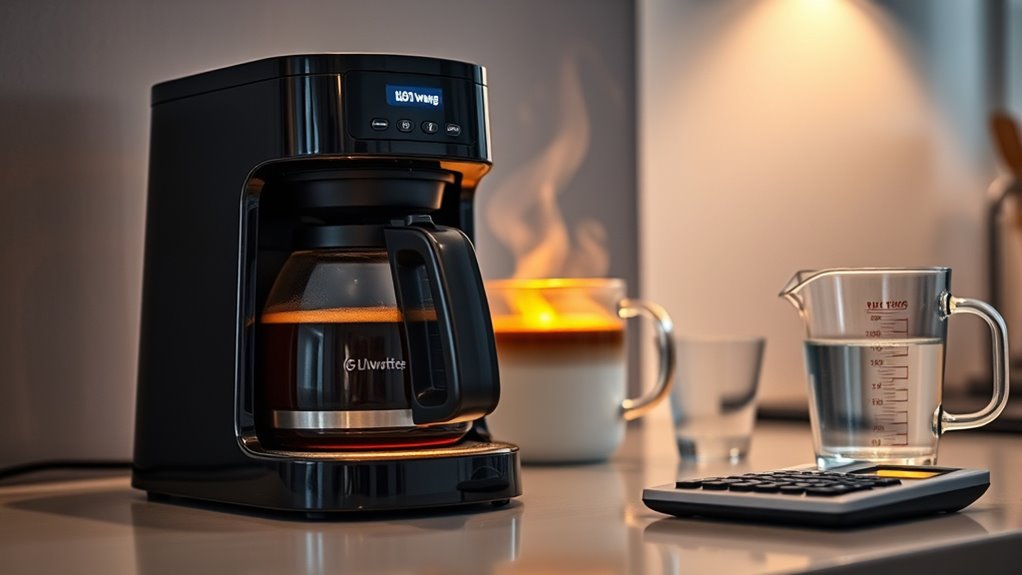
Calculating the costs and energy use of your coffee maker helps you understand how much each brew impacts your electricity bill. To do this, multiply the machine’s wattage by the brew time in hours, then by your electricity rate per kWh. For example, a 1000 W coffee maker running for 10 minutes (0.167 hours) costs about $0.028 per brew at $0.17 per kWh. Keep in mind that warming plates and standby functions add ongoing energy costs. If you brew twice a day, the daily energy consumption can reach around 0.33 kWh, translating to roughly $0.056 daily or over $16 annually. Using lower-wattage models or turning off warming features reduces these costs. Accurate calculations help you identify energy-efficient brewing habits and manage your electricity expenses effectively.
Implications for Off-Grid Power Systems and Inverter Sizing
When powering a coffee maker off-grid, selecting the right inverter size is vital because peak wattage during brewing can exceed the machine’s rated power. Many brewers experience short surges, especially during heating or pump cycles, which can overload an undersized inverter. To avoid shutdowns or damage, choose an inverter rated at least 20-25% above the machine’s maximum wattage. For example, a 1500 W coffee maker should have a 1800–2000 W inverter. Additionally, consider the inverter’s surge capacity and efficiency, as well as battery capacity, to guarantee reliable operation. Oversized inverters add cost but provide necessary headroom. Accurate knowledge of your coffee maker’s peak power, including startup surges, is essential for proper sizing and system longevity.
Strategies to Minimize Power Spikes and Save Energy
To minimize power spikes and improve energy efficiency, you can adopt several practical strategies. First, brew larger batches to reduce how often your machine heats water. Use thermal carafes and disable warming plates when possible, as they consume continuous energy. Choose models with better insulation or no warming feature. Schedule brewing during off-peak hours if your utility offers time-of-use rates. Regularly descale your machine to maintain ideal heat transfer, reducing unnecessary power draw. Finally, limit additional features like milk frothers or grinders that add to peak load.
| Strategy | Benefit |
|---|---|
| Brew larger batches | Less frequent heating, lower spikes |
| Use thermal carafe | Keeps coffee warm without warming plate |
| Disable warming plates | Cuts continuous energy use |
| Schedule during off-peak | Saves on energy costs |
| Regular descaling | Maintains efficiency, reduces energy waste |
Frequently Asked Questions
How Do Inrush Currents Influence Peak Power Measurements in Coffee Makers?
Inrush currents cause your coffee maker’s peak power measurements to spike temporarily. When you turn it on, the motor and heating elements draw a surge of current much higher than their steady-state wattage, often lasting just a few seconds. This surge reflects the initial energy needed to start the components moving or heating, leading to higher peak power readings that can sometimes exceed the device’s rated wattage.
Do Newer Coffee Machine Models Have Lower Power Spikes Than Older Ones?
Yes, newer coffee machine models often have lower power spikes than older ones. Advances in technology, better insulation, and improved circuit design help reduce inrush currents and peak power demands. Manufacturers focus on energy efficiency and safety, so newer models typically feature smoother startup processes and controlled power surges. This means your modern coffee maker is less likely to cause sudden power spikes, making it safer and more energy-efficient for your home electrical system.
Can Using a Thermal Carafe Significantly Reduce Power Consumption?
Imagine giving your coffee routine a gentle upgrade—using a thermal carafe can indeed trim down your power use. Since thermal carafes keep coffee hot without needing a warming plate, they eliminate the energy drain from continuous warming. This means less electricity consumed over time, saving you money and reducing your environmental footprint. Plus, you enjoy hot coffee longer without the extra power spikes, making your mornings smoother and more efficient.
What Is the Typical Duration of Peak Power Draw During Brewing?
You’ll typically see peak power draw lasting about 1 to 3 minutes during brewing. This is when the heating element rapidly raises water temperature, often reaching the device’s rated wattage. Pump cycles in espresso machines or additional features may cause short spikes, but the major surge happens during water heating. Once the water reaches the desired temperature, the power drops to maintain the heat, ending the peak period.
How Do Ambient Temperature and Water Temperature Affect Power Spikes?
Ambient temperature and water temperature markedly influence power spikes in your coffee maker. When it’s colder, your machine works harder to heat water and compensate for heat loss, causing higher power peaks. Similarly, colder water requires more energy to reach ideal brewing temperature, leading to increased power draw during heating cycles. To reduce spikes, keep your environment warm and use preheated water, minimizing the energy needed during brewing.
Conclusion
Knowing your coffee maker’s wattage can help you manage energy use better. Did you know that a typical drip coffee maker can draw up to 1,200 watts during brewing? By understanding these power spikes, you can plan for efficient energy use and avoid overloads, especially if you’re on an off-grid system. Small adjustments can make a big difference—they help you save energy and keep your morning routine smooth.