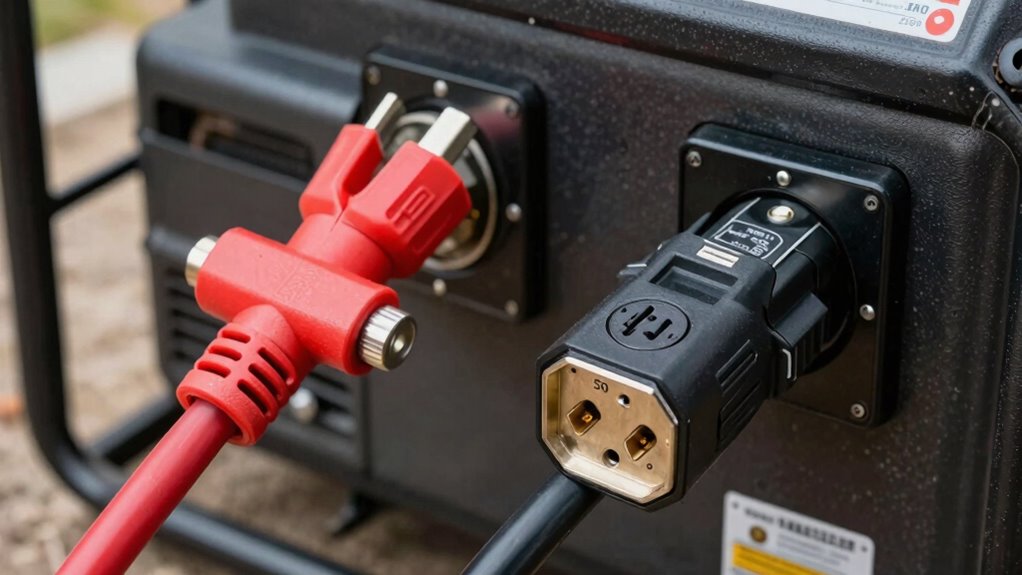
To choose between 30 amp and 50 amp generator connections, first assess your power needs. If you’re only running basic appliances or small setups, a 30 amp connection providing around 7,200 watts should be enough. For larger RVs, multiple devices, or more power-hungry equipment, a 50 amp connection with approximately 12,000 watts is more suitable. Understanding your total power demand helps prevent overloads and guarantees safety. Keep exploring to find the best fit for your setup.

Get backup power and energy gear delivered free with Prime
- Fast, free delivery on millions of items
- Prime Video, Amazon Music and more included
- Member-only deals all year
Key Takeaways
- Assess your total power needs to determine if a 30 Amp (7,200W) or 50 Amp (12,000W) connection is required.
- Check the compatibility of your appliances or RV with the connector type to ensure proper fit and power supply.
- Consider future expansion or additional appliances that may require higher amperage for flexibility.
- Ensure your generator and extension cords are rated for the chosen amperage to prevent overheating.
- Follow safety standards and consult an electrician if unsure about wiring or connection requirements.
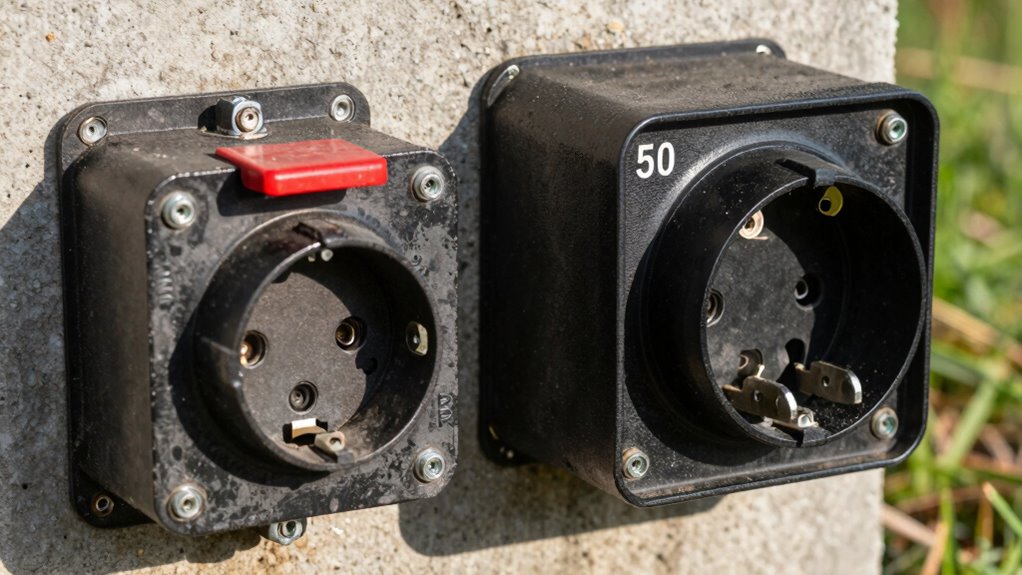
When selecting a generator for your needs, understanding the difference between 30 Amp and 50 Amp options is crucial. These connections determine how much power your generator can supply, directly impacting your ability to provide dependable portable power. If you’re planning to run essential appliances during a power outage or need to power multiple devices at a construction site, knowing which connection suits your setup can prevent headaches and guarantee safety.
Choosing the right generator connection—30 Amp or 50 Amp—ensures safe, reliable power for your specific needs.
A 30 Amp generator connection typically provides around 7,200 watts of power, making it suitable for smaller applications like camping, tailgating, or powering a few household essentials during an outage. It’s a common choice for portable power needs because it’s easy to connect and compatible with many appliances and RVs. However, if your power requirements grow or you need to run more equipment simultaneously, a 50 Amp connection might be necessary. A 50 Amp connection supplies roughly 12,000 watts, ideal for larger RVs, multiple appliances, or commercial tools. It offers more flexibility but requires compatible outlets and wiring.
Choosing between these options involves evaluating your power needs. If you only need to run basic appliances or a few devices, a 30 Amp generator connection is sufficient and easier to manage. On the other hand, if your setup involves higher power demands or you plan to operate multiple devices at once, a 50 Amp connection ensures you won’t be limited by your generator’s capacity. Properly understanding electrical capacity and how it influences your setup can help you make a more informed choice. Additionally, being aware of amperage ratings and their significance can help you select the right equipment and avoid potential issues.
Beyond just power, safety should be your top priority. Proper electrical safety practices are essential when working with high-amperage connections. Always verify that your generator and extension cords are rated for the amperage you need. Using an undersized cord or outlet can cause overheating, damage your equipment, or even pose a fire risk. If you’re unsure about your setup, consult an electrician. Proper grounding and adherence to electrical safety standards protect you and your property, especially when handling higher amperage connections like 50 Amp. Furthermore, understanding electrical safety standards and best practices can prevent hazards and ensure your setup is both safe and efficient.
As an affiliate, we earn on qualifying purchases.
Frequently Asked Questions
Can I Connect a 30 Amp Generator to a 50 Amp Outlet?
You can’t safely connect a 30 amp generator to a 50 amp outlet because of outlet compatibility and power compatibility issues. The outlet’s higher capacity isn’t designed to handle the lower amperage, which can cause electrical problems or damage. Always match the generator’s outlet with the correct receptacle. If you need to connect a 30 amp generator, use an appropriate adapter or verify the outlet is rated for 30 amps to avoid risks.
What Is the Lifespan Difference Between 30 Amp and 50 Amp Generators?
You’ll find that 30 amp generators generally have a shorter lifespan than 50 amp models due to their smaller size and possibly lower durability. However, proper maintenance can extend the durability of either generator. Regularly check oil levels, clean filters, and inspect parts to prevent wear and tear. While 50 amp generators tend to last longer with proper care, both require consistent maintenance to maximize their lifespan.
Are There Safety Concerns Switching Between 30 Amp and 50 Amp Connections?
Switching between 30 amp and 50 amp connections isn’t inherently unsafe if you follow proper safety protocols. You need to guarantee connection compatibility and use the right adapters to prevent electrical hazards. Always turn off your generator before switching connections, and verify that your equipment matches the amperage. By respecting these safety measures, you reduce risks and ensure safe, reliable power transfer between different connection types.
Do 30 Amp and 50 Amp Generators Cost Significantly Different?
Yes, 30 amp generators generally cost less than 50 amp models, but the price difference depends on features and power capacity. You should consider generator maintenance and electrical safety when choosing, as higher-capacity 50 amp units might require more investment upfront. While the initial cost is a key factor, guarantee your setup matches your power needs, and always prioritize proper maintenance and safety to keep your generator running efficiently.
How Does Power Capacity Affect Fuel Efficiency?
Oh, absolutely, cramming more power into your generator magically boosts fuel efficiency—said no one ever. In reality, higher power capacity means increased power consumption, which can drain your fuel faster. So, if you aim for fuel savings, pick a generator that matches your actual needs. Overloading it just wastes fuel, while underpowering leaves you stranded. Balance your power capacity carefully; it’s the secret to smarter fuel use.
As an affiliate, we earn on qualifying purchases.
Conclusion
Choosing between a 30 amp and a 50 amp generator depends on your power needs and setup. Remember, about 60% of homeowners with backup generators opt for the 50 amp connection for its higher capacity, ensuring they’re prepared for larger appliances or multiple devices during outages. By evaluating your power requirements carefully, you can select the right connection, giving you peace of mind and reliable backup when you need it most. So, make an informed choice and stay prepared!
generator transfer switch 30 amp
As an affiliate, we earn on qualifying purchases.
As an affiliate, we earn on qualifying purchases.
heavy-duty extension cords for generator
As an affiliate, we earn on qualifying purchases.
As an affiliate, we earn on qualifying purchases.
Halloween Picks
halloween
As an affiliate, we earn on qualifying purchases.