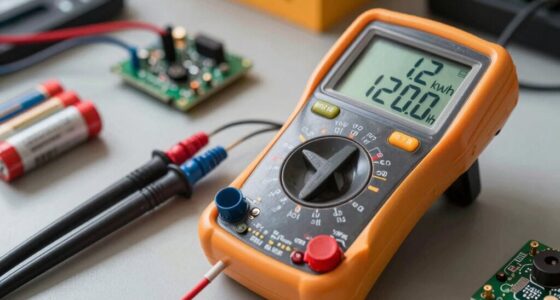
To read an appliance nameplate like a pro, start by locating it in common areas or accessible panels; you’ll find it behind doors, inside panels, or on the frame. Recognize symbols, safety marks, and certification logos, and note voltage, frequency, and wattage. Record model and serial numbers for identification. Pay attention to extra features and technical info, ensuring your appliance is compatible and safe. Keep going to uncover expert tips for accurate and safe inspection.

Get backup power and energy gear delivered free — and shop member deals
- Fast, free delivery on millions of items
- Access to Prime Big Deal Days deals on October 6–7
- Prime Video, Amazon Music and more included
Key Takeaways
- Locate the nameplate in common areas like inside doors, backs, or panels, depending on the appliance type.
- Carefully read the model and serial numbers, ensuring proper lighting and avoiding damage to labels.
- Identify key specifications such as voltage, wattage, frequency, and current ratings listed on the label.
- Recognize certification marks (UL, CE, CSA) to verify safety compliance and authenticity.
- Maintain labels by cleaning gently and recording data promptly for future reference or troubleshooting.
As an affiliate, we earn on qualifying purchases.
Identifying the Location of the Nameplate on Your Appliance
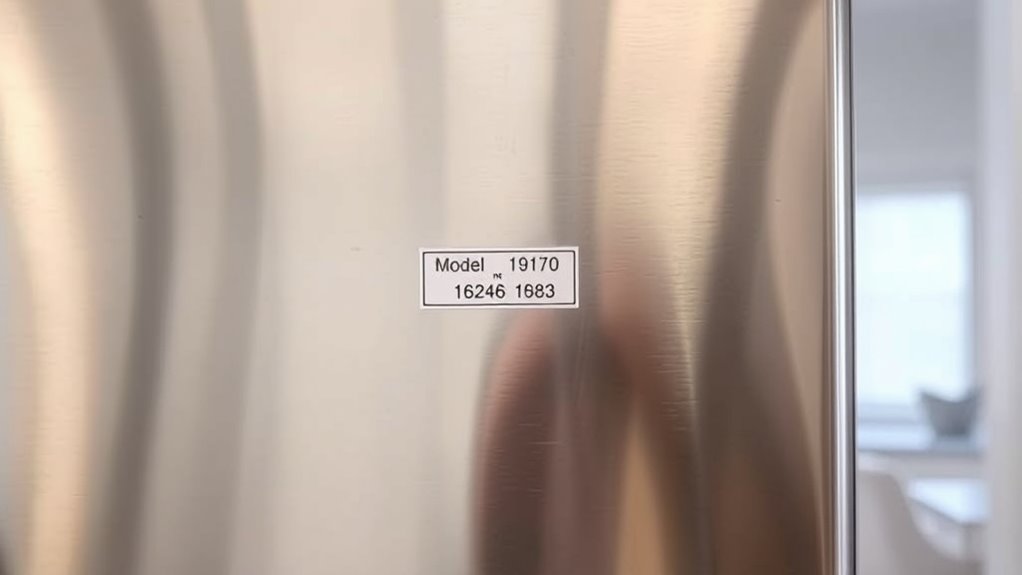
Where exactly is the nameplate on your appliance? Typically, you’ll find it in common areas like the back, side, or inside the door or panel. For appliances like refrigerators or washing machines, check behind or inside accessible panels. Stoves and ovens often have their labels on the frame or door edge. Knowing the location of the nameplate is essential for proper appliance maintenance, as it provides model and serial numbers needed for troubleshooting techniques. If you’re having issues, referencing this label helps ensure you’re using the correct parts or instructions. Take your time to locate it, and keep this information handy. Being familiar with its placement makes troubleshooting more straightforward and minimizes guesswork when identifying problems or seeking repairs. Additionally, understanding appliance specifications can help you select compatible replacement parts and ensure proper operation. Recognizing European cloud innovation trends can also inform best practices for modern appliance integrations. Being aware of safety information related to your appliance can also prevent accidents and damage during repairs. Moreover, many appliances now feature connected technology, making it increasingly important to identify the correct labels for updates or diagnostics. Knowing how to locate and interpret the nameplate can also assist in understanding energy efficiency ratings, which can lead to cost savings and environmental benefits.
appliance model and serial number label
As an affiliate, we earn on qualifying purchases.
As an affiliate, we earn on qualifying purchases.
Recognizing Common Labels and Symbols
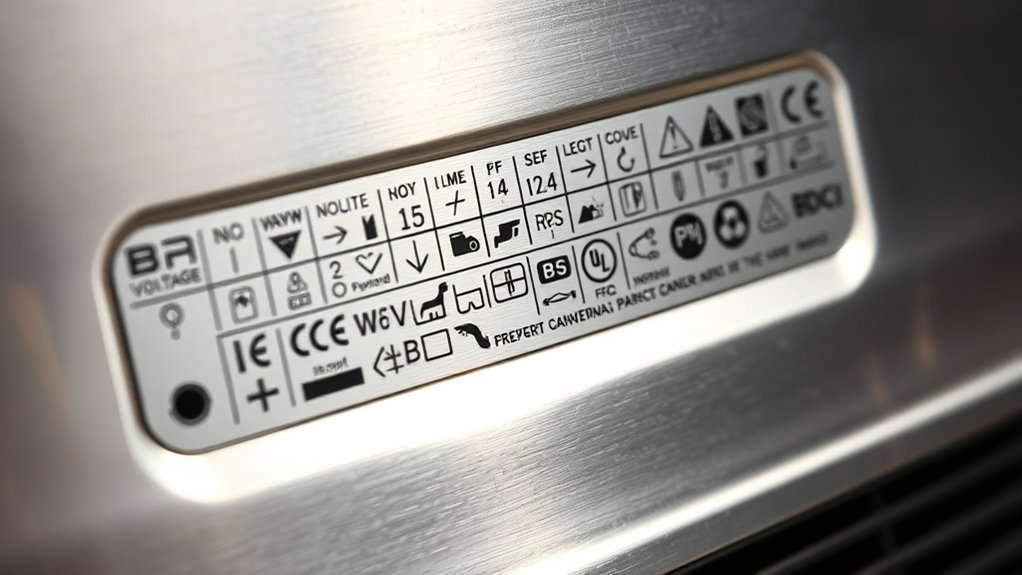
Have you ever looked at an appliance’s nameplate and wondered what all the symbols and labels mean? Recognizing common labels and symbols helps you interpret essential information quickly. Color coding often indicates safety or specific functions—red for danger, green for safe operation, blue for informational. Understanding symbol meanings is vital; for example, a triangle with an exclamation mark warns of potential hazards. Here’s a quick guide:
| Symbol | Meaning |
|---|---|
|  | Caution or warning |
|  | Electrical hazard |
|  | Temperature range |
|  | Ground connection |
Being familiar with these safety symbols can prevent accidents and ensure proper handling of appliances. Recognizing herbal teas like ginger and chamomile can also be beneficial for supporting health and well-being. Additionally, understanding the labeling conventions used on appliances can help you make safer and more informed decisions during maintenance or troubleshooting. For instance, many appliances include water resistance ratings that specify their suitability for humid environments, which is especially useful for pool-related equipment. Furthermore, knowledge of electric power generation and the capabilities of electric motors can help you better understand the performance specifications of various appliances.
appliance safety certification stickers
As an affiliate, we earn on qualifying purchases.
As an affiliate, we earn on qualifying purchases.
Understanding Voltage and Frequency Specifications

Understanding voltage and frequency specifications helps you guarantee your appliance works safely and efficiently. You should check if the voltage matches your power supply to avoid damage or malfunction. Knowing the frequency is also important, as it affects how the appliance operates and may require adjustments for different regions. Additionally, consulting whole-house water filtration system guidelines can help ensure compatibility with your home’s electrical standards. Being aware of regional electrical standards can prevent issues when installing appliances imported from other areas. Moreover, verifying compliance requirements can help ensure your appliance adheres to local safety regulations. Familiarizing yourself with the brand specifications can also aid in proper installation and maintenance. Understanding vetted wave and wind considerations for your area can further optimize appliance performance and longevity.
Voltage Compatibility Tips
To guarantee your appliance works safely and efficiently, it’s essential to pay attention to its voltage and frequency specifications. Understanding voltage compatibility ensures your appliance voltage matches your power supply, preventing damage or malfunction. Check the nameplate for the voltage range; if your supply exceeds or falls short, you may need a converter or transformer. Some appliances are dual voltage, meaning they can operate on multiple voltages, but always verify this before plugging in. Ignoring voltage compatibility risks overheating, electrical failure, or safety hazards. Always compare your local power supply’s voltage with the appliance’s specified voltage range. When in doubt, consult a professional or use appropriate voltage conversion equipment to avoid costly mistakes or unsafe conditions. Additionally, familiarizing yourself with Bank SWIFT/BIC codes can provide insights into secure international transactions and safety standards. Being aware of electrical safety guidelines is also crucial to ensure proper installation and avoid hazards. Proper knowledge of voltage and frequency specifications can help prevent damage to sensitive electronic components and ensure your appliance functions as intended. Moreover, understanding the factors affecting voltage stability can help you anticipate and mitigate potential fluctuations that may impact appliance performance.
Frequency Significance Explained
Why does frequency matter when reading appliance nameplates? Frequency importance lies in guaranteeing your appliance operates correctly and safely. Appliances are designed to run at specific cycle rates, measured in Hertz (Hz). Using an appliance with incompatible cycle ratings can cause malfunction or damage. For example, a device made for 60Hz won’t work properly on 50Hz power without modification. Checking cycle compatibility is essential, especially when traveling or importing appliances. Incompatibility can lead to motor overheating, inaccurate timing, or reduced lifespan. By understanding the frequency specifications on the nameplate, you verify your appliance matches the power grid’s cycle rate. This simple step helps prevent issues, extends your appliance’s life, and maintains peak performance. Frequency significance is a key factor in safe, effective appliance use. Additionally, being aware of power grid standards ensures you select appliances suitable for your location. Knowing the electrical standards in your area supports compatibility and optimal operation. Recognizing the voltage and frequency requirements helps you avoid potential electrical issues and ensures your appliance functions as intended. Furthermore, understanding sound and vibration levels can help anticipate operational noise and prevent disturbances. Being mindful of compatibility with local electrical standards can further safeguard your appliance’s longevity and performance.
appliance troubleshooting tool kit
As an affiliate, we earn on qualifying purchases.
As an affiliate, we earn on qualifying purchases.
Interpreting Power Consumption and Wattage
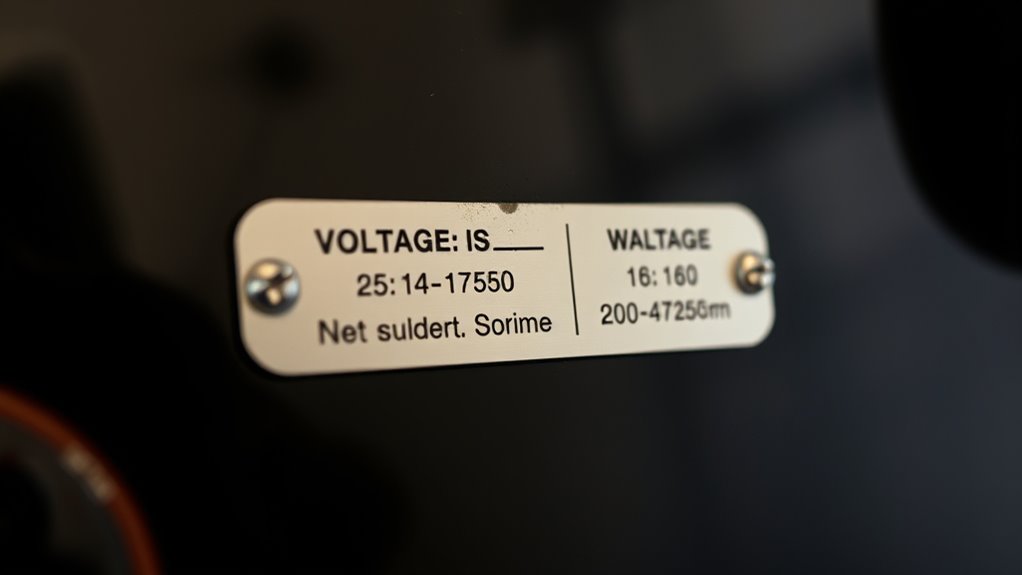
When you look at an appliance’s nameplate, understanding its power ratings helps you know how much energy it uses. Recognizing the voltage and current ratings allows you to see if it’s suitable for your home’s electrical system. By learning how to calculate energy consumption, you can better estimate operating costs and overall efficiency. Being familiar with energy efficiency can also guide you toward more cost-effective and environmentally friendly choices. Additionally, understanding appliance security features can help prevent damage or theft of your devices. Furthermore, understanding affiliate disclosure ensures you’re aware of potential biases in product recommendations.
Understanding Power Ratings
Understanding power ratings is essential for evaluating how much energy an appliance uses and how it operates within your electrical system. Power ratings tell you the wattage or power consumption, which directly impacts energy efficiency and running costs. When you look at a nameplate, note the wattage to determine if the appliance aligns with your energy-saving goals. Appliances with strong branding often emphasize power efficiency, meaning they deliver performance without excessive energy use. Recognizing the power ratings helps you compare devices and choose ones that suit your needs while minimizing electricity bills. Accurate interpretation ensures you select appliances that are both effective and energy-conscious, helping you manage your household’s power consumption smartly.
Recognizing Voltage and Current
Power ratings on a nameplate reveal more than just total energy use; they also indicate the appliance’s voltage ratings and current ratings. Voltage ratings show the electrical potential needed for the appliance to operate correctly, ensuring you supply the right power source. Current ratings specify the maximum current the device draws during operation, which helps determine if your wiring can handle it safely. When you see these ratings, compare them to your household supply to confirm compatibility. High voltage ratings typically mean the appliance is designed for specific outlets, while current ratings indicate whether your circuit can support its load. Recognizing these details helps you prevent overloads and guarantees safe, efficient operation of your appliance.
Calculating Energy Use
Ever wonder how much energy your appliance really uses? To figure that out, you need to understand power measurement and wattage. The nameplate’s wattage indicates the appliance’s power consumption, helping you estimate energy use. Higher wattage means more energy consumed over time, which can impact your electricity bill. For better energy efficiency, consider appliances with lower wattage and look for labels with energy star ratings. To calculate actual energy use, multiply the wattage by the hours of operation and divide by 1,000 to get kilowatt-hours (kWh). This calculation gives you a clear picture of your appliance’s power consumption, empowering you to make smarter choices about energy efficiency and usage. Knowing how to interpret wattage helps you manage energy costs effectively.
Reading Model and Serial Numbers for Identification
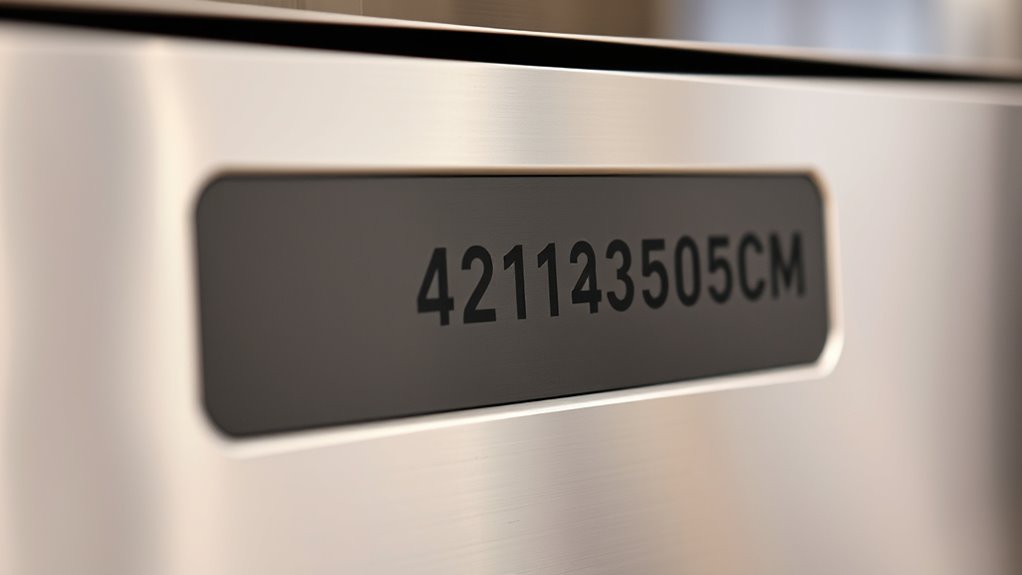
To identify your appliance accurately, start by locating its model and serial numbers, which are typically printed on the nameplate or data tag. These model numbers and serial identifiers are unique codes that help you find replacement parts, check warranty status, or verify specifications. Look for a label often found inside the door, on the back, or along the side of the unit. Model numbers usually specify the product type and features, while serial identifiers provide production details like manufacturing date and location. Take note of these codes carefully. When searching online or contacting customer support, having the exact model number and serial number ensures you get the right information and avoid confusion. This simple step is essential for proper appliance identification.
Deciphering Safety Certifications and Standards
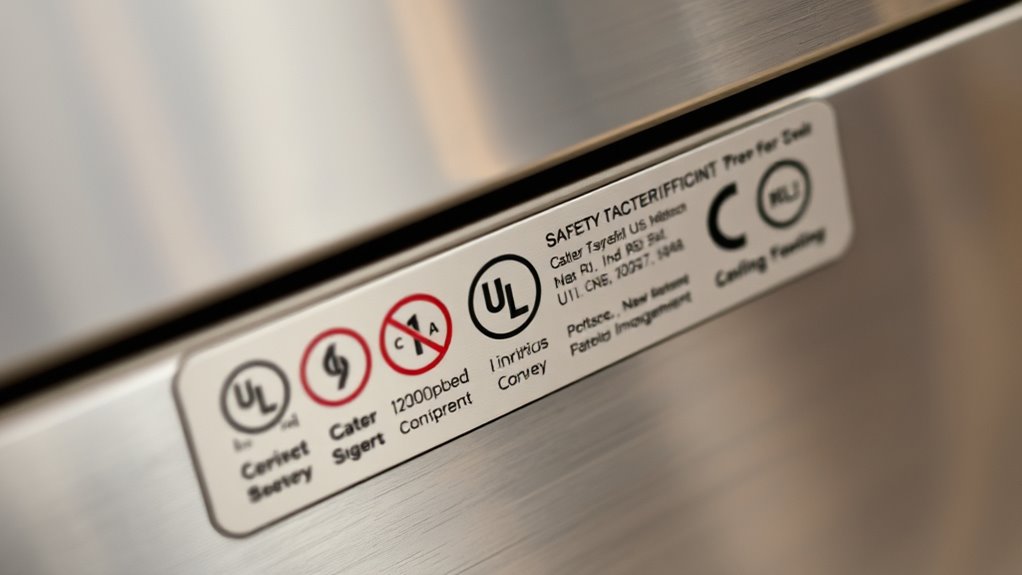
Understanding safety certifications and standards on appliance nameplates helps you guarantee the product meets recognized safety requirements. These safety certifications indicate that the appliance has been tested and approved by relevant authorities, ensuring it adheres to industry safety standards. Look for symbols or labels like UL, ETL, CSA, or CE, which verify standards compliance. Each certification signifies that the appliance has passed specific safety tests, such as electrical safety or fire resistance. Recognizing these markings helps you assess whether the product is safe for use and compliant with local regulations. By familiarizing yourself with these symbols, you can make informed decisions and avoid potential hazards associated with non-compliant or unsafe appliances.
Noting Additional Features and Technical Details
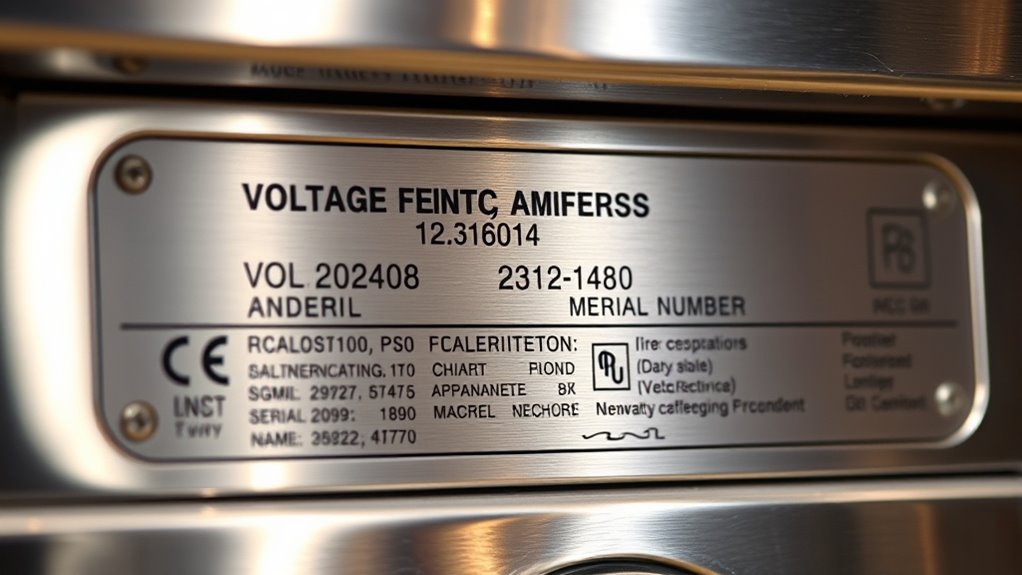
Noting additional features and technical details on an appliance nameplate can provide valuable insights into its capabilities and specifications. These details include features like energy-saving modes, safety mechanisms, or special functions that enhance performance. Technical details such as insulation type, control systems, or advanced safety features can help you understand how the appliance operates and what sets it apart. Recognizing these additional features allows you to assess whether the appliance meets your needs and safety standards. Make sure to carefully examine the label for any symbols, icons, or notes that highlight unique functionalities. This information can aid in troubleshooting, maintenance, or when comparing models, ensuring you choose a device that aligns with your requirements and expectations.
Using the Information to Ensure Compatibility and Efficiency
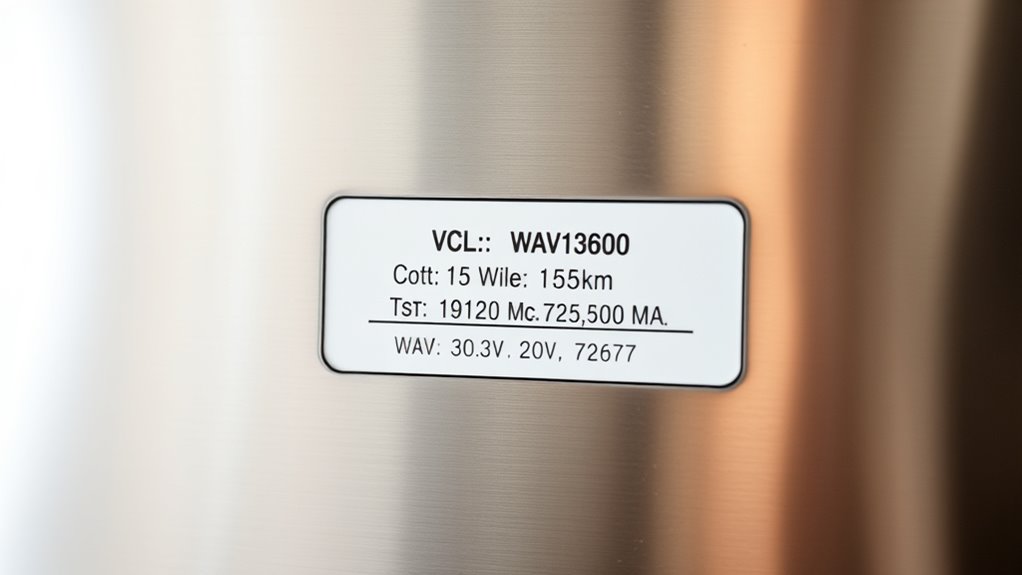
Have you ever wondered how to make sure an appliance will work seamlessly with your existing setup? By using the information on the nameplate, you can verify compatibility and optimize efficiency. Check the voltage and current ratings to ensure your power supply matches, preventing potential damage. Pay attention to the material durability indicated in the specifications; choosing appliances with durable materials can extend lifespan and reduce maintenance. Recognize manufacturer branding to confirm authenticity and quality standards, which helps avoid counterfeit or subpar products. Properly matching these details guarantees your appliance operates efficiently, saving energy and reducing operational costs. Using the nameplate data correctly allows you to make informed decisions, ensuring safety and performance in your setup.
Tips for Safely Reading and Recording Nameplate Data

To safely read and record nameplate data, start by turning off the appliance and unplugging it from the power source. Safety precautions are essential to prevent electrical shock or injury. Handle the appliance carefully, avoiding damaged cords or exposed wiring. When examining the appliance labeling, ensure proper lighting so you can clearly see all details. Keep a pen and paper or digital device ready to record data immediately. Here are some tips to stay safe and accurate:
Always turn off, unplug, and use proper safety gear before reading appliance nameplate data.
- Use insulated tools if needed to avoid contact with live parts
- Wear gloves for extra protection, especially with older appliances
- Avoid rushing — double-check readings before recording
- Keep work area dry to reduce risk of electrical hazards
- Follow manufacturer instructions for specific appliances
Prioritize safety to ensure accurate data collection without accidents.
Frequently Asked Questions
How Often Should I Check My Appliance’s Nameplate for Updates?
You should check your appliance’s nameplate during your regular maintenance schedule, ideally every few months or when you notice any issues. Doing so helps make certain safety precautions are up to date and that the appliance complies with current standards. Regular inspections allow you to verify details like voltage or model updates, preventing potential hazards. Staying proactive keeps your appliance running smoothly and maintains safety for you and your household.
Can I Read the Nameplate Without Turning off the Appliance?
Think of reading the nameplate as opening a treasure chest—you can often do it without turning off the appliance. For safety considerations, use a flashlight and a mirror for better reading angles, avoiding contact with hot or moving parts. Employ gentle reading techniques, like steady hands and clear lighting, to access information safely. This way, you gather details without risking injury or appliance damage.
Are There Differences in Nameplate Locations Across Appliance Brands?
Yes, there are differences in nameplate locations across appliance brands. You’ll find brand-specific labeling that varies by appliance type and model. The installation site often determines where the nameplate is placed—such as inside a dishwasher door, behind a washing machine panel, or on the back of an oven. To locate it quickly, check the user manual or manufacturer’s website for specific guidance on each brand’s typical placement.
What Should I Do if the Nameplate Is Damaged or Unreadable?
A stitch in time saves nine, so if the nameplate is damaged or unreadable, don’t disregard it. You should explore repair alternatives or seek professional assistance to identify your appliance’s details. Contact the manufacturer or a qualified technician who can help retrieve the necessary information or replace the damaged plate. Acting promptly ensures you get the right parts or help without risking further damage or safety issues.
How Can I Verify if the Specifications on the Nameplate Are Current?
You can verify if the nameplate specifications are current by checking the warranty verification and certification standards. Contact the manufacturer or visit their website to confirm that the model details match the latest specifications. Look for updated certification marks, like UL or CSA, which indicate compliance with current safety standards. This makes certain you’re working with accurate, up-to-date information for safe operation and proper maintenance.
Conclusion
Mastering how to read an appliance nameplate isn’t just about numbers; it’s about revealing a deeper understanding of your device’s true potential. By paying close attention and gently deciphering each detail, you create a smoother path to safety, efficiency, and longevity. Think of it as a quiet conversation with your appliance—an artful dance of knowledge that helps you make informed choices without ever missing a beat.
Fall Picks
fall essentials
As an affiliate, we earn on qualifying purchases.