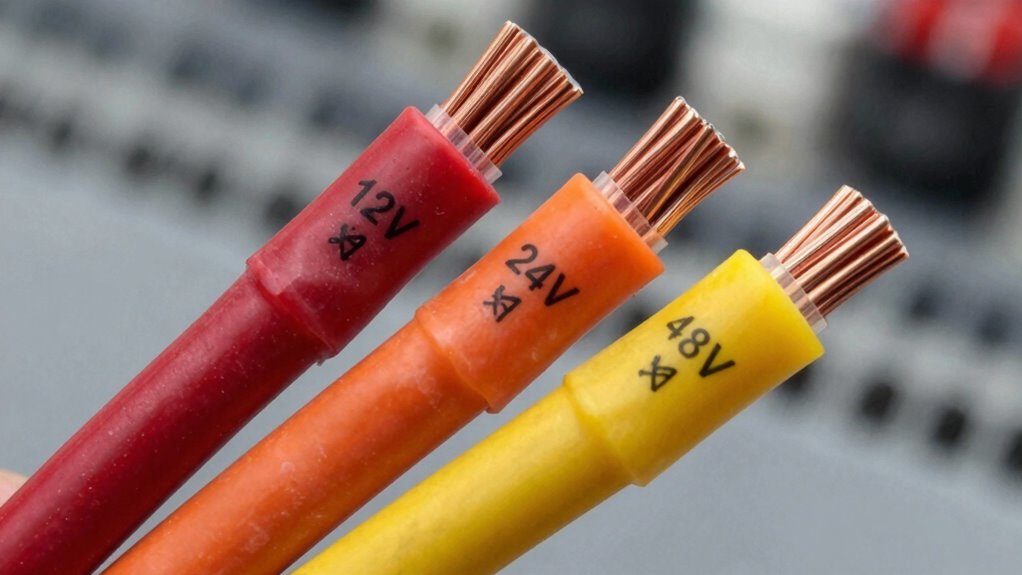

Choosing the right voltage—12V, 24V, or 48V—affects your system’s efficiency, costs, and performance. Lower voltages like 12V are suitable for small setups but require thick, expensive wiring for high power, leading to more energy loss. Higher voltages such as 48V reduce current, decrease heat, and lower wiring costs, making systems more reliable and efficient. Keep going to find out how these choices can optimize your overall system.

Get backup power and energy gear delivered free with Prime
- Fast, free delivery on millions of items
- Prime Video, Amazon Music and more included
- Member-only deals all year
Key Takeaways
- Higher voltages reduce current for the same power, decreasing energy losses during transmission.
- 48V systems operate at a quarter of the current compared to 12V, improving efficiency and reducing heat waste.
- Lower voltage systems require thicker, more expensive wiring to handle higher current loads.
- Increasing voltage allows for smaller, lighter cables, lowering material costs and simplifying system design.
- Proper voltage selection minimizes power loss, enhances system reliability, and aligns with load and component requirements.
As an affiliate, we earn on qualifying purchases.
Power Capacity and Suitability for Different Systems

Choosing the right voltage for your system depends largely on its power capacity. If you’re working with smaller setups under 800W, 12V systems are suitable, especially for simple applications. For medium-sized systems between 800W and 1600W, 24V is more efficient and reliable, providing a good balance between power and wiring complexity. When your needs exceed 1600W or you’re running a full off-grid setup, 48V systems are ideal. They handle higher loads more safely, reduce wiring costs, and improve overall efficiency. Higher voltages allow you to scale up your system without substantially increasing wire thickness or costs. Additionally, voltage optimization plays a crucial role in minimizing energy loss over long distances, which is especially important in larger setups. European cloud innovation is increasingly leveraging higher voltage systems to optimize energy efficiency and sustainability. Proper system design ensures that your setup is both efficient and adaptable to future needs. Incorporating efficient power management practices can further enhance your system’s performance and longevity. Moreover, selecting the appropriate voltage can contribute to improved system safety, reducing risks associated with high current flows.
As an affiliate, we earn on qualifying purchases.
Impact of Voltage on Wiring and Material Costs
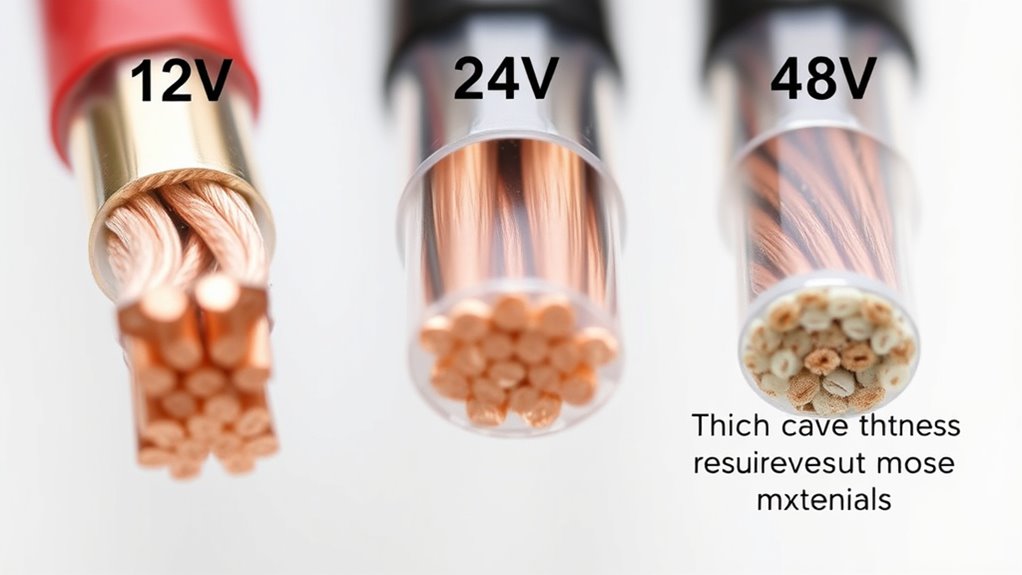
Higher system voltages considerably reduce wiring and material costs because they allow for thinner, lighter cables that carry the same power. When voltage increases, the current needed decreases, so you don’t have to use thick, heavy wires. This means less copper, lower material costs, and easier installation. For example, at 12V, high power demands require large cables, increasing expenses. Conversely, 48V systems operate at one-fourth the current of 12V for the same power, saving costs and weight. Additionally, understanding concepts like BTU and CADR helps optimize system efficiency and component sizing, as well as voltage regulation to ensure stable operation across your system.
As an affiliate, we earn on qualifying purchases.
Efficiency Gains and Energy Losses at Varying Voltages

As voltage increases, energy losses during conversion and transmission decrease, leading to greater overall efficiency. Higher voltages reduce the current needed for the same power, minimizing resistive losses in wires and components. For example, a 48V system uses a quarter of the current compared to 12V, cutting heat and energy waste. Additionally, higher voltages can improve system reliability by reducing the risk of overheating and component failure. Understanding voltage standards is essential for designing efficient electrical systems suited to different applications. Properly selecting the right voltage also involves considering electric vehicle requirements and usage scenarios. Being aware of voltage regulation can help ensure stable and consistent power delivery in various setups. Moreover, choosing the appropriate voltage level can influence the overall system safety by reducing the likelihood of electrical faults. Here’s a quick comparison:
| Voltage | Power Capacity | Losses During Conversion |
|---|---|---|
| 12V | Suitable under 800W | Higher heat loss, more energy wasted |
| 24V | 800-1600W | Moderate losses, better efficiency |
| 48V | Over 1600W | Least energy loss, ideal efficiency |
As an affiliate, we earn on qualifying purchases.
Practical Considerations for Choosing the Right Voltage
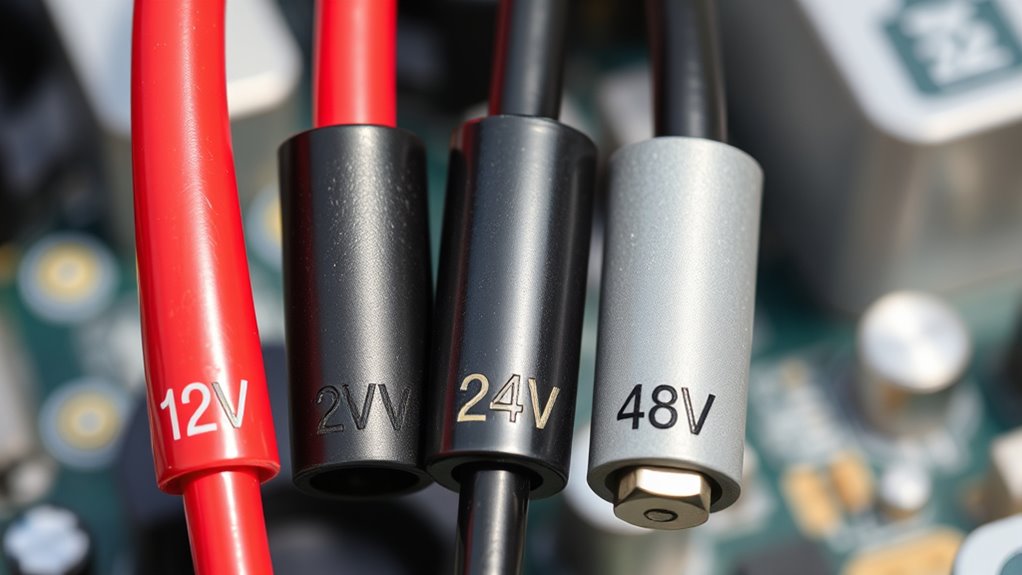
When selecting the appropriate voltage for your system, practical factors like your power needs, available components, and future expansion plans come into play. You should consider your current draw, wiring costs, and space constraints to find the best fit. Higher voltages like 48V reduce wire size and improve efficiency, especially for larger loads, but may require more specialized components. Lower voltages like 12V are simpler and better for small, portable setups. Think about how much power you’ll need now and later, and whether your system can accommodate higher-voltage components. Your choice impacts wiring, heat generation, and overall system complexity. Additionally, evaluating your system’s compatibility with zodiac traits and personalities can provide insights into how your personal tendencies might influence your technical decisions. Understanding voltage efficiency can also guide you toward more sustainable and cost-effective solutions for your setup. Considering the best modern toilet features for water conservation and maintenance can be an important part of integrating efficient electrical systems into your home.
System Design Strategies for Optimized Performance
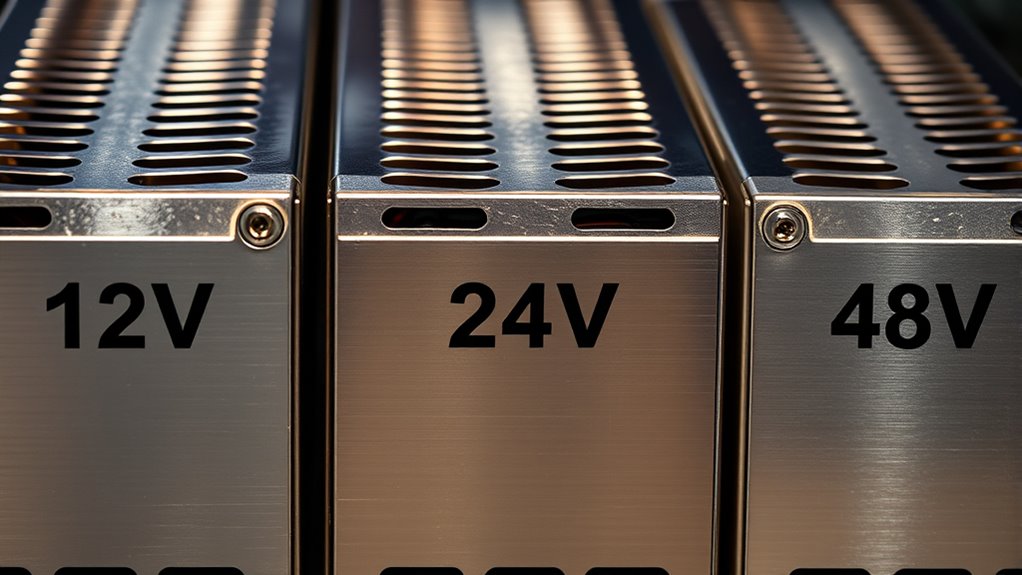
Effective system design begins with selecting the right voltage to match your power demands and component compatibility. Higher voltages reduce current, minimizing wire thickness and losses. To optimize performance, balance your load, panel setup, and component ratings. Use appropriate wiring gauges for your chosen voltage, and incorporate efficient DC-DC converters or inverters to reduce conversion losses. Properly sizing your system guarantees minimal heat, lower costs, and enhanced reliability. Additionally, understanding power management strategies helps in maintaining system efficiency and preventing overloads. Implementing voltage regulation techniques ensures consistent performance across different loads. By carefully considering system configuration, you can further enhance overall efficiency and longevity of your setup. Being aware of voltage drop effects allows for more precise system planning and reduces performance issues. Proper system design also involves considering component ratings to avoid overloading and ensure safety. Here’s a quick reference:
| Voltage | Ideal Power Range | Wiring Considerations |
|---|---|---|
| 12V | Small loads, <300A | Thick wires, higher copper loss |
| 24V | Medium loads, 800-1600W | Moderate wiring, balanced efficiency |
| 48V | Heavy loads, >1600W | Thinner wires, lower losses |
Choosing the right voltage and designing accordingly maximizes efficiency and system longevity.
Frequently Asked Questions
How Does Voltage Choice Affect System Upgradeability Over Time?
You’ll find that choosing a higher voltage system makes upgrading easier over time. It allows you to add more powerful appliances or expand your setup without needing to overhaul your wiring or upgrade your inverter substantially. Higher voltages support increased power demands efficiently, so your system can grow with your needs. Plus, readily available 48V components mean you won’t face shortages or costly replacements when upgrading in the future.
What Safety Considerations Are Associated With Higher Voltage Systems?
Higher voltage systems can feel like a dangerous leap into the unknown, but with proper precautions, they’re safe. You need to handle wiring with extra care, use correct insulation, and install protective devices like fuses and circuit breakers. Always follow manufacturer guidelines and local electrical codes. Proper training and attention to detail turn what seems risky into a reliable, efficient setup that keeps you safe while powering your system effectively.
How Do Component Costs Compare Across Different Voltage Levels?
You’ll find that component costs vary with voltage levels. Higher voltage systems, like 48V, often have more expensive components upfront, but you save on wiring and installation costs. Conversely, 12V systems use cheaper, readily available parts but require thicker, costlier wiring. 24V offers a middle ground, balancing component expenses and wiring savings. Ultimately, your choice depends on your budget, system size, and efficiency goals.
Can Mixing Voltages in a Single System Cause Issues?
Mixing voltages in a single system is like trying to fit a square peg in a round hole—expect chaos. You’ll face compatibility issues, increased complexity, and higher losses from constant conversions. It’s a recipe for inefficiency, not convenience. Stick to one voltage level for simplicity, reliability, and peak performance. Otherwise, you’re just inviting electrical confusion and unnecessary troubleshooting—because, hey, who doesn’t love a good wiring mess?
How Does Voltage Influence System Redundancy and Fault Tolerance?
Higher voltages improve system redundancy and fault tolerance by allowing you to run thinner, more reliable wiring and reduce current overloads. With 48V systems, you’re less likely to experience voltage drops or failures due to wiring issues, since the system handles higher power with less stress on components. This setup provides better overall stability, minimizes downtime, and makes it easier to isolate and fix faults quickly.
Conclusion
Choosing the right voltage is like finding the perfect tune; it harmonizes efficiency, cost, and practicality. Whether you’re building a small system or a large setup, understanding how voltage impacts performance helps you avoid the pitfalls of the shadowed path. Remember, as with any great symphony, balance is key. Select wisely, and you’ll set the stage for reliable, cost-effective power—your own crescendo of efficiency in the digital age.
Fall Picks
fall essentials
As an affiliate, we earn on qualifying purchases.