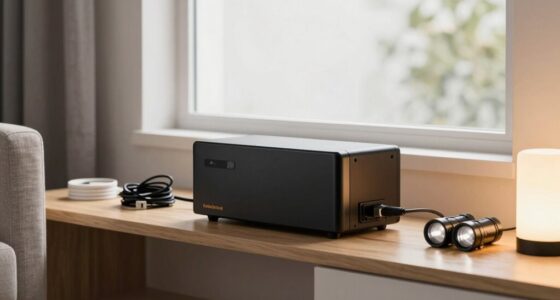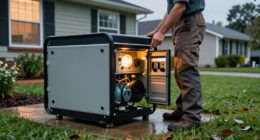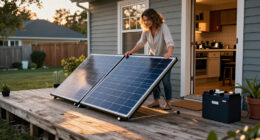

To build a weekend cabin power readiness plan, start by integrating renewable sources like solar panels or small wind turbines suited to your location, ensuring reliable, clean energy. Add backup options such as portable generators and battery storage to keep power consistent during weather disruptions. Maintain your system regularly and adopt energy-efficient appliances to extend power use. Focusing on these strategies boosts your independence and resilience—continue exploring to discover more effective ways to secure your cabin’s power!

Get backup power and energy gear delivered free with Prime
- Fast, free delivery on millions of items
- Prime Video, Amazon Music and more included
- Member-only deals all year
Key Takeaways
- Assess location-specific renewable energy options like solar and wind to optimize power generation.
- Select reliable backup systems such as portable generators and battery storage for continuous power.
- Perform regular maintenance on all components to ensure system longevity and efficiency.
- Implement energy-efficient appliances and practices to maximize power usage and reduce waste.
- Design an off-grid, self-sufficient system focusing on independence, resilience, and reliable energy supply.

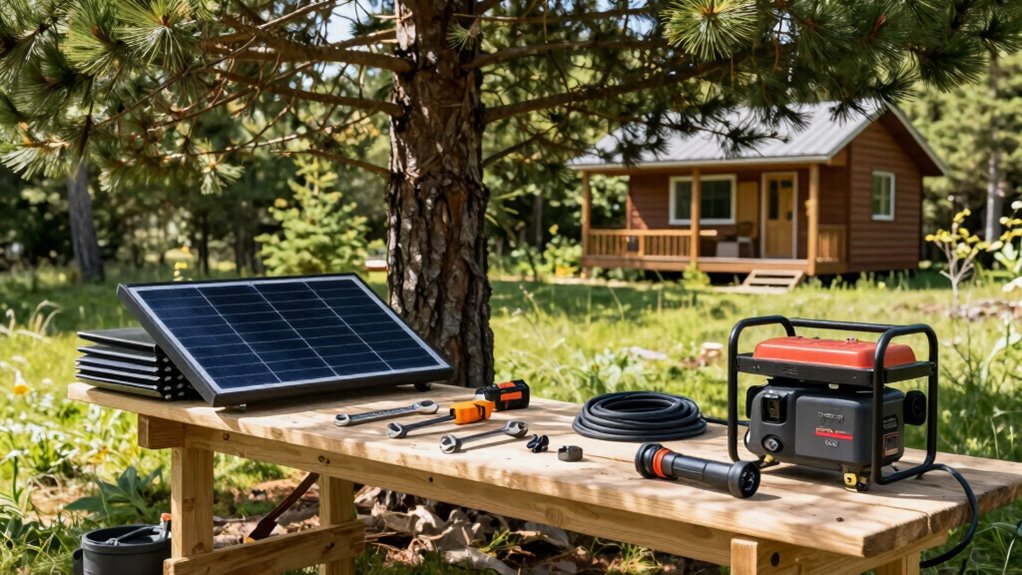
Heading to your weekend cabin should be relaxing, not stressful—especially when it comes to power. You want a system that’s reliable, simple to maintain, and sustainable. To achieve this, it’s vital to consider renewable sources and backup systems as core components of your power readiness plan. Renewable sources like solar panels or small wind turbines can provide clean, sustainable energy that reduces your dependence on the grid. Installing solar panels is often the most straightforward option, especially if your cabin is in a sunny location. They’re easy to set up, require minimal maintenance, and can generate enough power for lighting, small appliances, and even charging devices. Wind turbines are another option if your area experiences consistent breezes, offering a steady source of energy without relying on fuel or external connection.
But renewable sources alone might not always be enough, especially during cloudy days or calm periods. That’s where backup systems come into play. You’ll want a reliable backup power source, such as a portable generator or a battery storage system. Generators can provide immediate power when your renewable sources can’t, making sure you’re never left in the dark. Modern portable generators are lightweight, fuel-efficient, and easy to operate, which makes them perfect for a weekend retreat. Alternatively, battery storage systems—like deep-cycle batteries or advanced home energy storage units—allow you to store excess energy generated during sunny or windy periods. When the weather isn’t cooperating, you simply draw from the stored power, guaranteeing your cabin’s essentials stay running smoothly. Incorporating renewable energy options is essential for a sustainable and self-sufficient setup. Regular maintenance of your renewable and backup systems is vital, too. Clean solar panels, check connections, and ensure your backup generators have fresh fuel and are in good working order before your trips. Additionally, understanding energy efficiency principles can significantly extend your system’s effectiveness and reduce overall costs. Being aware of system reliability factors helps ensure your power setup remains dependable during your stays. Incorporating off-grid strategies can further enhance your independence and resilience during longer stays.
As an affiliate, we earn on qualifying purchases.
Frequently Asked Questions
What Are the Best Portable Power Options for Cabins?
You should consider portable generators and battery backups as the best power options for cabins. Portable generators provide reliable, on-demand electricity, perfect for running appliances and tools. Battery backups offer quiet, maintenance-free power, ideal for essential devices and lighting, especially during outages. Combining these options guarantees you have a flexible, dependable power supply, so your cabin stays comfortable and functional no matter the situation.
How Do I Prioritize Electrical Needs for My Cabin?
Think of your cabin’s electrical needs as a garden that needs careful tending. Start by prioritizing essentials like lighting, refrigeration, and heating—your core energy needs. Use energy storage solutions to keep power flowing smoothly and plan power distribution to guarantee each zone gets what it needs without overload. By focusing on these, you’ll create a balanced system that keeps your cabin comfortable and functional, no matter the weather outside.
What Safety Precautions Should I Take With Cabin Power?
You should prioritize safety by installing smoke and carbon monoxide detectors, ensuring they’re functional before your trip. Keep a fire extinguisher nearby and regularly check electrical wiring for damage to prevent fires. Prepare an emergency preparedness kit with flashlights, batteries, and first aid supplies. Always turn off power when working on electrical systems, and follow fire safety guidelines to reduce risks. These steps help protect you and your cabin during your weekend stays.
How Often Should I Perform Electrical System Maintenance?
You should perform electrical system maintenance at least once a year to guarantee safety and reliability. During this process, conduct thorough electrical inspections to identify any wear or potential hazards. Additionally, prioritize battery maintenance by checking connections, cleaning terminals, and testing charge levels regularly. Keeping up with these tasks helps prevent outages, extends equipment lifespan, and assures your weekend cabin remains powered safely and efficiently.
Can I Install Solar Panels Myself or Hire a Professional?
You can definitely try DIY installation of solar panels if you’re comfortable with electrical work, but professional consultation is highly recommended. Handling solar panels involves understanding wiring, safety, and local codes. Hiring a professional ensures proper setup, maximizes efficiency, and adheres to safety standards. Weigh your skills against the complexity of the project, and consider a professional for peace of mind, quality, and long-term reliability of your cabin’s power system.
As an affiliate, we earn on qualifying purchases.
Conclusion
By creating a solid power readiness plan, you’re ensuring your weekend cabin remains comfortable and functional, even during unexpected outages. Imagine a couple who installed solar panels and a backup generator, allowing them to enjoy cozy weekends without worries. With the right preparations, you’ll be ready for anything — whether it’s a storm or a simple trip. So, take action now, and make your cabin a reliable retreat you can count on, no matter what.
deep cycle battery storage system
As an affiliate, we earn on qualifying purchases.
As an affiliate, we earn on qualifying purchases.
As an affiliate, we earn on qualifying purchases.
Fall Picks
fall essentials
As an affiliate, we earn on qualifying purchases.