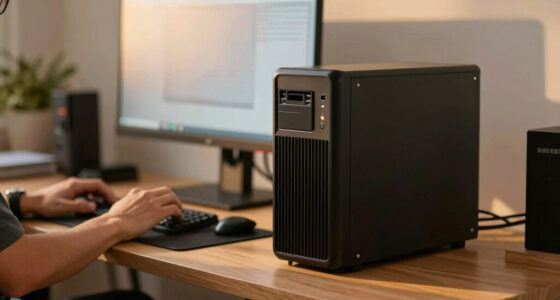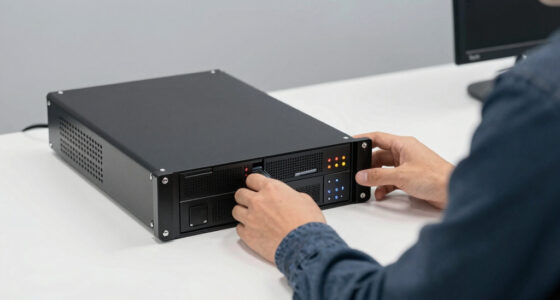
Solar-powered laptop chargers come in two very different forms: small power banks with a solar strip, and full generator kits that pair a battery station with a folding panel. The main tradeoff is portability versus real charging power — a pocket-size bank barely trickle-charges a laptop, while a 300W station with a 60W panel can run one all day but weighs twenty times more. For most buyers, the Portable Solar Generator 300W with 60W Solar Panel is the best overall pick because it delivers genuine laptop runtime and a panel big enough to recharge meaningfully off-grid. If weight is the priority, the SinKeu 24000mAh power bank is the most travel-friendly option with a true AC outlet, and the Daran 89.6Wh station stands out for its long-lived LiFePO4 battery. Read on for the full breakdown of what each option does well and who should skip it.

Get backup power and energy gear delivered free with Prime
- Fast, free delivery on millions of items
- Prime Video, Amazon Music and more included
- Member-only deals all year
Complete the kit


Key Takeaways
- Only three options in this roundup — the two 300W generators and the 146Wh station — can realistically run a laptop through a full workday; the smaller power banks are better treated as emergency top-up devices.
- Battery chemistry became a real divider: the Daran‘s LiFePO4 cell should last years longer than the standard lithium-ion packs in similarly priced competitors, which matters if you’ll cycle the battery weekly.
- Panel wattage matters more than battery size for true solar use. The 60W panel on the 300W generator recharges roughly three times faster than the 21W Takki panel, and the 40W bundled kit sits in between.
- Two products ship without any panel at all (the 300W 280Wh station and the wireless power bank category assumptions), so buyers must budget extra for solar — a hidden cost that changes the value math.
- The wireless charging power banks (SOARAISE, SinKeu) charge laptops slowly via their small AC outputs and tiny built-in solar cells; they are convenience picks, not off-grid workstations.
| Portable Power Station with 40W Solar Panel, 100W Solar Powered Generator |  | Best Complete Starter Kit | Battery Capacity: 100W-class | Solar Panel Power: 40W foldable | AC Outlets: 2 x 100W MAX | VIEW LATEST PRICE | See Our Full Breakdown |
| Takki Solar Generator 120W Peak Portable Power Station with 21W Solar Panel |  | Best for Ultralight Travel | Battery Capacity: 88.8Wh | Peak Power: 120W | Solar Panel Power: 21W foldable | VIEW LATEST PRICE | See Our Full Breakdown |
| Portable Solar Power Bank with AC Outlet 65W 110V |  | Best Pocketable Laptop Backup | Battery Capacity: 24000mAh | AC Output: 65W, 110V | Solar Panel: 30W folding | VIEW LATEST PRICE | See Our Full Breakdown |
| Portable Power Station 300W, 110V Solar Generator 280Wh | 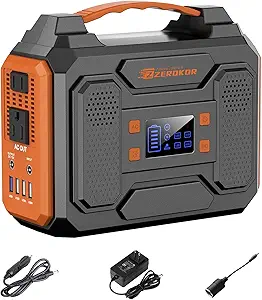 | Best Capacity Per Dollar | Power Output: 300W MAX | Battery Capacity: 280Wh | AC Outlets: 2 | VIEW LATEST PRICE | See Our Full Breakdown |
| Daran Portable Power Station 89.6Wh LiFePO4 Battery 100W Solar Power Bank |  | Best Longevity Pick | Battery Capacity: 89.6Wh | Battery Type: LiFePO4 | Cycle Life: 3500+ | VIEW LATEST PRICE | See Our Full Breakdown |
| Portable Power Station 146Wh 100W Solar Powered Power Bank with AC Outlet | 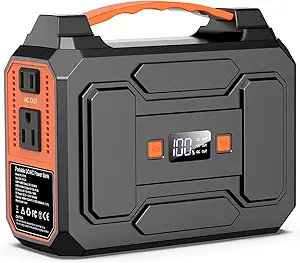 | Best for Emergency Kits | Capacity: 146Wh / 39600mAh | AC Output: 2 x 110V, 100W max | USB Ports: 2 x USB 3.1A, 1 x Quick Charge 3.0 | VIEW LATEST PRICE | See Our Full Breakdown |
| SOARAISE Solar Power Bank 48000mAh Wireless Portable Charger with 4 Cables |  | Best for Multi-Device Travelers | Capacity: 48000mAh | Solar Panels: 4 high-efficiency fold-out panels | Ports: 2 x USB-A, 1 x USB-C (input/output) | VIEW LATEST PRICE | See Our Full Breakdown |
| Portable Solar Generator 300W with 60W Solar Panel | 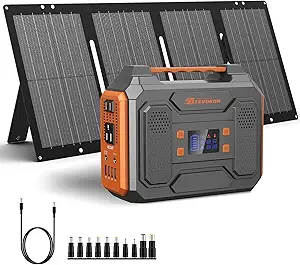 | Best Complete Solar Kit | Power Output: 300W (2 x AC outlets) | Solar Panel: 60W foldable monocrystalline, included | USB Ports: 3 x 5V/3A, 1 x Quick Charge 5V/3A, 9V/2A | VIEW LATEST PRICE | See Our Full Breakdown |
| SinKeu 24000mAh Portable Power Bank with AC Outlet and Solar Charging |  | Best Compact Laptop Backup | Capacity: 24000mAh Lithium Polymer | AC Output: 110V / 65W | Additional Ports: USB Type-A, DC 9-12.6V / 10A | VIEW LATEST PRICE | See Our Full Breakdown |
| solar-powered laptop charger | Battery Capacity | USB Ports |
|---|---|---|
| Portable Power Station with 40 | 100W-class | USB1, USB2, QC USB, USB-C |
| Takki Solar Generator 120W Pea | 88.8Wh | — |
| Portable Solar Power Bank with | 24000mAh | 5V/2.4A and QC 5V/3A, 9V/2A |
| Portable Power Station 300W | 280Wh | 3 x 5V/3A, 1 QC USB |
| Daran Portable Power Station 8 | 89.6Wh | — |
| Portable Power Station 146Wh 1 | — | 2 x USB 3.1A, 1 x Quick Charge 3.0 |
| SOARAISE Solar Power Bank 4800 | — | — |
| Portable Solar Generator 300W | — | 3 x 5V/3A, 1 x Quick Charge 5V/3A, 9V/2A |
| SinKeu 24000mAh Portable Power | — | — |
More Details on Our Top Picks
Portable Power Station with 40W Solar Panel, 100W Solar Powered Generator
This option stands out for being the only complete kit in this batch that pairs a battery station with a genuinely useful 40W panel, so nothing extra needs to be purchased before heading off-grid. Compared with the Daran 89.6Wh station, which arrives panel-less, this pairing makes it the easiest entry point for someone building a solar laptop setup from scratch. The built-in MPPT controller also squeezes more usable charge out of the panel than the basic charge circuits on cheaper kits like the Takki. The tradeoff is capacity: at roughly 100W-class storage, it charges a laptop once or twice before needing sun, and the 100W output ceiling rules out anything hungrier. The non-waterproof junction box demands care in wet weather, and the battery needs a top-up recharge every couple of weeks in storage.
Pros:- Station and 40W panel included, so no extra purchases needed
- MPPT charge controller extracts more solar energy than basic setups
- Multiple output types including QC USB and USB-C alongside dual AC
- Built-in BMS protects against charging faults
Cons:- Junction box is not waterproof, limiting wet-weather reliability
- 100W ceiling excludes higher-draw electronics
- Requires recharging at least twice a month even in storage
Best for: First-time buyers who want a matched station-plus-panel kit for weekend camping trips and laptop work away from outlets
Not ideal for: Anyone expecting multi-day laptop autonomy — the capacity only covers one or two full laptop charges
- Battery Capacity:100W-class
- Solar Panel Power:40W foldable
- AC Outlets:2 x 100W MAX
- USB Ports:USB1, USB2, QC USB, USB-C
- MPPT Controller:Yes
- Conversion Efficiency:22.8%
Our verdict“Buy this if you want a one-purchase solar laptop charging kit and can live with modest capacity.”
Takki Solar Generator 120W Peak Portable Power Station with 21W Solar Panel
At 2.29 lbs for the station and 0.92 lbs for the panel, this Takki kit is the lightest complete solar setup here, and that portability is its whole argument. Where the 100W kit with the 40W panel demands more pack space, this slides into a daypack alongside a laptop without much thought. The built-in LED flashlight with SOS mode adds genuine value for hikers and emergency kits. The compromises are real, though: the 21W panel needs 5–7 hours of good sun just to reach 80%, and the 80W continuous ceiling sits uncomfortably close to many laptop chargers’ draw, so gaming or workstation laptops may trip it. The advice against charging devices while recharging the station also slows multi-day workflows.
Pros:- Featherweight 3.2 lbs combined kit weight
- Fast 2-hour AC recharge to 80% before leaving home
- Foldable 21W panel included for off-grid top-ups
- Integrated LED flashlight with SOS mode
Cons:- Only supports devices up to 80W, marginal for many laptop chargers
- Solar recharge takes 5–7 hours to 80% even in good conditions
- Not recommended to charge devices while the station itself is recharging
Best for: Hikers, backpackers, and minimalists who prioritize grams over capacity and only need to top up a small laptop or tablet
Not ideal for: Laptop users with 90W+ chargers or anyone needing fast same-day solar recovery
- Battery Capacity:88.8Wh
- Peak Power:120W
- Solar Panel Power:21W foldable
- Weight:2.29 lbs (panel 0.92 lbs)
- AC Charging Time:2 hours to 80%
- Solar Charging Time:5-7 hours to 80%
Our verdict“This pick makes the most sense for ounce-counting travelers who charge small laptops occasionally rather than daily.”
Portable Solar Power Bank with AC Outlet 65W 110V
This model takes a different shape than everything else here: rather than a boxy station, it’s a 24,000mAh power bank with a 65W AC outlet, closer in spirit to the SinKeu 24000mAh power bank but bundled with a 30W folding panel. That format makes it the easiest option to actually carry in a laptop bag for daily commuting insurance, and the 65W output covers USB-C laptops and most ultrabook chargers comfortably. Compared with the Takki kit, it trades raw station features for grab-and-go convenience. The friction points: the AC outlet requires manual on/off switching, which is easy to forget mid-workday, the 65W ceiling excludes gaming laptops and some 90W chargers, and like several panels in this roundup the junction box won’t tolerate rain.
Pros:- Power-bank form factor fits in a laptop bag
- 65W AC outlet handles most ultrabook and USB-C laptop chargers
- Three recharge sources: wall, solar, and car
- Included 30W folding panel is generous for this category
Cons:- AC outlet must be switched on and off manually
- Capped at 65W, ruling out power-hungry laptops
- Solar panel junction box is not waterproof
Best for: Commuters and students who want an everyday-carry laptop backup that doubles as a solar option for trips
Not ideal for: Owners of gaming or workstation laptops drawing above 65W
- Battery Capacity:24000mAh
- AC Output:65W, 110V
- Solar Panel:30W folding
- USB Ports:5V/2.4A and QC 5V/3A, 9V/2A
- DC Output:9V~12.6V/10A MAX
- Size:6.89 x 3.98 x 1.89 inches
Our verdict“Choose this if your laptop sips 65W or less and you want backup power you’ll actually carry every day.”
Portable Power Station 300W, 110V Solar Generator 280Wh
With 280Wh of storage and a 300W output ceiling, this station outclasses every other entry in this batch on raw capability — enough for several full laptop charges plus phones, lights, and a router during an outage. The catch is baked into the price: no solar panel is included, so buyers need to add one (or reuse an existing panel) to make this a solar charger at all, unlike the all-in-one 100W kit with the 40W panel. For households that already own a panel, or plan to buy a larger one than the 21W–40W units bundled with cheaper kits, that flexibility is actually an advantage — pairing it with a 60W panel closes the gap to the 300W generator with 60W panel sold elsewhere in this guide. At around 5 lbs it’s still car-camping portable rather than backpackable.
Pros:- 280Wh capacity is the largest in this batch, good for multiple laptop charges
- 300W output handles small appliances beyond just laptops
- Three charging inputs: AC, car 12V, and solar
- Full protection suite including overload and short-circuit safeguards
Cons:- Solar panel sold separately, adding to total cost
- Around 5 lbs — heaviest option here
- Not suited to long idle storage without periodic recharges
Best for: Value-focused buyers who already own a compatible solar panel or want to choose a bigger one separately
Not ideal for: Anyone wanting a complete solar kit out of the box — the panel costs extra
- Power Output:300W MAX
- Battery Capacity:280Wh
- AC Outlets:2
- USB Ports:3 x 5V/3A, 1 QC USB
- Weight:about 5 lbs
- Charging Methods:AC, solar (panel sold separately), car 12V
Our verdict“This is the pick if capacity matters most and you’re willing to source your own panel to hit the total budget sweet spot.”
Daran Portable Power Station 89.6Wh LiFePO4 Battery 100W Solar Power Bank
The Daran’s defining feature is its LiFePO4 chemistry rated for 3,500+ cycles — several times the lifespan of the standard lithium-ion packs in the Takki or the 100W starter kit. For a device that lives in a car trunk or emergency drawer for years, that durability matters more than raw capacity, which at 89.6Wh is otherwise unremarkable. The seven ports including dual USB-C give it the most flexible output mix in this batch, and it accepts USB-C PD input, so one charger can refill both laptop and station. The obvious gap compared with the 100W kit: no panel is included and there’s no solar charging cable in the box, so the solar capability requires additional spending and cable sourcing before it functions off-grid.
Pros:- LiFePO4 battery rated for 3500+ cycles, far outlasting typical lithium-ion packs
- Seven ports including dual USB-C and dual AC
- Recharges via USB-C PD, car, AC, or solar
- Bright LED display shows exact remaining charge
Cons:- Solar panel not included
- No built-in solar charging cable
- 100W output ceiling excludes higher-draw devices
Best for: Preparedness-minded buyers who want a station that will still hold strong after years of occasional emergency use
Not ideal for: Buyers who need solar charging working on day one without extra purchases
- Battery Capacity:89.6Wh
- Battery Type:LiFePO4
- Cycle Life:3500+
- Ports:7 total (2 AC, 2 USB-C, 2 USB-A, 1 DC5521)
- Maximum Output:100W
- Charging Methods:AC, USB-C PD, car, solar panel
- Weight:2.54 lbs
Our verdict“Buy the Daran if you’re planning to own one small station for the better part of a decade and will add a panel later.”
Portable Power Station 146Wh 100W Solar Powered Power Bank with AC Outlet
This option stands out as a balanced emergency-backup unit that bridges the gap between tiny solar power banks and full-size generators. The 146Wh capacity is enough to keep a laptop, phone, and a light running through an outage evening, and the 3.3 lb frame makes it realistic to store in a car trunk or bug-out bag. Compared with the SinKeu 24000mAh power bank, this model offers double the AC output (100W vs 65W) and a 12V DC port, which matters if the gear being powered includes a portable fan or CPAP accessories. The tradeoff is real, though: unlike the Portable Solar Generator 300W, no panel comes in the box, so buyers budgeting for true off-grid use need to add one. For plug-in readiness first and solar later, this pick makes the most sense.
Pros:- 146Wh capacity comfortably covers a laptop charge plus phones and lights
- Three recharge paths (wall, car, solar) keep options open in an emergency
- 3.3 lb weight is genuinely portable for a power station with AC outlets
- Dual LED flashlights with multiple modes add real emergency utility
Cons:- Solar panel is not included, so the true off-grid cost is higher than the sticker price
- 100W AC ceiling rules out anything with a heating element or power-hungry appliance
Best for: Households building an outage or car emergency kit who want AC power on day one and can add a solar panel later
Not ideal for: Off-grid campers who need a complete solar solution out of the box — the panel is sold separately
- Capacity:146Wh / 39600mAh
- AC Output:2 x 110V, 100W max
- USB Ports:2 x USB 3.1A, 1 x Quick Charge 3.0
- DC Output:1 x 12V
- Recharging:AC wall, 12V car, solar (panel not included)
- Weight:3.3 lbs
Our verdict“Buy this if you want a home-and-car emergency power hub that’s solar-ready, not solar-complete.”
SOARAISE Solar Power Bank 48000mAh Wireless Portable Charger with 4 Cables
Where other entries here focus on AC outlets, this one doubles down on sheer charging volume for phones, tablets, and small gadgets. The 48000mAh capacity is several times what the SinKeu offers, and the four integrated solar panels unfold to gather sunlight far faster than a single-panel power bank could — a genuine advantage on a long trail day. Built-in cables (USB-C, USB-A, Micro, and phone connectors) mean one less thing to pack, and wireless charging tops up earbuds or a phone without hunting for a cord. The catch is bulk and weight: this is not a pocket charger, and it still won’t run a laptop the way the 146Wh power station can. This pick makes the most sense for group trips where keeping five devices alive matters more than AC power.
Pros:- Massive 48000mAh capacity covers multiple devices over several days
- Four unfolding solar panels charge noticeably faster than single-panel rivals
- Built-in cables and wireless charging eliminate dongle clutter
- Charges several devices simultaneously without slowdown-prone adapters
Cons:- Bulky and heavy compared with slim power banks — expect bag, not pocket, carry
- Solar input is weather-dependent and works best with direct, angled sunlight
- No AC outlet limits it to USB and wireless device charging
Best for: Group campers and long-trip travelers who need to keep many phones and small devices charged without AC wall access
Not ideal for: Laptop-first buyers — no AC outlet means it can’t replace a power station for computer work
- Capacity:48000mAh
- Solar Panels:4 high-efficiency fold-out panels
- Ports:2 x USB-A, 1 x USB-C (input/output)
- Fast Charging:3A via USB-C
- Wireless Charging:Yes
- Built-in Cables:USB-C, Phone, USB-A, Micro
Our verdict“Choose this when device count, not laptop wattage, defines your power needs outdoors.”
Portable Solar Generator 300W with 60W Solar Panel
This is the only entry in this batch that arrives as a true off-grid system: a 300W power station paired with a 60W foldable monocrystalline panel in one purchase. That matters because the 146Wh power station and the SinKeu both treat solar as an optional extra, quietly adding cost later. The 60W panel with 20.5% conversion efficiency can meaningfully replenish the battery during a full day of good sun, which makes multi-day camping realistic rather than theoretical. Output flexibility is also the widest here — two AC outlets, four USB ports, and a high-amperage DC barrel — so it handles a laptop, camera batteries, and a drone charger at once. The tradeoffs: it’s the heaviest commitment in this group, the 300W ceiling excludes anything with a heating element, and the panel’s junction box is not waterproof, so rain setup needs care.
Pros:- 60W foldable solar panel included, no separate purchase required
- 300W output with two AC outlets runs laptops and small appliances together
- 20.5% conversion efficiency extracts useful charge from partial-sun days
- Full BMS protection plus cooling for safe unattended charging
Cons:- Panel junction box is not waterproof, limiting wet-weather deployment
- 300W cap rules out kettles, hair dryers, and similar appliances
- Battery degrades in performance if left uncharged for long storage periods
Best for: Multi-day campers and van lifers who want a working solar charging loop in a single purchase
Not ideal for: Day-trippers and commuters — the combined station-plus-panel bulk outweighs short-trip needs
- Power Output:300W (2 x AC outlets)
- Solar Panel:60W foldable monocrystalline, included
- USB Ports:3 x 5V/3A, 1 x Quick Charge 5V/3A, 9V/2A
- DC Port:9V-12.6V / 10A max
- Charging Methods:AC wall, solar panel, 12V carport
- Conversion Efficiency:20.5%
- Safety:BMS with short-circuit, over-current, over-voltage, overload, and thermal protection
Our verdict“If the goal is genuine off-grid laptop power over multiple days, this is the kit that works out of the box.”
SinKeu 24000mAh Portable Power Bank with AC Outlet and Solar Charging
Sized at 6.8 x 3.8 x 1.78 inches, this is the closest thing in the lineup to a laptop charger that actually fits in a laptop bag. The 110V/65W AC outlet covers most ultrabooks, and the OLED display — a feature none of the other picks here include — shows remaining runtime at a glance instead of leaving the buyer guessing from blinking LEDs. Compared with the 146Wh power station, capacity is smaller and AC output is lower, but the portability gap is dramatic, and unlike the SOARAISE 48000mAh bank, it can actually run a laptop rather than just phones. The honest tradeoff: 65W won’t power gaming laptops or anything with a discrete GPU, and the solar input is a trickle-charge convenience, not a primary charging method. For commuters and occasional travelers, that trade lands in the right place.
Pros:- Genuinely bag-friendly dimensions with a working AC outlet
- OLED display gives precise battery and status readouts
- Built-in wall plug means recharging needs no cable
- BMS safety protections and versatile USB plus DC outputs
Cons:- 65W AC limit excludes high-draw laptops and appliances
- Solar input is slow; AC wall charging is the realistic refill method
- 24000mAh drains quickly when the AC outlet is under sustained load
Best for: Commuters and short-trip travelers with a USB-C or 65W-class laptop who want grab-and-go AC backup
Not ideal for: Gaming or workstation laptop owners — the 65W AC ceiling won’t keep power-hungry machines charged
- Capacity:24000mAh Lithium Polymer
- AC Output:110V / 65W
- Additional Ports:USB Type-A, DC 9-12.6V / 10A
- Display:OLED status screen
- Recharging:Built-in wall plug, solar compatible
- Dimensions:6.8 x 3.8 x 1.78 inches
Our verdict“This is the pick for laptop users who value pocketable AC power over raw capacity or off-grid charging speed.”
How We Picked
I evaluated each product against four buyer-relevant criteria. First, laptop charging capability: whether the AC outlet or USB-C output could actually deliver the 45–100W a modern laptop demands, and how many full charges the battery capacity supports. Second, solar input realism: a 5W solar strip on a power bank is a marketing feature, while a 40–60W folding panel can genuinely recharge a station over a sunny afternoon, so I weighted panel wattage heavily. Third, portability and build: weight, size, and whether the unit survives camping trips or RV storage. Fourth, value: total cost including any panel you have to buy separately, plus battery chemistry and expected cycle life.
The ranking reflects how these factors balance rather than raw specs alone. Kits that pair a substantial battery with an adequately sized panel rank highest because they solve the actual problem — keeping a laptop alive off-grid. Mid-tier picks win on specific strengths like chemistry or price, and the compact power banks rank lower for laptop duty despite their convenience, because trickle-charging a 60Wh laptop battery from a small solar cell rarely keeps pace with real work.
Factors to Consider When Choosing Solar-powered Laptop Chargers
Before picking a specific model, it helps to understand what actually determines whether a solar charger will keep your laptop running — and where buyers most often go wrong. These are the factors I weighed, and the tradeoffs behind each one.
Battery Capacity vs. Real Laptop Runtime
Manufacturers advertise watt-hours or milliamp-hours, but the number that matters is how many full laptop charges you get. A typical laptop battery holds 50–70Wh, and inverters lose 15–20% of energy in conversion, so a 90Wh station delivers roughly one full charge, while a 280Wh unit delivers three or more. A common mistake is buying a 20,000mAh power bank expecting laptop-class runtime — that translates to only about 74Wh, before conversion losses. Match capacity to your actual workday: occasional top-ups need far less battery than running a machine for eight hours off-grid. Also check whether the capacity rating is measured at the AC outlet or the internal cell, since the former is the honest number.
Solar Panel Wattage: The Number That Decides Everything
Battery capacity gets the marketing attention, but panel wattage determines whether the system actually sustains itself in sunlight. A 60W panel in good sun can replace what a laptop consumes, letting you work indefinitely; a 21W panel may take two full days to recharge a mid-size station. Tiny built-in solar cells on power banks (usually 5W or less) are effectively emergency trickle chargers and should never factor into a buying decision as a primary feature. If a product ships without a panel, budget $80–200 for a separate folding panel and confirm the station’s input limit supports it. My advice: never buy a panel smaller than 40W if running a laptop is the goal.
Output Power and Outlet Type
Check two numbers on the AC outlet: continuous wattage and peak/surge wattage. A modern laptop charger draws 65–100W, so a 65W-rated inverter may struggle or shut down with a gaming laptop or a 16-inch MacBook, while a 300W inverter has comfortable headroom. Also decide between AC outlets and USB-C power delivery — USB-PD is more efficient (fewer conversion losses) if your laptop charges over USB-C, while AC is universal for older barrel chargers. Some compact banks only offer 65W AC, which works for ultrabooks but not power-hungry machines. Matching output type to your specific laptop is the single easiest way to avoid a disappointing purchase.
Battery Chemistry and Lifespan
Most budget units use standard lithium-ion cells rated for 300–500 charge cycles, after which capacity fades noticeably. LiFePO4 chemistry, like the Daran uses, typically lasts 2,000+ cycles — meaning it could outlast several cheaper replacements and often wins on cost per year of ownership. If you’ll drain and recharge the unit weekly for camping or van life, chemistry should influence your decision more than a few extra watt-hours. For occasional emergency backup, standard lithium-ion is perfectly fine and lighter. This is also where warranty length signals manufacturer confidence: two years or more suggests the brand expects the cells to hold up.
Weight, Portability, and Honest Use Cases
There’s no escaping the physics: useful solar laptop charging requires mass. The full 300W kits weigh 8–12 pounds combined, which is fine for car camping, RVs, and base camps but miserable in a backpack. Know your transport method before buying — hikers should accept the compromise of a compact power bank used as a top-up device, not a workstation. Also consider whether the panel folds down flat and whether the station has a carrying handle; small ergonomic details determine whether a kit actually leaves the house. The most common buyer regret in this category is purchasing a heavy kit that never gets taken anywhere, or a light one that can’t do the job.
Hidden Costs and Bundle Traps
Several products in this category advertise attractive base prices while omitting the solar panel, which can add 40% or more to the true cost. Always confirm exactly what’s in the box before comparing prices between listings. Similarly, check whether included cables support the fast-charge protocols your laptop uses — a cheap USB cable can throttle a 100W charger to 30W. MC4-to-adapter compatibility matters if you later want to add a third-party panel, so verify the station’s input connector standard. Finally, be skeptical of inflated capacity claims on no-name power banks; a 48,000mAh rating in a pocket-sized body is physically implausible and usually signals generous marketing math.
Frequently Asked Questions
Can a small solar power bank actually charge a laptop, or is that just marketing?
It depends entirely on the output, not the marketing. A power bank with a true 65W AC outlet or 60W+ USB-C port can charge most ultrabooks, but only about once per full charge of the bank itself. The built-in solar cells are the misleading part — most deliver under 5W, meaning days of direct sun to refill the bank. Treat the solar strip as an emergency feature, not a charging strategy. If solar recharging is your main goal, a folding panel of 40W or more paired with a station is the only approach that keeps pace with real laptop use.
Is it better to buy a bundled solar generator kit or a station and panel separately?
Bundles usually win on price and guaranteed compatibility — the included panel’s connector, voltage range, and wattage are matched to the station’s input controller. Buying separately gives you flexibility to choose a higher-wattage panel later, which can meaningfully speed up recharging on a station with a high input limit. The compromise: verify the station’s maximum solar input before upgrading, because feeding more watts than it accepts gains you nothing. For first-time buyers, a bundle removes the most common compatibility mistakes. Experienced users with specific power goals often outgrow bundles within a year.
What capacity do I need to run a laptop for a full workday off-grid?
A typical laptop consumes 15–30W during normal office work, so an eight-hour day needs roughly 120–240Wh after accounting for inverter losses. That puts the 280Wh class stations firmly in full-workday territory, while 88–90Wh units cover about half a day or one full recharge from empty. If your laptop charges over USB-C, you’ll stretch runtime further by skipping the AC outlet, since direct DC charging avoids the 15–20% inverter loss. Gaming laptops or machines with discrete GPUs can double these figures. Be honest about your workload — buying for a rare heavy day wastes money and carrying weight.
How long does it take to recharge these stations by solar panel?
Rule of thumb: divide battery capacity by the panel’s real-world output, which is typically 70% of its rated wattage in good sun. A 280Wh station with a 60W panel recharges in roughly seven sunny hours; the same battery with a 21W panel takes two days. Cloud cover, panel angle, and shading can cut output by half or more, so always budget for worse conditions than the label implies. Positioning the panel perpendicular to the sun and adjusting it every couple of hours genuinely speeds things up. If you need faster solar recovery, a bigger panel matters more than a bigger battery.
Are LiFePO4 batteries worth the premium over standard lithium-ion here?
For frequent use, yes — LiFePO4 cells are typically rated for 2,000+ cycles versus 300–500 for standard lithium-ion, so they can outlast four or five cheaper units. That math only pays off if you cycle the battery regularly, as van-lifers and weekly campers do. For an emergency backup that sits plugged in most of the year, the chemistry advantage is largely wasted, and a cheaper lithium-ion unit makes more sense. LiFePO4 also handles heat better and is less prone to degradation from being held at full charge. The Daran in this lineup is the example to compare against if longevity is your priority.
Conclusion
Choosing among these nine options comes down to one honest question: do you need to run a laptop off-grid or just rescue a dying battery? For best overall, the Portable Solar Generator 300W with 60W Solar Panel is the pick — it’s the only kit where the battery and panel are both sized for genuine daily laptop work. For best value, the Takki 120W kit bundles a panel and AC outlet at a budget price, accepting slower solar recovery in exchange. The best premium choice is the Portable Power Station 300W 280Wh, whose larger capacity suits multi-day use — just remember to add a panel to the budget. Beginners should start with the Daran 89.6Wh LiFePO4 station: simple, safe, and built on chemistry that forgives learning mistakes. For specific needs, the SinKeu 24000mAh power bank is the pick for travelers who want laptop top-ups in a bag-friendly size, while the 146Wh 100W station splits the difference between portability and runtime. Skip anything whose panel is smaller than your ambition — in this category, sunlight is free, but underpowered hardware wastes it.
Halloween Picks
halloween
As an affiliate, we earn on qualifying purchases.