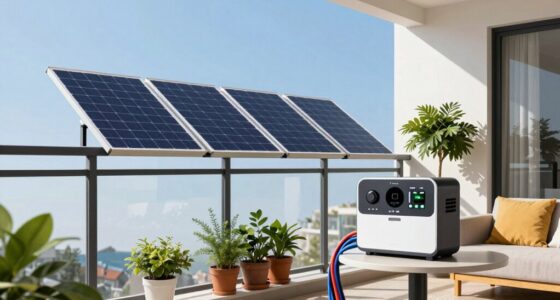
When you’re away during outages, you should monitor your power system’s battery voltage, backup generator status, and transfer switch alerts to guarantee continuous supply. Check network stability, cellular signal strength, and failover functions for reliable communication. Keep an eye on environmental conditions like temperature, humidity, and smoke or water leaks that could damage assets. Track fault indicators and automation responses to address issues promptly. For detailed tips on effective remote oversight, stay tuned for more insights.
Key Takeaways
- Continuously monitor battery voltage, capacity, and estimated time-to-depletion to prevent unexpected outages.
- Check network connectivity and signal strength to ensure remote access remains reliable during outages.
- Review environmental conditions like temperature, humidity, and water or smoke alerts to safeguard assets remotely.
- Verify fault codes, system logs, and equipment status to detect and respond to issues promptly.
- Ensure remote access security measures, such as MFA and VPN, are active for safe system management during outages.

CyberPower CP1500PFCLCD PFC Sinewave UPS Battery Backup and Surge Protector, 1500VA/1000W, 12 Outlets, AVR, Mini Tower, UL Certified
1500VA/1000W PFC Sine Wave Battery Backup Uninterruptible Power Supply (UPS) System designed to support active PFC and conventional…
As an affiliate, we earn on qualifying purchases.
As an affiliate, we earn on qualifying purchases.
Evaluating Power System Stability and Battery Status
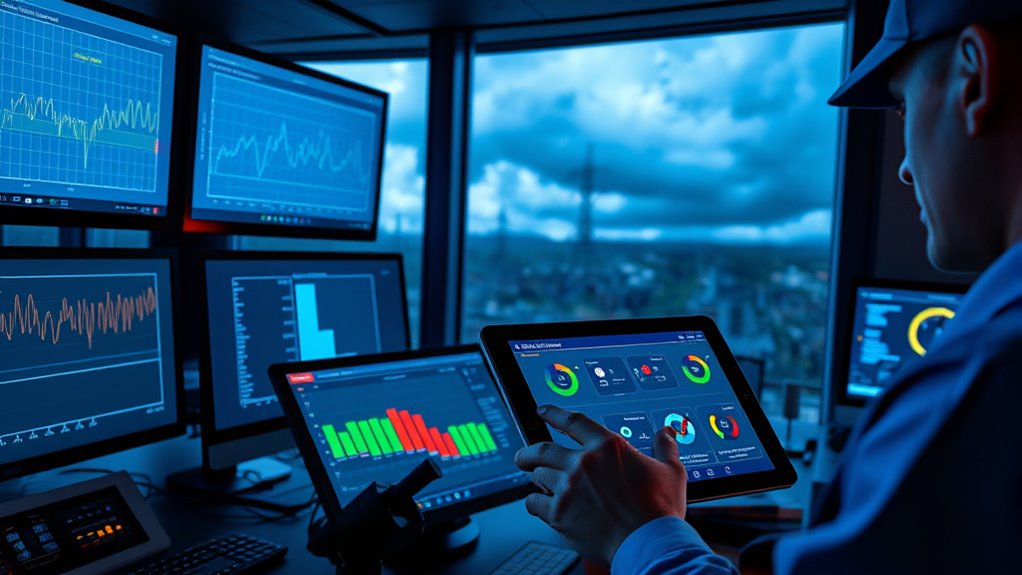
Evaluating power system stability begins with monitoring the battery voltage levels of on-site backup systems like UPS units and battery banks. You need to guarantee these voltages stay within safe thresholds to prevent unexpected shutdowns. Low-voltage alerts signal imminent depletion, giving you time to act before critical failure. Check the estimated time-to-depletion based on current loads to prioritize responses. Keep an eye on utility feed status—whether it’s on, off, or partial—to understand the power source conditions. Also, review generator readiness, including fuel levels and recent exercise logs, to confirm backup capacity. Transfer switch positions and fault codes help verify proper switchover during outages. Regularly monitoring these parameters ensures your power system remains stable and ready to sustain essential operations during disruptions. Additionally, assessing the field‑of‑view and imaging‑scale of your backup power setup can help optimize placement and accessibility during emergencies. Understanding battery health and capacity is crucial for maintaining reliable backup performance over time, and performing routine system checks can further enhance overall reliability. Moreover, staying informed about the latest industry standards can help ensure your backup systems meet current safety and performance benchmarks. Incorporating monitoring tools and sensors can provide real-time data and early warnings, improving your responsiveness to potential issues.

YGQ Generator Fuel Meter Level Gauge 0H9005 for Generac GP5500 6000 6500 7500 RS5500 RS7000E XT8000 5500w 6500w Portable Generator Fuel Tank
Replace Part#: 0H9005 0H9005A 0HM05 0HM05A 0K09150112.
As an affiliate, we earn on qualifying purchases.
As an affiliate, we earn on qualifying purchases.
Monitoring Network Connectivity and Communications Resilience
You need to regularly check cellular signal strength and the status of multi-network SIMs to guarantee alerts can still be sent if the main internet fails. Automatic failover checks for primary and secondary communication links confirm that your monitoring remains active during outages. Incorporating simple systems that are easy to monitor ensures ongoing connectivity without added complexity. Regularly testing network redundancy protocols can further prevent unexpected communication breakdowns. Implementing automated testing routines ensures ongoing verification of connection integrity, reducing the risk of unnoticed failures. Ensuring consistent connectivity testing across your systems is essential for early detection of potential failures. Maintaining these resilience measures is critical for uninterrupted remote check-ins when it matters most.
Cellular Signal Strength
Cellular signal strength is a critical component of maintaining robust communication during power outages or network disruptions. Strong cellular connectivity ensures you can send alerts, receive status updates, and coordinate remote interventions without interruption. You should regularly monitor signal quality indicators like signal-to-noise ratio, LTE/5G bars, and data throughput. Multi-network SIM cards provide redundancy, automatically switching to the strongest carrier if one drops. Keep an eye on signal stability over time to detect degradation that could compromise communication. If the signal weakens, consider relocating antennas or deploying signal boosters. Ensuring reliable cellular connectivity minimizes blind spots during outages, allowing you to respond swiftly and maintain continuous oversight of your systems remotely. Understanding Free Floating concepts can help optimize antenna placement and improve overall signal performance. Additionally, maintaining awareness of network load can help anticipate periods of congestion that may affect signal quality. Monitoring signal fluctuations helps identify transient issues that could impact communication reliability during critical moments, and staying informed about piercings and their impact on body health can be relevant when considering physical modifications that might influence device placement or signal reception. Regularly reviewing antenna positioning can further enhance signal reception by reducing interference and maximizing coverage.
Automatic Failover Checks
How can you guarantee uninterrupted communication during network disruptions? Automatic failover checks are essential. They assure your systems switch seamlessly when primary links fail. First, you should verify the status of secondary communication paths, such as cellular fallback or satellite, to confirm they’re operational. Second, monitor the health of your primary network link, including router uptime and connection stability, to detect issues early. Third, review alert delivery logs to ensure notifications reach you despite outages. These checks help maintain continuous oversight, minimizing blind spots. By regularly validating failover mechanisms, you reduce downtime risks and stay informed, even during network disruptions. Additionally, implementing network resilience strategies, such as redundant connections and load balancing, further enhances your system’s ability to withstand outages. Incorporating automated monitoring tools can streamline this process, providing real-time insights and quicker response times.

TP-Link AC1200 WiFi Extender, 2023 Engadget Best Budget Pick, 1.2Gbps Signal Booster for Home, Dual Band 5GHz/2.4GHz, Covers Up to 1500 Sq.ft and 30 Devices,Support Onemesh, One Ethernet Port (RE315)
𝐒𝐭𝐫𝐨𝐧𝐠𝐞𝐫 𝐖𝐢-𝐅𝐢 𝐢𝐧 𝐄𝐯𝐞𝐫𝐲 𝐂𝐨𝐫𝐧𝐞𝐫 – Enjoy extended coverage with strong performance powered by Adaptive Path Selection and…
As an affiliate, we earn on qualifying purchases.
As an affiliate, we earn on qualifying purchases.
Assessing Environmental Conditions and Asset Safety
During outages, you need to monitor interior temperature and humidity levels to prevent damage to sensitive equipment and stored goods. Water and smoke alerts are essential for detecting secondary risks like leaks or fires that could emerge when power is disrupted. Keeping a close eye on these environmental conditions helps you protect your assets and respond quickly to potential hazards. Additionally, ensuring good air quality with appropriate air purification can help mitigate indoor pollutants that may exacerbate health issues during outages. Regularly checking and maintaining home safety systems can further enhance protection during such disruptions. Understanding and controlling indoor air quality can be especially beneficial in preventing health problems caused by stale or contaminated air during these times. Incorporating environmental monitoring devices can provide real-time data to assist in swift decision-making.
Temperature & Humidity Risks
Maintaining ideal temperature and humidity levels is essential for safeguarding sensitive equipment and stored assets during outages. Fluctuations can cause thermal stress, condensation, or corrosion, risking damage or downtime. To monitor effectively, focus on these key areas:
- Interior ambient conditions: Track temperature and humidity to stay within safe thresholds, preventing freezing or excessive moisture that can harm HVAC-sensitive gear. Regularly calibrating sensors ensures accurate readings and reliable data for decision-making. Implementing sensor calibration routines enhances measurement accuracy over time. Additionally, using air quality monitors can provide comprehensive environmental data to identify potential issues early.
- Thermal trends: Observe rates of change to identify rapid heating or cooling that could trigger equipment shutdowns or failures.
- Rack and cabinet climate: Check inlet/outlet temperatures and airflow at the server and telecom levels to prevent overheating when cooling systems are compromised.
- Environmental stability: Regularly assess environmental conditions to detect potential risks early and ensure asset safety during outages. Monitoring asset safety factors is vital for proactive maintenance and risk mitigation.
Regular remote checks of these parameters help you act swiftly and protect your assets during power or environmental disruptions.
Water & Smoke Alerts
Are water leaks or smoke hazards putting your assets at risk during outages? During extended power failures, detecting water leaks early is vital to prevent secondary damage. Sump-pump sensors and leak detectors provide real-time alerts, so you can respond before flooding worsens. Smoke and air-quality sensors monitor for fire or HVAC failures that could threaten equipment safety. Elevated particulate levels or unusual odors signal potential hazards requiring immediate action. Monitoring environmental conditions like humidity and temperature helps identify risks to sensitive gear, especially if cooling systems fail. Ensure your system reports anomalies promptly through remote alerts. By actively tracking water and smoke indicators, you minimize damage, safeguard assets, and maintain operational continuity—even when you’re away during outages.

Newentor Indoor Outdoor Wireless Remote Sensor, Temperature and Humidity Meters for Q3/FJ3378, Q5/FJ3383B, Q6
Remote sensor with transmission large range up to 200ft/60m in an open air.
As an affiliate, we earn on qualifying purchases.
As an affiliate, we earn on qualifying purchases.
Tracking Equipment Performance and Fault Indicators
Tracking equipment performance and fault indicators is essential for quickly identifying issues and maintaining operational continuity. You need to monitor real-time data to catch problems early. Focus on these key areas:
- Fault codes and event logs — Check generator, switchgear, and UPS logs for error messages and severity levels to pinpoint failures swiftly.
- Battery health metrics — Track charge levels, temperatures, and cycle counts for batteries, anticipating degradation before failures occur.
- Remote telemetry and breaker status — Verify relay states and breaker positions to confirm protective devices operated correctly during outages.
Managing Alerts, Escalation, and Automated Responses
Effective alert management hinges on setting clear thresholds and policies to guarantee you’re notified promptly without being overwhelmed by false positives. You should define specific conditions for immediate alerts, like power loss or equipment faults, and delayed notifications for minor fluctuations. Multi-channel notifications—email, SMS, or calls—ensure you’re informed even if one method fails. Establish escalation procedures with contact hierarchies, role-based rules, and redundant contacts to guarantee coverage around the clock. Automate responses such as remote restarts or generator startups to minimize downtime, and log every action for transparency. Use alert correlation to identify root causes quickly, reducing diagnosis time. Properly managing alerts helps you respond faster, maintain system stability, and avoid unnecessary disruptions during outages.
Ensuring Data Integrity, Logging, and Secure Access
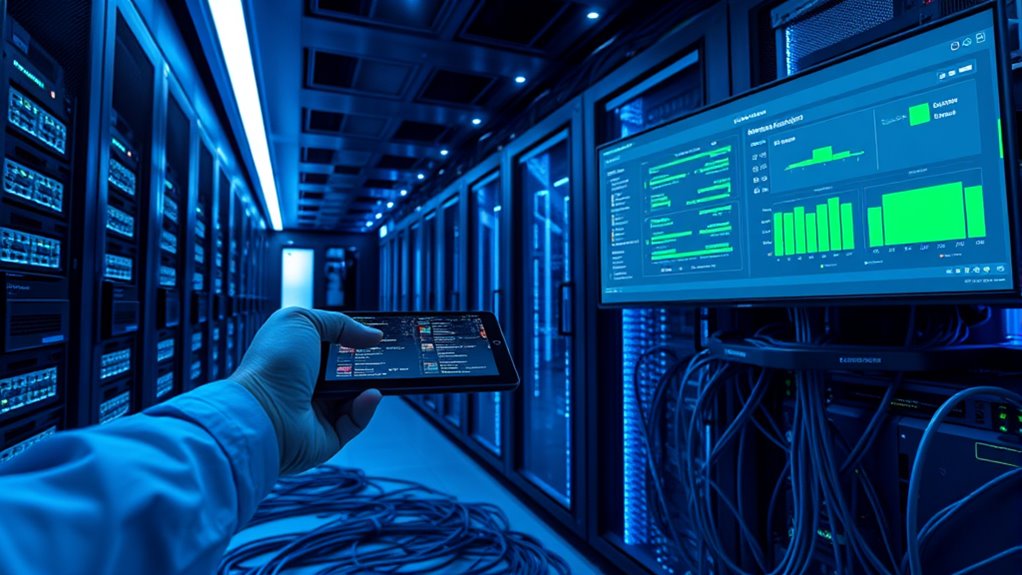
Maintaining data integrity and secure remote access during outages is essential for reliable system operation and post-incident analysis. To achieve this, focus on these key areas:
- Use continuous event logging with cloud backups and local buffers to prevent data loss and ensure records are available even during communication failures.
- Implement time-synchronized logs via NTP, enabling accurate correlation of outage and recovery events across systems.
- Enforce strict access controls with MFA and VPNs, securing remote consoles and preventing unauthorized interventions during incidents.
Frequently Asked Questions
How Often Should Remote Status Checks Be Performed During Outages?
You should perform remote status checks every 5 to 15 minutes during outages. This frequency ensures you stay updated on critical parameters like power status, network connectivity, environmental conditions, and equipment health. Regular checks allow you to quickly identify issues, verify failover success, and trigger remote remediation actions if needed. Adjust the interval based on outage severity and system criticality to maintain ideal oversight and minimize downtime risks.
What Are the Best Practices for Verifying Alert Delivery Success?
Think of alert delivery as the heartbeat of your outage response. You verify success by checking the logs of email, SMS, and phone notifications to confirm they were sent and received. Use automated reports to track delivery times and failures, and guarantee retries happen if needed. Regularly test your alert pathways with dry runs, so when a real outage strikes, your team’s communication remains steady, reliable, and unwavering.
How Can Remote Access Be Secured During Power and Network Failures?
You can safeguard remote access during power and network failures by implementing multi-factor authentication (MFA), encrypted VPN tunnels, and redundant communication paths like cellular or satellite links. Regularly update firmware and security protocols. Monitor connection health and failover logs to make certain access remains available. Set up automated alerts for access issues and test remote remediation procedures periodically to confirm you can securely access and manage assets during outages.
What Indicators Reveal Secondary Damage Risks Post-Outage?
You should monitor interior temperature and humidity trends, water/leak sensors, and sump-pump status to identify secondary damage risks after an outage. Keep an eye on environmental conditions like smoke or air quality alerts, as these indicate potential fires or HVAC failure. Also, watch for rapid thermal changes and equipment fault codes, especially in critical systems, to address issues proactively before they cause further damage.
How to Prioritize Issues Identified Through Remote Monitoring?
You should prioritize issues based on their potential impact on safety, equipment integrity, and system stability. Address critical faults in power, network, or environmental sensors first, as they can cause immediate damage or shutdowns. Next, focus on network or communications failures that hinder remote management. Then, resolve environmental anomalies affecting sensitive gear, followed by less urgent warnings. Always consider escalation protocols and alert severity to make certain of timely, effective responses.
Conclusion
So, next time you’re away, remember to trust your systems—after all, they’re perfectly capable of catching every fault, outage, and environmental anomaly. Who needs human oversight when your equipment can send endless alerts and logs? Just sit back, relax, and enjoy the illusion of control. Because nothing says “peace of mind” like a dashboard filled with warnings you’ll never read, right? Stay vigilant, or let the machines do the worrying for you.