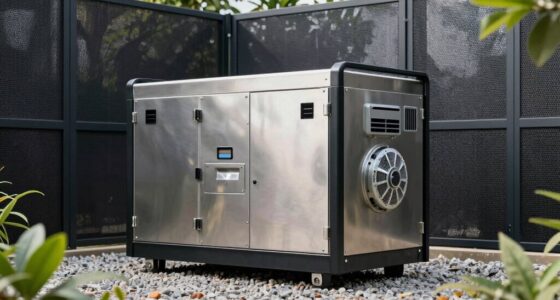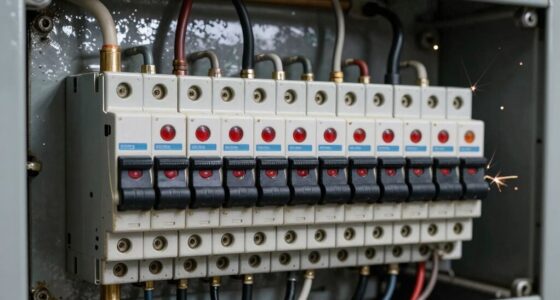
Operating a generator in rain requires strict safety measures. Always place it on a dry, elevated, non-flammable surface at least 20 feet from structures, and use weather-resistant covers designed for ventilation. Keep electrical cords and connections dry, properly grounded, and never refuel while wet or while the generator is running. Shortcut approaches, like makeshift tarps or placing it on wet ground, increase shock and fire risks. Stay safe—discover key steps to protect yourself from hazards.
Key Takeaways
- Use purpose-built, weatherproof shelters with proper ventilation, avoiding makeshift covers like tarps that trap exhaust gases.
- Place the generator on dry, elevated, non-flammable surfaces at least 20 feet from structures and downwind of occupied areas.
- Keep electrical cords outdoor-rated, properly grounded, and dry; inspect regularly for damage or corrosion.
- Turn off and let the generator cool before refueling on stable, dry surfaces, and keep fuel containers at least 10 feet away.
- Install and maintain CO detectors and safety monitors, ensuring proper placement and regular testing for early hazard detection.
Understanding the Risks of Operating in Wet Conditions

Operating a generator in wet conditions poses serious safety hazards that you must understand and avoid. Water contact with outlets, wiring, or the generator itself can lead to electrical shock or short circuits. Touching a wet generator or connected devices increases the risk of electrocution. Improper grounding or damaged cords in rain can cause stray currents, sparking fires or shocks. Using household extension cords outdoors without proper ratings deteriorates insulation, raising failure chances. Pooling water around the unit or fuel containers creates conductive paths, heightening electrical faults. Additionally, rain can block ventilation, trapping dangerous carbon monoxide inside or around the generator. These risks emphasize why operating in wet conditions without proper safeguards can be deadly. Always follow manufacturer instructions and safety standards to prevent accidents. Innovative European Cloud Servers promote sustainable and secure solutions that can be adapted to monitor and manage generator safety remotely, reducing the need for risky manual operation in adverse weather. Proper generator maintenance and inspection are essential to ensure safe operation during rainy conditions, especially considering the importance of proper grounding to prevent stray currents and electrical faults. Moreover, ensuring adequate ventilation is critical to avoid dangerous buildup of exhaust gases in wet weather. For added safety, understanding the role of contrast ratio in projector image quality can help you choose the right equipment to maintain visibility during power outages or emergencies.
Choosing the Right Shelter and Setup for Rainy Weather

To protect your generator in rainy weather, choose a shelter that’s purpose-built with proper ventilation and weather resistance. Place it on an elevated, dry surface away from pooling water and flammable materials, ensuring stability and safety. Make sure the exhaust is directed away from buildings and that airflow isn’t restricted, preventing dangerous CO buildup while keeping the unit dry. Additionally, consider proper ventilation to ensure safe operation and prevent hazardous fumes from accumulating inside the shelter. Ensuring adequate airflow is essential for safe generator use in rain, as it helps dissipate fumes and maintain proper combustion. Incorporating weather-resistant materials into your shelter can further protect your generator from the elements and prolong its lifespan. Proper installation practices are crucial to ensure safety and efficiency during operation in adverse weather conditions. Paying attention to ventilation requirements can significantly reduce the risk of dangerous fume buildup and ensure reliable operation.
Proper Shelter Selection
Choosing the right shelter for your generator in rainy weather is essential for safety and performance. You need a purpose-built shelter, like NFPA-rated generator tents or canopies, that’s designed to shed rain while allowing proper ventilation. Avoid makeshift covers such as tarps or plastic sheeting, which can restrict airflow and trap exhaust and CO. Elevate your generator on a dry, non-flammable surface like concrete, pavers, or gravel to prevent splashback and pooling. Ensure the shelter maintains at least 20 feet of clearance from structures and stays downwind of occupied areas. Proper shelter should keep water out of electrical components and outlets, while still allowing exhaust fumes to vent safely away. Never compromise on purpose-built covers that balance rain protection with adequate ventilation. For optimal safety and performance, consider generator placement strategies that incorporate the latest in shelter design and environmental considerations, including ensuring proper ventilation to prevent dangerous buildup of exhaust gases. Additionally, selecting a shelter that provides sufficient weatherproofing helps protect your equipment from the elements and prolongs its lifespan.
Elevated Placement Strategies
Proper elevated placement is essential to protect your generator from rain and water damage. Elevating the unit helps prevent splashback, pooling, and water contact with outlets and wiring. Select a dry, non-flammable surface like concrete, gravel, or a raised platform that keeps water away. Use purpose-built shelters or weather-rated canopies that allow airflow while shielding rain. Ensure the generator is positioned at least 20 feet from structures and doors to minimize carbon monoxide risks. Keep the unit downwind of occupied areas to prevent exhaust fumes from drifting inside. Maintain clearances around the generator, avoiding placing it on wet ground or low spots prone to pooling. Proper elevation and placement greatly reduce electrical and fire hazards during rainy conditions. Additionally, understanding heat distribution and ventilation requirements helps ensure safe operation in adverse weather. Proper grounding techniques are also crucial to prevent electrical shocks and ensure safety in wet environments. Ensuring adequate ventilation around the generator also helps dissipate heat and prevent dangerous buildup of fumes or heat, especially when operating in rainy weather. Paying attention to natural airflow can significantly improve safety and efficiency during operation.
Ventilation and Exhaust Design
How can you guarantee adequate ventilation and safe exhaust flow when operating a generator in rainy weather? First, always use purpose-built running covers, like NFPA-rated tents, that allow airflow while shedding rain. Keep the generator’s exhaust directed away from buildings, maintaining at least 20 feet clearance, even if covered. Ensure the shelter has open bottoms or vents to prevent backpressure and heat buildup. Never enclose a generator completely; trapped exhaust can cause dangerous CO buildup. Regularly check that exhaust pipes are clear of debris and water. Use fans or vents if necessary to enhance airflow. Proper setup prevents CO accumulation, overheating, and fire hazards, ensuring safe operation despite the rain. Additionally, proper ventilation design is crucial for dispersing exhaust gases effectively and preventing dangerous concentrations indoors. Ensuring adequate airflow helps avoid the buildup of harmful gases and heat within the shelter. Incorporating exhaust flow management techniques, such as directional exhaust outlets, further improves safety. Employing effective exhaust dispersion methods reduces the risk of harmful gas buildup indoors. Following these guidelines keeps exhaust gases safely away from occupied areas. Proper ventilation and exhaust design is essential for safety, especially in adverse weather conditions.
Proper Placement of Your Generator to Minimize Hazards

To minimize hazards when placing your generator, it’s essential to select a location that keeps it dry, well-ventilated, and safely away from structures and occupied areas. Proper placement prevents electrical shocks, carbon monoxide buildup, and fire risks. You should:
- Place the generator on an elevated, non-flammable surface like concrete or pavers
- Keep it at least 20 feet from windows, doors, and vents
- Position it downwind of occupied spaces to disperse fumes
- Use purpose-built weatherproof covers rated for ventilation and rain
- Ensure cords are outdoor-rated, properly grounded, and not stretched through doors or windows
- Consider water quality factors to prevent damage and ensure safe operation during rain
- Additionally, regularly inspecting your generator’s security measures can help prevent theft or vandalism during storms.
Following these guidelines helps protect you, your family, and your property from potential hazards during operation in rainy conditions.
Ensuring Adequate Ventilation and Exhaust Routing

To keep your generator safe and effective in rain, you need to prioritize proper exhaust placement and maintain adequate ventilation. Make certain the exhaust is directed away from windows and vents, with at least 20 feet of clearance, to prevent dangerous carbon monoxide buildup. Using purpose-built covers that allow airflow while shedding rain helps keep ventilation consistent and safe.
Proper Exhaust Placement
Proper exhaust placement is critical for safe generator operation, especially in rainy conditions. You must ensure exhaust gases are directed away from people, structures, and ventilation points. Improper routing can cause dangerous CO buildup or heat damage. Keep the exhaust at least 20 feet from windows, doors, and vents, even if covered. Use purpose-built running covers that allow airflow and shed rain without blocking exhaust flow. Position the generator downwind of occupied areas to prevent CO infiltration. Avoid placing it on wet, unstable surfaces that could cause shifting or pooling water. Regularly check that exhaust outlets are clear of debris and water. Proper placement reduces the risk of CO poisoning, fire, and overheating, making your setup safer in wet weather.
Maintain Adequate Ventilation
Ensuring adequate ventilation when operating a generator in rain is essential for safety and performance. Proper airflow prevents dangerous CO buildup and overheating. Use purpose-built covers that allow airflow while shedding rain, avoiding tight tarps or enclosures that restrict exhaust and fresh air. Keep the generator at least 20 feet from structures, windows, and vents to prevent CO infiltration. When possible, position the unit downwind of occupied areas to disperse exhaust safely. Never run a generator inside garages, sheds, or enclosed spaces, as this creates lethal CO levels. Regularly check that ventilation openings are clear of debris or water pooling. Maintaining good airflow reduces fire hazards, prevents CO poisoning, and guarantees your generator operates efficiently during rainy conditions.
Grounding and Electrical Connections: Safety First
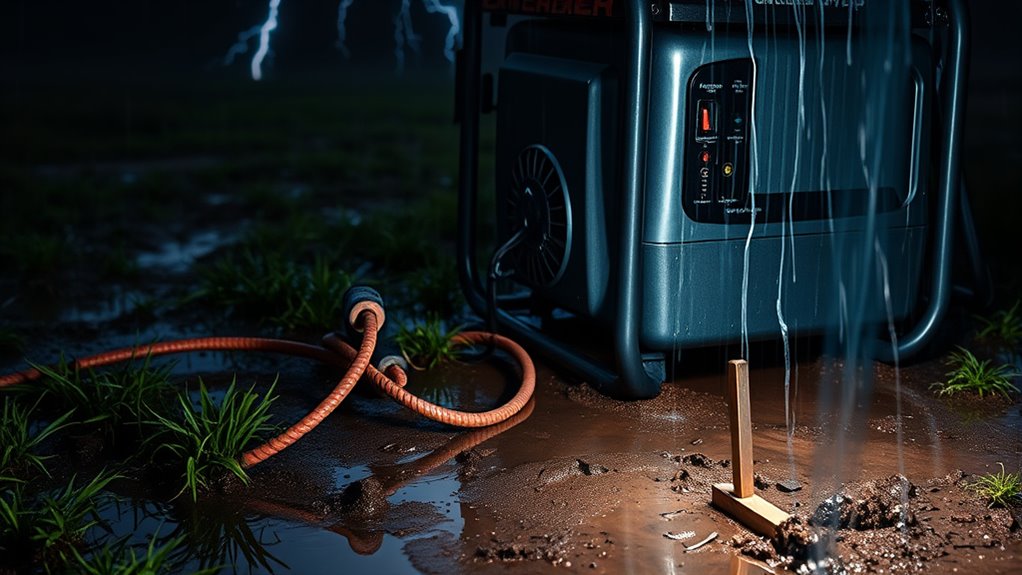
Grounding your generator properly is essential for safety, especially when operating in wet conditions. Proper grounding prevents stray currents that can cause shocks or fires. Always follow manufacturer instructions and use a heavy-duty, outdoor-rated grounding rod or grounding system. Ensure all electrical connections are secure, dry, and protected from water exposure. Use only outdoor-rated extension cords with proper insulation and grounding plugs. Avoid daisy-chaining cords and keep connections off wet surfaces. Regularly inspect cords and connections for damage or corrosion. Keep grounding hardware tight and free of rust. Maintain at least 20 feet clearance from structures to minimize water runoff onto connections. Remember, a well-grounded generator reduces electrical hazards and keeps you safe during rainy operations.
- Use outdoor-rated, heavy-duty extension cords
- Keep all connections dry and off wet surfaces
- Inspect cords and grounding hardware regularly
- Follow manufacturer grounding instructions precisely
- Maintain proper clearance from structures
Using Purpose-Built Covers Versus Improvised Tarp Solutions

Using purpose-built generator covers offers a reliable solution for protecting your equipment during rain, unlike improvised tarps that often fall short. These covers are designed with proper ventilation to prevent exhaust and CO buildup, reducing fire and health risks. They are tested to withstand wind, precipitation, and snow loads, ensuring durability and safety during stormy conditions. Purpose-built covers typically feature secure anchoring and open bottoms to allow airflow and drainage, preventing water pooling around the unit. In contrast, improvised tarps tend to be tight-fitting or poorly ventilated, which restricts exhaust escape and traps moisture, creating electrocution, fire, and carbon monoxide hazards. Investing in a certified, weather-rated cover enhances safety, maintains generator performance, and complies with recommended safety standards.
Safe Refueling Practices in Rain and Wet Environments
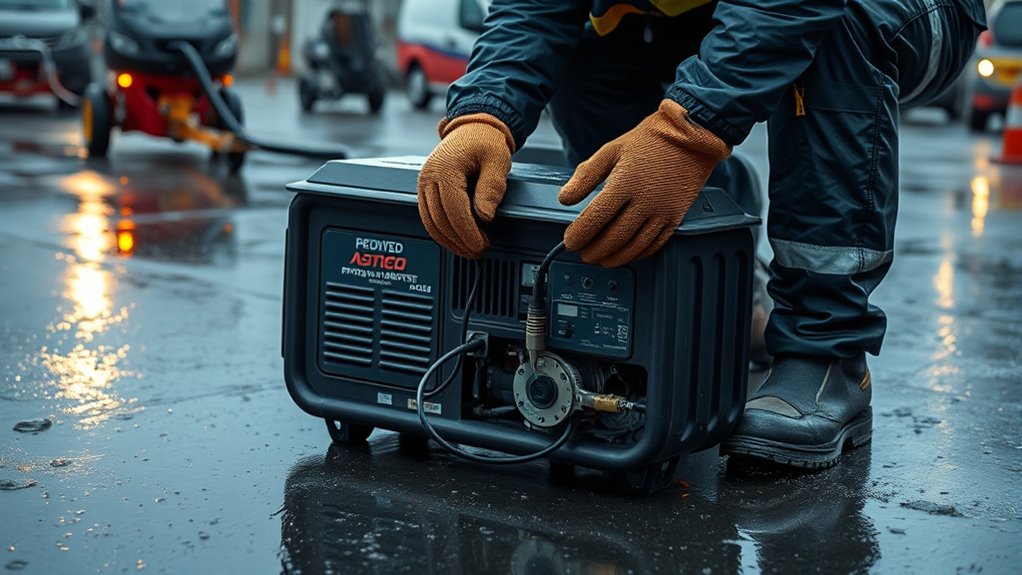
Refueling a generator in rain or wet conditions can be dangerous if proper safety procedures aren’t followed. To prevent fires, shocks, and spills, always turn off the generator and let it cool completely before refueling. Use a dry, stable surface, like concrete or gravel, to avoid splashback and pooling water. Keep fuel containers upright and away from the unit—at least 10 feet—to reduce fire risk. Use a funnel to minimize spills, and never refuel in the rain or when the unit is wet. Make sure your hands are dry and wear gloves if possible. Check that extension cords and connections are rated for outdoor use and free of water. Following these practices helps guarantee safe, effective refueling in wet environments.
The Dangers of Shortcutting Safety Guidelines

Shortcutting safety guidelines might seem like a quick fix, but it considerably increases the risk of accidents, fires, and injuries. When you ignore recommended distances from structures, you risk carbon monoxide buildup and potential poisoning. Using improvised covers or tarps that restrict airflow can lead to overheating, CO accumulation, and fires. Running a generator inside a garage or shed, even if partially open, creates dangerous CO levels and false ventilation safety. Using non-rated extension cords or placing the unit on wet ground heightens electrical shock risks and damage to equipment. These shortcuts might save time initially, but they compromise your safety and that of others. Following proper setup guidelines guarantees safe operation, reduces hazards, and prevents costly accidents. Never sacrifice safety for convenience.
Essential Safety Equipment and Monitoring Devices

To keep safe while running your generator in rain, you need proper safety equipment and monitoring devices. Placing carbon monoxide detectors correctly makes certain early warning of dangerous buildup, especially when ventilation is compromised. Reliable power monitoring devices help prevent overloads and electrical faults, giving you real-time insight into your setup’s status.
Proper CO Detectors Placement
Where should you place CO detectors to guarantee maximum safety when running a generator? You should position detectors on every level of your home, especially near sleeping areas and common rooms. Place detectors at least 5 feet above the floor, since CO is lighter than air and tends to rise. Keep them away from vents, windows, or doors that could block airflow or cause false alarms. Install detectors on the ceiling or high on walls for ideal detection. Test them monthly and replace batteries annually. Ensure they are interconnected so that when one alarms, all activate. Avoid placing detectors directly next to the generator, vents, or areas with high humidity. Proper placement helps detect CO early, protecting your family from potential poisoning.
Reliable Power Monitoring Devices
Reliable power monitoring devices are essential for ensuring safe generator operation, especially in wet or challenging conditions. These devices alert you to overloads, voltage fluctuations, and power outages that could cause damage or safety hazards. By monitoring real-time electrical parameters, you can prevent fires, equipment damage, and electrical shocks. Using reliable monitors helps you stay within safe load limits and quickly identify faults before they escalate.
| Device Type | Key Feature | Benefits |
|---|---|---|
| Voltage Monitor | Continuous voltage tracking | Prevents overvoltage damage |
| Load Meter | Real-time load measurement | Avoids overloads |
| Ground Fault Detector | Detects stray currents | Reduces shock risk |
Emergency Shutoff Alarms
Emergency shutoff alarms are critical safety devices that alert you immediately to hazardous conditions during generator operation. They can detect issues like high CO levels, overheating, or electrical faults, giving you time to shut down the unit before disaster strikes. Installing CO alarms near the generator and throughout your home ensures early warning of dangerous gas buildup. Temperature sensors can monitor overheating, triggering an alarm if the generator gets too hot. Some advanced systems integrate multiple sensors for thorough safety coverage. Remember to regularly test and maintain these alarms to guarantee they function properly. Features to look for include:
- Carbon monoxide detection with loud alarms
- Overheat sensors
- Voltage fluctuation alerts
- Remote monitoring capabilities
- Battery backup for continuous operation
Tips for Maintaining Safe Operation During Inclement Weather

When operating a generator in inclement weather, taking proactive safety measures is crucial to prevent accidents and guarantee reliable power. Always place your generator on an elevated, dry, non-flammable surface like concrete or gravel to avoid splashback and pooling water. Use purpose-built weatherproof covers rated for ventilation, not improvised tarps that can restrict airflow and trap exhaust. Ensure proper grounding and connect only outdoor-rated, heavy-duty extension cords. Maintain at least 20 feet of clearance from structures and keep the unit downwind of occupied areas. Never run the generator inside enclosed spaces, and turn it off before refueling to prevent fires. Regularly check for water pooling or damage, and always operate with functioning CO detectors on every level of your home.
Frequently Asked Questions
Can I Run My Generator During Light Rain Under a Tarp?
No, you shouldn’t run your generator during light rain under a tarp. Even a small amount of moisture can reach outlets and wiring, risking electrocution and short circuits. Tightly draping a tarp over the unit restricts airflow and traps exhaust gases, increasing fire and CO hazards. Instead, use a purpose-built, NFPA-rated weatherproof cover that maintains ventilation and keeps the generator dry and safe during rain.
Is It Safe to Operate a Generator in a Partially Enclosed Garage?
A chain is only as strong as its weakest link. Operating a generator in a partially enclosed garage isn’t safe because it traps exhaust gases, causing dangerous CO buildup. Even with open doors, the risk remains high. Always run your generator outdoors, at least 20 feet from structures, and guarantee proper ventilation. Never compromise safety for convenience—your life depends on it.
How Do I Protect Outdoor Extension Cords From Rain Damage?
You protect outdoor extension cords from rain damage by using heavy-duty, outdoor-rated cords designed for wet conditions. Always unplug cords when not in use, and avoid running them through doors or windows without proper seals. Elevate cords off the ground on weatherproof mounts or stakes to prevent pooling water. Cover connections with weatherproof enclosures or junction boxes, and regularly inspect cords for cracks or damage to guarantee safety.
What Are the Signs of Electrical Faults Caused by Wet Conditions?
Imagine plugging in your generator during a storm and suddenly experiencing flickering lights or a tripped breaker. These are signs of electrical faults caused by wet conditions. You might notice corrosion or rust on outlets and cords, or see sparks or smoke when plugging in devices. Such issues indicate water intrusion, insulation damage, or short circuits. Always inspect for these signs, turn off the generator, and get a professional to check before further use.
Can Portable Generators Be Safely Used in Snow or Freezing Rain?
You should avoid using portable generators in snow or freezing rain because moisture can cause electrical faults, short circuits, or shocks. If you must operate in cold conditions, guarantee the generator is fully sheltered, placed on an elevated, dry surface, and protected by a purpose-built, NFPA-rated cover. Always keep it at least 20 feet from structures, follow manufacturer instructions, and avoid exposing cords or outlets to snow or ice to prevent hazards.
Conclusion
Running a generator in rain isn’t just risky—it’s dangerous if you cut corners. By following proper setup, grounding, and safety practices, you protect yourself and your loved ones. Sure, it might seem inconvenient to set up shelter or wait for the rain to pass, but safety should always come first. Don’t let shortcuts lead to accidents—invest a few extra minutes now for peace of mind and safe operation in any weather.