
To keep your generator reliable, run it for 10-30 minutes weekly to lubricate parts and charge the battery. Perform monthly loaded tests to verify everything works during an outage. Check fuel quality and inspect components like filters and belts. In addition, do a more thorough quarterly maintenance and annual professional servicing. If you want detailed schedules and tips on customizing your routine, keep going to find the full guide to maintaining your generator properly.
Key Takeaways
- Exercise your generator weekly for 10–30 minutes to lubricate components and charge the battery.
- Conduct monthly loaded tests of about 30 minutes to verify transfer switch operation under real conditions.
- Inspect fuel quality, lines, and filters monthly to prevent contamination and ensure proper fuel system function.
- Perform quarterly loaded runs at full or significant capacity for 15–30 minutes to check overall system health.
- Schedule professional maintenance, including oil changes and load bank testing, every 6–12 months for optimal performance.
Weekly Exercise and Checks
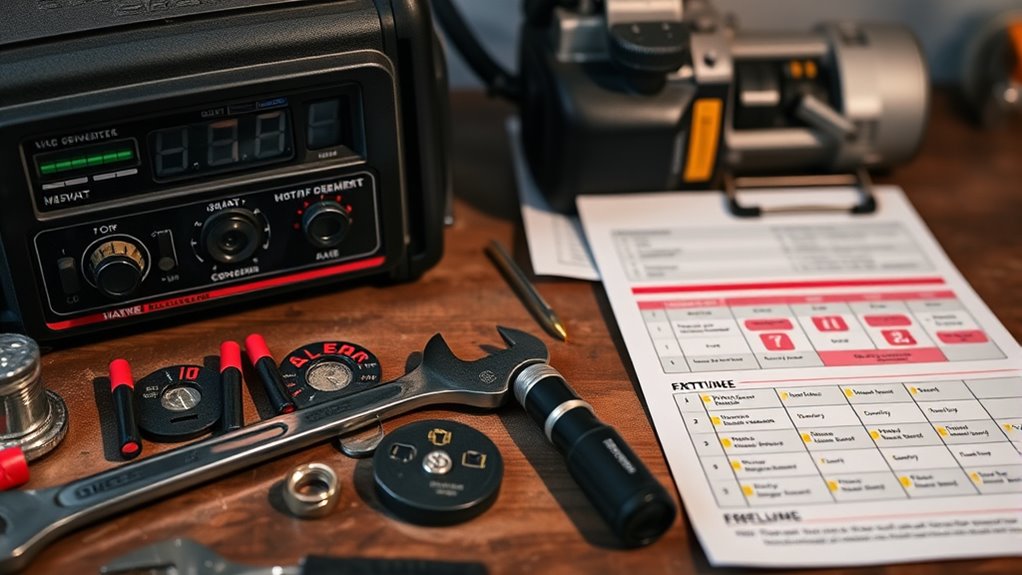
Regular weekly exercise and checks are essential to keep your generator reliable. Running it for 10–30 minutes each week lubricates the engine and keeps the battery charged. This routine helps you catch unusual noises, vibrations, alarms, or leaks early, preventing bigger issues later. Many standby units have automatic weekly exercise modes; just confirm they’re scheduled correctly via the control panel. Performing a no-load run also reduces rotor and shaft corrosion and prevents wet stacking in diesel units. During these weekly checks, inspect the fuel level, look for leaks, verify alarms, check the transfer switch position, and ensure circuit breakers are in good shape. Proper maintenance also supports the safety and efficiency of your generator operation. Incorporating regular calibration can further enhance its performance and longevity. Additionally, monitoring system diagnostics can help identify potential problems before they escalate. To ensure optimal operation, consider reviewing your generator’s manufacturer recommendations periodically. Regularly reviewing preventive maintenance schedules helps keep your generator in top condition.
Monthly Loaded Testing and Fuel System Checks

During your monthly loaded test, make sure to verify that the transfer switch operates correctly under real conditions. Checking fuel quality is also essential; inspect for water or contamination that could impact performance. These steps help guarantee your generator remains reliable when you need it most. Additionally, monitoring water chemistry in the fuel system can prevent corrosion and ensure optimal operation. Regularly testing thermal behavior during these procedures can also help identify potential issues before they affect your generator’s performance. Incorporating sensor diagnostics can further enhance early detection of system problems. Understanding essential oil properties can also be useful in maintaining the overall health of your generator’s components. It’s also beneficial to review lube and cooling systems to keep all parts functioning smoothly.
Verifying Transfer Switch Operation
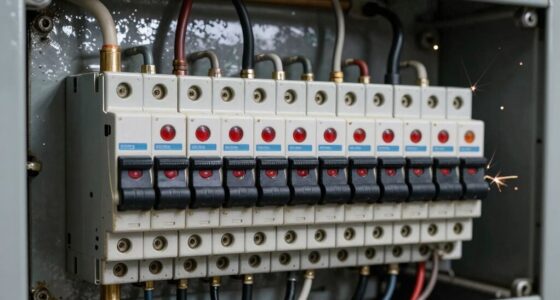
To guarantee your generator’s transfer switch functions correctly, it’s essential to perform monthly loaded tests. During these tests, run your generator under load for about 30 minutes, simulating a power outage. Pay close attention to the transfer switch’s operation—ensure it successfully switches from utility power to generator power and back without delay or hesitation. Listen for unusual noises, watch for abnormal vibrations, and observe the switch’s position on the control panel. Confirm that alarms activate if issues occur. Document the test, noting any faults or irregularities. Regularly verifying transfer switch operation makes certain it responds reliably during actual outages, preventing potential power failures or damage. Incorporating transfer switch testing procedures into your routine helps identify problems early. Regular testing helps catch problems early, keeping your backup power system ready when you need it most. Incorporating regular maintenance procedures ensures all components stay in optimal condition and extend the lifespan of your system. Performing these checks also helps ensure component reliability, which is vital for system dependability in emergencies. Additionally, checking the fuel system and ensuring proper fuel quality and levels can prevent operational issues during critical moments. It’s also wise to review fuel storage safety practices regularly to mitigate fire risks and ensure continuous fuel supply.
Fuel Quality Inspection
How often should you inspect your fuel quality to guarantee reliable generator operation? Monthly checks are essential to prevent fuel issues and ensure smooth performance. Regular inspections help catch water, dirt, or microbial contamination that can clog injectors or degrade fuel. To keep your fuel system in top shape, focus on these key tasks:
- Check fuel for water, sediment, or discoloration.
- Inspect fuel lines and filters for leaks, cracks, or blockages.
- Drain water separators and drain tanks if necessary.
- Test fuel quality by sampling and examining for contamination or fuel degradation. Monitoring fuel quality can help identify early signs of contamination and prevent costly repairs.
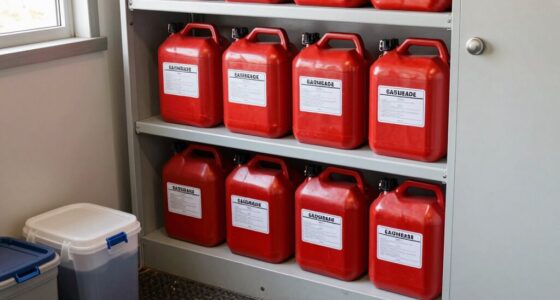
- Fuel storage conditions also play a crucial role in maintaining fuel integrity over time.
- Monitoring fuel degradation can help predict when fuel needs replacing before it causes system issues. Proper fuel handling practices are vital for preventing contamination during storage and transfer.
Performing these checks monthly keeps fuel fresh, prevents engine problems, and maintains system reliability. Logging inspection results helps identify trends and plan timely maintenance, ensuring your generator runs when you need it most. Protecting your fuel system components is vital for sustained efficiency and avoiding costly repairs.
Quarterly Maintenance and Inspection Tasks

Quarterly maintenance is essential to guarantee your generator operates reliably and efficiently. During this period, you should perform a loaded run to significant or full capacity for 15–30 minutes, especially if you have a diesel unit, to prevent wet stacking and ensure proper oil heating. Inspect the air filter, belts, hoses, and battery terminals to catch wear or damage early. Check for leaks, corrosion, and loose connections. Confirm that the transfer switch functions correctly and that safety devices are operational. For environments exposed to dust, salt, or humidity, increase inspection frequency. Additionally, review your spare parts and fuel supply plans based on logged run hours and observed wear. Regular generator testing helps identify potential issues before they cause failures. Performing a comprehensive inspection and keeping detailed logs will help you track your maintenance history and anticipate future needs. Implementing proper ventilation and cooling practices is also vital for preventing overheating and ensuring optimal performance. Proper ventilation not only prevents overheating but also extends the lifespan of internal components. Incorporating scheduled maintenance into your routine assists in maintaining consistent system performance and prolonging the overall lifespan of your generator. This routine helps maintain ideal system performance and extends the lifespan of your generator.
Seasonal Preparedness and System Verification
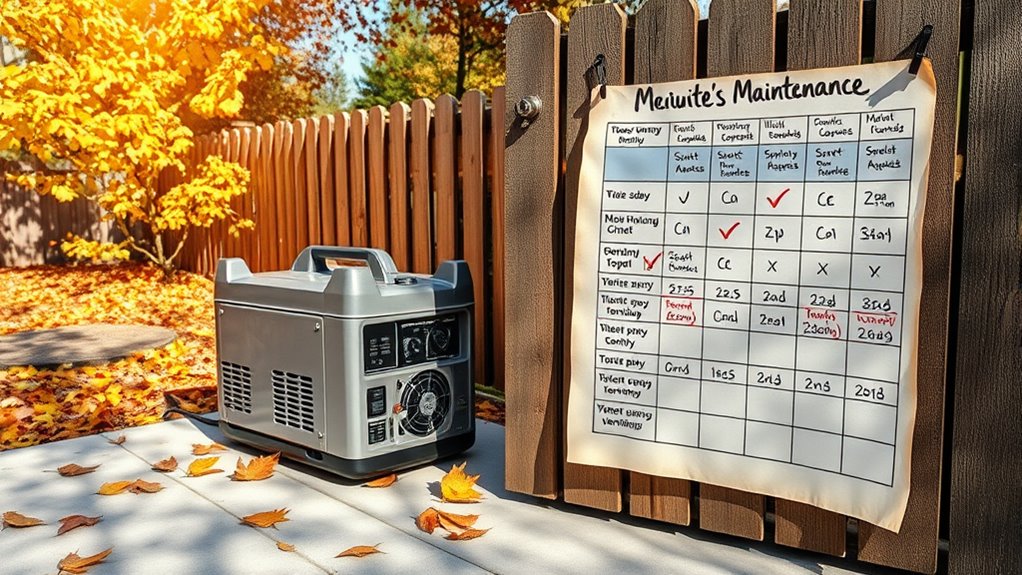
Preparing your generator for seasonal changes helps guarantee it runs reliably when you need it most. Seasonal preparedness involves verifying that your system is ready for upcoming weather conditions and increased demand. To assure ideal performance, consider these steps:
Ensure your generator is ready for seasonal changes to run reliably when it matters most.
- Check coolant levels, thermostat operation, and ventilation, especially before high-demand seasons.
- Inspect fuel quality, storage, and filters to prevent contamination and ensure proper combustion.
- Test automatic transfer switches and control panels to confirm correct scheduling and functionality.
- Examine the air intake, belts, hoses, and batteries for wear or leaks, replacing parts as needed.
Performing these checks helps prevent unexpected failures during critical times, extends your generator’s lifespan, and ensures smooth operation when power is most crucial.
Biannual and Annual Professional Service Recommendations

Regular professional service is essential to keep your generator operating reliably over time. Every six months or around 400 run hours, schedule a technician to perform oil and filter changes, and conduct a detailed inspection of key components. This helps prevent wear and catch issues early. Annually, it’s recommended to perform load bank testing for 2–4 hours, which verifies the system’s long-duration performance and prevents wet stacking, especially in diesel units. During these visits, the technician should inspect the alternator, control systems, and safety devices, and replace filters like spark plugs, air filters, and fuel filters per manufacturer guidelines. Keeping thorough records of service dates and findings ensures ongoing reliability and helps meet warranty requirements. These professional checkups are vital for maintaining peak performance and extending your generator’s lifespan.
Special Considerations for Diesel Generators
Why do diesel generators require special attention compared to other types? Diesel engines are more prone to wet stacking, which occurs when unburned fuel builds up due to insufficient combustion. This can cause engine deposits and reduce efficiency if not managed properly. Regular higher-load runs help burn off these deposits and prevent issues. Additionally, diesel fuel can degrade or develop microbes, requiring fuel polishing or tank maintenance. Cold weather also poses challenges, increasing the risk of cold-start problems and fuel gelling. To keep your diesel generator running smoothly, consider these steps:
Diesel generators need extra care to prevent wet stacking, fuel issues, and cold weather problems.
- Perform quarterly loaded tests to prevent wet stacking and maintain fuel system health.
- Monitor exhaust for smoke or soot, indicating combustion issues.
- Schedule more frequent inspections in cold climates or high-use scenarios.
- Ensure proper fuel storage, filtration, and regular tank maintenance.
Recordkeeping and Safety Protocols
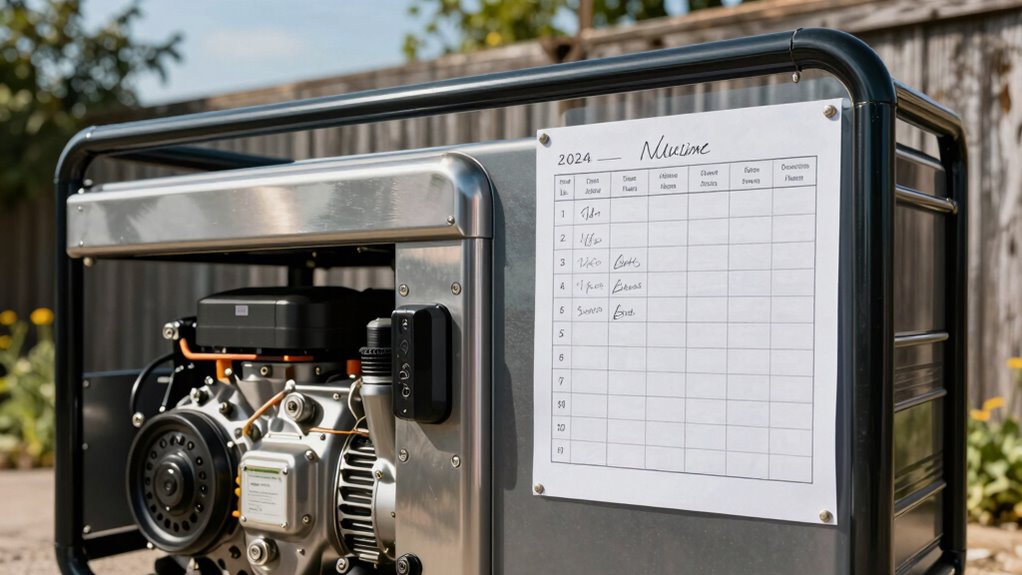
Keeping accurate records of your generator’s exercise schedule, maintenance actions, and any faults is essential for effective operation and reliable backup power. Use a logbook or digital system to track exercise dates, durations, loads, and issues encountered. This helps identify patterns, anticipate repairs, and ensure compliance with manufacturer recommendations. Always follow the manufacturer’s manual for specific intervals and procedures, and record any deviations or adjustments made. Safety is paramount: exercise your generator in well-ventilated areas, check for fuel or exhaust leaks, and allow proper warm-up and cool-down periods. Program automatic exercise features if available to maintain consistency. Regularly review your records to confirm scheduled maintenance, monitor system health, and document faults for troubleshooting and warranty purposes.
Adjusting Exercise Frequency Based on Usage
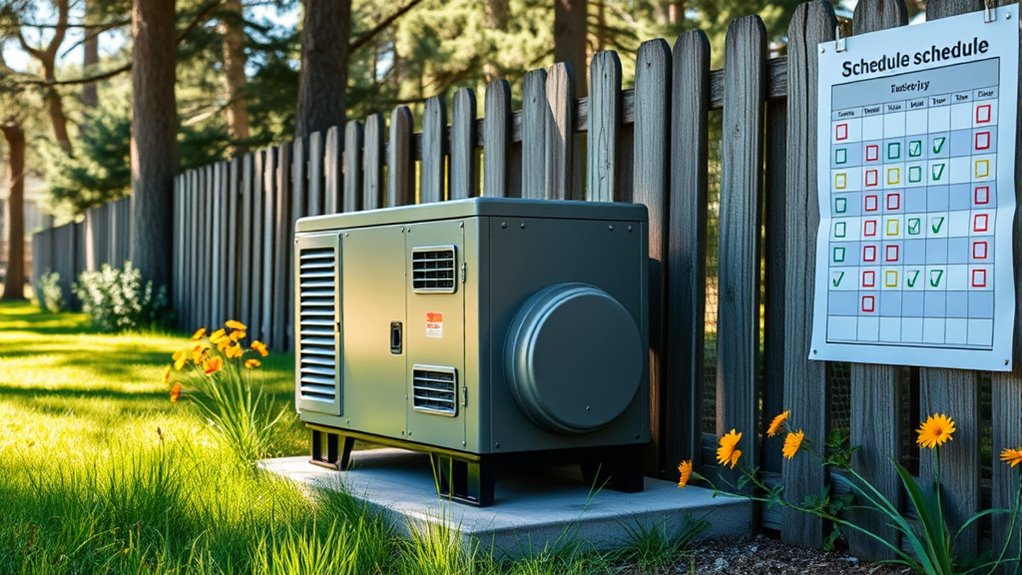
Your generator’s exercise schedule should change depending on how often and how hard you use it. If it’s used heavily or in harsh environments, you’ll need to exercise it more frequently to keep it reliable. For critical backup power, regular exercises become even more essential to make sure it’s ready when you need it most.
Usage Intensity Impacts Frequency
The frequency at which you exercise your generator should directly reflect its usage intensity. If you use it regularly or for critical loads, you’ll need to exercise it more often to guarantee reliability. Conversely, infrequent users can space out exercises but should still perform routine checks. Consider these guidelines:
- For heavy usage or critical backup needs, run weekly or biweekly.
- If used moderately, exercise monthly to maintain readiness.
- For minimal use, bi-monthly or quarterly runs are sufficient, combined with regular inspections.
- Always adjust based on environmental factors, fuel quality, and manufacturer recommendations.
Higher usage helps prevent issues like corrosion, fuel degradation, and wet stacking. Lower usage requires more vigilant inspections to catch potential problems early. Tailor your schedule to match your generator’s actual demand.
Environmental Conditions Matter
Environmental conditions profoundly influence how often you should exercise your generator, especially when combined with usage patterns. If your location exposes the unit to dust, salt, humidity, or extreme temperatures, you’ll need to boost exercise frequency and perform more frequent inspections. Dusty environments can clog filters faster, requiring more regular air filter checks and replacements. Salt and humidity accelerate corrosion, so you should schedule additional inspections of belts, hoses, and terminals. High temperatures can cause overheating, while cold climates may lead to cold-start issues, necessitating more frequent testing to ensure reliable operation. In such conditions, following manufacturer recommendations becomes even more critical, and increasing maintenance intervals helps prevent long-term damage, ensuring the generator remains ready and reliable when you need it most.
Criticality of Backup Power
When the backup power is critical to your operations, you need to prioritize more frequent exercise and maintenance to guarantee reliability. The importance of your generator directly impacts how often you should run it. Consider these factors:
- Critical Load: For essential facilities like hospitals or data centers, run weekly or more to ensure readiness.
- Usage Frequency: If the generator rarely operates, increase exercise frequency to prevent deterioration and confirm functionality.
- Environmental Exposure: Harsh conditions demand more frequent checks and exercises to counteract corrosion and damage.
- Fuel and Asset Age: Older units or those with fuel quality issues benefit from additional maintenance and testing to prevent failures.
Adjust your schedule accordingly, ensuring your backup power remains dependable when you need it most.
Aligning With Manufacturer Guidelines
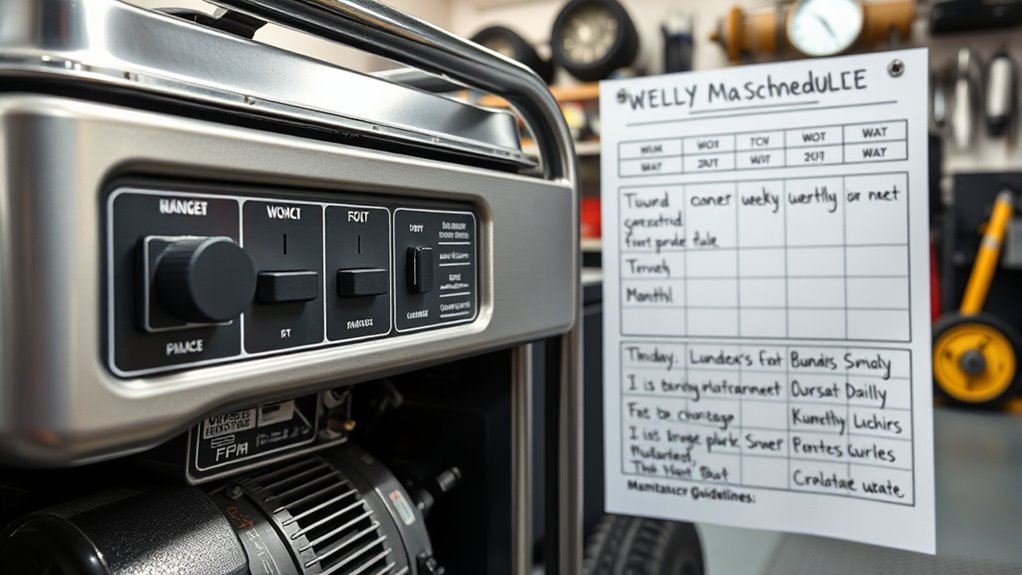
Aligning your generator maintenance and exercise routines with the manufacturer’s guidelines guarantees peak performance and safety. Always consult your unit’s manual for recommended exercise frequency, run times, and service intervals. Manufacturers specify these to ensure your generator operates reliably and meets safety standards. Program automatic exercise modes if available, to maintain consistency and reduce human error. Follow their advice on load testing, fuel checks, and component inspections. Deviating from these guidelines can lead to inefficient operation, premature wear, or safety hazards. Keep detailed logs of all exercises, faults, and maintenance actions to track performance trends and ensure warranty compliance. Prioritizing manufacturer recommendations guarantees your generator remains dependable, safe, and ready when you need it most.
Frequently Asked Questions
How Do I Know if My Generator’s Automatic Exercise Schedule Is Correct?
You can check if your generator’s automatic exercise schedule is correct by reviewing the control panel settings and confirming the scheduled times match the manufacturer’s recommendations. Look for the automatic exercise mode indicator and verify the frequency and duration of runs. Regularly monitor logs for any faults or irregularities. If unsure, consult your manual or a professional technician to ensure your generator exercises properly and stays in peak condition.
What Signs Indicate My Generator Needs More Frequent Maintenance?
Noticing unusual noises, persistent smoke, or black soot during exercises? These signs mean your generator needs more frequent maintenance. You should also check for frequent faults, difficulty starting, or if the engine runs rough. Are your fuel levels consistent? If fuel contamination or water buildup occurs often, increase inspection and servicing. Regularly monitor your generator’s performance, and don’t ignore warning signs—they indicate the need for more maintenance to keep it reliable.
Can I Skip Weekly Exercises During Certain Seasons or Conditions?
You shouldn’t skip weekly exercises during certain seasons or conditions without consulting your generator’s manual. If you face extreme cold, humidity, or dusty environments, more frequent testing is advisable to prevent issues like fuel degradation or corrosion. However, if your generator is used infrequently or stored properly in mild conditions, you might modify the schedule slightly. Always follow manufacturer recommendations to ensure your generator remains reliable.
How Do I Properly Log and Track Generator Exercise and Maintenance?
You log your generator’s exploits like a detective chronicling a hero’s journey—date, run time, load, faults, and fixes. Keep a neat notebook or digital file, and update it after every exercise or maintenance. Don’t forget to note anomalies or repairs. This record isn’t just for bragging rights; it helps spot trends, schedule future checks, and proves your dedication when the power gods demand proof of your vigilance.
What Safety Precautions Should I Follow During Generator Testing?
During generator testing, always make certain you’re in a well-ventilated area to prevent dangerous exhaust buildup. Wear appropriate personal protective equipment, like gloves and safety glasses. Before starting, check for fuel or oil leaks and secure loose objects nearby. Keep a fire extinguisher nearby, and never leave the generator unattended while running. After testing, inspect for leaks or unusual noises, and allow the unit to cool down before maintenance or shutdown.
Conclusion
By sticking to this simple schedule, you’ll keep your generator running smoothly when you need it most. Regular exercise and inspections prevent unexpected breakdowns and extend its lifespan. Are you prepared to trust your generator in an emergency? Consistency is key, so follow the guidelines, stay vigilant, and guarantee your system is always ready. After all, isn’t peace of mind worth a little routine effort?