To build a reliable cord kit for outages, focus on essential, versatile cords like heavy-duty cords for appliances and lighter ones for small devices, keeping quantities manageable to reduce clutter. Store everything in clearly labeled, sturdy containers near your electrical panel or common area. Regularly inspect cords for damage and test their functionality. Prioritize safety by using surge protectors and following electrical guidelines. By sticking to these basics, you’ll be prepared when outages strike; continue to learn more to enhance your setup.

Get backup power and energy gear delivered free — and shop member deals
- Fast, free delivery on millions of items
- Access to Prime Big Deal Days deals on October 6–7
- Prime Video, Amazon Music and more included
Key Takeaways
- Assess your household’s essential devices and power needs to include only necessary cords and adapters.
- Choose high-quality, versatile extension cords and surge protectors, avoiding unnecessary gadgets.
- Organize cords in clearly labeled, dedicated containers, separating small accessories from main cables.
- Regularly inspect and test cords for damage, replacing worn or frayed items promptly.
- Practice quick setup and safety protocols to ensure readiness during outages without unnecessary clutter.

Have you ever wondered how to stay prepared during power outages? Building a cord kit is a smart move to ensure you have the essentials ready without cluttering your space with unnecessary extras. When it comes to emergency preparedness, simplicity and organization make all the difference. You want a kit that’s easy to use, reliable, and tailored to your needs. The key is to focus on the basics—nothing more, nothing less—and keep everything well-organized so you can grab it quickly when the lights go out.
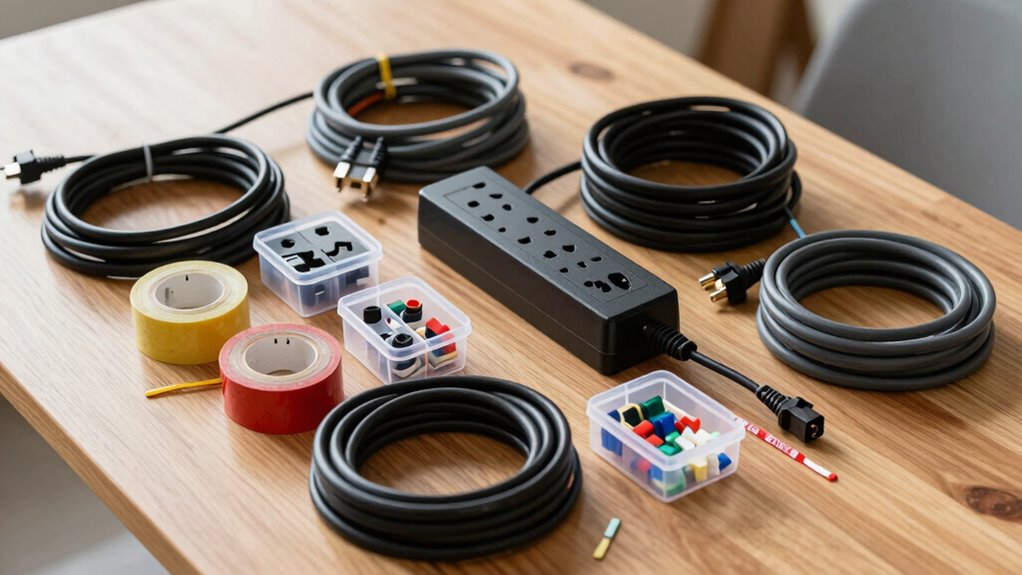
Start by listing the essential tools you’ll need. This typically includes a variety of extension cords, power strips, and surge protectors. Instead of buying random extras, choose versatile cords that can handle different loads—heavy-duty cords for appliances and lighter cords for smaller devices. Stick to a manageable number of each so your kit isn’t cluttered. For example, a few 25-foot extension cords and a couple of power strips with surge protection should suffice. When selecting these items, prioritize quality and durability to prevent failures during critical moments. Additionally, understanding the importance of proper electrical safety can help you avoid hazards during outages. Incorporating safety protocols into your setup can further prevent accidents during use.
Choose versatile, durable cords and limit quantities for a clutter-free, reliable emergency power kit.
Next, focus on tool organization. Use a sturdy, clearly labeled container or toolbox to keep everything in one place. Separate cords from smaller accessories, like adapters or surge protectors, using compartments or small zippered bags. This way, you won’t waste time digging around when you need to connect something fast. Make sure your kit is stored in an accessible location—near your main electrical panel or where you’re most likely to need it. Regularly inspect your cords for damage, and replace any that show signs of wear or fraying to avoid potential hazards during an outage. Incorporating inspection routines into your maintenance schedule can further ensure your kit remains reliable. Additionally, understanding common electrical hazards can help you prevent accidents during use.
Avoid the temptation to buy every gadget or accessory you come across. Instead, think about what you actually need based on your household’s power requirements. For instance, if you rely heavily on a particular device or appliance, include a dedicated cord or adapter for it. Keep your kit streamlined, focusing on the essentials that will serve you in most situations. This approach not only saves space but also ensures your emergency preparedness measures are effective and straightforward.
Finally, practice using your cord kit periodically. Test your cords and connections to confirm everything works as expected. By maintaining a well-organized, purpose-driven kit, you’ll feel more confident during outages. Remember, the goal is to have a reliable, easy-to-access setup that prevents chaos and saves you time when every second counts. Building your cord kit with careful planning and organization puts you in control, making emergency preparedness manageable and less stressful.
heavy-duty extension cords for emergencies
As an affiliate, we earn on qualifying purchases.
As an affiliate, we earn on qualifying purchases.
Frequently Asked Questions
What Safety Precautions Should I Follow When Handling Electrical Cords?
When handling electrical cords, prioritize electrical safety by inspecting cords regularly for damage, like frays or exposed wires. Always unplug cords by gripping the plug, not the cord, to prevent damage. Keep cords away from water and heat sources, and avoid overloading circuits. Proper cord maintenance is essential—store cords properly and avoid twisting or pinching them. Following these safety precautions ensures safe use and prolongs your cords’ lifespan during outages.
How Do I Determine the Right Length for My Cord Kit?
To determine the right length for your cord kit, consider your power needs and the distance between outlets and appliances. Use a cord gauge suitable for your equipment—thicker gauges handle higher loads safely. Measure the extension length needed to reach all devices comfortably without excess slack, which can cause tripping hazards. Aim for a length that provides flexibility without creating clutter, ensuring safe and efficient power distribution during outages.
Can I Customize My Kit for Specific Appliances or Devices?
Sure, you can definitely customize your kit for specific appliances or devices. It’s ironic, right? You get to be the boss of your appliance-specific, device tailored cords, ensuring perfect compatibility and safety. Just identify your devices’ power needs and connector types, then choose or modify cords accordingly. This way, you avoid wasting space or risking damage, making your kit both efficient and tailored precisely to your household’s unique needs.
How Often Should I Inspect or Update My Cord Kit?
You should inspect and update your cord kit at least every six months to guarantee everything remains in good condition. During these checks, focus on storage organization, making sure cords are neatly stored and easily accessible. Regular kit maintenance helps identify worn or damaged cords needing replacement, preventing future issues during outages. Staying proactive with inspections keeps your kit reliable and ready whenever you need it.
What Are Common Mistakes to Avoid When Assembling a Cord Kit?
When assembling your cord kit, avoid poor cord organization by keeping cables tangled or unlabelled. Use proper storage solutions like labeled bins or hooks to keep everything accessible and neat. Don’t forget to check for damaged cords regularly, and confirm your kit includes essential items without excess or unnecessary extras. Proper organization and smart storage help you quickly find what you need during an outage and keep your kit in good condition.
surge protector power strips with surge protection
As an affiliate, we earn on qualifying purchases.
As an affiliate, we earn on qualifying purchases.
Conclusion
By assembling a focused cord kit, you’re prepared for outages without cluttering your space with unnecessary extras. Think about how peace of mind feels when you’re confident you’ve got what you need, no matter the situation. Isn’t it worth investing a little time now to avoid chaos later? With a streamlined kit, you’ll stay connected and safe, ready to face any power outage that comes your way. After all, preparedness isn’t just smart—it’s essential.
organized emergency cord kit storage containers
As an affiliate, we earn on qualifying purchases.
As an affiliate, we earn on qualifying purchases.
outage preparedness electrical safety tools
As an affiliate, we earn on qualifying purchases.
As an affiliate, we earn on qualifying purchases.
Evergreen bestsellers Picks
bestsellers
As an affiliate, we earn on qualifying purchases.