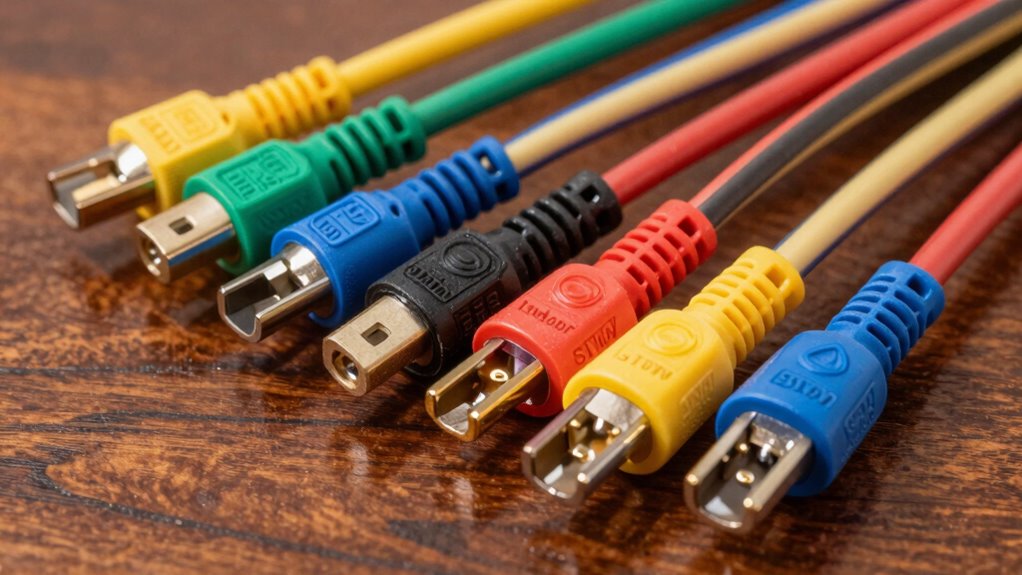

When choosing extension cords, look at the codes like SJTW, SJEOW, and “indoor only” to understand their uses. SJTW cords are weather-resistant and good for outdoor use, while SJEOW cords are oil-resistant and flexible, suited for colder environments. “Indoor only” cords are designed for dry, protected spaces and lack outdoor ratings. Understanding these differences helps you select the right cord—keep exploring to guarantee safe, reliable power everywhere.
Key Takeaways
- SJTW cords are weather-resistant with PVC jackets, suitable for outdoor use, resisting moisture, UV, and ozone.
- SJEOW cords have rubber insulation, are oil-resistant, flexible, and ideal for cold or industrial environments.
- Indoor-only cords lack outdoor ratings like “W” and are designed for dry, protected environments with thinner jackets.
- Weather-resistant labels (“W,” “O”) indicate suitability for outdoor exposure and environmental durability.
- Inspect cords regularly for damage, as cracked or brittle insulation signals the need for replacement to ensure safety.
Understanding the Basic Letter Codes in Extension Cords
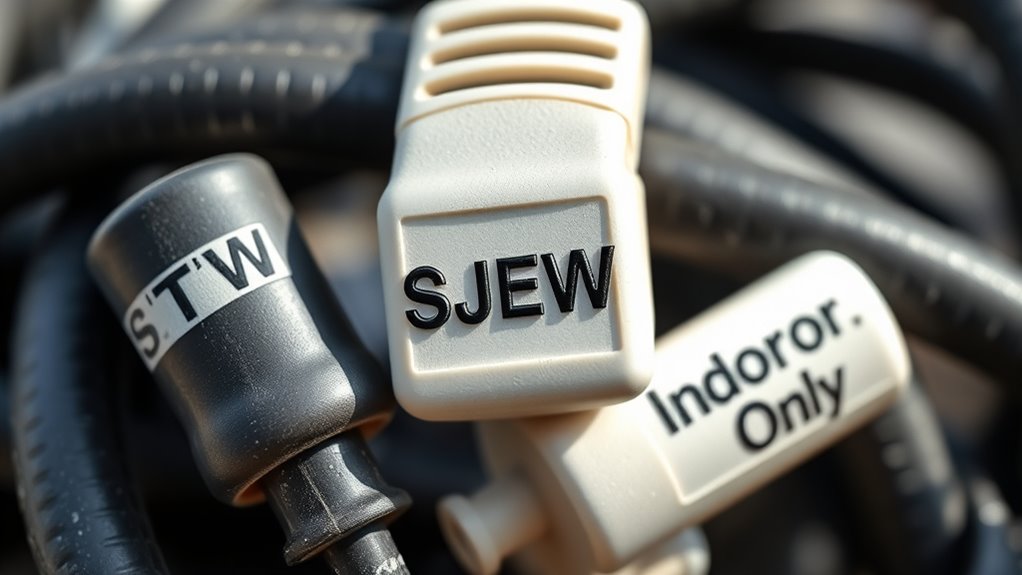
Understanding the basic letter codes in extension cords is essential for selecting the right cord for your needs. These codes tell you about the cord’s construction, intended use, and environmental resistance. The first letter, “S,” indicates a service or portable cable, suitable for general-purpose outdoor or indoor use. The “J” signifies a junior rating, meaning it’s rated for 300 volts, generally for lighter-duty applications. The “T” indicates thermoplastic (PVC) insulation and jacket, which offers durability but less flexibility in cold weather. The “E” or “O” shows elastomer or rubber components, providing better cold flexibility or oil resistance. Finally, a “W” indicates weather-resistant, suitable for outdoor environments exposed to moisture, UV, and ozone. Recognizing these codes helps you select a safe, durable extension cord for your specific needs. Understanding the coding system is helpful for making informed choices and ensuring safety. Additionally, being aware of appliance power requirements can prevent potential hazards when using extension cords with various devices.
What Does “W” Signify and When Is It Necessary?
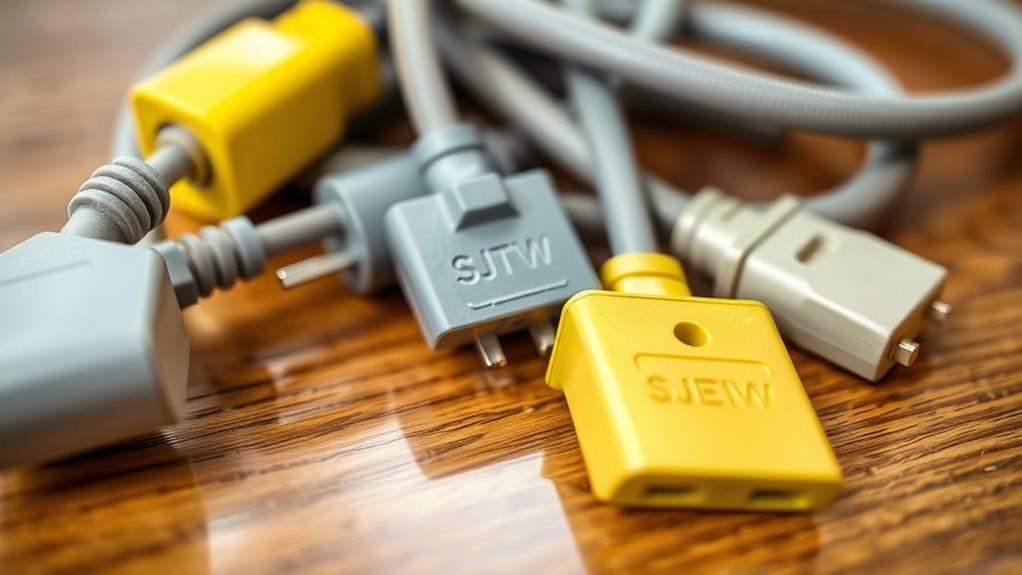
What does the “W” in extension cord codes signify, and why is it significant? The “W” indicates the cord is weather-rated, designed for outdoor use, and resistant to moisture, UV rays, and ozone. This rating is essential when you need a cord that can withstand environmental exposure without degrading or becoming unsafe. If you plan to use an extension cord outside, choosing one with a “W” guarantees better durability and safety. Without this designation, cords are typically intended for indoor use only, where environmental factors are minimal. Using a non-weather-rated cord outdoors increases the risk of electrical failures, shocks, or fires. Consequently, always check for the “W” when selecting an extension cord for outdoor or exposed applications to guarantee proper protection and compliance with safety standards. Understanding weather resistance is crucial for ensuring safety and longevity of your outdoor electrical equipment. Additionally, being aware of extension cord classifications can help you make informed safety decisions, especially regarding the appropriate cord ratings for specific environments.
Differentiating Thermoplastic and Elastomeric Jackets
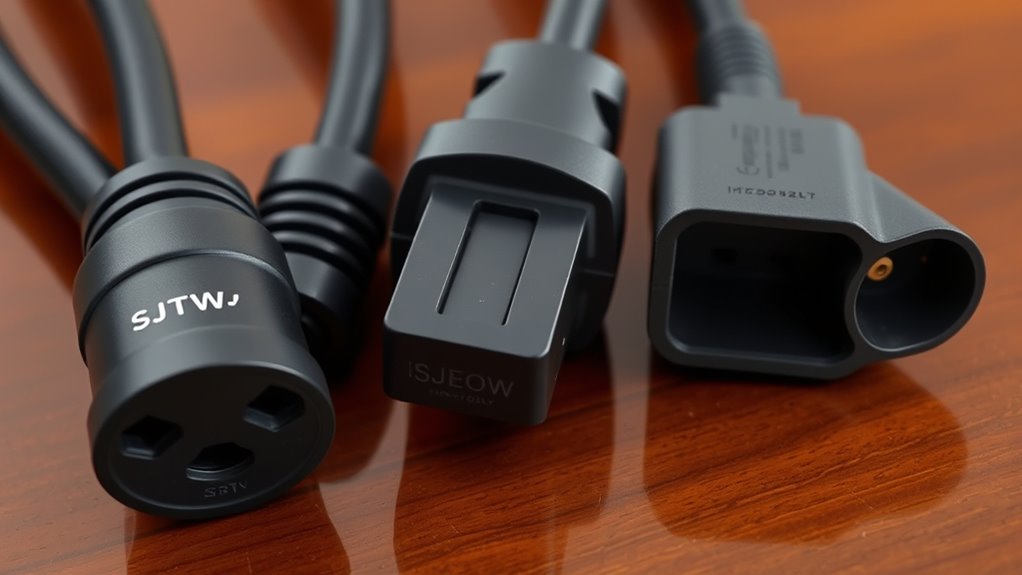
Ever wondered how the jacket material affects an extension cord’s performance and suitability? Thermoplastic (PVC) jackets are durable and abrasion-resistant, making them ideal for everyday outdoor use. However, they tend to stiffen in cold weather, reducing flexibility and increasing the risk of cracks or damage. Elastomeric or rubber jackets, on the other hand, stay pliable in low temperatures, offering better cold-flexibility and kink resistance. They also provide enhanced durability against repeated flexing and mechanical stress. Oil-resistant rubber jackets protect against hydrocarbons, grease, and solvents, suitable for industrial or automotive environments. Additionally, the jacket material influences the cord’s safety standards and compliance requirements. While thermoplastic cords are typically more affordable and easier to manufacture, elastomeric jackets excel where flexibility, cold-weather performance, and chemical resistance are necessary. Selecting the appropriate jacket type involves considering material properties and environmental factors to ensure safety and longevity. Recognizing the thermal performance of the jacket material can further inform the best choice for specific conditions. Furthermore, understanding electric insulation properties can help prevent electrical hazards associated with different jacket materials.
Oil-Resistant and Weather-Ready Cord Variants Explained

Oil-resistant and weather-ready extension cords are designed to endure tough environments and prevent damage from hydrocarbons, moisture, and temperature swings. These variants typically feature jackets made from rubber or elastomer materials, offering superior flexibility and cold resistance compared to thermoplastic options. The oil-resistant (O) designation guarantees the cord’s outer layer resists grease, fuel, and solvents, making them ideal for automotive or industrial settings. Weather-ready (W) ratings indicate protection against moisture, UV, and ozone exposure, suited for outdoor use. Use the table below to quickly identify key differences: environmental resistance.
| Variant | Key Features |
|---|---|
| SJTW | PVC, weather-resistant, thermoplastic |
| SJEOW | Rubber, oil-resistant, weatherproof |
| SJOOW | Rubber, oil-resistant, flexible |
| SJTOW | PVC, oil-resistant, outdoor-rated |
| Indoor | No weather or oil resistance, indoor only |
Indoor-Only Cords: Characteristics and Limitations
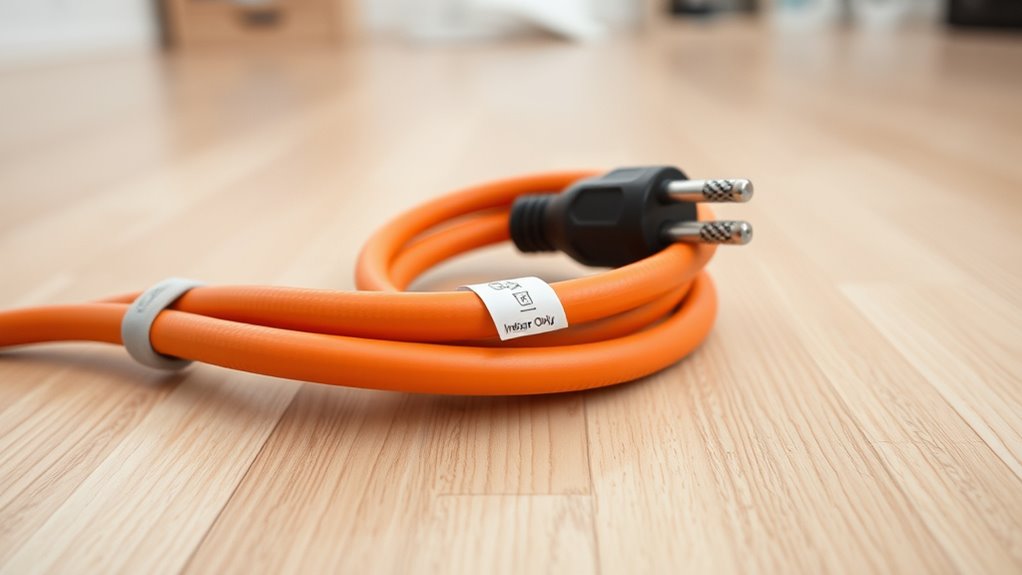
Indoor-only extension cords are designed specifically for use in dry, protected environments and lack features needed for outdoor or exposed settings. They usually have thinner PVC jackets, such as SPT or SPT-3, which provide basic insulation but aren’t weather-resistant. These cords don’t include outdoor ratings like “W,” meaning they’re not resistant to moisture, UV rays, or ozone. Their insulation and jackets are optimized for indoor conditions, making them more flexible and easier to coil in controlled temperatures. However, they’re limited in durability, especially in colder environments, where stiffening or cracking can occur. Using indoor-only cords outdoors or in damp areas can increase the risk of electrical shock, short circuits, or fire. Always check the markings and avoid using these cords where weather or moisture exposure is possible.
Selecting the Right Cord for Outdoor and Heavy-Duty Use
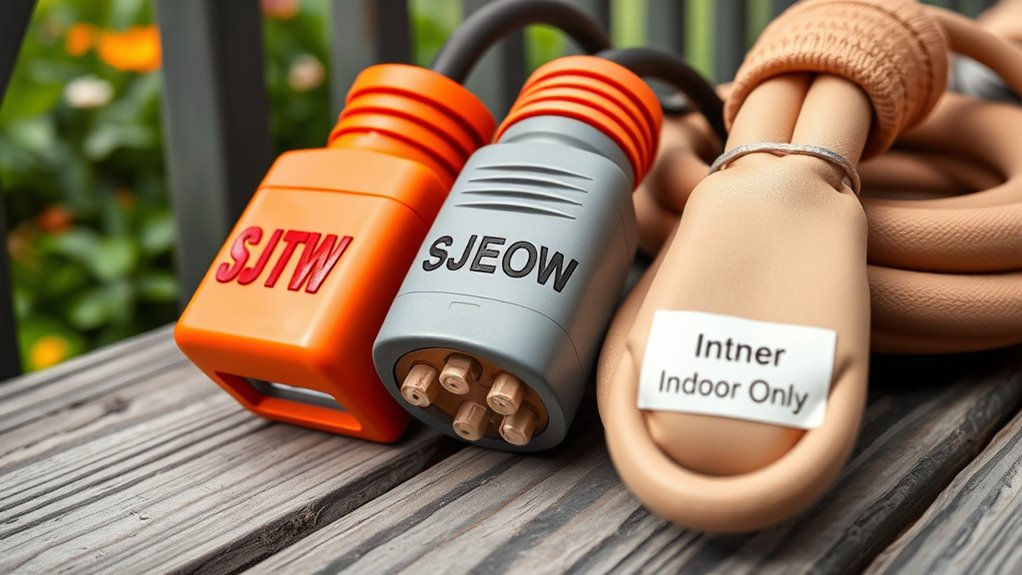
When choosing a cord for outdoor or heavy-duty tasks, weather resistance features are essential to protect against moisture, UV rays, and ozone. You’ll also want a cord that offers durability and flexibility, so it withstands repeated use and harsh conditions without cracking or stiffening. By understanding these qualities, you can select a cord that performs reliably in demanding environments. Additionally, selecting cords with the appropriate power rating ensures safe and efficient operation under load. It’s also important to consider the material composition of the cord’s insulation and jackets, which can significantly influence its weather resistance and longevity. Incorporating weather-resistant materials further enhances the cord’s ability to endure outdoor conditions over time.
Weather Resistance Features
Choosing the right extension cord for outdoor and heavy-duty use requires understanding its weather resistance features. Look for cords with the “W” designation, which indicates weatherproofing for moisture, UV rays, and ozone exposure. These cords typically have jackets made from durable thermoplastic or elastomer materials that resist cracking and degradation in outdoor conditions. Rubber or elastomer jackets (like in SJEOW or SJOOW cables) provide superior cold-flexibility and better resistance to oils, chemicals, and physical wear, making them ideal for harsh environments. PVC jackets (such as SJTW) offer good moisture resistance but are less flexible in cold weather. Always verify the manufacturer’s specifications for UV, ozone, and chemical resistance to ensure the cord withstands specific outdoor conditions. Proper weather-resistant features extend the cord’s lifespan and guarantee safety during outdoor use. Additionally, selecting cords with weather-resistant materials can significantly improve durability and safety during prolonged outdoor exposure. For optimal safety and performance, it’s important to understand the different weatherproofing standards, which serve as a reliable measure of a cord’s protective qualities. Recognizing the material composition of the jacket can also help prevent unexpected failures in extreme environments.
Durability and Flexibility
For outdoor and heavy-duty applications, selecting a cord with superior durability and flexibility guarantees reliable performance and safety over time. Rubber or elastomer jackets, like those on SJEOW or SJOOW cords, offer greater flexibility in cold temperatures and resist cracking and stiffening, making them ideal for frequent movement and harsh conditions. Thermoplastic PVC jackets, such as on SJTW cords, provide good abrasion resistance but can become stiff when cold, limiting flexibility. Oil-resistant jackets (O-rated) add durability against hydrocarbons and solvents, extending cord life in industrial settings. Thicker gauge wires (12 or 10 AWG) improve strength and reduce voltage drop, especially for long runs. Understanding insulation properties can help select the best cord for specific conditions, particularly when considering flexibility in cold weather. Selecting the correct cord also involves considering its application environment, ensuring it meets the safety and performance needs of your project.
Safety Markings, Ratings, and Compliance Indicators
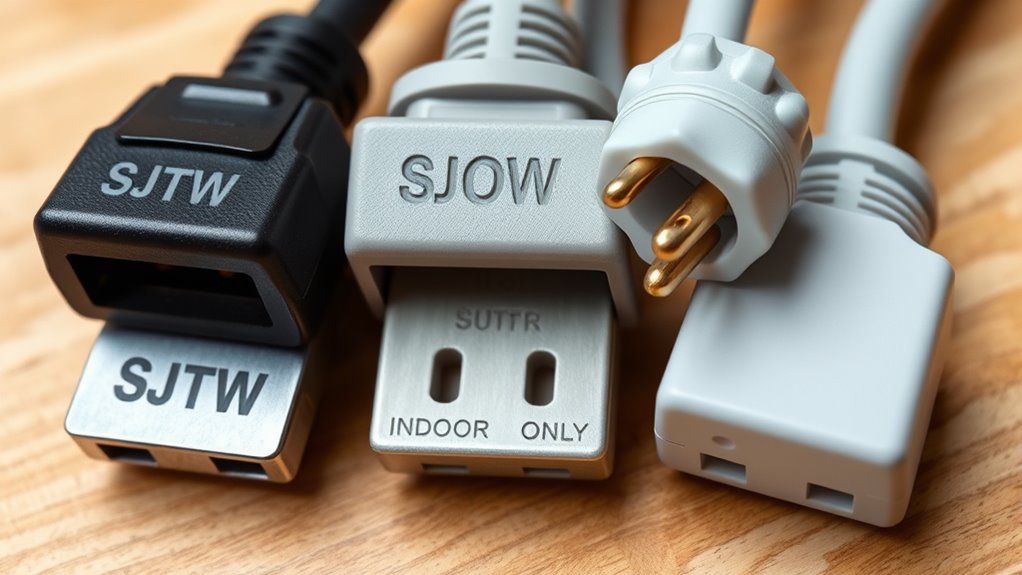
Have you ever examined an extension cord’s jacket markings and wondered what they truly mean? These markings reveal essential safety, performance, and compliance info. Look for code letters like “W,” “O,” or “T” that indicate weather resistance, oil resistance, or thermoplastic construction. The cord should also display its gauge (AWG), voltage rating, and ampacity, ensuring it matches your needs. Certifications such as UL or CSA symbols confirm it meets safety standards. An indoor-only cord will lack outdoor ratings or “W” markings, signaling it’s not suitable for exterior use. Always verify the jacket’s printing before purchasing or connecting. Check for damage, cracks, or exposed conductors, and ensure the cord is rated for your specific application. Proper markings help you use extension cords safely and effectively. Additionally, selecting cords with appropriate ratings and certifications ensures optimal safety and durability for your specific environment. Recognizing these compliance indicators is crucial for adhering to safety standards. Being aware of safety markings can prevent accidents and extend the life of your extension cords. Moreover, understanding cord code markings can assist in selecting the right cord for both indoor and outdoor use, enhancing safety and performance.
Common Applications and Best Practices for Cord Usage

Extension cords are versatile tools designed to power a wide range of devices across various environments. For outdoor use, choose SJTW cords, which resist weather and moisture, making them ideal for gardening, power tools, and outdoor lighting. When working in cold or industrial settings, opt for SJEOW or SJOOW cords, as their rubber or elastomer jackets remain flexible and resist oil and chemicals. Inside, use indoor-only cords like SPT or SPT-3 for appliances, computers, or office equipment, where weather resistance isn’t needed. Always match your cord’s wire gauge and ampacity to your load—heavier-duty tools require thicker gauges. Follow safety guidelines, inspect cords regularly, and avoid overloading or using damaged cords to make sure safe and reliable operation.
Recognizing Wear and Damage: When to Replace
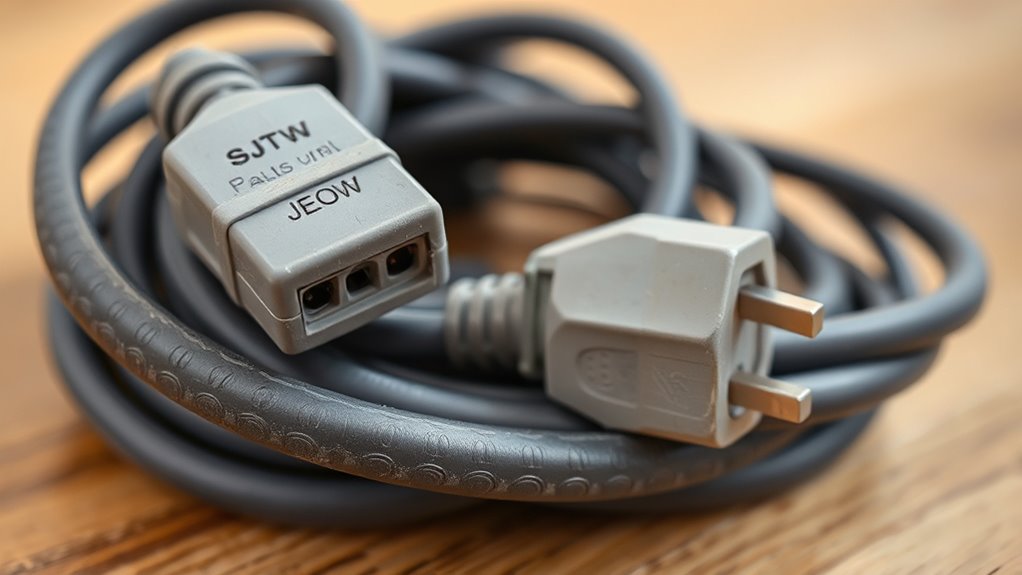
If you notice cracks, cuts, or exposed wiring on your extension cord, it’s time to replace it immediately. Brittle or stiff material indicates the insulation has degraded and can fail under load or cold conditions. Don’t ignore visible damage—using a compromised cord risks shock, fire, or equipment failure.
Visible Cracks or Cuts
Visible cracks or cuts in an extension cord are clear signs that it’s time to replace the cord immediately. These damages compromise the insulation, exposing live wires and increasing the risk of electrical shock or fire. Inspect the entire length of the cord carefully, paying attention to areas near plugs, connectors, and high-flex zones. Even small cuts or frayed sections can worsen over time, especially with repeated use or exposure to weather, chemicals, or physical stress. If you notice any cracks, cuts, or exposed conductors, unplug the cord immediately and avoid using it until replaced. Continuing to use a damaged extension cord puts you and your property at significant risk. Always prioritize safety by replacing cords with visible damage before they cause an electrical hazard.
Brittle or Stiff Material
Brittle or stiff material in an extension cord signals significant wear that can compromise safety and performance. Over time, exposure to cold temperatures, UV rays, or aging causes the jacket material to lose flexibility, becoming hard and brittle. When you handle a cord with a stiff or cracking outer layer, it’s a clear sign the insulation is degrading. This reduces the cord’s ability to resist impacts, cuts, and environmental damage, increasing the risk of electrical shock or fire. Don’t ignore these signs; using a cord with brittle insulation can lead to exposed wires or short circuits. If the material feels chalky, cracks easily, or resists bending, it’s time to replace it. Always prioritize safety by replacing cords that no longer have pliable, intact jackets.
Tips for Purchasing and Verifying Extension Cord Quality
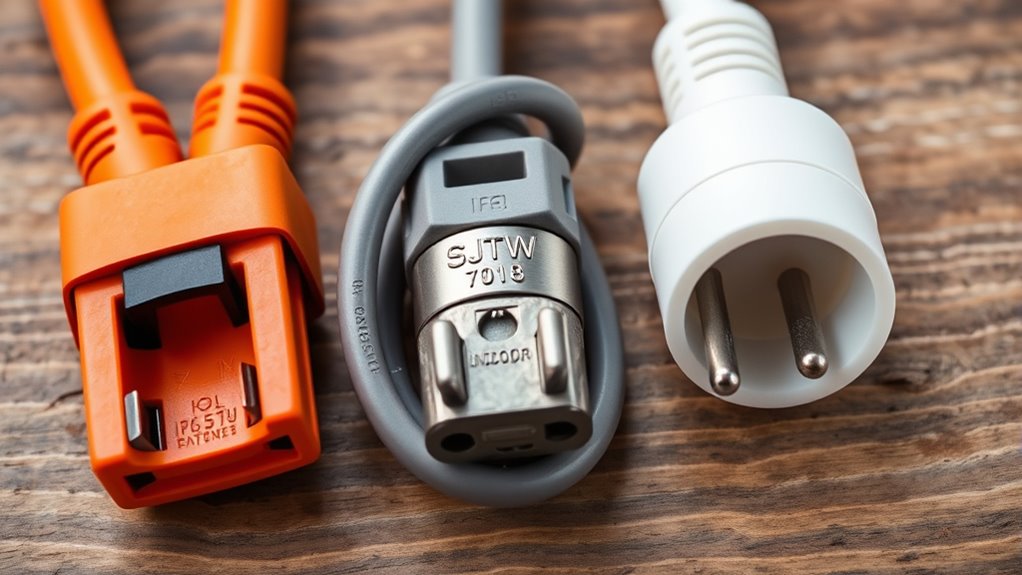
When purchasing extension cords, prioritizing quality guarantees safety and durability. Always check for clear markings on the jacket, including the code letters, AWG gauge, voltage, amperage ratings, and certification marks like UL or CSA. Avoid cords with missing or illegible labels, as these may lack essential safety features. Inspect the cord thoroughly for cracks, brittleness, exposed conductors, or damaged plugs—discard any damaged cords immediately. Verify the jacket’s material—rubber or elastomer jackets are more flexible and suited for cold conditions, while thermoplastic jackets offer abrasion resistance. For outdoor use, ensure the cord has a “W” rating and weatherproofing. Purchase cords from reputable brands and review datasheets for specific ratings like UV, ozone, and oil resistance. Proper verification guarantees safe, long-lasting performance.
Frequently Asked Questions
How Do I Identify the Ampacity Ratings on Extension Cords?
You identify the ampacity ratings on extension cords by checking the printed label or markings on the cord’s jacket. Look for specific details like the amp rating (e.g., 13A, 15A), voltage (e.g., 125V), and wire gauge (e.g., 14 AWG). Reputable cords also display UL or CSA certification marks. Always verify these ratings correspond with your power needs before plugging in high-draw devices to guarantee safety.
Can I Use Outdoor-Rated Cords Indoors Safely?
You can technically use outdoor-rated cords indoors, but it’s not recommended. Outdoor cords, like SJTW, have thicker jackets and weather-resistant coatings designed for exposure to moisture and UV. However, they’re often stiffer and less flexible, making them less ideal for indoor use. For safety and convenience, choose cords specifically rated for indoor environments, which tend to be lighter, more flexible, and suited for dry, enclosed spaces.
What Is the Difference Between UL and CSA Markings?
You should know that UL and CSA markings both indicate safety standards, but UL is primarily a North American certification from Underwriters Laboratories, while CSA is a Canadian standard from the Canadian Standards Association. When you see these marks on cords or equipment, it means they’ve been tested for safety and conformity with local regulations. Always look for these markings to confirm you’re using certified, safe products in your environment.
Are Rubber Jackets More Durable Than PVC in All Conditions?
Rubber jackets are generally more durable than PVC in harsh conditions, especially in cold weather, due to their flexibility and resistance to cracking or stiffening. They handle repeated flexing better and resist oils and chemicals more effectively. However, in high-heat environments or where abrasion is minimal, PVC can be sufficiently durable. You should choose based on your specific environment, considering temperature, exposure, and mechanical stress.
How Does Cord Gauge Affect Voltage Drop Over Long Distances?
You need to contemplate that thicker cord gauges, like 12 or 10 AWG, reduce voltage drop over long distances, ensuring your equipment gets proper power. Thinner gauges, such as 14 or 16 AWG, cause more voltage loss, especially beyond 50 feet. By choosing a lower AWG number, you minimize power loss, improve efficiency, and prevent potential damage to your tools or appliances due to insufficient voltage.
Conclusion
Now that you’ve cracked the code of extension cord markings, you’re equipped to navigate the tangled web of options like a pro. Think of these labels as your map through a jungle of choices, guiding you to safe, reliable power sources. With this knowledge, you’ll confidently pick the right cord for any task, turning potential hazards into a clear path. Power up safely and keep your projects shining bright—your mastery starts here!