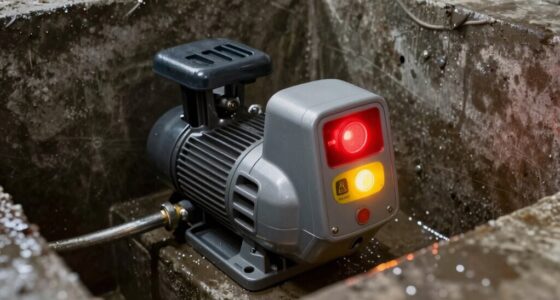
Practicing the manual release of your electric garage door guarantees you can operate it safely during power outages or malfunctions. Locate the red cord or handle, usually hanging from the trolley, and get comfortable with pulling it straight down or back—without rushing. Regular practice allows you to identify any signs of damage and confidently disengage or re-engage the door when needed. Keep your safety in mind and learn more if you continue exploring this important skill.
Key Takeaways
- Regularly locate and familiarize yourself with the emergency release cord for quick access during emergencies.
- Practice pulling the release cord correctly to disengage the door from the automatic opener safely.
- Confirm the door’s full closure before using the manual release to prevent unexpected movements.
- Re-engage the automatic system properly after manual operation by listening for the click and checking smooth movement.
- Conduct routine drills to ensure confidence and safety in manual release procedures during power outages or malfunctions.

Ayellow 41A2828 Garage Emergency Release Pull Rope Cord Handle Kit Garage Opener, Red Black
Compatible with most garage door opener models,if you're unsure about compatibility, please don't hesitate to inquire with us,…
As an affiliate, we earn on qualifying purchases.
As an affiliate, we earn on qualifying purchases.
Understanding When and Why to Use the Manual Release

Knowing when and why to use the manual release is essential for safe garage door operation. You should only activate it during power outages, if the door becomes stuck, or if you suspect a malfunction that prevents normal operation. Always guarantee the door is fully closed before pulling the release cord to avoid uncontrolled movement. Using the manual release allows you to open or close the door when the opener isn’t functioning properly, but only if the springs and hardware are intact. Never attempt manual operation if you notice broken springs, damaged tracks, or cables, as this could cause the door to fall unexpectedly or become unmanageable. Understanding these situations helps prevent injury and ensures you handle emergencies safely and effectively. Additionally, familiarizing yourself with the safety features of your garage door system can help prevent accidents during manual operation. Proper maintenance of the hardware is also crucial to ensure safe manual operation when needed. Regular inspections and hardware checks can help identify potential issues before they become hazards. Performing routine spring inspections can further ensure your system remains safe and reliable in emergencies. Moreover, consulting your garage door’s manufacturer’s guidelines can provide specific instructions for manual release procedures tailored to your model.

LAJIAOZ Garage Door Jackshaft Chain Hoist – 3:1 Reduced Drive Heavy Duty Hoist for Roll Up Doors and Jackshaft Garage Door Openers
1.Garage Door Jackshaft Chain Hoist,Roll Up Door Opener (1)Gear ratio: 3:1 (2) 41B36 Sprocket 1" bore (3)36"of 41#…
As an affiliate, we earn on qualifying purchases.
As an affiliate, we earn on qualifying purchases.
Identifying the Location and Type of Emergency Release Cord

The emergency release cord is typically located inside your garage, hanging from the trolley mechanism near the ceiling. It’s usually a red cord or handle designed to be easily visible and accessible. The cord’s length and appearance can vary depending on your garage door model, but it generally hangs down from the trolley near the center or side of the garage ceiling. Some cords pull straight down, while others may require a downward and backward motion toward the motor. Before pulling, verify the cord’s location and ensure the door is fully closed. Familiarize yourself with its appearance and placement during regular inspections. Knowing exactly where the emergency release cord is and its type ensures you’re prepared to operate it safely in an emergency. Understanding the emergency release system enhances safety and preparedness during power outages or mechanical failures. Additionally, practicing the manual operation periodically can prevent confusion during an actual emergency. Regularly reviewing the garage door components helps you recognize and respond to potential issues promptly. Being aware of the safety mechanisms involved can further reduce the risk of injury during manual release. Conducting these preparatory exercises can help build confidence and ensure a smoother response when needed.

TOPOWN Heavy Duty Garage Door Vertical Track Repair Tool Set for 2-Inch Roller Track Rail Systems, Anvil Tools for Garage Door Tracks Rails Maintenance, Anti-Slip Handle and Easy Operation
Professional Repair of Your Door Track:This Garage Door Track Rails Repair Tool Kit is designed to repair and…
As an affiliate, we earn on qualifying purchases.
As an affiliate, we earn on qualifying purchases.
Step-by-Step Guide to Safely Disengage the Garage Door

To safely disengage your garage door, start by confirming the door is fully closed. Locate the emergency release cord and pull it firmly in the direction specified by your manufacturer—usually straight down or down-and-back toward the motor. Keep your face and body clear of the door’s path. Use two hands if needed, and avoid forcing the door if it feels heavy or uneven, which indicates a potential spring issue. Additionally, understanding contrast ratio can help you better evaluate the clarity and detail of your home cinema setup if you decide to incorporate a projector with your garage space. Familiarizing yourself with smart automation features can also make your garage more convenient and secure. Before performing any manual release, practice the manual release periodically to ensure you’re familiar with the process in case of an emergency, especially since regular maintenance can prevent unexpected malfunctions. Incorporating safety precautions is essential to prevent injury or damage during manual disengagement.

Garage Door Spring Conversion Kit – Garage Door Cable Pulley Including Garage Door Cable Kit, Garage Door Extension Spring Kit for Heavy Garage Door Repair – Garage Door Cable Replacement Kit
【Garage Door Cable Kit】This garage door cable designed to fit torsion spring doors up to 12 feet tall…
As an affiliate, we earn on qualifying purchases.
As an affiliate, we earn on qualifying purchases.
Techniques for Manually Operating and Re-engaging the Door

To manually operate and re-engage your garage door, you need to follow proper disengagement steps carefully to make certain of safety. Always be aware of potential hazards and proceed only when the door is fully closed, using the correct pull direction for your model. Once you’ve manually moved the door, re-engage the system by following the manufacturer’s procedures, listening for a click to confirm connection.
Proper Disengagement Steps
Disengaging your garage door manually involves a clear, step-by-step process to guarantee safety and proper operation. First, ensure the door is fully closed before pulling the emergency release cord. Depending on your model, pull the cord straight down or down-and-back toward the motor until the trolley disconnects from the opener. Once disengaged, carefully lift the door using both hands, feeling for any imbalance or unusual heaviness, which could indicate broken springs. To re-engage, follow your manufacturer’s instructions—either pulling the cord in the opposite direction or pressing the wall button to allow the opener to reconnect automatically. Always do this slowly and deliberately, avoiding sudden movements. Practice this process periodically to stay familiar with the steps before an emergency arises. Understanding garage door mechanisms will help you identify potential issues and handle the door more confidently during manual operation. Additionally, being aware of garage door safety features can prevent accidents during manual disengagement, and knowing how to perform routine safety checks can further enhance your confidence in managing your garage door safely.
Manual Operation Safety
When manually operating your garage door, it’s vital to proceed with caution to prevent injury or damage. Always verify the door is fully closed before pulling the emergency release cord to avoid uncontrolled movement. Use the correct pull direction specified by your model—usually straight down or down-and-back—to disengage the trolley safely. Move the door slowly, feeling for resistance; if it’s heavy or uneven, stop immediately, as springs may be broken. Keep hands, clothing, and tools clear of moving parts like cables and tracks. For heavy doors, use assistance to lift or lower, preventing strain or loss of control. Regularly inspect hardware for wear and keep safety equipment accessible. Never force the door if it won’t move smoothly, and seek professional help for spring or track issues. Additionally, ensure proper maintenance to keep the system functioning safely and smoothly. Familiarize yourself with the manual release procedure beforehand, so you’re prepared in case of an emergency.
Re-engagement Procedures
Re-engaging your garage door after manual operation is a straightforward process, but it’s essential to guarantee safety and proper function. First, confirm the door is fully closed before attempting to reconnect the trolley. Depending on your model, pull the emergency release cord in the correct direction—usually straight down or down-and-back—until you hear a click and the trolley re-engages. If your opener has an automatic re-engage feature, simply press the wall button or remote to allow the motor to reconnect. For manual re-engagement, slowly move the door and listen for the click that indicates engagement. Always verify the door moves smoothly and securely before leaving it unattended. Periodically practicing this process ensures you’re prepared during an emergency. Being familiar with the manual release procedures helps prevent potential injuries or damage during unexpected situations.
Recognizing Signs of Spring or Track Damage Before Manual Operation
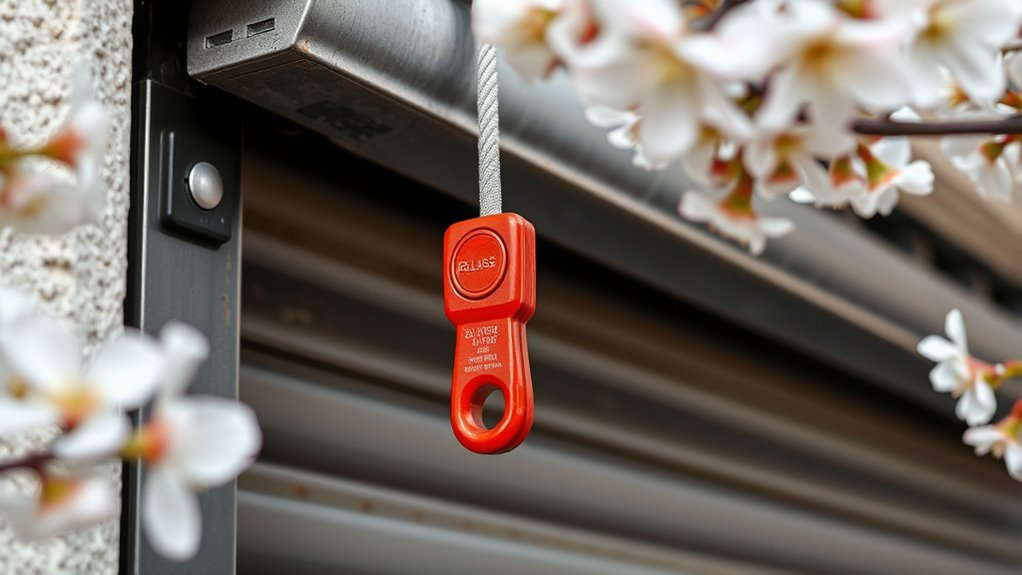
Before attempting manual operation, check for signs of track misalignment like uneven gaps or warped sections. Look for spring wear, such as gaps, rust, or stretched coils, which can indicate potential failure. Also, inspect for obvious structural damage, including bent tracks or cracked brackets, to prevent accidents during manual release. Additionally, performing a seasonal maintenance check can help identify developing issues early and ensure safe operation. Regularly inspecting the garage door components ensures all parts function correctly and reduces the risk of sudden failures. Incorporating visual inspections into your routine can further help catch issues before they become hazardous, especially since metal fatigue can develop over time, affecting the door’s safety and performance.
Track Misalignment Indicators
Track misalignment often shows up through visible signs that indicate potential damage or wear. You might notice the garage door isn’t closing evenly, with gaps between the door and tracks or uneven gaps along the sides. Look for bent or bowed sections of track, which can cause the door to drift off course. Sagging or loose tracks, especially if they’re not parallel, also signal misalignment. Additionally, if rollers appear to be rubbing or sticking, it may point to track issues. These signs can lead to improper operation, increased strain on components, or even derailment. Recognizing these indicators early helps prevent further damage and ensures safe manual operation when necessary. Always inspect tracks regularly and address misalignment promptly.
Spring Wear Signs
Inspecting your garage door’s springs regularly can help you spot early signs of wear or damage that could compromise safe operation. Recognizing spring wear signs ensures you don’t get caught during an emergency. Here are key indicators to watch for:
- Visible gaps or gaps in the torsion or extension springs, signaling fatigue or breakage.
- Uneven or sagging door sections, which can indicate weakened or broken springs affecting balance.
- Rust, corrosion, or powdery residue on springs, suggesting deterioration and potential failure.
If you notice any of these signs, don’t attempt to operate the door manually without professional help. Damaged springs can cause unpredictable movements, risking injury or further damage. Regular inspections keep your garage safe and functional.
Obvious Structural Damage
Obvious structural damage to your garage door or its components can prevent safe manual operation and pose safety risks. Visible warping, cracks, or dents in the door panels indicate weakened structural integrity, making manual lifting dangerous. Bent or misaligned tracks can cause the door to bind or derail, increasing the risk of injury during manual release. Damaged hinges or broken rollers may impair movement, leading to unpredictable or sudden door drops. If you notice sagging sections, uneven gaps, or missing hardware, don’t attempt to force the door open. These issues often signal spring or track damage that requires professional repair. Always inspect for signs of rust, corrosion, or deformation, and address any structural concerns before attempting manual operation to ensure safety.
Common Obstacles That Can Prevent Proper Manual Release

Several common obstacles can block the proper manual release of your garage door, making it difficult or impossible to disengage the opener. First, rusted or stuck release cords can prevent you from pulling them fully. Second, misaligned or damaged tracks and hinges may jam the door, even after release. Third, broken or weak springs eliminate the door’s counterbalance, making manual lifting unsafe or impossible. Other issues include tangled cables or debris lodged in tracks, which hinder movement. Additionally, if safety interlocks are engaged or malfunctioning, they can prevent release altogether. Before attempting to disconnect, verify the door is fully closed and inspect for these obstacles. Addressing these problems early can save you from dangerous situations during an emergency.
Regular Practice and Inspection to Ensure Readiness
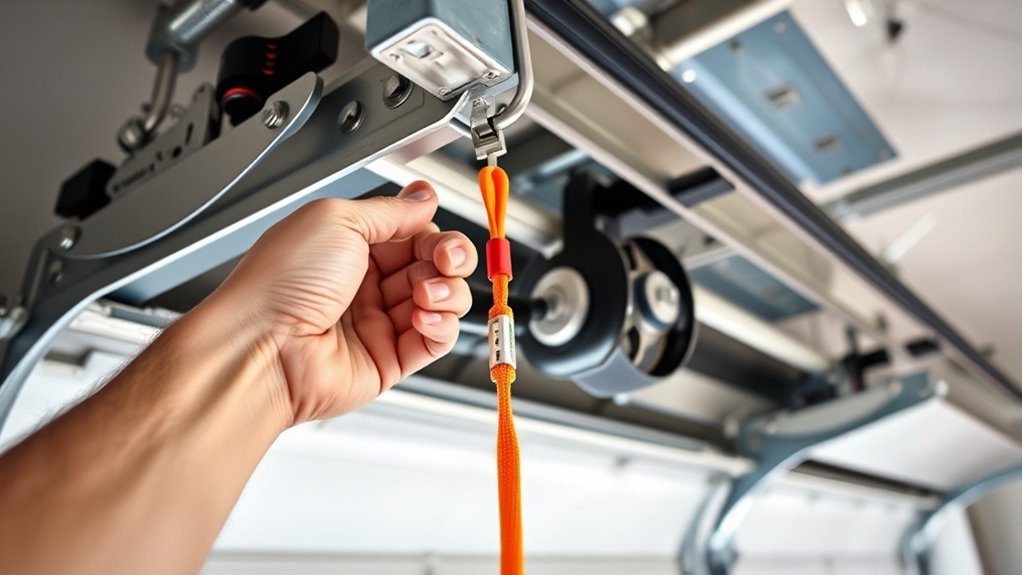
Regularly practicing and inspecting your garage door’s manual release system guarantees you’re prepared for emergencies. Schedule biannual drills to ensure you know how to disengage and operate your door manually. Before testing, confirm the door is fully closed to prevent uncontrolled movement. Follow manufacturer instructions carefully when pulling the release cord, noting the proper direction—straight down or down-and-back. While manually lifting the door, feel for balance; stop if it’s heavy or uneven, indicating possible spring issues. After practice, reconnect the trolley properly and listen for a click to confirm re-engagement. Regular inspection of cables, rollers, and tracks is essential to identify wear or damage. Keeping the system in good condition reduces risks during actual failures and guarantees safe manual operation when needed.
Emergency Planning and Communication for Garage Door Failures

Effective emergency planning and clear communication are essential to safely handle garage door failures. You need a well-organized plan so everyone knows what to do during an outage or malfunction. Here are three key steps:
- Assign roles and train household members on how to locate and operate the emergency release cord and wall controls.
- Keep a flashlight and your phone nearby for inspections, troubleshooting, or calling for help if needed.
- Post your garage door model number and service contact information visibly for quick reference during emergencies.
Regularly review and practice your emergency procedures, including manual release, so everyone stays familiar with the process. Clear communication prevents accidents and ensures swift action during unexpected failures.
Frequently Asked Questions
Can I Manually Operate My Garage Door if the Springs Are Broken?
No, you can’t safely operate your garage door manually if the springs are broken. Broken springs can’t support or balance the weight, making manual lifting dangerous or impossible. Attempting to do so risks injury or damage. Instead, call a professional to repair or replace the springs. Regularly inspect your springs and hardware to prevent issues, and always follow safety guidelines when handling or servicing your garage door.
How Often Should I Practice Manually Releasing My Garage Door?
Think of practicing your garage door’s manual release like tuning a musical instrument—it guarantees smooth operation when needed most. You should regularly practice biannually, ideally before seasons prone to power outages or storms. This routine helps you become familiar with the process, reduces panic during emergencies, and keeps all household members prepared. Consistent practice keeps your safety net reliable, so you can confidently respond when time counts.
What Should I Do if the Emergency Release Cord Is Missing?
If the emergency release cord is missing, don’t attempt to force the door open or close. Contact a professional garage door technician to inspect and replace the missing cord or mechanism. Avoid trying to operate the door manually without proper equipment, as this can be unsafe. Regularly check your garage door components to guarantee all parts, including the emergency release, are intact and functioning properly for safety.
Is It Safe to Force the Door Open or Closed During Spring Failure?
Trying to force your garage door open or closed during spring failure is like playing with fire in a fireworks factory. It’s extremely dangerous and can cause the door to slam shut or fall uncontrollably, risking injury or damage. If springs are broken, don’t attempt to force the door. Instead, disconnect the opener safely, then call a professional to inspect and repair the springs before any manual operation.
How Do I Identify if My Garage Door’s Tracks or Hinges Are Damaged?
You can identify damaged tracks or hinges by inspecting for visible bends, dents, or misalignment. Look for uneven gaps between the door and tracks, and check if rollers run smoothly or stick. Listen for unusual noises during operation. If the door is unbalanced, wobbles, or you notice cables or hinges that are rusted or broken, it’s a sign of damage. Always address issues promptly to prevent further harm or failure.
Conclusion
Practicing manual release isn’t just a good idea—it’s your ultimate safety superpower. Imagine being trapped in a metal fortress that suddenly turns into a stubborn beast refusing to open. By knowing how to quickly disengage your garage door, you could save yourself from a catastrophe that’s more chaotic than a tornado in a trailer park. Don’t wait for a disaster—practice now and turn yourself into the hero your garage never knew it needed.