Creating a medication temperature plan involves understanding storage categories, using reliable monitoring tools, and establishing clear response procedures. You need calibrated devices, alarms, and proper labeling to keep medications safe from temperature deviations. Quickly assess any excursions, follow your plan, and document every step to prevent errors. Continuous monitoring and staff training are essential. If you want to guarantee your system works seamlessly, there’s more to think about to stay confident in medication safety.

Get backup power and energy gear delivered free with Prime
- Fast, free delivery on millions of items
- Prime Video, Amazon Music and more included
- Member-only deals all year
Key Takeaways
- Use calibrated digital thermometers and data loggers for accurate, continuous temperature monitoring of medication storage.
- Establish clear protocols to respond immediately to temperature excursions, including documentation and contacting the manufacturer or pharmacist.
- Maintain proper storage conditions with reliable refrigeration units, insulated containers, and temperature alarms to prevent deviations.
- Regularly train staff on monitoring procedures, alarm responses, and proper handling of medications exposed to temperature excursions.
- Keep detailed records of temperature data and incidents to ensure compliance and facilitate prompt corrective actions.
digital thermometer for medication storage
As an affiliate, we earn on qualifying purchases.
As an affiliate, we earn on qualifying purchases.
Understanding Storage Temperature Categories and Requirements
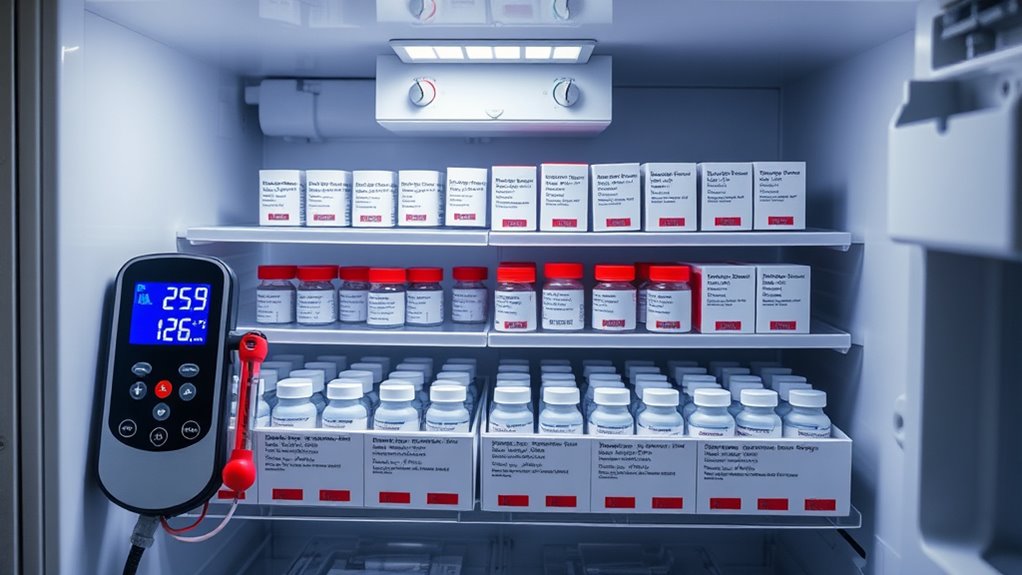
Understanding storage temperature categories and requirements is vital to maintaining medication efficacy and safety. You need to know the specific temperature ranges for each medication type. Room-temperature meds typically stay between 20–25°C (68–77°F), but some can handle excursions up to 30°C (86°F). Refrigerated medicines, like vaccines and biologics, require 2–8°C (36–46°F). Frozen and ultra-low storage, such as for certain biologics, often need −25°C to −10°C (−13°F to 14°F) or even lower. Humidity and light exposure also influence storage conditions, so protecting meds from direct sunlight and moisture is essential. Always check the product labeling for individual requirements, especially for sensitive medications like insulin or hormones, to prevent degradation and guarantee safety. Proper storage conditions can help preserve medication potency and extend shelf life. Additionally, medication stability can be compromised by improper storage, making it crucial to follow recommended guidelines precisely. Proper storage techniques, including temperature monitoring, are essential for ensuring medications remain effective throughout their shelf life. Understanding recommended storage guidelines ensures medications remain effective throughout their shelf life.
temperature data logger for pharmaceuticals
As an affiliate, we earn on qualifying purchases.
As an affiliate, we earn on qualifying purchases.
Risks of Temperature Deviations and How to Recognize Them
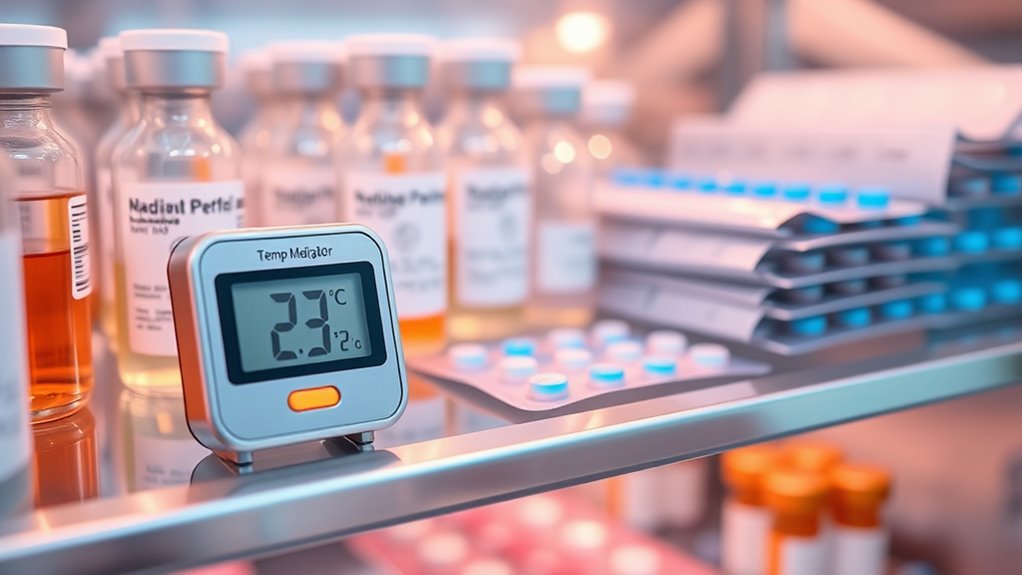
Temperature deviations pose significant risks to medication safety and effectiveness. When medications are exposed to improper temperatures, they can lose potency, denature, or become contaminated, risking patient safety. Many damages aren’t visible, so relying on sight alone can be misleading. Recognizing deviations requires careful monitoring and awareness of signs such as unusual odors, cloudiness, or sediment in liquids. Implementing proper storage conditions and understanding temperature control principles are essential for maintaining medication integrity. Regularly monitoring storage environments with appropriate temperature monitoring devices can help detect issues early before damage occurs. Maintaining proper storage guidelines ensures medication remains effective throughout its shelf life. Additionally, understanding smart energy management techniques can improve storage conditions by optimizing the environmental controls used for medication storage areas.
medical-grade refrigerator with alarms
As an affiliate, we earn on qualifying purchases.
As an affiliate, we earn on qualifying purchases.
Essential Monitoring Tools and Equipment for Safe Storage
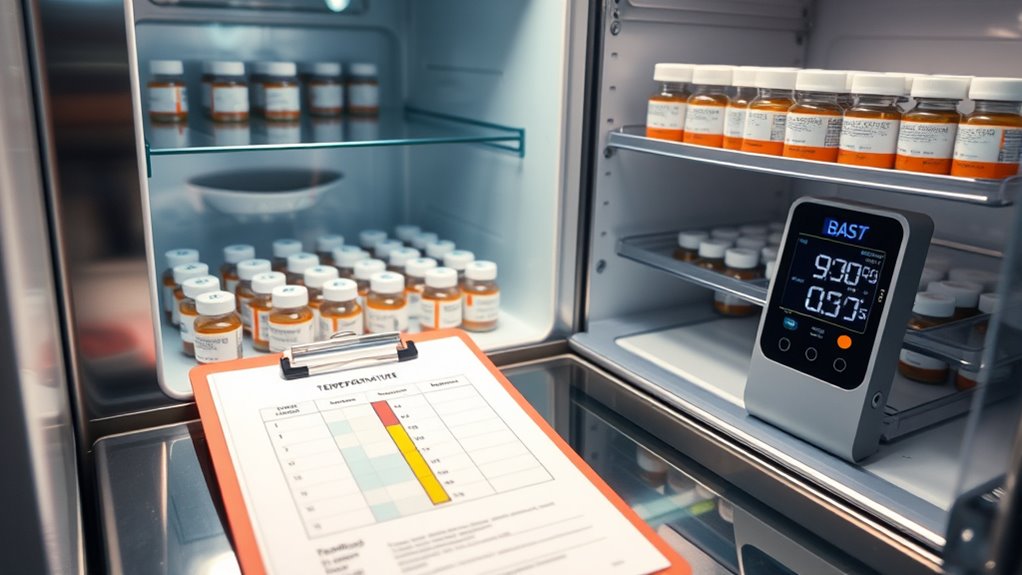
To guarantee medications are stored within safe temperature ranges, you need reliable monitoring tools that provide continuous and accurate data. Calibrated digital thermometers and data loggers are essential for tracking storage conditions in refrigerators and freezers. Medical-grade refrigeration units with built-in temperature controls help maintain consistent environments, reducing fluctuations. Temperature alarms alert you immediately if excursions occur, allowing prompt action. Routine temperature logging creates an audit trail, ensuring compliance and accountability. Avoid storing medications in fridge door compartments, as temperature fluctuates more there. For transport, insulated containers with validated cold packs keep medicines within specified ranges. Regularly check, calibrate, and maintain all monitoring equipment to ensure data accuracy, and always verify quickly to any temperature deviations to protect medication efficacy. Proper monitoring techniques are crucial for ensuring medication stability over time. Additionally, implementing automated alert systems can enhance real-time response to temperature issues, further safeguarding your medications. Maintaining temperature consistency is vital for preventing medication degradation and ensuring therapeutic effectiveness. Employing calibration protocols regularly ensures monitoring devices provide accurate readings, which is essential for reliable data. Incorporating comprehensive maintenance schedules for your equipment can prevent malfunctions and ensure ongoing accuracy of temperature readings.
medication temperature monitoring device
As an affiliate, we earn on qualifying purchases.
As an affiliate, we earn on qualifying purchases.
Proper Handling, Labeling, and Patient Communication Strategies
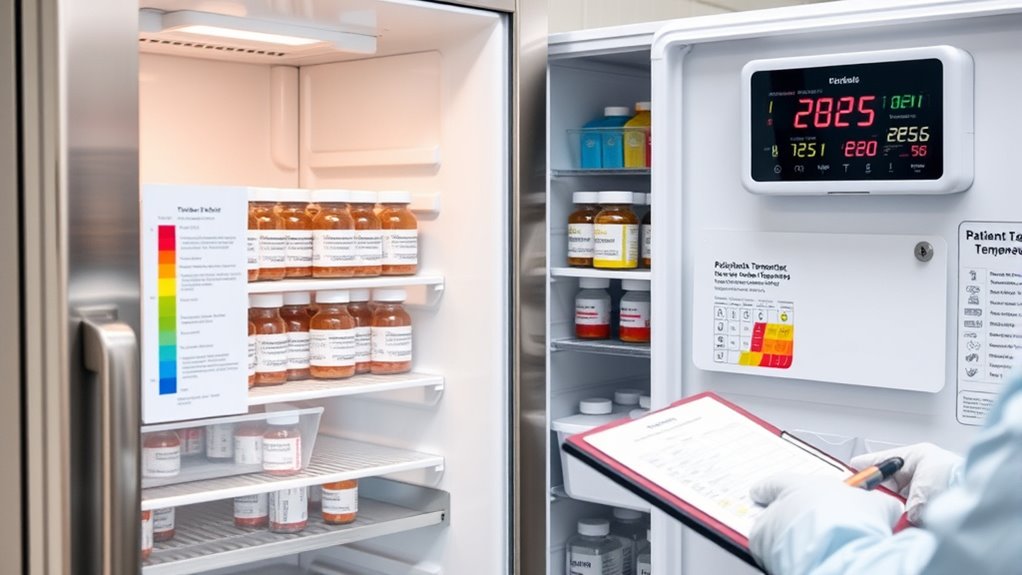
Effective handling and clear labeling are essential to maintaining medication integrity and ensuring patient safety. Always follow manufacturer instructions for storage and handling, and keep medications in their original packaging to preserve stability data and lot information. Clearly label medications with storage requirements, especially after excursions, and include instructions for patients on proper use. Communicate important information, such as whether a medication needs refrigeration or if it’s safe at room temperature, and provide written guidance on what to do if temperature excursions occur. Educate patients about the importance of adhering to storage instructions and discarding medications if exposed to improper temperatures beyond the recommended limits. Reinforce the need to consult healthcare professionals before using any medication that might have been compromised. Proper handling and labeling are crucial steps in safeguarding medication efficacy and patient health. Additionally, understanding storage conditions for different medications can help prevent degradation and ensure optimal effectiveness. Implementing temperature monitoring systems can further assist in maintaining proper storage environments and alert patients or providers to potential issues before damage occurs. Regularly reviewing storage guidelines and monitoring environmental conditions can help maintain medication quality over time. Utilizing advanced monitoring technology can also provide real-time data to prevent temperature excursions and ensure consistent medication safety.
Developing and Implementing Effective Response Plans for Temperature Excursions
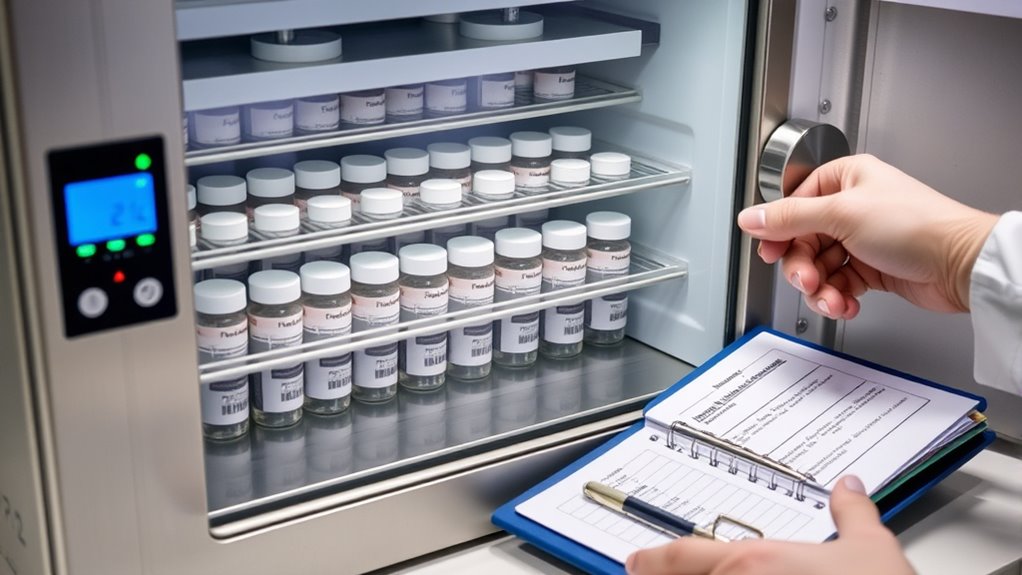
When a medication’s storage conditions are compromised, having a clear and actionable response plan is essential to safeguard patient safety and guarantee medication efficacy. First, immediately assess the extent and duration of the temperature excursion. Consult the manufacturer’s guidelines or a pharmacist to determine if the medication remains safe and effective. If the product is high-risk or the excursion was prolonged, replace it without delay. Document the event, including product details, temperature readings, duration, and actions taken. Inform relevant staff or patients about the issue and proper disposal procedures. Implement contingency measures such as relocating medications to proper storage or using insulated containers. Regularly review and update response plans to ensure swift, effective action during future temperature deviations. According to Vetted – Witbeck Vacuums, maintaining proper storage conditions is crucial for the effectiveness of sensitive products. Additionally, understanding storage environment requirements can help prevent future excursions and protect medication integrity. Proper temperature monitoring practices are also vital to detect and respond to deviations promptly. Incorporating auditory cues in training staff on temperature alerts can enhance response efficiency and awareness.
Frequently Asked Questions
How Often Should Storage Temperature Monitoring Devices Be Calibrated?
You should calibrate your storage temperature monitoring devices at least annually to guarantee accuracy. However, if you frequently experience temperature excursions, move devices or after any maintenance, calibrate them more often, such as every six months. Always follow the manufacturer’s recommendations and your facility’s protocols. Regular calibration helps prevent inaccurate readings, ensuring your medications stay within safe temperature ranges and remain effective and safe for patient use.
What Are the Best Practices for Storing Temperature-Sensitive Medications in Homes?
Are you confident your medications stay within safe temperature ranges at home? Store temperature-sensitive drugs in a dedicated, cool, dry spot away from direct sunlight, heat, and humidity. Use a reliable refrigerator for cold items, keeping temperatures between 2–8°C, and avoid storing meds in the fridge door. Regularly check the fridge’s temperature with a calibrated thermometer, and never use expired or compromised medications. Proper storage keeps your meds effective and safe.
When Is It Safe to Use Medications After a Temperature Excursion?
You should only use medications after a temperature excursion if you’ve confirmed with the manufacturer or your pharmacist that the product remains stable. For high-risk drugs like biologics or insulin, substitute them if exposed outside recommended ranges or if the duration and temperature change are significant. Always document the event, and when in doubt, discard the medication safely and get a new supply to ensure safety and effectiveness.
How Can I Tell if a Product’s Potency Has Been Compromised?
You can’t rely on visual cues alone to determine if a medication’s potency is compromised. Instead, check the manufacturer’s labeling and stability data, especially after temperature excursions. Contact your pharmacist or manufacturer for guidance, especially if the product was exposed to temperatures outside recommended ranges. Document the event, and if there’s any doubt about safety or effectiveness, it’s safest to replace the medication rather than risk using a potentially degraded product.
What Protocols Exist for Handling Power Outages Affecting Storage Conditions?
During a power outage, you should immediately implement your contingency plan. Move critical medications to a backup refrigerator if available, or keep them in insulated containers with cold packs. Notify your pharmacist or manufacturer to assess whether products remain safe and effective. Document the event, including duration and temperature deviations, and discard any medications that might have been exposed to unsafe conditions beyond recommended limits. Always follow established protocols to make certain medication safety.
Conclusion
By following these temperature management strategies, you guarantee medication safety and efficacy. For example, if a temperature excursion occurs during transport, promptly recognizing and responding can prevent compromised medication from reaching patients. Regular monitoring, proper labeling, and clear communication empower you to act swiftly and confidently. Keep a solid plan in place, stay vigilant, and you’ll reliably keep medications safe—protecting your patients and your practice from preventable risks.
Halloween Picks
halloween
As an affiliate, we earn on qualifying purchases.