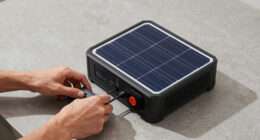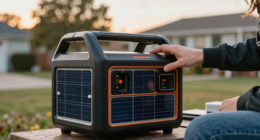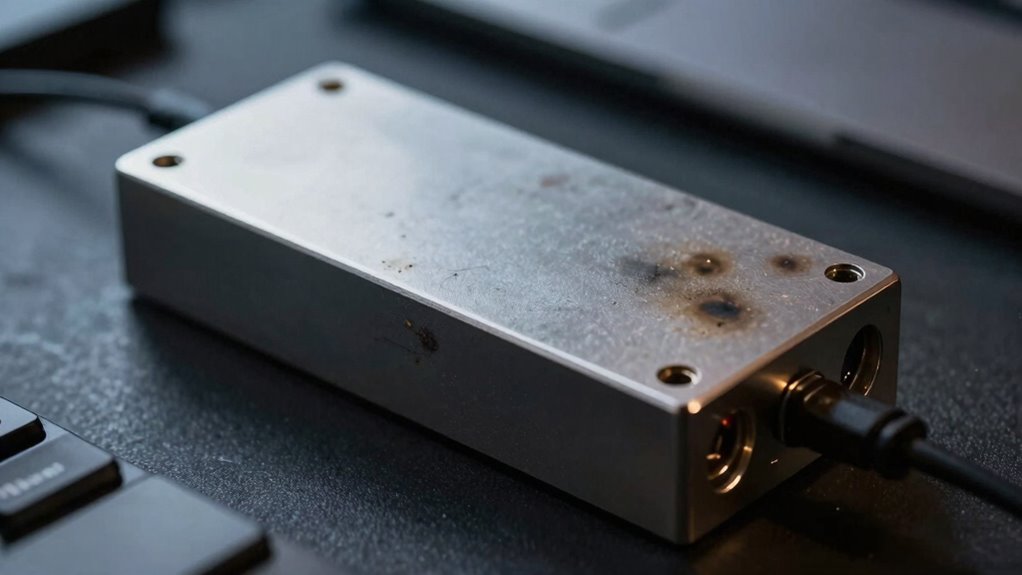

Charger bricks often run hot during backup power because they have multiple inefficient conversion stages, like AC to DC rectification and transformer steps, which produce heat. Environmental factors such as poor airflow, dust, and placement near heat sources also make things worse. Over time, damaged cables or ports can increase resistance and heat. If you want to understand how to keep your charger safe and cool, there’s more to explore below.
Key Takeaways
- Excessive heat during backup power is often caused by multiple energy conversion stages generating internal losses.
- Poor ventilation, dust buildup, or placement near heat sources trap heat, raising charger temperatures.
- Damaged cables or ports increase resistance, causing additional heat and potential safety hazards.
- Overheating accelerates battery and internal component deterioration, reducing device lifespan.
- Unplug the charger, improve ventilation, inspect for damage, and replace faulty components to prevent overheating.

Black Shark Wireless Charger with Cooling Fan, 25W Dual-Sided Magnetic Pad Compatible with iPhone 17/16/15/14 MagSafe Charging, Phone Cooler for Gaming/Streaming
【25W Fast MagSafe Charging】Delivers up to 25W fast wireless charging for iPhone 12–17 series with MagSafe compatibility.When paired…
As an affiliate, we earn on qualifying purchases.
As an affiliate, we earn on qualifying purchases.
Understanding the Causes of Charger Heat During Backup Power Use
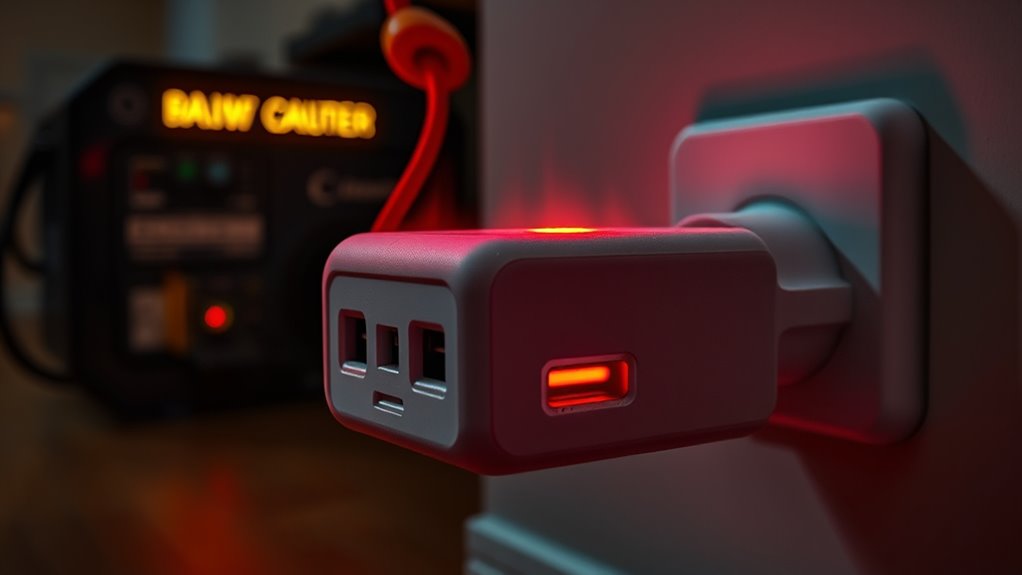
When using backup power sources like portable power stations, chargers often generate excessive heat due to inefficiencies in their design. These inefficiencies happen because power conversion involves multiple stages, each losing some energy as heat. For example, AC to DC rectification isn’t perfect, causing heat loss. Chopper circuits, which convert DC to high-frequency AC for smaller transformers, also produce heat. Transformers step down voltage but do so imperfectly, adding warmth. Overall, the process of converting AC wall power into usable DC for batteries isn’t 100% efficient. This energy loss manifests as heat, making your charger brick hot during backup power use. Recognizing these causes helps you understand why your charger heats up, prompting better safety and maintenance practices. Additionally, some chargers incorporate smart technology, which can influence their thermal behavior during operation. The efficiency of the power conversion process significantly impacts how much heat is generated during use, emphasizing the importance of quality components and design. Improving power supply design can help reduce heat buildup and enhance safety during backup power scenarios. Moreover, advancements in thermal management techniques are increasingly being integrated into charger design to mitigate overheating risks.

LIBRIDS Portable Power Station C600, 600Wh 600W Solar Generator, LiFePO4 Battery, 1.5H Fast Charge, 10ms UPS, 8 Ports(4 AC) for Camping, Home Backup & Outages – Grey
【Reliable UPS Backup for Power Outages】Built-in 10ms UPS automatically switches to battery power during outages, keeping WiFi routers,…
As an affiliate, we earn on qualifying purchases.
As an affiliate, we earn on qualifying purchases.
The Role of Conversion Stages in Charger Inefficiency and Heat Generation
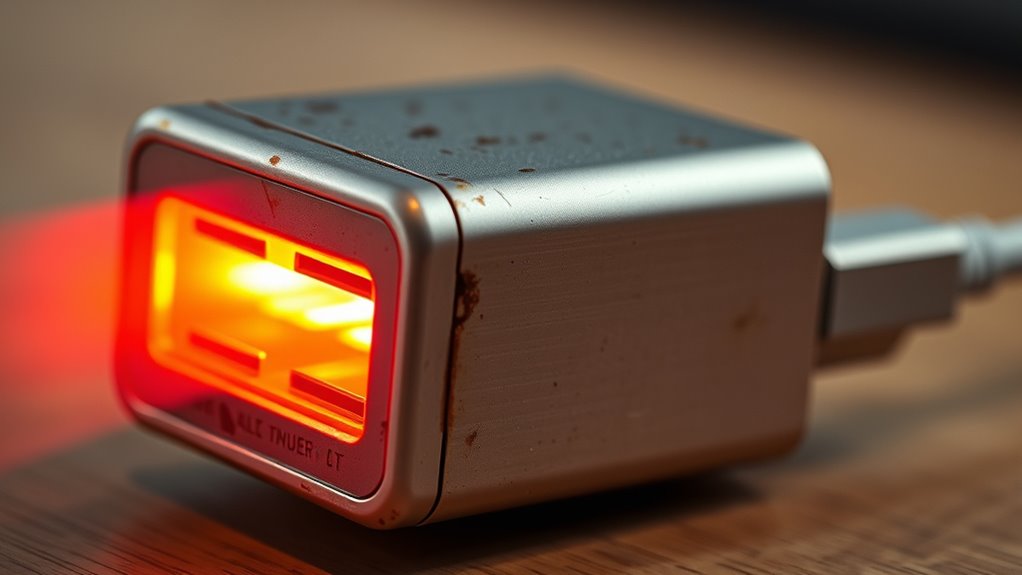
Conversion stages within charger bricks play a significant role in generating heat and reducing overall efficiency. When your charger converts AC from the wall to DC for your device, each step introduces energy losses, mostly as heat. For example, the rectification process and transformer steps aren’t perfectly efficient. The following table illustrates typical stages:
| Conversion Stage | Heat Generation Effect |
|---|---|
| AC to DC Rectification | Losses due to imperfect diodes |
| Transformer Step-down | Magnetic resistance causes warmth |
| High-frequency Conversion | Switching circuits produce heat |
| Voltage Regulation | Resistance in components leads to heat |
Each stage contributes cumulatively, causing your charger to run hotter, especially during backup power or heavy use. These inefficiencies are unavoidable but manageable with better design and cooling.
![INIU USB C to USB C Cable, 240W Fast Charging Type C Charger Cord, Braided USBC Cable for iPhone 17, Samsung S25, Laptop, MacBook, Switch, Photographers, Outdoor, Travel, [6.6ft+6.6ft Black]](https://m.media-amazon.com/images/I/41r3DXOHFvL._SL500_.jpg)
INIU USB C to USB C Cable, 240W Fast Charging Type C Charger Cord, Braided USBC Cable for iPhone 17, Samsung S25, Laptop, MacBook, Switch, Photographers, Outdoor, Travel, [6.6ft+6.6ft Black]
[From INIU—the SAFE Fast Charge Pro] Experience the safest charging with over 38 million global users. At INIU,…
As an affiliate, we earn on qualifying purchases.
As an affiliate, we earn on qualifying purchases.
How Environmental Factors Contribute to Overheating of Charger Bricks
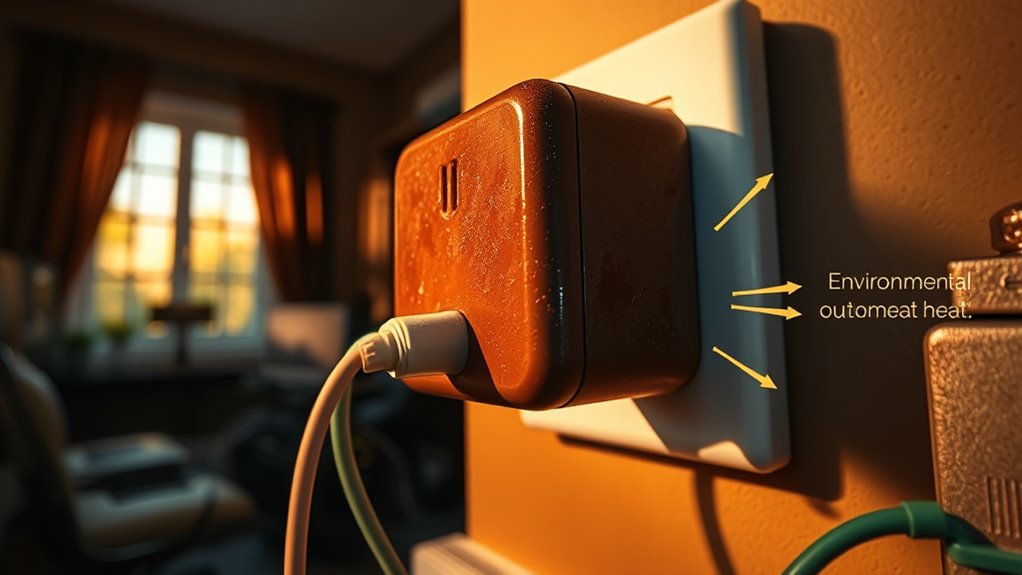
Your charger brick’s temperature can spike based on where you place it. Hot environments or areas with poor airflow trap heat and make it harder for the charger to stay cool. Dust buildup and lack of ventilation further reduce cooling, increasing the risk of overheating. Ensuring proper safe installation practices helps maintain optimal temperature levels and prolongs the lifespan of your charger. Additionally, understanding Gold IRA markets can provide insights into securing your investments against economic uncertainties that may indirectly impact your technology needs. Being aware of indoor air quality factors, such as humidity and ventilation, can also help create a more favorable environment that supports better device performance. Using essential oils for respiratory health, like eucalyptus or peppermint, can improve indoor air quality and potentially aid in maintaining a cooler environment for your devices. Proper cleaning and choosing a well-ventilated location are essential device cooling strategies to prevent overheating and ensure your charger’s longevity.
Heat From Placement Areas
Environmental factors play a significant role in causing charger bricks to overheat, especially if they are placed in unsuitable locations. When chargers sit on surfaces that trap heat, like carpets or fabric mats, airflow is restricted, making it harder for them to dissipate heat. Placing chargers near heat sources, such as radiators, lamps, or direct sunlight, can cause temperatures to rise quickly. Unventilated spaces or cramped areas prevent proper cooling, leading to thermal buildup. Additionally, chargers placed on power stations like the AC200MAX with active DC output can absorb excess heat from their surroundings. Over time, these environmental conditions compound internal inefficiencies, increasing the risk of overheating, damage, or safety hazards. Proper placement is essential to keep your chargers cool and functioning safely. Free Floating conditions can also cause unpredictable airflow, further contributing to overheating issues. Ensuring adequate ventilation and avoiding direct contact with heat sources can significantly reduce overheating risks, especially in environmental conditions that favor heat retention. Also, ambient temperature fluctuations can influence how quickly a charger heats up or cools down, making it crucial to monitor placement areas regularly.
Dust and Ventilation Issues
Dust accumulation and poor ventilation substantially contribute to charger bricks overheating. Dust clogs vents and insulates internal components, trapping heat inside the device. When airflow is restricted, heat dissipates less effectively, causing temperatures to rise. Placing chargers in unventilated or dusty environments worsens this issue, especially during backup power use when cooling options are limited. Over time, dust buildup inside the charger can block cooling fans or vents, reducing heat exchange and increasing the risk of thermal runaway. To prevent this, regularly clean your charger with compressed air or a soft brush, and make sure it’s placed in a well-ventilated area. Proper airflow allows heat to escape, keeping the charger cooler and functioning safely, even during extended backup power use. Additionally, understanding how Gold IRA Rollovers can diversify your investment portfolio may provide long-term financial stability, even during unexpected power issues. Effective ventilation is crucial for maintaining optimal operating temperatures and preventing overheating. Regular maintenance and inspection of ventilation pathways further support thermal management and prolong the lifespan of your charger.

QUETHEDS Charger Station Protector Box – Charger Station Cover, Waterproof, Sun, Rain, UV, Snow Protection Cover for Most Electric Car Chargers
Designed for various outdoor charging station installations, such as residential areas, commercial districts, and parking lots, providing effective…
As an affiliate, we earn on qualifying purchases.
As an affiliate, we earn on qualifying purchases.
Common Signs of Wear and Damage in Charger Cables and Ports
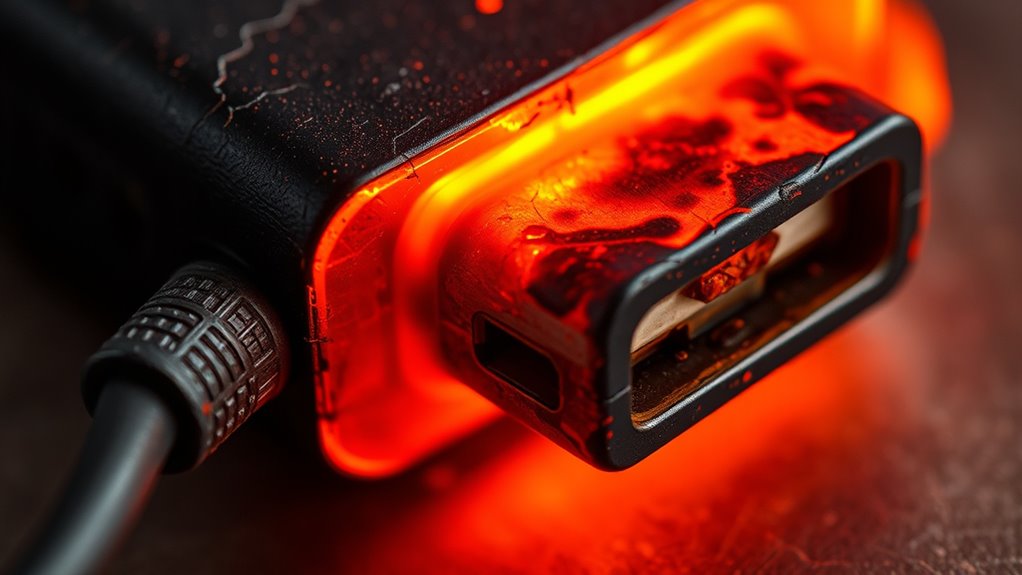
Worn or damaged charger cables and ports often show visible signs that they’re no longer reliable. Frayed or cracked cables indicate internal wire exposure, increasing resistance and overheating risk. Discolored or melted insulation suggests heat damage, which can lead to shorts or fires. Bent or broken connectors may not fit securely, causing poor contact and inconsistent charging. Port damage, such as bent pins or debris buildup, can hinder proper connection and transfer of power. Visible corrosion or rust inside ports signals moisture exposure, risking corrosion and electrical failure. Additionally, device safety concerns can motivate users to inspect and replace damaged chargers promptly. Regular inspection helps guarantee safe, efficient charging and can prevent potential electrical hazards that arise from compromised components. Maintaining charge cable integrity is essential for safe device operation and to avoid unexpected failures. Damage to the charger’s internal components can also compromise overall safety and performance. If you notice any of these signs, stop using the charger immediately. Continuing to use damaged cables or ports raises the chance of overheating, device malfunction, or safety hazards.
The Impact of Excessive Heat on Batteries and Device Longevity
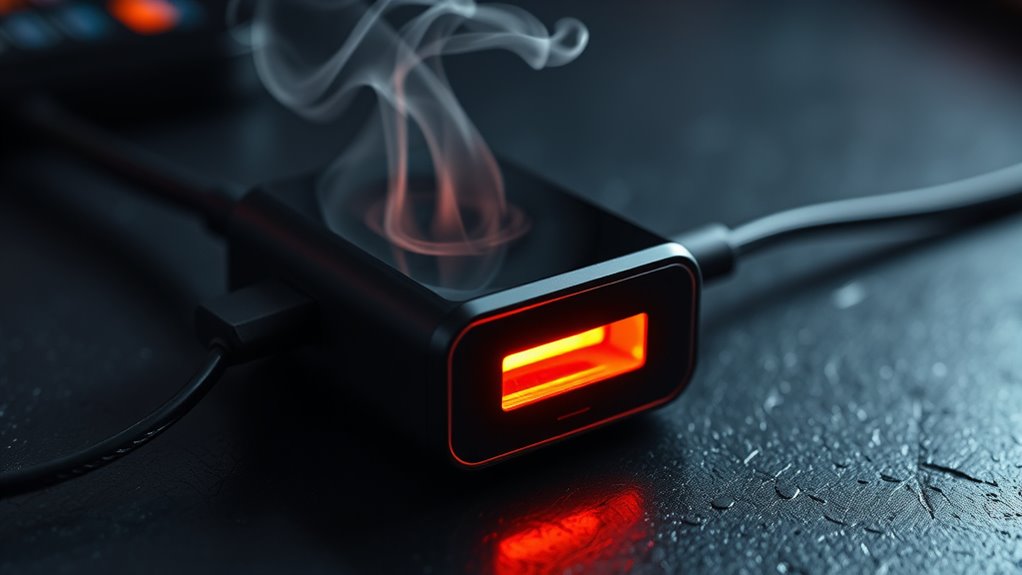
When your charger gets too hot, it can speed up battery deterioration and shorten your device’s lifespan. Excessive heat damages the chemicals inside batteries, leading to reduced capacity and potential malfunctions. If you ignore overheating, it can cause permanent damage, making repairs more costly or even risking fires. Additionally, security vulnerabilities associated with overheating devices can compromise your overall safety. Proper device maintenance can help prevent these issues and extend the life of your electronics. Regularly monitoring and managing heat levels can also mitigate the risk of damage caused by overheating. Maintaining proper airflow around chargers and avoiding placing them in high-temperature environments are essential steps in charger care.
Heat Accelerates Battery Deterioration
Excessive heat from charger bricks directly harms your device’s battery, leading to faster deterioration and reduced lifespan. When a charger runs hot, it transfers heat to the battery during charging cycles. Over time, this heat damages the lithium cobalt oxide chemicals inside, causing them to break down more quickly. This chemical damage results in reduced capacity, making your battery hold less charge and needing replacements sooner. Additionally, high temperatures cause the battery’s internal structure to weaken, increasing the risk of swelling or failure. The more heat your charger generates, the faster these processes accelerate. Ultimately, persistent overheating shortens your device’s overall lifespan, forcing you to replace batteries or devices more frequently. Keeping temperatures in check is vital for preserving your device’s battery health and longevity.
Reduced Device Lifespan Risks
Prolonged exposure to high heat from charger bricks accelerates the deterioration of your device’s components, especially the battery. Excessive heat causes chemical breakdowns inside the battery, reducing its capacity and lifespan. Over time, this leads to faster charging cycles, decreased runtime, and possible device failure. The table below shows how heat affects different parts:
| Component | Effect of Excessive Heat |
|---|---|
| Battery | Chemical evaporation, capacity loss |
| Internal Circuits | Accelerated wear, potential short circuits |
| Display & Processor | Increased risk of overheating and damage |
Ignoring overheating risks shortens your device’s overall longevity, increases repair costs, and may force early replacements. Managing heat is essential to keep your device functioning efficiently over the years.
Overheating Causes Chemical Damage
High temperatures from faulty or overused chargers can cause chemical damage inside your device’s batteries, substantially shortening their lifespan. Excess heat accelerates the evaporation of lithium cobalt oxide chemicals, damaging the battery’s internal structure. Overheating also causes chemical reactions that lead to capacity loss and swelling. This damage can result in reduced battery efficiency, faster degradation, and even safety hazards.
- Evaporates essential chemicals, weakening internal bonds
- Accelerates electrode deterioration
- Promotes thermal runaway, risking fires
- Causes irreversible capacity loss
- Leads to early battery failure and replacement costs
Safety Precautions When Handling Overheating Chargers
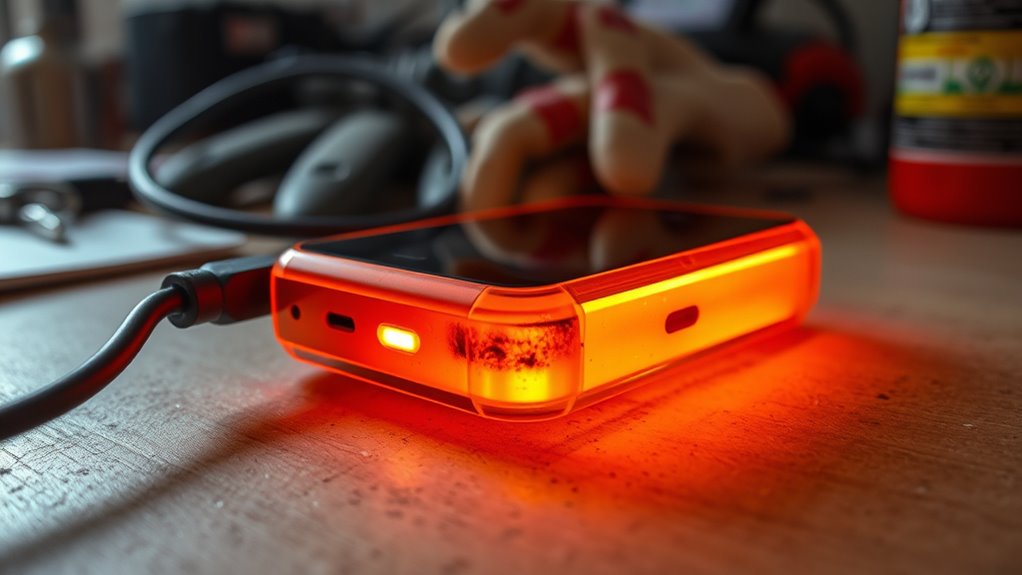
When you notice your charger brick running hot, it’s crucial to take immediate safety precautions to prevent potential hazards. First, unplug the charger from your device and power source to stop heat buildup. Avoid touching the brick, especially if it feels painfully hot, as this indicates critical failure and risk of burns. Move the charger to a well-ventilated, cool area away from flammable objects. Inspect the cable and brick for visible damage like fraying, cracks, or discoloration; do not reuse damaged chargers. If the charger continues to overheat or emits a burning smell, replace it immediately. Always handle overheating chargers with care, and don’t attempt to repair internal components yourself. Prioritize safety to prevent fire risks, device damage, or personal injury.
Best Practices to Prevent Charger Overheating and Maintain Performance
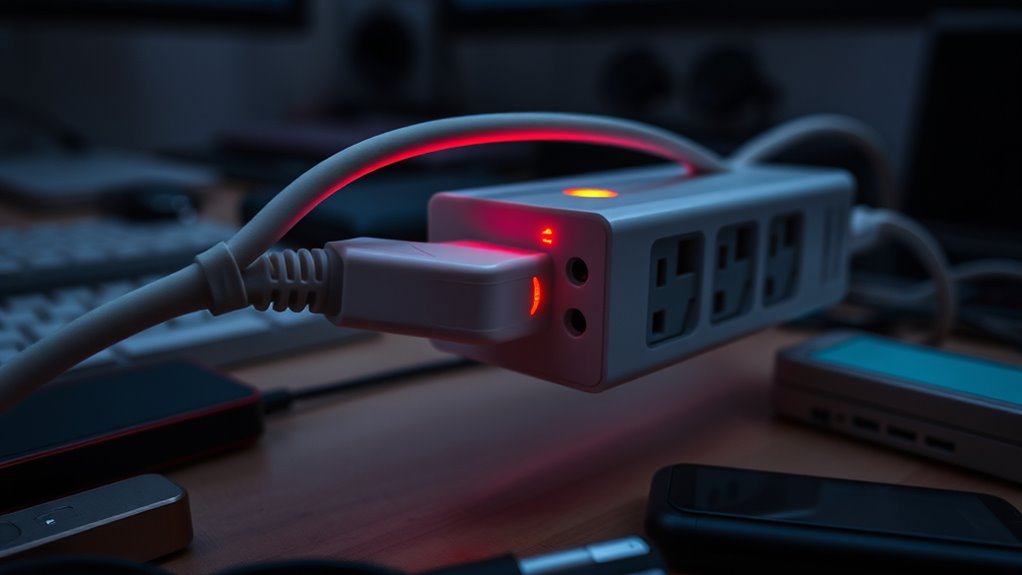
To keep your charger running efficiently and prevent overheating, adopting proper usage habits is essential. First, always use chargers with the latest safety features and Power Delivery technology. Keep chargers and cables clean and free of dust to improve airflow and cooling. Avoid charging in hot, poorly ventilated areas or under direct sunlight, which can accelerate heat buildup. Regularly inspect cables for fraying, cracks, or discoloration, and replace damaged ones immediately. Lastly, unplug chargers once devices are fully charged to reduce unnecessary heat. By following these best practices, you help maintain peak performance, prevent overheating, and extend the lifespan of your charger and devices.
- Use brand-name chargers with safety features
- Keep chargers and cables clean and dust-free
- Charge in cool, ventilated areas
- Regularly inspect and replace worn cables
- Unplug chargers after charging completes
Frequently Asked Questions
Can Using a Cheap Charger Increase Overheating Risks?
Using a cheap charger definitely increases overheating risks. Low-quality chargers often lack proper safety features, have poor internal components, and use inefficient design, which causes more heat buildup. Frayed cables or damaged parts in cheap chargers worsen resistance, making them overwork and overheat. To avoid hazards and protect your device, always opt for reputable brands with safety certifications, regularly inspect your chargers, and replace any that show signs of damage or excessive heat.
How Does Ambient Temperature Affect Charger Heat Levels?
Ambient temperature definitely impacts your charger’s heat levels. When you use a charger in hot environments, it’s like adding fuel to the fire; the heat generated inside compounds, making the charger run even hotter. You might think it’s harmless, but prolonged exposure to high temperatures can cause thermal runaway or damage your device. Always keep chargers in cool, ventilated areas to prevent overheating and prolong their lifespan.
Is It Safe to Leave a Hot Charger Plugged In?
It’s not safe to leave a hot charger plugged in. When a charger becomes excessively hot, it indicates internal issues or inefficiencies that can lead to damage or fire risks. You should unplug it immediately, allow it to cool down, and inspect for visible damage like frayed wires or discoloration. Replacing damaged chargers with certified ones and avoiding prolonged use of hot chargers helps protect your devices and personal safety.
Do Wireless Chargers Generate More Heat Than Wired Ones?
Wireless chargers tend to generate more heat than wired ones because they use high-frequency electromagnetic fields to transfer energy, which causes additional heat during the process. This inefficiency leads to increased thermal output, especially if placed on non-ventilated surfaces or in hot environments. To prevent overheating, make certain of proper ventilation, avoid leaving them in direct sunlight, and regularly clean to improve airflow. Using quality chargers also reduces unnecessary heat buildup.
How Often Should I Replace Worn or Damaged Charging Cables?
You should replace worn or damaged charging cables as soon as you notice fraying, cracks, discoloration, or exposed wires. Regularly inspect your cables, especially if they feel hot or don’t charge properly. If you spot any damage, swap them out immediately to prevent overheating, electrical resistance issues, or potential fire hazards. Properly maintained cables guarantee safer charging and help prolong your device’s battery life.
Conclusion
By understanding why your charger bricks heat up during backup power, you can better protect your devices. Think of your charger as a busy chef — working hard to serve up power, but sometimes overworking causes it to get too hot. Keep an eye on signs of wear, stay mindful of environmental factors, and follow safety tips. With these steps, you’ll keep your power supply cool and your devices running smoothly, like a well-oiled machine.