
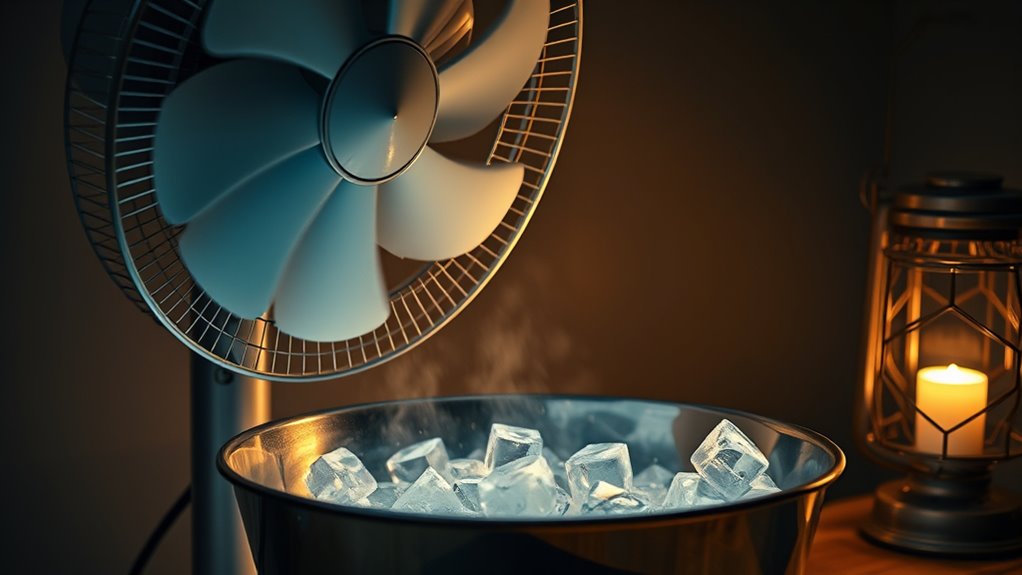
To mimic AC during outages, maximize airflow by positioning a fan across a tray of ice or cold water, creating a chilled breeze. Use a damp cloth or sponge near the fan to enhance cooling through evaporation. Keep windows open to promote cross-ventilation and shade your setup to prevent heat gain. By following these simple steps, you can keep your space cooler—if you’d like more tips, there’s plenty more to explore.
Open a free Amazon Business account
Business pricing, bulk buying and tax-exempt orders.
As an affiliate, we earn on qualifying purchases.
Key Takeaways
- Use fans blowing across ice or cold water for a chilled breeze that mimics air conditioning.
- Position fans near shaded windows or vents to draw in cooler outdoor air during outages.
- Elevate fans to chest or shoulder height to maximize airflow and improve cooling effect.
- Combine fans with damp cloths or sponges to enhance evaporative cooling efficiency.
- Opt for solar-powered fans or battery backups to maintain continuous airflow when power is out.
As an affiliate, we earn on qualifying purchases.
Understanding the Limitations of Traditional Fans During Power Outages
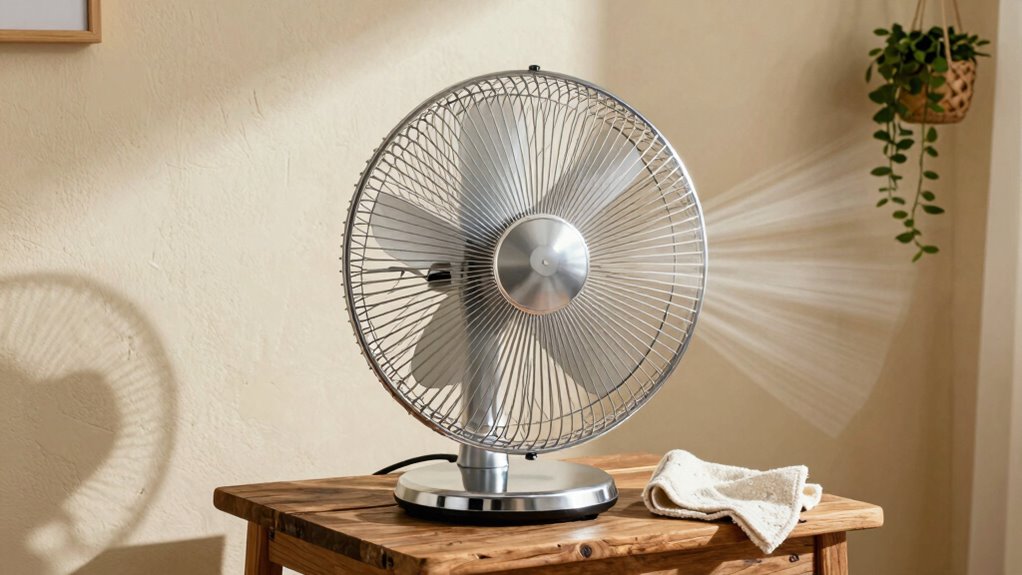
Traditional electric fans rely on a continuous power supply to operate, which means they become useless during outages. The effectiveness of a fan depends heavily on its fan blade materials and airflow dynamics. Plastic blades are common, but their lightweight nature can limit airflow, reducing cooling efficiency during power interruptions. Metal blades, while sturdier, may be heavier and less aerodynamic, affecting airflow patterns. The design of the blades influences airflow dynamics—well-designed blades create smoother, more directed airflow, providing better cooling. Without electricity, these carefully engineered airflow patterns vanish, rendering traditional fans useless. Understanding how fan blade materials and airflow dynamics work together highlights their limitations during outages and underscores the need for alternative cooling solutions that don’t rely on power. fan blade materials and airflow dynamics are critical factors that determine a fan’s cooling performance. Additionally, airflow efficiency depends on the precise construction and positioning of blades, which are compromised when power is lost. Improving fan design can optimize airflow even in limited conditions, but without power, these enhancements cannot function. Recognizing these limitations emphasizes the importance of exploring power-free cooling methods that can operate effectively during outages. Moreover, considering passive cooling techniques can offer effective relief without electricity.
As an affiliate, we earn on qualifying purchases.
Essential Equipment for a Cool Fan Setup Without Electricity

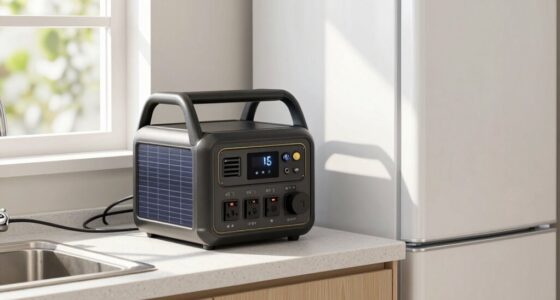
During power outages, relying solely on electric fans isn’t enough to stay cool. To enhance your setup, consider solar powered fans and a battery backup. Solar fans harness sunlight, providing continuous airflow without electricity. A battery backup ensures your fans run smoothly when the sun isn’t shining. Combining these tools keeps you cool longer and reduces dependency on grid power. Using renewable energy sources can significantly improve your cooling efficiency during extended outages. Incorporating energy-efficient appliances can further optimize your cooling strategy. Here’s a quick comparison:
| Feature | Benefits |
|---|---|
| Solar Powered Fans | Eco-friendly, renewable energy |
| Battery Backup | Reliable, uninterrupted airflow |
| Portability | Easy to move around |
| Cost Efficiency | Saves on electricity bills |
| Ease of Use | Simple setup and operation |
Investing in this equipment helps you stay cool, even during lengthy outages, without sacrificing comfort. Smart home technology can also assist in monitoring and managing your cooling setup efficiently. Incorporating vintage-inspired tech can add a charming touch to your practical cooling solutions. Additionally, understanding load calculations ensures your setup remains safe and effective during power disruptions.
evaporative cooling fan with ice tray
As an affiliate, we earn on qualifying purchases.
As an affiliate, we earn on qualifying purchases.
Building a DIY Evaporative Cooler to Mimic Air Conditioning
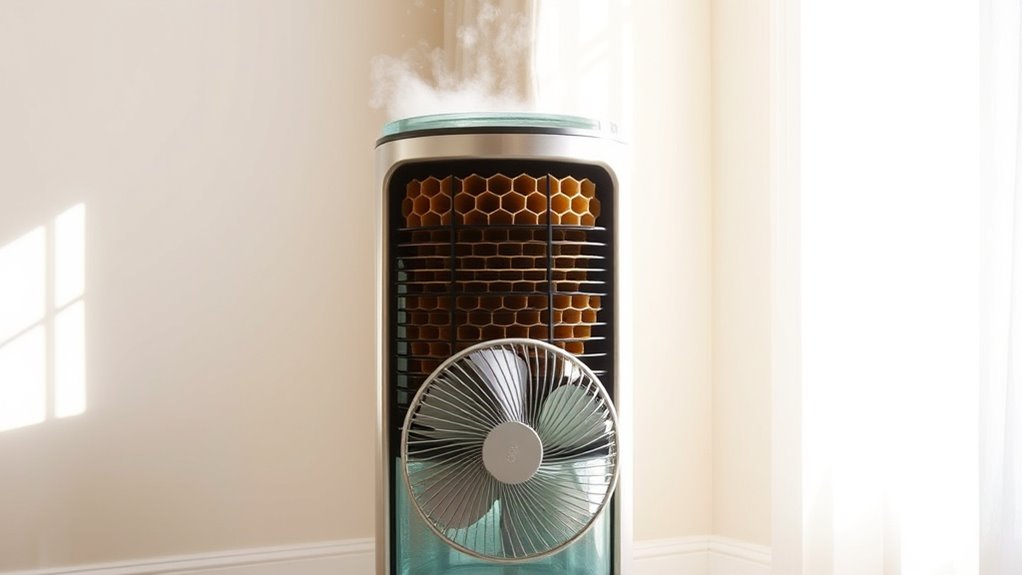
Creating a DIY evaporative cooler is an effective way to beat the heat without relying on electricity. By combining portable fans and simple materials, you can create DIY cooling that mimics air conditioning. Start with a shallow box or container, fill it with ice or cold water, and place a fan nearby to blow air through a damp cloth or sponge submerged in the water. As the fan pushes air through the moist material, it cools the air before it enters your space. This setup works best in dry climates and during low humidity days. It’s a budget-friendly, easy project that offers invigorating relief during power outages, making your portable fans work even harder to keep you comfortable. Incorporating indoor air quality considerations can help ensure that your DIY cooler does not introduce dust or pollutants into your environment. Using proper source materials for the damp cloth or sponge can further optimize cooling efficiency and maintain good air quality. Additionally, understanding climate conditions can help you determine the most effective setup for your environment. To optimize performance, regularly monitor air quality around your cooler to prevent the buildup of mold or bacteria.
shade and cross-ventilation fan setup
As an affiliate, we earn on qualifying purchases.
As an affiliate, we earn on qualifying purchases.
Positioning Fans and Coolers for Maximum Cooling Effect
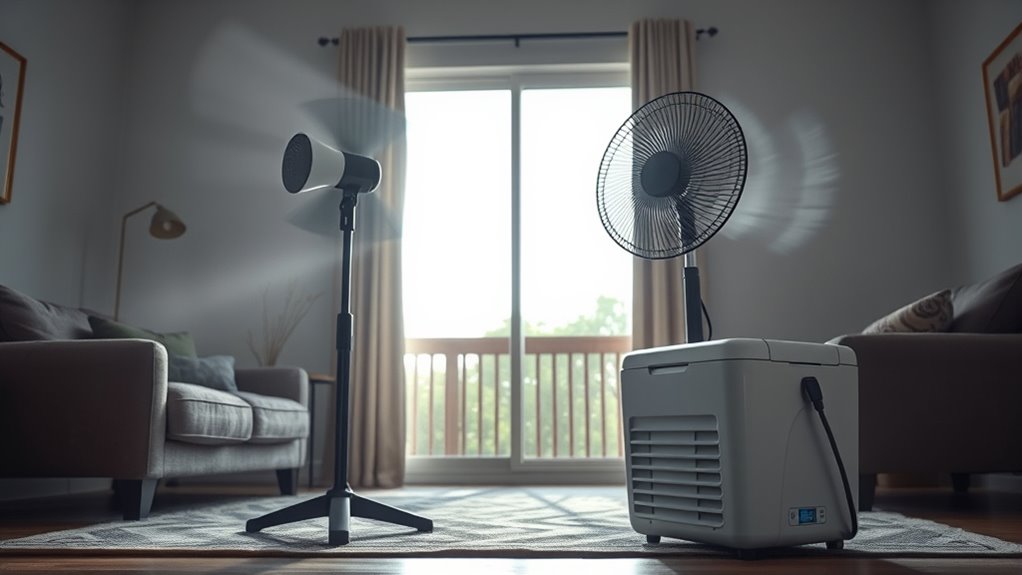
To maximize the cooling effect of your fans and coolers, strategic placement is essential. Start with fan placement: position fans where they can create cross-breezes, such as opposite sides of a room or near open windows, to promote airflow. Elevate fans to chest or shoulder height for better circulation. Cooler positioning matters too—place coolers in shaded areas, ideally near open windows or vents, to draw in cooler air and push warm air out. Avoid blocking airflow paths, and don’t set fans or coolers too close to walls or furniture that can obstruct circulation. Experiment with angles and locations to find the most effective setup for your space, ensuring continuous airflow that helps maintain a cooler environment during outages. Additionally, understanding how heat distribution works can inform better placement choices for optimal cooling efficiency. Being aware of airflow dynamics can help you optimize your setup for maximum cooling during power outages, especially by considering support breakfast options that can provide energy to sustain your efforts. Furthermore, selecting the right cooling devices, such as high-quality fans or portable coolers, can significantly enhance the overall effectiveness of your cooling strategy. Incorporating regular maintenance of your cooling equipment ensures they operate efficiently when you need them most.
Incorporating Water and Ice for Enhanced Chilling Power
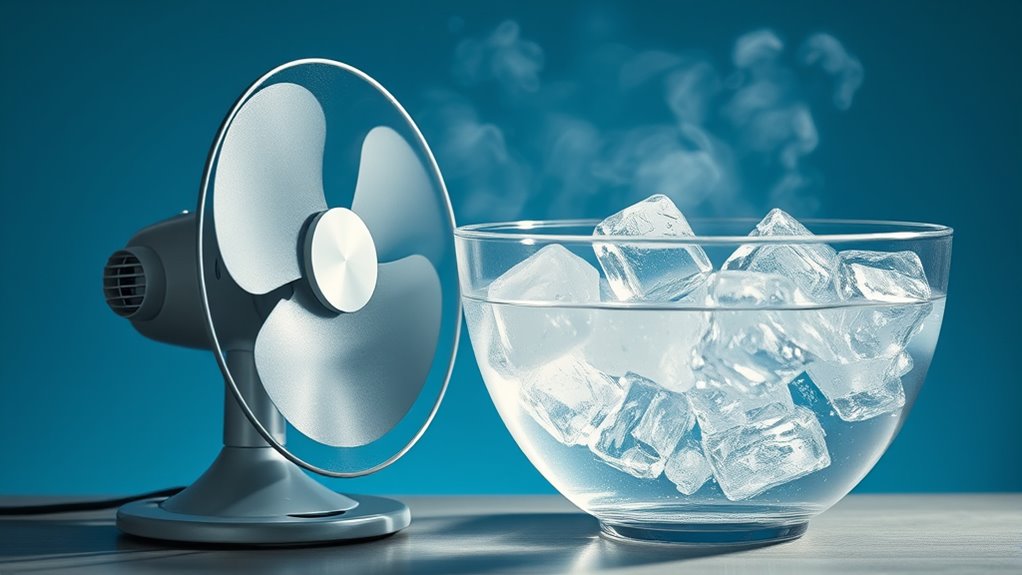
Adding water and ice to your cooling setup can substantially boost their effectiveness during power outages. To maximize impact, focus on fan placement—position fans so they blow across the water or ice, creating a cooling breeze. Ice optimization is key: use crushed ice or frozen water bottles placed directly in front of or around the fan to improve airflow and chilling power. As the ice melts, it releases cold air, lowering the temperature in your space. For best results, keep the ice accessible for replenishment, ensuring continuous cooling. Avoid blocking airflow; instead, direct fans toward the ice or water containers. This simple setup amplifies cooling without electricity, making your fan feel like a mini air conditioner during outages. Understanding airflow dynamics can help you optimize fan and ice placement for maximum cooling efficiency. Additionally, proper insulation can help retain the cold air longer, enhancing your cooling effectiveness. Incorporating thermal mass such as water containers further stabilizes temperature and prolongs cooling effects, especially when combined with energy-efficient practices to maintain comfort during outages.
Safety Tips and Maintenance for Off-Grid Cooling Systems
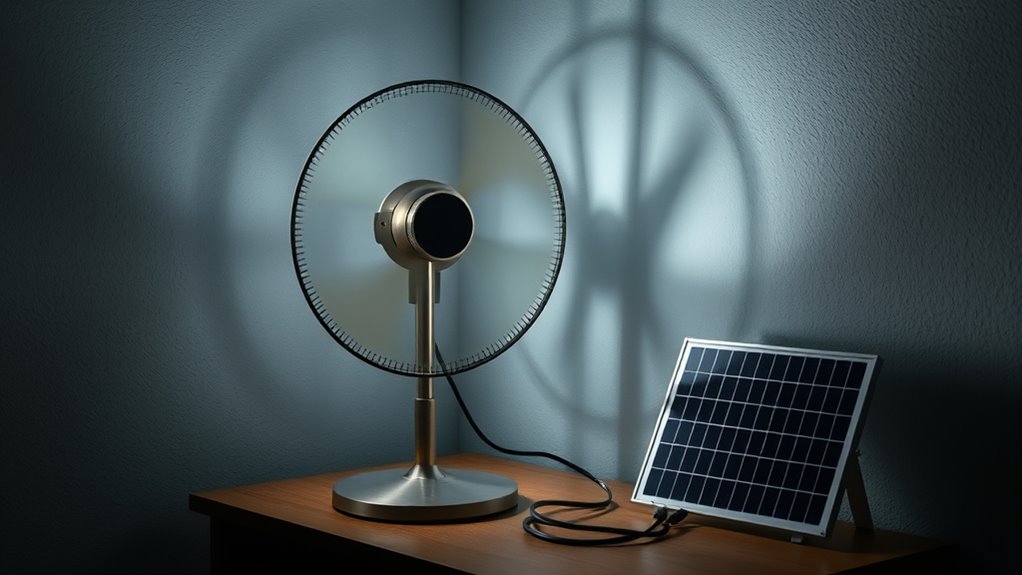
To keep your off-grid cooling system safe and reliable, you need to perform regular inspections and maintenance. Make sure your power sources are secure and backup options are ready in case of outages. Being prepared for emergencies guarantees your system stays operational and safe for everyone. Incorporating connected equipment can also help monitor system performance remotely and detect potential issues early. Regularly testing your emergency backup power ensures it functions properly when needed. Additionally, understanding the performance capabilities of your system allows you to optimize its operation during power interruptions. Implementing remote monitoring technologies can further enhance your ability to oversee the system’s status in real-time and respond swiftly to problems. Maintaining system safety is essential to prevent hazards and ensure continuous cooling.
Regular System Inspections
Regular system inspections are essential for ensuring your off-grid cooling system operates safely and efficiently. Regular checks help catch issues early, optimize performance, and extend the lifespan of your equipment. Focus on inspecting energy efficient fans and portable cooling units to make sure they’re clean, properly connected, and functioning correctly. Look for loose wires, unusual noises, or signs of wear and tear that could compromise safety or efficiency. Keep air filters clean to maintain airflow and prevent overheating. Ensure vents are unobstructed, and test switches and controls regularly. Performing these simple inspections can prevent breakdowns during outages and keep your cooling setup running smoothly when you need it most. Stay vigilant to keep your space cool and safe.
Safe Power Sources
Choosing a reliable power source is crucial for keeping your off-grid cooling system safe and functional during outages. Solar panels are a clean, renewable option that can provide consistent power if properly maintained and connected with a quality charge controller. Make certain your solar setup is protected from weather and regularly inspected to prevent issues. Generator options offer backup power when sunlight isn’t available; choose models suited to your energy needs and follow safety guidelines for operation. Always keep fuel stored safely and perform regular maintenance to avoid malfunctions. Use appropriate transfer switches or outlets to prevent backfeeding, which can pose serious hazards. Combining solar panels with a generator creates a versatile, safe power system that keeps your cooling setup running smoothly during outages.
Emergency Preparedness
Are you prepared to handle emergencies and keep your off-grid cooling system safe? Proper maintenance and safety measures ensure reliable cooling during outages. Regularly inspect your portable generator, checking fuel levels and connections, so it’s ready when needed. Keep your solar-powered fans clean and free of debris to maintain efficiency. Have a fire extinguisher nearby in case of electrical issues, and ensure all wiring is secure. Develop an emergency plan that includes quick access to backup power sources and clear safety procedures. Store spare parts and tools for quick repairs. Familiarize yourself with system shutdown protocols to prevent damage. By staying vigilant and prepared, you can keep your cooling setup safe and functional even during unexpected outages.
Additional Strategies to Keep Your Home Cool During Heatwaves
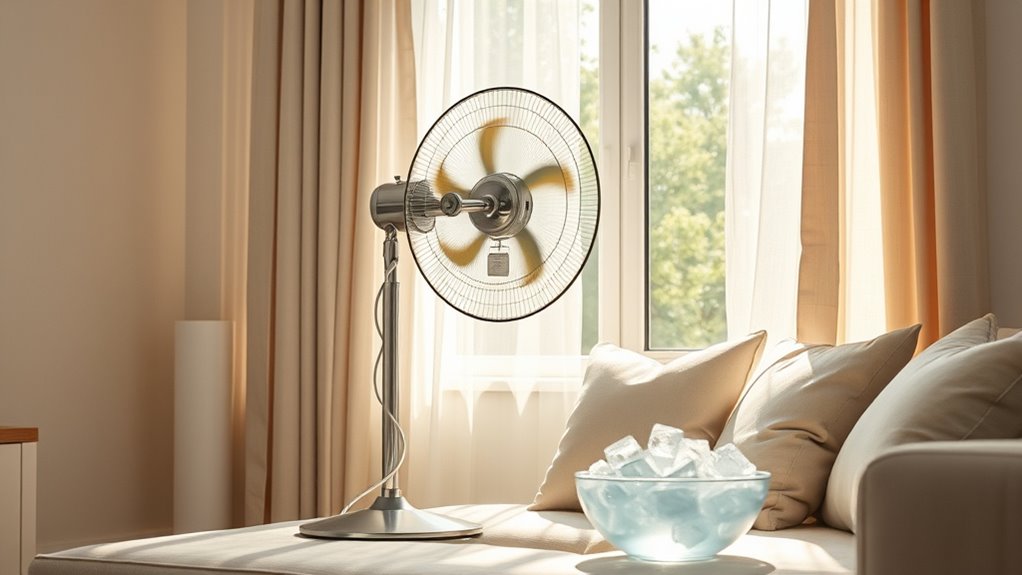
During heatwaves, implementing additional strategies can considerably help keep your home cooler even when the power is out. Using portable fans allows you to circulate air effectively without relying on electricity from the grid. Position them near windows or shaded areas to maximize airflow and create a breeze. You can also explore solar cooling solutions, such as solar-powered fans or evaporative coolers, which harness sunlight to operate without draining your battery or electrical system. Keeping blinds, curtains, or reflective window films can block out heat and reduce indoor temperatures. Additionally, opening windows during cooler evenings and early mornings helps bring in fresh, cooler air. Combining these tactics creates a multi-layered approach that maintains comfort during heatwaves, even when power outages occur.
Long-Term Solutions for Reliable Cooling During Power Disruptions

Battery-powered fans and other portable cooling options offer a reliable way to stay comfortable when the power’s out. Investing in backup power solutions, like generators or solar systems, guarantees your cooling stays uninterrupted for longer periods. Exploring these long-term options can make a significant difference during extended outages.
Battery-Powered Fans Efficiency
To guarantee reliable cooling during power outages, investing in battery-powered fans offers a practical long-term solution. These fans are highly efficient, especially when paired with renewable energy sources like solar powered fans or wind turbine cooling. You’ll benefit from sustained airflow without relying on grid power, making them ideal for extended outages. Battery-powered fans with high-capacity batteries ensure longer operation, even on cloudy days or low wind conditions. Consider models with energy-efficient motors and smart controls to maximize runtime. Additionally, look for fans with quick recharge capabilities and compatibility with solar charge controllers or wind turbines. This way, you create a resilient cooling setup that minimizes energy waste while maintaining comfort during emergencies.
Backup Power Solutions
When power outages strike, having reliable backup power solutions is essential to keep your cooling systems running smoothly. Solar panels offer a sustainable option, harnessing sunlight to generate electricity and reduce dependency on the grid. Pairing solar energy with battery storage guarantees you have power even after sunset or during cloudy days. A generator backup provides immediate, reliable power during outages, keeping fans and essential cooling devices operational. Combining these solutions gives you a long-term, resilient system that maintains comfort without interruption. Consider installing solar panels with battery storage for eco-friendly, silent operation, and keep a generator as a dependable fallback. Together, these backup options ensure your cooling setup stays active, no matter how long the power disruption lasts.
Frequently Asked Questions
Can These Cooling Setups Be Used Outdoors Safely?
Yes, these cooling setups can be used outdoors safely if they’re designed for outdoor use. Look for fans with weather resistance and outdoor safety features like sealed motors and durable materials. Always verify the equipment is rated for outdoor conditions to prevent damage or electrical hazards. Keep cords and electrical connections protected from rain or moisture, and follow manufacturer instructions to maintain safety and performance during outdoor cooling.
How Long Can a DIY Cooler Effectively Cool a Room?
A DIY cooler can effectively cool a room for several hours, depending on the size of the cooler, the room, and ambient conditions. You’ll want to think about energy efficiency to avoid high power bills and noise levels to keep comfort high. Regularly refilling water and maintaining the setup helps sustain cooling performance longer. Keep in mind, the cooler’s effectiveness diminishes over time, so plan on recharging or adjusting as needed.
What Are the Best Materials for Constructing an Off-Grid Fan?
You should use lightweight, durable materials like plywood or PVC for constructing an off-grid fan. These materials withstand outdoor conditions and maintain ventilation strategies effectively. Incorporate sturdy blades made from weather-resistant plastics or metals, ensuring long-term durability. Focus on airtight seals and proper insulation to optimize airflow. This setup keeps your space cool efficiently, even without power, by maximizing natural ventilation and minimizing heat transfer.
Do These Methods Work in Very Humid Climates?
Yes, these methods can work in humid climates, but you’ll need to address moisture issues. In high humidity, fans alone may not feel as cooling because moisture makes the air feel heavier. To improve comfort, consider adding dehumidifiers or moisture-wicking materials in your setup. Proper ventilation and insulation also help reduce humidity levels indoors, making the fan setup more effective and more like AC even in very humid conditions.
How Often Should I Replace or Refill Water and Ice?
You should refill ice and perform water maintenance every 2 to 4 hours during continuous use. Check the water tray or reservoir regularly, especially in humid conditions, to prevent mold or odors. Replenish ice as needed, ideally every few hours, to sustain a cool airflow. Staying on top of water maintenance and ice replenishment ensures your setup remains effective and comfortable, mimicking air conditioning even during outages.
Conclusion
By exploring these off-grid cooling options, you can stay comfortable even during power outages. With a bit of planning and DIY ingenuity, you’ll keep your home invigoratingly cool without relying on electricity. Isn’t it worth investing in simple, reliable solutions that give you peace of mind during heatwaves? Remember, the key is creativity and preparation—so why not start building your own effective, eco-friendly cooling system today?
Fall yard work Picks
leaf blowers
As an affiliate, we earn on qualifying purchases.