During a blackout, standard ceiling fans stop working unless you have backup power options like generators, battery systems, or uninterruptible power supplies that can provide short-term or extended airflow. Manual fans or hand-crank models work without electricity and offer immediate relief. You can also use natural ventilation by opening windows. To discover more about cost-effective solutions and emerging innovations that keep your fans running during outages, explore further options designed for power outages.
Key Takeaways
- Manual or hand-crank fans operate without electricity during blackouts.
- Battery-powered or portable inverter-based fans can run temporarily with backup power sources.
- Whole-home battery systems and generators can keep ceiling fans running for extended periods.
- Solar-powered fans work during daylight but are limited at night without additional storage.
- Fans with mechanical or manual controls continue to function independently of power outages.

Drphiru Hand Crank Blower, 200W Fire Blower with Hand Crank, Heat Up Coal Portable Blacksmith Furnace, High Pressure Manual Fan for Home Camping, BBQ, Canteen, Small Boiler, Gasification Furnace
DURABLE CONSTRUCTION: The Hand Crank Fire Blower is made of a durable aluminum rocker, cast iron gear housing,…
As an affiliate, we earn on qualifying purchases.
As an affiliate, we earn on qualifying purchases.
Types of Power Sources for Fans During Blackouts
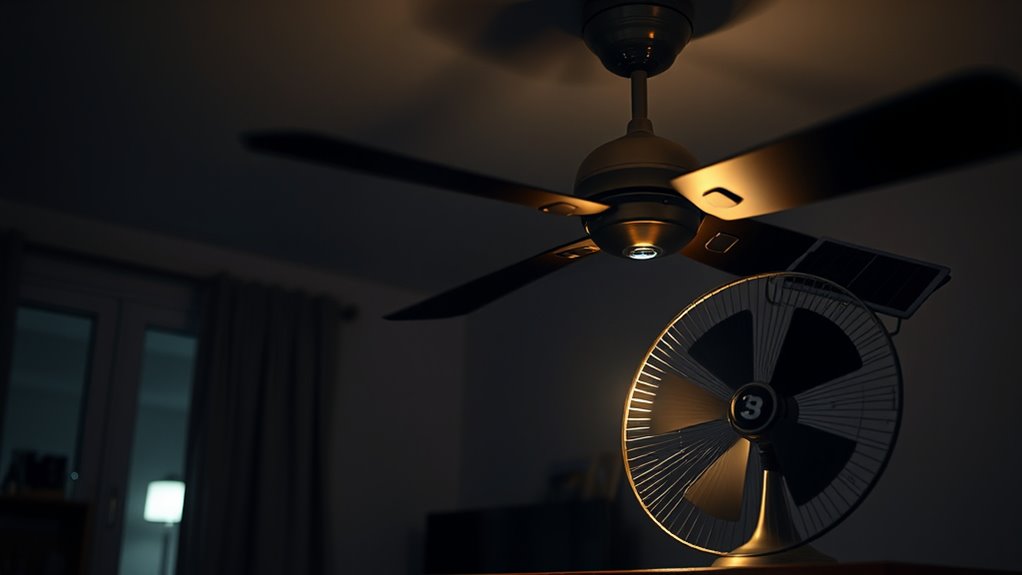
During blackouts, your options for powering ceiling fans depend on the available sources. If your home relies solely on grid power, the fan stops immediately. Battery-powered fans are rare but can work off-grid, offering limited operation. Solar-powered fans use integrated panels to run during daylight without grid electricity, but they’re less practical at night. Generators can power fans if you have a compatible model or extension cord, providing more sustained airflow. Manual or hand-crank fans require no electricity, offering mechanical airflow during outages. Portable power stations with inverters can run small fans temporarily, while whole-home battery systems like Tesla Powerwall store energy for longer durations. Your choice hinges on your specific backup setup and the availability of alternative power sources, which determine how effectively your ceiling fan can keep running during a blackout. Some modern fans even incorporate smart technology that can optimize power use or connect to backup systems for improved reliability. Additionally, energy storage systems can provide a reliable backup for essential devices, including ceiling fans, during extended outages. For instance, integrating solar energy with backup batteries can enhance resilience and ensure continuous airflow, especially when combined with home automation that manages power distribution efficiently.

Gaiatop Mini Portable Stroller Fan, Battery Operated Small Clip on, Detachable 3 Speed Rechargeable, 360° Rotate Flexible Tripod Better Cooling for Car Seat Crib Treadmill Travel Black
Safe Design for Baby: The mini stroller fan's cover only has 5.6mm gaps, so it will protect the…
As an affiliate, we earn on qualifying purchases.
As an affiliate, we earn on qualifying purchases.
Motor Technologies and Their Resilience to Power Loss

Your ceiling fan’s motor type greatly affects its ability to operate during a blackout. AC motors stop immediately without power, while DC motors are more efficient but still need an energy source. Reversible motors, used for seasonal airflow, also cease function when power is lost, highlighting the importance of choosing the right motor technology for resilience. Additionally, understanding small appliance efficiency can help you select more reliable options during power outages. Exploring energy-efficient motor designs may further enhance your fan’s performance in such situations, as some modern motors incorporate backup power solutions to maintain operation during outages. Recognizing resilient motor technologies can guide you toward fans that are better suited for backup power scenarios, especially when combined with innovative power storage options.
AC Motor Limitations
AC motors, commonly found in traditional ceiling fans, are highly dependent on a continuous supply of alternating current to operate. When the power goes out, these motors stop immediately because they lack built-in backup systems or energy storage. Unlike some modern motors, AC motors cannot run on batteries or stored energy, making them unreliable during blackouts. Reversing their direction or adjusting speed isn’t possible without power, limiting their flexibility. Their simple design is efficient under normal conditions but becomes a significant limitation during outages. To keep a fan running, you’ll need an external power source like a generator or battery backup. Without these, AC motor fans are useless during blackouts, highlighting their vulnerability and the need for alternative solutions. Motor Technologies continue to evolve, offering options that are more resilient to power loss. Additionally, innovations such as energy-efficient motors are designed to better handle power interruptions, providing greater reliability during outages. New resilient motor designs are also emerging, aiming to improve performance in power-variable environments.
DC Motor Efficiency
Modern ceiling fans equipped with DC motors are especially more efficient than traditional models, using up to five times less energy at high speeds. They convert power more effectively, reducing energy waste and lowering operating costs. These motors also generate less heat, extending their lifespan and maintaining efficiency over time. Additionally, DC motor efficiency contributes to reduced environmental impact by lowering energy consumption. However, despite their superior efficiency, DC motors still rely on a power source to operate. During blackouts, their resilience depends on backup solutions like batteries or generators. Some DC fans include backup capacitors to provide brief operation during power interruptions, but they can’t run indefinitely without a stable power supply. Overall, DC motor technology offers significant energy savings and better performance, but to keep them running during outages, you need auxiliary power sources. Understanding backup solutions can help ensure continuous operation during power outages. Moreover, investing in uninterruptible power supplies can provide additional security for essential fan operation. Additionally, implementing emergency power supplies can further enhance resilience during unexpected outages. Choosing the right backup power options ensures your ceiling fans remain functional during blackouts.
Reversible Motor Use
Reversible motors in ceiling fans allow you to switch airflow direction for seasonal comfort, but they rely on continuous power to change settings and operate. During a blackout, this means you can’t reverse the blade direction without power, limiting their flexibility. If the motor is reversible, it still needs electricity to change from clockwise to counterclockwise or vice versa. Once the power is out, the fan’s direction is locked in, preventing seasonal adjustments. This is especially problematic in winter, when reversing airflow can help warm a room. To maintain airflow control during outages, you’ll need manual fans, battery-powered units, or fans with mechanical direction controls. Natural ventilation is an alternative method to improve airflow without relying on electrical components. Reversible motor technology offers efficiency and convenience but isn’t resilient to power loss, making water-resistant features essential during blackouts.

SHUNLEE Solar Outdoor Ceiling Fan Light 31.5'', 60W Solar Powered Portable Gazebo Fan With Remote and Hook, 3000K-6000K LED, 40000mAh Large Hanging Canopy Fan (31.5 inch)
60W SOLAR PANELS POWERED CEILING FAN LIGHT – This solar ceiling fan light is equipped with two high-performance…
As an affiliate, we earn on qualifying purchases.
As an affiliate, we earn on qualifying purchases.
Backup Power Solutions for Continuous Fan Operation
To keep your ceiling fan running during a blackout, you need reliable backup power options. Battery backups, generator compatibility, and portable devices each offer different advantages for continuous operation. Choosing the right solution depends on your power needs and how long you want the fan to run without grid electricity. Additionally, understanding the types of backup power available can help you select the most effective and cost-efficient method for your needs. For instance, some backup options are better suited for short-term outages, while others can support longer durations, ensuring your fan stays on regardless of power interruptions.
Battery Backup Options
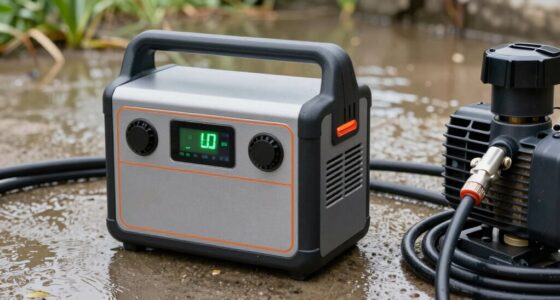
Battery backup options provide reliable solutions to keep ceiling fans running during power outages. Uninterruptible power supplies (UPS) offer quick, short-term power, typically lasting 10-30 minutes, enough for brief outages or resetting devices. Whole-home battery systems, like Tesla Powerwall, can power fans for hours or even days, depending on capacity, making them suitable for extended blackouts. Portable power stations with inverter outputs are versatile; they efficiently run DC fans or small AC models during outages. Hybrid solar generators combine solar panels and batteries, providing indefinite operation in sunlight. These options allow you to maintain airflow without relying on grid power, offering peace of mind and comfort during blackouts. Selecting the right backup depends on your fan type, power needs, and budget.
Generator Compatibility Strategies
Using a generator is one of the most reliable ways to guarantee your ceiling fan keeps running during a blackout. To verify compatibility, check if your fan’s motor is compatible with your generator’s power output. Most ceiling fans with standard AC motors can run on portable generators rated for at least 1,000 watts. For larger fans or multiple units, a standby generator with higher capacity is essential. Use a transfer switch for safety and convenience, preventing backfeed into the grid. Confirm your generator supplies clean, stable power to protect your fan’s motor. Consider the startup surge; some fans need extra power to start spinning. Finally, always follow manufacturer instructions for both your generator and fan to avoid damage and ensure continuous operation during outages.
Portable Power Devices
Portable power devices like generators, power stations, and uninterruptible power supplies (UPS) can keep your ceiling fans running during blackouts. These solutions ensure continuous airflow and comfort when grid power is out. Here are four options to consider:
- Uninterruptible Power Supplies (UPS): Provide short-term backup, typically 10-30 minutes, ideal for brief outages or critical moments.
- Portable Power Stations: Compact, inverter-based units that run DC fans efficiently during outages, offering several hours of operation.
- Generators: Standby or portable models that can power larger fans or multiple devices for extended periods, especially when connected to compatible fans.
- Hybrid Solar Generators: Combine solar panels and batteries, offering indefinite operation during daylight or with stored energy.
These devices give you reliable backup power, ensuring your ceiling fans keep moving through any blackout.

EF ECOFLOW 12kWh Power Station: DELTA Pro Ultra with Extra Battery, 120/240V 7200W AC Output, Lifepo4 Home Battery Backup Expandable to 90kWh, Solar Generator for Home Use, Emergency, Camping, RV
One Powers All. The unit of DELTA Pro Ultra whole house generator includes an inverter and a battery….
As an affiliate, we earn on qualifying purchases.
As an affiliate, we earn on qualifying purchases.
Efficiency Considerations When Power Is Limited
When power is limited during a blackout, maximizing airflow efficiency becomes essential to get the most comfort from your fan. You should choose fans with high airflow per watt—like Energy Star models or those with brushless DC motors—which are up to five times more efficient. Larger fans move more air for the same energy, but they require more backup capacity, so size matters. Using fans with reversible motors is pointless without power, but some models with backup capacitors may still operate briefly. To conserve energy, turn off unnecessary lights and features, such as light kits, which add extra load. Portable fans or alternative mechanical solutions can supplement your ceiling fan, ensuring better airflow without draining your limited power supply.
Manual and Mechanical Alternatives to Electric Fans
During a blackout, manual and mechanical alternatives become essential to maintain airflow without relying on electricity. You can rely on simple tools and techniques that don’t need power. Here are four effective options:
- Hand Fans: Portable and easy to use, hand fans provide immediate airflow, perfect for personal cooling.
- Cloth or Sheet Fanning: Use a large cloth or sheet to generate breeze by waving it back and forth.
- Manual Ventilation: Open windows and doors strategically to create cross-ventilation, encouraging natural airflow.
- Wind Chimes or Bell Fanning: Hang lightweight objects that catch the breeze and move, creating a gentle airflow in the room.
These options require no electricity, are inexpensive, and can keep you comfortable during outages.
Practical Placement and Usage Tips During Power Outages
To maximize airflow during a power outage, careful placement of fans and ventilation sources is essential. Position portable fans or manual units near windows or open doorways to create cross-ventilation, drawing cooler air inside. Place fans at least 7-9 feet high for ideal coverage, but avoid blocking airflow pathways. Use the table below to visualize effective placements:
| Location | Purpose |
|---|---|
| Near open windows | Enhance intake of fresh air |
| In hallways | Distribute airflow across rooms |
| Close to sleeping areas | Promote cooler, more comfortable sleep |
| Elevated on sturdy surfaces | Maximize air circulation and safety |
Adjust fan angles to direct airflow toward occupied spaces, ensuring even ventilation during blackouts.
Impact of Fan Size and Design on Backup Needs
Larger ceiling fans move more air per watt, making them effective for cooling or ventilating bigger spaces. However, they also require more backup power during blackouts. Consider these factors:
- Increased Capacity: Larger fans demand higher wattage, meaning your backup system must supply more energy to keep them running.
- Motor Size and Design: Heavier-duty motors need stronger power sources; inefficient or older models may struggle without grid power.
- Blade Span and Pitch: Bigger blades with steep angles generate more airflow but consume more power, increasing backup load.
- Efficiency Ratings: Energy Star-rated fans operate more efficiently, reducing backup requirements despite size, while unoptimized large fans can drain backup capacity quickly.
Choosing the right size and design helps balance airflow needs and backup power constraints effectively.
Smart Features and Their Limitations in Blackout Conditions
Smart features in ceiling fans, such as remote controls, smartphone integration, and voice commands, depend heavily on electricity and internet connectivity. During blackouts, these functions become useless because power is cut off, and internet access is unavailable. If your fan depends on smart controls, you lose the ability to operate or adjust it remotely. Even fans with built-in Wi-Fi or app compatibility won’t respond without power. Some fans include backup batteries for basic operation, but most smart features won’t work without grid power. In blackout conditions, you must revert to manual controls, like pull chains or switches. Relying on smart features for ventilation during outages isn’t practical, so consider simpler, non-smart fans or backup power solutions to ensure continuous airflow when needed.
Cost-Effective Strategies for Off-Grid Ventilation
When blackouts strike, relying solely on standard ceiling fans can be costly and ineffective. To keep your home ventilated without grid power, consider these cost-effective strategies:
- Use manual or hand-crank fans that require no electricity, offering instant airflow.
- Invest in portable battery-powered fans, which are affordable and easy to move where needed.
- Install solar-powered fans with integrated panels, working during daylight without external power sources.
- Connect fans to portable or standby generators, ensuring continuous operation during outages.
These options provide flexible, budget-friendly ventilation, reducing reliance on expensive backup systems. Combining manual fans with solar or generator-powered units maximizes airflow while minimizing costs. Keep airflow flowing efficiently, even when the power’s out.
Future Innovations in Fan Technology for Power Outage Readiness
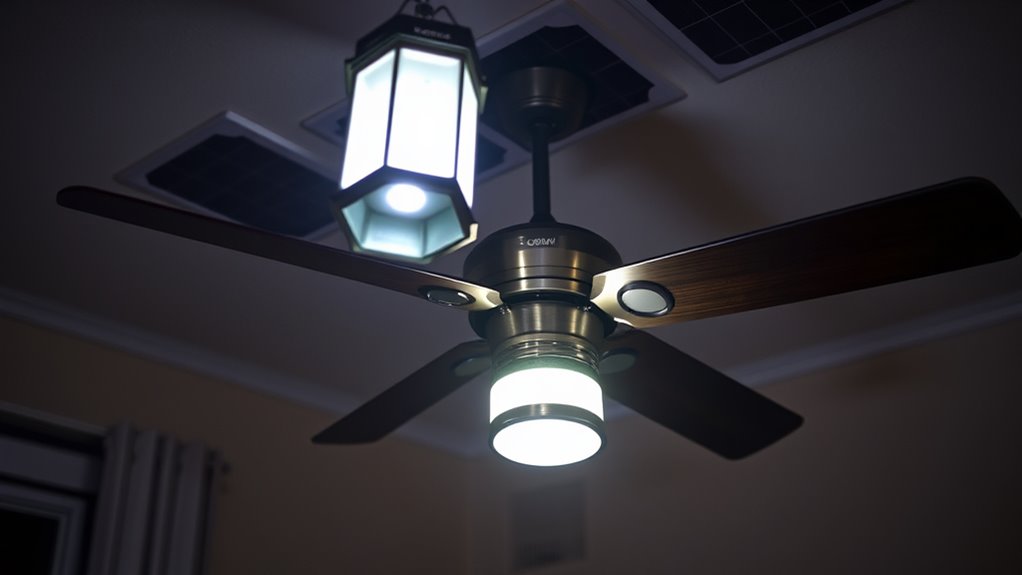
Future fan tech will focus on integrating advanced batteries and solar assist systems to keep airflow running during outages. These innovations aim to eliminate reliance on grid power, making fans more resilient and energy-efficient. By adopting these designs, you’ll have reliable ventilation even when the lights go out.
Advanced Battery Integration
Advancements in battery technology are driving the development of integrated systems that enable ceiling fans to operate seamlessly during power outages. These innovations focus on making backup power more efficient and accessible. Here are key features to contemplate:
- Built-in rechargeable batteries that automatically activate during outages, eliminating the need for external units.
- Smart management systems that optimize energy use, extending runtime and battery life.
- Modular battery packs allowing easy upgrades for longer backup durations.
- Wireless connectivity for remote monitoring and control, ensuring you can operate fans even when the power’s out.
These advancements make it possible for your ceiling fan to keep running without relying solely on generators or manual alternatives, enhancing your blackout preparedness.
Solar-Assist Fan Designs
Innovative solar-assist fan designs are emerging to enhance power outage resilience by combining renewable energy with traditional fan features. These fans integrate solar panels directly into the motor housing or blades, allowing them to operate during daylight without grid power. Some models store excess solar energy in onboard batteries, enabling operation after sunset or during overcast conditions. This hybrid approach reduces reliance on external power sources, especially in remote or blackout-prone areas. Advances include lightweight, aerodynamic panels that maximize sunlight capture and smart controls that optimize energy use. These designs aim to deliver consistent airflow while minimizing energy consumption. By harnessing solar power, you gain a sustainable, eco-friendly option that keeps your fan running during outages, ensuring continuous comfort without added energy costs.
Frequently Asked Questions
Can Manual Ceiling Fans Operate Without Any Electrical Power?
Manual ceiling fans can operate without electrical power if they’re designed with a hand-crank or manual mechanism. These fans don’t rely on electricity, so you can turn the blades manually to create airflow during blackouts. Keep in mind, they may not circulate air as effectively as motorized fans, but they’re a practical, energy-free solution for ventilation. Make sure you choose a fan built specifically for manual operation.
Are Solar-Powered Fans Effective During Nighttime Blackouts?
Solar-powered fans aren’t effective during nighttime blackouts because they rely on sunlight to generate power. Without daylight, their integrated solar panels produce no electricity, rendering the fans inoperable. If you want reliable airflow during a blackout, consider options like battery-powered fans, generators, or manual fans that don’t depend on sunlight. These alternatives guarantee you stay cool even when the sun’s gone down and power’s out.
Do Portable Generators Support All Types of Ceiling Fans?
Portable generators can support many types of ceiling fans, but not all. Think of it like a power buffet—if your fan has an AC motor, it likely needs a stable grid supply, so it may have difficulty. However, fans with DC motors or those designed for generator hookup tend to do well. Always check the fan’s compatibility and wattage needs to confirm your generator can keep your favorite breeze going during outages.
How Long Can a UPS Power a Ceiling Fan During an Outage?
A UPS can power your ceiling fan for about 10 to 30 minutes during an outage, depending on its capacity and the fan’s power draw. If your fan is energy-efficient or small, it may run longer. To extend backup time, consider upgrading to a larger UPS or switching to a battery-powered fan. Keep in mind, a typical UPS isn’t designed for prolonged use, so plan accordingly for longer outages.
Are There Battery-Operated Fans Suitable for Ceiling Fan Replacement?
Imagine a gentle breeze stirred by a fan that doesn’t need a wall socket—yes, battery-operated fans do exist. While they’re rare in standard homes, you can find portable models designed for outdoor or emergency use. These fans run on rechargeable batteries, providing you with a invigorating airflow during outages. They’re perfect for quick relief, easy to move, and offer a practical alternative when traditional ceiling fans can’t operate.
Conclusion
During blackouts, your options for ceiling fans depend on power sources and backup solutions. Nearly 80% of households with backup systems report maintaining comfortable airflow during outages. By choosing energy-efficient fans, backup batteries, or manual alternatives, you can stay cool without relying solely on grid power. Planning ahead guarantees you’re prepared for any blackout, keeping your home comfortable and safe even when the lights go out.