
TL;DR
Open a free Amazon Business account
Business pricing, bulk buying and tax-exempt orders.
As an affiliate, we earn on qualifying purchases.
Tesla’s Cybercab specifications have been publicly disclosed through an EPA filing, revealing details about its battery, range, and power. However, many questions about its pricing, autonomy, and market strategy are still unresolved. The development signals potential shifts in Tesla’s urban mobility plans but leaves uncertainties about commercial viability.
Tesla’s Cybercab specifications have been officially released through an EPA filing, confirming details such as battery capacity, range, and power output. This marks a significant step forward in Tesla’s plan to deploy a small, affordable electric vehicle designed primarily for urban transportation and robotaxi fleets. The disclosure offers clarity on some technical aspects but leaves many strategic questions unanswered, including pricing, autonomy, and market approach.
The EPA document reveals that the Cybercab features a 326-volt, 146 Ah battery system, estimated at around 50 kWh of energy storage. It is powered by a 163 kW (219 hp) front-mounted AC permanent magnet motor, providing sufficient power for city driving. The vehicle’s curb weight is approximately 3,113 pounds, with a gross vehicle weight rating of 3,730 pounds. The EPA testing indicates a range of 418 miles, though real-world estimates are likely closer to 300 miles, considering typical efficiency figures of 165 Wh/m. The vehicle is designed to seat two passengers, emphasizing its role as a compact urban transport option. The specifications suggest a highly efficient vehicle, optimized for short trips rather than long-distance travel, and highlight Tesla’s focus on affordability and efficiency.
Questions remain about the vehicle’s commercial plans. It is unclear whether Tesla will sell the Cybercab at the anticipated price point of $30,000 or less. Additionally, the EPA filing does not clarify whether the vehicle will come with traditional controls like steering wheels and pedals or if it will start as a fully autonomous, driverless robotaxi. Tesla’s broader strategy for deploying these vehicles—whether for fleet operation or consumer sales—remains uncertain, along with how many units Tesla plans to produce and operate in its robotaxi network.
Potential Impact on Urban Mobility and Tesla Strategy
The release of detailed specs for the Cybercab indicates Tesla’s commitment to developing a small, affordable electric vehicle for urban environments and autonomous ride-hailing. If Tesla successfully markets and deploys the Cybercab at the projected price, it could significantly influence urban transportation, reduce congestion, and reshape the ride-hailing industry. However, uncertainties around its autonomy, market acceptance, and production scale mean that its real-world impact remains to be seen. The development also signals Tesla’s continued innovation in vehicle design focused on efficiency and cost reduction, which could set new standards for small EVs in the coming years.
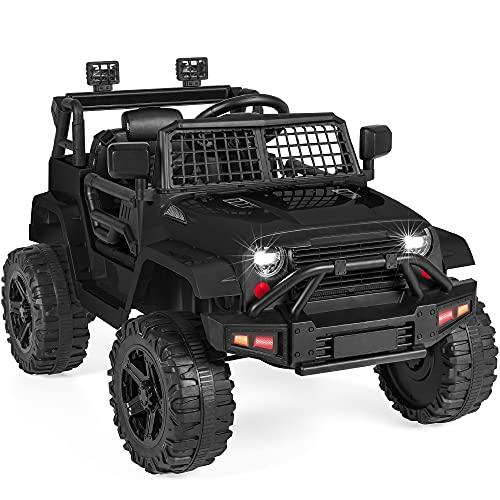
Best Choice Products 12V Kids Electric Vehicle Toy Ride On Car with Parent Remote Control for Toddlers, Seat Harness, 61 lbs Weight Capacity, Locking Doors, Spring Suspension, Bluetooth – Black
- Age Range: For kids 3 years and older
- Powerful 12V Motor: Realistic design with traction tires
- Parent Remote Control: Manual or remote driving options
As an affiliate, we earn on qualifying purchases.
As an affiliate, we earn on qualifying purchases.
Tesla’s Transition to Compact Electric Vehicles
Tesla has long been known for its larger electric vehicles like the Model S, Model 3, Model X, and Model Y. The Cybertruck marked a move into the pickup segment, while the Cybercab appears to be Tesla’s first dedicated small urban vehicle aimed at ride-hailing and city commuting. The EPA filing follows months of speculation about Tesla’s plans to develop a low-cost, city-focused EV, with the company emphasizing efficiency and affordability. Previous prototypes and rumors suggested a vehicle designed primarily for fleet use, with a simplified interior and autonomous capabilities. The EPA documentation confirms some of these assumptions but leaves many strategic questions open, including whether Tesla intends to sell these vehicles directly to consumers or operate them solely as part of robotaxi fleets.
“The EPA filing confirms Tesla’s focus on efficiency and urban suitability, but the real questions are about how they plan to commercialize this vehicle and what autonomy features will be included.”
— an anonymous researcher

TACTILIAN Red Tire Valve Stem Caps for Tesla Model 3, S, X, Y | Leakproof Aluminum Tire Valve Caps with Rubber O-Rings Compatible with Tesla Car Accessories | Tire Valve Stem Covers Tire Caps 4 Pack
- High-Quality Aluminum Material: Matte black with Tesla logo
- Stylish and Subtle Design: Elegant vehicle pride without overpowering
- Show Your Tesla Pride: Set of 4 tire valve caps
As an affiliate, we earn on qualifying purchases.
As an affiliate, we earn on qualifying purchases.
Unresolved Questions About Pricing, Autonomy, and Deployment
It is not yet clear whether Tesla will sell the Cybercab at the targeted sub-$30,000 price point. The EPA filing does not specify the vehicle’s autonomy level—whether it will be fully autonomous or require a driver—and how Tesla plans to integrate it into its existing or future robotaxi fleet. Additionally, the number of units Tesla intends to produce and the timeline for commercial deployment remain undisclosed. The vehicle’s final interior configuration, including whether it will have traditional controls, is also still uncertain.

EVIQO Level 2 EV Charger J1772 40A NEMA 14-50 – 240V Wall Charging Station
- Plug-in Design: No electrician needed, 40A output
- Compatible Connector: J1772 connector for non-Tesla EVs
- Tesla Compatibility: Works with Tesla via J1772-to-NACS adapter
As an affiliate, we earn on qualifying purchases.
As an affiliate, we earn on qualifying purchases.
Next Steps for Tesla and Market Expectations
Tesla is expected to clarify its plans for the Cybercab in upcoming product announcements or investor presentations. The company may also begin testing autonomous features in the vehicle, potentially demonstrating its capabilities in controlled environments. Market analysts will closely watch for official statements regarding pricing, autonomy, and production volume. Consumer interest and fleet operator responses will influence whether the Cybercab becomes a significant part of Tesla’s urban mobility strategy or remains a niche product. Regulatory approvals and safety certifications will also play a critical role in its rollout timeline.
As an affiliate, we earn on qualifying purchases.
Key Questions
Will Tesla sell the Cybercab to individual consumers?
It is currently unclear. Tesla has not announced specific plans, and the vehicle’s design suggests it may primarily target fleet operators and robotaxi services, but consumer sales are possible.
Will the Cybercab have full autonomous driving capabilities?
The EPA filing does not specify the autonomy level. It remains uncertain whether Tesla will offer fully autonomous operation at launch or require a driver.
How much will the Cybercab cost when it goes on sale?
While Tesla has indicated a target price of around $30,000 or less, this has not been confirmed officially, and final pricing may vary based on features and market conditions.
When will Tesla start producing and delivering the Cybercab?
Specific timelines have not been announced. The EPA filing suggests the vehicle is in advanced development stages, but commercial availability remains unconfirmed.
Will the Cybercab be fully autonomous from the start?
It is not yet clear whether Tesla will launch with full autonomy or include driver controls initially. Further details are expected in upcoming disclosures.
Source: CleanTechnica
Flea & tick season Picks
flea and tick prevention
As an affiliate, we earn on qualifying purchases.