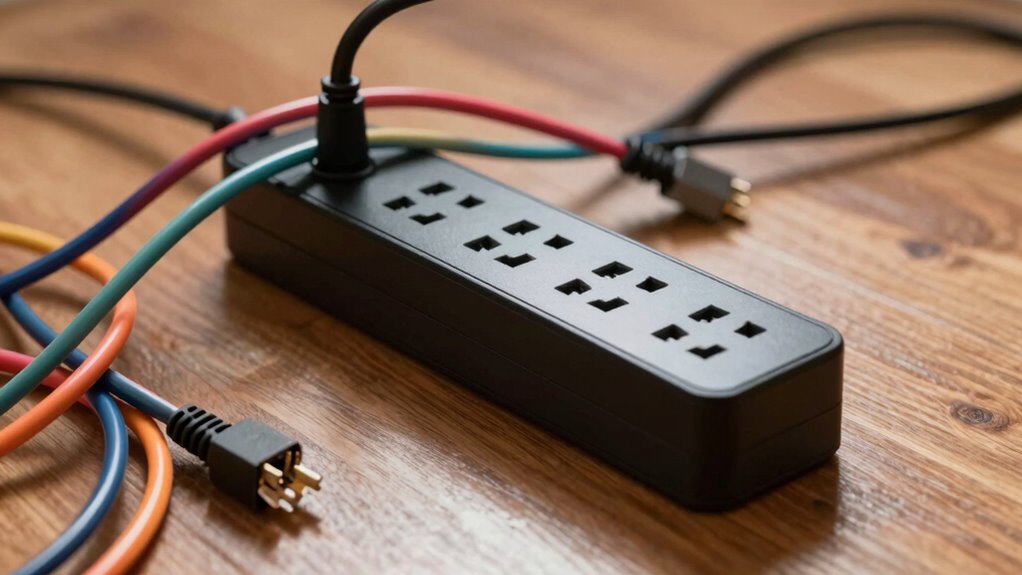

The safest choice between power strips and extension cords depends mainly on understanding their load capacities and proper usage. Power strips with surge protection are better for multiple devices indoors, while extension cords are useful for reaching distant outlets but must be rated for their intended load. Overloading either can cause overheating and fire hazards. To make the right decision and prevent accidents, consider safety features and how you plan to use each option—more details await.
Open a free Amazon Business account
Business pricing, bulk buying and tax-exempt orders.
As an affiliate, we earn on qualifying purchases.
Key Takeaways
- Safety depends mainly on proper usage, including avoiding overloads and ensuring devices stay within rated capacities.
- Power strips are safer for multiple devices in indoor settings with surge protection, while extension cords suit outdoor or longer-distance needs.
- The safety of either option hinges on quality construction, proper insulation, and compliance with safety standards like UL certification.
- Overloading or improper placement increases risks regardless of whether using a power strip or extension cord.
- The critical factor is selecting the right device type for the environment, load, and safety features needed to prevent hazards.

ALESTOR 6 Ft Surge Protector Power Strip with 12 Outlets and 4 USB Ports
- Multi-Function Power Strip: 12 AC outlets and 4 USB ports
- Heavy Duty Extension Cord: 6-foot long power cord for flexibility
- High Surge Protection: 2700 Joules surge energy absorption
As an affiliate, we earn on qualifying purchases.
As an affiliate, we earn on qualifying purchases.
Understanding the Basic Differences Between Power Strips and Extension Cords
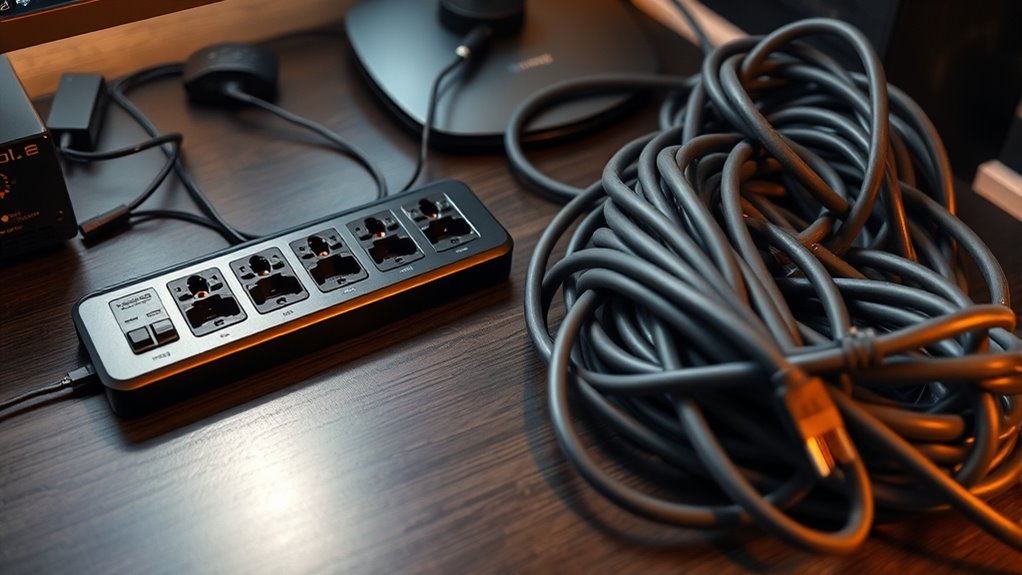
While power strips and extension cords may seem similar, they serve different purposes and have distinct features. A power strip is designed to provide multiple outlets from a single socket, often including surge protection to safeguard your devices. It typically offers a fixed cord length, making it easy to position near your equipment. Extension cords, on the other hand, are primarily meant to extend the reach of an outlet, usually with a longer cord but without built-in surge protection. They are useful for temporarily powering devices farther away but can pose safety risks if overloaded or used improperly. Electrical safety guidelines also influence how you should properly use these devices to prevent hazards. Additionally, selecting energy-efficient options can reduce power consumption and improve overall safety. Being aware of overloading risks is crucial to prevent electrical fires and equipment damage. To further ensure safety, consider the appropriate use of each device based on your specific needs.

50ft Outdoor/Indoor Extension Cord 10/3 Gauge Ultra Heavy Duty 3 Prong SJTW, Waterproof, Flexible Cold-Resistant Long Power Cord,15A 125V 1875W, Yellow by LifeSupplyUSA
- Durable Waterproof Design: Resilient for indoor and outdoor use
- Heavy Duty Construction: Oil, grease, moisture, and abrasion resistant
- Lighted End for Safety: Indicates power status and enhances visibility
As an affiliate, we earn on qualifying purchases.
As an affiliate, we earn on qualifying purchases.
The Role of Power Ratings and Load Capacity in Safety
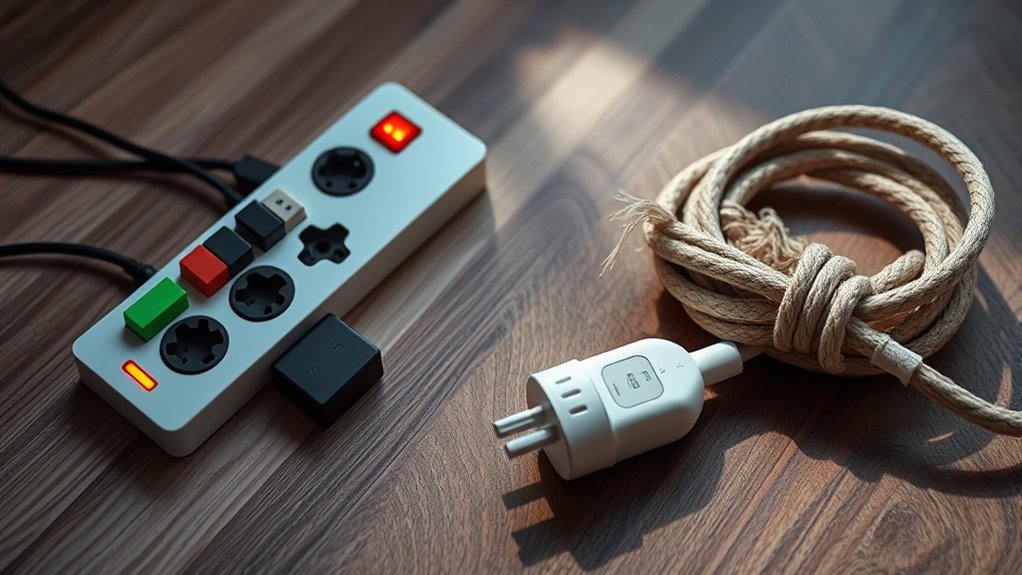
Your safety depends on understanding how power ratings and load capacities work. Exceeding these limits can cause overheating or electrical fires. Knowing these numbers helps you choose the right device and avoid dangerous situations.
Understanding Power Ratings
Have you ever wondered why power strips and extension cords have specific ratings? These ratings indicate their maximum power capacity, which is vital for safety. Exceeding these limits can cause overheating or fires. Power ratings also reflect grounding requirements, ensuring proper electrical safety, especially in preventing electrical shocks. Many surge protection devices rely on these ratings to safeguard your devices from voltage spikes. When choosing between a power strip and an extension cord, pay close attention to these ratings to match your intended load. Properly rated equipment helps prevent overloads and supports safe operation. Remember, always follow manufacturer guidelines and avoid improvising connections beyond the specified power ratings to protect your appliances and household safety. Understanding power ratings is essential for making informed and safe electrical choices.
Load Capacity Limits
Understanding load capacity limits is essential for safe use of power strips and extension cords because exceeding their rated power can lead to overheating and potential fires. Always check the power ratings and avoid overloading by adding too many devices. The cord length matters because longer cords can cause voltage drops, increasing the risk of overheating if you draw high current. Longer cords may also tempt you to stretch them across areas with frequent foot traffic, risking damage. Proper outlet placement is vital; plugging too many devices into a single outlet can surpass the load capacity. Be mindful of your setup, ensuring the total wattage remains within the limits specified for your power strip or extension cord to maintain safety. Additionally, **load capacity limits** are tied to the overall design and quality of the power strip or extension cord, making it important to select products that meet safety standards. Choosing products with safety certifications can provide added assurance of their ability to handle the intended load and ensure reliable performance. Being aware of the safety standards that apply to these devices can further help prevent accidents and ensure proper functioning. Furthermore, understanding the manufacturer’s specifications can help you better assess the actual capacity and compatibility of your electrical devices.
Implications for Safety
Power ratings and load capacity directly impact safety when using power strips and extension cords. If you overload them, the risk of overheating, fire, or damage increases. A circuit breaker helps prevent overloads by shutting off power if capacity is exceeded, but relying solely on it isn’t enough. Surge protection features guard your devices from voltage spikes, reducing damage. To stay safe, always match the device’s power needs with the strip or cord’s load capacity. Here’s a quick reference:
| Device Power (W) | Max Load Capacity (A) | Recommended Use |
|---|---|---|
| 1200 | 10 | Home appliances, computers |
| 1800 | 15 | Multiple electronics |
| 2400 | 20 | Power tools, heavy-duty |
| 3600 | 30 | Industrial equipment |
Choosing the right rated power strip or extension cord minimizes hazards and protects your devices.

Belkin 12-Outlet Surge Protector Power Strip w/ 12 AC Outlets & 8ft Flat Plug, UL-Listed Heavy-Duty Extension Cord for Home, Office, Travel, Computer, Laptop, Charger – 3,780 Joules of Protection
- Multi-Outlet Surge Protector: 12 AC outlets for multiple devices
- High Joules Surge Protection: Provides 3,940 joules of protection
- Safety Indicator Light: Confirms devices are protected
As an affiliate, we earn on qualifying purchases.
As an affiliate, we earn on qualifying purchases.
Proper Usage and Placement of Power Strips
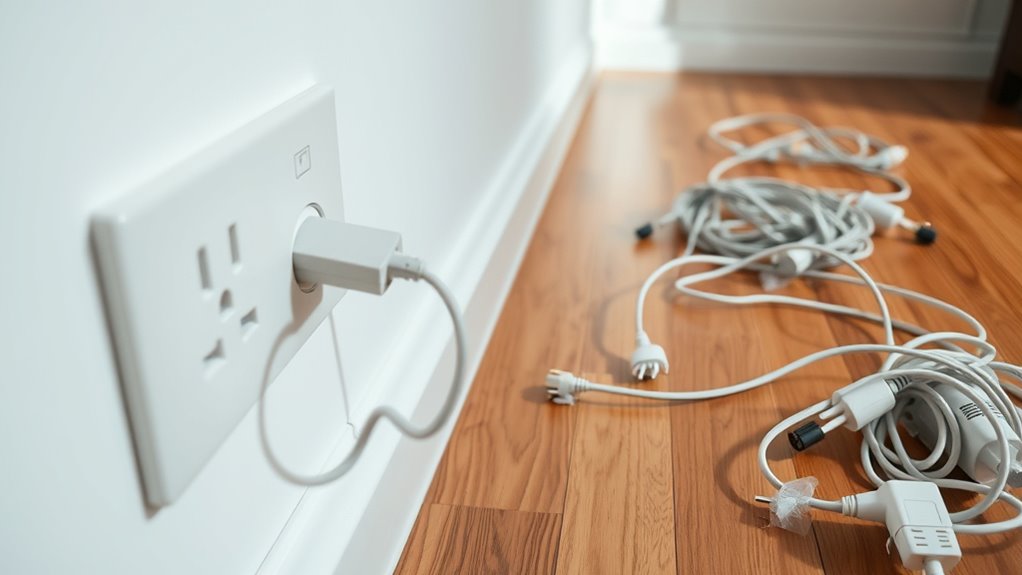
To guarantee safety and efficiency, it’s essential to properly use and place power strips in your home or workspace. Always ensure your cords are arranged to prevent tripping hazards, maintaining good cord safety. Avoid overloading the power strip; check its maximum capacity and distribute devices accordingly. When plugging in, consider outlet placement—place the strip in areas where outlets are easily accessible and not strained by extension cords. Keep power strips away from water, heat sources, and areas prone to moisture. Do not daisy-chain multiple strips, as this increases the risk of overload and fire. Regularly inspect cords and outlets for damage, replacing any that show signs of wear. Proper placement and mindful use help maximize safety and prevent accidents. Additionally, selecting a power strip with sufficient surge protection can further safeguard your devices from power fluctuations. Using quality safety features like circuit breakers and child safety covers can also enhance your safety measures. Ensuring your power strips are compliant with safety standards offers extra peace of mind, especially when choosing products with robust construction and reliable components. Being aware of proper grounding methods can further reduce electrical hazards and improve overall safety.

Extension Cord 15 Ft, Flat Plug Surge Protector Power Strip 15 Ft Long Cord
- 12-in-1 Power Strip with USB: 8 outlets and 4 USB ports
- Wide Spaced Outlets: 2.2-inch spacing fits large adapters
- 15 Ft Flat Extension Cord: Long reach for versatile placement
As an affiliate, we earn on qualifying purchases.
As an affiliate, we earn on qualifying purchases.
Extension Cord Construction and Its Impact on Safety
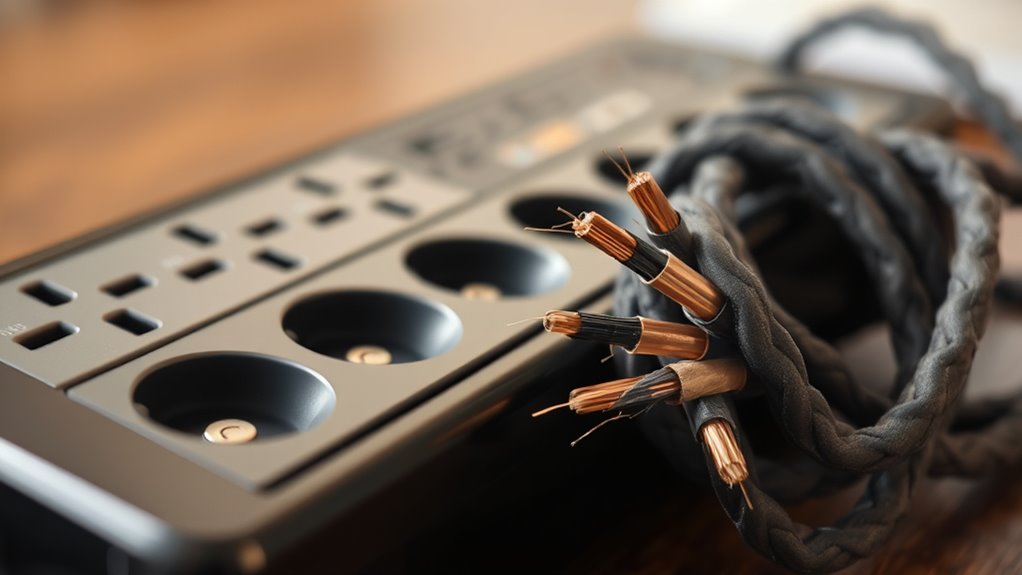
The quality of materials used in your extension cord directly affects safety. Proper insulation prevents electrical shocks and fires, so always check for sturdy, intact coverings. Choosing well-constructed cords reduces the risk of damage and hazards during use. Additionally, inspecting the type of insulation material can provide further assurance of safety and durability. Using cords with high-quality insulation materials also ensures better resistance to wear and environmental factors, extending the lifespan of the cord. Moreover, material durability standards can help you select safer, longer-lasting extension cords, providing peace of mind during everyday use. Properly rated cords that meet safety standards are essential for reliable performance. Additionally, farmhouse-inspired decor can enhance the aesthetic appeal of your space while maintaining safety standards.
Material Quality Matters
Since the construction quality of an extension cord directly affects its safety, paying attention to the materials used is essential. High-quality cords often feature better insulation and durable wiring, reducing the risk of shorts and fires. Look for cords with built-in surge protection, which can prevent damage to your devices and enhance safety. The cord length also matters; a longer cord may be more prone to damage or overheating if not made from quality materials. Cheaper cords might use inferior plastic or wiring that wears out quickly, increasing safety hazards. Investing in a well-constructed extension cord ensures better electrical integrity, minimizes fire risks, and provides peace of mind, especially when powering sensitive or high-demand devices. Material quality truly impacts overall safety and performance. Additionally, understanding electrical safety principles can help you make more informed choices about the cords you use in your home or workspace. For example, selecting cords with appropriate gauge size can prevent overheating and potential hazards, and choosing cords with UL certification can ensure they meet safety standards.
Proper Insulation Essential
High-quality materials in an extension cord aren’t enough if the insulation isn’t properly designed and applied. Proper insulation prevents electrical shocks and short circuits, making safety your top priority. Surge protection built into the cord adds extra safety by shielding connected devices from voltage spikes, but if the insulation is compromised, that protection becomes ineffective. Additionally, pay attention to cord length; longer cords can increase resistance, leading to potential overheating if not properly insulated. Ensure the insulation is thick and durable, especially around areas where the cord bends or connects. When choosing an extension cord, check for quality insulation that supports surge protection features and is suitable for the length you need. Proper insulation is essential to keep you safe and your devices protected.
Identifying Overloading Risks and How to Prevent Them
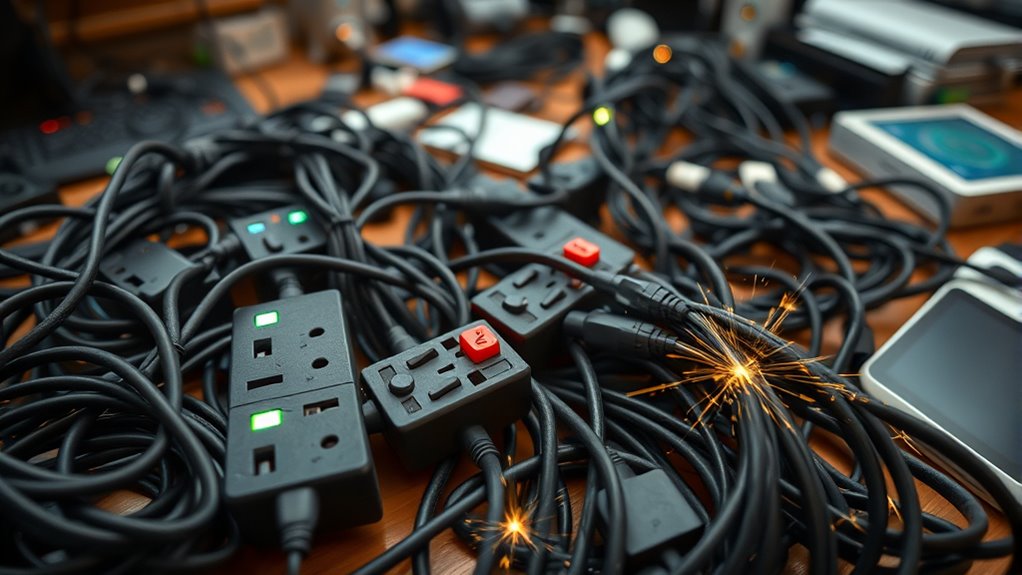
Overloading power strips and extension cords is a common hazard that can lead to overheating and fires. To prevent this, you need to recognize overloading risks. First, avoid plugging too many devices into a single strip or cord, as this increases electrical fire hazards. Second, understand cord length considerations; longer cords may cause voltage drops, encouraging overloads. third, check the power ratings of your devices and ensure they don’t exceed the cord’s capacity. Fourth, regularly inspect cords for damage or fraying, which can trigger overheating. By staying aware of these factors, you minimize the risk of electrical fires and ensure a safer environment. Properly managing load and paying attention to cord limitations are key to preventing overloading issues.
Safety Features to Look for in Power Strips
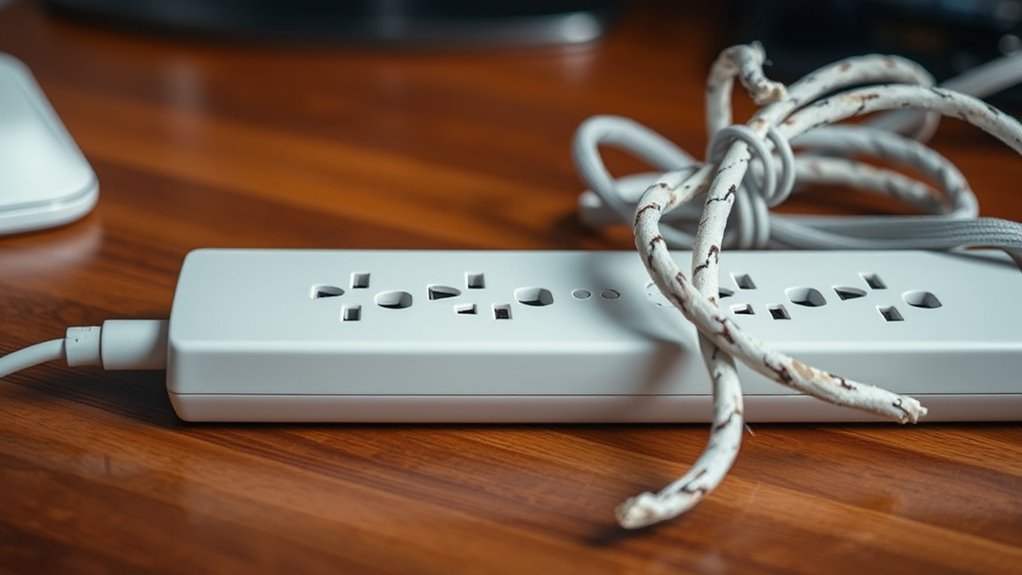
When choosing a power strip, making sure built-in safety features that protect both your devices and your home is vital. Look for surge protection, which shields your electronics from voltage spikes that can cause damage. A power strip with surge protection provides peace of mind, especially during thunderstorms or power fluctuations. Additionally, consider the cord length; a longer cord offers flexibility but can become a tripping hazard if not managed properly. Safety features like a resettable circuit breaker and overload protection are essential to prevent overheating and fires. Always check for UL or ETL certification to guarantee the power strip meets safety standards. Prioritizing these features helps keep your devices safe while reducing the risk of electrical accidents.
When to Choose a Power Strip Over an Extension Cord
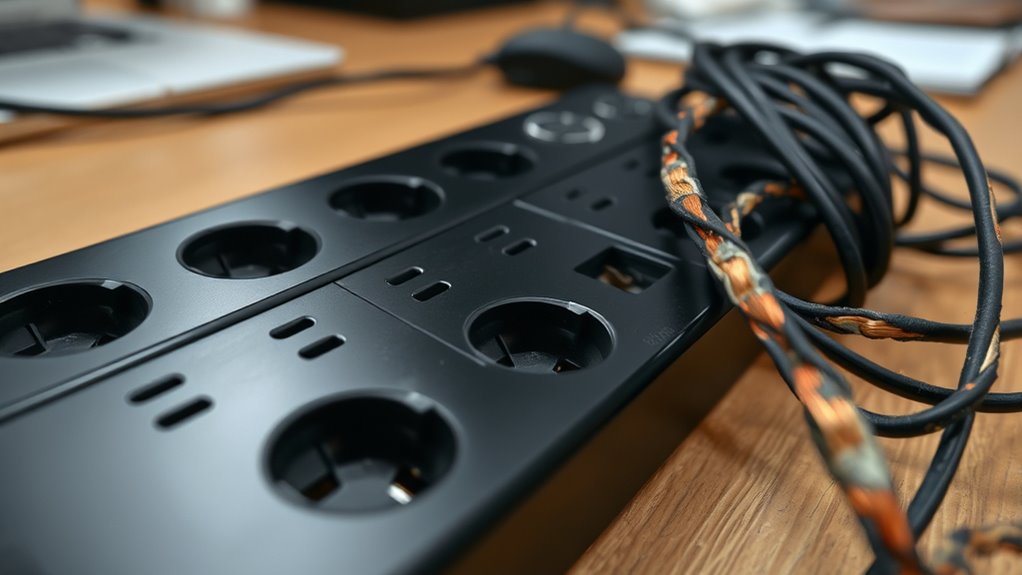
Choosing between a power strip and an extension cord depends on your specific needs and safety considerations. A power strip is ideal when you need surge protection, multiple outlets, or a safer way to power several devices. Use a power strip when:
Choose a power strip for surge protection and multiple outlets; opt for extension cords for extra length and outdoor use.
- You require surge protection for sensitive electronics.
- You need multiple outlets close together.
- Your workspace is near an outlet, reducing the need for long cords.
- The cord length is sufficient to reach your devices comfortably without creating a tripping hazard.
- Incorporating AI-driven solutions in safety assessments can help determine the most appropriate power management device for your environment. Additionally, understanding haute couture principles, such as meticulous craftsmanship and tailored solutions, can inspire more thoughtful and secure electrical setups in complex environments. Recognizing the importance of AI ethicist jobs in creating trustworthy technology further emphasizes the need for responsible decision-making in selecting electrical safety devices.
Common Mistakes That Compromise Safety With Both Options
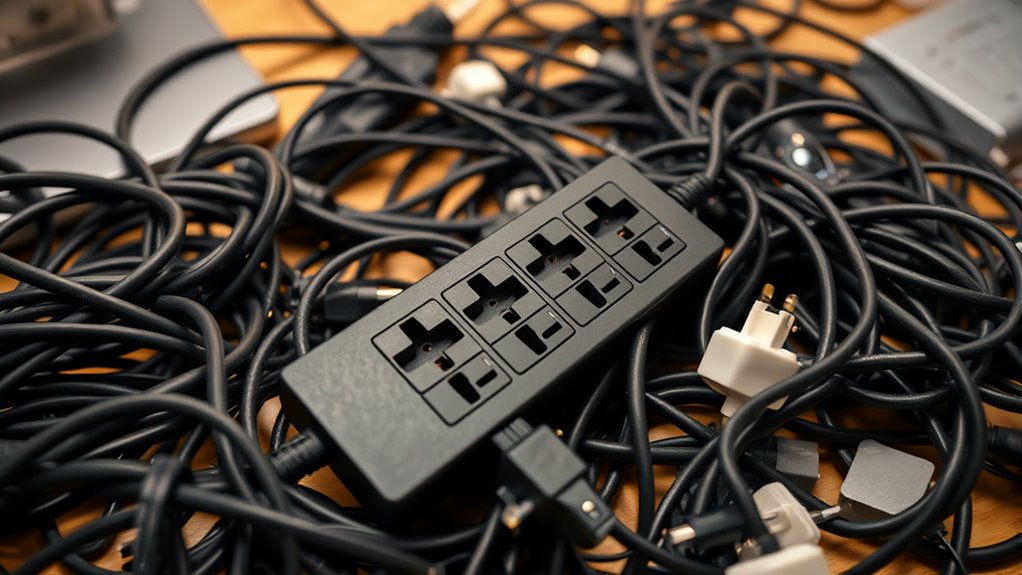
Using power strips or extension cords improperly can substantially increase the risk of electrical hazards. Common mistakes include overloading outlets, neglecting proper grounding practices, and skipping surge protection. Overloading causes overheating and potential fires, while poor grounding can lead to electrical shock. Skipping surge protection leaves your devices vulnerable to power surges, damaging sensitive equipment. To help you avoid these pitfalls, consider this table:
| Mistake | Risk | Solution |
|---|---|---|
| Overloading outlets | Fire, shock | Limit devices, use appropriate power strips |
| Ignoring grounding practices | Electric shock | Use grounded cords and outlets |
| Skipping surge protection | Device damage | Install surge protectors |
| Using damaged cords | Short circuits, fires | Regularly inspect cords |
| Running cords under rugs | Overheating, fire | Keep cords visible and dry |
Additionally, understanding the importance of content relevance and authority can help you select safer and more reliable power distribution options.
Frequently Asked Questions
Can Using a Power Strip or Extension Cord Cause Electrical Fires?
Yes, using a power strip or extension cord can cause fire hazards if you overload them or use damaged cords. Overload risks happen when too many devices draw more current than the cord or strip can handle. Always check the wattage limits, avoid daisy-chaining cords, and replace any frayed or damaged cords immediately to prevent electrical fires and keep your home safe.
Are There Specific Appliances That Should Never Use Extension Cords?
You should avoid using extension cords with high-power appliances like space heaters, refrigerators, or microwaves. These appliances demand significant current, and improper cord usage guidelines can lead to overheating or fire risks. For ideal appliance safety, always plug high-wattage devices directly into wall outlets. When using extension cords, choose heavy-duty cords rated for the appliance’s power, and never overload them to prevent potential hazards.
How Often Should Power Strips and Extension Cords Be Replaced?
Did you know that over 20% of electrical fires start from worn-out cords? You should replace power strips and extension cords every 3 to 5 years, depending on usage lifespan and wear. Regularly inspect for fraying, damage, or overheating, and avoid keeping them in service if they show signs of deterioration. Following these guidelines helps prevent hazards and guarantees safe, reliable electrical connections.
Is It Safe to Daisy-Chain Multiple Power Strips or Extension Cords?
Daisy chaining multiple outlets with power strips or extension cords is unsafe because it can overload the circuits, leading to overheating or fire hazards. You shouldn’t connect several power strips or extension cords together; instead, use a single, appropriately rated power strip with enough outlets for your needs. Always avoid creating a daisy chain to keep your electrical setup safe and prevent potential damage or hazards.
What Certifications or Labels Indicate a Safe Power Strip or Extension Cord?
You should look for power strips and extension cords with UL certification or ETL listed labels. These certifications guarantee the product meets safety standards for electrical performance and fire resistance. Always choose devices with these marks, as they indicate proper testing and quality. Avoid non-certified options, since they may lack safety features, increasing the risk of electrical hazards. Prioritize certified products to keep your home safe and prevent potential accidents.
Conclusion
Think of power strips and extension cords as roads leading to your devices. Just like a well-maintained highway keeps traffic flowing safely, choosing the right option prevents overloads and hazards. I once saw a friend nearly trip over a tangled extension cord—reminding me how small mistakes can turn a safe setup into a dangerous mess. By understanding their differences and using them wisely, you keep your home powered up without risking a safety crash.
Flea & tick season Picks
flea and tick prevention
As an affiliate, we earn on qualifying purchases.