To build a safe, clean backup battery corner, select high-quality batteries and install them in a well-ventilated, clutter-free space. Keep the area protected with fire-resistant mats and guarantee proper spacing for airflow. Follow strict safety protocols during installation, including secure, insulated wiring and circuit protection. Regularly inspect for leaks, corrosion, and damage, cleaning with non-abrasive tools. Continuing will show you how to maintain safety and cleanliness for long-term reliability.

Get backup power and energy gear delivered free with Prime
- Fast, free delivery on millions of items
- Prime Video, Amazon Music and more included
- Member-only deals all year
Key Takeaways
- Select a well-ventilated, clutter-free space with fire-resistant flooring and barriers for safe battery installation.
- Install high-quality batteries with secure, insulated wiring and proper spacing for optimal airflow.
- Incorporate active ventilation fans to dissipate heat and hazardous gases continuously.
- Regularly inspect and clean the area using non-abrasive tools, checking for leaks and corrosion.
- Follow strict safety protocols, including protective gear, circuit protection devices, and secure mounting.
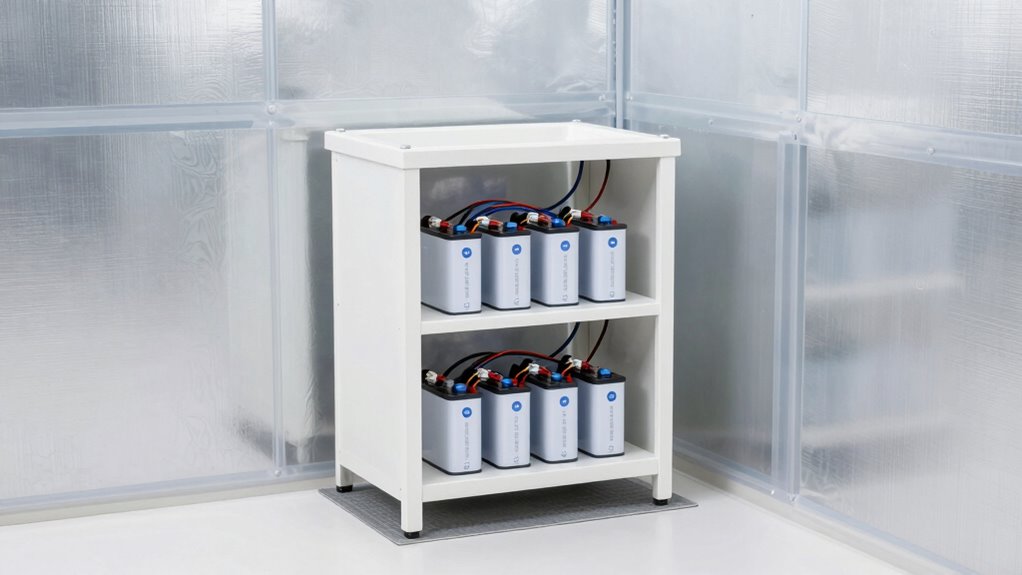
Having a reliable backup battery corner can be a game-changer during power outages, guaranteeing your essential devices stay operational. When you’re setting up this space, focus on efficient energy storage solutions that suit your needs. Choose high-quality batteries, like lithium-ion or lead-acid, based on your power requirements and budget. Proper energy storage not only assures longer-lasting backup power but also minimizes risks associated with improper handling. Remember, the safety of your backup battery corner depends heavily on following strict safety protocols. Always install batteries in well-ventilated areas to prevent heat buildup and reduce the risk of fire or explosion. Keep the area free of clutter, and avoid placing batteries near flammable materials or liquids. Using fire-resistant mats or barriers beneath batteries can add an extra layer of protection. When wiring your backup system, make certain all connections are tight, secure, and insulated to prevent shorts or sparks. Use the correct gauge of wiring for your setup, and double-check all connections before powering up. Incorporating circuit breakers or fuses into your system can help prevent damage during overloads or faults. Regular maintenance and inspections are essential to keep your backup battery corner safe and clean. Periodically check for leaks, corrosion, or damage, and clean the area with non-abrasive tools and materials. Never use metal tools that could cause a short circuit, and always wear protective gear during maintenance. Implementing a proper ventilation system is vital for dissipating heat and preventing the buildup of potentially hazardous gases. Ensuring your batteries are stored in a well-ventilated space is crucial for reducing the buildup of hazardous gases and maintaining safety. To further optimize safety, consider installing ventilation fans that can actively circulate air and prevent gas accumulation. Securely mounting and spacing multiple batteries allows for better air circulation, which is essential for safe operation. Ultimately, building this space with a focus on safety protocols and energy storage best practices creates a reliable, clean, and safe backup power source. You’ll gain peace of mind knowing your devices are protected and your space is secure, even when the power goes out unexpectedly.
As an affiliate, we earn on qualifying purchases.
Frequently Asked Questions
What Is the Ideal Location for a Backup Battery Corner?
You should place your backup battery corner in a well-ventilated area away from living spaces to guarantee proper battery ventilation. Choose a spot with good airflow to prevent heat buildup and potential hazards. Keep it organized with clear storage solutions, so batteries and accessories are easy to access. Avoid damp or dusty locations, and ensure the area stays clean and safe, minimizing risks and maintaining efficient operation.
How Often Should I Inspect My Backup Batteries?
You should inspect your backup batteries at least once every three to six months to guarantee proper battery maintenance. Regular inspection frequency helps identify corrosion, leaks, or swelling early, preventing potential hazards. During inspections, check terminals, fluid levels, and overall condition. Staying diligent with these checks ensures your backup battery corner remains safe and reliable, reducing the risk of failure during power outages.
Can I Use Regular Household Cleaning Products on Batteries?
You shouldn’t use regular household cleaning products on batteries. For example, using an all-purpose cleaner like bleach or ammonia can damage the battery’s components and cause safety hazards. Stick to specialized cleaning agents for battery maintenance, such as a mixture of baking soda and water for acid spills. Proper cleaning agents guarantee your backup batteries stay safe, functional, and free from corrosion, extending their lifespan and maintaining peak performance.
What Safety Gear Is Recommended When Handling Batteries?
When handling batteries, you should wear safety gear like gloves, goggles, and a long-sleeved shirt to protect against acid spills or leaks. Always prioritize emergency preparedness by having a fire extinguisher nearby and knowing proper battery disposal methods. This gear minimizes risks during maintenance or disposal, ensuring you stay safe while managing your backup battery corner responsibly.
How Do I Prevent Corrosion in My Battery Storage Area?
Like a vigilant guardian, you can prevent corrosion in your battery storage area by practicing proper battery maintenance and corrosion prevention. Regularly inspect terminals for signs of buildup, clean them with a mixture of baking soda and water, and guarantee connections are tight. Keep the area dry and well-ventilated, and apply protective coatings or terminal protectors. These steps safeguard your batteries, ensuring longevity and safe operation.
As an affiliate, we earn on qualifying purchases.
Conclusion
Now that you know how to create a clean and safe backup battery corner, you’re all set to guarantee your power backup is reliable and organized. Remember, maintaining this space regularly keeps it safe and efficient. Don’t you want to avoid last-minute surprises during a blackout? Keep your backup battery corner well-ventilated, tidy, and monitored, and you’ll enjoy peace of mind knowing your home is prepared for any power outage. Ready to get started?
As an affiliate, we earn on qualifying purchases.
circuit breaker for backup batteries
As an affiliate, we earn on qualifying purchases.
As an affiliate, we earn on qualifying purchases.
Halloween Picks
halloween
As an affiliate, we earn on qualifying purchases.