
TL;DR

Get backup power and energy gear delivered free with Prime
- Fast, free delivery on millions of items
- Prime Video, Amazon Music and more included
- Member-only deals all year
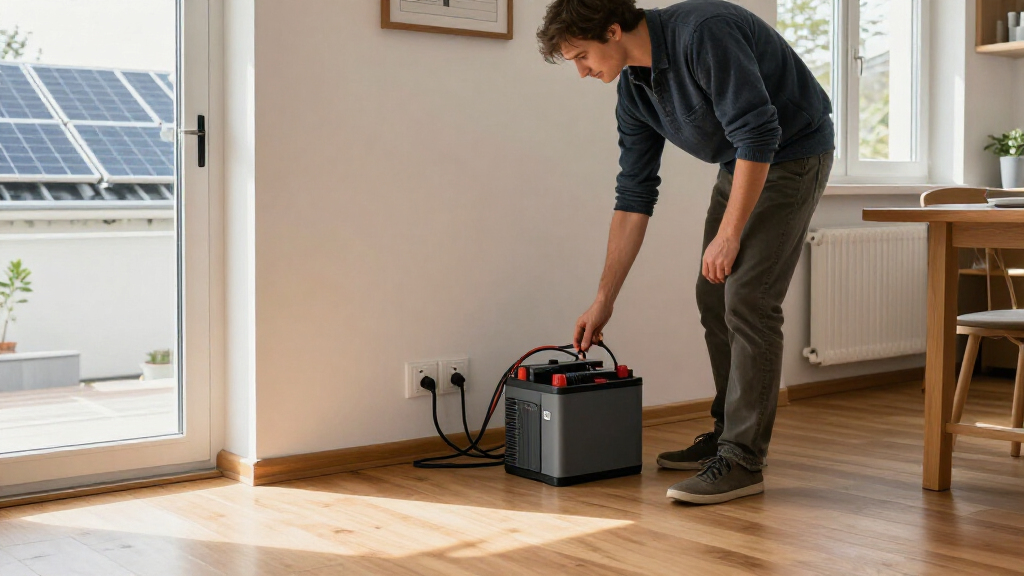
Conow has launched the Atlas 6000 AC, a 6.28 kWh AC-coupled home battery for German households, including homes with existing solar inverters. It can connect to a standard Schuko outlet, but grid feed-in through that plug is limited to 800 W; an electrician is required to use its full 3 kW output. German online distributors list it for €1,239–€1,299, while compatibility and performance claims come from the company.
Conow has launched its Atlas 6000 AC, a 6.28 kWh AC-coupled home battery now listed by German online distributors for €1,239 to €1,299. The system is aimed at homeowners adding storage to existing rooftop solar installations: it can connect to a standard German household outlet, while an electrician must hardwire it to access its full 3 kW discharge output.
The Atlas 6000 AC stores energy in lithium iron phosphate (LFP) cells and includes a 3 kW bidirectional AC inverter. Because it is AC-coupled, it is designed to work alongside existing solar equipment rather than requiring homeowners to replace a legacy string inverter. Conow is also targeting households seeking to store electricity for use at other times, including customers on dynamic electricity tariffs.
In its plug-in configuration, the battery connects through a Schuko socket or standard household outlet. The source report says grid feed-in is limited to Germany’s 800 W regulatory limit for plug-in storage devices, although the unit can charge at up to 3 kW. Discharging at the full 3 kW requires hardwiring by an electrician. These are distinct operating configurations: the socket connection does not provide the same discharge capability as the hardwired setup.
The unit measures 805 × 315 × 256 millimeters and weighs 55.9 kilograms. Conow lists an IP65 rating for outdoor use and an operating range of -20 C to 50 C. The system has a fanless design, an internal heating film for cold-weather operation, thermal isolation between the inverter and battery pack, and an internal aerosol fire-suppression module. Conow claims 87.2% round-trip efficiency, rates the cells for 10,000 cycles and offers a 10-year warranty. These performance and durability figures are manufacturer claims; the report does not provide independent test results.
The battery runs on software infrastructure from Tuya Smart, which backs the Conow residential-storage brand. Conow says its platform can connect with inverters from SMA, Fronius and FoxESS, as well as optical smart-meter readers, compatible heat pumps and EV chargers. The report cautions that actual connectivity depends on the specific equipment and configuration.
Conow says up to 10 units can be linked wirelessly, for a stated total capacity of 60 kWh. It also describes pairing three units for a 9 kW, 18 kWh three-phase arrangement. The product is listed through German online distributors Tepto, Sonnenmatrix and Solfuerza. The reported price range is €1,239–€1,299, shown at 0% VAT under Germany’s residential solar tax exemption.
A Retrofit Option Without Inverter Replacement
The product’s main practical distinction is its focus on adding storage to existing solar systems. AC coupling can let a household retain its current solar inverter rather than replacing it as part of a battery installation. That may make the system relevant to owners whose panels are already installed but who did not buy storage at the same time. The actual ease and cost of installation will depend on the home’s electrical setup and the chosen operating configuration.
The outlet connection may offer a lower-barrier route to using the battery, but it comes with a meaningful limit: feed-in is capped at 800 W in that configuration, according to the report. Households seeking full 3 kW discharge must arrange hardwiring by an electrician. The distinction matters for buyers comparing the headline capacity and inverter rating with what the unit can do after a simple plug-in installation.
Conow is also presenting compatibility across brands as a selling point. If its stated connections work with a household’s specific inverter, meter and other devices, a shared software platform could help coordinate energy use across equipment from different manufacturers. But the report does not establish that every listed product or model will connect seamlessly, or that compatibility will deliver a particular bill saving. Buyers will need to check supported models and operating requirements.
Products Worth Considering

Ring Alarm 8-Piece Kit (2nd Gen) Home Security System

LEVOIT Vital 200S-P Smart Air Purifier for Large Rooms

Sony BRAVIA 5 85-Inch Mini LED 4K HDR Smart TV (K-85XR50)
As an affiliate, we earn on qualifying purchases.
Tuya’s Move Into Home Storage
Conow is a residential-storage brand backed by Tuya Smart, a New York-listed company known for providing smartphone-app and cloud software used by third-party connected-device brands. The Atlas 6000 AC marks a push by the software company’s storage brand into battery hardware for German households, according to the source report.
The German product is aimed at two overlapping groups: owners of rooftop solar who want to add a battery without replacing their existing inverter, and consumers seeking to shift electricity use in response to dynamic tariff prices. The report gives no projected savings or payback period for either group. It also does not identify a separate launch date beyond reporting the product launch on October 30, 2026.
Germany’s 800 W limit for plug-in storage devices shapes the product’s socket-based mode. The Atlas 6000 AC can charge at up to 3 kW, but using its full 3 kW discharge output calls for a hardwired connection, according to the report. That makes installation method central to how prospective buyers should assess the system, rather than treating “plug-in” as a description of every operating capability.
Installation and Compatibility Details
The source report provides no independent verification of Conow’s 87.2% efficiency claim, 10,000-cycle rating or safety performance. It also does not specify the warranty’s terms, such as capacity retention thresholds, exclusions or the conditions that apply to the cycle rating. Those details would affect how buyers interpret the advertised durability figures.
It remains unclear which exact inverter, meter, heat-pump and EV-charger models are supported, and whether all advertised connections are available at launch. The report says firm connectivity depends on the equipment details, but does not give a complete compatibility list. It also does not explain the precise installation requirements for the three-unit three-phase arrangement or whether additional components are needed.
Pricing is reported as a range across distributors, rather than as a single fixed retail price. The source gives no installation costs, delivery terms, availability quantities or estimated household savings. It also does not provide evidence that the 0% VAT treatment will apply to every purchaser or sale; buyers should confirm eligibility and the final invoice treatment with the seller.
Check Listings and Installation Rules
The next practical step for prospective buyers is to compare the listings at Tepto, Sonnenmatrix and Solfuerza and confirm current price, stock, delivery and warranty terms. Households should check whether their existing inverter and other devices are on a supported compatibility list before relying on the promised cross-brand connections.
Anyone intending to use the full 3 kW discharge output will need to discuss hardwiring with an electrician; the outlet-based configuration has a different feed-in limit. Conow’s product documentation and distributor guidance will be needed to clarify installation details, the three-phase setup, and how the advertised performance and warranty figures apply in practice. The available report does not give a timetable for further product or compatibility announcements.
Key Questions
How much energy can the Conow Atlas 6000 AC store?
The reported usable product capacity is 6.28 kWh. Conow says up to 10 units can be linked wirelessly for a stated total of 60 kWh, though the source report does not detail the equipment or installation requirements for that configuration.
Can the battery be used through a standard household outlet?
Yes. The report says the Atlas 6000 AC can connect to a German Schuko socket or standard household outlet. In this mode, grid feed-in is limited to 800 W, and the full 3 kW discharge output requires hardwiring by an electrician.
What does the battery cost in Germany?
German online distributors list it for €1,239 to €1,299, with the reported prices shown at 0% VAT under Germany’s residential solar tax exemption. The final price and tax treatment should be confirmed with the seller.
Will it work with my existing solar inverter?
Conow says its software connects with inverters from SMA, Fronius and FoxESS, among other devices. The report says connectivity depends on the exact equipment, so buyers should check whether their specific inverter model is supported.
Are the efficiency and lifespan figures independently verified?
The reported 87.2% round-trip efficiency, 10,000-cycle cell rating and 10-year warranty are figures attributed to Conow. The source material does not provide independent test results or the warranty’s full terms.
Source: ess-news.com