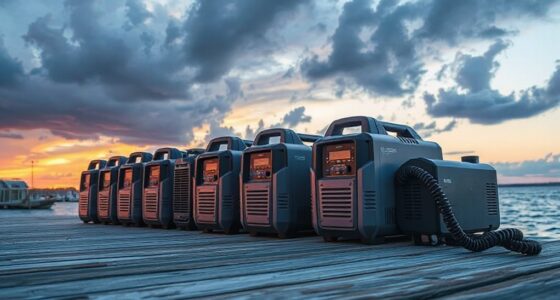
Whole-home battery backups range from portable power stations for essential circuits to large battery-and-inverter systems built for broader household loads. My best overall pick is the EF ECOFLOW DELTA Pro Ultra 12kWh Power Station with Extra Battery, which offers a more integrated path to substantial backup capacity than standalone batteries. The ECO-WORTHY 10kW system stands out for buyers seeking a larger inverter-and-battery package, while the Jackery Explorer 5000 Plus is a more approachable all-in-one option. The main tradeoffs are usable capacity, inverter output, installation complexity, expandability, and how much of the house you expect to power. Read on for how these eight options differ and which kind of backup setup may fit your home.

Get backup power and energy gear delivered free — and shop member deals
- Fast, free delivery on millions of items
- Access to Prime Big Deal Days deals on October 6–7
- Prime Video, Amazon Music and more included
Key Takeaways
- System completeness matters: The ECO-WORTHY 10kW package includes an inverter and two batteries, while the ECO-WORTHY Powermega models are batteries that need compatible system components.
- Capacity alone does not define whole-home capability: A large battery bank still needs an inverter and suitable wiring to run household loads.
- Portable power stations trade integration for flexibility: The Anker SOLIX F3800, Jackery models, and EcoFlow option package power conversion with storage, but their stated capacities differ substantially.
- The two Powermega formats solve different storage needs: One 16.07kWh battery is a different purchase commitment from a two-pack, and neither should be treated as a complete backup system by itself.
- Installation and load planning separate the best fits: Buyers aiming to back up selected circuits can favor a power station, while broader home backup calls for careful matching of inverter output, battery capacity, and electrical setup.
| ECO-WORTHY Powermega 48V 314Ah LiFePO4 Battery, 16.07kWh |  | Best Single-Battery Capacity | Chemistry: LiFePO4 | Nominal voltage: 51.2V | Capacity: 314Ah | VIEW LATEST PRICE | See Our Full Breakdown |
| Anker SOLIX F3800 Portable Power Station, 3,840Wh |  | Best Portable 120V/240V Backup | Capacity: 3,840Wh (3.84kWh) | AC output: 6,000W | Voltage: 120V/240V | VIEW LATEST PRICE | See Our Full Breakdown |
| AOUSK 48V 314Ah LiFePO4 Battery, 16.07 kWh |  | Best for Multi-Interface System Integration | Nominal voltage: 51.2V (marketed as 48V) | Capacity: 314Ah | Energy storage: 16.07kWh | VIEW LATEST PRICE | See Our Full Breakdown |
| Jackery HomePower 3600 Plus Portable Power Station with Two 200W Solar Panels |  | Best for Easier Portable Setup | Battery capacity: 3,584Wh | AC output: 3,600W | Parallel output: 7,200W | VIEW LATEST PRICE | See Our Full Breakdown |
| EF ECOFLOW DELTA Pro Ultra 12kWh Power Station with Extra Battery |  | Best Premium Whole-Home System | Included battery capacity: 12kWh | Battery capacity per unit: 6,144Wh | Output: 7,200W | VIEW LATEST PRICE | See Our Full Breakdown |
| Jackery Explorer 5000 Plus Portable Power Station |  | Best Portable Whole-Home Backup | Battery capacity: 5,040Wh | Battery chemistry: LiFePO₄ | Surge output: 14,400W | VIEW LATEST PRICE | See Our Full Breakdown |
| ECO-WORTHY 48V Home Backup Power System with 10kW Inverter and Two 10.24kWh LiFePO4 Batteries |  | Best Complete Off-Grid Starter Kit | Total battery capacity: 10,240Wh | Battery configuration: Two 51.2V 100Ah batteries | Battery chemistry: LiFePO₄ | VIEW LATEST PRICE | See Our Full Breakdown |
| ECO-WORTHY Powermega 48V 314Ah LiFePO4 Battery, 2-Pack |  | Best for Large Custom Battery Banks | Pack size: 2 batteries | Energy capacity: 16.07kWh per battery; 32.14kWh combined | Nominal voltage: 51.2V | VIEW LATEST PRICE | See Our Full Breakdown |
| whole home battery backup | Capacity | Expandable capacity | Weight |
|---|---|---|---|
| ECO-WORTHY Powermega 48V 314Ah | 314Ah | — | — |
| Anker SOLIX F3800 Portable Pow | 3,840Wh (3.84kWh) | Up to 26.9kWh with additional battery packs | — |
| AOUSK 48V 314Ah LiFePO4 Batter | 314Ah | — | 291 pounds |
| Jackery HomePower 3600 Plus Po | — | Up to 21kWh per unit or 43kWh with multiple units | 77.2 pounds |
| EF ECOFLOW DELTA Pro Ultra 12k | — | Up to 90kWh | 293.6 pounds |
| Jackery Explorer 5000 Plus Por | — | Up to 60kWh | 134.5 lb |
| ECO-WORTHY 48V Home Backup Pow | — | — | — |
| ECO-WORTHY Powermega 48V 314Ah | 314Ah per battery | — | — |
More Details on Our Top Picks
ECO-WORTHY Powermega 48V 314Ah LiFePO4 Battery, 16.07kWh
For a whole-home system built around a compatible 48V inverter, this battery brings 16.07kWh in one unit—far more stored energy than the Anker SOLIX F3800’s 3.84kWh starting capacity. Expansion to up to 15 units leaves room to grow, while the 200A active-balancing BMS, external breaker, and aerosol fire suppression add useful protection features to a large stationary installation. A touchscreen plus Wi-Fi and Bluetooth monitoring makes system status easier to check than with a battery that relies on inverter-side reporting alone.
The tradeoff is that this is a component, not a ready-to-use backup station: buyers need compatible equipment, installation space, and a plan for handling pallet delivery. I’d choose the ECO-WORTHY over portable options when substantial fixed storage matters more than mobility; buyers seeking an integrated system with inverter and UPS features should compare it with the EF ECOFLOW DELTA Pro Ultra.
Pros:- 16.07kWh of storage in one battery
- Supports expansion to as many as 15 units
- 200A active-balancing BMS, external breaker, and aerosol fire suppression
- Touchscreen, Wi-Fi, Bluetooth, RS485, and CAN monitoring or communication
Cons:- Requires a compatible inverter and system installation
- Large, heavy format calls for space and pallet delivery
- Stationary battery format lacks the portability of the Anker SOLIX F3800
Best for: Homeowners building a stationary 48V solar or backup system who want substantial storage from a single battery and may expand later.
Not ideal for: Buyers seeking a plug-and-play power station, renters, or anyone without room and compatible inverter equipment for a large stationary battery.
- Chemistry:LiFePO4
- Nominal voltage:51.2V
- Capacity:314Ah
- Energy capacity:16.07kWh
- BMS current:200A
- Maximum parallel units:15
- Monitoring:7-inch HD touchscreen, Wi-Fi, and Bluetooth
- Connectivity:RS485 and CAN
- Warranty:10 years
Our verdict“Choose this battery for high-capacity, expandable 48V home storage if you already have—or are planning—a compatible installed system.”
Anker SOLIX F3800 Portable Power Station, 3,840Wh
The Anker SOLIX F3800 is the most mobile choice here for buyers who need 120V and 240V output without starting with a fixed battery-and-inverter installation. Its 6,000W AC output gives it more power headroom than the Jackery HomePower 3600 Plus’s 3,600W, and the F3800 can expand from 3.84kWh to 26.9kWh with added battery packs. That makes it a flexible starting point for a home backup setup that may also serve an RV or EV-charging needs.
Its main limitation is that its base capacity is modest for whole-home outages; longer coverage depends on buying and installing additional packs. Unlike the EF ECOFLOW DELTA Pro Ultra, it does not list a zero-millisecond UPS feature, so buyers prioritizing uninterrupted backup should compare transfer behavior and system setup. I’d favor the F3800 for portable, multi-use power rather than as an automatic substitute for a permanently installed whole-home system.
Pros:- 6,000W AC output with 120V/240V support
- Expandable from 3.84kWh to 26.9kWh with additional battery packs
- Portable format can serve home backup, RV, and EV-charging needs
- Wi-Fi and Bluetooth app monitoring
Cons:- Base capacity is limited for extended whole-home backup
- Additional battery packs are needed to reach expanded capacity
- Does not list the EF ECOFLOW DELTA Pro Ultra’s 0ms UPS transfer time
Best for: Households that want a movable 120V/240V power source for selected home circuits, RV use, and possible EV charging.
Not ideal for: Buyers who need long whole-home runtimes from the base unit or want listed zero-millisecond UPS backup without adding a different system.
- Capacity:3,840Wh (3.84kWh)
- AC output:6,000W
- Voltage:120V/240V
- Battery type:LFP
- Expandable capacity:Up to 26.9kWh with additional battery packs
- EV charging:Up to 6,000W via NEMA 14-50 port
- Connectivity:Wi-Fi and Bluetooth
- Warranty:5 years
Our verdict“Pick the F3800 if you value portable 120V/240V power and multi-use flexibility more than high capacity out of the box.”
AOUSK 48V 314Ah LiFePO4 Battery, 16.07 kWh
The AOUSK is a strong fit for buyers assembling a stationary 48V backup system who want 16.07kWh of storage and several ways to monitor or connect it. Its RS485, CAN, and RS232 interfaces, alongside Bluetooth and Wi-Fi monitoring, offer more listed communication options than the ECO-WORTHY Powermega, which specifies RS485 and CAN. Both provide 314Ah capacity and support parallel expansion to 15 units, so the distinction is less about stored energy and more about system integration and handling.
Built-in handles and wheels may help with positioning, but they do not make a 291-pound battery easy to move. The 200A BMS and stated cycle life suit buyers planning regular use, while the five-year warranty is shorter than the ECO-WORTHY model’s listed 10 years. Like that battery, AOUSK requires compatible inverter equipment and installation; it is not an all-in-one station like the Anker SOLIX F3800.
Pros:- 16.07kWh capacity with support for up to 15 units in parallel
- RS485, CAN, RS232, Bluetooth, and Wi-Fi communication options
- 200A BMS and stated life of up to 6,000 cycles at 80% state of health
- Built-in handles and wheels assist with positioning
Cons:- Weighs 291 pounds, so positioning still requires planning
- Requires a compatible inverter and system setup
- Five-year warranty is shorter than the ECO-WORTHY Powermega’s listed 10 years
Best for: Solar and off-grid system builders who need a large 48V battery with several monitoring and inverter communication options.
Not ideal for: Buyers who need a ready-to-run portable backup, cannot accommodate a 291-pound battery, or prioritize a longer listed warranty.
- Nominal voltage:51.2V (marketed as 48V)
- Capacity:314Ah
- Energy storage:16.07kWh
- BMS:200A
- Chemistry:LiFePO4
- Cycle life:Up to 6,000 cycles at 80% state of health
- Communication interfaces:RS485, CAN, RS232, Bluetooth, and Wi-Fi
- Parallel connection:Up to 15 units
- Weight:291 pounds
Our verdict“Choose AOUSK if broad system communication options matter more to your stationary build than lighter handling or a longer listed warranty.”
Jackery HomePower 3600 Plus Portable Power Station with Two 200W Solar Panels
For buyers who want a portable backup package with solar panels included, the Jackery HomePower 3600 Plus pairs 3,584Wh of storage with 3,600W AC output and a wheeled case with a telescopic handle. Its stated charging options include AC, solar, hybrid AC+DC, and a gas generator, giving owners several ways to restore power between outages. Compared with the Anker SOLIX F3800, Jackery offers lower AC output and a lower starting capacity, but its included two 200W panels make solar part of the package rather than an optional add-on.
This remains a portable power station, not the same kind of installed high-capacity system as the ECO-WORTHY Powermega battery. Expansion can raise storage substantially, and parallel operation supports 120V and 240V, but buyers should plan around the stated unit and parallel configurations. At 77.2 pounds, the wheels help with movement on suitable surfaces, while lifting remains a challenge; the power station and panels may also ship separately.
Pros:- 3,584Wh capacity and 3,600W AC output
- Includes two 200W solar panels
- AC, solar, hybrid AC+DC, and gas-generator charging options
- Wheels and telescopic handle aid movement
Cons:- 77.2-pound weight makes lifting difficult
- Power station and panels may ship separately
- Lower output and starting capacity than the Anker SOLIX F3800
Best for: Homeowners who want portable backup with solar panels in the package and need to move the unit between storage, home, or outdoor use.
Not ideal for: Buyers seeking high-capacity stationary storage, a lightweight lift-and-carry unit, or a simple single-package delivery.
- Battery capacity:3,584Wh
- AC output:3,600W
- Parallel output:7,200W
- Expandable capacity:Up to 21kWh per unit or 43kWh with multiple units
- Battery type:LFP
- Charging options:Hybrid AC+DC, AC, solar, and gas generator
- Hybrid AC+DC recharge time:2 hours
- Weight:77.2 pounds
- Included solar panels:Two 200W panels
Our verdict“Choose this Jackery if you want a movable backup station with solar panels included and can accept its weight and lower output than the Anker F3800.”
EF ECOFLOW DELTA Pro Ultra 12kWh Power Station with Extra Battery
The DELTA Pro Ultra is the most system-oriented choice in this group for buyers who want 120V/240V output, substantial expansion, and backup switching in one setup. Its 7,200W output and included 12kWh capacity put it well ahead of the portable Anker SOLIX F3800’s 3.84kWh base capacity, while expansion to up to 90kWh gives it room to support longer outages. The listed 0ms UPS transfer time is a useful distinction for connected equipment that should not lose power during a switchover.
That capability comes with a serious installation and handling burden: the system weighs 293.6 pounds, and its inverter and battery ship separately. Buyers can recharge through solar, wall outlets, EV chargers, or outdoor generators, but should plan the setup around the separate components. Compared with the ECO-WORTHY Powermega, this is a more integrated backup system; the Powermega is a single battery component with a longer listed warranty.
Pros:- 12kWh included capacity with expansion up to 90kWh
- 7,200W output supports 120V and 240V loads
- Listed 0ms UPS transfer time
- Can charge from solar, wall outlets, EV chargers, or outdoor generators
Cons:- 293.6-pound system requires careful handling and installation planning
- Inverter and battery ship in separate packages
- More involved setup than portable stations such as the Anker SOLIX F3800
Best for: Homeowners planning a high-capacity 120V/240V backup system who value expandable storage, multiple charging sources, and listed 0ms UPS transfer.
Not ideal for: Renters, buyers who need a light portable station, or households unwilling to plan for separate heavy system components and installation.
- Included battery capacity:12kWh
- Battery capacity per unit:6,144Wh
- Output:7,200W
- Voltage:120V and 240V
- Expandable capacity:Up to 90kWh
- Maximum AC output with three inverters:21.6kW
- UPS transfer time:0ms
- Charging sources:Solar, wall outlets, EV chargers, and outdoor generators
- Weight:293.6 pounds
Our verdict“Choose the DELTA Pro Ultra for a highly expandable 120V/240V home backup system if its heavy, separately shipped components suit your installation plan.”
Jackery Explorer 5000 Plus Portable Power Station
The Jackery Explorer 5000 Plus is the strongest fit here for buyers who want substantial backup output in a portable power-station format. Its 7,200W rated output and 120V/240V support can serve more demanding household loads than a compact backup unit, while expansion to 60kWh leaves room to add storage later. Compared with the ECO-WORTHY 48V Home Backup Power System, Jackery is a more self-contained portable option, but it starts with less capacity than that kit’s 10.24kWh and is not a complete fixed home installation. Solar input up to 4,000W can shorten recharging when paired with suitable panels; those panels are optional. At 134.5 lb, it is portable in concept, not easy to move by hand, and its two outlets may limit direct connections without additional compatible equipment.
Pros:- 7,200W rated output with both 120V and 240V support
- Expandable capacity up to 60kWh for longer backup periods
- Up to 4,000W solar input supports faster charging with compatible panels
- LiFePO₄ battery chemistry is rated by the manufacturer for up to 11 years of daily use
Cons:- At 134.5 lb, it is difficult to move without assistance
- Solar panels are optional, adding equipment needed for solar recharging
- Two outlets may require compatible distribution equipment for multiple household circuits
Best for: Households or RV owners who need 120V and 240V backup power in a portable system and may expand storage or add solar later.
Not ideal for: Buyers seeking a ready-to-install whole-home system, many direct outlet connections, or a lightweight unit they can carry without help.
- Battery capacity:5,040Wh
- Battery chemistry:LiFePO₄
- Surge output:14,400W
- Output voltage:120V / 240V
- Expandable capacity:Up to 60kWh
- Maximum solar input:4,000W
- Weight:134.5 lb
Our verdict“Choose the Explorer 5000 Plus if portable 120V/240V output and future storage expansion matter more than a ready-made fixed home installation.”
ECO-WORTHY 48V Home Backup Power System with 10kW Inverter and Two 10.24kWh LiFePO4 Batteries
This ECO-WORTHY kit is the more installation-oriented choice for buyers building an off-grid or solar-backed home system: it bundles a 10kW inverter with two batteries for 10.24kWh of storage. Split-phase 120V/240V output and a 20,000W peak rating give it more headroom for larger loads than the Jackery Explorer 5000 Plus, whose portable format is easier to relocate but has a lower rated output. Two independent MPPT controllers help manage separate solar inputs, and app monitoring plus CAN/RS485 communication can support system oversight with compatible equipment. This is not a plug-and-play substitute for a portable power station, though. The inverter and batteries ship separately, and integrating an off-grid system may require compatible components and qualified installation. Its expansion options suit system builders, but add complexity for buyers who only need occasional backup.
Pros:- Bundles a 10kW inverter with two batteries for 10.24kWh total storage
- Supports 120V and 240V split-phase output
- Two independent MPPT controllers support solar system design
- Can expand with parallel inverters and batteries
Cons:- Batteries and inverter ship separately, complicating delivery and setup
- Off-grid installation may require compatible equipment and professional help
- Solar and battery system design is more involved than using a portable power station
Best for: Homeowners or off-grid system builders who want an inverter and battery bank together, plan to use solar, and can arrange compatible installation.
Not ideal for: Renters, portable-backup shoppers, or homeowners seeking a simple appliance-style power station that needs little system integration.
- Total battery capacity:10,240Wh
- Battery configuration:Two 51.2V 100Ah batteries
- Battery chemistry:LiFePO₄
- Peak output power:20,000W
- Output voltage:120V or 240V split-phase; 120V single-phase
- Charge controllers:Two independent MPPT controllers
- Battery communication:CAN and RS485
Our verdict“Choose this kit if you want a scalable, solar-ready off-grid foundation and are prepared to manage system compatibility and installation.”
ECO-WORTHY Powermega 48V 314Ah LiFePO4 Battery, 2-Pack
For a whole-home backup build centered on storage capacity, this two-battery Powermega pack supplies 32.14kWh total before expansion, making it the largest starting battery bank in this group. Unlike the ECO-WORTHY 48V Home Backup Power System, it does not include an inverter; that means buyers can choose compatible power-conversion equipment, but must source and integrate it separately. Each battery has a 200A active-balancing BMS, aerosol fire suppression, and monitoring through a touchscreen, Wi-Fi, and Bluetooth. Those protections and status tools speak to system management, not a guarantee of compatibility, so inverter communication and installation still need checking. Expansion to 15 units offers room for larger storage plans. The tradeoff is logistics: these are large batteries delivered by palletized truck, so the site needs suitable access and handling.
Pros:- Two batteries provide 32.14kWh combined capacity
- UL 1973 certification and a 10-year warranty
- 200A active-balancing BMS, aerosol fire suppression, and an external circuit breaker
- Monitoring options include a touchscreen, Wi-Fi, and Bluetooth
Cons:- No inverter is included, so compatible conversion equipment must be sourced separately
- Large batteries require palletized truck delivery and suitable site access
- System integration and communication compatibility need to be checked before purchase
Best for: Homeowners and solar installers building a high-capacity 48V battery bank who already have, or are selecting, a compatible inverter.
Not ideal for: Buyers who want a complete backup system in one purchase, need a portable battery, or cannot receive and handle palletized freight.
- Pack size:2 batteries
- Energy capacity:16.07kWh per battery; 32.14kWh combined
- Nominal voltage:51.2V
- Capacity:314Ah per battery
- Battery chemistry:LiFePO₄
- BMS:200A with active cell balancing
- Certification:UL 1973
- Parallel expansion:Up to 15 units
- Warranty:10 years
Our verdict“Choose this pack when your priority is a large, expandable battery bank and you are equipped to pair it with a compatible inverter.”

How We Picked
I compared these products by how directly they can support a home backup plan, not by battery capacity alone. The ranking gives weight to the completeness of the package, stated storage capacity, inverter availability and output where specified, expansion potential, and the amount of extra system planning a buyer may need. Usability and the difference between a portable station and a stationary battery system also matter: a simple setup can be more practical for essential loads, while a modular system may suit a household planning a larger installation.
The EF ECOFLOW DELTA Pro Ultra leads as a substantial integrated option; the ECO-WORTHY 10kW system ranks strongly for its included inverter and battery bank. The Jackery Explorer 5000 Plus and HomePower 3600 Plus, along with the Anker SOLIX F3800, offer distinct portable-station capacities and configurations. The standalone ECO-WORTHY and AOUSK batteries, including the Powermega two-pack, rank lower as ready-to-use whole-home choices because buyers must plan for compatible power electronics and installation. I would confirm current specifications, compatibility, and installation requirements before purchasing any system.
| whole home battery backup | Expandable capacity |
|---|---|
| ECO-WORTHY Powermega 48V 314Ah | — |
| Anker SOLIX F3800 Portable Pow | Up to 26.9kWh with additional battery packs |
| AOUSK 48V 314Ah LiFePO4 Batter | — |
| Jackery HomePower 3600 Plus Po | Up to 21kWh per unit or 43kWh with multiple units |
| EF ECOFLOW DELTA Pro Ultra 12k | Up to 90kWh |
| Jackery Explorer 5000 Plus Por | Up to 60kWh |
| ECO-WORTHY 48V Home Backup Pow | — |
| ECO-WORTHY Powermega 48V 314Ah | — |
Factors to Consider When Choosing Whole Home Battery Backups
Choosing a home battery backup starts with the loads you want to keep running and the electrical setup you already have. A product label may describe a large battery or a powerful inverter, but those figures answer different questions. Use these factors to define the backup job before comparing packages.
Choose the Loads Before the Battery Size
List the devices you need during an outage, separating must-run equipment from comforts you can switch off. A refrigerator, lights, networking equipment, and a medical device create a different backup plan from central air conditioning, an electric range, or a well pump. Check both running demand and any brief startup surge, since motors can ask for more power when they begin operating. A common mistake is buying storage based on total capacity without checking whether the inverter can handle the combined load. Prioritize circuits and realistic usage hours before sizing a system. That exercise may point you toward a smaller station or reveal that a larger, professionally planned setup is necessary.
Separate Storage Capacity From Output
Battery capacity describes stored energy; inverter output describes how much power the system can supply at one time. More capacity can keep modest loads running longer, but it does not automatically let you operate several high-demand appliances together. Compare continuous output and surge capability with the loads you identified, and check how the manufacturer defines usable capacity. Buyers often focus on the largest kWh number and miss an output limit that rules out a key appliance. The reverse can also happen: a strong inverter paired with limited storage may run a load but not for long. Match both figures to your intended backup schedule.
Decide Whether You Need a Power Station or a Battery System
A portable power station combines storage and power conversion in one product, which can reduce the number of components a buyer has to source. A standalone 48V battery is only part of a system; it needs a compatible inverter, protective equipment, wiring, and an appropriate way to connect household circuits. This can give an experienced installer more flexibility, but it adds compatibility checks and project planning. Do not assume a battery can connect directly to a home’s electrical panel. Confirm the full bill of materials, installation method, and whether a transfer switch or other approved equipment is required. If you want a simpler purchase, favor a clearly specified complete system rather than choosing a battery on capacity alone.
Plan for Circuit Connection and Installation
How power reaches household circuits can matter as much as the storage unit itself. Some buyers want backup for a few appliances through outlets, while others want selected circuits connected through a transfer setup or a broader home integration. The latter can require qualified electrical work, permits, and coordination with local rules and utility requirements. A frequent misstep is treating a portable station as a panel-connected whole-home system without confirming that the manufacturer supports that use. Ask an electrician to review the intended connection, grounding, and circuit limits before committing. Include installation and required accessories in your project plan, not as an afterthought.
Check Expandability, Compatibility, and Future Plans
Expansion can be useful if your backup needs may grow, but battery compatibility is not universal. Confirm which batteries can be added, the maximum supported capacity, and whether expansion changes the system’s output or only its runtime. For standalone batteries, verify voltage, communications, charging limits, and inverter compatibility rather than assuming another battery with a similar capacity will work. A two-pack may be a sensible storage purchase for a designed system, but it also commits you to managing a larger battery bank. Consider whether solar charging, generator input, or future equipment will be part of the plan. Buy for a realistic next step, not a vague promise of easy expansion.
Balance Backup Duration Against Budget and Complexity
Longer outage coverage usually means more storage, but capacity is only useful if the system can charge again and support the required loads. Estimate likely outage length, then decide which appliances you would ration to stretch runtime. Solar panels can help replenish a system in suitable conditions, yet weather, panel placement, and charging limits affect how much energy they add. A larger installed system also brings more equipment, space needs, and maintenance planning than a compact station. Paying more makes sense when it buys a capability you will use, such as higher output or a complete inverter-and-battery package. Avoid paying for whole-home coverage if your practical goal is limited to essential circuits.
Frequently Asked Questions
Can a portable power station back up my entire house?
Not automatically. A portable station may run selected appliances or circuits, but backing up an entire home depends on its inverter output, connection method, and the combined demand of household loads. High-draw equipment such as central cooling, electric cooking, and pumps may exceed a station’s limits even when its battery has substantial capacity. Check whether the specific model supports a panel connection and what approved equipment that requires. For many households, a portable station is better treated as essential-load backup unless a qualified installer confirms broader compatibility.
How do I know whether a battery’s capacity will last through an outage?
Estimate the energy use of the loads you plan to run over the hours you expect to need backup. Add the watt-hours for each appliance based on its actual operating pattern, rather than assuming every device draws its maximum continuously. Leave room for conversion losses and for loads that cycle or draw more at startup. Compare that estimate with the system’s usable capacity, which may differ from the headline battery figure. If you cannot estimate appliance use confidently, an electrician or energy professional can help build a practical load list.
Do the ECO-WORTHY Powermega batteries work as complete backup systems?
No: the Powermega listings here are batteries, not complete power stations with an included inverter. A working home backup setup also needs compatible power electronics, protection, wiring, and a suitable connection to the loads or panel. The ECO-WORTHY 10kW package is a different type of purchase because its description includes an inverter and two batteries. Before selecting a standalone battery, confirm voltage and communications compatibility with the planned inverter and get a complete installation plan. This distinction can change both the complexity and total scope of the project.
Should I choose one large battery or two smaller batteries?
The right arrangement depends on the system’s design, supported battery configuration, and the storage capacity you need. Multiple batteries can offer a path to more stored energy, but they do not necessarily increase inverter output, and they add connection and compatibility requirements. Check whether the inverter supports the battery bank size and whether the batteries may be connected in the intended arrangement. Also consider space, installation access, and how the system manages charging and protection. Do not combine batteries based only on matching voltage or a similar product name; follow the manufacturer-approved configuration.
What should I confirm before connecting a backup system to my home’s electrical panel?
Confirm that the product supports the intended panel connection and identify the required transfer equipment, circuit limits, and installation method. Local electrical rules, permits, utility requirements, and safe isolation from the grid can all affect the project. A product’s outlet capacity does not establish that it can feed a panel. Ask a licensed electrician to check the system’s output, grounding, wiring, and the circuits you want to back up. Get those details settled before purchase so you do not end up with a capable battery that cannot be connected as planned.
Conclusion
For the broadest mix of substantial storage and an integrated power-station approach, I would start with the EF ECOFLOW DELTA Pro Ultra 12kWh Power Station with Extra Battery as best overall. The ECO-WORTHY 48V Home Backup Power System with 10kW Inverter and Two 10.24kWh Batteries is my pick for buyers seeking a packaged inverter-and-battery system, while the Jackery Explorer 5000 Plus is a more approachable option for shoppers who prefer a portable station format. For value, compare the ECO-WORTHY Powermega 16.07kWh battery or its two-pack against the full cost of the compatible inverter and installation; these are best for buyers who already have a system plan, not those seeking a ready-to-run backup. The Anker SOLIX F3800 and Jackery HomePower 3600 Plus suit buyers whose priority is portable, more limited backup rather than a large installed battery bank. Choose the AOUSK 16.07kWh battery only after verifying its fit with your planned components. My final advice is to name the circuits, check output and capacity together, then confirm installation compatibility before choosing a whole-home setup.
Halloween Picks
halloween
As an affiliate, we earn on qualifying purchases.