During monsoon storms, lightning often causes power surges, outages, and safety hazards. To protect your electronics, unplug sensitive devices and use surge protectors or whole-house surge systems. Stay alert with weather warnings, and when storms approach, avoid using wired electronics and stay indoors. If you want to learn how to better safeguard your home and stay safe during these powerful storms, keep exploring for essential tips and safety measures.

Get backup power and energy gear delivered free with Prime
- Fast, free delivery on millions of items
- Prime Video, Amazon Music and more included
- Member-only deals all year
Key Takeaways
- Lightning strikes cause power surges that can damage transformers, electronics, and cause outages during monsoon storms.
- Unplug sensitive electronics and use surge protectors before storms to prevent damage from voltage spikes.
- Heavy rain and wind can topple power poles and damage infrastructure, leading to outages and potential surge risks.
- Stay informed with weather alerts and safety protocols to protect yourself from high winds, lightning, and electrical hazards.
- Regularly check and maintain electrical systems and grounding to reduce the risk of surge damage and enhance safety.
Top picks for "monsoon lightn outag"
As an affiliate, we earn on qualifying purchases.
The Power of Lightning: Frequency and Impact in the Southwest
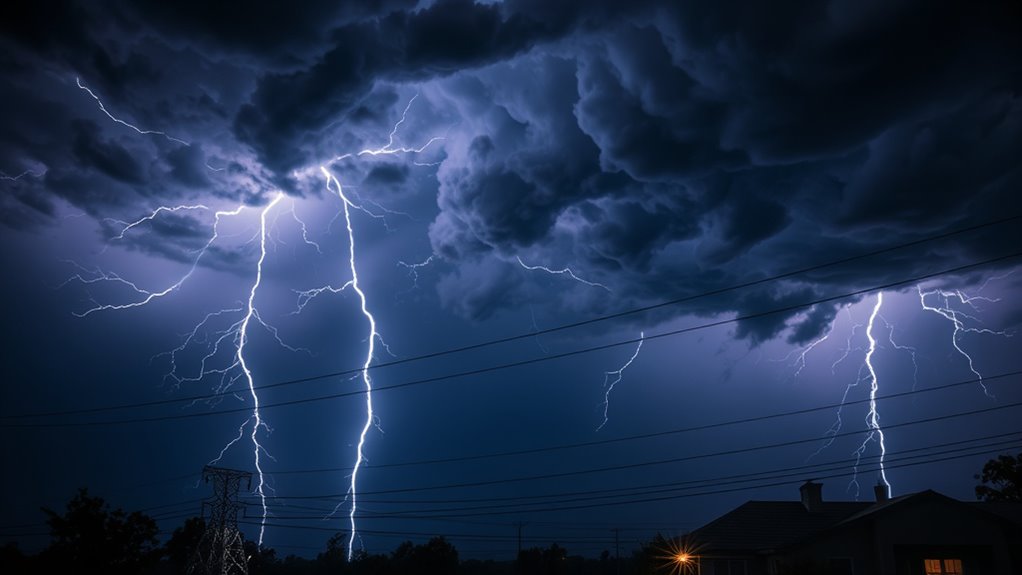
Have you ever wondered how powerful lightning is in the Southwest? Each year, over 1.5 million lightning strikes hit Arizona and New Mexico, making up 15% of all strikes in the lower 48 states. These flashes can produce intense energy, with the US recording 87 million lightning flashes in 2022 alone—about 240 daily. On peak days like August 10, 2021, nearly 3 million strikes lit up the sky. Lightning doesn’t just light up the sky; it causes real damage. It’s responsible for over 400 power poles falling during the 2022 monsoon storms and contributes to about 80% of major power outages across the US. The frequency and impact make lightning a significant threat during monsoon season in the Southwest. Additionally, the high energy release from lightning strikes can cause power surges that damage electrical systems and sensitive electronics. Implementing power surge protection is crucial to safeguarding your home or small team’s electrical devices during these storms. Moreover, understanding the frequency of lightning helps in planning effective safety measures and infrastructure resilience. Recognizing the patterns of lightning activity can also aid in better preparedness and response strategies for communities affected by frequent storms. Knowing the local lightning trends can further improve community safety protocols and emergency planning.
How Monsoon Storms Cause Widespread Power Outages
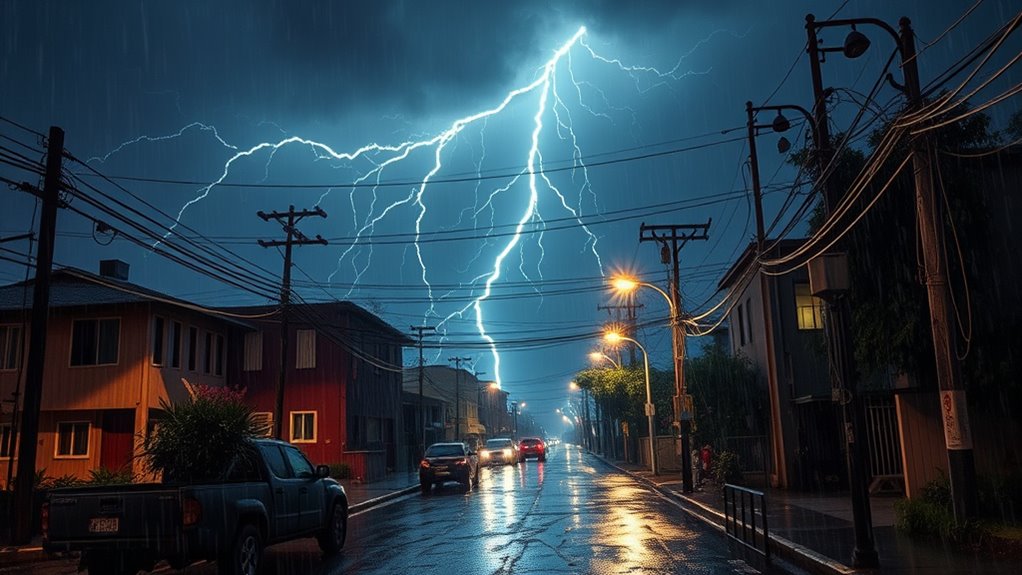
Monsoon storms damage power infrastructure through strong winds that topple poles and knock out lines. Lightning strikes create surges that harm connected electronics and cause outages. Additionally, storm-related transmission failures disrupt the flow of electricity across regions. Modern smart appliances and connected systems can sometimes help monitor and manage power issues during such events. To protect your home and EV charging equipment, understanding safe installation practices can help prevent damage and ensure reliable operation during storms. Implementing surge protection devices can further safeguard your electronics from sudden voltage spikes during lightning events. Being aware of power grid vulnerabilities can also aid in preparing for extended outages caused by severe weather, which often result from infrastructure damage and other factors.
Wind-Induced Infrastructure Damage
Winds during monsoon storms can cause significant damage to power infrastructure, leading to widespread outages. Gusts reaching up to 60 mph can topple power poles, break transmission lines, and weaken support structures. This damage disrupts electricity flow, leaving neighborhoods without power for hours or days. High winds can also cause debris to strike transformers and substations, further impairing the system. If a pole falls or a line snaps, it can take down multiple connected poles with it, amplifying the outage. These wind-related failures are often unpredictable and can occur suddenly, making immediate response and repair challenging. Protecting infrastructure with stronger materials and regular maintenance can mitigate some damage, but during severe storms, wind remains a primary cause of widespread power disruptions. Understanding infrastructure vulnerabilities can help in planning effective prevention and response strategies.
Lightning-Triggered Power Surges
When power infrastructure is battered by wind and debris, lightning strikes often follow, causing sudden surges that can cripple electrical systems. These surges occur because lightning can induce high-voltage spikes in power lines, even if the strike hits nearby. The rapid increase in electrical energy overwhelms protective devices, leading to damage in transformers, circuit breakers, and connected electronics. During monsoon storms, the frequency of lightning strikes rises sharply, increasing the risk of widespread surges. Power lines act as conductors, channeling lightning energy into the grid and homes. Without proper surge protection, your appliances and electronics are vulnerable to permanent damage. It’s essential to unplug sensitive devices before storms and install surge protectors to reduce the risk of surge-related outages and equipment failure. Proper power surge protection can help safeguard your home’s electrical system during these storms.
Storm-Related Transmission Failures
During monsoon storms, heavy rains and strong gusts can directly damage power transmission infrastructure, leading to widespread outages. High winds can topple transmission towers, while saturated soil weakens pole foundations, causing lines to sag or break. Lightning strikes can also hit equipment, resulting in short circuits and equipment failure. This combination of physical damage and electrical faults causes extensive power disruptions.
| Damage Type | Impact |
|---|---|
| Tower and pole failure | Loss of transmission routes |
| Line sagging or snapping | Power outages over large areas |
| Equipment damage from strikes | Prolonged outages and repairs |
Understanding these failures highlights why storm preparedness and infrastructure resilience are vital to minimizing outages during monsoon seasons.
Understanding Lightning-Induced Surges and Electrical Damage
Lightning-induced surges occur when a lightning strike creates a sudden, intense spike of electrical energy that travels through power lines and electrical systems. This surge can overload and damage sensitive electronics, transformers, and wiring. When lightning strikes nearby, it induces a rapid voltage increase that can reach thousands of volts in milliseconds. If your electrical system isn’t properly protected, this excess energy can fry circuits, burn out devices, and cause costly repairs. Surges often happen during storms, especially when lightning strikes directly on or near power infrastructure. Even if the lightning doesn’t hit your home, the electrical noise and surges can still travel through the grid. Understanding these surges helps you realize the importance of surge protectors and unplugging devices during thunderstorms to prevent damage. Proper grounding and surge suppression devices are essential for minimizing the risk of electrical damage caused by lightning-induced surges. Recognizing the signs of electrical damage can help you respond quickly to protect your home’s electrical system. Additionally, knowing how to install surge protectors properly can significantly reduce your vulnerability to lightning-related electrical issues. Being aware of these electrical risks emphasizes the importance of electrical system maintenance to ensure your home remains safe during storms.
Key Safety Precautions During Severe Thunderstorms
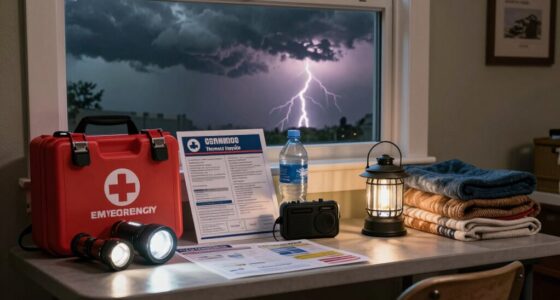
Severe thunderstorms pose significant safety risks, making it essential to take proper precautions to protect yourself and your property. First, unplug sensitive electronics to prevent surge damage. Avoid using corded phones and plumbing, as lightning can travel through these conductive paths. Seek shelter indoors, away from windows and metal objects. Stay updated with weather alerts, especially for high winds and lightning. Prepare an emergency kit with essentials in case of extended outages. Remember, safety is about awareness and quick action. Regularly checking your air purifier filters can help ensure that indoor air quality remains safe during power outages caused by storms. Additionally, reviewing your home’s electrical wiring and grounding can reduce the risk of electrical fires during storms. Educating yourself about storm safety protocols can further enhance your preparedness and response during severe weather events. Being aware of surge protection options can also help safeguard your appliances and electronics from voltage spikes. Incorporating home electrical safety measures can provide extra protection against storm-related electrical issues.
Protecting Your Electronics From Lightning Surges
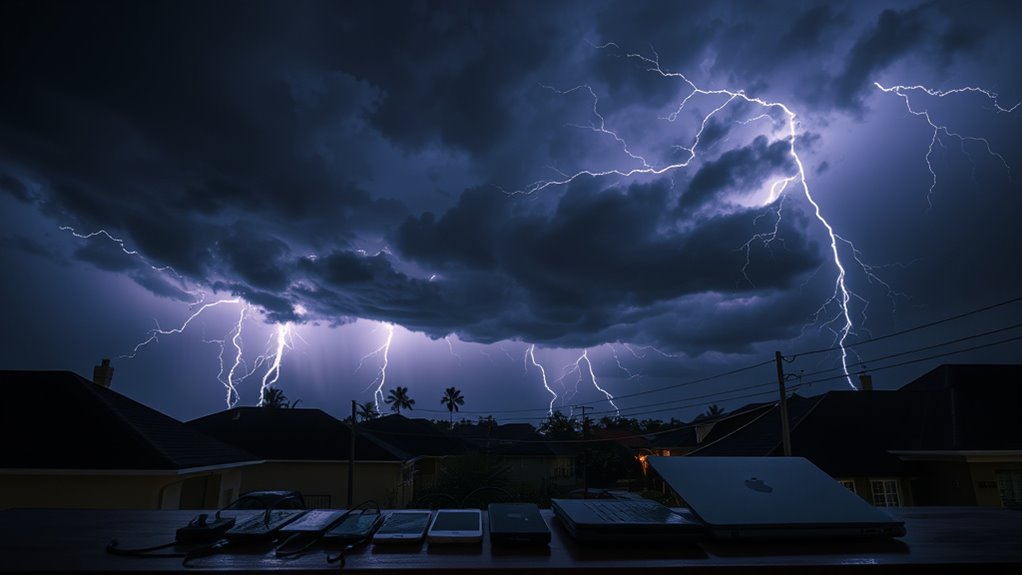
To protect your electronics from lightning surges, it’s crucial to take proactive measures before storms arrive. Start by unplugging devices, especially sensitive electronics like computers, TVs, and chargers. Using surge protectors can help divert excess voltage caused by lightning strikes, but ensure they’re rated for power surges. Avoid relying solely on power strips; invest in quality surge protection with a Joule rating suitable for your equipment. Consider installing whole-house surge protectors at your main electrical panel for detailed coverage. During storms, stay away from outlets and avoid connecting devices to power sources. If you’re in an area prone to frequent lightning, think about using uninterruptible power supplies (UPS) for critical electronics. These steps can save your devices from costly damage and keep your electronics safe during monsoon storms. Incorporating simple safety measures into your routine can significantly reduce the risk of damage from electrical surges.
Preparing for Extended Power Outages in Rural and Low-Income Areas

Preparing for extended power outages in rural and low-income areas requires more than just unplugging electronics and using surge protectors. You need a plan to stay safe and comfortable without electricity. Stock up on non-perishable food, bottled water, and basic supplies well before storms hit. Ensure you have a reliable flashlight, batteries, and a battery-powered radio to stay informed. Keep your cell phone charged and consider a portable charger or solar-powered options. If possible, arrange a way to stay warm or cool, depending on the season. Connect with neighbors to share resources and help each other during long outages. Know your community’s emergency plan and local shelter locations. Preparing now can make a significant difference when extended outages strike in areas with limited infrastructure.
Regional Trends and Data on Lightning-Related Power Failures

You’ll notice that some states, like Texas and Arizona, face more frequent lightning-related outages during monsoon seasons. Data shows distinct regional patterns, with storm impacts varying across the country. Understanding these trends helps you prepare for where power failures are most likely to occur. For example, white noise machines can help mitigate sleep disruptions caused by storm noise in affected areas. Additionally, familiarity with Gold IRA markets can inform your financial preparedness in regions prone to natural disruptions. Moreover, knowledge of security systems can enhance home safety during power outages, especially in areas susceptible to severe weather.
State Outage Rankings
Arizona ranks among the top states for lightning-related power outages, driven by its intense monsoon activity and frequent thunderstorms. You can expect widespread disruptions during peak storms, with some areas experiencing hundreds of outages. The state’s aging infrastructure struggles to withstand the lightning surges and high winds, leading to extensive repairs and prolonged outages.
- Thousands of power poles toppled in Arizona’s storm seasons
- Phoenix Valley often faces 20,000+ outages during severe monsoons
- Rural areas hit hardest, with outages lasting days or weeks
- Maricopa County reports thousands of outages post-storm
- Lightning strikes are responsible for a significant portion of regional failures
Understanding these patterns helps you prepare for outages, especially in high-risk zones prone to frequent lightning and storms.
Monsoon Impact Trends
Monsoon storms considerably impact regional power infrastructure, causing a surge in lightning-related outages across the Southwest. Data shows that Arizona experiences a significant increase in outages during monsoon season, with Phoenix Valley alone facing over 20,000 outages in 2025. Maricopa County also reported around 6,000 outages following storms. Over the past decade, storm-related outages in the Southwest have increased by 74%, reflecting worsening climate patterns. Texas leads the nation with 210 weather-related outages, while Arizona’s pole replacements have soared beyond 290 annually, exceeding typical numbers. Lightning strikes are frequent, with over 1.5 million annually in Arizona and New Mexico, accounting for a large share of regional outages. These trends highlight the growing vulnerability of infrastructure and the need for resilient solutions amid escalating monsoon activity.
Lightning Strike Patterns
Lightning strike patterns reveal distinct regional trends that markedly impact power reliability across the Southwest. During monsoon season, strikes concentrate in specific zones, increasing the risk of outages. You can imagine fierce lightning bolts striking open fields, lightning flickering across mountain ridges, or illuminating storm clouds overhead. These patterns often follow the terrain, with peaks and ridges attracting more strikes. Heavy rain and wind can direct lightning toward exposed power lines, causing surges and failures. The data shows that Arizona and New Mexico experience over 1.5 million strikes annually, with peaks in August. Visualize lightning bolts zigzagging through stormy skies, striking transmission towers, and hitting poles. Such regional trends make some areas more vulnerable to outages, emphasizing the need for targeted safety and infrastructure measures.
The Role of Microgrids and Infrastructure Resilience
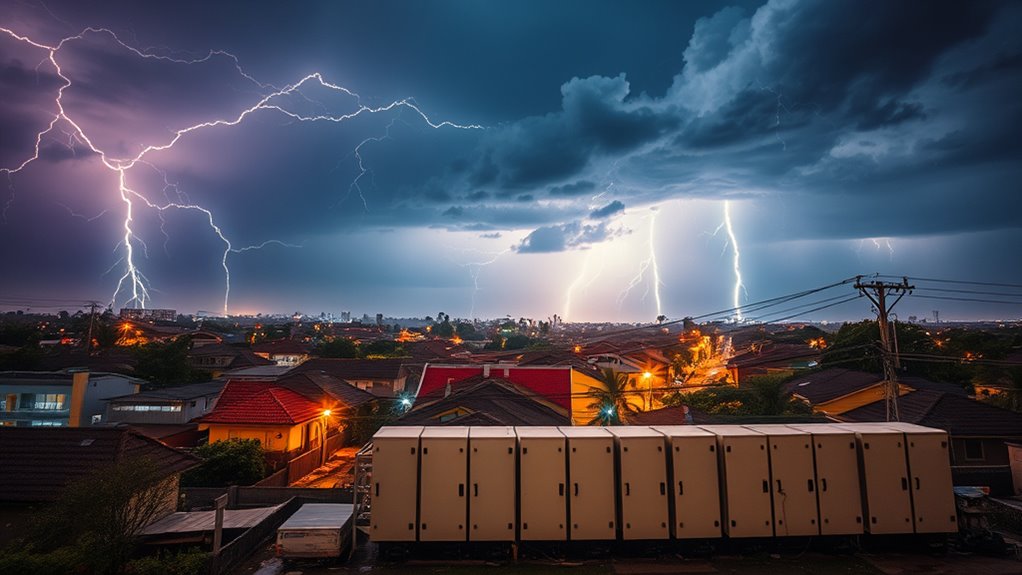
Microgrids play a crucial role in enhancing infrastructure resilience during severe weather events like monsoon storms. By operating independently or in coordination with the main grid, they can keep critical services running even when centralized power lines are damaged. Microgrids incorporate local energy sources such as solar, wind, or batteries, reducing reliance on vulnerable transmission infrastructure. This setup minimizes outage durations and limits the impact of lightning strikes and high winds. They also enable faster recovery, allowing communities to restore essential functions more quickly. In rural or hard-hit areas, microgrids provide reliable power during extended outages, improving safety and reducing economic disruption. Implementing microgrids is a proactive step toward strengthening infrastructure against the increasing frequency and intensity of monsoon-related storms.
Staying Informed: Monitoring Weather Warnings and Emergency Readiness
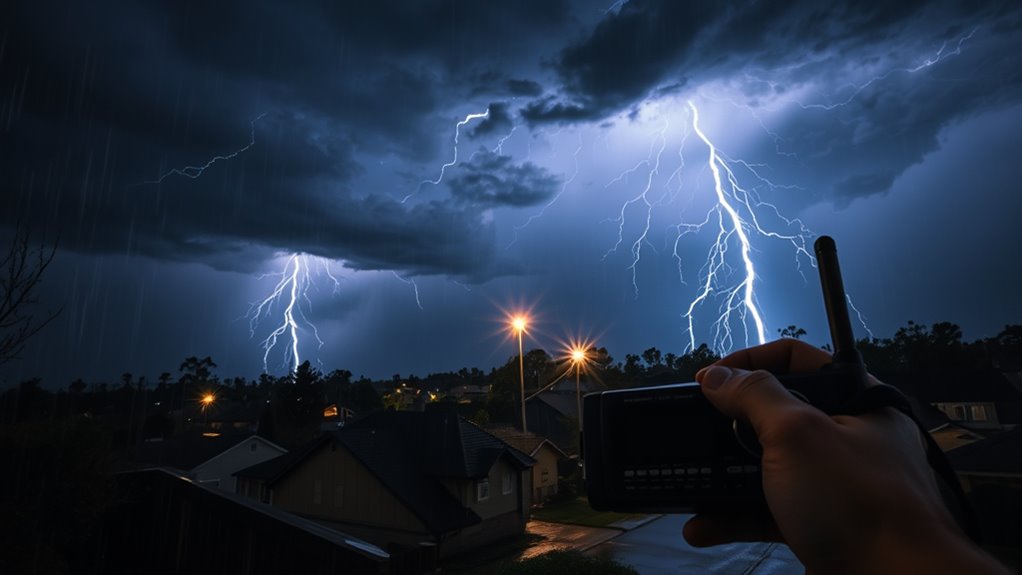
Staying informed during severe weather events is essential for your safety and preparedness. Knowing when storms are approaching helps you act quickly and avoid danger. Keep an eye on official alerts and warnings from trusted sources like the National Weather Service. Use your phone or a weather radio to get real-time updates. Prepare a communication plan with family members so everyone stays connected. Have emergency supplies ready, including water, snacks, and batteries, in case power goes out. Visualize:
- Receiving alerts on your phone as dark clouds gather
- Hearing sirens warning of high winds
- Watching lightning illuminate the night sky
- Hearing rain pounding on your roof
- Seeing power lines flicker and go dark
Staying alert ensures you’re prepared to respond swiftly and stay safe during monsoon storms.
Frequently Asked Questions
How Can I Detect if My Home Is Vulnerable to Lightning Surges?
You can detect if your home is vulnerable to lightning surges by inspecting your electrical system for proper grounding and surge protection devices. Check if your outlets have surge protectors installed, especially for sensitive electronics. Look for signs of wear or outdated wiring. Consider consulting a professional electrician to perform a thorough assessment of your home’s electrical grounding and surge protection measures, ensuring you’re shielded during thunderstorms.
Are There Affordable Surge Protection Devices Suitable for Residential Use?
Yes, affordable surge protectors are perfect for your home. You can easily find plug-in models for your computers, entertainment systems, and appliances that block damaging surges. Imagine plugging in your devices and knowing they’re shielded during thunderstorms. These devices are budget-friendly, simple to install, and provide peace of mind. Just guarantee you choose a surge protector with a high joule rating for maximum protection, and you’re all set.
What Are the Best Practices for Securing Outdoor Electrical Equipment Before Storms?
To secure outdoor electrical equipment before storms, you should disconnect and unplug devices to prevent surge damage. Cover outdoor outlets and wires with weatherproof covers, and consider installing surge protectors specifically designed for outdoor use. Secure or store portable equipment indoors, and remove any loose objects that could become projectiles. Stay informed about weather alerts, and wait until the storm passes before restoring power or reconnecting devices.
How Do Microgrids Improve Power Resilience During Monsoon Thunderstorms?
Microgrids boost your power resilience during monsoon thunderstorms by operating independently from the main grid. They can quickly isolate damaged sections and keep your critical systems running, even during outages. With local energy sources like solar or batteries, microgrids reduce dependency on vulnerable infrastructure. This means you experience fewer disruptions, enhanced safety, and quicker recovery, ensuring your home or business stays powered through severe weather conditions.
What Steps Should I Take if I Experience a Power Surge During a Storm?
If you experience a power surge during a storm, immediately unplug sensitive electronics to prevent damage. Turn off your surge protector and disconnect it from the outlet. Avoid using electrical devices until the power stabilizes. Check your breaker box for any tripped switches and reset them if needed. Stay indoors and away from water, and monitor local weather alerts for updates. If you notice damage, contact a qualified electrician before restoring power.
Conclusion
Stay vigilant during monsoon storms, like a sturdy lighthouse guiding you through thunder’s chaos. Unplug devices to shield them from lightning’s fiery dance and keep your home safe. Think of your electronics as delicate flowers in a storm’s path—protect them before the lightning strikes. By staying informed and prepared, you can weather the storm’s fury and emerge unscathed, your peace of mind as steady as the calm after the thunder’s roar.
Halloween Picks
halloween
As an affiliate, we earn on qualifying purchases.