To guarantee your fire extinguishers are effective, mount them at accessible heights—around 3 to 5 feet—and use sturdy brackets or cabinets. Place them near common fire hazards like the kitchen and garage, with no more than 75 feet between them. Keep signage clear and visible, and avoid obstructions. Regularly inspect and maintain your units to stay prepared. If you want to make your home safer, continue exploring expert tips for ideal placement and safety practices.
Get ready for Prime Big Deal Days — try Prime free
Exclusive member deals on October 6–7, plus fast free delivery. Cancel anytime.
As an affiliate, we earn on qualifying purchases.
Key Takeaways
- Mount extinguishers between 3-5 feet high for easy access by all household members.
- Place extinguishers near common fire hazards like kitchens, garages, and workshops within 30 feet.
- Ensure signage is visible, clear, and mounted directly above or beside extinguishers for quick identification.
- Keep extinguishers unobstructed, accessible, and securely mounted using sturdy brackets or cabinets.
- Regularly inspect and maintain extinguishers and signage to ensure readiness and visibility during emergencies.
Proper Mounting Height and Positioning

To guarantee quick and easy access during an emergency, you should mount fire extinguishers at the proper height so that they are reachable by all occupants. For extinguishers weighing 40 pounds or less, position the top no more than 5 feet above the floor, making them easy to grab without stretching. If the extinguisher weighs more than 40 pounds, keep the top no higher than 3.5 feet to prevent difficulty lifting. The bottom edge should be at least 4 inches above the floor to avoid damage and improve visibility. Use sturdy wall brackets or cabinets to secure the unit firmly, preventing movement. Proper mounting ensures quick access and reduces the risk of delays when seconds count during a fire emergency. Additionally, ensuring fire safety equipment is correctly positioned can make a significant difference in emergency situations. Regularly inspecting and maintaining fire extinguishers and understanding placement rules can significantly enhance safety and preparedness. Proper installation techniques are essential to ensure the longevity and effectiveness of your fire safety tools.
Strategic Placement Near Common Fire Hazards
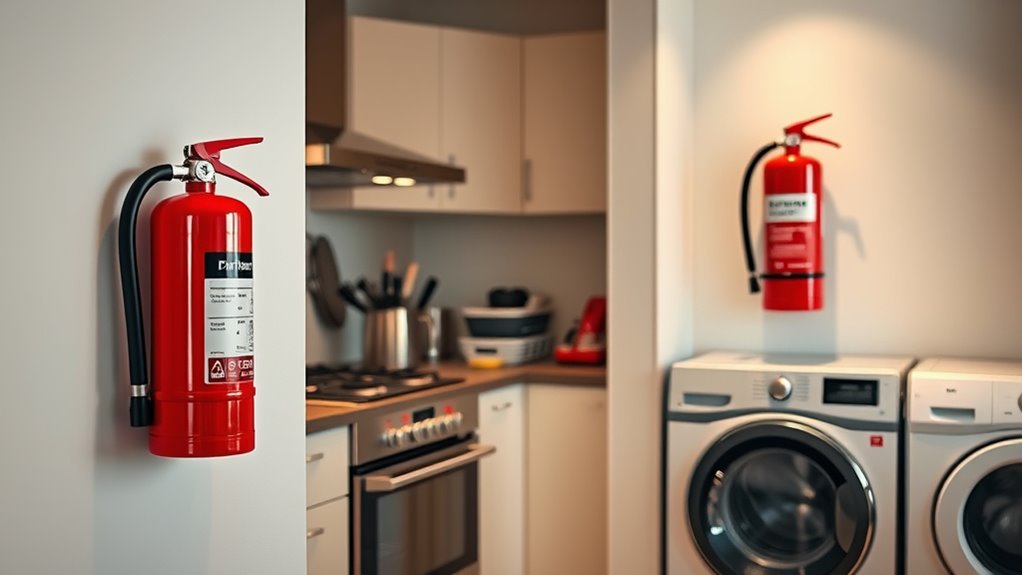
You should place fire extinguishers near common household hazards like the kitchen, garage, and workshop to guarantee quick access during a fire. Position them within reach of these areas without blocking pathways or doors that could delay response. Proper placement helps you respond swiftly to fires where they’re most likely to start. Additionally, understanding key traits of successful safety equipment can enhance your overall emergency preparedness. Being aware of appropriate maintenance and inspection practices ensures your fire extinguishers function reliably when needed. Regularly checking fire safety guidelines can also help you stay informed about best practices for placement and use. Familiarizing yourself with fire extinguisher types and applications can further improve your readiness in case of different fire scenarios. Knowing support breakfast options can make your mornings more enjoyable and help you stay energized in emergency situations.
Kitchen Fire Risks
Kitchen fire risks are among the most common household hazards, making strategic placement of fire extinguishers essential for quick response. You should position your extinguisher near cooking areas but not directly on or above stoves to avoid obstruction. Keep it within easy reach—no more than 30 feet from heavy cooking equipment or grease-prone appliances. Consider these key points:
- Place extinguishers on the wall close to the kitchen entrance for fast access during an emergency.
- Mount the unit at about 3 ft above the floor to ensure easy lifting and operation.
- Use clear signage and ensure the extinguisher is visible, well-lit, and free from obstructions like cabinets or furniture.
- Regularly check and maintain your extinguisher to ensure it remains effective in an emergency, especially in areas prone to fire hazards.
- Proper placement can significantly improve response time, especially if the extinguisher is located where it can be quickly accessed during a fire emergency.
- Ensuring your extinguisher has the appropriate fire suppression capacity can make a critical difference in controlling kitchen fires promptly.
- Understanding the history of fire safety regulations can help you better position your extinguisher for maximum effectiveness.
- Conducting routine safety inspections can further enhance your preparedness in case of a kitchen fire.
Garage & Workshop Placement
Have you placed your fire extinguisher where it can be quickly accessed in your garage or workshop? Position it near common fire hazards like workbenches, tools, or near the garage door for easy reach. Mount the extinguisher so the bottom edge is at least 4 inches above the floor, with the handle no more than 3.5 feet high if over 40 pounds. Keep it visible, with signage if needed, and ensure the area around it is clear of obstacles. Place it within 30 feet of cooking or flammable liquids, but not directly in front of potential flames. Regularly check the pressure gauge, and perform maintenance to keep it ready. Quick access near fire-prone areas can make all the difference in an emergency. Additionally, understanding modern kitchen technology can help improve overall safety measures in your home. Ensuring your fire safety equipment aligns with fire safety standards enhances its effectiveness and reliability during an incident. Being aware of individuals’ financial backgrounds can also influence how safety equipment is funded or prioritized within a household. Familiarity with proper extinguisher usage is essential to ensure effective response during a fire emergency.
Ensuring Visibility and Signage Clarity
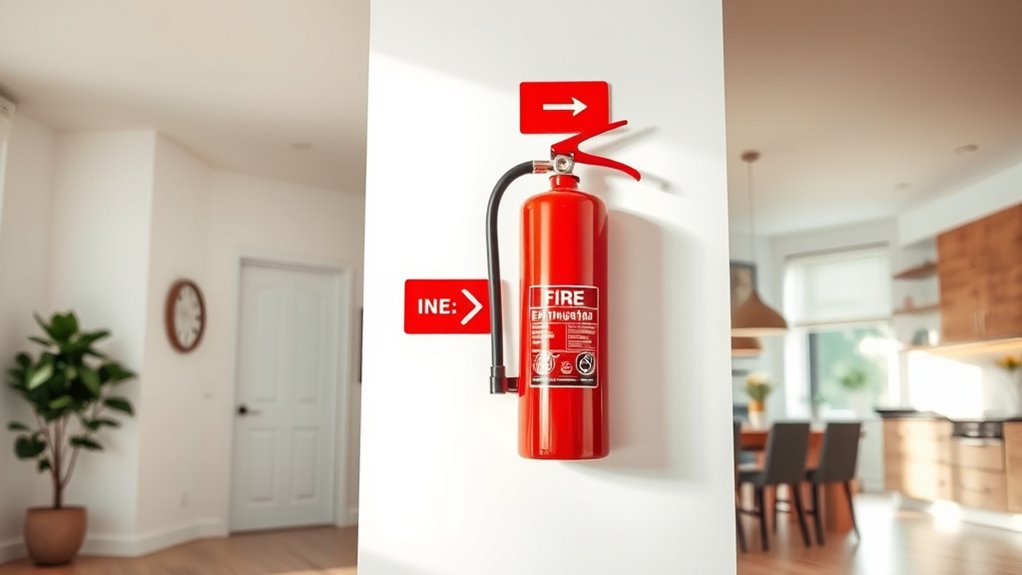
Make sure the signage and labels on your fire extinguisher face outward and are easy to read at a glance. Use high-contrast or reflective materials to improve visibility, especially around corners or in low-light areas. Keep the area around the extinguisher clear so it can be quickly located when needed. Additionally, regularly inspect the signage for damage or fading to maintain visibility and clarity. Proper signage can significantly enhance emergency response efficiency, ensuring quick access during a fire. Regularly checking that signage remains intact and legible helps maintain fire safety standards and reduces response time during emergencies. Incorporating clear, trustworthy information about extinguisher placement can further improve overall safety and preparedness. Ensuring signage adheres to organization safety guidelines also supports consistent safety practices.
Clear Signage Placement
Clear signage placement is essential for ensuring that fire extinguishers can be quickly identified and accessed during an emergency. You want signage that’s easily visible, legible, and unobstructed from any approach. To achieve this, mount signs directly above or beside the extinguisher, especially if the unit might be out of direct line of sight. Use reflective or high-contrast signs to stand out in low light or smoky conditions. Keep a clear zone around the signage—about 3 feet—to prevent clutter or obstructions. Consider installing additional lighting or reflective tape on the signs for better visibility. Proper signage helps everyone recognize fire extinguishers instantly, reducing retrieval time and increasing safety during a fire emergency. Additionally, understanding the Gold IRA markets can offer insights into investments and asset protection, much like how clear signage protects during emergencies.
High-Contrast Labels
Why is high-contrast labeling essential for fire extinguisher visibility? Because in emergencies, quick recognition saves lives. Bright, contrasting labels make fire extinguishers stand out against their backgrounds, even in low light or smoky conditions. Clear signage with bold colors guarantees you can identify the device instantly, reducing hesitation during a fire. Use labels with large, readable fonts and simple symbols to communicate purpose effectively. Reflective or glow-in-the-dark elements further boost visibility at night or in poor lighting. Regularly check that labels remain clean, unobstructed, and intact, replacing any damaged or faded signage promptly. High-contrast signage not only helps you locate extinguishers fast but also reinforces proper usage, ensuring everyone in your home can respond confidently when it matters most.
Accessibility for All Users
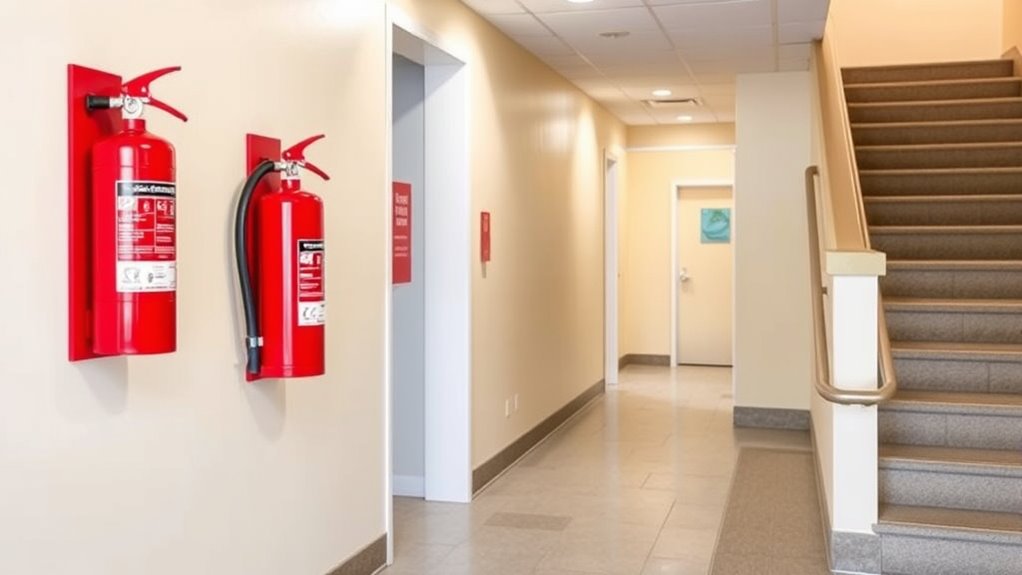
Have you considered how accessible your fire extinguishers are for everyone in your home? Ensuring easy reach is essential for quick response during emergencies. You should:
- Place extinguishers at heights adults can reach comfortably without climbing or stretching, ideally between 3 and 5 feet from the floor.
- Keep them in clear, unobstructed locations—avoid behind doors, furniture, or inside closets—so anyone can locate and grab them quickly.
- Choose lighter units (≤40 lb) for easier handling, and position heavier ones where multiple people can lift safely.
Think about all household members, including children, seniors, or those with mobility challenges. Consistent placement and minimal obstructions make sure everyone can use the fire extinguisher confidently when seconds count.
Managing Travel Distance for Quick Access

To guarantee you can respond quickly in a fire, it’s essential to keep extinguishers within the recommended travel distance. For most household hazards, limit the distance to 75 feet or less, so you can grab the extinguisher without delay. In areas like the kitchen or garage, keep a fire extinguisher within about 30 feet of the potential fire source, but avoid placing it directly next to flames to prevent blocking access. Install at least one extinguisher on every floor, including the basement and attic, ensuring the path from any room stays within these limits. Place extinguishers near likely fire-start locations, such as the furnace or workshop, but in a safe, accessible spot that’s easy to reach during an emergency.
Regular Inspection and Maintenance Routines
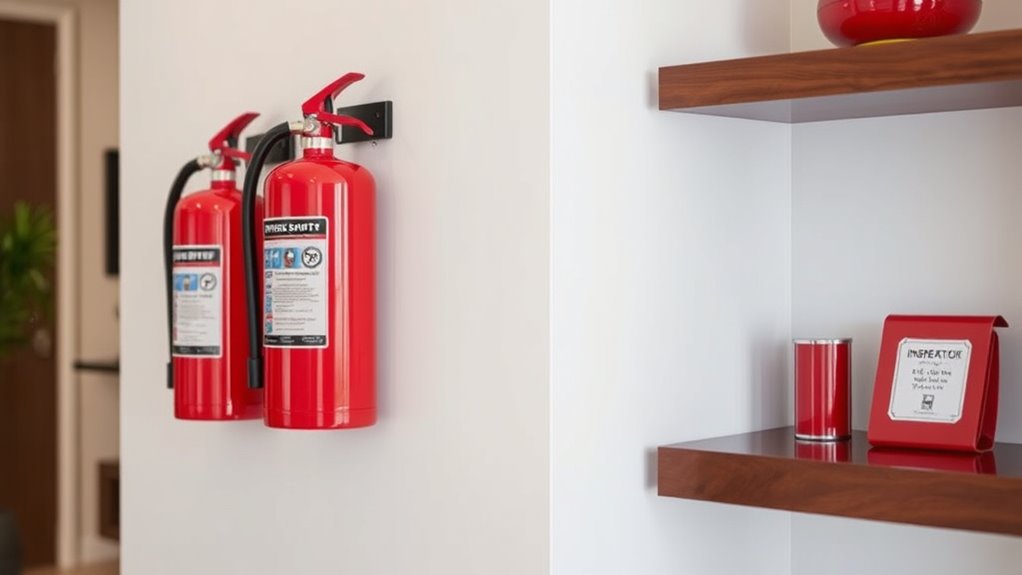
Regular inspection and maintenance are crucial for ensuring your fire extinguishers remain ready to perform when needed. You should check your extinguisher monthly by inspecting the pressure gauge to ensure it’s in the operable range, verifying the tamper seal is intact, and confirming there’s no corrosion or damage. Keep a record of each inspection date and any maintenance performed. Schedule professional inspections and hydrostatic testing annually to verify internal condition and rechargeability. Replace or service extinguishers with low pressure, damaged hoses, or corrosion instead of relying solely on visual checks.
Regularly inspect fire extinguishers monthly for pressure, seals, and damage to ensure readiness.
- Check pressure gauge, seals, and damage monthly
- Schedule annual professional inspections
- Replace units reaching end-of-life or showing signs of wear
Selecting the Right Type and Size for Your Home
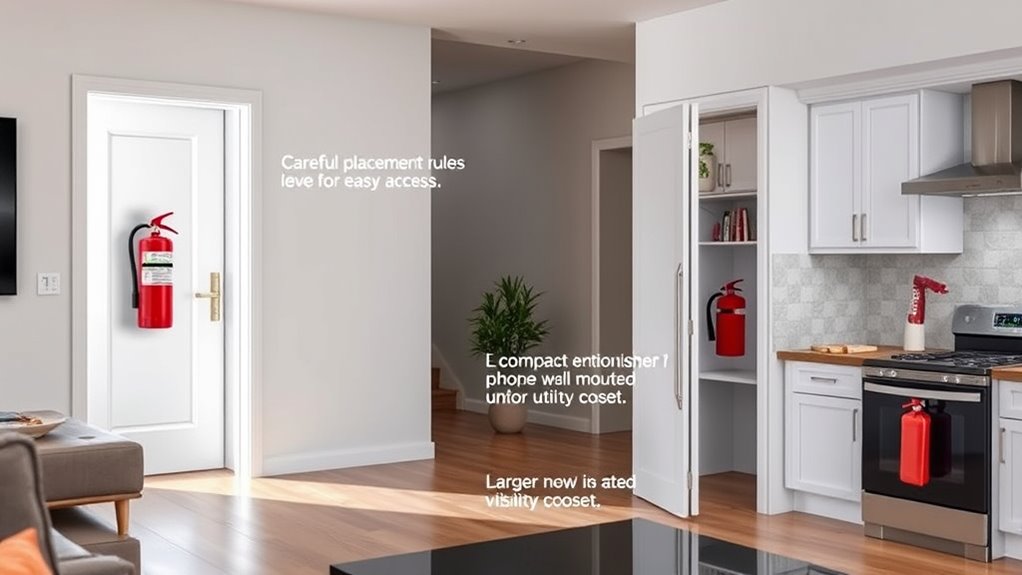
Choosing the right fire extinguisher type and size guarantees you’re prepared for common household fires. For most homes, a multi-purpose ABC-rated extinguisher covers paper, wood, flammable liquids, and electrical fires. Use a Class K extinguisher or wet-chemical agent near heavy cooking equipment to handle grease fires. Select a size based on hazards and reachability: smaller units (under 40 lbs) are easier to handle, while larger ones provide more capacity. The table below helps you decide:
| Fire Type | Recommended Extinguisher | Size Consideration |
|---|---|---|
| Combustibles | ABC-rated portable unit | 2.5–5 lbs for quick access |
| Grease fires | Class K or wet-chemical | 5–10 lbs near kitchen |
| Electrical | ABC-rated or CO2 | 2.5–5 lbs, easily reachable |
Choose prudently to ensure safety and ease of use during emergencies.
Incorporating Fire Extinguisher Placement Into Home Safety Planning
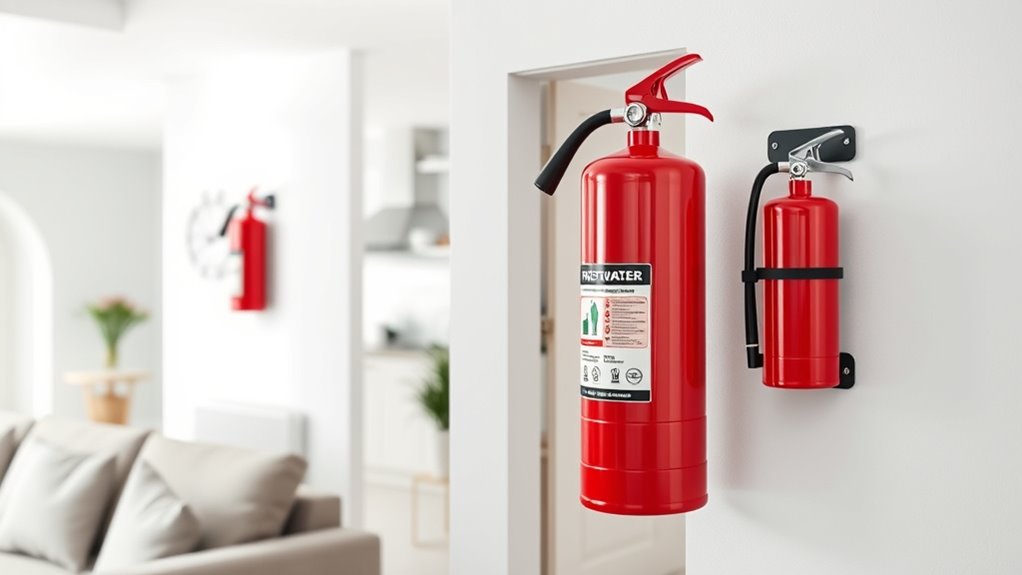
Incorporating fire extinguisher placement into your home safety plan guarantees quick access during emergencies, minimizing damage and potential injuries. You need to think about strategic locations that align with fire risks and ensure easy reach. Consider placing extinguishers:
- Near high-risk areas like the kitchen, garage, and furnace for quick response.
- On every floor, including basement and attic, so no room is out of reach.
- In visible, well-lit spots with clear signage, avoiding obstructions like furniture or doors.
This planning helps occupants react swiftly and confidently. Regularly review placement to confirm accessibility and visibility, especially if furniture or storage arrangements change. Proper placement reduces retrieval time and enhances overall safety during a fire emergency.
Frequently Asked Questions
How Often Should I Replace or Service My Home Fire Extinguisher?
You should replace or service your home fire extinguisher at least once a year and after any use. Regularly check the pressure gauge, tamper seal, and for corrosion monthly. Schedule professional inspections and hydrostatic testing annually, especially for rechargeable units. Record maintenance dates and replace units older than 12 years or showing signs of damage or low pressure. Proper upkeep guarantees your extinguisher remains ready when you need it.
What Is the Ideal Location for Extinguishers in Multi-Story Homes?
Did you know over 60% of home fires start in the kitchen? You should place extinguishers on every floor, especially near common fire hazards like the kitchen, furnace, or garage. Mount them within easy reach, no higher than 5 feet for lighter units. Keep them accessible from all areas, avoiding obstructions or locked spaces, so you can quickly grab one during an emergency. Proper placement saves vital seconds in a fire.
How Can I Ensure Children or Seniors Can Safely Use Extinguishers?
You can guarantee children and seniors use extinguishers safely by placing them within easy reach—no higher than 5 feet for lighter units and around 3 feet for heavier ones. Use clear signage with simple pictograms, and keep instructions visible and straightforward. Conduct regular drills with all household members so they’re comfortable operating the extinguisher. Avoid obstructing access, and choose lightweight, manageable units to promote confidence and safety during emergencies.
Are There Specific Signs or Labels Recommended for Fire Extinguisher Visibility?
Think of signs and labels as the inviting neon signs guiding you through a dark night. You should use reflective, high-contrast signage that shines even in low light, making the extinguisher impossible to miss. Position pictograms and color codes clearly, so everyone, even in a panic, instantly understands what to do. Keep labels unobstructed and facing outward, turning your fire safety device into a welcoming beacon of safety.
What Are the Best Practices for Storing Extinguishers During Home Renovations?
During home renovations, you should store extinguishers in easily accessible, clearly marked locations that won’t be obstructed. Keep them away from dust, debris, and potential damage zones like construction areas. Mount them securely on visible walls or in cabinets, ensuring they’re within reach and not behind furniture or doors. Regularly check pressure gauges, and confirm they’re maintained and ready for use, especially if renovation activities increase fire risks.
Conclusion
Think of your fire extinguishers as the safety net beneath a tightrope walker—they’re there when you need them most. Proper placement, like a well-timed catch, can prevent a small spark from turning into disaster. Regularly checking your extinguishers keeps that safety net strong and reliable. Remember, a little planning and maintenance now can save your home—and lives—later. Stay vigilant, and your home will be a safer place for everyone.
Evergreen bestsellers Picks
bestsellers
As an affiliate, we earn on qualifying purchases.