
Peak sun hours show you how many hours of full sunlight your location gets daily, helping you estimate your solar system’s potential output. To find this, divide your area’s average daily solar insolation in kWh/m² by 1 kW/m². This measurement varies across the U.S. due to climate, latitude, and weather. Knowing your region’s peak sun hours helps size your system accurately—stick around to learn how to make the most of this data.
Key Takeaways
- Peak sun hours measure the equivalent hours of full sunlight received daily, based on solar insolation data.
- Regional variations affect peak sun hours, with the Southwest typically receiving 5.5 to 7+ hours.
- Use sources like NREL’s PVWatts or satellite maps to find local solar insolation data for your area.
- Divide your location’s daily solar energy (kWh/m²/day) by 1 kW/m² to estimate peak sun hours.
- Accurate regional peak sun hours enable proper solar system sizing and energy production estimates.

Anker SOLIX C1000 Gen 2 Portable Power Station, 2,000W (Peak 3,000W) Solar Generator, Full Charge in 49 Min, 1,024Wh LiFePO4 Battery for Home Backup, Power Outages, and Camping (Optional Solar Panel)
49 Min UltraFast Recharging: With upgraded HyperFlash tech, fully recharge at 1,600W—for outage prepping, camping trips, or tailgating...
As an affiliate, we earn on qualifying purchases.
Understanding the Core Idea of Peak Sun Hours

Understanding the core idea of peak sun hours is essential for grasping how solar energy systems are sized and evaluated. Essentially, peak sun hours measure the intensity of sunlight, indicating how many hours in a day the sunlight provides an irradiance of 1,000 watts per square meter, or 1 kW/m². This isn’t about the total daylight hours but about the strength of sunlight during the most productive part of the day. For example, if your location averages 5 peak sun hours, it means that, on average, your solar panels receive the equivalent of 5 hours of full-strength sunlight daily. This metric helps you estimate how much energy your solar system can generate, making it a fundamental tool in system design and performance prediction. Free Floating can also influence the distribution of peak sun hours across different regions, affecting solar potential estimates and system planning. Additionally, understanding regional climate can help refine your energy production forecasts based on peak sun hours.

Jackery HomePower 3000 Portable Power Station with 2X 200W Solar Panels, 3600W (Surge 7200W) Output, 3072Wh LFP Battery Solar Generator, Essential Backup for Home Use, Power Outage, RV, Emergencies
Essential Home Backup: With a robust 3600W output (7200W surge) and a 3072Wh capacity, the Jackery HomePower 3000...
As an affiliate, we earn on qualifying purchases.
How to Calculate Daily Peak Sun Hours
To calculate daily peak sun hours, you need to start with solar insolation data for your location. Once you have the total daily solar energy in kilowatt-hours per square meter, you can use a simple formula: divide that number by 1 kW/m² to find the equivalent peak sun hours. This straightforward method helps you estimate the solar energy available for your system each day. Additionally, understanding the role of solar technology can improve your accuracy in assessing solar potential. A good understanding of Youngster Choice can also provide insights into regional trends and influences on solar adoption.
Use Solar Insolation Data
How can you accurately calculate daily peak sun hours using solar insolation data? First, gather the average daily solar insolation for your location, expressed in kilowatt-hours per square meter per day (kWh/m²/day). You can obtain this data from sources like NREL’s PVWatts, satellite maps, or local meteorological stations. Once you have this value, divide it by 1 kW/m², which represents the standard insolation for peak sun hours. This division converts total daily energy into an equivalent number of peak sun hours, providing a clear measure of sunlight intensity. Using precise insolation data ensures your calculations reflect real-world conditions, helping you better estimate your solar system’s potential energy production and optimize your design.
Apply Basic Formula
Calculating daily peak sun hours involves dividing the total solar energy your location receives in a day by the standard insolation value of 1 kW/m². First, find your location’s average daily solar insolation in kilowatt-hours per square meter per day (kWh/m²/day) from datasets like PVWatts or solar maps. Then, use the formula: Peak Sun Hours = Total Daily Solar Insolation ÷ 1 kW/m². This calculation converts the total energy into equivalent hours at 1,000 W/m², representing the peak sunlight intensity. For example, if your area gets 5.5 kWh/m²/day, dividing by 1 results in 5.5 peak sun hours. Remember, this value helps estimate solar system output and guides system sizing for your location.

Portable Solar Generator, 300W Portable Power Station with Foldable 60W Solar Panel,110V Pure Sine Wave 280Wh Battery Power Pack with USB DC AC Outlet for Camping Smart Devices RV Van Outdoor-Orange
Portable Generator with 60W Solar Panel Included: with a big battery pack, ZeroKor 300W power stations Generator are...
As an affiliate, we earn on qualifying purchases.
Regional Variations in Sunlight Across the U.S

Your location greatly influences the sunlight levels you can expect, with the Southwest enjoying the highest peak sun hours and the Northeast seeing less. Seasonal changes also cause significant fluctuations, especially at higher latitudes. Factors like climate, clouds, and terrain further impact the amount of sunlight reaching your panels throughout the year. Additionally, understanding regional sunlight variations can help optimize solar energy use in your area.
Sunlight Levels by Region
Sunlight levels vary markedly across different regions of the United States, primarily due to geographic location, climate, and local weather patterns. In the Southwest, like Arizona and Nevada, you’ll find the highest averages, often exceeding 5.5 peak sun hours daily, thanks to clear skies and low cloud cover. California’s southern regions also enjoy strong sunlight, averaging around 5–6 hours. Moving eastward, the Midwest and mid-Atlantic states typically get 3.5–5 peak sun hours daily, influenced by cloudier conditions and seasonal changes. Northeastern states and heavily forested or coastal areas usually average even lower, around 3–4.5 hours daily. Factors like latitude, weather, and obstructions substantially impact these levels, meaning your solar potential can vary widely depending on your location within the U.S. Additionally, understanding solar power system sizing can help you optimize your solar setup based on regional sunlight data. Recognizing regional variations in peak sun hours is essential for accurately estimating your solar energy production and planning your renewable energy investments. It’s also helpful to consider weather patterns that can temporarily affect sunlight availability throughout the year. Market research can provide insights into regional solar incentives and policies that influence investment decisions. Knowing these regional differences can assist you in choosing the right solar equipment for your specific location.
Seasonal Sunlight Variability
Seasonal sunlight variability profoundly impacts solar energy production across the United States, with regions experiencing marked differences in insolation throughout the year. You’ll notice that some areas see substantial changes in peak sun hours season to season, affecting system performance and planning. Consider these key factors:
- Latitude: Higher latitudes face longer winters with reduced sunlight. These variations are also influenced by wave and wind patterns that affect weather conditions and cloud cover. Additionally, local atmospheric conditions can further alter sunlight exposure and energy output. Understanding local climate patterns helps in predicting seasonal energy availability more accurately.
- Seasonal tilt: The sun’s angle varies, creating more daylight in summer and less in winter.
- Weather patterns: Cloud cover and snow can considerably diminish insolation during certain seasons. Understanding these variations helps you predict energy output more accurately and design systems that maximize efficiency year-round. Being aware of seasonal fluctuations allows you to better plan for energy needs and optimize your solar investment. Additionally, solar system components such as inverters and batteries can influence overall system performance during these seasonal changes.
Geographic Climate Impact
Regional climate plays a crucial role in shaping the average peak sun hours across the United States, leading to significant differences in solar energy potential. In the Southwest, arid conditions and minimal cloud cover mean you can expect roughly 5.5 to 7+ peak sun hours daily. Conversely, regions with more cloud cover, like the Northeast or Pacific Northwest, typically receive 3 to 4.5 hours. Latitude also matters—higher latitudes experience more seasonal variation and fewer peak sun hours overall. Local weather patterns, such as persistent fog or haze, further reduce sunlight. Shading from trees or buildings can decrease effective peak sun hours at your site. Understanding these regional differences helps you accurately size your solar system, estimate energy production, and optimize your investment based on your specific geographic climate.
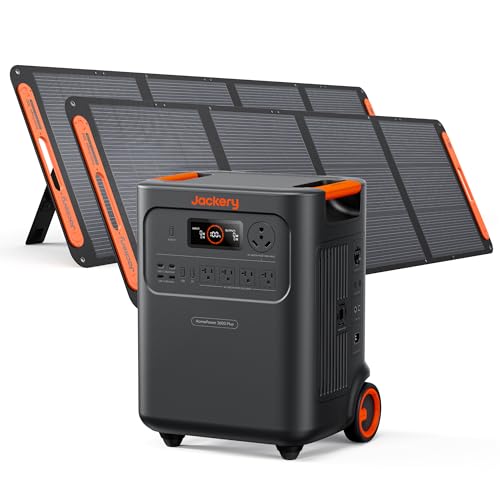
Jackery HomePower 3600 Plus Portable Power Station with 2x 200W Solar Panels, 3600W AC Output, 3584Wh LFP Solar Generator, Expandable up to 21kWh, Essential Home Backup for Home Use, Emergencies, RV
Essential Home Backup: The Jackery HomePower 3600 Plus delivers 3600W output (7200W in parallel) to run pumps, heaters,...
As an affiliate, we earn on qualifying purchases.
Factors That Influence Peak Sun Hours
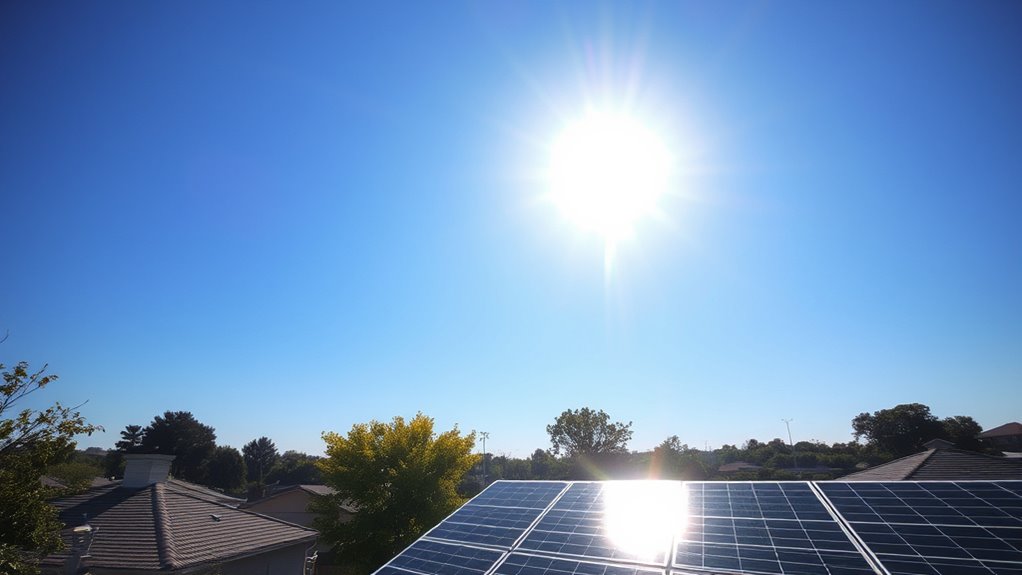
Several factors can substantially influence peak sun hours at a given location, affecting how much solar energy your system can generate. These variables determine the intensity and duration of sunlight reaching your panels. Key influences include:
Factors like location, climate, shading, and panel setup significantly impact peak sun hours and solar energy potential.
- Geographic latitude: Higher latitudes receive less direct sunlight, especially seasonally.
- Climate and cloud cover: Persistent clouds, haze, or fog reduce solar insolation. Understanding local weather patterns can help you better anticipate sunshine variability.
- Shading and obstructions: Trees, buildings, or terrain block sunlight, lowering peak sun hours. The presence of reliable weather data can help better predict sunshine patterns and improve system planning. Additionally, understanding local solar radiation patterns can further refine your estimates for energy production.
Other factors like panel orientation, tilt, and atmospheric conditions also play a role. Ideal angles and minimal shading help maximize sunlight exposure. Recognizing how each element impacts peak sun hours ensures better system sizing and improved energy yield predictions.
Using Peak Sun Hours to Size Your Solar System
Using peak sun hours to size your solar system involves translating your energy needs into a system capacity that can reliably meet demand based on the sunlight available at your location. To do this, you divide your daily energy requirement (kWh) by the average peak sun hours for your area. This gives you the approximate system size in kilowatts (kW). Keep in mind, you’ll need to adjust for system losses caused by inverter efficiency, shading, and temperature, typically reducing the estimated output by 15-25%. By accurately sizing your system with regional peak sun hours, you ensure your array generates enough power to meet your daily needs, optimize investment, and improve overall system performance. Proper sizing prevents undersizing or oversizing, both of which can impact your savings and system longevity. Understanding solar irradiance helps you better estimate the potential energy production of your system in your specific region. Additionally, knowing your region’s sunlight patterns can help you anticipate seasonal variations and adjust your system design accordingly.
Estimating Your Solar Energy Output

Estimating your solar energy output involves calculating how much electricity your system will generate based on your location’s peak sun hours and system size. To do this, multiply your system’s AC capacity (kW) by your area’s average peak sun hours per day. This gives you an estimate of daily energy production before losses. Keep in mind:
- Adjust for system losses like inverter efficiency, shading, and temperature.
- Use local insolation data for precise calculations.
- Remember, regional differences in peak sun hours influence your total energy output.
- Understanding solar insolation patterns can help optimize your system’s performance and energy estimates.
Tools and Datasets for Accurate PSH Data
Accurate peak sun hour data relies on a variety of tools and datasets that provide reliable insolation measurements. You can start with resources like the NREL PVWatts Calculator, which offers modeled data tailored to specific locations across the U.S. Satellite-based solar resource maps from agencies like NASA or NOAA also deliver long-term average insolation values in kilowatt-hours per square meter per day, helping you estimate PSH. For precise site measurements, using a pyranometer or irradiance logger allows you to record real-time solar radiation, providing site-specific data. Many online tools and regional solar companies offer quick PSH estimates based on existing datasets. To guarantee accuracy, it’s best to use at least 10 years of climatological data or validated modeled datasets, which utilize the science behind insolation, to account for interannual variability. Incorporating climatological datasets ensures a comprehensive understanding of solar patterns over time, improving the reliability of your estimates.
Practical Tips for Site Assessment and Planning

A thorough site assessment guarantees your PV system performs at its best by accurately identifying factors that influence peak sun hours. Start by evaluating the site’s geographic location, noting its latitude and typical weather patterns. Check for shading from trees, buildings, or terrain that could reduce sunlight exposure. Consider the orientation and tilt of your panels; ideal angles maximize insolation. Additionally, assess atmospheric conditions like haze, humidity, and cloud cover that can lower peak sun hours. During assessment, focus on these key factors: solar insolation levels. Incorporating local climate data can further improve the accuracy of your sun exposure estimates.
Incorporating Peak Sun Hours Into Financial Estimates
Understanding how peak sun hours influence financial estimates is essential for designing cost-effective solar projects. You use peak sun hours to determine the expected energy production of your system, which directly impacts your project’s economics. By multiplying your system’s size (kW) by the average daily peak sun hours, you estimate daily energy output in kWh. This calculation helps you forecast annual energy generation, enabling accurate ROI and payback period calculations. Adjusting for system losses—such as inverter efficiency, soiling, and shading—refines these estimates. Knowing your region’s average peak sun hours allows you to size your system appropriately, avoiding over- or under-investment. Incorporating this metric into your financial models ensures you make informed decisions, optimize your investment, and accurately project long-term savings.
Enhancing Solar Performance Through Site Optimization
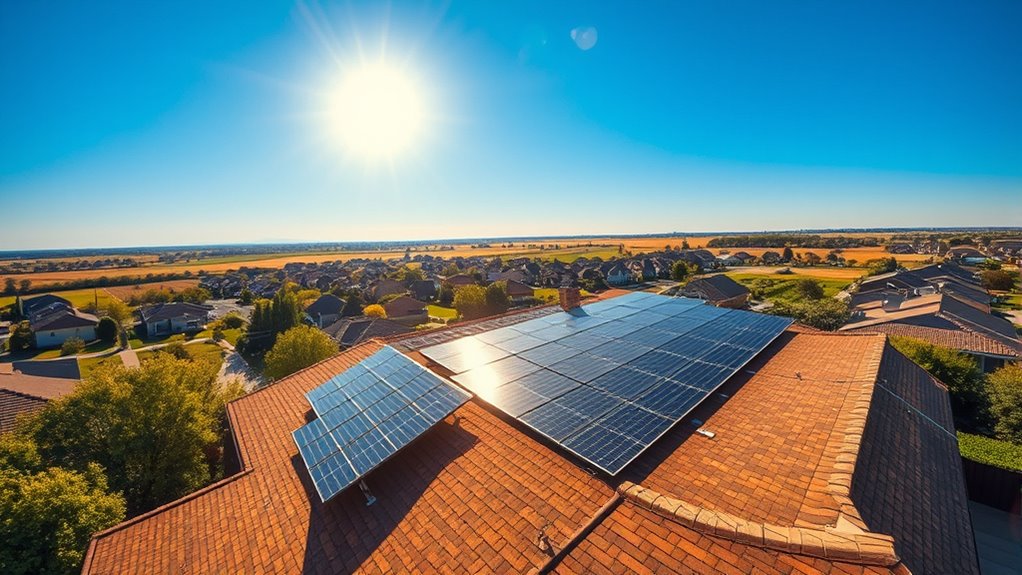
Maximizing your solar system’s output begins with site optimization, which involves carefully evaluating and modifying the location and setup of your panels to capture the most sunlight possible. To do this effectively, consider these key factors:
- Panel orientation and tilt: Ensure panels face true south (for northern hemisphere) and are tilted to match your latitude, maximizing exposure during peak hours.
- Minimize shading: Remove or trim trees, avoid nearby buildings, and select a higher elevation site to reduce shading that blocks sunlight during the day.
- Clear obstructions and debris: Keep panels clean and free from dirt, snow, or leaves that diminish efficiency.
Implementing these strategies boosts peak sun hours at your site, leading to increased energy production and better system performance overall.
Frequently Asked Questions
How Often Do Peak Sun Hours Vary Throughout the Year?
You’ll notice peak sun hours vary throughout the year due to seasonal changes. They’re typically higher in summer, when the sun is more direct, and lower in winter, with shorter days and weaker sunlight. In northern regions, the difference can be quite significant, while southern areas experience less variation. Understanding this helps you plan better for seasonal fluctuations in solar energy production and optimize your system’s performance year-round.
Can Local Weather Changes Significantly Impact Peak Sun Hour Estimates?
Did you know that local weather changes can reduce peak sun hours by up to 30%? Weather fluctuations, like cloudy days, fog, or heavy rain, greatly impact solar irradiance, lowering the intensity of sunlight reaching your panels. This means your system’s daily energy production can vary widely, even within the same season. So, weather plays an important role in real-world solar estimates, making it essential to consider local climate variability.
How Accurate Are Online Tools for Predicting Site-Specific Peak Sun Hours?
Online tools are generally quite accurate for predicting site-specific peak sun hours, especially when they use long-term datasets like NREL or PVWatts. However, they can have limitations due to local shading, weather variability, and atmospheric conditions that aren’t always fully captured. For the most precise planning, combine these estimates with on-site measurements or detailed assessments, particularly for critical or complex installations.
What Is the Typical Difference Between Theoretical and Actual Peak Sun Hours?
Think of the sun’s potential as a shining promise, but reality often dims that promise. Typically, actual peak sun hours are about 20-30% lower than the theoretical maximum, due to clouds, atmospheric conditions, and shading. This difference is like a whisper of reality over the bold forecast. You should expect real-world peak sun hours to be slightly less, helping you size your system more accurately and avoid overestimating energy production.
How Do Shading and Obstructions Alter Effective Peak Sun Hours at My Site?
Shading and obstructions reduce your site’s effective peak sun hours by blocking or diffusing sunlight, leading to lower solar irradiance on your panels. Trees, buildings, or terrain create shadows that limit sunlight during peak hours, decreasing energy production. To maximize output, you should clear obstructions, optimize panel placement, and regularly maintain your system to minimize shading effects and guarantee you capture the most sunlight possible.
Conclusion
By understanding peak sun hours, you’re revealing the sun’s secret recipe for powering your home. Think of it as catching the perfect rays in a treasure map—guiding you to a brighter, greener future. With a little planning and the right tools, you can turn your roof into a sunlit oasis. So, harness that golden energy and let your solar journey shine as brightly as the midday sun on a clear summer day.