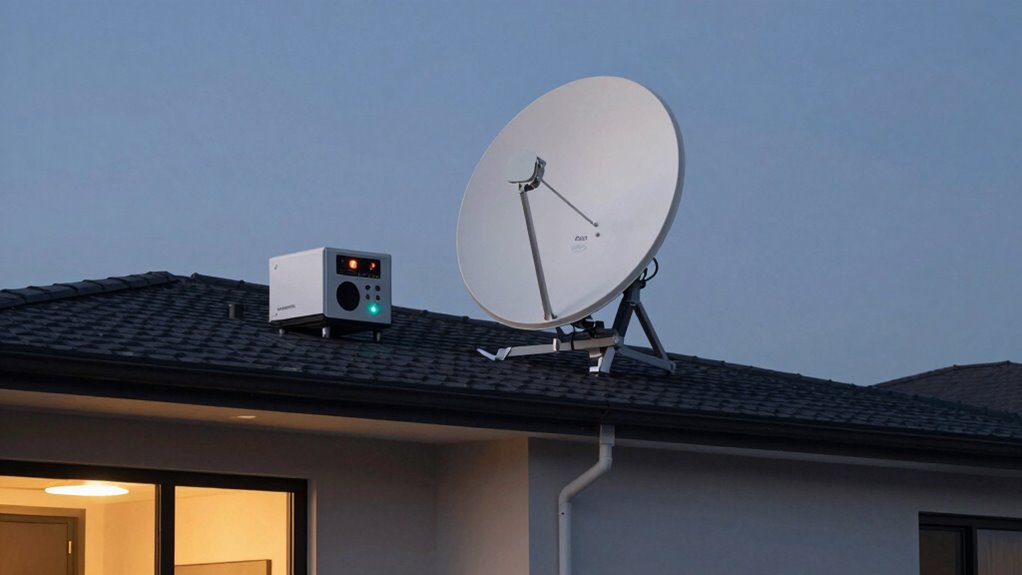

You’re seeing Starlink in more home backup plans because it offers reliable, high-speed internet even during outages, ensuring you stay connected when terrestrial networks fail. Its satellite technology provides resilience and quick deployment, making it ideal for emergencies or remote areas. Plus, it’s easy to install and works seamlessly with your existing equipment. As more households recognize the importance of resilient connectivity, Starlink’s role in backup plans keeps expanding—there’s more to discover if you keep exploring this trend.

Get backup power and energy gear delivered free — and shop member deals
- Fast, free delivery on millions of items
- Access to Prime Big Deal Days deals on October 6–7
- Prime Video, Amazon Music and more included
Key Takeaways
- Increasing reliance on internet makes backup solutions essential, and Starlink offers reliable satellite connectivity during outages.
- Starlink’s quick deployment and resilient low-earth orbit satellites ensure consistent service in emergencies.
- Its compatibility with home networks makes it an easy and practical backup option for homeowners.
- Growing awareness of disaster preparedness emphasizes the need for resilient internet solutions like Starlink.
- Broader adoption reflects a shift toward flexible, reliable connectivity to minimize disruptions during outages.

In today’s increasingly connected world, having a reliable internet backup is more important than ever, especially when your primary service goes down unexpectedly. With so many aspects of daily life relying on internet connectivity—whether it’s work, streaming, or staying in touch—being prepared for outages isn’t just smart, it’s essential. That’s where Starlink is making a big impact, especially as more homeowners include it in their backup plans. Its satellite internet technology offers a compelling option for emergency preparedness, ensuring you stay connected no matter what disrupts your main internet service.
Traditional broadband providers are often vulnerable to weather, infrastructure failures, or regional outages. In contrast, Starlink’s satellite internet system uses a constellation of low-Earth orbit satellites, providing a more resilient connection. When your primary internet provider experiences a blackout, you can switch seamlessly to Starlink, which is designed for quick deployment and reliable service in remote or underserved areas. This flexibility makes it an attractive choice for those who want a robust backup solution. It’s not just about having an internet connection during power outages; it’s about ensuring your communication channels remain open for work, emergencies, and everyday needs. Additionally, the rapid deployment of satellite internet can be crucial during disaster response efforts, further highlighting its importance in emergency planning.
Starlink offers a resilient, quick-deploy backup connection for work, emergencies, and everyday communication needs.
Emergency preparedness has become a priority for many households, especially given the increasing frequency of natural disasters. In these situations, traditional internet services can become inaccessible, leaving you cut off from vital information and communication. By integrating Starlink into your backup plan, you gain a dependable satellite internet option that works even when terrestrial infrastructure fails. This added layer of security means you won’t have to worry about losing access to critical services, such as emergency alerts, telehealth, or remote work tools, when you need them most. Additionally, the resilience of satellite networks makes them a valuable component in disaster readiness strategies. Incorporating satellite internet into your home safety measures can provide peace of mind during unpredictable events. A key advantage is that satellite internet can often be deployed rapidly, making it suitable for immediate response to outages or disasters.
Homeowners are recognizing that investing in satellite internet like Starlink isn’t just for rural or remote locations anymore. Its ability to provide high-speed internet with minimal latency makes it suitable for a variety of uses, including as a backup during outages. The ease of installation and the growing coverage area pave the way for more households to see satellite internet as a practical part of their emergency preparedness toolkit. As internet reliability continues to be a top concern, more people are choosing Starlink to ensure they stay connected, regardless of what’s happening outside. Furthermore, its compatibility with existing home networking equipment simplifies integration into current setups, making it an even more attractive backup option.
Ultimately, the rise of Starlink in home backup plans reflects a broader shift toward resilient, flexible connectivity solutions. You can’t predict every outage or disaster, but you can prepare for them. Satellite internet is becoming a key component of that preparedness, offering peace of mind and continuous connectivity when it matters most.
Starlink satellite internet backup kit
As an affiliate, we earn on qualifying purchases.
As an affiliate, we earn on qualifying purchases.
Frequently Asked Questions
How Does Starlink Compare to Traditional Backup Internet Options?
Starlink offers a reliable backup by providing high-speed internet, but satellite latency can be higher than traditional options like cable or fiber. You might experience slight delays during video calls or gaming. Signal interference from weather or obstructions can occasionally disrupt service, unlike traditional wired connections. However, its quick setup and coverage in remote areas make it a valuable backup, especially when traditional options are unavailable or unstable.
What Are the Cost Differences for Using Starlink as a Backup?
Ever wondered how the cost comparison stacks up? Starlink’s subscription plans typically start around $110 per month, which is higher than traditional backup options like cable or cellular plans. While the initial setup fee is a bit steep, you get reliable high-speed internet, even during outages. For backup use, consider whether the benefits of uninterrupted connectivity outweigh the higher monthly expense.
How Reliable Is Starlink During Extreme Weather Conditions?
During extreme weather conditions, you might experience some interruptions with Starlink, but it’s generally quite weather resilient. Satellite latency can increase during storms, impacting internet speed and stability. However, Starlink’s design aims to minimize weather-related disruptions, making it a reliable backup. You should keep in mind that heavy rain or snow can temporarily affect the signal, but overall, it’s a solid option for maintaining connectivity in tough conditions.
What Equipment Is Needed to Set up Starlink as a Backup?
You need a Starlink dish, a power supply, and a Wi-Fi router to set up Starlink as a backup. Did you know satellite latency can be as low as 20 milliseconds, making it suitable for most online activities? The equipment is built for durability, handling various weather conditions. Make certain your setup has a surge protector and proper mounting to maintain a reliable connection during outages, maximizing your backup’s effectiveness.
Can Starlink Be Integrated With Existing Home Networking Systems?
Yes, you can integrate Starlink with your existing home networking systems. You’ll need to connect the Starlink router to your smart home hub or network management system, allowing seamless control and monitoring. This setup enables you to prioritize traffic for smart home devices, improve network stability, and guarantee reliable backup connectivity. Proper integration ensures your smart home remains operational even during primary internet outages, enhancing overall network resilience.
As an affiliate, we earn on qualifying purchases.
Conclusion
So, next time your internet crashes just when you’re about to binge your favorite show, remember—Starlink’s backup plans might just save your day. Who knew that a satellite constellation could become your digital knight in shining armor? It’s almost poetic: as traditional ISPs falter, a network in the sky promises to keep you connected, proving that in today’s world, it’s not just about speed but about surviving the chaos—one satellite at a time.
satellite internet router for home
As an affiliate, we earn on qualifying purchases.
As an affiliate, we earn on qualifying purchases.
emergency internet backup system
As an affiliate, we earn on qualifying purchases.
As an affiliate, we earn on qualifying purchases.
Fall Picks
fall essentials
As an affiliate, we earn on qualifying purchases.