Flexible solar panels are lightweight and easy to transport, fitting curved surfaces without complex mounting, but they tend to degrade faster and last around 5-15 years. Rigid panels are heavier, more durable, and resistant to impact, often lasting 25-40 years with better weather resistance. If you want a long-lasting, weatherproof solution, rigid panels may suit you better. To understand how these differences can impact your project, consider the key storage and durability factors outlined below.

Get backup power and energy gear delivered free with Prime
- Fast, free delivery on millions of items
- Prime Video, Amazon Music and more included
- Member-only deals all year
Key Takeaways
- Flexible panels are lightweight and portable, making storage and installation quick, but they typically last 5-15 years outdoors.
- Rigid panels are heavier but more durable, with a lifespan of 25-40 years, resisting environmental stressors better.
- Flexible panels are vulnerable to impact, cracking, and delamination, reducing long-term durability compared to rigid panels.
- Rigid panels with tempered glass and sealed frames withstand UV, hail, and weather damage over decades.
- Flexible panels may require more frequent replacements, making rigid panels more cost-effective long-term despite higher initial costs.
As an affiliate, we earn on qualifying purchases.
Comparing Storage and Portability of Flexible and Rigid Solar Panels

When it comes to storage and portability, flexible solar panels have a clear advantage over rigid panels. Their lightweight design—typically 4-5 pounds per 100W—makes them easy to carry, store, and install in tight spaces. You can bend flexible panels up to 30 degrees, allowing for compact storage or fitting onto curved surfaces like RV roofs, boats, or tents without drilling holes. In contrast, rigid panels are much heavier, often weighing 14 pounds per 100W or more, and require racks and hardware for installation. Their bulkiness makes them less portable and more challenging to dismantle or transport. If mobility, quick setup, and easy storage matter to you, flexible panels are the smarter choice, especially for temporary or mobile setups. lightweight design also makes flexible panels more suitable for DIY projects and off-grid applications, where easy handling is essential. Additionally, Sound vibrations are believed to enhance cellular regeneration and overall health, which can be an added benefit when considering eco-friendly energy solutions. Furthermore, durability and weather resistance are important factors influencing the lifespan and performance of flexible panels in varying environmental conditions. A comprehensive understanding of material properties can help in choosing the right type of panel for specific environmental challenges and ensuring long-term reliability. Moreover, understanding the flexibility and material composition of panels can help predict how well they will perform over time when exposed to environmental stresses.
As an affiliate, we earn on qualifying purchases.
Durability and Resistance to Environmental Factors in Panel Types
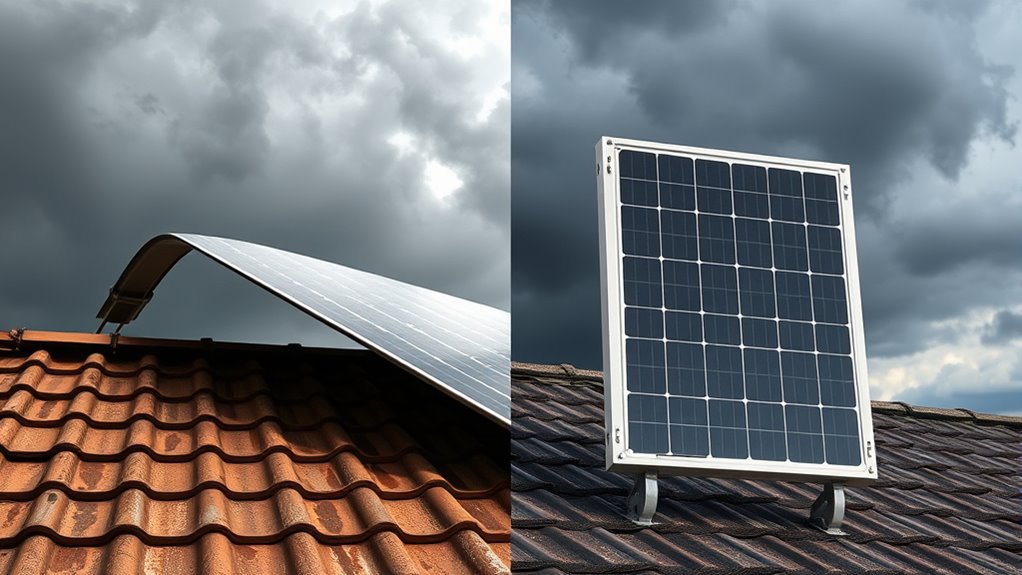
When it comes to durability, you need to contemplate how well each panel type withstands UV exposure and harsh weather. Flexible panels, made with polymers, tend to degrade faster from moisture and sunlight, while rigid panels with glass and aluminum frames resist these elements longer. Understanding impact resistance and how each panel ages over time helps determine which option will hold up best in your environment. Smart home technology can also offer solutions to monitor panel performance and environmental conditions to ensure longevity. Additionally, selecting panels with proper protective coatings can significantly improve their resistance to environmental damage. Incorporating maintenance practices tailored to each panel type can further extend their lifespan and performance. Moreover, considering the market reputation of panel manufacturers can guide you toward more reliable and durable options. Recognizing the importance of material quality can also influence the overall durability and longevity of your panels in challenging conditions.
UV and Weather Resistance
Flexible panels generally degrade faster than rigid ones because their polymers and laminates are more vulnerable to UV radiation, moisture, and temperature fluctuations. UV exposure breaks down flexible materials more quickly, causing discoloration, cracking, and loss of efficiency over time. Moisture penetrates flexible laminates more easily, accelerating delamination and reducing lifespan. Temperature swings cause flexible materials to expand and contract, increasing the risk of cracks and material fatigue. Rigid panels, with tempered glass and sealed frames, resist UV damage better and maintain their structural integrity longer. They also handle environmental stressors like wind, hail, and snow more effectively. Additionally, rigid panels often have superior resistance to environmental stressors, making them more suitable for harsh outdoor conditions. While flexible panels are lightweight and easy to install, their weather resistance diminishes faster, making durability a key consideration for long-term outdoor use.
Impact and Hail Durability
Rigid panels, thanks to their tempered glass and sturdy frames, excel at resisting impact and hail damage, making them a reliable choice for harsh environments. Their robust construction can withstand heavy impacts, such as hailstones or debris, without cracking or breaking. This durability is crucial if you live in storm-prone areas. To give you a clearer picture:
- The tempered glass absorbs impacts, preventing cracks and shattering.
- The aluminum frames add structural integrity, resisting bending or damage.
- Their elevation allows airflow, reducing the risk of accumulation damage from hail.
In contrast, flexible panels are more vulnerable because their polymer laminates are prone to cracking under impact or hail. Rigid panels are better suited for environments with severe weather conditions.
Degradation Over Time
Over time, environmental factors considerably influence the durability of solar panels, with rigid and flexible types responding differently to exposure. Rigid panels, built with glass and aluminum frames, resist UV rays, temperature fluctuations, hail, wind, and snow better, often lasting 25 to 40 years. Flexible panels, made with polymers and laminates, tend to degrade faster—typically 5 to 15 years—due to moisture, UV exposure, and thermal stress. The flexible materials are more prone to cracking, delamination, and moisture infiltration, which can diminish power output. Rigid panels maintain their water-tight seals longer, ensuring consistent performance over decades. Meanwhile, flexible panels require more frequent replacements as their polymers degrade, impacting long-term reliability, especially in harsh environments. Material composition significantly influences how well panels withstand environmental stresses over time.
portable flexible solar panel 100W
As an affiliate, we earn on qualifying purchases.
As an affiliate, we earn on qualifying purchases.
Longevity and Maintenance Considerations for Different Panel Materials

When choosing panel materials, understanding their longevity and maintenance needs is essential for ensuring long-term performance. Rigid panels typically last between 25 and 40 years, thanks to durable glass and aluminum frames that resist UV, hail, and temperature swings. Flexible panels, however, usually last 20 to 30 years; their polymer laminates are more prone to degradation from moisture and UV exposure. To keep your panels in top shape, consider these factors:
- Regular cleaning to remove dirt, debris, and salt buildup, especially on flexible panels.
- Inspecting for cracks or delamination, which are more common in flexible materials.
- Ensuring proper sealing and mounting to prevent moisture ingress and frame damage.
Proper maintenance extends lifespan and maintains efficiency for both types.
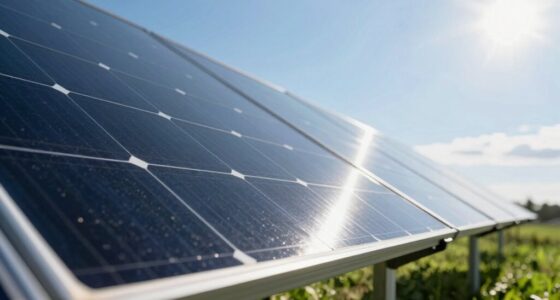
tempered glass rigid solar panel
As an affiliate, we earn on qualifying purchases.
As an affiliate, we earn on qualifying purchases.
Installation Methods and Their Impact on Storage and Durability

Installation methods substantially influence both the ease of setup and the long-term durability of solar panels. Flexible panels adhere directly with adhesive, allowing quick, drill-free installation, ideal for curved surfaces like RVs or boats. Rigid panels require racks, brackets, and hardware, making installation more complex but providing better airflow and protection. Your choice impacts how well the panels withstand environmental factors and how they’re stored. Flexible panels are portable and easy to remove, making them perfect for temporary setups. Rigid panels are heavier and stay fixed, suitable for permanent installations. Here’s a quick comparison:
| Feature | Flexible Panels | Rigid Panels |
|---|---|---|
| Installation | Adhesive, quick | Hardware-based, longer |
| Durability | Sensitive to moisture | Longer-lasting, UV resistant |
| Portability | Highly portable | Less portable |
| Setup Time | Minutes | Hours |
Additionally, flexible panels tend to have lower efficiency compared to rigid options, which can influence long-term energy production and system performance. Proper installation techniques can significantly improve their longevity and effectiveness over time, especially when considering environmental exposure and maintenance practices.
Environmental Susceptibility and Protective Features of Flexible and Rigid Panels
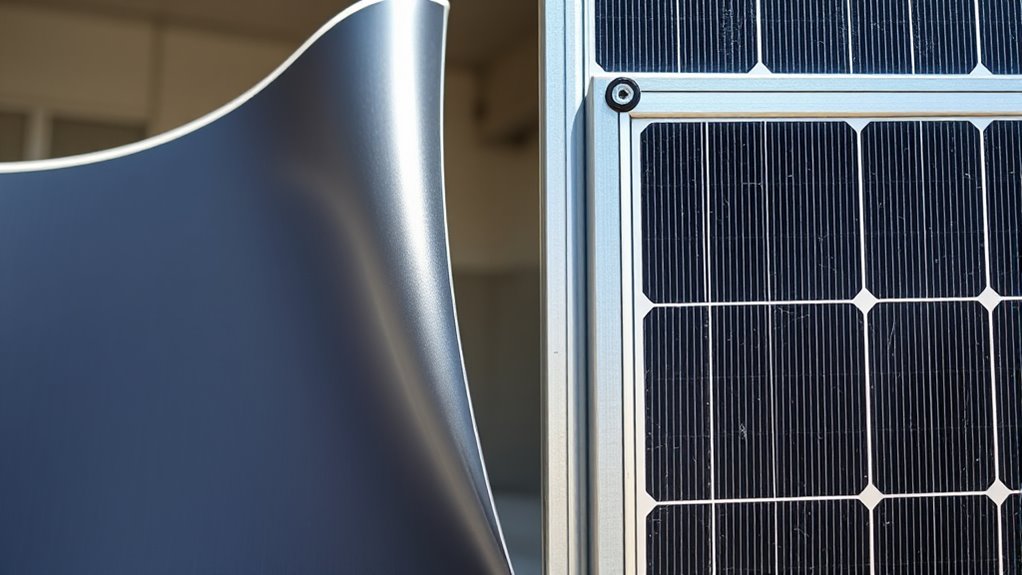
You need to contemplate how flexible and rigid panels handle environmental stresses like UV exposure, impact, and weather. Flexible panels are more vulnerable to UV degradation and damage from impacts, while rigid panels offer better weatherproofing and resistance. Understanding these protective features helps you choose the right panel for your specific environment.
UV Resistance Variability
Flexible and rigid solar panels face different challenges regarding UV resistance due to their construction and materials. Flexible panels often use polymers and thin-film coatings that degrade faster under prolonged UV exposure, leading to potential discoloration and reduced efficiency over time. Polymer degradation is a common issue that affects their longevity. The UV resistance of a panel significantly influences its overall durability and suitability for prolonged outdoor use. Additionally, the environmental susceptibility of flexible panels makes them less ideal for consistently harsh sunlight conditions. Some flexible panels incorporate UV protective coatings****, but these can diminish over time, further impacting their durability. Your choice affects longevity: flexible panels need more frequent replacements in harsh sunlight, whereas rigid panels often withstand UV damage for decades.
Impact Damage Vulnerability
Impact damage is a significant factor in evaluating the durability of solar panels, especially since environmental conditions vary widely. Rigid panels, with their tough glass surface and sturdy frame, resist impacts like hail, debris, or accidental knocks better than flexible panels. They’re designed to withstand harsh weather and minor collisions without cracking or breaking. Flexible panels, while lightweight and adaptable, are more vulnerable to impact damage because their polymer surfaces can crack or delaminate when struck. Although flexible panels excel in curved or hard-to-reach installations, their thinner, softer materials offer less protection against physical impacts. To mitigate this vulnerability, flexible panels often incorporate protective coatings, but they still generally require careful handling to avoid damage. Your choice depends on balancing impact resilience with installation flexibility.
Moisture and Weatherproofing
Moisture and weatherproofing are critical considerations when choosing solar panels, as exposure to rain, snow, humidity, and UV rays can degrade their performance and lifespan. Rigid panels typically have sealed glass faces and sturdy frames that resist water intrusion, offering better long-term protection. Flexible panels, however, are more vulnerable because their polymer laminates can absorb moisture, leading to degradation over time. To understand the differences:
- Rigid panels are sealed with tempered glass and aluminum frames, providing superior waterproofing.
- Flexible panels rely on laminates that may crack or delaminate, allowing moisture ingress.
- Proper sealing and installation are essential for both, but rigid panels generally withstand harsh weather better, ensuring durability and consistent performance over the years.
Cost-Effectiveness Over Time: Balancing Initial Investment and Long-Term Durability
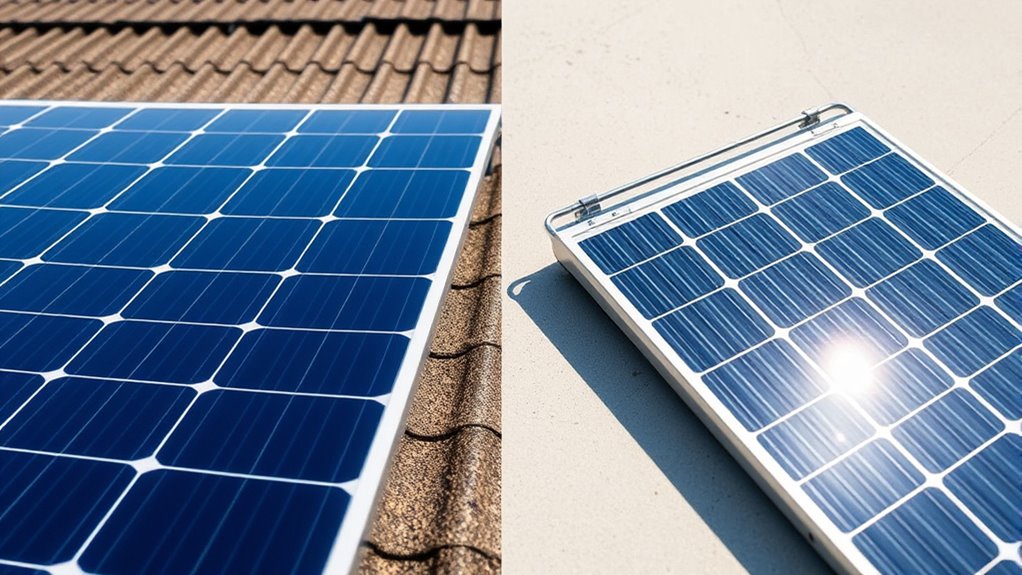
While flexible panels often have a higher upfront cost, their shorter lifespan and lower durability can make them less economical over time. You might pay more initially, but rigid panels tend to last 25-40 years, offering better long-term value. Flexible options typically last 20-30 years or less, often needing replacement sooner due to polymer degradation and exposure damage. Although flexible panels are easier and quicker to install, their reduced durability means ongoing costs for replacements can add up. Rigid panels, despite higher installation costs, provide a better return on investment through their longevity and resistance to weathering. If you’re aiming for a long-term, cost-effective setup, rigid panels usually outweigh flexible options due to their durability and lower lifecycle costs.
Frequently Asked Questions
How Do Flexible Panels Handle Extreme Temperature Fluctuations?
Flexible panels struggle more with extreme temperature fluctuations because their polymers can degrade over time due to moisture and exposure. You might notice reduced efficiency and a shorter lifespan compared to rigid panels, which are better suited to withstand temperature swings thanks to their durable glass and aluminum frames. If you often encounter harsh weather, rigid panels could be a more reliable choice for long-term performance.
Can Flexible Panels Be Repaired After Damage?
Yes, flexible panels can often be repaired after damage, but it depends on the type and extent of the harm. Minor cracks or punctures might be fixable with specialized adhesives or patch kits designed for flexible solar material. However, significant damage may require replacing the entire panel. Keep in mind, repairs might not restore full efficiency, so evaluate whether fixing or replacing makes more sense for your setup.
What Are the Best Storage Practices for Flexible Panels?
You should store flexible panels in a cool, dry place to prevent moisture damage and degradation. Keep them flat or carefully rolled in a protective tube to avoid creases or bends that could weaken the material. Avoid direct sunlight, extreme temperatures, or placing heavy objects on top. If not in use for long periods, cover them with a soft, non-abrasive material to shield against dust and UV exposure.
Do Rigid Panels Need Special Maintenance for Longevity?
Rigid panels do require some maintenance to guarantee longevity. You should regularly clean the glass surface to remove dirt and debris, preventing power loss. Check the aluminum frame for corrosion and tighten any loose fittings. Although durable, they need protection from extreme weather, like hail or heavy snow, which can cause damage. Proper inspections and gentle cleaning help keep your rigid panels performing efficiently for 25 to 40 years.
How Does Panel Flexibility Affect Resistance to Physical Impacts?
Flexible panels are generally less resistant to physical impacts than rigid ones. Since they lack a sturdy glass surface and aluminum frame, they’re more prone to damage from hail, hailstones, or heavy debris. You might find that rigid panels, with their tough glass and sturdy frame, withstand impacts better over time. If you’re in an environment with potential for rough handling or impacts, rigid panels offer better durability and protection.
Conclusion
Choosing between flexible and rigid panels is like picking the right tool for a job—you need to contemplate your specific needs. Flexible panels are lightweight and adaptable, perfect for portable use, while rigid panels offer unmatched durability and efficiency for fixed setups. Think of it as a dance: flexibility lets you move easily, but rigidity provides stability. Weigh your priorities carefully, and you’ll find the perfect match for your energy needs.
Halloween Picks
halloween
As an affiliate, we earn on qualifying purchases.