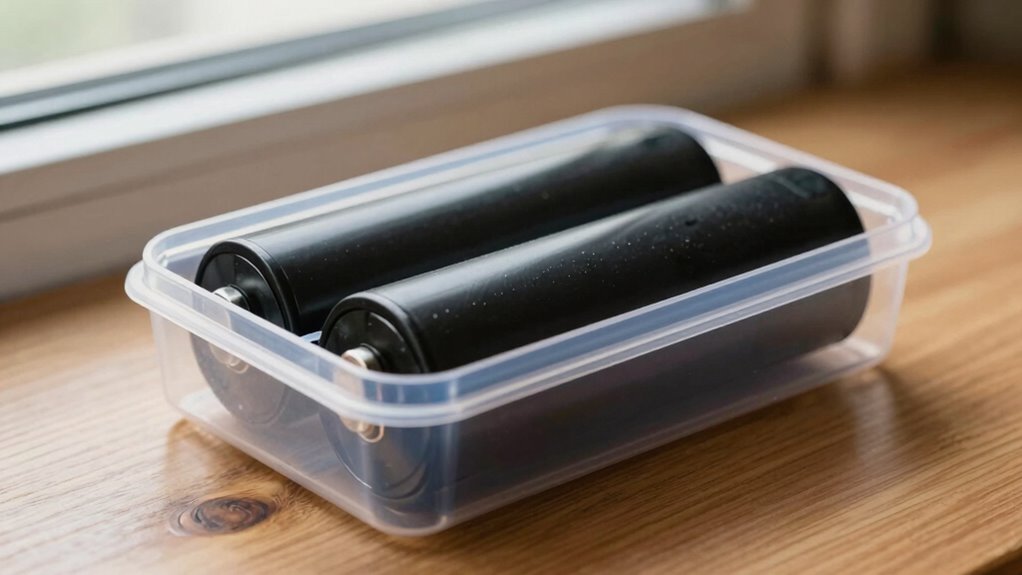

To store a backup battery for months without damage, keep it in a cool, dry place with stable temperatures between 50-77°F. Partially charge it to around 40-60% and avoid fully discharging or full charging before storage. Protect it from sunlight, heat sources, and moisture, and guarantee it’s in a sturdy, airtight container. Regularly check the charge level and condition; more tips to help maintain your battery’s health are just ahead.

Get backup power and energy gear delivered free with Prime
- Fast, free delivery on millions of items
- Prime Video, Amazon Music and more included
- Member-only deals all year
Key Takeaways
- Store the battery in a cool, dry environment between 50-68°F (10-20°C) to maintain chemical stability.
- Keep the charge level around 40-60%, recharging if it drops below 50%.
- Use airtight, moisture-proof containers with silica gel packs to prevent humidity and corrosion.
- Protect the battery from direct sunlight, heat sources, and magnetic fields to avoid degradation.
- Regularly check the battery’s voltage and recharge as needed to prevent capacity loss during long-term storage.
As an affiliate, we earn on qualifying purchases.
Choose the Right Storage Location
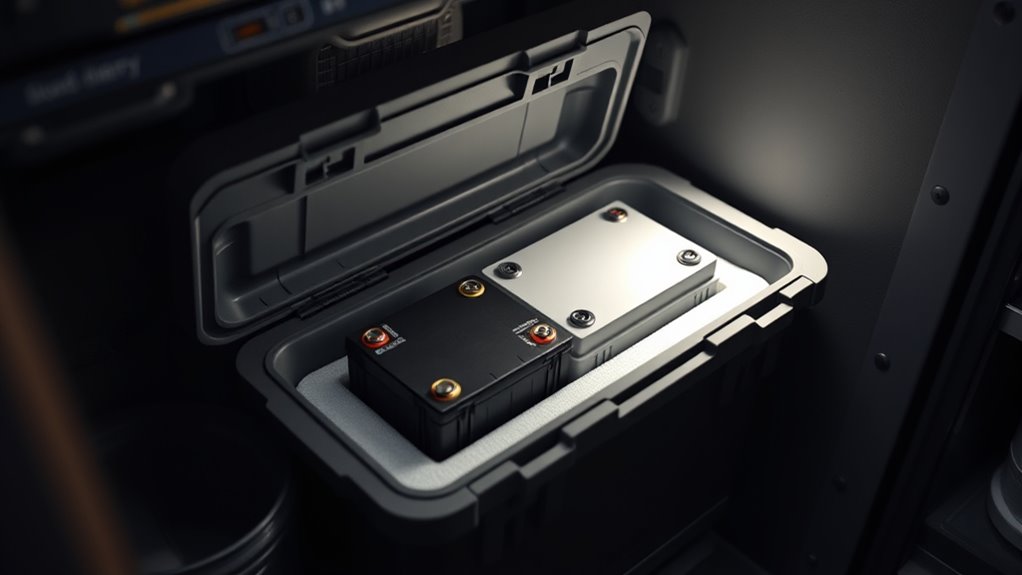
Choosing the right storage location is essential to preserving your backup battery’s lifespan. The battery chemistry determines how sensitive your battery is to environmental factors, so understanding it helps you select a suitable spot. For example, lithium-ion batteries require a cool, dry environment to prevent capacity loss over extended storage durations. Avoid places with high humidity, extreme temperatures, or frequent temperature fluctuations, as these conditions can accelerate degradation. A stable, temperature-controlled area ensures the battery’s integrity remains intact during months of storage. Additionally, keep the battery away from direct sunlight and magnetic fields that could harm its chemistry. Proper storage location supports your goal of maintaining maximum capacity and prolonging the battery’s effective storage duration. Proper environmental conditions help prevent chemical reactions that could damage the battery’s internal components during long-term storage. Maintaining a consistent temperature and humidity level minimizes the risk of chemical degradation, which is crucial for long-term preservation. According to industry standards, monitoring storage environment parameters can further enhance the longevity of your backup batteries by preventing deterioration caused by uncontrolled environmental variables. Proper storage practices are also vital for minimizing capacity loss and ensuring the battery remains ready for use when needed.
lithium-ion battery storage container
As an affiliate, we earn on qualifying purchases.
As an affiliate, we earn on qualifying purchases.
Maintain Proper Temperature Conditions
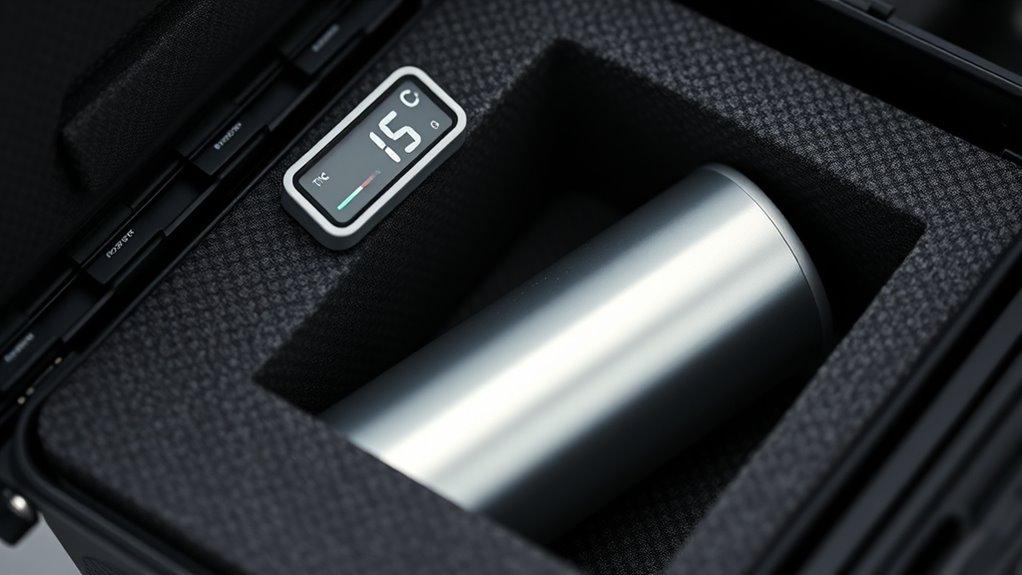
Maintaining proper temperature conditions is essential for preserving your backup battery’s health during storage. Temperature regulation helps prevent capacity loss and extends the battery’s lifespan. Keep the storage area cool and stable, ideally between 50°F and 77°F (10°C to 25°C). Avoid exposing the battery to extreme heat or cold, which can damage internal components. Use insulation techniques, such as wrapping the battery in thermal blankets or placing it inside insulated containers, to buffer against temperature fluctuations. Proper insulation minimizes temperature swings that could harm the battery’s chemistry. Regularly monitor the storage environment with a thermometer to ensure conditions remain consistent. Additionally, understanding the battery’s chemistry can help you better tailor your storage practices for optimal longevity. Being aware of different battery chemistries can guide you in choosing the best storage methods for each type. Proper temperature management and insulation are crucial for preventing capacity degradation and ensuring the battery’s readiness when needed. Recognizing the impact of temperature extremes enables you to implement more effective storage strategies. By controlling temperature and using effective insulation, you safeguard your backup battery’s performance and longevity during months of storage.
As an affiliate, we earn on qualifying purchases.
Keep the Battery Partially Charged
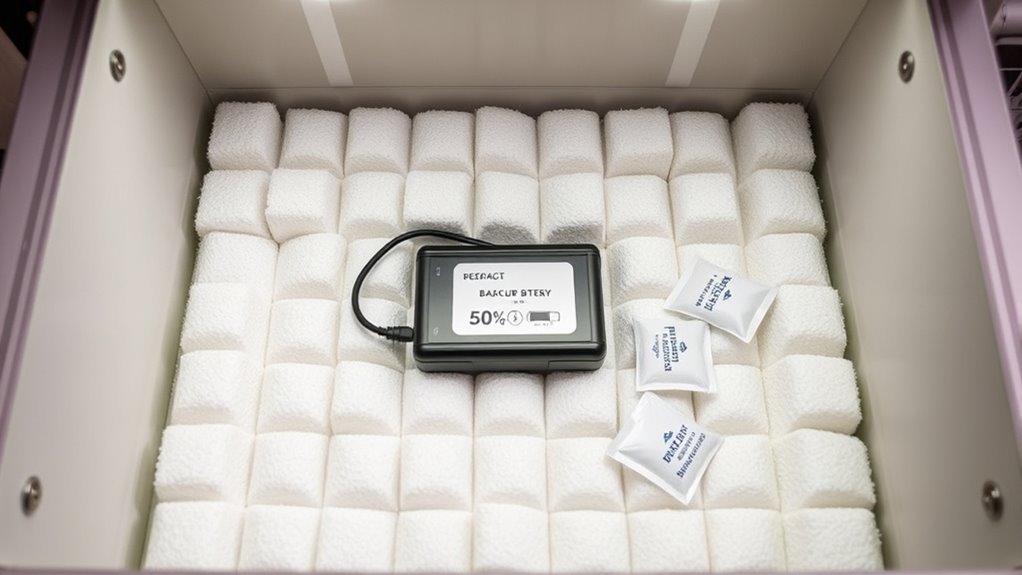
After confirming your storage environment stays at a stable, cool temperature, the next step is to keep the battery partially charged. Depending on the battery chemistry, maintaining a charge level around 40-60% helps prevent capacity loss over the storage duration. Lithium-ion batteries, for example, degrade faster if kept fully charged or completely discharged for extended periods. By keeping the battery partially charged, you reduce stress on the cells and slow down chemical reactions that cause deterioration. Regularly check the charge level and recharge if it drops below the recommended range. Additionally, proper storage conditions such as avoiding temperature fluctuations can further help preserve battery health. Ensuring the storage environment remains consistent and suitable is essential for long-term battery preservation. Proper partial charging, especially for battery longevity, is key to preserving battery life during long-term storage. This approach ensures your backup battery remains healthy and ready to perform when needed, even after months of storage.
As an affiliate, we earn on qualifying purchases.
Avoid Full Discharges Before Storage
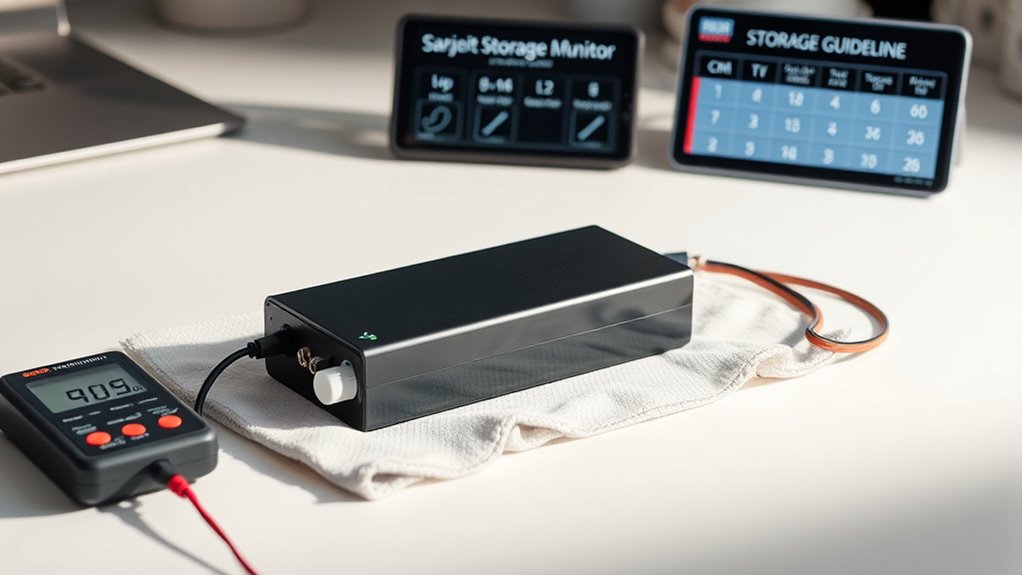
Before storing your backup battery, make sure it isn’t fully discharged, as deep voltage drops can damage it. Keeping it partially charged helps preserve its health over time. Avoid letting the voltage fall too low to guarantee your battery stays ready when you need it.
Keep Battery Partially Charged
To prevent damage during storage, you should keep your backup battery partially charged rather than letting it fully discharge. This approach helps preserve the battery’s chemistry and prolongs its storage duration. A fully discharged battery can suffer from capacity loss or internal damage. Ideally, aim for 40-60% charge level before storing. Visualize this as a simple chart:
| State of Charge | Effect on Battery |
|---|---|
| Fully Discharged | Risks internal damage |
| 40-60% Charged | Suitable for storage |
| Fully Charged | Accelerates aging |
| Low Charge | Limits capacity loss |
Maintaining this optimal charge level also helps prevent issues related to battery chemistry degradation over time. Proper storage practices, such as keeping the battery in a cool, dry place and avoiding temperature fluctuations, are essential to ensure your backup battery remains reliable when you need it most, and regular monitoring can help detect potential issues before they become critical. Additionally, periodic check-ins help preserve battery health during long-term storage.
Prevent Deep Voltage Drops
Have you ever wondered why deep discharges harm your backup battery during storage? When a battery drops to very low voltage levels, it risks damaging the cells, reducing voltage stability, and shortening its overall lifespan. To prevent this, avoid letting your battery fully discharge before storing it. Keep the voltage within a safe range to maintain its health. Additionally, understanding battery performance and how it declines with improper storage can help you extend its useful life. Proper storage conditions can also influence battery longevity and overall capacity retention. Recognizing how Vetted – Soaring Skyways batteries are tested and rated can provide further insight into optimal storage practices. Maintaining appropriate body jewelry that fits well and is made from suitable materials can also prevent unnecessary stress on the battery system in electronic devices. Regularly monitoring the voltage levels during storage is essential to ensure the battery remains within the safe operating range. Consider these tips:
- Regularly check the battery’s voltage during storage
- Recharge if voltage drops below recommended levels
- Use a maintenance charger to sustain proper voltage
- Avoid leaving the battery in a drained state for long periods
- Store in a cool, dry environment to minimize voltage fluctuations
Store in a Dry, Cool Environment
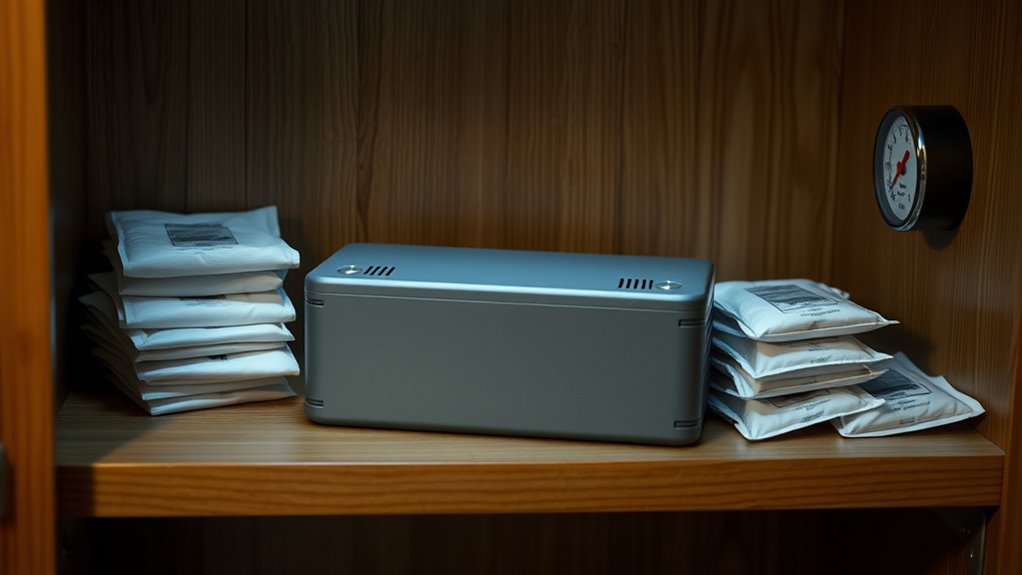
Storing your backup battery in a dry, cool environment is essential for maintaining its lifespan and performance. Excess moisture can lead to moisture control issues, increasing the risk of corrosion inside the battery. High temperatures accelerate chemical reactions, which can damage the internal components and reduce capacity. Aim to store your battery in a space with stable, low humidity and temperatures between 50-77°F (10-25°C). Avoid places prone to temperature fluctuations or damp conditions, such as basements or garages. By keeping your backup battery in a dry, cool spot, you help prevent corrosion and preserve its overall health, ensuring it remains reliable when you need it most. Proper storage extends your battery’s usability and protects your investment. Remember that battery chemistry can influence how sensitive your battery is to storage conditions, so understanding its specific needs can help optimize longevity. Additionally, checking the manufacturer’s guidelines for storage recommendations can further ensure your battery remains in optimal condition over extended periods. To further protect your backup battery, consider using a protective case to prevent accidental damage during storage. Regularly inspecting and cycling the battery can also help maintain its capacity during long-term storage to prevent degradation. Furthermore, understanding storage environment factors such as humidity and temperature variations can significantly impact your battery’s health over time.
Use Protective Packaging or Containers

Using the right protective packaging helps prevent damage and prolongs your battery’s lifespan. You should store it in insulated containers to guard against temperature fluctuations and avoid metal contact that could cause short circuits. Additionally, make sure the container stays dry to prevent corrosion and other issues.
Use Insulated Containers
Insulated containers are essential for protecting backup batteries during storage, especially when you need to prevent temperature fluctuations from damaging them. Using thermal insulation helps maintain a stable environment, reducing the risk of capacity loss or failure. Select a container designed specifically for thermal insulation to maximize protection. Keep these tips in mind:
- Choose containers with thick walls for better insulation
- Use foam padding inside to prevent movement
- Avoid containers with metal parts that conduct heat
- Ensure the lid fits tightly to seal out temperature changes
- Store in a cool, dark place for ideal results
Avoid Metal Contact
Metal contact can cause significant damage to backup batteries during storage, leading to corrosion, short circuits, or capacity loss. To prevent this, always use protective packaging or containers that keep the battery’s terminals isolated. Wrap the battery in non-conductive materials like plastic or foam, or store it in a container with insulating lining. Avoid loose metal objects or tools near the battery, as they can create unintended contact. Proper insulation acts as a barrier, reducing the risk of corrosion caused by exposure to moisture or air. When handling the battery, double-check that no metal parts touch each other or external conductors. Implementing these measures ensures corrosion prevention and extends your backup battery’s lifespan during months of storage.
Keep Dry Environment
To keep your backup battery in ideal condition during storage, maintaining a dry environment is essential. Moisture absorption can lead to corrosion, which damages the internal components and shortens the battery’s lifespan. Using protective packaging or containers helps prevent moisture buildup and keeps the battery safe. Consider these tips:
- Store the battery in airtight, moisture-proof containers
- Use silica gel packs to absorb excess humidity
- Keep the container away from humid environments, like bathrooms or basements
- Avoid plastic bags that trap moisture; opt for sealed plastic or metal containers
- Regularly check and replace silica gel packs for sustained corrosion prevention
Regularly Check and Recharge the Battery
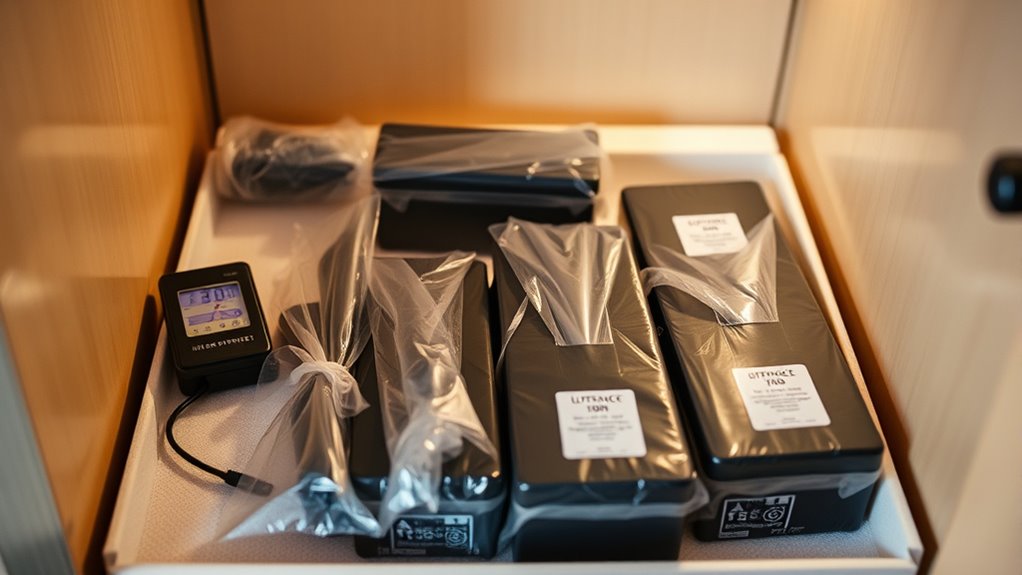
Regularly checking and recharging your backup battery is essential to keep it in ideal condition over extended storage periods. Different battery chemistries, like lithium-ion or nickel-metal hydride, require specific attention to maintain capacity. As storage duration extends, self-discharge can reduce the charge level and harm the battery’s health. By periodically testing the voltage and recharging as needed, you prevent deep discharge, which can cause permanent damage. Aim to recharge the battery to about 50-70%, depending on its chemistry, and check it every few months. This routine helps preserve its longevity and ensures readiness when you need it. Consistent maintenance minimizes the risk of capacity loss over time, keeping your backup power reliable without risking damage from neglect.
Prevent Physical Damage and Pressure

Storing your backup battery properly also means protecting it from physical damage and pressure, which can compromise its integrity. Damage to the battery casing can lead to leaks or reduced performance, while pressure effects may cause internal components to shift or break. To prevent this, keep your battery in a secure, cushioned container. Avoid stacking heavy objects on top of it or placing it in tight spaces. Handle it with care during storage to prevent dents or cracks. Use a padded box or foam inserts to absorb shocks and distribute pressure evenly. Regularly check for any signs of damage or deformation, and replace if necessary. Protecting the battery from physical harm ensures it remains functional and safe for long-term storage.
Avoid Exposure to Direct Sunlight and Heat Sources
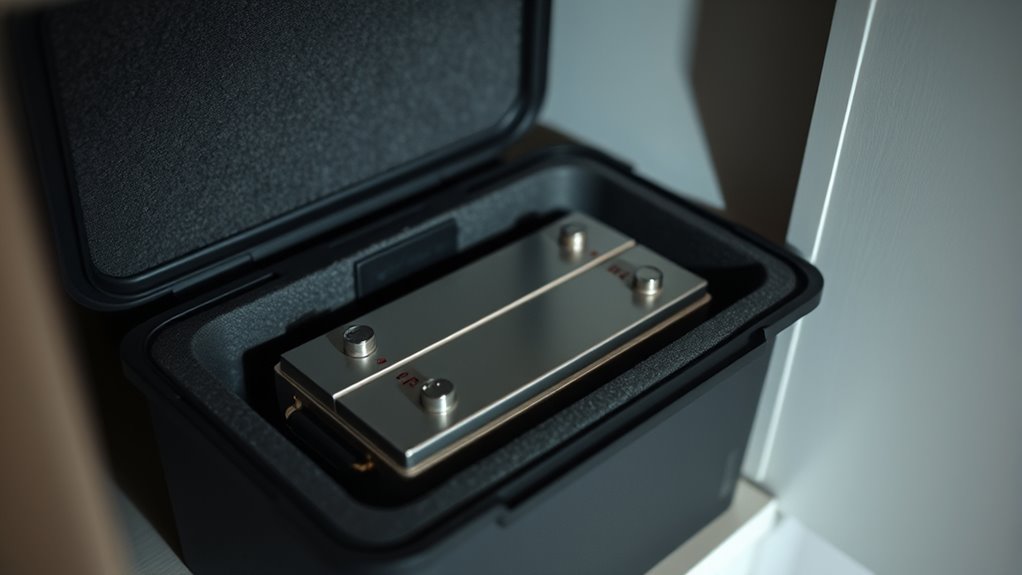
You should always store your backup battery in a cool, shaded place away from direct sunlight. Heat can harm the battery’s components and decrease its lifespan. Keep it out of hot environments to make certain it stays in good condition over time.
Store in Cool Environment
To keep your backup battery in good condition during storage, it’s essential to place it in a cool environment away from direct sunlight and heat sources. High temperatures can accelerate charging cycles, reducing your battery’s lifespan. A consistent, moderate temperature helps maintain ideal chemical stability and prevents capacity loss.
Consider these tips:
- Store in a temperature between 50-68°F (10-20°C).
- Avoid places near heaters, radiators, or vents.
- Use insulated storage containers if needed.
- Check the storage area regularly for temperature fluctuations.
- Keep the battery away from direct sunlight, which can cause temperature spikes.
Shield From Sunlight
Exposure to direct sunlight and heat sources can quickly damage your backup battery, causing it to degrade faster and lose capacity. To prevent this, make certain your storage area offers good UV protection and heat shielding. Keep the battery in a shaded, cool spot away from windows or outdoor exposure. UV rays can harm the battery’s casing and internal components, accelerating deterioration. Using a protective cover or storing it inside an insulated container can block harmful rays and reduce temperature fluctuations. Avoid places like garages, attics, or sunny shelves where heat builds up easily. Proper shielding from sunlight helps maintain the battery’s integrity over months, ensuring it’s ready when you need it and prolonging its lifespan.
Follow Manufacturer Recommendations for Storage
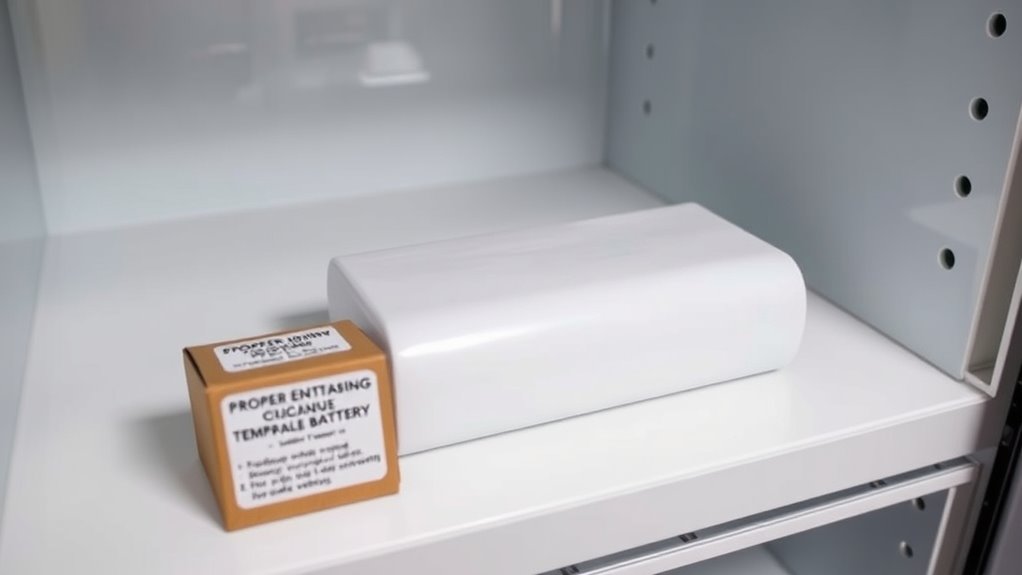
Following the manufacturer’s storage instructions is essential to keep your backup battery in ideal condition. Different battery chemistries require specific storage conditions to maximize their storage duration and prevent damage. Always consult the manual or manufacturer guidelines for your battery type. Proper storage can extend its lifespan and ensure it’s ready when needed. Keep in mind:
- Maintain recommended temperature ranges for your battery chemistry
- Store at the optimal state of charge specified by the manufacturer
- Avoid prolonged storage in fully charged or depleted states
- Check for any special instructions regarding ventilation or humidity
- Follow recommended storage duration limits to prevent capacity loss
Frequently Asked Questions
How Long Can a Backup Battery Be Stored Without Losing Capacity?
You can typically store a backup battery for several months without losing significant capacity if you follow proper storage techniques. To maximize battery lifespan, keep it in a cool, dry place, ideally at around 50% charge, and avoid extreme temperatures. Regularly check the battery if stored long-term, and recharge it as needed. Proper storage helps prevent capacity loss and guarantees your backup battery remains ready when you need it.
Does Storage Temperature Affect Different Battery Chemistries Equally?
Storage temperature affects different battery chemistries uniquely because each chemistry reacts differently to temperature changes. For instance, lithium-ion batteries perform best at room temperature, while nickel-based chemistries tolerate a wider range. You should consider the storage environment carefully, keeping batteries in a cool, dry place to prevent capacity loss. Always check the manufacturer’s recommendations for your specific battery chemistry to guarantee ideal storage and prolong its lifespan.
Can I Store Multiple Backup Batteries Together Safely?
You can store multiple backup batteries together safely if you use proper storage containers and make certain each battery is insulated. Coincidentally, many accidents happen because people neglect insulation, causing short circuits. Always keep batteries separated with non-conductive materials and in ventilated containers. This setup prevents contact and minimizes risks, so you protect your backup power supply and avoid potential hazards during storage.
What Are Signs of Battery Degradation During Long-Term Storage?
During long-term storage, you’ll notice battery degradation if you see signs like battery leakage or corrosion indicators around the terminals. You might also observe reduced capacity or the battery not holding a charge as well as before. Keep an eye out for swelling or bulging, which signals internal damage. If you spot any of these signs, it’s best to replace the battery to avoid potential safety hazards or equipment damage.
Is It Necessary to Periodically Rotate Stored Batteries for Longevity?
You should periodically rotate stored batteries to maintain their longevity. Regular battery maintenance, including cycling and checking for capacity loss, helps prevent degradation. Keep your storage environment cool, dry, and at a consistent temperature to avoid damage. Rotating batteries ensures they don’t sit unused for too long, which can lead to capacity loss. This proactive approach preserves battery health, ensuring they’re ready when you need them most.
Conclusion
If you follow these simple steps, your backup battery will stay perfectly healthy for months—like a superhero in a fortress, ready to save the day whenever you need it! Don’t let neglect turn it into useless scrap or a ticking time bomb. Keep it cool, dry, and partially charged, and you’ll have a reliable power source waiting patiently for your call. With proper care, your backup battery will outlast even the most stubborn apocalyptic scenarios!
Halloween Picks
halloween
As an affiliate, we earn on qualifying purchases.