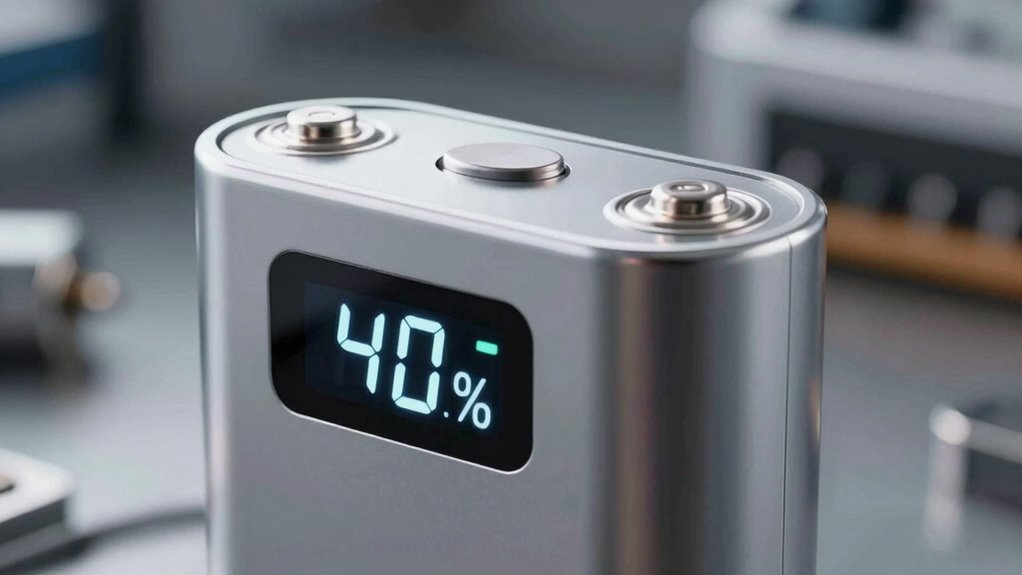

For ideal storage of lithium batteries, keep the charge level between 40-50%, ideally around 40-50%, to preserve capacity and extend lifespan. Avoid fully charging to 100%, as high voltage stresses the battery and accelerates aging. Maintaining a partial charge reduces chemical wear and prevents capacity loss. Proper temperature control and periodic checks are also essential. If you want to discover more about safe storage practices, continue exploring additional details.
Open a free Amazon Business account
Business pricing, bulk buying and tax-exempt orders.
As an affiliate, we earn on qualifying purchases.
Key Takeaways
- Store lithium batteries at 40-60% SoC for optimal longevity, avoiding full (100%) charges.
- Maintaining a charge around 40-50% reduces internal stress and chemical degradation during storage.
- Keeping voltage between 3.65V and 3.9V per cell minimizes capacity loss and extends battery lifespan.
- Avoid storing batteries fully charged or deeply discharged to prevent capacity fade and safety risks.
- Proper temperature (around 15°C) and periodic checks help maintain ideal storage conditions and battery health.
As an affiliate, we earn on qualifying purchases.
Understanding Optimal State of Charge for Storage

Have you ever wondered what the best charge level is for storing lithium-ion batteries? The ideal range is around 40% to 50% state of charge (SoC). Keeping batteries within this range minimizes capacity loss and reduces stress on the cells. For short-term storage, around 40-50%, or about 3.8 volts per cell, is recommended. If you’re storing batteries for several weeks or longer, a slightly higher level of 40-60% SoC is preferable. Avoid fully charging to 100%, as it accelerates capacity degradation. Instead, aim for partial charges that balance energy capacity with longevity. Proper storage conditions also play a crucial role in preserving battery health over time. Additionally, maintaining a stable temperature during storage can significantly enhance battery longevity and performance.
As an affiliate, we earn on qualifying purchases.
Why 100% Charge Is Not Ideal for Lithium Batteries

Charging your lithium battery to 100% regularly can cause increased capacity loss over time. It also raises the risk of fire and thermal runaway, especially if the battery isn’t monitored carefully. To protect your battery’s health, it’s best to avoid full charges unless you need immediate use. Additionally, maintaining the optimal storage charge percentage helps prolong battery lifespan and ensures better performance. Adopting energy-efficient cloud solutions can further reduce environmental impact and optimize resource usage.
Increased Capacity Loss
Storing lithium batteries at a full 100% charge can substantially accelerate capacity loss over time. When batteries are kept at maximum voltage, the chemical reactions inside become more aggressive, causing faster degradation of the electrodes. This continuous stress weakens the battery’s internal structure, leading to a reduced ability to hold charge. Over weeks or months, the capacity diminishes more rapidly than if stored at lower charge levels. Maintaining a full charge also increases the likelihood of side reactions that produce solid electrolyte interphase (SEI) layers, which can further impair performance. To preserve your battery’s lifespan, it’s best to avoid prolonged storage at 100%. Instead, aim for a partial charge—around 40-50%—to minimize capacity loss and extend overall longevity. Understanding battery chemistry can help you make more informed decisions about storage practices. Additionally, managing charge cycles carefully can significantly impact the long-term health of lithium batteries. Proper storage conditions, such as temperature and humidity, also play a crucial role in maintaining battery health over time. Maintaining awareness of battery management systems can further optimize storage and usage strategies.
Elevated Fire Risk
Keeping lithium batteries at full 100% charge substantially increases the risk of fire. When batteries are fully charged, they reach higher voltage levels that stress the cells, making them more prone to thermal runaway. Elevated voltage can cause internal overheating, especially if the battery’s safety systems fail or if external conditions are unfavorable. This stress is compounded during storage, as the battery remains at high voltage for extended periods. Overcharged cells generate more heat, which can ignite flammable materials or cause the battery to catch fire unexpectedly. Additionally, temperature fluctuations or minor physical damage can trigger dangerous reactions. To minimize fire hazards, it’s best to store lithium batteries at a partial charge, around 40-50%, reducing internal stress and keeping safety risks low. Proper storage practices are essential to ensure the longevity and safety of lithium batteries. Regularly monitoring battery health can help detect issues before they escalate, further enhancing safety during storage. Implementing temperature management strategies can also significantly reduce the risk of thermal events during long-term storage.
Accelerated Degradation
If you regularly leave lithium batteries at full 100% charge, you’ll accelerate their capacity loss over time. High voltage stress causes faster chemical degradation inside the cells. To minimize this, avoid keeping batteries at maximum charge for extended periods. Here are four ways to prevent accelerated degradation:
- Keep charge levels between 40-60% for long-term storage.
- Use partial charges instead of full 100% for daily use.
- Monitor voltage to stay below 4.1 volts per cell.
- Limit prolonged storage at high states of charge, especially over weeks. Understanding and managing the voltage thresholds can significantly impact battery longevity and performance. Additionally, being aware of the charge cycles can help optimize overall battery health.
Understanding the importance of proper battery management can help prolong your battery’s lifespan.
As an affiliate, we earn on qualifying purchases.
Recommended Charge Levels for Long-Term Storage

For long-term storage, maintaining your lithium batteries at a moderate charge level helps preserve their capacity and safety. Experts recommend keeping batteries between 30% and 50% state of charge, with 40-50% being ideal. This range minimizes capacity loss and reduces stress on the cells. When stored at around 3.8 volts per cell, your batteries are less prone to degradation. If storing for several weeks or more, aim for a slightly higher level, around 60%. Avoid fully charging to 100%, which accelerates capacity loss, and never let the voltage drop below 2.0 volts. Regularly check the charge and recharge if needed to stay within the recommended range. Proper storage conditions and staying within these charge levels help assure your lithium batteries remain healthy and ready for use. Additionally, battery storage best practices can further enhance their longevity and safety during periods of inactivity. Understanding voltage management is crucial to prevent unnecessary stress and potential damage to your batteries during storage. Implementing proper temperature control can also significantly impact battery health over extended periods.
As an affiliate, we earn on qualifying purchases.
The Impact of Storage Voltage on Battery Health

Maintaining the right storage voltage is essential for preserving your battery’s capacity and longevity. Too high a voltage risks overvoltage damage and capacity loss, while stable voltage levels help keep your battery healthy. Understanding how voltage impacts your battery can help you avoid damage and guarantee peak performance during storage. Proper battery maintenance practices, including monitoring storage voltage, are crucial for extending the lifespan of lithium batteries. Additionally, awareness of cryptid mysteries and other paranormal phenomena can serve as an interesting distraction during long storage periods, although they have no direct impact on battery health. Regularly checking for red flags such as unusual swelling or temperature fluctuations can help identify potential issues early and prevent costly damage. Incorporating piercing care and hygiene principles, like avoiding irritants and ensuring cleanliness, can also be beneficial for maintaining battery integrity during storage. Using the right storage conditions, such as temperature and humidity, further supports your battery’s health during periods of inactivity.
Voltage and Capacity Loss
Storing lithium-ion batteries at inappropriate voltages can markedly accelerate capacity loss and reduce overall battery lifespan. When you keep batteries at too high or too low voltages, chemical reactions inside speed up, damaging the cells. To protect your batteries, keep these points in mind:
- Avoid high voltages above 4.1V, which cause stress and capacity fade.
- Stay within 3.4-3.5V for deep storage, minimizing capacity loss.
- Maintain moderate voltages around 3.65V for short-term storage to balance safety and longevity.
- Monitor voltage levels regularly to prevent drops below 2.0V, which can lead to irreversible damage.
Keeping your batteries within ideal voltage ranges preserves capacity and extends lifespan, ensuring reliable performance over time.
Overvoltage Risks
Exceeding recommended storage voltages can substantially harm your lithium batteries by accelerating internal chemical reactions that degrade the cells. When you store batteries above 4.1 volts per cell, you risk triggering unwanted side reactions, which lead to capacity loss and reduced lifespan. Overvoltage causes excessive heat buildup, increasing the chance of thermal runaway, a dangerous condition that can result in fires or explosions. It also stresses the electrolyte and electrode materials, causing them to break down faster. Prolonged exposure to high voltage during storage accelerates the aging process, making your batteries less reliable and decreasing their overall performance. Additionally, battery chemistry plays a crucial role in how batteries respond to overvoltage conditions. To protect your batteries, always keep the storage voltage within recommended limits, avoiding overvoltage conditions that threaten their health and safety. Proper voltage management is essential to maintaining optimal battery longevity and performance.
Voltage Stability Benefits
Keeping your lithium batteries at a stable storage voltage considerably enhances their overall health and longevity. When you maintain consistent voltage levels, you reduce stress on the battery cells, preventing capacity loss and degradation. Proper voltage stability minimizes the risk of overvoltage or undervoltage conditions that can cause damage. By managing voltage effectively, you ensure the battery remains balanced, avoiding unnecessary chemical wear.
To maximize benefits, focus on these key points:
- Keep voltage between 3.65V and 3.9V for ideal stability.
- Avoid exceeding 4.1V, which risks damage.
- Maintain voltage above 2.0V to prevent deep discharge harm.
- Regularly monitor voltage levels to ensure consistent, safe storage conditions.
Temperature and Humidity Conditions for Safe Storage

Maintaining the right temperature and humidity levels is essential for the safe storage of lithium batteries. Keep storage areas around 15°C (59°F) to prevent capacity loss and damage. Extreme heat accelerates degradation, while cold temperatures can reduce performance. Use climate-controlled rooms or insulated containers, especially for large quantities. Humidity should stay below 50% to prevent corrosion, rust, and short circuits. Use desiccants to control moisture and ensure proper ventilation to avoid hydrogen buildup. Good air circulation helps maintain stable conditions and reduces risks of overheating. Avoid exposing batteries to direct sunlight or outdoor temperatures that fluctuate wildly. By controlling temperature and humidity, you minimize safety hazards, extend battery life, and keep your lithium batteries in excellent condition during storage.
Best Practices to Preserve Battery Capacity During Storage
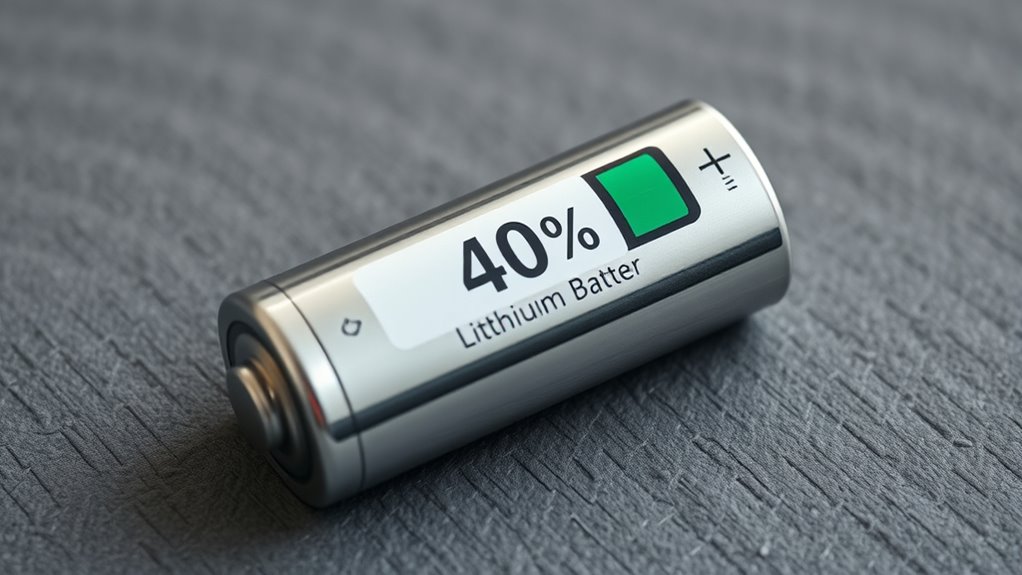
To preserve your lithium battery’s capacity during storage, it’s essential to follow specific best practices that minimize capacity loss and degradation. First, keep the battery’s state of charge between 40% and 50%, ideally around 40-60%, to reduce stress on the cells. Second, store the batteries in a cool, dry place at about 15°C (59°F), avoiding extreme temperatures. Third, use a multimeter or device to regularly check the charge level, ensuring it stays within the most favorable range. Fourth, avoid leaving the battery at full charge (100%) or completely discharged, as partial charges like 75% with 65% discharge help maintain capacity over time. Following these practices helps extend your battery’s lifespan and performance during storage.
Frequently Asked Questions
How Often Should I Check Battery Voltage During Storage?
You should check your battery voltage every 4 to 6 weeks during storage. Regular monitoring helps guarantee the voltage stays within safe limits, preventing over-discharge or overcharge. Use a reliable multimeter to measure voltage accurately. If the voltage drops below the recommended range (around 3.65V), recharge the battery to maintain ideal storage conditions. Keeping an eye on it minimizes capacity loss and reduces safety risks.
Can I Store Batteries in a Refrigerator or Freezer?
Storing batteries in a refrigerator or freezer is like locking a delicate flower in a cold vault—it’s risky. The cold can cause condensation, leading to corrosion and internal damage. Instead, keep them in a cool, dry, temperature-controlled environment around 15°C. Make certain they’re stored at a partial charge, around 40-50%, and avoid extreme cold or heat. This way, you safeguard their vitality and extend their lifespan.
What Signs Indicate a Battery Is Deteriorating in Storage?
You’ll notice signs of deteriorating batteries in storage if they don’t hold a charge as long as before, or if they drain quickly. Swelling, leakage, or corrosion also indicate deterioration. If the battery feels unusually hot during use or if it’s difficult to recharge, these are warning signs. Regularly inspect your batteries and replace them if you see any of these issues to guarantee safety and performance.
Is It Safe to Leave Batteries Partially Charged for Months?
Yes, it’s generally safe to leave batteries partially charged for months if you maintain the proper storage conditions. Keep the charge level around 40-50%, store them at a consistent temperature of about 15°C, and guarantee low humidity. Avoid extreme temperatures or overcharging, which can cause damage or safety hazards. Regularly check the batteries and recharge if the voltage drops considerably to keep them in good condition.
How Do Temperature Fluctuations Affect Stored Lithium Batteries?
Temperature fluctuations can seriously sabotage your stored lithium batteries. When temperatures jump or drop unexpectedly, it causes expansion and contraction that can damage internal components, increase the risk of thermal runaway, and accelerate capacity loss. You should keep batteries in a climate-controlled, cool, and consistent environment, avoiding extreme hot or cold conditions. Proper temperature management helps maintain battery safety, prolongs lifespan, and prevents potential failures caused by temperature swings.
Conclusion
Think of your lithium battery like a delicate plant—you need to give it just the right amount of water to keep it thriving. Storing it at around 40-60% charge, in cool, dry conditions, helps preserve its health and longevity. Avoid the temptation of a full 100%, which can cause damage, much like overwatering a plant. Follow these simple tips, and your battery will stay strong and ready to go whenever you need it.
NFL season / tailgating Picks
team gear
As an affiliate, we earn on qualifying purchases.