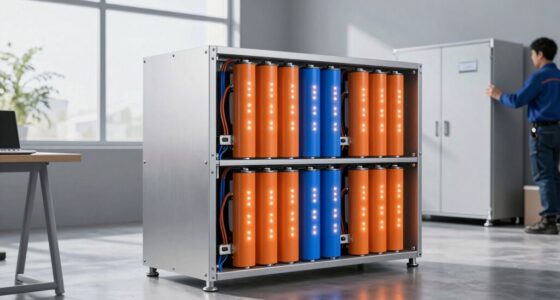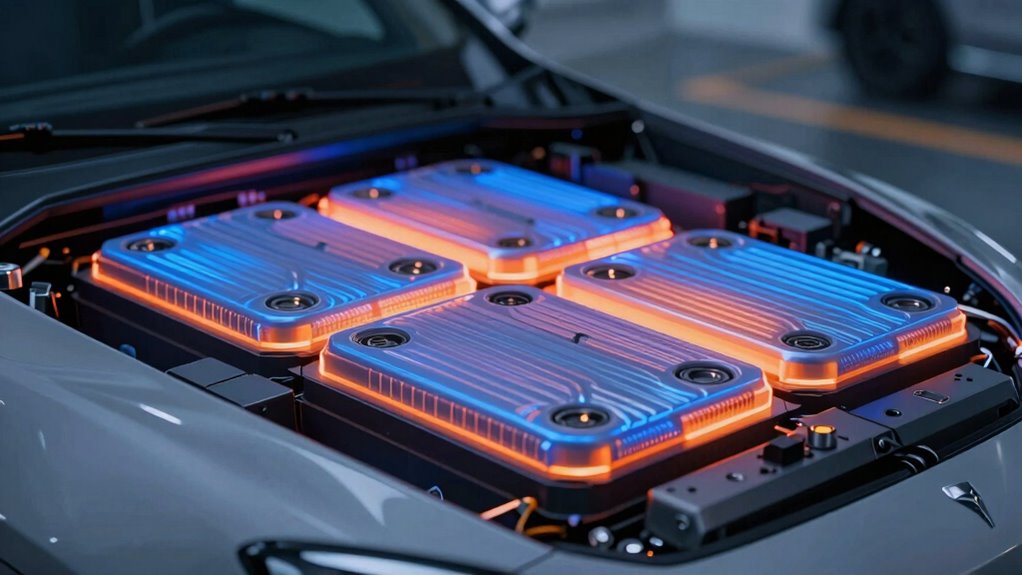

Battery temperature impacts its performance, lifespan, and safety more than you might realize. When it gets too hot, chemical reactions speed up, causing faster aging and potential damage. Cold temperatures slow internal processes, reducing power and charging speed. Poor thermal management leads to quicker degradation and can even cause safety issues. By understanding how temperature affects your battery, you can prevent issues before they happen. Stick around to discover more about keeping your battery in the ideal range.
Key Takeaways
- Extreme temperatures accelerate battery aging, reducing lifespan and effectiveness.
- Overheating causes faster chemical degradation, impairing performance and safety.
- Cold conditions slow chemical reactions, decreasing power output and charging speed.
- Proper thermal management prevents internal stress and preserves battery health over time.
- Maintaining optimal temperature extends battery life and ensures consistent, reliable operation.
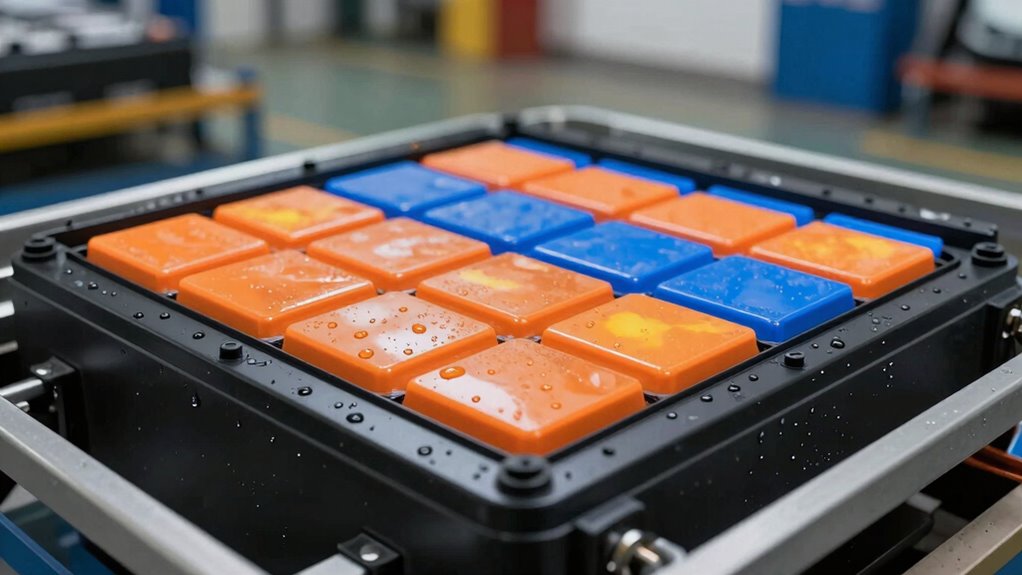
Battery temperature plays a crucial role in maintaining ideal performance and longevity. When your battery operates within the right temperature range, it performs efficiently, charges quickly, and lasts longer. On the other hand, temperature extremes can accelerate battery aging, reducing its overall lifespan and effectiveness. If you neglect thermal management, your battery might heat up too much during use or charging, leading to faster degradation. Excessive heat causes chemical reactions inside the battery to proceed at an accelerated rate, which speeds up battery aging and diminishes capacity over time.
Proper battery temperature management is essential for optimal performance and long-lasting health.
Conversely, cold temperatures can also be problematic. When your battery gets too cold, its internal chemical processes slow down, resulting in decreased power output and slower charging. This stress from temperature fluctuations stresses the battery’s internal components, making it more vulnerable to wear and tear. Over time, these thermal stresses contribute to a decline in performance, even if the battery appears to be functioning normally. Proper thermal management becomes essential to keep your battery within a safe operating temperature range, preventing both overheating and freezing conditions that could cause damage. Additionally, understanding the chemical reactions involved in battery operation can help you better grasp how temperature impacts performance and longevity.
You might not realize how profoundly temperature impacts your battery’s health. High temperatures don’t just cause discomfort; they accelerate battery aging by increasing internal resistance and degrading electrolytes. This degradation results in reduced capacity and a shorter overall lifespan. If your device or vehicle lacks good thermal management, these effects happen faster, forcing you to replace batteries more often. Maintaining prime temperature conditions isn’t just about immediate performance; it’s about protecting your investment over the long term. Understanding thermal management techniques can help you optimize your device’s lifespan and performance. Proper thermal regulation strategies are vital for preventing thermal stress and ensuring consistent operation.
To extend your battery’s life, you should pay attention to how it’s managed thermally. Many devices incorporate cooling systems, such as fans or liquid cooling, to prevent overheating during intensive use. Others have built-in safeguards that reduce charging rates when temperatures get too high. If you’re in an environment with extreme temperatures, consider using insulating covers or storing your device in a temperature-controlled space. These simple steps help minimize thermal stress, slowing down battery aging and preserving capacity. Recognizing thermal management techniques is crucial in safeguarding your battery’s health over time. Furthermore, monitoring temperature levels with dedicated sensors can provide real-time feedback to prevent thermal damage.
Ultimately, understanding the importance of thermal management and controlling your battery’s temperature isn’t just a technical detail—it’s a key factor in ensuring your device or vehicle operates reliably and lasts longer. By keeping your battery within its ideal temperature range, you’re actively reducing degradation, enhancing performance, and extending its usable life. Never underestimate how much temperature influences your battery’s health; a little attention to heat can make a big difference.

Modern Battery Management System Engineering: State Estimation, Cell Balancing, and Protection Design for Li-Ion, LFP, and Solid-State EV Packs (Electric Vehicle & Battery Engineering Series)
As an affiliate, we earn on qualifying purchases.
As an affiliate, we earn on qualifying purchases.
Frequently Asked Questions
How Does Temperature Affect Lithium-Ion Battery Lifespan?
You should know that temperature impacts lithium-ion battery lifespan through thermal effects that accelerate battery degradation. When temperatures get too high, it speeds up chemical reactions inside, causing faster capacity loss and reducing overall lifespan. Conversely, cold temperatures can slow down performance. To prolong your battery’s life, avoid exposing it to extreme heat or cold, and keep it within recommended temperature ranges to minimize thermal effects and battery degradation.
What Temperature Range Is Optimal for Battery Charging?
You should aim to charge your battery within a temperature range of 20°C to 25°C. Imagine your battery as a delicate engine; too hot or cold, and it struggles to cool down or warm up efficiently. Proper battery cooling sustains this ideal range, boosting charging efficiency and preventing damage. Staying within this temperature window ensures your battery charges faster, lasts longer, and performs at its best.
Can Extreme Cold Damage a Battery Permanently?
Yes, extreme cold can cause permanent damage to your battery. Cold weather effects include reduced chemical activity, which strains the battery and can lead to capacity loss over time. Proper battery insulation helps protect against these effects, preventing deep freezes that damage internal components. If you frequently experience cold temperatures, consider using insulation or keeping your device in a warmer environment to maintain battery health and avoid irreversible damage.
How Do Thermal Management Systems Work in Electric Vehicles?
Thermal management systems in electric vehicles work by regulating your battery’s temperature through insulation and cooling techniques. You might notice a battery cooling system that uses liquid or air to dissipate heat, preventing overheating. Insulation helps maintain ideal temperature, especially in cold weather. These systems actively monitor and adjust to keep your battery within a safe range, ensuring performance, longevity, and safety during your drives.
Is It Safe to Use a Hot Battery Immediately After Charging?
They say, “Better safe than sorry,” and that applies here. Using a hot battery immediately after charging isn’t safe because of potential battery overheating, which can cause damage or even fire hazards. It’s best to let your battery cool down a bit before use, ensuring proper charging safety. This way, you reduce risks and prolong your battery’s lifespan, keeping you safe and your vehicle reliable.

Alphacool 7V Rechargeable Circulatory Cooling Vest 3L Bladder Mini Pump Summer XL/XXL
- Innovative Water Circulation Technology: Built-in unit for efficient cooling
- High-Quality Durable Construction: Waterproof, breathable, and double-stitched
- Effective Heat Stress Relief: Circulates cold water to maintain comfort
As an affiliate, we earn on qualifying purchases.
As an affiliate, we earn on qualifying purchases.
Conclusion
You now see why battery temperature matters more than you think—because it affects performance, longevity, and safety. Keeping it cool prevents overheating, preserves capacity, and extends life. Managing it wisely guarantees reliability, optimizes efficiency, and safeguards your device. Just like a well-tuned engine runs smoothly, a well-regulated battery runs longer, safer, and better. So, pay attention to temperature—because a balanced battery is a healthier, happier device that works when you need it most.

Antonki 2 Pack Room Thermometer Indoor Hygrometer
- Package Includes: 2 indoor hygrometer thermometers
- Temperature Range: -58°F to 158°F (-50°C to 70°C)
- Humidity Range: 10% to 99%
As an affiliate, we earn on qualifying purchases.
As an affiliate, we earn on qualifying purchases.

6Pcs Battery Terminal Cover, Battery Terminal Protector, Car Insulating Battery Cover, Soft Rubber Positive and Negative Poles Stud Covers Connector Top Post Cap for Car Motorcycle Truck (Red/Black)
- Color Options: Red and black for easy identification
- Enhanced Insulation: Reduces contact and prevents accidents
- Durable Material: Made of wear-resistant, high-temperature rubber
As an affiliate, we earn on qualifying purchases.
As an affiliate, we earn on qualifying purchases.