
Fuel stabilizers help prevent gasoline or diesel from degrading during storage by slowing oxidation, reducing gum and varnish formation, and controlling moisture. They’re most effective when added to a full tank before long-term storage or during periods of inactivity, especially in fall and winter. However, stabilizers can’t undo already bad fuel or fix contamination. To guarantee ideal engine performance and storage outcomes, understanding proper use and limitations is key—discover more to protect your equipment effectively.
Key Takeaways
- Fuel stabilizers effectively prevent fuel degradation during short-term storage but cannot reverse already deteriorated fuel.
- They work best when added to fresh, full tanks before long-term storage, especially in inactive periods.
- Stabilizers do not fix issues caused by microbial contamination, corrosion, or sediment already present in the fuel.
- Proper storage conditions, such as airtight containers and cool environments, enhance stabilizer effectiveness.
- Overreliance on stabilizers without addressing underlying fuel issues can be just hope in a bottle, not a true solution.

STA-BIL Storage Fuel Stabilizer Keeps Fuel Fresh for 24 Months, Prevents Corrosion, Gasoline Treatment Additive That Protects System, Gas Stabilizer for Storage, 16 oz.
Great Product
As an affiliate, we earn on qualifying purchases.
As an affiliate, we earn on qualifying purchases.
Understanding the Role of Fuel Stabilizers in Engine Care
Understanding the role of fuel stabilizers in engine care is vital if you want to keep your vehicle running smoothly during periods of infrequent use or storage. Fuel stabilizers are petroleum-based solutions that preserve fuel quality by preventing chemical breakdown. They contain antioxidants, lubricants, corrosion inhibitors, and detergents that neutralize the harmful effects of oxygen, light, heat, and metals. This helps maintain fuel’s combustibility and prevents degradation. Stabilizers also absorb moisture, which can cause rust and microbial growth, and they stop resins from forming in injectors and carburetors. By protecting the fuel, stabilizers reduce deposits, corrosion, and clogs, ensuring your engine starts easily and runs efficiently after storage. Essentially, they act as a safeguard, preserving fuel integrity for longer periods. European cloud innovation emphasizes the importance of sustainable and secure solutions that can support advanced engine and fuel management systems. Additionally, incorporating smart monitoring can help you track fuel quality and stability over time to prevent potential issues before they arise.
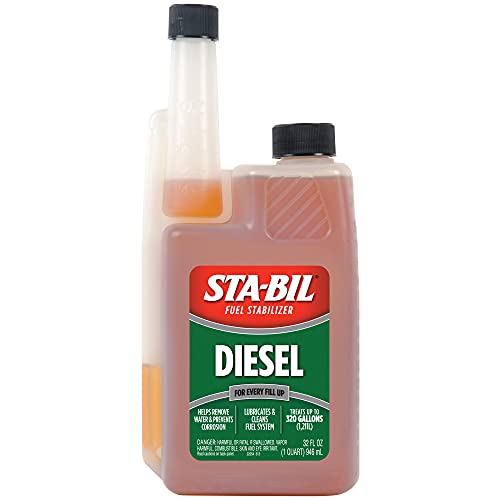
STA-BIL Diesel Fuel Stabilizer And Performance Improver – Keeps Diesel Fuel Fresh For Up To 12 Months – Lubricates And Cleans The Fuel System – Treats 320 Gallons, 32 fl. oz. (22254)
Advanced Sludge and Sediment Prevention: Unleash the power of our diesel fuel additive, designed to act as a…
As an affiliate, we earn on qualifying purchases.
As an affiliate, we earn on qualifying purchases.
When to Use Fuel Stabilizer for Your Vehicle or Equipment
You should use fuel stabilizer whenever your vehicle or equipment will sit idle for an extended period or during seasonal storage. Applying stabilizer guarantees the fuel stays fresh and prevents engine issues when you’re ready to use it again. If you store fuel for several months or only operate your equipment infrequently, it’s time to add stabilizer to protect your investment. Additionally, for optimal results, consider proper fuel storage techniques to minimize fuel degradation over time.
Seasonal Storage Timing
As seasons change, it’s essential to add fuel stabilizer when storing your vehicle or equipment for extended periods, especially during fall and winter months. If you plan to leave your gas or diesel-powered equipment unused for more than a month, treating the fuel beforehand helps prevent degradation. This is particularly important before storing seasonal tools, boats, motorcycles, or lawnmowers. Add stabilizer after filling the tank completely to ensure the entire fuel system benefits. Run the engine for about 5-10 minutes to circulate the stabilizer through the fuel lines, injectors, and carburetor. Timing matters—add stabilizer a few weeks before storage begins to maximize effectiveness. Properly stabilized fuel preserves engine performance and prevents costly repairs once you’re ready to use your equipment again. Incorporating connected equipment or smart tech solutions can also help monitor fuel conditions and maintenance needs over time.
Infrequent Use Scenarios
When you store your vehicle or equipment for extended periods without regular use, applying fuel stabilizer becomes a smart choice to protect the fuel system. Even if you only rarely operate your engine, stabilizer prevents fuel degradation, gum formation, and moisture buildup that can clog filters and injectors. It’s especially useful if you plan to skip use for weeks or months, such as seasonal equipment or backup vehicles. Stabilizer keeps the fuel fresh, maintaining its combustibility and preventing corrosion inside tanks and fuel lines. By adding stabilizer before storage, you reduce startup issues and costly repairs caused by old, degraded fuel. Overall, it’s a simple, effective way to ensure your engine starts smoothly and runs reliably when you need it, despite infrequent use.
STA-BIL Storage Fuel Stabilizer Keeps Fuel Fresh for 24 Months, Prevents Corrosion, Gasoline Treatment Additive That Protects System, Gas Stabilizer for Storage, 16 oz.
Great Product
As an affiliate, we earn on qualifying purchases.
As an affiliate, we earn on qualifying purchases.
The Limitations of Fuel Stabilizers: What They Cannot Fix
Fuel stabilizers can’t reverse fuel that has already degraded or gone bad over time. If your fuel is old or contaminated, adding stabilizer won’t restore its quality or performance. Keep in mind, they only help maintain fresh fuel—they can’t fix issues caused by long-term deterioration. Free floating fuel that is already compromised will not benefit from stabilizer addition.
Cannot Reverse Fuel Degradation
Though fuel stabilizers are effective at slowing down chemical reactions and preventing further degradation, they can’t repair damage that’s already been done. Once fuel has started to break down, the gums, varnishes, and sediments are already formed and can’t be dissolved or removed by stabilizers. These deposits can clog filters, injectors, and carburetors, leading to poor engine performance. Additionally, chemical changes like acid formation or microbial contamination are irreversible. Fuel stabilizers work by halting ongoing reactions, but they won’t reverse oxidation, moisture damage, or corrosion that has already occurred. Proper fuel maintenance is essential to prevent these issues from developing in the first place. If your fuel has aged considerably or shows signs of degradation, adding stabilizer won’t restore its original quality or prevent potential engine issues. You’ll need to replace old fuel to ensure peak performance. Fuel quality is vital to maintaining engine health and efficiency over time.
Ineffective on Old Fuel
Have you ever added a fuel stabilizer to old gasoline expecting it to restore quality? Unfortunately, stabilizers can’t revive fuel that’s already degraded. Once fuel has broken down, its chemical composition changes permanently, making it unfit for combustion. No matter how much stabilizer you add, it won’t reverse these effects.
- Chemical breakdown: Stabilizers can’t fix gum, varnish, or sediments that have already formed.
- Loss of combustibility: Degraded fuel loses its ability to ignite efficiently, which stabilizers can’t restore.
- Contaminant buildup: Water, dirt, and microbial growth embedded in old fuel remain unaffected, risking engine damage.
In short, if your fuel is old and degraded, stabilizers won’t do the job—they’re only effective before significant deterioration occurs.
Limited Restorative Power
Fuel stabilizers are designed to prevent ongoing chemical reactions in fresh fuel, but they can’t reverse damage once degradation has set in. If your fuel has already broken down, become varnished, or formed gums, stabilizers won’t restore its original quality. They can’t fix fuel contaminated with water, microbial growth, or sediments that have settled. Additionally, once fuel has lost its combustibility or developed varnishes that clog injectors and filters, stabilizers won’t clear these deposits. Using stabilizers on severely degraded fuel won’t improve engine performance or reliability. Instead, it’s better to drain and replace old fuel. Stabilizers are a preventative measure, not a cure. Relying on them to fix damage already done is like trying to patch up a rotting structure—you need to start fresh. Understanding fuel degradation helps you recognize when stabilizers are no longer effective.
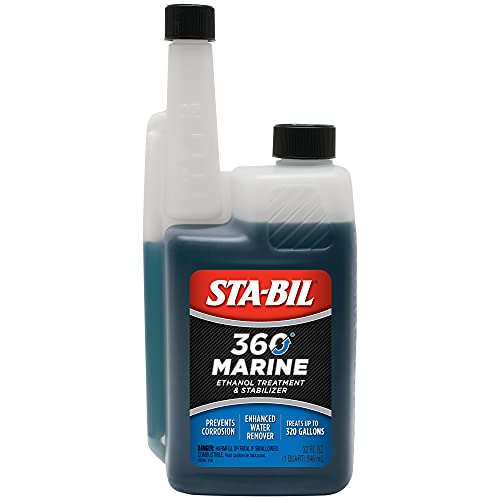
STA-BIL 360 Marine Ethanol Treatment & Fuel Stabilizer – Prevents Rust and Corrosion, Helps Clean Fuel System For Improved In-Season Performance, Treats Up To 320 Gallons, 32oz (22240) , Blue
FUEL SYSTEM CLEANER: Cleanses the entire fuel system using PEA additives, including fuel injectors, lines, & fuel pumps….
As an affiliate, we earn on qualifying purchases.
As an affiliate, we earn on qualifying purchases.
Signs That Your Fuel Has Degraded and Needs Attention
If your vehicle or equipment has sat unused for an extended period, you might notice signs that the fuel has started to degrade. Recognizing these signs helps prevent engine trouble and costly repairs. Support Breakfast options, like a hearty, high-protein meal, can provide the energy needed to tackle vehicle maintenance tasks. 1. Difficulty Starting: If your engine cranks but refuses to start smoothly, degraded fuel could be the culprit. 2. Poor Performance: Notice sluggish acceleration, misfires, or rough idling—classic signs that the fuel’s quality has declined. 3. Unusual Odors or Deposits: A sour smell or visible varnish, gum, or sediment in the fuel or tank indicate chemical breakdown. These symptoms signal your fuel’s condition has deteriorated and needs attention. Acting promptly by draining or stabilizing the fuel prevents further damage and ensures your engine runs smoothly when needed.
Proper Application Techniques for Maximum Effectiveness
To guarantee maximum effectiveness, it’s essential to apply fuel stabilizers correctly from the start. First, fill your tank completely to minimize air and moisture exposure. Add the stabilizer according to the manufacturer’s recommended dosage for your tank size. After pouring, start the engine and run it for 5-10 minutes to circulate the stabilizer throughout the fuel system. This ensures injectors, carburetors, and fuel lines receive proper treatment. Use the following table to help visualize key steps:
| Step | Tip |
|---|---|
| Measure tank capacity | Check manual or VIN for accurate info |
| Add stabilizer | Pour directly into tank after removing cap |
| Run engine | Circulate stabilizer through system |
| Wait before storage | Allow fuel to stabilize for a few minutes |
| Store properly | Keep in a cool, dry place away from sunlight |
Proper technique maximizes protection and performance. Additionally, understanding fuel system components can help optimize your maintenance routine and ensure your engine runs smoothly during storage. Recognizing the role of AI in the automotive industry can also inform future maintenance practices and safety protocols. Being aware of how modern engine technologies interact with additives like stabilizers can further enhance your vehicle’s longevity and reliability. Utilizing appropriate storage conditions can prevent fuel degradation and ensure optimal performance when the vehicle is needed again. Regularly inspecting fuel quality and fuel degradation signs can help you identify issues early and decide if stabilization or other maintenance is necessary.
Choosing the Right Fuel Stabilizer: Ingredients and Compatibility
Choosing the right fuel stabilizer depends on understanding its ingredients and confirming compatibility with your fuel type. You need to verify that the stabilizer contains antioxidants, corrosion inhibitors, and detergents suited for your specific fuel. Not all stabilizers work equally across gasoline, diesel, or ethanol-blended fuels. For example, some stabilizers are formulated specifically for ethanol-blended fuels, which are common in many areas. A new sentence with gelato flavors and the rest of the sentence. Additionally, understanding the formulation differences helps you select a stabilizer that effectively preserves your fuel during storage.
Choose a fuel stabilizer with compatible ingredients to protect your engine and fuel type effectively.
Being aware of fuel chemistry ensures you choose the most effective product for your needs.
The Science Behind Fuel Oxidation and How Stabilizers Help
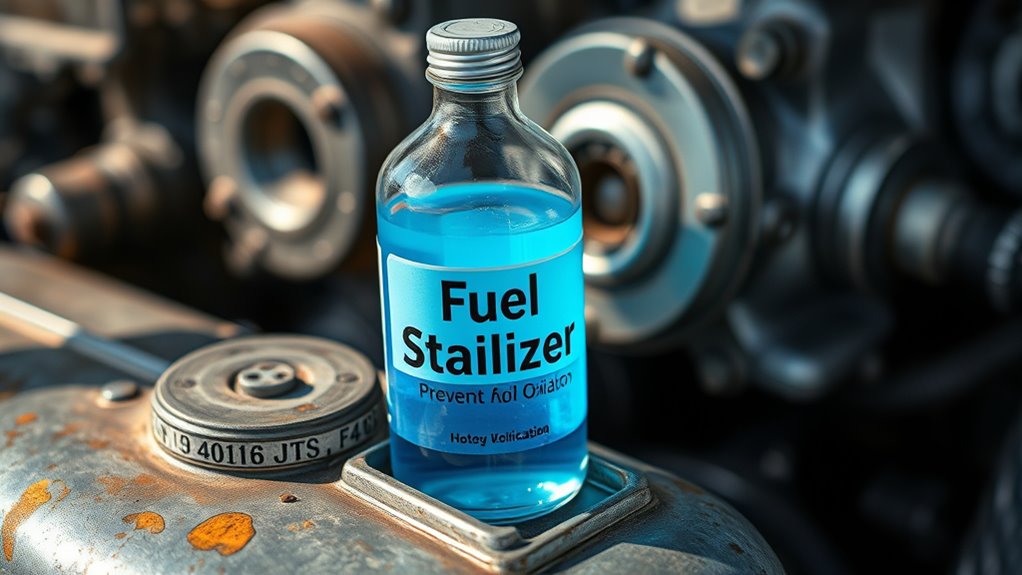
Fuel oxidation is a chemical process where fuel molecules react with oxygen, leading to degradation that can impair engine performance. When exposed to heat, light, or metals, these reactions produce gums, varnishes, acids, and sediments that clog filters and injectors. This breakdown reduces fuel combustibility and can cause starting issues or engine knocking. Fuel stabilizers contain antioxidants that neutralize free radicals, preventing oxidation from progressing. They also absorb moisture, which can accelerate corrosion and microbial growth. Additionally, fuel storage conditions play a crucial role in maintaining fuel quality. Proper storage practices help minimize exposure to oxidation catalysts like heat and air, further protecting fuel stability. Essentially, they act as a shield, slowing chemical reactions and preserving fuel quality, ensuring your engine runs smoothly even after prolonged storage. Regular use of stabilizers can also help extend fuel shelf life, providing peace of mind for long-term storage.
Long-Term Storage Strategies for Fuel and Equipment
Proper long-term storage of fuel and equipment requires careful planning to prevent degradation and guarantee readiness when needed. To succeed, follow these key strategies:
- Use Stabilizers: Add fuel stabilizers before storing fuel for extended periods to inhibit oxidation, absorb moisture, and prevent gum formation. Fuel quality can significantly decline without proper stabilization, affecting engine performance. Using a high-quality stabilizer suited for your fuel type enhances effectiveness.
- Store Properly: Keep fuel in airtight, opaque containers in a cool, dry place away from sunlight and heat sources to slow chemical reactions. Proper storage conditions help maintain fuel integrity over time. Ensuring containers are sealed tightly prevents contamination and evaporation.
- Maintain Equipment: Regularly run engines for a few minutes or empty tanks if not in use for long periods, preventing stale fuel and corrosion. This practice also helps identify potential issues early. Engine maintenance is essential to prolong equipment life and ensure reliable operation.
- Monitor Storage Conditions: Regularly check stored fuel for signs of separation or contamination, as unplanned weather changes can impact fuel quality over time. Keeping an eye on environmental factors ensures optimal fuel longevity. Additionally, monitoring humidity levels can prevent moisture buildup that leads to fuel degradation.
Frequently Asked Questions
Can Fuel Stabilizers Be Used With Ethanol-Blended Fuels?
Yes, you can use fuel stabilizers with ethanol-blended fuels. They help prevent the ethanol from absorbing moisture, which can cause phase separation and corrosion. Just follow the manufacturer’s instructions for the correct amount to add, and run your engine to circulate the stabilizer through the system. This keeps your fuel fresh longer, protects your engine, and reduces potential problems caused by ethanol’s unique properties.
How Long Can Fuel Remain Stabilized Before It Degrades?
You can usually expect stabilized fuel to last up to 12 months before degradation starts. Some fuels, especially those with ethanol, may break down sooner—around 6 to 9 months—so it’s smart to use stabilizers if you plan to store fuel longer. Remember, stabilizers slow deterioration but don’t prevent it indefinitely, so for the best results, use your stored fuel within the recommended time frame.
Are There Any Risks Mixing Different Brands of Stabilizers?
Mixing different brands of stabilizers can pose risks, so you should be cautious. Some formulas may not be compatible, potentially causing chemical reactions that reduce effectiveness or harm your engine. Always check labels and manufacturer recommendations. If unsure, it’s safer to stick with one trusted brand. Mixing might lead to unpredictable results, so it’s best to avoid it unless the products explicitly state they can be combined safely.
Do Stabilizers Affect the Fuel’s Octane Rating?
You might think stabilizers affect octane ratings, but scientific studies show they don’t. Stabilizers focus on preventing fuel degradation, oxidation, and moisture buildup, not altering the fuel’s combustion quality. Their chemical makeup is designed to protect the fuel’s integrity, not change its octane level. So, when you add a stabilizer, you can trust it won’t impact your engine’s performance related to octane, ensuring consistent operation without compromising power.
Can Fuel Stabilizers Be Used in Small Engines or Lawn Equipment?
Yes, you can use fuel stabilizers in small engines or lawn equipment. They help preserve fuel quality during storage, preventing issues like gum and varnish buildup that can clog carburetors and filters. Just follow the manufacturer’s instructions for dosage, add it to a full tank, and run the engine a few minutes to circulate the stabilized fuel. This keeps your equipment running smoothly and reduces maintenance costs.
Conclusion
Fuel stabilizers can be your engine’s best friend or just hope in a bottle. When used correctly, they prevent degradation and keep your equipment running smoothly. But don’t rely on them to fix already bad fuel or neglect proper storage. Recognize the signs of fuel issues early, apply stabilizers properly, and choose the right product. In the end, understanding their limits and benefits guarantees your engine stays reliable—because sometimes, prevention is the best fix.