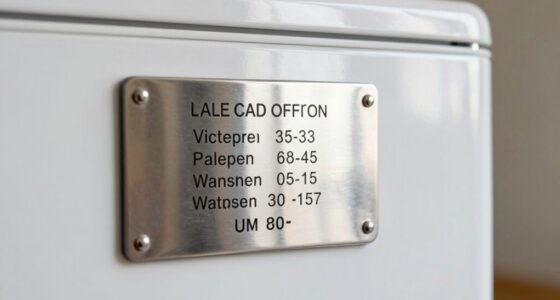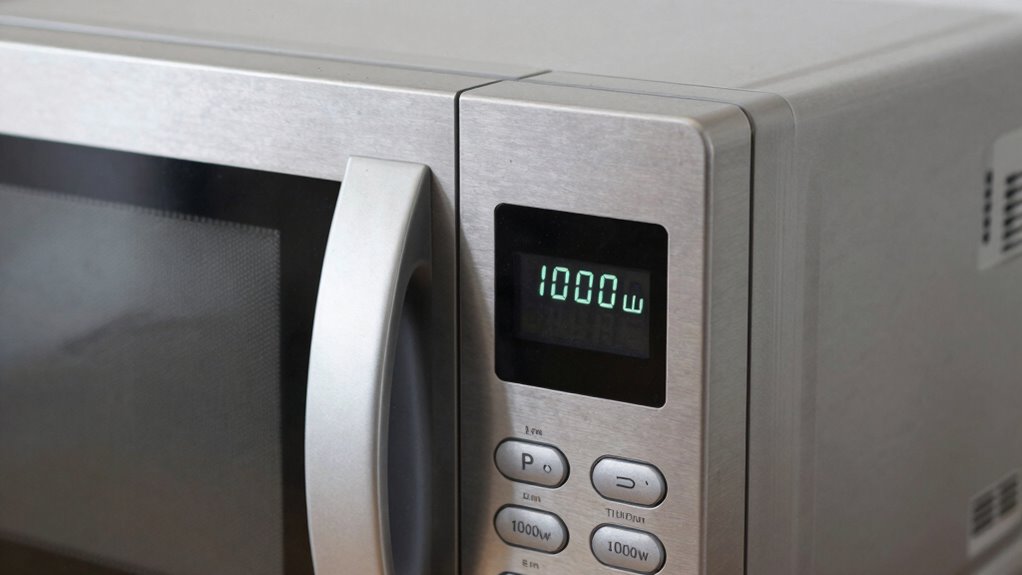

The wattage on your microwave’s sticker shows its cooking power, not how much electricity it actually uses. Typically, a microwave’s input power is higher than the labeled output—an 800 W model might draw around 900–1000 W from the wall. Factors like cycling, efficiency, and standby electronics also affect real energy use. If you want to understand how much energy your microwave consumes, there’s more to take into account beyond the label.

Get backup power and energy gear delivered free with Prime
- Fast, free delivery on millions of items
- Prime Video, Amazon Music and more included
- Member-only deals all year
Key Takeaways
- The sticker shows the microwave’s output wattage, not its actual electrical power consumption.
- Actual power draw from the wall is typically 10–30% higher than the rated wattage.
- Inefficiencies in components like the magnetron and electronics cause additional energy use.
- Power settings cycle the magnetron on and off, affecting average energy consumption during operation.
- Using a power meter can accurately measure real energy use, accounting for standby and cycling losses.
Understanding Microwave Power Ratings
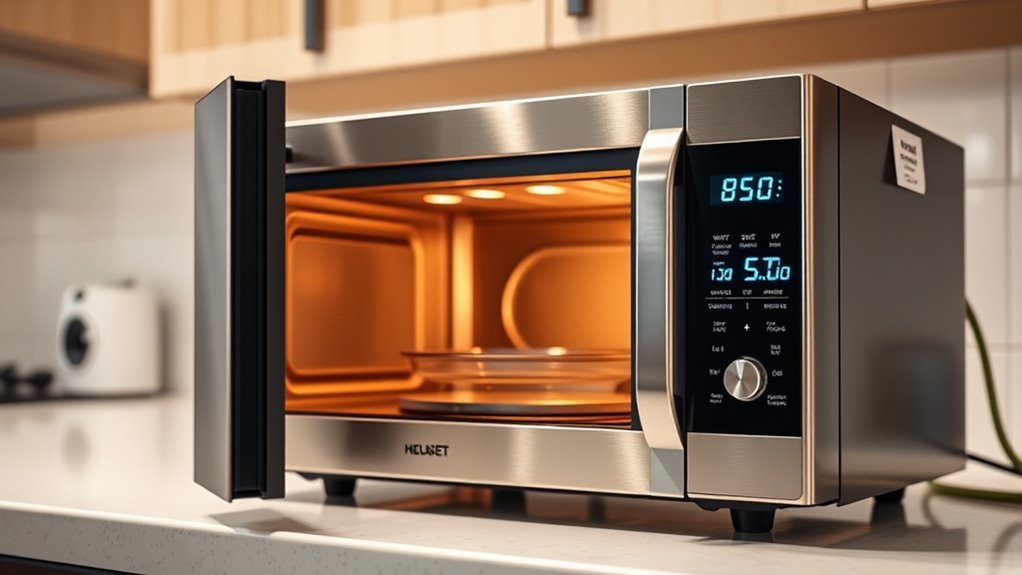
Understanding microwave power ratings is essential because it helps you interpret how much energy your microwave consumes and how effectively it cooks. Most household microwaves fall between 600 and 1,200 watts, with small models usually around 600–800 W. Standard countertop units typically list 800–1,000 W as their cooking power, while high-power or commercial models can reach 1,700 W or more. Keep in mind, the rating on the sticker reflects the output wattage—the microwave energy used for cooking. The actual electrical power drawn from the wall is higher due to inefficiencies and other internal components. Knowing these ratings helps you estimate energy use, compare appliances, and choose the right microwave for your needs, especially when considering energy costs and cooking efficiency. Additionally, understanding the power ratings can assist in optimizing cooking times and energy consumption for your household. Recognizing energy efficiency ratings can also guide you toward more sustainable appliance choices. Being aware of energy consumption patterns can further enhance your ability to select appliances that align with your household’s energy conservation goals.
Difference Between Input and Output Wattage
Your microwave’s label shows its output or cooking wattage, but the actual electrical input is higher due to inefficiencies. This difference means the power you see on the sticker isn’t the full energy your appliance consumes from the outlet. Understanding this gap helps you better estimate energy use and cost. Additionally, knowing the net worth of appliances or individuals can give context to their financial or energy investments. Recognizing the contrast ratio and efficiency ratings of devices can further aid in making energy-conscious choices. Being aware of performance cookies can also help you understand how your usage data is collected and utilized for improvements.
Output vs. Input Power
Microwave ovens typically list their cooking power as output wattage, which indicates the actual microwave energy used to heat food. However, the electrical power you plug in—the input wattage—is higher because of inefficiencies in the magnetron and other components. For example, a microwave with an 800 W output may have an input power of around 900–1000 W. This means it draws more electricity than it delivers directly to your food. The difference accounts for energy lost as heat within the appliance. Understanding this helps you estimate energy consumption more accurately. Keep in mind, the input wattage is what you see on the appliance’s label or manual, and it’s essential for calculating your overall energy use and costs.
Efficiency Losses Explained
The difference between input and output wattage in a microwave stems from energy losses within the appliance. These losses happen because not all electrical power converts directly into microwave energy. Some energy is lost as heat in the magnetron, power supply, and electronic controls. The magnetron, which produces microwave radiation, operates less than 100% efficiently, meaning it consumes more power than the actual microwave energy delivered to your food. Additionally, other components like fans, turntables, and control electronics draw power even when the magnetron is off or cycling on and off. As a result, the input wattage you see on the appliance’s label is higher than the cooking power listed. These inefficiencies are normal, but understanding them helps you assess real energy use more accurately. Recognizing energy conversion efficiency in appliances can help you make more informed choices about energy consumption. Being aware of these power losses can also guide you toward selecting more energy-efficient models in the future. Understanding appliance efficiency can further help optimize your energy savings and reduce electricity costs over time. Knowing about energy transfer can also assist in evaluating overall microwave performance and efficiency.
Wattage Label Differences
Although the wattage label on a microwave shows its cooking power, the actual electrical input it draws from the outlet is typically higher. The label usually displays the output wattage—the magnetron’s microwave energy delivered to your food. However, this number doesn’t reflect the total power the microwave consumes from the electrical outlet. The appliance’s input wattage accounts for inefficiencies and additional components like electronic controls, fans, and turntables, which draw power even when the magnetron isn’t actively firing. For example, a microwave with an 800 W output might actually use 1,000 W or more from the wall. Energy consumption varies depending on the microwave’s design and features, affecting your overall electricity costs. Additionally, standby power can contribute to the total energy usage even when the microwave is not in active use. It’s helpful to consider these factors when estimating your microwave’s overall electricity costs to better understand its impact on your energy bill. Recognizing the power efficiency of your appliance can help you make more informed choices about its usage and energy savings. Moreover, understanding how the internal components influence electrical draw can assist in optimizing energy consumption. Understanding this difference helps you better estimate energy use and costs, especially when comparing appliances or calculating your monthly electricity bill.
How Microwave Power Is Measured and Labeled
Manufacturers measure microwave power primarily by testing the magnetron’s output, which is the microwave energy used to cook food. They do this in controlled lab settings, often using specialized equipment to capture and quantify the actual microwave radiation emitted. The measured output wattage reflects the microwave’s cooking power, not the total electrical power drawn from the wall. Labels on appliances display this *cooking wattage*, indicating the magnetron’s effective power. Meanwhile, the electrical input wattage—what you see on the rear plate—is usually higher due to inefficiencies in the system. This distinction helps you understand that the sticker wattage represents the microwave’s cooking capability, not its total energy consumption. Manufacturers rely on these standardized tests to ensure consistent, comparable labeling across different models.
Typical Power Consumption for Common Models
Most household microwaves fall within a power range of 600 to 1,200 watts, depending on size and purpose. Your actual energy use might differ from the rated wattage due to factors like cycling, settings, and age. Understanding this variability helps you better estimate your microwave’s real-world power consumption. Additionally, considering how Essential Oils are used for health purposes can be a useful analogy for understanding variability in expected versus actual performance. For example, just as different Piercing materials and aftercare practices can influence healing times, actual microwave energy consumption can vary based on usage patterns and appliance condition. Recognizing the power efficiency of your microwave can also guide you in selecting models that minimize energy waste over time.
Power Range Variability
The power consumption of common microwave models varies widely depending on their size and intended use. You might find small, compact models rated between 600 and 800 W, ideal for quick reheats. Standard countertop microwaves typically list between 800 and 1,000 W, suitable for everyday tasks. High-power models and some commercial units can reach 1,000 to 1,700+ W, designed for heavy-duty use. Keep in mind that the rated wattage on the label reflects output power, not the actual electrical draw, which is often higher. Understanding wattage differences is essential because the actual energy consumption depends on both the rated power and the efficiency of the appliance. Additionally, appliance efficiency influences how much energy you actually use during operation, which can vary even among models with similar wattage ratings. These variations mean your microwave’s energy use depends on its design, features, and intended application. Understanding this power range variability can help you make more informed choices about energy consumption and efficiency.
Actual vs. Rated Wattage
Have you ever noticed that the actual power your microwave consumes often differs from the wattage listed on its label? The sticker shows the rated or output wattage, which indicates the microwave’s cooking power, not its actual electrical draw. In reality, the input wattage—what you pay for—can be 10–30% higher due to inefficiencies. For example, an 800 W microwave might draw around 900 W from the outlet, while a 1,000 W model could consume roughly 1,100 W. Factors like duty cycles, standby electronics, and additional features also influence actual consumption. So, while the sticker provides a useful estimate, your true energy use depends on how you operate the microwave, the settings you choose, and the appliance’s age and condition.
Calculating Energy Use and Cost

Calculating the energy use and cost of your microwave starts with understanding its wattage and how long you operate it each day. You can estimate energy consumption by multiplying the microwave’s wattage by your daily usage time and dividing by 1,000 to get kilowatt-hours (kWh). To ensure you’re getting accurate measurements, consider using a power meter to monitor actual energy consumption, as internal wattage ratings can sometimes be misleading. Using an 800 W microwave for 15 minutes daily results in about 0.2 kWh per day. Monthly energy consumption for this use is roughly 6 kWh, which can be multiplied by your local energy rate. Checking your appliance’s rear plate for input wattage or consulting manufacturer specifications provides more accurate data. Additionally, understanding energy efficiency can help you choose models that consume less power for the same performance.
Factors That Affect Actual Wattage Draw

Various factors influence the actual wattage your microwave draws during operation, beyond its rated power. Power settings and duty cycles play a big role; lower settings mean the magnetron cycles on and off, reducing average power consumption. The size and type of food you heat also matter—more mass or colder items require longer run times, increasing energy use. Additional features like convection or grilling add to the total draw, as they require extra power. The condition of your microwave influences efficiency too; an aging magnetron or poor maintenance can cause higher energy consumption. Even standby electronics and the turntable motor contribute small but constant loads. All these elements combine to make your microwave’s actual energy use vary considerably from its sticker rating.
Comparing Microwaves to Other Kitchen Appliances
When comparing microwave energy use to other kitchen appliances, it’s clear that microwaves are generally more energy-efficient for quick tasks like reheating or small-scale cooking. They typically draw less power than electric ovens or stovetops, which can use 2,000–5,000 W or more. Shorter microwave run times mean less energy overall, especially for small portions. For example, a microwave operating at 800 W for 15 minutes uses about 0.2 kWh, while an oven may use much more for the same task. Additionally, appliances like toaster ovens and induction cooktops can sometimes approach microwave energy use—but only for specific tasks. Larger-volume cooking with conventional ovens, however, can be more efficient due to better heat distribution.
- Microwaves often use less energy for reheating and small meals
- Electric ovens and stovetops consume considerably more power
- Toaster ovens and induction cookers can be comparable for certain tasks
How Power Settings Impact Energy Consumption
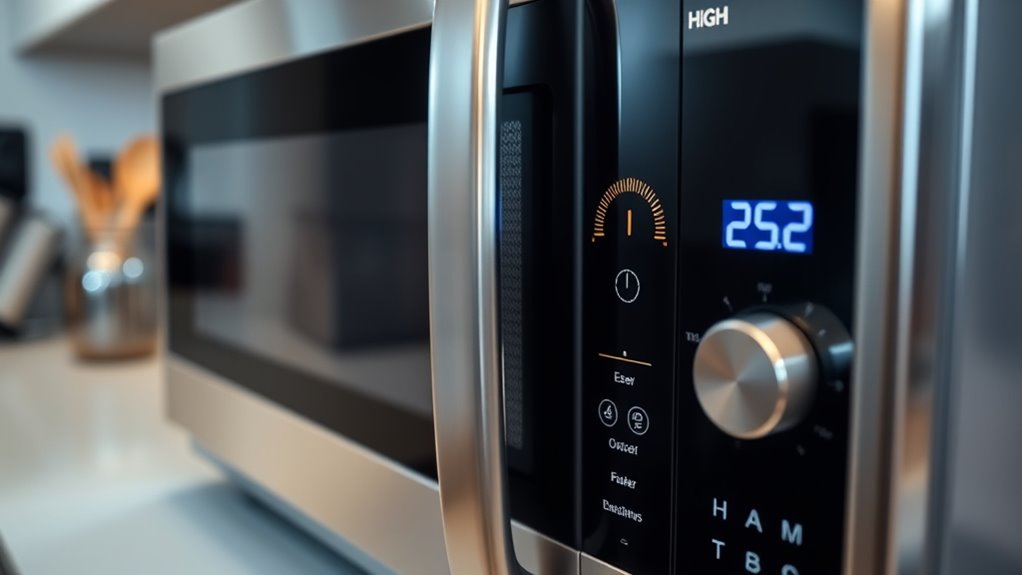
Power settings on your microwave directly influence how much energy it consumes during operation. When you select a lower power level, the magnetron cycles on and off, reducing the average power draw over time. For example, a 30% power setting typically means the magnetron runs about 30% of the time, lowering overall energy use compared to full power. Conversely, using high power continuously results in maximum energy consumption during the cooking cycle. Other components, like fans and turntables, add constant small loads regardless of power setting, but the primary factor is how long the magnetron runs at each setting. Adjusting power levels allows you to fine-tune cooking times and energy efficiency, especially for tasks like defrosting or gentle warming.
Tips for Estimating and Reducing Microwave Energy Use
Estimating and reducing your microwave’s energy use is simpler than it seems. First, check the input wattage on the rear plate or manual, then track your usage time. Using a plug-in energy meter can give precise readings of actual consumption. To cut energy costs, follow these tips:
- Match microwave size to your typical tasks to avoid unnecessary energy use.
- Use full power for short bursts instead of prolonged low-power settings.
- Cover food with microwave-safe lids to speed cooking and reduce run time.
Why the Sticker Wattage Isn’t the Whole Story
The wattage listed on your microwave’s sticker shows its output power, but that doesn’t tell the whole story about how much electricity it uses. Power settings and duty cycles mean the magnetron cycles on and off, affecting actual energy consumption. Plus, standby modes and additional features add to the total power draw, so the sticker wattage is just a starting point.
Output vs. Input Power
While the wattage listed on your microwave’s sticker indicates its cooking or output power, it doesn’t tell the whole story about how much electricity it actually uses. The sticker shows the magnetron’s microwave energy output, not the total electrical power drawn from the wall. The input wattage is usually higher due to inefficiencies and additional components like fans, control electronics, and turntables. When you run your microwave at different power levels, the magnetron cycles on and off, affecting average power consumption. Standby modes also draw a small amount of electricity even when not in use. Understanding this difference helps you estimate energy use more accurately and manage your household electricity costs better.
- Magnetron output wattage is lower than input wattage because of inefficiencies.
- Power cycling at lower settings reduces average energy draw over time.
- Standby electronics consume small amounts of power even when idle.
Power Settings and Duty Cycles
Power settings and duty cycles substantially impact how much electricity a microwave uses, making the sticker wattage only part of the story. When you lower the power setting, the magnetron cycles on and off more frequently, reducing the average power consumption over time. For example, a 30% power setting doesn’t mean it uses 30% of the rated wattage continuously; it means the magnetron runs intermittently, with periods off. This cycling affects total energy use, often making lower settings more efficient for certain tasks. Additionally, other components like fans and turntables run constantly, adding to energy consumption regardless of power level. Understanding how your microwave’s settings and duty cycles work helps you better estimate actual energy use, rather than relying solely on the sticker wattage.
Standby and Ancillary Loads
Even when a microwave isn’t actively cooking, it continues to draw power to support standby functions, control electronics, and internal components. This small but steady energy use adds up over time. You’re likely to notice it as a low but constant electricity draw when the microwave is plugged in, even if it’s turned off.
- Control panels light up or stay on, consuming power.
- Internal electronics keep the clock running and memory intact.
- Fans or sensors may operate intermittently to monitor or maintain internal temperature.
These standby loads can increase your overall energy consumption beyond the cooking wattage listed on the sticker. To reduce waste, unplug the microwave when not in use for extended periods or choose models with lower standby power ratings.
Frequently Asked Questions
How Can I Accurately Measure My Microwave’s Actual Energy Consumption?
You can accurately measure your microwave’s energy use with a plug-in power meter. Simply unplug the microwave, connect it to the meter, then plug the meter into your outlet. Turn on the microwave and run it during typical use. The meter will display real-time power consumption in watts or kilowatt-hours, giving you a precise measurement. This method helps you track actual energy use beyond the manufacturer’s rated wattage.
Does Inverter Technology Reduce Overall Microwave Power Usage?
Did you know inverter microwaves can offer more consistent power levels? They don’t necessarily reduce overall power consumption but improve efficiency by delivering a steady wattage, which cuts down on cooking time and energy waste. Unlike traditional models that cycle on and off, inverter technology maintains a constant power output, making your cooking quicker and potentially lowering total energy use, especially during delicate or prolonged tasks.
Are Energy-Efficient Microwaves Worth the Higher Purchase Price?
Energy-efficient microwaves can be worth the higher price if you use your microwave frequently, as they lower energy costs over time. They often have advanced features like inverter technology, which provides more precise power control, reducing cooking time and energy waste. While the upfront investment is higher, the savings on electricity bills and the convenience of faster, more consistent cooking can make them a smart choice for your kitchen.
How Does the Age of a Microwave Affect Its Power Consumption?
Think of your microwave as a vintage clock—over time, its gears and springs wear down, slowing performance. As your microwave ages, its magnetron and components become less efficient, often drawing more power to deliver the same cooking results. This gradual decline means increased energy consumption and possibly longer cooking times. Regular maintenance and eventual replacement help keep energy use ideal, much like tuning a clock keeps it ticking accurately.
Can Using Different Cookware Impact the Microwave’s Wattage and Efficiency?
Using different cookware can impact your microwave’s efficiency, but it doesn’t guarantee the wattage it draws. Non-metallic, microwave-safe containers heat food faster because they absorb and transfer energy better. Thick or dense cookware might extend cooking time, making the microwave work longer and use more energy. Always choose appropriate, microwave-safe cookware to optimize performance and reduce cooking time, which helps save energy and ensures even heating.
Conclusion
Remember, the sticker wattage isn’t the full story. While it shows the microwave’s input power, your cooking time and efficiency matter more for actual energy use. Some people think a higher wattage always means more energy, but it’s about how you use it. By understanding these differences, you can make smarter choices to save energy and cut costs. Don’t just rely on the sticker—look at real-world performance and your habits.
Halloween Picks
halloween
As an affiliate, we earn on qualifying purchases.