TL;DR
Solar-powered portable chargers use photovoltaic panels to turn sunlight into electricity, and most compact models store that energy in a battery for later USB charging. Sunlight, panel size, angle, shade, and output determine how quickly they collect power, so charge the pack from a wall outlet before a trip and use solar as a useful supplement.
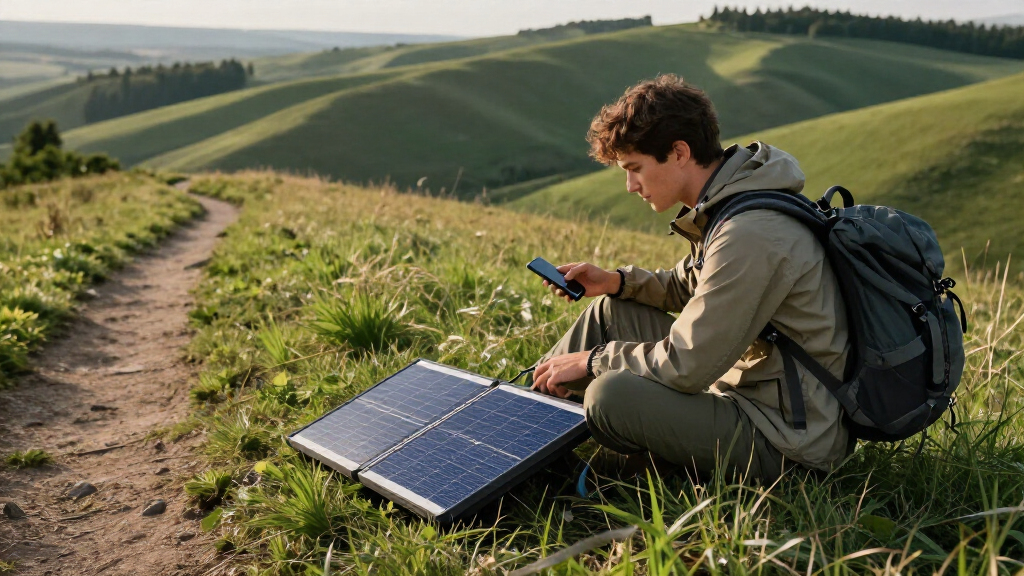
Your phone hits 8% just as the trail turns away from the road, and the nearest outlet is miles behind you. A solar charger clipped to your pack may help, but its little panel will not behave like a wall socket: clouds drift, trees cast shade, and each step changes its angle to the sun.

Get backup power and energy gear delivered free with Prime
- Fast, free delivery on millions of items
- Prime Video, Amazon Music and more included
- Member-only deals all year
Solar-powered portable chargers use photovoltaic panels to convert sunlight to electricity. Most compact models store that energy in an internal battery, giving you a steadier supply to use later. In this guide, you’ll learn how panels and batteries work together, what affects charging time, and which details matter when you compare products.
Think of the panel as a small rain catcher: more surface area can gather more energy, but a passing cloud still slows the flow. That distinction helps you use a charger for what it does well: extending access to power when you’re away from outlets, rather than replacing a dependable wall charger.
Most compact solar chargers store energy from the panel in a battery, so you can charge a device later.
Direct sunlight, panel angle, shade, and movement all affect how fast a charger collects energy.
Compare watt-hours when available; mAh alone does not show how much energy your phone can use.
Charge the battery pack from a wall outlet before a trip and treat solar input as a supplement.
Check USB standards, shared port output, outdoor protection ratings, temperature guidance, and warranty.
How a solar charger turns sunlight into phone power
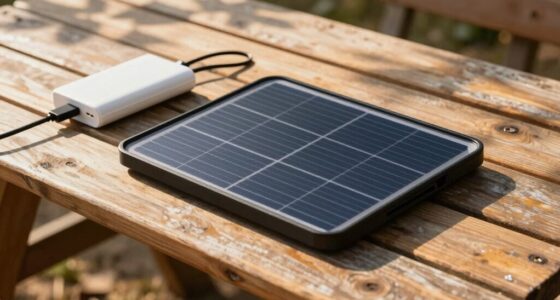
A solar-powered portable charger uses photovoltaic cells to convert sunlight into electricity, then either sends that power to a device or stores it in a battery. The panel gathers energy; the battery makes it available later. That two-part setup is why a compact model can collect sunlight in the afternoon and charge your phone after sunset.
Some products combine a panel with a battery pack, while others are panel-only and need sunlight to provide output. A panel-only model can suit a campsite where you can leave it open in the sun, but direct phone charging may pause when clouds roll over. A battery-equipped charger acts more like a pantry: you store energy while conditions are good and draw on it when you need it.
For example, imagine you reach a sunny lunch spot with a phone at 35%. You unfold the charger and leave the battery pack exposed while you eat; later, you connect the phone to the pack in the shade. That is usually more convenient than holding a phone in direct sun or relying on a panel that must keep receiving strong light throughout the charge.
Manufacturers increasingly offer USB-C and higher-output charging standards, along with foldable panels and built-in lights. Those features can help, but they don’t guarantee faster solar collection. Panel size, available sunlight, battery storage, and USB output each solve a different part of the charging job.
Products Worth Considering

Hisense 75-Inch E6SR Series Hi-QLED 4K UHD Smart Roku TV (2026 Model)

LEVOIT Vital 200S-P Smart Air Purifier for Large Rooms

Ring Battery Doorbell and Chime (3rd Gen), Venetian Bronze
As an affiliate, we earn on qualifying purchases.
Why real sunlight matters more than the label
Solar-powered portable chargers collect energy at a rate that changes with sunlight strength, panel angle, shade, temperature, and movement. A laboratory rating describes conditions that may not match a moving trail or cloudy campsite. A larger panel generally collects more energy, but its performance still depends on how much direct sun reaches it.
Try this scenario: you clip a small panel to your backpack on a wooded path. Each time you walk under trees, the panel slips into shade or tilts away from the sun, so the incoming power rises and falls. At an open picnic table, you can lay the same panel flat or angle it toward the sun and give it a steadier view of the sky.
Clouds do not always stop charging completely. Bright overcast skies may still provide some power, but typically less than direct sunlight; indoor light is generally too weak for practical charging. If the forecast calls for gray skies, treat solar collection as a bonus rather than counting on a full recharge by evening.
There is no universal charging time. Panel area and output, shade, angle, and whether the panel feeds a battery or phone all change the result. Use manufacturer figures as ideal-condition estimates, not promises. For a dependable departure, charge the battery from a wall outlet first, then let the panel extend your supply outdoors.
Compare capacity, ports, and panel size before you buy
Choose a charger by matching its stored energy, USB output, and panel area to your trip and devices. A large mAh figure alone can’t tell you how quickly a phone will charge or how useful the solar panel will be. Check whether the ports support the charging standard your device can use, such as USB-C Power Delivery or USB-A fast charging.
Capacity in milliamp-hours (mAh) can be hard to compare directly with a phone’s battery because the numbers may refer to different voltages. Voltage conversion and charging itself also waste some energy, so the usable amount is lower than the pack’s nominal figure. When the manufacturer lists watt-hours (Wh), that measure can make energy capacity easier to compare.
| Feature | What it tells you | What to check |
|---|---|---|
| Battery capacity | How much energy the pack stores | Wh when available, weight, and realistic device needs |
| Panel area | How much surface can collect sunlight | Whether it folds out and how you’ll position it |
| USB output | How the pack supplies connected devices | Port type, supported charging standards, and shared output |
| Protection and durability | How the product handles outdoor use | Published water, dust, and drop ratings and warranty |
Suppose two hikers share one charger. Two ports may let them connect both phones, but the total output may be split across those ports. Check the combined output specification before counting on both devices charging at full speed.
Foldable panels offer more collection area without requiring one rigid, full-size panel, though they add bulk to a bag. A tiny panel attached to a large battery may take a long time to refill that pack. Think about the whole setup: more stored energy can mean more weight, and more panel area can mean more packing space.
Use the charger so you have power when you need it
To get the most dependable use from a solar charger, fill its battery from an outlet before leaving, then collect solar energy when sunlight is available. Solar charging is a practical supplement when outlets disappear; a wall charger is usually faster and more reliable. This simple plan gives you stored power from the start and lets the panel help top it up along the way.
- Charge the pack at home. Connect it to a wall outlet before your trip. That gives you a known starting supply rather than waiting for sunshine to build one.
- Place the panel in open sun. Choose a stable spot, angle it toward the sun when practical, and move it out of shade as the light shifts.
- Store the energy for later. If your product has a battery, let the panel feed that pack while you hike, rest, or set up camp.
- Check your device and total output. Use a compatible port and charging standard. If you connect two phones, check whether the charger shares its output.
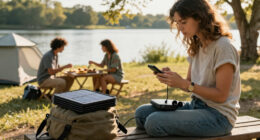
A camper who arrives with a full battery pack can spend the afternoon topping it up on a sunny table, then charge a headlamp or phone in the tent after dark. Someone relying on direct sunlight to charge a nearly empty phone may get a very different result when branches or clouds interrupt collection.
Use the manufacturer’s temperature guidance, especially for the battery pack. A panel designed to sit in sunlight does not mean every battery component can safely sit in a hot car. Keep the pack where its instructions allow, and don’t confuse “weather resistant” with waterproof: check the stated rating and whether it covers the panel, ports, battery, or all parts.
Know when solar power is a useful backup
A solar charger works best as a backup that extends access to power over time, not as an instant replacement for a charged battery pack. It can be helpful on sunny camping trips, long hikes, or travel days without outlets, but collection depends on real weather and panel exposure. In an emergency, it may provide power gradually when conditions allow; it cannot guarantee an immediate charge.
Imagine a storm knocks out power while you’re away from home. A charged battery pack can supply energy right away, while a solar panel could help replenish it if skies clear and you can put the panel in open sunlight. Keeping the pack charged before an emergency is more dependable than storing it empty and hoping for a sunny afternoon.
Portability involves tradeoffs. The most compact models take little space, but their small panels may collect energy slowly. Foldable designs can spread a larger surface in a sunny campsite, though they ask for more room in your bag and a place to sit undisturbed.
Pay attention to the actual durability details for outdoor use: water resistance, dust protection, drop resistance, battery protections, and warranty. A product description that says “weather resistant” does not establish that it can be submerged or left in heavy rain. For a weekend trip, compare the stated ratings with how you plan to carry and store the charger.
The phrase powered portable chargers can describe many products, so read beyond the name. Look for clear manufacturer documentation on capacity, ports, environmental limits, and solar input. Product availability and specifications change quickly; independent testing can help put performance claims in context before you buy.
Use this quick checklist to choose your charger
The right charger is the one that matches your devices, trip length, and tolerance for weight. Start with what you actually need to power: a phone for a day hike has a different job from several devices on a weeklong camping trip. Then check the product details against that job instead of choosing by the biggest number on the box.
- Capacity: Compare stored energy and weight; use Wh when available and allow for energy lost in conversion.
- Ports and output: Match the connector and charging standard to your device, and check the combined output if you’ll use several ports.
- Solar input: Check panel size and output. A small panel may extend a pack’s charge, but refill it slowly.
- Portability: Choose a compact panel for a light bag or a foldable design when you can spare room for more surface area.
- Outdoor protection: Read the stated water, dust, and drop ratings, battery guidance, and warranty.
- Charging plan: Decide where you can charge from an outlet before setting off and where you can leave the panel in open sun.
For example, a day hiker who mainly wants one emergency phone top-up may prefer a lighter pack and accept slow solar replenishment. A group camping far from outlets may value more battery capacity and a foldable panel, even if the setup takes more space.
Search results may use related wording such as key facts for solar charging or tips to use photovoltaic panels to convert sunlight, but a useful buying decision still comes down to product documentation. Confirm what the panel supplies, what the battery stores, which ports can charge your devices, and what the manufacturer says about real operating conditions.
Frequently Asked Questions
Can a solar-powered charger charge my phone?
Yes, if it has a USB output compatible with your phone. Charging speed depends on the charger, the phone, and sunlight conditions, so a battery-equipped model is often more convenient when light changes.
How long does it take to charge?
There is no universal charging time. Panel size and output, sunlight, shade, angle, and whether you’re charging a battery pack or a device all affect it. Treat manufacturer times as ideal-condition estimates.
Will a solar charger work on a cloudy day or indoors?
Bright overcast conditions may still provide some power, but usually less than direct sun. Indoor light is generally too weak for practical charging, so don’t rely on it to refill a pack quickly.
Should I charge the battery by solar or by wall outlet?
A wall outlet is usually faster and more reliable. Charge the pack before a trip, then use solar input to extend your supply when outlets aren’t available and the panel can get sunlight.
Does a higher mAh rating always mean a better charger?
No. The mAh figure doesn’t account by itself for usable energy after voltage conversion and charging losses, and it says little about panel size or USB output. Compare watt-hours when listed, along with weight, ports, and the product’s solar input.
Can one solar charger power two devices at once?
Some models can charge more than one device, but total output may be shared across ports. Check the combined output specification and make sure each port supports a suitable charging standard for your device.
Are solar chargers waterproof?
Some offer water resistance, but protection differs by product and may not cover every component. Check the stated rating and whether it applies to the panel, battery, ports, or the full charger.
Can I leave a solar charger in a hot car?
Follow the manufacturer’s temperature guidance. A panel made for sunlight does not mean the battery can safely sit in excessive heat, which can damage battery performance.
Conclusion
Think of a solar-powered portable charger as a small energy reserve with a sunlight-fed top-up. Choose its battery, panel, ports, and weight to match your plans, and start each trip with the pack charged from an outlet.
Then let the panel do its quiet work in open sun: a slow, steady trickle that can keep a useful bit of power waiting when the trail goes dark.