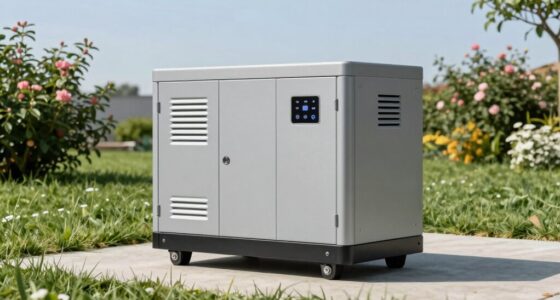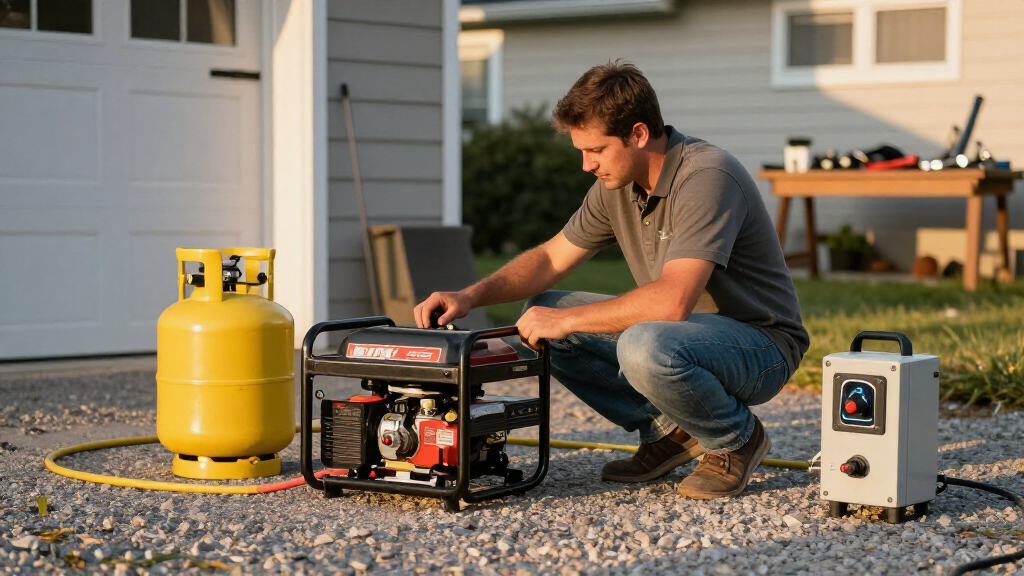

The best tri-fuel generators let you run on gasoline, propane, or natural gas, which is exactly why they’ve become the go-to choice for home backup power — when one fuel is scarce, you switch to another. My top overall pick is the Westinghouse WGen14500TFc, which pairs serious 14,500-watt output with a remote electric start and a CO sensor at a mid-pack price. The DuroMax XP13000HXT stands out as the best value for raw whole-home power, while the Westinghouse iGen8200TFc is the pick for anyone who wants clean inverter power for sensitive electronics and RV use. The main tradeoff you’ll face in this category is brute open-frame wattage versus quieter, cleaner inverter output — and whether you need natural gas compatibility for a permanent home hookup. Keep reading for the full breakdown of all 15 models and which one fits your situation.

Get backup power and energy gear delivered free — and shop member deals
- Fast, free delivery on millions of items
- Access to Prime Big Deal Days deals on October 6–7
- Prime Video, Amazon Music and more included
Complete the kit


Key Takeaways
- Westinghouse dominates this lineup with six of 15 spots, and for good reason: its tri-fuel models consistently include CO sensors, remote start, and natural gas compatibility as standard, while some rivals charge similar prices without those safety features.
- Inverter tri-fuel models (the Westinghouse iGen series and WEN 13,000-watt inverter) cost more per watt but deliver cleaner power and quieter operation — the right call for RV owners and anyone running electronics, but overkill for well pumps and power tools.
- Raw wattage has diminishing returns: the WGen20000TFc’s 28,000 peak watts only make sense for whole-house coverage with a transfer switch, and most households can save money with a 12,000–14,500-watt model instead.
- Natural gas compatibility is the hidden differentiator in tri-fuel generators — every model here runs gasoline and propane, but buyers planning a permanent home hookup should verify NG output, which drops roughly 10% below gasoline ratings.
- DuroMax and DuroStar offer nearly identical 13,000-watt platforms at different price points, illustrating that in this category, paying less usually means giving up an electric start, CO sensing, or fuel gauge refinements rather than core performance.
| Westinghouse 14,500-Watt Tri-Fuel Portable Generator with Remote Electric Start |  | Best Overall | Fuel types: Gasoline, propane, natural gas | Peak output (gasoline): 14,500 watts | Running output (gasoline): 11,500 watts | VIEW LATEST PRICE | See Our Full Breakdown |
| Generac 12,500-Watt Tri-Fuel Portable Generator with Electric Start |  | Best for Safety-Minded Homeowners | Fuel types: Gasoline, liquid propane, natural gas | Running output: 9,500 watts | Starting output: 12,500 watts (gasoline) | VIEW LATEST PRICE | See Our Full Breakdown |
| DuroMax XP13000HXT 13,000-Watt Tri-Fuel Portable Generator |  | Best Value | Peak wattage: 13,000 watts | Running wattage: 10,500 watts | Fuel types: Gasoline, propane, natural gas | VIEW LATEST PRICE | See Our Full Breakdown |
| GENMAX GM15000ET Tri-Fuel Portable Generator |  | Best High-Output Workhorse | Peak power: 15,000 watts | Fuel types: Gasoline, LPG, natural gas | Fuel tank capacity: 10.56 gallons | VIEW LATEST PRICE | See Our Full Breakdown |
| DuroStar DS13000MXT 13,000-Watt Tri-Fuel Portable Generator |  | Best Straightforward Backup | Power output: 13,000 watts peak | Fuel types: Gasoline, propane, natural gas | Engine displacement: 500 cc | VIEW LATEST PRICE | See Our Full Breakdown |
| DuroMax XP15000HXT 15,000-Watt Tri-Fuel Portable Generator with CO Alert |  | Best High-Output Workhorse | Power output: 15,000 watts | Engine: 500cc OHV, 100% copper windings | Fuel types: Gasoline, propane, natural gas | VIEW LATEST PRICE | See Our Full Breakdown |
| Westinghouse WGen9500TFc 12500 Peak Watt Tri-Fuel Portable Backup Generator |  | Best Balanced Home Backup | Output (gasoline): 12,500 peak / 9,500 running watts | Output (propane): 11,200 peak / 8,500 running watts | Output (natural gas): 9,500 peak / 7,500 running watts | VIEW LATEST PRICE | See Our Full Breakdown |
| WEN 14,500-Watt Tri-Fuel Generator with Electric Start |  | Best Value Big-Wattage Pick | Surge watts: 14,500 gas / 12,500 propane / 10,500 natural gas | Running watts: 11,500 gas / 10,300 propane / 8,750 natural gas | Engine: 500cc 4-stroke OHV | VIEW LATEST PRICE | See Our Full Breakdown |
| WEN 13,000-Watt Tri-Fuel Inverter Generator with Electric Start |  | Best for Backup Plus EV Charging | Surge output: 13,000 gas / 11,250 propane / 10,000 natural gas watts | Running output: 10,500 gas / 9,000 propane / 8,000 natural gas watts | Engine: 550cc 4-stroke OHV | VIEW LATEST PRICE | See Our Full Breakdown |
| Westinghouse iGen8200TFc Tri-Fuel Portable Inverter Generator |  | Best Clean-Power Inverter | Gasoline output: 8,200 peak / 6,600 running watts | Propane output: 7,380 peak / 5,940 running watts | Natural gas output: 6,560 peak / 5,280 running watts | VIEW LATEST PRICE | See Our Full Breakdown |
| Westinghouse iGen12000TFc Tri-Fuel Portable Inverter Generator |  | Best Clean-Power Inverter Pick | Fuel types: Gasoline, propane, natural gas | Gasoline output: 12,000W peak / 9,000W running | Propane output: 11,000W peak / 8,100W running | VIEW LATEST PRICE | See Our Full Breakdown |
| Westinghouse WGen14500TFc Tri-Fuel Portable Generator with Remote Electric Start and CO Sensor |  | Best for Whole-Home Backup | Fuel types: Gasoline, propane, natural gas | Running output: 14,500W gas / 13,000W propane / 11,600W natural gas | Peak output: 18,000W gas / 16,000W propane / 14,400W natural gas | VIEW LATEST PRICE | See Our Full Breakdown |
| Westinghouse 13,500-Watt Tri-Fuel Portable Generator with Remote Electric Start |  | Best Balanced All-Rounder | Fuel types: Gasoline, propane, natural gas | Running output (gasoline): 10,500 watts | Running output (natural gas): 8,500 watts | VIEW LATEST PRICE | See Our Full Breakdown |
| Westinghouse WGen20000TFc Tri-Fuel Portable Generator, 28,000 Peak Watts |  | Best Maximum Output | Fuel types: Gasoline, propane, natural gas | Running output: 20,000W gas / 18,000W propane / 16,000W natural gas | Peak output: 28,000W gasoline | VIEW LATEST PRICE | See Our Full Breakdown |
| WEN TF-1450 14,500-Watt Tri-Fuel Generator with Electric Start |  | Best Starter Kit Value | Fuel types: Gasoline, propane, natural gas | Running output: 11,500W gas / 10,300W propane / 8,750W natural gas | Surge output (gasoline): 14,500 watts | VIEW LATEST PRICE | See Our Full Breakdown |
| tri-fuel generator | Engine | Fuel types | Outlets |
|---|---|---|---|
| Westinghouse 14,500-Watt Tri-F | 550cc 4-stroke OHV | Gasoline, propane, natural gas | — |
| Generac 12,500-Watt Tri-Fuel P | 500cc Generac OHV | Gasoline, liquid propane, natural gas | Two 120V 20A GFCI duplex, 120/240V 30A, 120/240V 50A |
| DuroMax XP13000HXT 13,000-Watt | 500cc four-stroke OHV | Gasoline, propane, natural gas | 7, including 50-amp transfer switch-ready |
| GENMAX GM15000ET Tri-Fuel Port | — | Gasoline, LPG, natural gas | — |
| DuroStar DS13000MXT 13,000-Wat | — | Gasoline, propane, natural gas | — |
| DuroMax XP15000HXT 15,000-Watt | 500cc OHV, 100% copper windings | Gasoline, propane, natural gas | 4 x 120V 20A GFCI; 120V 30A twist lock; 120/240V 30A twist lock; 120/240V 50A |
| Westinghouse WGen9500TFc 12500 | 457cc 4-stroke OHV with cast iron sleeve | — | Two 120V 5-20R GFCI; 120V L14-30R; 120/240V 14-50R |
| WEN 14,500-Watt Tri-Fuel Gener | 500cc 4-stroke OHV | — | Four 120V 5-20R; L14-30R; 14-50R; 12V DC |
| WEN 13,000-Watt Tri-Fuel Inver | 550cc 4-stroke OHV | — | Two 5-20R; 14-50R; L5-30R; 10-50R; 12V DC; two USB |
| Westinghouse iGen8200TFc Tri-F | 298cc 4-stroke OHV with cast iron sleeve | — | 120/240V 14-50R 50A; 120V TT-30R 30A; 120V 5-20R GFCI duplex |
| Westinghouse iGen12000TFc Tri- | 457cc 4-stroke OHV | Gasoline, propane, natural gas | 50A 14-50R, 30A L14-30R, 20A 5-20R duplex |
| Westinghouse WGen14500TFc Tri- | 713cc Westinghouse V-Twin OHV | Gasoline, propane, natural gas | 50A 14-50R, 30A L14-30R, 30A L5-30R, two GFCI duplex, two USB |
| Westinghouse 13,500-Watt Tri-F | 500cc 4-stroke OHV | Gasoline, propane, natural gas | — |
| Westinghouse WGen20000TFc Tri- | 999cc 4-stroke OHV V-Twin | Gasoline, propane, natural gas | — |
| WEN TF-1450 14,500-Watt Tri-Fu | 500cc 4-stroke OHV, electric start | Gasoline, propane, natural gas | — |
More Details on Our Top Picks
Westinghouse 14,500-Watt Tri-Fuel Portable Generator with Remote Electric Start
This Westinghouse earns the top spot because it refuses to compromise on any of the three pillars a tri-fuel buyer cares about: raw power, fuel flexibility, and runtime. Its 11,500 running watts on gasoline beat the DuroMax XP13000HXT by a full 1,000 watts, and its 9,500 running watts on natural gas mean it can feed a transfer switch off a household gas line indefinitely during an extended outage. The 9.5-gallon tank and up to 19 hours of runtime put it well ahead of the Generac 12,500-watt unit, which sips from a smaller 7.5-gallon tank.
The tradeoff is portability — this is a heavy machine built to live in a garage or on a jobsite, not to ride in a trunk. Compared with inverter options like the Westinghouse iGen series, it’s louder and less refined, but for pure whole-home backup muscle, nothing else in this batch matches its balance of output and endurance.
Pros:- Highest running output in this batch, at 11,500 watts on gasoline
- Up to 19 hours of runtime on a single 9.5-gallon tank
- Low-THD output with copper windings for running sensitive electronics
- Remote electric start and transfer-switch-ready design
Cons:- Large and cumbersome to move compared with lighter 500cc-class rivals
- Units may arrive with residual oil or fuel odor from factory testing
Best for: Homeowners wiring a generator into a transfer switch who want maximum runtime and the option to connect to a natural gas line
Not ideal for: Campers or tailgaters — the large tank and heavy frame make it impractical to move regularly
- Fuel types:Gasoline, propane, natural gas
- Peak output (gasoline):14,500 watts
- Running output (gasoline):11,500 watts
- Running output (natural gas):9,500 watts
- Engine:550cc 4-stroke OHV
- Fuel tank capacity:9.5 gallons
- Runtime (gasoline):Up to 19 hours
- Starting method:Remote electric start
- Warranty:3-year limited service, labor, and parts coverage
Our verdict“The most complete whole-home backup package in this lineup, ideal for buyers who prioritize endurance and natural gas compatibility over portability.”
Generac 12,500-Watt Tri-Fuel Portable Generator with Electric Start
Generac’s entry stands out less for peak numbers and more for protective engineering. The COsense carbon monoxide detection goes beyond the basic CO shutoff found on the DuroMax XP13000HXT by actively monitoring exhaust and shutting down before fumes become dangerous — a meaningful difference for anyone running a generator near an attached garage or in tight suburban lots. Automatic voltage regulation smooths out power delivery in a way many budget tri-fuel units skip, protecting appliances from voltage swings.
The honest tradeoff: at 219 pounds with a 7.5-gallon tank, you give up both mobility and runtime to the Westinghouse 14,500-watt pick, which runs nearly twice as long per fill. And unlike the GENMAX GM15000ET, there’s no recoil backup if the battery dies. This model makes the most sense for buyers who value set-and-forget safety over maximum wattage.
Pros:- COsense carbon monoxide detection with automatic shutdown
- Automatic voltage regulation protects connected appliances
- Strong 12,500 starting watts handle surge loads from well pumps and AC compressors
- Ships complete with battery, oil, LP hose, and wheel kit
Cons:- Heavy at 219 pounds despite the wheel kit
- Gasoline runtime is limited by the smaller 7.5-gallon tank
- No recoil backup start if the electric battery fails
Best for: Suburban homeowners in neighborhoods where generator placement is tight and carbon monoxide safety is a top concern
Not ideal for: Buyers needing long unattended runtimes — the 7.5-gallon tank means more frequent refueling than larger-tank rivals
- Fuel types:Gasoline, liquid propane, natural gas
- Running output:9,500 watts
- Starting output:12,500 watts (gasoline)
- Engine:500cc Generac OHV
- Fuel tank capacity:7.5 gallons
- Runtime:Up to 9.5 hours at 50% load on gasoline
- Safety feature:COsense carbon monoxide detection and shutdown
- Outlets:Two 120V 20A GFCI duplex, 120/240V 30A, 120/240V 50A
- Weight:219 lbs
Our verdict“A well-engineered middle ground for safety-conscious buyers who want cleaner, monitored power more than brute output.”
DuroMax XP13000HXT 13,000-Watt Tri-Fuel Portable Generator
The XP13000HXT delivers nearly the same capability as pricier rivals while trimming the extras that inflate cost. Its 10,500 running watts sit just below the Westinghouse 14,500-watt leader, yet it still includes the features that actually matter: a 50-amp transfer switch-ready outlet, remote start, and CO Alert shutdown. For a buyer planning a basic whole-home hookup, that 50-amp outlet is the difference between powering essential circuits and rewiring around their absence.
Where the savings show up is endurance and polish. The 8.3-gallon tank yields a listed runtime of about 8 hours — roughly half of what the Westinghouse manages — so expect mid-outage refueling. It also lacks the Generac’s automatic voltage regulation, making it less ideal for delicate electronics. Still, for watts per dollar, this is the strongest argument in the batch, and the 500cc engine is proven across DuroMax’s entire tri-fuel lineup.
Pros:- Transfer-switch-ready 50-amp outlet at an accessible price point
- Both push-button and remote starting included
- 10,500 running watts cover most essential household circuits
- CO Alert automatic shutdown for safer operation
Cons:- 8-hour runtime on the 8.3-gallon tank means frequent refueling during long outages
- No automatic voltage regulation for voltage-sensitive loads
Best for: Budget-conscious homeowners who want transfer-switch-ready whole-house power without paying for premium runtime or regulation features
Not ideal for: Anyone running sensitive home-theater or computing equipment, since it lacks the low-THD and AVR refinement of the Westinghouse and Generac picks
- Peak wattage:13,000 watts
- Running wattage:10,500 watts
- Fuel types:Gasoline, propane, natural gas
- Engine:500cc four-stroke OHV
- Starting system:Electric push-button and remote start
- Tank capacity:8.3 gallons
- Runtime:8 hours
- Outlets:7, including 50-amp transfer switch-ready
- Safety feature:CO Alert
Our verdict“The smartest buy for buyers who need serious, hookup-ready tri-fuel power and can live with shorter runtimes.”
GENMAX GM15000ET Tri-Fuel Portable Generator
When wattage is the whole conversation, the GM15000ET simply talks louder: 15,000 peak watts and 11,000 rated watts put it at the top of this batch, edging out even the DuroMax XP13000HXT and rivaling dedicated 15kW-class units. Combined with a massive 10.56-gallon tank — larger than both the Westinghouse and Generac picks — it’s built for situations where refueling stops are unacceptable: long jobsite days, multi-day outages, or running heavy tools alongside household loads.
The triple starting redundancy (one-button, remote, and recoil) is a genuinely practical touch the Generac lacks, and the digital display makes monitoring less guesswork. The tradeoffs are physical: this is a big, bulky machine, and the absence of published weight and noise figures suggests neither number is flattering. Compared with the Westinghouse’s low-THD output, its power is also less refined for delicate electronics. This is a workhorse, not a show pony.
Pros:- Highest peak output in this batch at 15,000 watts
- 10.56-gallon fuel tank outlasts every rival here
- Three starting methods including recoil backup
- Digital display plus built-in CO detection and 3-year warranty with lifetime technical support
Cons:- Large and bulky; no published weight or noise figures
- Output is not low-THD, so it’s less suited to sensitive electronics
Best for: Contractors and rural property owners who need maximum sustained wattage and the largest available fuel capacity
Not ideal for: Suburban buyers with noise-sensitive neighbors or tight storage space — the size and likely sound output make it a poor fit
- Peak power:15,000 watts
- Fuel types:Gasoline, LPG, natural gas
- Fuel tank capacity:10.56 gallons
- Starting methods:One-button, remote, recoil
- Voltage:120V/240V with voltage transfer switch
- Safety feature:Built-in CO detection
- Warranty:3 years with lifetime technical support
Our verdict“The pick when raw capacity and fuel endurance matter more than refinement, portability, or quiet operation.”
DuroStar DS13000MXT 13,000-Watt Tri-Fuel Portable Generator
The DS13000MXT is the stripped-down sibling of the DuroMax XP13000HXT, and that’s its appeal. You get the same 500cc engine, the same 13,000-watt peak output, the same transfer switch-ready 50-amp outlet, and the same CO Alert protection — but without paying for the remote start fob and the extra outlets of the DuroMax version. For a buyer who plans to start the generator at the unit and run it through a transfer switch, those omitted features are money saved, not capability lost.
Compared with the GENMAX GM15000ET, it trades peak output for simplicity, and it lacks the multiple starting redundancies — push-button only here, so a dead battery means downtime. Published runtime details are also thin, so plan fuel logistics conservatively. As a no-frills emergency backup that runs on whatever fuel you have on hand, it does the job without tempting you to pay for features you won’t use.
Pros:- Transfer-switch-ready 50-amp outlet for straightforward whole-home hookup
- 13,000 peak watts from the same proven 500cc platform as the DuroMax
- CO Alert automatic shutdown when harmful fumes are detected
- Clean feature set without paying for unused extras
Cons:- Push-button start only, with no remote or recoil redundancy
- No published runtime figures, making fuel planning harder
Best for: Buyers who want a simple, transfer-switch-ready emergency backup and don’t need remote start or extra outlets
Not ideal for: Anyone wanting long unattended runtimes or backup starting methods — runtime data is unpublished and there’s no recoil option
- Power output:13,000 watts peak
- Fuel types:Gasoline, propane, natural gas
- Engine displacement:500 cc
- Starting:Push-button electric start
- Outlet:Transfer switch-ready 50-amp outlet
- Safety feature:CO Alert automatic shutdown
Our verdict“A sensible, pared-down choice for buyers who start their generator by hand and just want reliable tri-fuel backup power.”
DuroMax XP15000HXT 15,000-Watt Tri-Fuel Portable Generator with CO Alert
This model stands out as the raw power pick of this batch, with 15,000 watts and a 50-amp outlet that can feed a whole-house transfer switch or a demanding job site. Compared with the Westinghouse WGen9500TFc, the XP15000HXT trades portability and documented runtime figures for sheer output — its 500cc engine makes it one of the heaviest options here, so buyers should plan on keeping it parked rather than moving it regularly. The remote start and LED display showing load, voltage, and fuel level make it genuinely livable during an extended outage, and the CO Alert automatic shutdown adds a safety layer that used to be reserved for pricier units. The main frustration is that DuroMax publishes no runtime numbers, so sizing fuel storage requires guesswork.
Pros:- 15,000 watts with a 50-amp outlet for whole-house backup
- Push-button and remote start from a distance
- CO Alert automatic shutdown protects against fumes buildup
- 100% copper windings and a detailed LED display for monitoring load and fuel
Cons:- Bulky and heavy compared with smaller tri-fuel rivals like the iGen8200TFc
- No published runtime or fuel consumption figures, making fuel planning harder
Best for: Homeowners who want maximum wattage to run central appliances through a 50-amp transfer switch during extended outages
Not ideal for: Anyone who needs to move the generator often — the 500cc engine and large frame make it a semi-permanent installation
- Power output:15,000 watts
- Engine:500cc OHV, 100% copper windings
- Fuel types:Gasoline, propane, natural gas
- Starting:Push-button and remote start
- Outlets:4 x 120V 20A GFCI; 120V 30A twist lock; 120/240V 30A twist lock; 120/240V 50A
- Display:LED with gas gauge, load gauge, voltage, frequency, and time
- Safety feature:CO Alert automatic shutdown
Our verdict“Buy this if raw wattage is your priority and you plan to set it and leave it; skip it if portability or runtime transparency matters more.”
Westinghouse WGen9500TFc 12500 Peak Watt Tri-Fuel Portable Backup Generator
The WGen9500TFc earns its place by being the most complete package in this batch: published wattage for all three fuels, a 12-hour runtime estimate, three starting methods, and a 3-year warranty with a real service network behind it. Where the DuroMax XP15000HXT overshoots for many households, this Westinghouse lands closer to what a typical home backup actually needs — 9,500 running watts on gasoline covers a fridge, furnace, well pump, and lights with headroom to spare. The RV-ready 14-50R and transfer-switch-ready L14-30R outlets mean it plugs into common setups without adapters. The honest tradeoff is weight and convenience out of the box: it’s heavy, requires some assembly, and can arrive with residue from factory testing.
Pros:- Clear wattage ratings on all three fuels, so you can plan appliances accurately
- Remote key fob start plus electric and recoil backup
- Automatic low-oil and CO shutdown with covered GFCI outlets
- 3-year limited warranty with nationwide service network
Cons:- Heavy and bulky despite never-flat wheels and lift bracket
- Minimal assembly required and may arrive with residual oil or fuel odor from factory testing
Best for: Suburban homeowners who want a well-supported, transfer-switch-ready backup sized right for essential circuits rather than the whole house
Not ideal for: RV owners or campers who need quiet, clean power — the open-frame WGen line is louder than an inverter like the iGen8200TFc
- Output (gasoline):12,500 peak / 9,500 running watts
- Output (propane):11,200 peak / 8,500 running watts
- Output (natural gas):9,500 peak / 7,500 running watts
- Engine:457cc 4-stroke OHV with cast iron sleeve
- Fuel tank / runtime:6.6 gallons; up to 12 hours
- Outlets:Two 120V 5-20R GFCI; 120V L14-30R; 120/240V 14-50R
- Warranty:3-year limited with lifetime technical support
Our verdict“This is the safest all-around choice for a household that wants dependable tri-fuel backup with brand support, as long as moving it frequently isn’t part of the plan.”
WEN 14,500-Watt Tri-Fuel Generator with Electric Start
For buyers who want near-DuroMax-level output without the premium, this WEN delivers 14,500 surge watts with both transfer-switch-ready 240V outlets and a 12V DC port, wrapped in a three-year warranty. Next to the DuroMax XP15000HXT, it gives up a little peak power and remote start but matches the 50-amp outlet that matters most for home backup, and its published runtime — up to 12 hours at half load on an 8.2-gallon tank — beats DuroMax’s silence on the subject. The WEN Watchdog CO sensor covers the safety basics. The catch is in the details: the natural gas hose is sold separately, so if a hard-lined NG connection is your primary plan, budget for that part and its installation before day one.
Pros:- 14,500 surge watts with both L14-30R and 14-50R 240V outlets
- Published 12-hour runtime at half load on an 8.2-gallon tank
- Electric start with recoil backup and included wheel kit
- CO shutdown sensor and three-year limited warranty
Cons:- Natural gas hose not included, adding cost for NG-focused setups
- Large and heavy despite the wheel and handle kit
Best for: Buyers who want maximum watts per dollar with a 50A outlet and an honest runtime figure for outage planning
Not ideal for: Anyone planning to run primarily on natural gas out of the box — the missing NG hose means extra cost and setup delay
- Surge watts:14,500 gas / 12,500 propane / 10,500 natural gas
- Running watts:11,500 gas / 10,300 propane / 8,750 natural gas
- Engine:500cc 4-stroke OHV
- Fuel tank / runtime:8.2 gallons; up to 12 hours at half load on gasoline
- Outlets:Four 120V 5-20R; L14-30R; 14-50R; 12V DC
- Safety feature:WEN Watchdog CO shutdown sensor
- Warranty:Three-year limited
Our verdict“A smart pick if you want big-block tri-fuel output and can source the natural gas hose yourself; remote-start devotees should look at the Westinghouse alternatives instead.”
WEN 13,000-Watt Tri-Fuel Inverter Generator with Electric Start
This model occupies an unusual niche: it pairs generator-class wattage with an outlet array that includes a 14-50R and a 10-50R, explicitly supporting Level 2 vehicle charging during an outage — something no other unit in this batch advertises. Compared with the WEN 14,500-watt tri-fuel, it gives up roughly 1,500 surge watts but adds USB ports, a DC outlet, and a more outlet-diverse panel for mixed household and vehicle needs. Its 550cc engine is the largest here, which helps explain the middling 7.7-hour runtime at half load — big power burns fuel faster. Buyers counting on charging an EV on propane or natural gas should note the output drops to 9,000 and 8,000 running watts respectively, which narrows what’s left for the house.
Pros:- 13,000 surge watts with outlets that support Level 2 vehicle charging
- Broad outlet selection including USB and 12V DC alongside AC options
- CO Watchdog automatic shutdown sensor
- Electric start with a 550cc engine built for sustained load
Cons:- Runtime of 7.7 hours at half load trails rivals with smaller engines
- Very large and heavy despite the included wheel kit
Best for: EV owners who want a single tri-fuel machine that can charge a vehicle and power essential home circuits in an emergency
Not ideal for: Buyers prioritizing long runtime — 7.7 hours at half load means more frequent refueling than the Westinghouse or larger WEN units
- Surge output:13,000 gas / 11,250 propane / 10,000 natural gas watts
- Running output:10,500 gas / 9,000 propane / 8,000 natural gas watts
- Engine:550cc 4-stroke OHV
- Fuel tank / runtime:7.1 gallons; up to 7.7 hours at half load
- Outlets:Two 5-20R; 14-50R; L5-30R; 10-50R; 12V DC; two USB
- Safety feature:CO Watchdog automatic shutdown
- Warranty:Three-year limited
Our verdict“The pick for electric-vehicle households who want outage-day charging capability, provided they accept shorter runtime between refuels.”
Westinghouse iGen8200TFc Tri-Fuel Portable Inverter Generator
This is the pick where power quality matters more than raw wattage. Inverter output below 3% THD means laptops, TVs, and modern furnaces run safely — something the open-frame DuroMax XP15000HXT and WEN conventional models can’t promise. At around 60 dBA at quarter load, it’s also the quietest in this batch, which changes where you can realistically place it during an outage. The 50A 14-50R outlet keeps it legitimately backup-capable despite the smaller 6,600 running watts, and the 17-hour runtime at 25% load from a modest 3.9-gallon tank reflects an efficient 298cc engine. The honest limitation is scale: households running central AC alongside a well pump will hit its ceiling fast, and Westinghouse only quotes runtime at the flattering 25% load figure.
Pros:- Inverter output under 3% THD safe for sensitive electronics
- 50A 14-50R outlet plus RV-style TT-30R for flexible connections
- Up to 17 hours runtime at 25% load from just 3.9 gallons
- Around 60 dBA at 25% load, quieter than open-frame rivals
Cons:- Gasoline runtime only specified at 25% load, so real-world runtime under heavier loads is unclear
- 6,600 running watts limits how many large appliances it can carry at once
Best for: Homeowners and RV users who prioritize quiet operation and electronics-safe power for essential circuits rather than whole-house coverage
Not ideal for: Households with heavy 240V loads like central air conditioning — 6,600 running watts won’t carry them
- Gasoline output:8,200 peak / 6,600 running watts
- Propane output:7,380 peak / 5,940 running watts
- Natural gas output:6,560 peak / 5,280 running watts
- Engine:298cc 4-stroke OHV with cast iron sleeve
- Fuel tank / runtime:3.9 gallons; up to 17 hours at 25% load
- Noise / THD:Around 60 dBA at 25% load; under 3% THD
- Outlets:120/240V 14-50R 50A; 120V TT-30R 30A; 120V 5-20R GFCI duplex
- Safety features:CO sensor and automatic low-oil shutdown
Our verdict“The clear choice when clean, quiet, efficient power for essentials outranks maximum wattage — skip it if you need to run big 240V appliances.”
Westinghouse iGen12000TFc Tri-Fuel Portable Inverter Generator
This model stands out as the only true inverter generator in this high-output batch, and that changes who it’s for. With THD at or below 3%, it produces cleaner power than the Westinghouse WGen14500TFc (under 5% THD), making it the safer choice for laptops, TVs, and other sensitive electronics. Compared with the WEN TF-1450, the iGen12000TFc also runs noticeably quieter — as low as 64 dBA versus conventional open-frame designs — which matters on a patio or at a campsite. The 50A outlet and parallel capability add flexibility the GENMAX GM15000ET doesn’t offer. The tradeoff: inverter complexity at this size makes it heavy for its output, and the 19-hour runtime figure is only at 25% load, so realistic full-house backup time is far shorter.
Pros:- Inverter design with ≤3% THD for safely powering sensitive electronics
- Runs on gasoline, propane, or natural gas with a 50A transfer-switch-ready outlet
- Remote start and parallel capability for future expansion
- As low as 64 dBA — quieter than comparable conventional generators
Cons:- Heavy and awkward to transport despite the inverter format
- 19-hour runtime only applies at 25% load; heavier demands cut it sharply
Best for: Homeowners and RVers who want whole-home-capable output that’s safe for sensitive electronics and quiet enough for close quarters
Not ideal for: Buyers prioritizing maximum watts per dollar — a conventional model like the WGen14500TFc delivers more raw output for less complexity
- Fuel types:Gasoline, propane, natural gas
- Gasoline output:12,000W peak / 9,000W running
- Propane output:11,000W peak / 8,100W running
- Natural gas output:9,800W peak / 7,200W running
- Engine:457cc 4-stroke OHV
- Fuel tank:7.9 gallons
- Runtime:Up to 19 hours at 25% load
- Noise level:As low as 64 dBA
- Outlets:50A 14-50R, 30A L14-30R, 20A 5-20R duplex
Our verdict“This is the pick for buyers who refuse to compromise on power quality and quiet operation while still wanting tri-fuel flexibility.”
Westinghouse WGen14500TFc Tri-Fuel Portable Generator with Remote Electric Start and CO Sensor
For buyers who need to run most of a house, not just essentials, this model hits a sweet spot the smaller Westinghouse iGen8200TFc can’t reach. With 14,500 running watts on gasoline and a V-Twin 713cc engine, it carries central AC, well pumps, and kitchen circuits without strain. Compared with the WEN TF-1450 at the same gasoline rating, the WGen14500TFc adds a remote-start key fob and an extra 30A twist-lock outlet, which makes connecting a transfer switch and starting it from indoors more practical during a storm. The tradeoff versus the WGen20000TFc is raw headroom — if you have two large AC units or an electric water heater, the bigger unit is worth the upgrade. It’s also loud at 74 dBA, so it belongs outside, away from living areas.
Pros:- 14,500 running watts on gasoline covers most household loads
- Remote and push-button electric start for convenient storm-day operation
- Transfer-switch-ready 50A and 30A outlets plus two USB ports
- CO shutdown and low-oil shutdown safety features
Cons:- Large and heavy enough that moving it solo is unrealistic
- 16-hour runtime only at 25% load; realistic loads shorten it considerably
Best for: Suburban homeowners wiring a transfer switch who want whole-home coverage without stepping up to a 20kW-class unit
Not ideal for: Campers or anyone in close quarters — at 74 dBA and with a heavy frame, it’s strictly a backup-power tool
- Fuel types:Gasoline, propane, natural gas
- Running output:14,500W gas / 13,000W propane / 11,600W natural gas
- Peak output:18,000W gas / 16,000W propane / 14,400W natural gas
- Engine:713cc Westinghouse V-Twin OHV
- Fuel tank:10.5 gallons
- Runtime:Up to 16 hours at 25% load
- Noise level:As low as 74 dBA
- Outlets:50A 14-50R, 30A L14-30R, 30A L5-30R, two GFCI duplex, two USB
Our verdict“This is the middleweight champion for whole-house backup — more power than portable units, less cost and bulk than the 20kW class.”
Westinghouse 13,500-Watt Tri-Fuel Portable Generator with Remote Electric Start
This model earns its spot by doing everything reasonably well without the extremes of its siblings. Its 10,500 running watts on gasoline sits comfortably above the Westinghouse iGen8200TFc while staying far more manageable than the WGen20000TFc. The 19-hour maximum runtime from its 9.5-gallon tank is the standout here — paired with a natural gas hookup, it becomes a set-and-forget backup that doesn’t demand constant refueling. Unlike the WEN TF-1450, it offers three starting methods including a recoil backup, which matters when a dead battery coincides with a power outage. The tradeoff: some assembly is required out of the box, and the 500cc engine keeps it firmly in two-person-to-move territory. Compared with the DuroMax XP13000HXT, its outlet selection is more transfer-switch friendly with a 50A option.
Pros:- Up to 19 hours of runtime from the 9.5-gallon tank
- Remote, electric, and recoil starting for redundancy
- Transfer-switch-ready 50A outlet plus household and RV outlets
- 3-year limited warranty covering service, labor, and parts
Cons:- Requires some assembly before it’s operational
- Bulky 500cc platform makes repositioning a chore
Best for: Homeowners who want long runtime, multiple starting options, and enough power for essentials plus a few comforts
Not ideal for: Buyers wanting a plug-and-play experience — assembly is required before first use
- Fuel types:Gasoline, propane, natural gas
- Running output (gasoline):10,500 watts
- Running output (natural gas):8,500 watts
- Engine:500cc 4-stroke OHV
- Fuel tank:9.5 gallons
- Maximum runtime:Up to 19 hours
- Starting methods:Remote, electric, recoil
- Warranty:3-year limited service, labor, and parts
Our verdict“The most sensible middle ground of the lineup: long runtime, redundant starting, and enough watts for real household backup.”
Westinghouse WGen20000TFc Tri-Fuel Portable Generator, 28,000 Peak Watts
When nothing less than 20,000 running watts will do, this is the ceiling of the roundup. Compared with the WGen14500TFc, it adds a second 50A outlet, dual 30A twist-locks, four GFCI duplexes, and — uniquely in this lineup — a 125A terminal block for hardwiring directly into a home’s electrical system. That makes it less a portable generator and more a standby generator substitute, especially on natural gas where it still delivers 16,000 running watts. The GENMAX GM15000ET simply can’t compete at this output level. Real tradeoffs exist: the 999cc V-Twin and 17.2-gallon tank make it genuinely cumbersome despite wheels and a lift bracket, and hardwiring means an electrician’s invoice before it does anything. Runtime at 25% load looks good on paper, but at the loads this unit is bought for, expect far less.
Pros:- 20,000 running watts on gasoline, 16,000 on natural gas
- 125A hardwire terminal block for direct home integration
- Extensive outlet array including dual 50A and dual 30A connections
- Wheels and lift bracket aid placement despite the size
Cons:- Very large and heavy; maneuvering it solo is impractical
- Hardwiring requires a licensed electrician, adding cost and setup time
Best for: Large households, small businesses, or jobsites that need standby-class power and can hardwire it professionally
Not ideal for: Anyone without a licensed electrician in the plan — the terminal block and 240V output are overkill and unsafe for casual extension-cord use
- Fuel types:Gasoline, propane, natural gas
- Running output:20,000W gas / 18,000W propane / 16,000W natural gas
- Peak output:28,000W gasoline
- Engine:999cc 4-stroke OHV V-Twin
- Fuel tank:17.2 gallons
- Runtime:Up to 15 hours at 25% load
- Hardwire connection:125A 240V AC terminal block
- Warranty:3-year limited
Our verdict“Buy this only if you genuinely need 20kW-class output — it’s a whole-house power plant dressed as a portable.”
WEN TF-1450 14,500-Watt Tri-Fuel Generator with Electric Start
This option stands out less for raw specs and more for what’s in the box. While the Westinghouse WGen14500TFc matches its gasoline output, the WEN TF-1450 arrives with a wheel kit, oil, a 6-foot propane hose, and a natural gas quick-connect adapter — accessories that other brands sell separately or omit. That makes it the most turnkey entry point into tri-fuel ownership here. Output drops meaningfully across fuels (11,500 running watts on gasoline falls to 8,750 on natural gas), so fuel choice matters more with this unit than with the WGen20000TFc, which retains more headroom on natural gas. The 8.2-gallon tank and 12-hour half-load runtime are respectable but not class-leading, and there’s no remote start like Westinghouse’s models — you’ll walk outside to fire it up. It’s a fair exchange for a simpler, more complete package.
Pros:- Includes wheel kit, oil, LPG hose, and NG quick-connect adapter out of the box
- 120V/240V output with transfer-switch-ready 50A and 30A outlets
- Electric start with up to 12 hours of half-load runtime
- 3-year limited warranty
Cons:- No remote start — electric start only, requiring outdoor trips
- Output drops sharply on natural gas to 8,750 running watts
Best for: First-time tri-fuel buyers who want everything needed to run propane or natural gas included on day one
Not ideal for: Buyers who want remote start or maximum natural gas output — Westinghouse’s competing models beat it on both counts
- Fuel types:Gasoline, propane, natural gas
- Running output:11,500W gas / 10,300W propane / 8,750W natural gas
- Surge output (gasoline):14,500 watts
- Engine:500cc 4-stroke OHV, electric start
- Fuel tank:8.2 gallons
- Runtime:Up to 12 hours at half load
- Voltage:120V/240V
- Included accessories:Wheel kit, oil, 6-ft LPG hose, NG quick-connect adapter
Our verdict“The easiest on-ramp to tri-fuel backup power thanks to its complete accessory package, provided remote start isn’t a dealbreaker.”
How We Picked
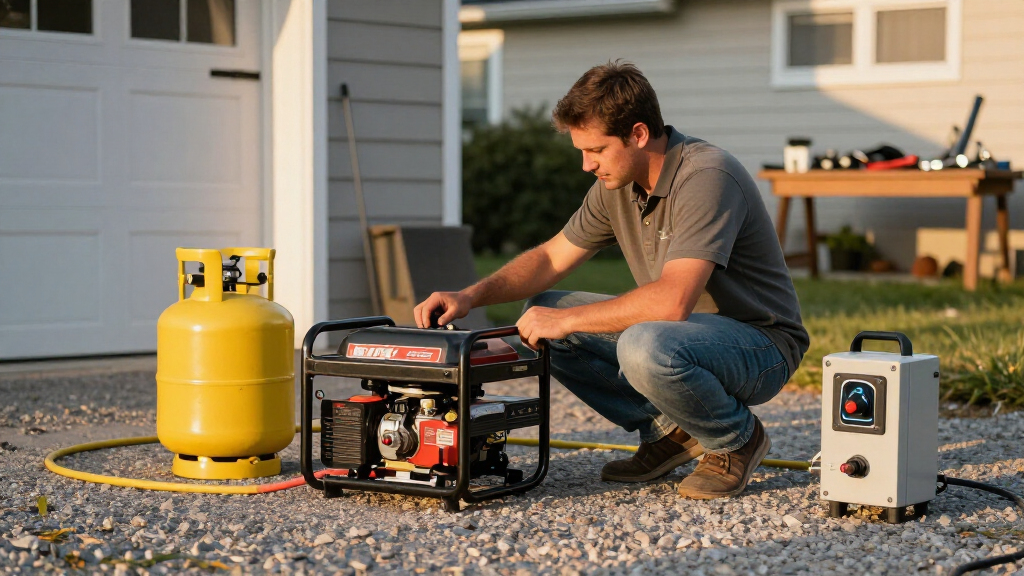
I evaluated every generator through the lens that actually matters for tri-fuel buyers: fuel flexibility in practice, not just on paper. That meant confirming natural gas compatibility, checking how much wattage drops when switching from gasoline to propane to NG, and favoring models with easy fuel-source switching. I also weighed starting convenience — electric start, remote start, and choke design — because a backup generator you can’t start reliably during an outage is a liability, not an asset.
Beyond that, I compared build quality and engine platform reputation, runtime per tank at typical loads, noise output, and safety features like CO detection and automatic shutoff. I deliberately included a mix of open-frame workhorses and inverter models because these serve genuinely different buyers, and I ranked within those roles rather than forcing unlike machines into one ladder. Finally, I gave weight to feature-per-dollar positioning: models that bundle transfer-switch readiness, GFCI outlets, and monitoring displays ranked above bare-bones units at similar output levels.
| tri-fuel generator | Fuel types |
|---|---|
| Westinghouse 14,500-Watt Tri-F | Gasoline, propane, natural gas |
| Generac 12,500-Watt Tri-Fuel P | Gasoline, liquid propane, natural gas |
| DuroMax XP13000HXT 13,000-Watt | Gasoline, propane, natural gas |
| GENMAX GM15000ET Tri-Fuel Port | Gasoline, LPG, natural gas |
| DuroStar DS13000MXT 13,000-Wat | Gasoline, propane, natural gas |
| DuroMax XP15000HXT 15,000-Watt | Gasoline, propane, natural gas |
| Westinghouse WGen9500TFc 12500 | — |
| WEN 14,500-Watt Tri-Fuel Gener | — |
| WEN 13,000-Watt Tri-Fuel Inver | — |
| Westinghouse iGen8200TFc Tri-F | — |
| Westinghouse iGen12000TFc Tri- | Gasoline, propane, natural gas |
| Westinghouse WGen14500TFc Tri- | Gasoline, propane, natural gas |
| Westinghouse 13,500-Watt Tri-F | Gasoline, propane, natural gas |
| Westinghouse WGen20000TFc Tri- | Gasoline, propane, natural gas |
| WEN TF-1450 14,500-Watt Tri-Fu | Gasoline, propane, natural gas |
Factors to Consider When Choosing Best Tri-fuel Generators
Before settling on a specific model, it helps to understand the broader tradeoffs that shape every tri-fuel generator purchase. These factors matter more than any single spec on a product page.Wattage: Size for Startup Surges, Not Just Running Load
The most common mistake buyers make is adding up running watts and calling it done. Motor-driven appliances — well pumps, refrigerators, air conditioners — draw two to three times their running wattage at startup, and that surge is what trips breakers or bogs down small generators. A 9,500-watt unit can realistically run a fridge, lights, and a furnace fan, but adding a 1 HP well pump pushes you into 12,000-watt territory fast. I’d suggest listing every appliance you truly need during an outage, including surge figures, then adding 20% headroom. Also remember that propane and natural gas reduce output by roughly 10% compared to gasoline on most models, so size your purchase around your preferred fuel, not the gasoline peak number on the box.
Natural Gas Compatibility and Your Home Setup
Every generator here runs gasoline and propane, but natural gas is where tri-fuel units earn their keep for permanent home backup. NG never runs out during a long outage the way propane tanks do, and it eliminates fuel storage entirely — a real advantage if your municipality limits how much gasoline you can keep on hand. The catch: NG requires a professional plumber-installed line and proper sizing, and undersized gas lines are a frequent cause of generators that run fine on propane but starve on NG. Before buying, confirm your home’s gas meter capacity can feed the generator alongside your furnace and water heater. If a permanent hookup isn’t in your plans, you can save money by treating any of these as a dual-fuel unit and ignoring the NG inlet entirely.
Open-Frame vs. Inverter: The Decision That Shapes Everything Else
This is the single biggest fork in the road, and it explains why my lineup includes both types. Open-frame generators deliver more watts per dollar and handle dirty, surge-heavy loads like power tools and pumps without complaint, but they’re loud — often 74+ decibels — and their power isn’t clean enough for sensitive electronics without a surge protector. Inverter generators cost more per watt but produce THD under 3%, safe for laptops, TVs, and modern furnaces with electronic control boards, and they run dramatically quieter and throttle down at partial load. If your backup plan centers on a whole-house transfer switch and big appliances, go open-frame. If you’re an RVer, tailgater, or backing up a home office, the inverter premium pays for itself in peace and quiet.
Starting System and Cold-Weather Reliability
A generator that won’t start in an ice storm is a very expensive paperweight. Electric start should be considered the minimum for any home backup unit — recoil-only models belong on job sites where they’re started once and run all day. Remote start, offered on several Westinghouse models here, is more convenient than it sounds: starting a generator from inside the house during a storm is genuinely safer than walking out to a cold, wet machine. Keep the starting battery maintained with a trickle charger between outages, since lead-acid starter batteries routinely die within two years of neglect. If you live somewhere with harsh winters, propane is your best cold-weather fuel — it doesn’t gel or go stale like gasoline, and it starts reliably at temperatures where carbureted gas engines struggle.
CO Safety Features Are Non-Negotiable
Carbon monoxide poisoning from generators kills people nearly every storm season, and it happens to careful people who made one bad placement decision. Modern units with built-in CO sensors that auto-shutoff — standard on the Westinghouse models with CO Alert and increasingly common across the category — add a real layer of protection beyond placement rules. Never run any of these generators in a garage, under a deck, or within 20 feet of a window, even with a CO sensor onboard. If you’re choosing between two similarly priced models and one includes CO detection, that feature alone should break the tie. I’d treat it the same way I’d treat a smoke detector: a small cost for a failure mode you never want to experience.
Transfer Switch Readiness and Outlet Selection
If your goal is whole-home backup rather than running extension cords, plan for a transfer switch or interlock kit from day one. Look for a generator with a 50-amp twist-lock or 14-50R outlet that can feed a transfer switch — most 12,000-watt-plus models here qualify, but smaller output configurations vary. Professional installation of a transfer switch typically costs more than buyers expect, so factor it into the total budget rather than treating the generator price as the whole cost. Also count your outlets: a model with four household 120V outlets plus a 30A and 50A connection covers far more real-world scenarios than one that leans entirely on a single high-amperage outlet. Extension cords work fine for occasional camping use, but they’re a poor long-term backup strategy for a household.
Frequently Asked Questions
Do tri-fuel generators lose power when running on propane or natural gas?
Yes, and the difference matters more than most buyers expect. Most tri-fuel generators produce their rated peak and running watts on gasoline, then lose roughly 10% on propane and 15–20% on natural gas, because those fuels contain less energy per unit of air drawn into the engine. A generator rated at 13,000 running watts on gasoline might deliver around 11,700 on propane and closer to 10,500 on natural gas. If natural gas is your primary planned fuel — say, for a permanent home hookup — size your purchase around the NG rating, not the headline number. Manufacturers list derated figures in their manuals, and checking those before buying prevents the classic mistake of buying a generator that’s undersized on the exact fuel you intend to use most.
Is a tri-fuel generator better than a dual-fuel model?
For home backup, tri-fuel flexibility is a genuine advantage rather than marketing fluff. Dual-fuel units cover gasoline and propane, which handles most emergencies, but the third fuel — natural gas — is the one that never runs out during an extended outage, since the gas grid typically stays pressurized even when power is down. Tri-fuel capability also lets you avoid gasoline entirely if you dislike storing it, since gasoline degrades within months and requires stabilizer. The tradeoff is modest: tri-fuel models sometimes cost slightly more than equivalent dual-fuel units, and the added NG inlet is one more connection to maintain. If you have natural gas service at your home, tri-fuel is worth the premium; if you don’t, a dual-fuel model would serve you just as well.
How loud are tri-fuel generators, and can I make one quieter?
Open-frame tri-fuel generators typically run 72–78 decibels at half load — loud enough that neighbors will notice and conversation near the unit is difficult. You can’t meaningfully quiet an open-frame unit; DIY sound enclosures cause overheating and are genuinely dangerous. The real solution is buying an inverter model like the Westinghouse iGen series or the WEN inverter, which run in the low-to-mid 60s decibel range and throttle down when load is light. Beyond purchase choice, placement is your other lever: position the generator 20+ feet from living spaces, point the exhaust away from the house, and use solid fencing or terrain as a partial sound break. If noise restrictions or close neighbors are part of your situation, that should push you toward an inverter model even at a higher cost per watt.
Can a tri-fuel generator run my whole house, including central air conditioning?
It depends heavily on your AC unit and your generator’s surge capacity. A typical 3-ton central air conditioner draws around 3,500 running watts but needs 8,000–10,000 watts momentarily at compressor startup, which is why small generators stall on AC even when the running math seems to work. The 13,000–15,000-watt open-frame models in this lineup can generally start and run a central AC alongside refrigeration and lights, especially on gasoline where full output is available. The WGen20000TFc exists precisely for this scenario, handling large homes with multiple major appliances simultaneously. Check your AC’s LRA (locked rotor amps) rating on the data plate, convert to watts, and compare it against the generator’s surge rating on your intended fuel — that single calculation answers the question definitively for your home.
Which fuel should I actually use day to day for emergency preparedness?
My general guidance: store propane, plan for natural gas, and use gasoline only when convenient. Propane stores indefinitely without stabilizer, doesn’t gum up carburetors, and starts reliably in cold weather, making 20-pound or 30-pound tanks the ideal standby fuel. Natural gas is best for long outages because it flows continuously without any stored supply, provided you have a properly installed line. Gasoline offers the most power and is easiest to source in normal times, but it degrades within three to six months, attracts moisture, and is the leading cause of generators that won’t start after sitting idle for a year. A sensible preparedness setup is two or three propane tanks on hand, the generator’s gasoline tank kept empty or treated with stabilizer and rotated, and NG ready if your home supports it.
Conclusion
The right tri-fuel generator depends less on spec sheets and more on what you’re actually powering. For most homeowners, the Westinghouse WGen14500TFc is my best overall pick — it combines whole-home-capable output, remote electric start, a CO sensor, and full natural gas compatibility without climbing into premium pricing. If value is the priority, the DuroMax XP13000HXT delivers genuine 13,000-watt tri-fuel performance at a lower price, and the nearly identical DuroStar DS13000MXT is even more affordable if you’re willing to accept a slightly rougher feature set.
For buyers wanting the most capable machine money can buy, the Westinghouse WGen20000TFc with its 28,000 peak watts is the best premium choice, built for large homes with central air and multiple major loads running at once. Beginners and casual users — campers, tailgaters, first-time backup buyers — should start with the Westinghouse iGen8200TFc, whose inverter platform, quiet operation, and clean power are the most forgiving introduction to the category. And for specific needs: RV owners get the best fit from the WEN 13,000-watt inverter for its blend of clean power and capacity, while anyone planning a permanent natural gas hookup should stick with the Generac 12,500-watt or the WGen9500TFc, both of which pair naturally with a transfer switch installation. Whatever you choose, buy for the fuel you’ll actually run and the appliances you’ll actually power — that discipline matters more than any single wattage number on the box.
Fall Picks
fall essentials
As an affiliate, we earn on qualifying purchases.