
TL;DR
A person moved a clock into their bathroom and experienced a notable improvement in their morning routine. The change has garnered attention for its simplicity and potential behavioral benefits.
A homeowner has reported that moving a clock into their bathroom has permanently changed their morning routine, leading to increased punctuality and a more structured start to the day. This personal experiment has attracted attention for its simplicity and potential implications for behavioral habits.

Get backup power and energy gear delivered free with Prime
- Fast, free delivery on millions of items
- Prime Video, Amazon Music and more included
- Member-only deals all year
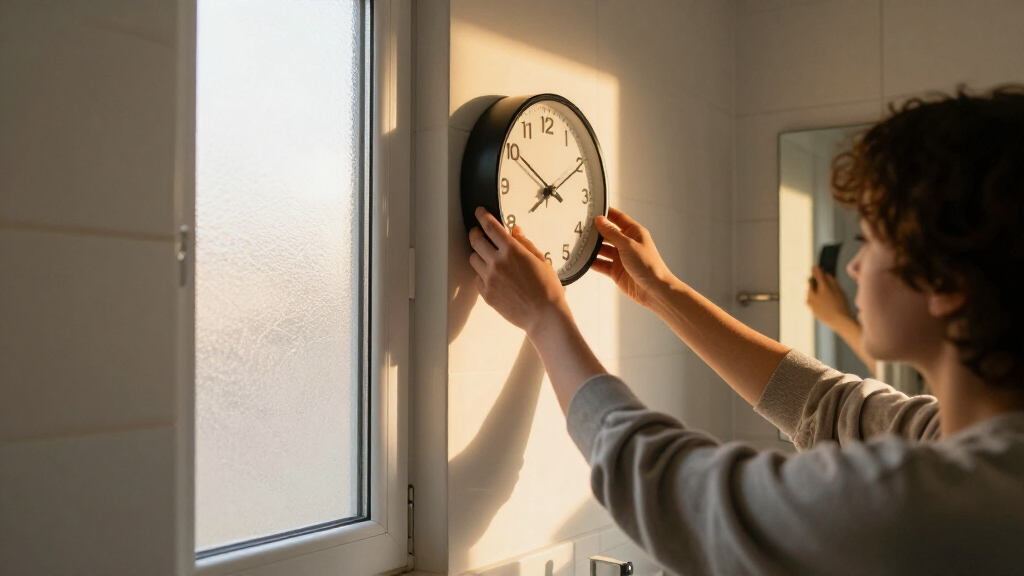
The individual, who prefers to remain anonymous, placed a standard wall clock inside their bathroom to better track time during morning activities. Since doing so, they have noted arriving at work earlier, feeling less rushed, and experiencing a more organized start to their day. The change was implemented approximately three weeks ago and has been sustained consistently.
Experts in behavioral psychology suggest that such environmental modifications, even minor ones, can influence routines and habits. Dr. Lisa Chen, a psychologist specializing in habit formation, stated, “Simple adjustments like visual cues or environmental prompts can significantly impact behavior, especially when they relate to time management.”
Impact of Environmental Cues on Morning Behavior
This story highlights how a straightforward environmental change—relocating a clock—can influence daily habits and improve punctuality. It suggests that small, intentional modifications in one’s surroundings may serve as effective tools for behavioral change, encouraging others to experiment with their routines.
Products Worth Considering

Levoit Core 400S-P Smart Air Purifier for Large Rooms up to 1718 ft²

Levoit Air Purifier for Home, Pets, Bedroom – Smart Wi‑Fi for Large Rooms

Philips Hue Play Gradient Light Tube, Large, Black
As an affiliate, we earn on qualifying purchases.
Minimal Changes, Notable Effects in Routine Optimization
While routine adjustments are common in productivity discussions, this case underscores how a simple physical cue can reinforce time awareness. Previous studies have shown that visual reminders and environmental cues can aid in establishing new habits or reinforcing existing ones. The individual’s experience echoes broader research on habit formation, where environmental triggers play a crucial role.
This specific change was motivated by a desire to better manage time, especially during busy mornings, and reflects a growing interest in low-cost, low-effort behavioral interventions.
“Environmental cues like a clock in a strategic location can serve as powerful triggers for establishing or reinforcing routines.”
— Dr. Lisa Chen, behavioral psychologist
Extent of Long-Term Effectiveness and Broader Applicability
It is not yet clear whether this change will sustain long-term benefits or if similar results can be achieved by others. The individual’s experience is anecdotal, and scientific studies on such specific environmental modifications are limited. Further research would be needed to determine if moving a clock can reliably improve routines across diverse populations.
Potential for Broader Adoption and Formal Study
Researchers may investigate the impact of environmental cues like clocks on daily routines through controlled studies. Meanwhile, individuals interested in improving their habits might consider experimenting with simple environmental adjustments. The homeowner plans to continue monitoring their routine and may share more insights if positive effects persist.
Key Questions
Can moving a clock really improve my morning routine?
While anecdotal evidence suggests it can help, scientific research on this specific intervention is limited. It may work by increasing time awareness and reducing rush, but results can vary.
What other environmental cues could help improve daily habits?
Visual reminders, designated spaces for specific tasks, or alarms are common cues that can reinforce routines and promote punctuality or productivity.
Is this a proven method for habit formation?
Not definitively. Environmental cues are known to support habit formation, but their effectiveness depends on individual circumstances and consistency.
Should I try moving a clock into my bathroom?
If you struggle with time management or punctuality, experimenting with environmental cues like relocating a clock may be worth trying. However, results are personal and not guaranteed.
Source: rss