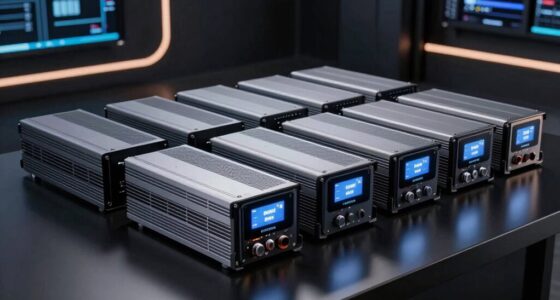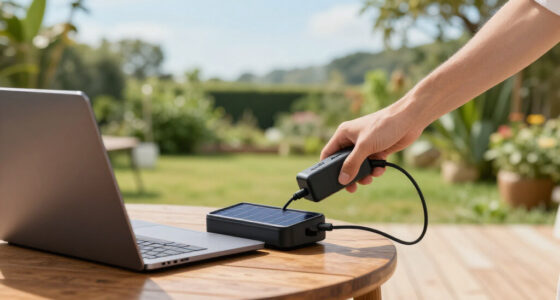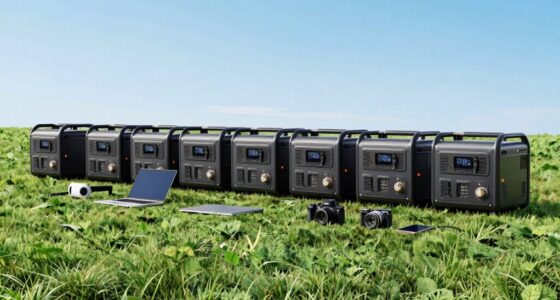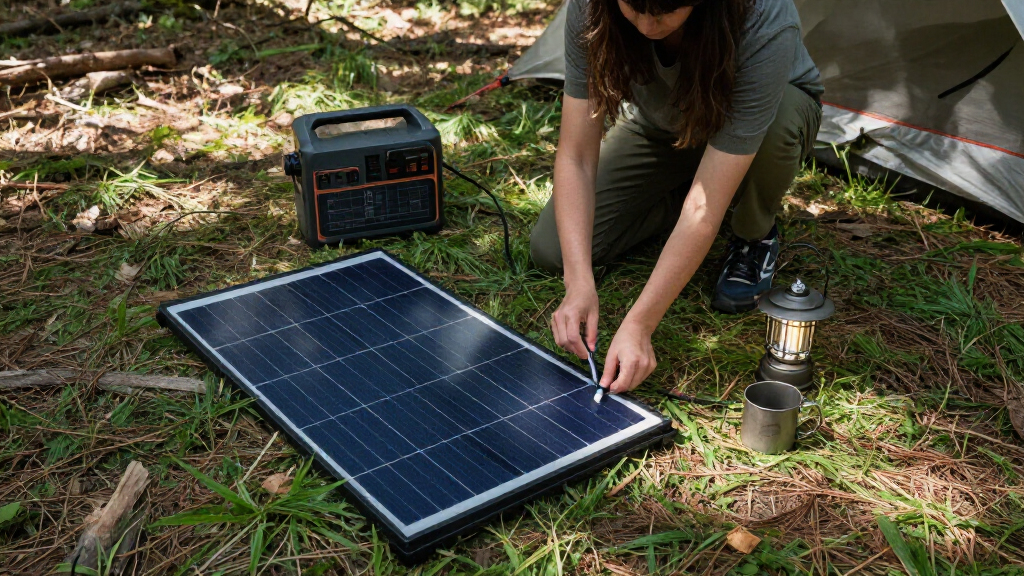
For most campers, I’d start with the Anker SOLIX C300 kit: its 288Wh capacity, 300W output, and included 60W panel make a practical balance for phones, lights, and small electronics. The Jackery Solar Generator 1000 v2 is a stronger choice for longer trips and larger loads, while the MARBERO 155Wh kit suits short outings when low carry weight matters more than runtime. The main tradeoff is straightforward: compact kits are easier to pack but run out sooner, while high-capacity systems can power more gear but take up more room and need more careful transport planning. Solar panels can extend a trip’s power supply, but charging speed depends on sunlight and the kit’s input limits. Read on for the full comparison and help matching a kit to your camping setup.

Get backup power and energy gear delivered free with Prime
- Fast, free delivery on millions of items
- Prime Video, Amazon Music and more included
- Member-only deals all year
Complete the kit


Key Takeaways
- The 288Wh Anker SOLIX C300 kit is the most balanced small setup here: it pairs a 300W station with a 60W panel, while the similarly sized BLUETTI Elite 30 Mini is listed without a bundled panel.
- The Jackery 1000 v2 and Anker SOLIX C1000 Gen 2 mark a useful capacity step-up: both include 200W panels, making them better suited to longer stays than the 155Wh and 288Wh kits.
- Capacity changes the camping plan, not just runtime: the 3014Wh BLUETTI Elite 300 and 3072Wh PECRON F3000LFP are closer to campsite power hubs than lightweight weekend companions.
- Included panel wattage varies sharply: the kits range from a 30W MARBERO panel to two 200W panels with the larger BLUETTI and Jackery systems, so bundled solar capability is a major point of separation.
- Several 300W-class kits are near alternatives rather than clear upgrades: ZeroKor appears twice with different panel descriptions, while the EM300, EnginStar, and other small stations call for close checks of battery chemistry, ports, and solar input before choosing.
| Anker SOLIX C300 Portable Power Station with 60W Solar Panel, 288Wh, 300W |  | Best Overall Compact Solar Kit | Battery capacity: 288Wh | Battery type: LiFePO4 | Included solar panel: 60W | VIEW LATEST PRICE | See Our Full Breakdown |
| MARBERO 155Wh Portable Power Station with 30W Solar Panel |  | Best Lightweight Starter Kit | Battery capacity: 155Wh | Included solar panel: 30W, 23% conversion efficiency | Solar charging time: Approximately 6–7 hours under suitable conditions | VIEW LATEST PRICE | See Our Full Breakdown |
| BLUETTI Elite 30 Mini Portable Power Station, 288Wh, 300W |  | Best for USB-C-Focused Campers | Battery capacity: 288Wh | Battery chemistry: LiFePO4 | USB-C ports: 2 bidirectional 140W ports and 1 30W port | VIEW LATEST PRICE | See Our Full Breakdown |
| EM300 300W Portable Power Station, 259Wh LiFePO4 Solar Generator with 65W USB-C PD |  | Best for Campers Who Already Own a Panel | Battery capacity: 259Wh | Battery type: LiFePO4 | AC output / peak output: 300W / 600W | VIEW LATEST PRICE | See Our Full Breakdown |
| Jackery Solar Generator 1000 v2 with 200W Solar Panel, 1024Wh LiFePO4 Battery |  | Best Premium High-Capacity Kit | Battery capacity: 1,024Wh | Battery chemistry: LiFePO4 | AC output / surge peak: 1,500W / 3,000W | VIEW LATEST PRICE | See Our Full Breakdown |
| ZeroKor 300W Portable Power Station with 60W Solar Panel |  | Best for Simple, Multi-Device Camp Charging | Maximum output: 300W | Solar panel: 60W monocrystalline; 20.5% conversion efficiency | AC outlets: 2; 300W maximum | VIEW LATEST PRICE | See Our Full Breakdown |
| BLUETTI Elite 300 Portable Power Station with Two 200W Solar Panels, 3014Wh LiFePO4 Battery |  | Best for RV-Style Camping and High-Demand Loads | Battery capacity: 3014Wh | Battery chemistry: LiFePO4 | AC output: 2400W; 4800W surge | VIEW LATEST PRICE | See Our Full Breakdown |
| PECRON F3000LFP Portable Power Station with Cart Kit, 3072Wh LiFePO4 Battery, 3600W Output |  | Best High-Output Kit for Camps with Easy Vehicle Access | Battery capacity: 3072Wh | Battery chemistry: LiFePO4 | Output power: 3600W | VIEW LATEST PRICE | See Our Full Breakdown |
| VTOMAN Jump 100 Portable Power Station with 40W Foldable Solar Panel |  | Best Compact Kit for Minimalist Campers | Battery capacity: 89.6Wh | Battery chemistry: LiFePO4 | Maximum station output: 100W | VIEW LATEST PRICE | See Our Full Breakdown |
| EnginStar 300W Portable Power Station with 60W Foldable Solar Panel |  | Best Lightweight 300W Panel Bundle | Battery capacity: 296Wh | Battery chemistry: Lithium-ion | AC output: 300W; 2 × 110V pure sine wave outlets | VIEW LATEST PRICE | See Our Full Breakdown |
| BLUETTI Elite 100 Mini Solar Generator with 100W Solar Panel, 1004.8Wh |  | Best Compact One-Kit Option | Battery capacity: 1004.8Wh | Battery type: LiFePO4 | AC output: 700W | VIEW LATEST PRICE | See Our Full Breakdown |
| Anker SOLIX C1000 Gen 2 Portable Power Station with 200W Solar Panel |  | Best for High-Power Camping Loads | Battery capacity: 1,024Wh | Battery type: LiFePO4 | Continuous output: 2,000W | VIEW LATEST PRICE | See Our Full Breakdown |
| ZeroKor 300W Portable Power Station with Solar Panel |  | Best for Basic, Low-Draw Campsite Needs | Model: R200 | Battery capacity: 280Wh | Power station output: 300W | VIEW LATEST PRICE | See Our Full Breakdown |
| Jackery Explorer 2000 v2 Solar Generator with Two 200W Solar Panels, 2042Wh, 2200W |  | Best High-Capacity Solar Kit | Battery capacity: 2042Wh | Battery type: LiFePO4 | AC output: 2200W | VIEW LATEST PRICE | See Our Full Breakdown |
| solar generator kits for camping | Battery capacity | Weight |
|---|---|---|
| Anker SOLIX C300 Portable Powe | 288Wh | 15.5 lb |
| MARBERO 155Wh Portable Power S | 155Wh | — |
| BLUETTI Elite 30 Mini Portable | 288Wh | 7.27 lb |
| EM300 300W Portable Power Stat | 259Wh | 7.17 lb |
| Jackery Solar Generator 1000 v | 1,024Wh | 23.4 lb |
| ZeroKor 300W Portable Power St | — | — |
| BLUETTI Elite 300 Portable Pow | 3014Wh | — |
| PECRON F3000LFP Portable Power | 3072Wh | 63.3 lb |
| VTOMAN Jump 100 Portable Power | 89.6Wh | — |
| EnginStar 300W Portable Power | 296Wh | Power station: 6.5 lb; panel: 4 lb |
| BLUETTI Elite 100 Mini Solar G | 1004.8Wh | 23.5 lb |
| Anker SOLIX C1000 Gen 2 Portab | 1,024Wh | 24.9 lb |
| ZeroKor 300W Portable Power St | 280Wh | — |
| Jackery Explorer 2000 v2 Solar | 2042Wh | — |
More Details on Our Top Picks
Anker SOLIX C300 Portable Power Station with 60W Solar Panel, 288Wh, 300W
The Anker SOLIX C300 is my strongest fit for campers who want a ready-to-use kit without carrying a large power station. Its 288Wh LiFePO4 battery, 300W output, and included 60W panel cover phones, lights, and other modest campsite electronics, while eight ports help a group charge several devices at once. Compared with the BLUETTI Elite 30 Mini, it weighs more, but it includes a solar panel and offers three AC outlets rather than two. Wall, car, and USB-C charging give you alternatives when sunlight is limited, and the stated 25dB operating noise is suited to a quiet campsite. The main compromise is solar speed: 60W is a modest panel for replenishing the battery, and the carrying strap is sold separately. Its panel compatibility is also limited, so check before pairing it with other Anker panels.
Pros:- Includes a 60W solar panel and supports wall, car, and USB-C charging.
- Eight ports, including three AC outlets, accommodate multiple campsite devices.
- LiFePO4 battery is rated for 3,000 cycles.
- Compact 15.5-pound unit has a stated 25dB noise level.
Cons:- The 60W panel can take a while to replenish the 288Wh battery.
- Carrying strap is sold separately.
- Not compatible with Anker SOLIX PS30, PS200, or PS400 panels.
Best for: Campers who want a complete, quiet kit for phones, lights, and small electronics, with several ways to recharge.
Not ideal for: Campers running high-wattage appliances or seeking fast solar replenishment; 300W output and the included 60W panel are limiting.
- Battery capacity:288Wh
- Battery type:LiFePO4
- Included solar panel:60W
- Charging ports:8
- Wall recharge:80% in 50 minutes
- Weight:15.5 lb
- Noise level:25dB at 3.3 ft
- Battery cycle life:3,000 cycles
Our verdict“Choose the C300 if you want a quiet, well-connected camping kit with a panel included and can work within its modest solar and output limits.”
MARBERO 155Wh Portable Power Station with 30W Solar Panel
For a short trip built around phones, headlamps, and small electronics, the MARBERO 155Wh kit keeps the carry burden down: the power station weighs just 3.7 pounds, and the foldable 30W panel is part of the package. Its mix of AC, USB, and DC outputs makes it more flexible than a simple battery pack, while the panel’s IP65 rating and 6.5-foot cable help with campsite placement. The tradeoff is capacity and recharge pace. The Anker SOLIX C300 offers nearly twice the stored energy and a higher-wattage panel, making it a better match for longer trips or heavier device use. MARBERO’s stated 6–7-hour solar charge time also depends on suitable conditions, so this is better treated as a lightweight top-up station than a dependable source for sustained appliance use. Its two AC outlets are useful, but the 100W rating per outlet narrows what they can run.
Pros:- Complete kit includes the station, foldable 30W panel, and power converter.
- Light 3.7-pound power station is easy to pack.
- IP65-rated panel has a 6.5-foot cable for flexible placement.
- AC, USB, DC, and car outputs cover a variety of small devices.
Cons:- The 155Wh battery is modest for multi-day or group use.
- Solar charging is listed at approximately 6–7 hours under suitable conditions.
- Each of the two AC outlets is rated at 100W.
Best for: Solo campers and minimalist weekenders who mainly need to recharge phones, lights, and small USB or DC devices.
Not ideal for: Campers with multi-day power needs or larger appliances; its 155Wh capacity and 30W panel limit runtime and recharge speed.
- Battery capacity:155Wh
- Included solar panel:30W, 23% conversion efficiency
- Solar charging time:Approximately 6–7 hours under suitable conditions
- AC outlets:2 × 100W
- USB outputs:1 QC3.0 USB-A, 2 standard USB-A, 1 USB-C on station, 1 18W USB-C on solar converter
- Other outputs:3 DC outputs and 1 car port
- Panel water resistance:IP65
- Power station weight:3.7 lb
Our verdict“Pick MARBERO for a light, all-in-one starter kit for small electronics, but choose the Anker SOLIX C300 or another higher-capacity unit for longer trips.”
BLUETTI Elite 30 Mini Portable Power Station, 288Wh, 300W
The BLUETTI Elite 30 Mini stands apart for campers who want a compact power station with unusually capable USB-C connections, rather than a bundled solar kit. It weighs about 7.3 pounds and holds 288Wh, while two bidirectional 140W USB-C ports can serve as both device outputs and charging inputs. A retractable USB-C cable reduces loose accessories, and the stated 6,000-plus cycle life is longer than the 3,000-cycle rating listed for the Anker SOLIX C300. But the comparison favors Anker if you want to set up solar straight from the box: the Elite 30 Mini’s listed accessories do not include a panel, and its output is capped at 300W. It does support solar charging, but buyers need to source a compatible panel separately. The sub-10ms UPS switchover and lighting modes add utility beyond ordinary campsite charging.
Pros:- Two bidirectional 140W USB-C ports can charge devices or accept input.
- Built-in retractable USB-C cable cuts down on loose cables.
- LiFePO4 battery is rated for 6,000-plus charge and discharge cycles.
- Weighs about 7.3 pounds and includes three lighting modes.
Cons:- No solar panel is listed among the included accessories.
- 300W rated output rules out many higher-draw appliances.
- At 35dB, its stated noise level is higher than the Anker SOLIX C300’s 25dB.
Best for: Campers carrying USB-C laptops, tablets, and phones who value low carry weight, fast USB-C connections, and a long stated cycle life.
Not ideal for: Buyers seeking a ready-made solar kit or power for appliances above 300W; no solar panel is listed as included and output is limited.
- Battery capacity:288Wh
- Battery chemistry:LiFePO4
- USB-C ports:2 bidirectional 140W ports and 1 30W port
- AC outlets:2
- Weight:7.27 lb
- Battery cycle life:6,000+ cycles
- UPS switchover:Under 10ms
- Noise level:35dB
Our verdict“Choose the Elite 30 Mini if USB-C capability and low weight matter more than receiving a solar panel in the box.”
EM300 300W Portable Power Station, 259Wh LiFePO4 Solar Generator with 65W USB-C PD
The EM300 suits campers who already have compatible solar gear or prefer to choose a panel separately. Its 259Wh LiFePO4 battery, 300W AC output, and connections spanning USB-C, USB-A, DC, and a car socket cover a useful range of camp electronics, while its 7.17-pound weight and built-in handle make it easier to move than the 15.5-pound Anker SOLIX C300. Wall, car, and solar charging add flexibility, and the stated pass-through support can help when power needs overlap with charging. Unlike the C300 or MARBERO kit, though, the EM300 does not include a solar panel; its compatible 100W panel is sold separately. Its 259Wh capacity is also slightly below both 288Wh models, and the corrected sine wave AC output is a specification to check against sensitive equipment before buying.
Pros:- Light 7.17-pound design has a built-in carrying handle.
- Supports wall, car, and solar charging, with pass-through charging listed.
- Includes 65W and 36W USB-C output alongside USB-A, DC, car, and AC connections.
- LiFePO4 battery is rated for more than 3,000 charge cycles.
Cons:- Compatible 100W solar panel is sold separately.
- 259Wh capacity is lower than the 288Wh Anker SOLIX C300 and BLUETTI Elite 30 Mini.
- 300W AC limit and corrected sine wave output may not suit every appliance.
Best for: Campers who already own a compatible 100W panel and want a light station with varied ports for small electronics.
Not ideal for: First-time solar-kit buyers who want the panel included, or campers who need more than 300W AC output.
- Battery capacity:259Wh
- Battery type:LiFePO4
- AC output / peak output:300W / 600W
- AC waveform:Corrected sine wave
- USB-C output:Up to 65W and 36W
- Solar panel compatibility:100W panel, sold separately
- Charging methods:Wall, car, and solar
- Weight:7.17 lb
- Battery cycle life:More than 3,000 cycles
Our verdict“The EM300 is a sensible lightweight station for campers with a panel already in hand, but it is not the most complete kit for a first solar purchase.”
Jackery Solar Generator 1000 v2 with 200W Solar Panel, 1024Wh LiFePO4 Battery
If my camping plan calls for more than phones and lights, the Jackery Solar Generator 1000 v2 brings a substantial step up: its 1,024Wh battery and 1,500W AC output can support a wider range of compatible gear than the 259–288Wh stations in this group. The included 200W solar panel also makes it a more complete high-capacity kit than the BLUETTI Elite 30 Mini or EM300, which list no panel in the package or require one separately. Its 23.4-pound weight is the price of that extra reserve, so it is better suited to car camping than a long walk from the parking area. App-controlled charging offers emergency, quiet, and efficiency modes, but the 50-minute full-charge claim requires emergency charging to be enabled in the app. The station and panel ship separately, which may affect trip planning.
Pros:- 1,024Wh capacity and 1,500W AC output offer much more headroom than the compact stations in this lineup.
- Includes a 200W solar panel.
- LiFePO4 battery is rated to retain over 70% capacity after 4,000 cycles.
- App offers emergency, quiet overnight, and energy-efficiency charging modes.
Cons:- At 23.4 pounds, it is much heavier than the compact stations and better suited to car camping.
- 50-minute full charging requires emergency mode to be enabled in the app.
- The power station and solar panel ship separately.
Best for: Car campers and small groups who need to run compatible higher-draw equipment and want a 200W solar panel included.
Not ideal for: Backpackers or campers prioritizing minimal weight, and buyers who want a single shipped package or app-free emergency fast charging.
- Battery capacity:1,024Wh
- Battery chemistry:LiFePO4
- AC output / surge peak:1,500W / 3,000W
- Included solar panel:200W
- AC outlets:2 pure sine wave
- USB-C ports:2, up to 100W charging
- UPS switchover:10ms
- Weight:23.4 lb
- Charging time:50 minutes with emergency charging enabled
Our verdict“Choose the Jackery if you need substantial campsite power and can handle its weight; for a lighter trip centered on small devices, the Anker SOLIX C300 is easier to carry.”
ZeroKor 300W Portable Power Station with 60W Solar Panel
The ZeroKor 300W is a straightforward kit for campers who want a small power station and panel together, plus AC, DC, and USB options for everyday electronics. Its 60W monocrystalline panel can contribute charging when sunlight is available, while AC, car, and compatible solar inputs give you alternatives at camp or on the road. Compared with the EnginStar 300W, ZeroKor offers a similar output ceiling and panel size, but its panel efficiency is listed lower and the data does not specify battery capacity, making runtime harder to judge. The 300W limit rules out higher-draw appliances, and the panel junction box must stay dry. I’d pick it for phones, lights, and other modest loads—not for running camp cooking gear or sustained appliance use.
Pros:- Includes a 60W monocrystalline solar panel with USB and DC outputs
- Offers AC, DC, and USB ports for different small-device charging needs
- Can recharge from an AC outlet, 12V car outlet, or compatible solar panel
- Includes an SOS and reading-mode flashlight and multiple electrical protections
Cons:- The 300W maximum output excludes higher-draw appliances
- Battery capacity is not specified in the provided product data
- The solar panel junction box is not waterproof
Best for: Car campers who want a bundled panel and several charging formats for phones, lights, and other devices drawing no more than 300W
Not ideal for: Campers who need a documented battery capacity, longer appliance runtimes, or power for loads above 300W; the panel junction box also needs protection from moisture
- Maximum output:300W
- Solar panel:60W monocrystalline; 20.5% conversion efficiency
- AC outlets:2; 300W maximum
- USB ports:3 × USB-A and 1 × quick-charge USB
- DC port:9V–12.6V, 10A maximum
- Recharge methods:AC outlet, 12V car outlet, or compatible DC5521 solar panel
- Safety protections:Short-circuit, over-current, over-voltage, overload, and overheating
Our verdict“Choose the ZeroKor for modest camp electronics and bundled solar charging, but skip it if you need appliance-level output or clearly stated battery runtime.”
BLUETTI Elite 300 Portable Power Station with Two 200W Solar Panels, 3014Wh LiFePO4 Battery
For campers bringing an RV or several demanding appliances, the BLUETTI Elite 300 sits in a different class from compact kits such as the ZeroKor 300W. Its 3014Wh LiFePO4 battery, 2400W AC output, and 4800W surge rating give it far more capacity and headroom, while the TT-30 outlet and 12V/30A port suit RV connections. Two 200W panels are included, so the bundle is built for solar replenishment rather than occasional phone charging. That capability comes with a substantial footprint and less appeal for campers who hike from a vehicle or pack light. The listed runtime is seven hours, but actual results depend on the devices connected; charging performance details are also limited in the supplied specs. I’d favor it when campsite power needs resemble small-scale RV backup.
Pros:- 3014Wh LiFePO4 battery with a stated cycle life of 6000+ cycles
- 2400W AC output and 4800W surge rating support higher-demand equipment
- Includes two 200W solar panels
- Dedicated TT-30 outlet and 12V/30A DC port suit RV connections
Cons:- The large-capacity station and two-panel bundle are poorly suited to carry-in campsites
- Solar panels ship separately
- Actual runtime varies with connected load, despite the listed seven-hour figure
Best for: RV campers and vehicle-based groups who need high battery capacity, a TT-30 connection, and power for multiple substantial loads
Not ideal for: Backpackers, minimalist tent campers, or anyone prioritizing a compact kit; its large-capacity setup is more than small-device charging requires
- Battery capacity:3014Wh
- Battery chemistry:LiFePO4
- AC output:2400W; 4800W surge
- Solar panels:2 × 200W
- RV connection:TT-30 outlet
- DC output:12V/30A
- Stated battery cycle life:6000+ cycles
- Power sources:Solar, AC, car, lead-acid battery, or generator
Our verdict“Pick the Elite 300 for RV-style camping and substantial power needs; for a light tent-camping kit, a compact 300W option is a more practical fit.”
PECRON F3000LFP Portable Power Station with Cart Kit, 3072Wh LiFePO4 Battery, 3600W Output
The PECRON F3000LFP offers the highest stated output in this group at 3600W, paired with a 3072Wh LiFePO4 battery and 13 ports. That makes it more versatile for a base camp with several devices or demanding appliances than the BLUETTI Elite 300, which has a 2400W AC rating and includes two solar panels. PECRON’s maximum solar input is 1600W, but no panels are listed among the included components, so buyers need to plan their own solar setup. Its advertised two-hour AC recharge and app monitoring can make managing a large battery easier, while the UPS feature has a stated 8–20ms switching time. The tradeoff is clear for camping: at 63.3 lb, even with the included cart, this is better suited to vehicle-accessible sites than carrying any distance.
Pros:- 3072Wh LiFePO4 battery and 3600W output support substantial camp power needs
- Thirteen ports include six AC outlets and two 100W USB-C ports
- Supports up to 1600W solar input and AC, solar, or car charging
- Includes a cart, UPS function, and app-based power monitoring
Cons:- Weighs 63.3 lb, making it a poor choice for carry-in campsites
- Solar panels are not listed among the included components
- The cart has a shorter one-year warranty than the station
Best for: Car campers and base-camp hosts who need high AC output, many ports, and a large battery, and can roll the station from vehicle to site
Not ideal for: Backpackers or campers with long walks from parking; the 63.3 lb station is heavy, and solar panels are not listed as included
- Battery capacity:3072Wh
- Battery chemistry:LiFePO4
- Output power:3600W
- Maximum solar input:1600W
- AC charging input:1800W maximum; advertised two-hour full recharge
- Output ports:13 total, including 6 AC outlets and 2 × 100W USB-C
- Weight:63.3 lb
- UPS switching time:8–20ms
Our verdict“Choose the PECRON when high output and capacity matter more than portability, and you have vehicle access plus a separate solar-panel plan.”
VTOMAN Jump 100 Portable Power Station with 40W Foldable Solar Panel
At 89.6Wh and just a few pounds for the station, the VTOMAN Jump 100 is the most compact choice here for keeping small electronics topped up without packing a full-size power station. Its 65W USB-C port can handle compatible devices that need more than a basic USB-A connection, and the included 40W foldable panel adds a compact solar option. Compared with the ZeroKor 300W, VTOMAN is easier to fit into a light camping load, but its 100W output and small battery sharply limit what it can run and for how long. The listed station weight varies between 2.36 and 2.9 lb in the product information, and the station and panel ship separately. I’d choose it for phones and small electronics, not camp appliances or extended off-grid power.
Pros:- Compact 89.6Wh LiFePO4 station with a foldable 40W solar panel
- 65W USB-C PD port supports compatible higher-power electronics
- Battery is specified for 3000+ cycles before reaching 80% capacity
- Provides AC, USB-A, and USB-C outputs
Cons:- 100W maximum output and 89.6Wh capacity limit appliance use and runtime
- The station weight is inconsistent in the supplied information, listed as both 2.36 and 2.9 lb
- The power station and solar panel ship separately
Best for: Minimalist car campers and travelers who want a small LiFePO4 battery, USB-C charging, and a foldable panel for phones and compact electronics
Not ideal for: Campers who need to run appliances above 100W, power multiple devices for long periods, or receive the station and panel in one shipment
- Battery capacity:89.6Wh
- Battery chemistry:LiFePO4
- Maximum station output:100W
- AC outlet:1 × 120V, 100W
- USB-C port:65W PD, input/output
- USB-A ports:2 × 5V/2.4A, 12W
- Solar panel:40W foldable; USB-A and USB-C PD 30W ports
- Station weight:Listed as 2.36 lb and 2.9 lb in product information
Our verdict“Pick the VTOMAN for a compact charging kit centered on small electronics, but choose a larger station if your campsite needs more than 100W or longer runtimes.”
EnginStar 300W Portable Power Station with 60W Foldable Solar Panel
The EnginStar 300W pairs a modest 296Wh battery with a 60W foldable monocrystalline panel, making it a balanced middle ground between the tiny VTOMAN Jump 100 and large stations such as the PECRON F3000LFP. At 6.5 lb for the power station and 4 lb for the panel, it suits vehicle-based camping where a smaller load matters but a 100W-only station feels too restrictive. Two pure sine wave AC outlets, regulated DC outputs, and USB-A and USB-C ports cover common camp electronics. The 300W ceiling and 296Wh capacity still limit higher-draw appliances and extended use; the advertised three-hour recharge should also be read alongside its 65W maximum charging input. I’d favor it over the ZeroKor when a foldable panel and stated battery capacity matter, while accepting its stated cycle life of just over 1,000 charges.
Pros:- Includes a foldable 60W monocrystalline panel with 23% stated conversion efficiency
- 296Wh capacity and 300W output offer more headroom than the VTOMAN Jump 100
- Pure sine wave AC outlets plus DC, USB-A, and USB-C outputs cover varied small-device needs
- Can recharge from solar, a wall outlet, or a 12V car socket
Cons:- The 296Wh battery and 300W output limit appliance use and extended runtimes
- Maximum charging input is 65W, so solar replenishment depends on suitable sunlight and setup
- Stated battery cycle life is more limited than the LiFePO4 options in this roundup
Best for: Car campers who want a relatively light 300W station with a foldable panel and enough capacity for lights, phones, and modest electronics
Not ideal for: Campers relying on high-wattage appliances or long runtimes, and buyers seeking a long stated battery cycle life or a panel that can be left in wet conditions
- Battery capacity:296Wh
- Battery chemistry:Lithium-ion
- AC output:300W; 2 × 110V pure sine wave outlets
- Solar panel:60W monocrystalline; 23% conversion efficiency
- Maximum charging input:65W
- Charging methods:Solar, wall outlet, or 12V car socket
- Weight:Power station: 6.5 lb; panel: 4 lb
- Battery cycle life:More than 1000 charge cycles
Our verdict“Choose the EnginStar for a lightweight, foldable-panel 300W kit for modest camp loads; step up to a larger station for appliances or longer trips.”
BLUETTI Elite 100 Mini Solar Generator with 100W Solar Panel, 1004.8Wh
The BLUETTI Elite 100 Mini pairs a roughly 1kWh battery with a compact, upright case weighing 23.5 pounds, making it easier to pack than the larger Jackery Explorer 2000 v2. Its included 100W panel and support for solar, AC, and car charging suit campers who want one kit for phones, lights, and modest appliances without moving up to a heavy-duty station. The long-life LiFePO4 battery and app control add useful flexibility, while the LED light is handy around camp. The main limit is its 700W AC output: unlike the Anker SOLIX C1000 Gen 2, it cannot handle as many higher-draw appliances. Solar charging is also slow at the included panel’s capacity, with a listed full charge taking about 13–15 hours.
Pros:- 23.5-pound weight and compact vertical form are easier to stow than larger high-capacity kits.
- 1004.8Wh LiFePO4 battery is suited to repeated camping use.
- Includes a 100W solar panel and supports solar, AC, and car charging.
- App control, LED lighting, and UPS backup add useful features beyond basic campsite power.
Cons:- 700W AC output rules out many higher-powered appliances and is far below the Anker SOLIX C1000 Gen 2’s 2,000W rating.
- The included 100W panel is a slow way to refill the battery; listed solar charging takes about 13–15 hours.
- Its 1400W surge figure does not change the 700W continuous-output limit.
Best for: Car campers who want around 1kWh of storage in a relatively light, compact station and expect to recharge small devices and modest loads.
Not ideal for: Campers who need to run high-wattage appliances or want quick solar replenishment from the included panel.
- Battery capacity:1004.8Wh
- Battery type:LiFePO4
- AC output:700W
- Surge output:1400W
- AC outlets:3
- USB-C output:140W
- Included solar panel:100W
- Weight:23.5 lb
- Solar recharge time:About 13–15 hours from 0% to 100%, as listed
Our verdict“Choose this BLUETTI for a compact, roughly 1kWh camping kit, but pick a higher-output station if you plan to run demanding appliances.”
Anker SOLIX C1000 Gen 2 Portable Power Station with 200W Solar Panel
The Anker SOLIX C1000 Gen 2 is the strongest fit here when camping power needs go beyond phones and lighting: its 2,000W continuous output can support more demanding equipment than the BLUETTI Elite 100 Mini’s 700W ceiling, while the battery capacities are nearly identical. The included 200W panel gives it a better starting point for campsite solar than the BLUETTI’s 100W panel, and the station can accept up to 600W of solar input. Its 24.9-pound weight remains manageable for car camping, though it is not as compact as the BLUETTI. The listed 1.8-hour solar recharge depends on access to the full 600W input, not just the bundled panel. The station and panel also ship separately, which can complicate kit delivery.
Pros:- 2,000W continuous and 3,000W peak output handle larger loads than the BLUETTI Elite 100 Mini.
- Includes a 200W solar panel and accepts up to 600W solar input.
- Nine total power outlets provide several connection options at camp.
- App-based monitoring and control, plus UPS switchover under 10 ms.
Cons:- The listed 1.8-hour solar recharge requires up to 600W of solar input, more than the included panel provides.
- Power station and solar panel are dispatched separately.
- At 24.9 pounds, it is suited to vehicle-based camping rather than carrying far from the car.
Best for: Car campers who need to power higher-draw appliances from a roughly 1kWh station and can make use of additional solar input.
Not ideal for: Backpackers, minimal-load campers, or buyers who need a single parcel delivery and expect the included 200W panel alone to provide the listed fastest solar recharge.
- Battery capacity:1,024Wh
- Battery type:LiFePO4
- Continuous output:2,000W
- Peak output:3,000W
- Total power outlets:9
- Included solar panel:200W
- Maximum solar input:600W, 60V maximum
- Weight:24.9 lb
- UPS switchover:Under 10 ms
Our verdict“Pick the Anker when appliance headroom matters more than a very compact kit, and plan for extra solar input if fast recharging is a priority.”
ZeroKor 300W Portable Power Station with Solar Panel
The ZeroKor R200 is the light-duty choice in this group: its 280Wh battery and 300W output are aimed at phones, lights, and other small electronics, not the appliances the Anker SOLIX C1000 Gen 2 can run. That smaller capacity keeps the kit focused on short trips and modest needs, while its AC, DC, USB, and USB-C connections give campers several ways to power gear. A built-in flashlight with reading and SOS modes adds practical campsite utility. The solar-panel listing is inconsistent: the title and description say 40W, but the included-components details say 60W, so buyers should confirm what is supplied. Its 300W ceiling is a firm boundary, and the listing warns that appliances above it may damage the unit.
Pros:- AC, DC, USB, and USB-C outputs support a range of small campsite devices.
- Built-in flashlight includes reading and SOS modes.
- Protection features cover short-circuit, over-current, over-voltage, and overload conditions.
- Gas-free, low-noise operation suits campsites where a fuel generator is not wanted.
Cons:- 280Wh capacity is much smaller than the BLUETTI Elite 100 Mini’s 1004.8Wh, limiting longer trips and multiple loads.
- 300W output restricts appliance choices, and the listing warns that higher-draw appliances may damage the station.
- Solar panel rating is inconsistent across the listing: 40W in the title and description versus 60W in the included-components details.
Best for: Campers on short, low-power trips who mainly need to charge phones, small electronics, and lights, with a compact station for occasional use.
Not ideal for: Campers running appliances above 300W or anyone who needs roughly 1kWh or more of stored power; the BLUETTI Elite 100 Mini offers much more capacity.
- Model:R200
- Battery capacity:280Wh
- Power station output:300W
- AC outlets:2 × 110V, 300W maximum
- DC output:9V–12.6V, 10A maximum
- USB ports:3 × 5V/3A maximum
- QC3.0 USB port:5V/3A or 9V/2A maximum
- Protection features:Short-circuit, over-current, over-voltage, and overload protection
Our verdict“Choose the ZeroKor for basic device charging on short trips, but skip it if you need substantial capacity or reliable power for appliances.”
Jackery Explorer 2000 v2 Solar Generator with Two 200W Solar Panels, 2042Wh, 2200W
For extended car camping or a base camp with several power needs, the Jackery Explorer 2000 v2 offers the largest battery in this four-product group at 2042Wh, paired with 2200W AC output and two 200W panels. That capacity is roughly double the Anker SOLIX C1000 Gen 2’s, giving it more reserve for longer trips, though the Anker weighs substantially less at 24.9 pounds. Jackery lists the station itself at 39.5 pounds in the description, but the specifications give a total item weight of 66.8 pounds, so transport planning is less clear. The 400W panel set is a stronger camping solar package than the BLUETTI Elite 100 Mini’s single 100W panel. Tradeoffs include the greater carrying burden, 20ms UPS switchover, and a specific plug requirement for solar-panel connection.
Pros:- 2042Wh capacity provides roughly twice the stored energy of the Anker SOLIX C1000 Gen 2.
- 2200W AC output and three AC ports support multiple higher-draw campsite devices.
- Two included 200W solar panels provide 400W of listed panel capacity.
- LiFePO4 battery, temperature control, and a listed 66-minute AC charge to 80% support repeated use.
Cons:- Station weight is inconsistent: 39.5 lb in the description versus 66.8 lb in the specifications for total item weight.
- Much heavier to move than the Anker SOLIX C1000 Gen 2, making it less convenient for campsites away from the vehicle.
- Solar connection requires the straight DC8020 plug rather than the L-shaped DC7909 plug.
- UPS switchover is 20ms, slower than the under-10ms claims for the Anker and BLUETTI options.
Best for: Car campers and base-camp users who need a larger energy reserve for multi-day trips and can transport a heavier station and two panels.
Not ideal for: Campers prioritizing easy portability, or buyers who need a clearly stated total carry weight before choosing a kit.
- Battery capacity:2042Wh
- Battery type:LiFePO4
- AC output:2200W
- AC ports:3
- USB-C PD output:100W
- Included solar panels:2 × 200W
- Solar charging time:About 6 hours with 400W panels
- UPS switchover:20ms
- Station weight:39.5 lb in description; 66.8 lb in specifications
Our verdict“Choose the Jackery for a larger energy reserve and a substantial included solar array, provided its transport weight fits your camping setup.”
How We Picked
I compared the 14 listed kits through a camping lens: usable capacity and output for typical devices, how the included panel setup could contribute to recharging, and how practical the overall size of the system is for a campsite. I also looked at differences buyers can verify from the supplied specifications, including battery chemistry where stated, USB-C power, included accessories, and whether the station is positioned for small electronics or heavier loads. Because a panel’s rated wattage does not guarantee a particular charging time outdoors, I treated panel size as a comparative feature rather than a promise of real-world performance.
The ranking favors useful balance for common camping trips over raw capacity alone. Kits with a sensible match between station and included panel rank ahead of options that are either very small for multi-day use or large enough to bring transport and storage tradeoffs. I also separate close competitors by their stated equipment and likely buyer fit; where the product details are limited or two listings appear similar, I avoid assuming differences that the specifications do not establish.
Factors to Consider When Choosing Solar Generator Kits For Camping
Choosing a camping power kit starts with the gear you plan to run and the way you travel. I’d work from your actual loads and trip length, then check whether the station, solar panel, and transport setup fit together. These factors can prevent both overspending on capacity you won’t use and packing a kit that falls short away from an outlet.
Estimate Energy Use Across the Whole Trip
Make a short list of devices and how many hours you expect to use each one; a phone, camera, headlamp, and laptop can add up differently from a single brief charge. Check device wattage and battery capacity where available, then leave room for conversion losses and uncertain usage rather than treating the station’s stated watt-hours as fully available at every outlet. A common mistake is buying based on the largest device’s wattage alone: wattage affects whether a device can run, while watt-hours affect how long it can run. For a one-night trip with mostly USB devices, a small station may be enough; repeated laptop charging or several campers’ gear can justify a larger battery. I’d also account for cold weather and longer nights if your trip dates make those likely to increase power use.
Match Output to Devices, Not Just Battery Size
Capacity and output answer different questions, so check both before choosing. A station may store plenty of energy yet lack the rated AC output for a device, while a high-output model can still run out quickly if its battery is small. Add up the devices you might use at the same time, especially if you plan to share power with other campers. Pay attention to USB-C power delivery when it is listed, since compatible laptops and tablets may charge directly without relying on an AC adapter. Avoid assuming every port can deliver its maximum rating simultaneously; consult the manufacturer’s output limits for the exact configuration you need.
Treat Solar Recharging as Weather-Dependent
A panel’s rated wattage is a ceiling under favorable conditions, not a daily energy guarantee. Shade, clouds, season, panel angle, and available daylight can all reduce what reaches the station, so a campsite beneath trees may offer less solar opportunity than an open site. Check the station’s maximum solar input and connector compatibility before buying an extra panel; a larger panel cannot exceed the station’s accepted input. Bundled panels help keep a kit matched, but they may not cover heavy use during a short or overcast trip. If your plans depend on reliable power, choose enough stored capacity for the expected stretch without sun and treat solar as a way to replenish it.
Plan for Carrying, Packing, and Camp Layout
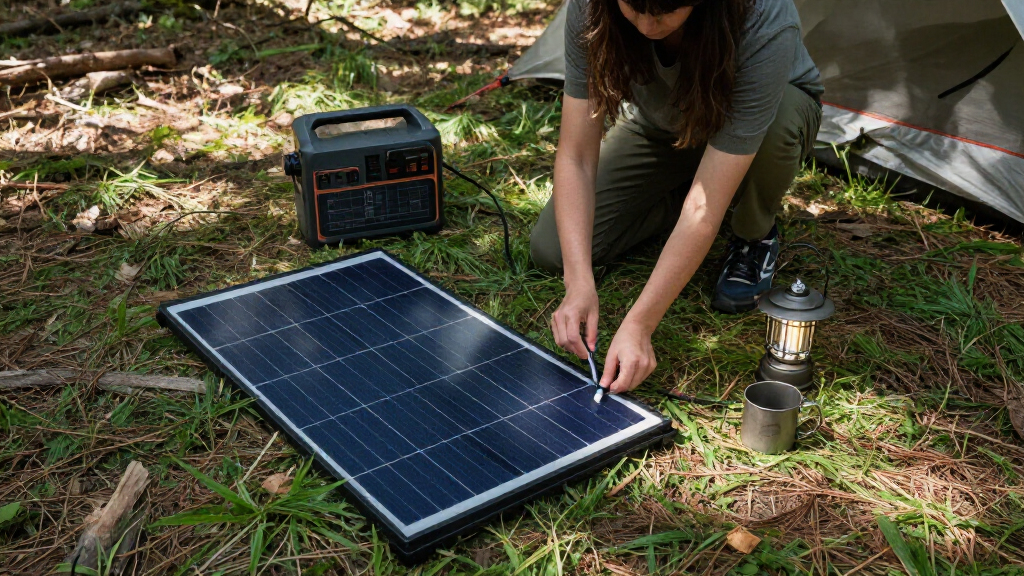
Portability is about more than the station’s dimensions: include the panel, cables, and any cart or case in your packing plan. A compact unit can be easier to move between a car and a tent, while a multi-kilowatt-hour station may suit a drive-in campsite better than a hike-in route. Decide where the panel can sit in sunlight without creating a trip hazard or leaving valuable gear exposed, and check whether its cable can reach the station in a shaded spot. Larger kits may reduce the need to ration power, but their bulk can take space away from other camping equipment. Match the kit to how far you carry gear, not simply to how much power sounds reassuring.
Choose Battery Chemistry and Charging Options for Your Use
Battery chemistry can affect cycle life, weight, and how a station handles repeated use, but compare the specific manufacturer claims rather than relying on a label alone. Several larger options in this roundup specify LiFePO4 batteries, while not every listing gives enough detail to make a chemistry comparison. Check whether you can recharge from a vehicle or wall outlet as well as solar; those alternatives matter when sun is limited or you’re driving between stops. Also review operating and storage temperature guidance, since camping conditions can differ from the indoor environment where a station is stored. A long-lasting battery is useful only if the unit’s charging methods and care requirements fit your routine.
Decide When Extra Capacity Is Worth the Bulk
Paying for a larger station makes sense when it changes what you can do: powering several people’s devices, supporting higher-draw equipment, or carrying enough reserve for multiple days. It is less compelling if you mainly need occasional phone and light charging, because unused capacity still takes up vehicle space and must be recharged. Before stepping up, compare the station’s output limits, included panel capacity, and your likely daily energy use rather than focusing on the largest watt-hour figure. A cart can help with a heavy unit at a drive-in campsite, but it does not make a large system suitable for every route. Keep a realistic use case in mind so the extra reserve solves a real camping problem.
Frequently Asked Questions
Is a 288Wh solar generator kit enough for a weekend camping trip?
It can be enough for a weekend if your loads are modest, such as phones, lights, and occasional camera charging. It is less suited to running several power-hungry devices or supporting multiple campers through repeated use. The station’s 300W output limit also matters for AC devices, separate from how much energy the battery stores. A 60W panel can contribute to recharging in suitable sun, but shade and weather may limit that help. List your expected device use before deciding whether this size leaves enough reserve.
Can I rely on the included solar panel to recharge the station each day?
Not without accounting for the conditions at your campsite and the energy you use. Panel ratings describe output under favorable conditions, while trees, clouds, poor angle, and short winter days can cut production. The station may also limit how much solar power it accepts, so check its input specification rather than choosing a panel by wattage alone. If you need power overnight or during cloudy stretches, stored battery capacity is your buffer. I’d treat solar as variable replenishment, not a guaranteed daily reset.
Should I choose a 1000Wh kit or a 3000Wh-class station for car camping?
A 1000Wh-class kit is often the more practical starting point for charging personal electronics and supporting moderate campsite use over a longer outing. A 3000Wh-class station makes more sense when several people share it, your devices use substantial power, or you want a larger reserve between charging opportunities. The bigger unit brings added transport and packing demands, even at a drive-in site. Check both output and capacity against your appliances, since a large battery does not automatically run every device. If the trip is short and your loads are light, the smaller setup may be easier to live with.
What should I check before buying a third-party solar panel for one of these kits?
Confirm the station’s accepted solar input range, connector type, and any voltage or current limits in its manual. A panel with a higher wattage rating will not charge faster if the station cannot accept that input, and an incompatible connector can require an adapter or prevent use. Check whether the manufacturer permits the panel type you plan to connect, especially if you are combining panels. Also account for cable length and where the panel can sit in the sun relative to the station. These checks matter more than matching panel wattage by itself.
Are two similarly named 300W kits interchangeable if their listed capacity is close?
No. Similar capacity and AC output do not establish that the stations share the same ports, battery chemistry, solar input limits, or charging behavior. In this roundup, the ZeroKor listings have different panel descriptions, so I would verify the exact included accessories and model details before ordering. Compare USB-C output, outlet count, charging inputs, weight, and warranty terms for the specific listing. A small difference in those details can matter more at camp than a modest difference in stated capacity.
Conclusion
For most car campers who want one balanced kit, I’d choose the Anker SOLIX C300 with its 60W panel as the best overall fit among the compact options. The MARBERO 155Wh kit is the best value-style pick for light use and short trips, while the Jackery Solar Generator 1000 v2 is my best step-up choice for campers who need more stored energy and a 200W panel. For a premium, high-capacity campsite setup, compare the BLUETTI Elite 300 and PECRON F3000LFP; their multi-kilowatt-hour batteries suit heavier needs but add substantial transport demands. Beginners with basic electronics may prefer a compact kit, but should check the port mix and input limits before purchase rather than choosing by capacity alone. For longer trips or heavier shared loads, look at the larger BLUETTI, PECRON, or Jackery Explorer 2000 v2; for short outings where pack space matters most, stay with a smaller station and keep expectations modest.