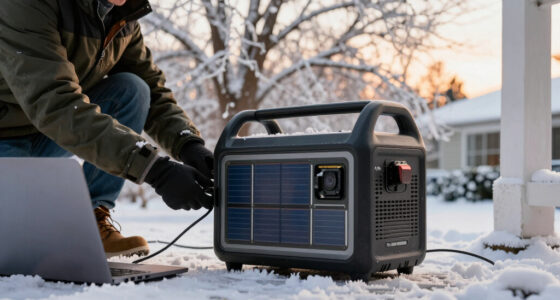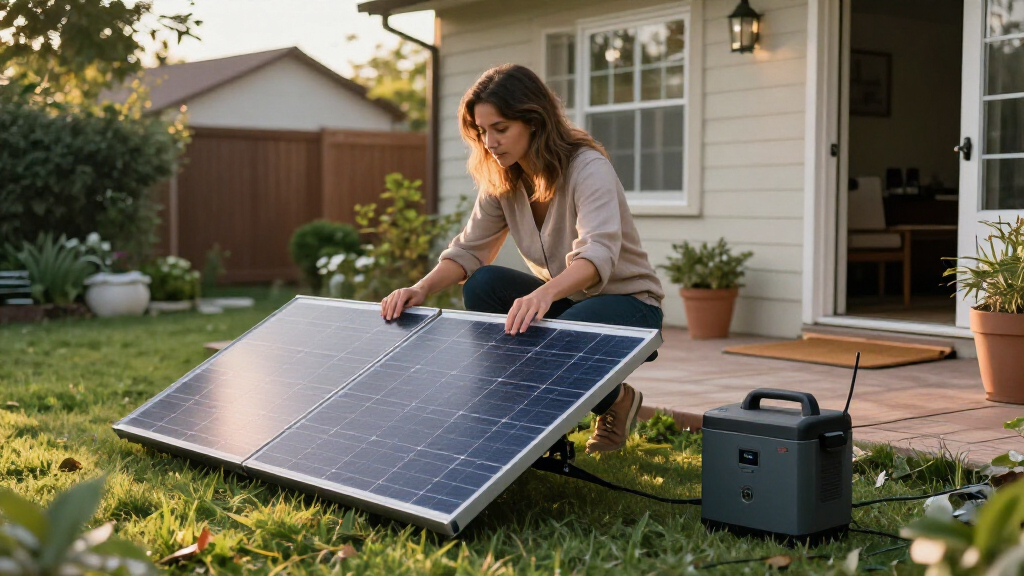

For home backup, portable solar panels need to work with a power station: the panels collect energy, while the station stores it for later use. My best overall pick is the BLUETTI Elite 300 bundle, pairing a 3,014Wh LiFePO4 battery with two 200W panels for substantial storage and a practical amount of solar input. The Jackery Explorer 2000 v2 bundle is another strong fit for buyers who want a ready-made system, while the Renogy 200W foldable panel suits people who already own a compatible power station. The main tradeoff is between stored energy, panel output, portability, and how much compatibility checking you are willing to do. Read on for how these seven options compare and which setup fits your backup plan.

Get backup power and energy gear delivered free with Prime
- Fast, free delivery on millions of items
- Prime Video, Amazon Music and more included
- Member-only deals all year
Complete the kit


Key Takeaways
- The BLUETTI Elite 300 bundle leads on stated storage capacity: its 3,014Wh LiFePO4 battery gives it a larger reserve than the other listed bundles with stated battery capacity.
- Bundled panels reduce setup guesswork: the CTOLITY, BLUETTI, Jackery, and Anker packages pair a power station with panels, while the Renogy, SunJack, and generic 400W panel require buyers to supply or already own a compatible power station.
- Panel wattage is not the same as energy stored: a 400W panel can gather energy, but only a power station with suitable capacity and input limits can hold and accept it.
- The lineup serves different backup scales: large station bundles are better suited to storing energy for several devices, while the 40W SunJack is a small charging option rather than a household backup system by itself.
- Compatibility and real-world sunlight shape the outcome: connector type, station input limits, placement, shade, and weather can matter as much as the panel’s stated wattage.
| CTOLITY AP1000 1800W Portable Power Station with 400W Solar Panel |  | Best All-in-One Kit for Everyday Backup | Battery capacity: 1,024Wh | Battery chemistry: LiFePO4 | Battery cycle life: 4,000+ cycles, retaining up to 70% capacity | VIEW LATEST PRICE | See Our Full Breakdown |
| BLUETTI Elite 300 Solar Generator with Two 200W Solar Panels, 3014Wh LiFePO4 Battery |  | Best for Longer Home Outages | Battery capacity: 3,014Wh | Battery chemistry: LiFePO4 | Battery cycle life: 6,000+ cycles | VIEW LATEST PRICE | See Our Full Breakdown |
| Jackery Explorer 2000 v2 Portable Power Station with Two 200W Solar Panels |  | Best for Fast Recharging and UPS Backup | Battery capacity: 2,042Wh | Battery type: LiFePO4 | AC output: 2,200W | VIEW LATEST PRICE | See Our Full Breakdown |
| Anker SOLIX S2000 Portable Power Station with 400W Bifacial Solar Panel |  | Best for Long-Term Battery Cycling | Battery capacity: 2,010Wh | Battery type: LFP | Battery cycle life: Up to 10,000 charge cycles | VIEW LATEST PRICE | See Our Full Breakdown |
| SunJack 40 Watt Foldable and Waterproof Solar Panel |  | Best Compact Solar Charger for Small Devices | Maximum power: 40W | Cell material: ETFE, monocrystalline silicon | Output ports: PD30W USB-C, dual USB-A QC3.0, DC output | VIEW LATEST PRICE | See Our Full Breakdown |
| Renogy 200W Portable Foldable Solar Panel with 25% Efficiency |  | Best for Direct Device Charging | Maximum power: 200 W | Cell type: N-type monocrystalline silicon | Number of cells: 16 | VIEW LATEST PRICE | See Our Full Breakdown |
| 400W Foldable Portable Solar Panel for Power Stations |  | Best for Higher Panel Capacity | Power output: 400 W | Voltage: 40 V | Cell type: Monocrystalline | VIEW LATEST PRICE | See Our Full Breakdown |
| portable solar panels for home backup | Battery capacity | Weight |
|---|---|---|
| CTOLITY AP1000 1800W Portable | 1,024Wh | Under 30 lb |
| BLUETTI Elite 300 Solar Genera | 3,014Wh | — |
| Jackery Explorer 2000 v2 Porta | 2,042Wh | — |
| Anker SOLIX S2000 Portable Pow | 2,010Wh | 35.7 lb |
| SunJack 40 Watt Foldable and W | — | 3.5 lb |
| Renogy 200W Portable Foldable | — | 13.89 lb |
| 400W Foldable Portable Solar P | — | — |
More Details on Our Top Picks
CTOLITY AP1000 1800W Portable Power Station with 400W Solar Panel
The CTOLITY AP1000 pairs a 1,024Wh power station with a 400W solar panel, giving home-backup buyers a complete starting setup rather than a high-capacity battery alone. Its 1,800W pure sine wave output and 11 ports suit essentials such as networking gear, lights, and smaller appliances; the under-20ms UPS function is useful for electronics that should stay on through a brief outage. Compared with the BLUETTI Elite 300, it stores far less energy, but the included panel and under-30-pound listed weight make this bundle easier to approach for occasional outages and portable use. The tradeoff is limited runtime for larger household loads, and the solar panel ships separately. I’d skip it if the priority is running multiple high-draw appliances for an extended outage.
Pros:- Includes a 400W solar panel, reducing the need to find a compatible panel separately.
- 1,800W pure sine wave output and 11 ports support a range of everyday backup devices.
- LiFePO4 battery is specified for 4,000+ charge cycles while retaining up to 70% capacity.
- Under-20ms UPS switching can help keep connected electronics running during brief interruptions.
Cons:- The 1,024Wh capacity is substantially lower than the BLUETTI Elite 300’s 3,014Wh.
- The solar panel ships separately, so the station and panel may not arrive together.
- The listed weight is under 30 pounds, which can still be cumbersome for frequent carrying.
Best for: Households seeking a ready-to-pair solar backup kit for routers, lights, phones, and a few smaller appliances.
Not ideal for: Buyers who need several kilowatt-hours of storage or want to power high-draw household equipment for long stretches.
- Battery capacity:1,024Wh
- Battery chemistry:LiFePO4
- Battery cycle life:4,000+ cycles, retaining up to 70% capacity
- AC output:1,800W pure sine wave; 3,600W peak
- Ports:11
- Included solar panel:400W, up to 23% conversion efficiency
- UPS switching time:Under 20ms
- Charging methods:AC, solar, and vehicle
- Weight:Under 30 lb
Our verdict“Choose the CTOLITY AP1000 for a bundled solar setup and everyday essentials, not extended backup for large loads.”
BLUETTI Elite 300 Solar Generator with Two 200W Solar Panels, 3014Wh LiFePO4 Battery
The BLUETTI Elite 300 is the capacity pick in this group: its 3,014Wh LiFePO4 battery offers more stored energy than the Jackery Explorer 2000 v2, making it better suited to keeping several essentials running through a longer outage. A 2,400W AC output with 4,800W surge capacity can handle compatible loads with higher startup demands, while the TT-30 outlet and 12V/30A port make it a stronger fit for RV use than the Anker SOLIX S2000, which lacks a 12V DC port. The bundle includes two 200W panels, but solar replenishment is not quick: the stated full-charge window is about 7–15 hours. This is a larger-capacity choice, not the best match for buyers who prioritize quick solar recovery or a lightweight setup.
Pros:- 3,014Wh capacity provides more stored energy than the Jackery Explorer 2000 v2.
- 2,400W AC output and 4,800W surge power support compatible loads with high startup demand.
- TT-30 outlet and 12V/30A DC port add practical connections for RV equipment.
- LiFePO4 battery is specified for 6,000+ cycles.
Cons:- Solar charging is listed at approximately 7–15 hours for a full charge with the included panels.
- The solar panels ship separately from the power station.
- Its high capacity may be unnecessary for buyers who only need to back up small electronics.
Best for: Households or RV owners who want substantial stored energy, stronger output, and dedicated RV connections for backup.
Not ideal for: Buyers with limited panel placement time, minimal storage needs, or a priority on the lightest and simplest portable kit.
- Battery capacity:3,014Wh
- Battery chemistry:LiFePO4
- Battery cycle life:6,000+ cycles
- AC output:2,400W
- Surge power:4,800W
- Solar panels:2 × 200W
- Solar charging time:Approximately 7–15 hours from 0% to 100%
- RV connections:TT-30 outlet and 12V/30A DC port
- Fast AC charging:78 minutes to 80% maximum
Our verdict“Pick the Elite 300 when longer runtime and RV-ready ports matter more than fast solar replenishment.”
Jackery Explorer 2000 v2 Portable Power Station with Two 200W Solar Panels
The Jackery Explorer 2000 v2 balances a 2,042Wh battery with 2,200W AC output, putting it between the CTOLITY AP1000 and the much larger BLUETTI Elite 300 for stored energy. Its standout home-backup feature is the 20ms UPS switching, paired with a stated AC charge to 80% in 66 minutes; that combination suits buyers who want a quick return to readiness between outages. Two 200W panels are included, with a listed six-hour solar charge time under the stated conditions. Compared with the Anker SOLIX S2000, Jackery offers higher continuous AC output, but there are only three AC outlets. I’d also factor in the inconsistent listed weight—39.5 or 66.8 pounds—and the need for a specific straight DC8020 solar connector.
Pros:- 2,200W AC output is higher than the Anker SOLIX S2000’s 1,500W continuous output.
- 20ms UPS switching supports backup for connected electronics.
- AC charging is listed at 80% in 66 minutes, with an emergency full-charge time of 102 minutes.
- Includes two 200W solar panels and a 100W USB-C PD output.
Cons:- Only three AC outlets may limit how many household devices can connect directly.
- Product information lists conflicting weights of 39.5 and 66.8 pounds.
- Solar connection requires the straight DC8020 plug rather than the L-shaped DC7909 plug.
Best for: Buyers who want around 2kWh of storage, UPS support for sensitive electronics, and fast AC recharging between outages.
Not ideal for: People who need many AC outlets, want an uncomplicated solar connector, or need a clearly stated carry weight before choosing.
- Battery capacity:2,042Wh
- Battery type:LiFePO4
- AC output:2,200W
- AC outlets:3
- USB-C PD output:100W
- Solar panels:2 × 200W
- UPS switching time:20ms
- Solar charging time:6 hours with 400W panels
- Listed weight:39.5 lb in description; 66.8 lb in product information
Our verdict“Choose the Explorer 2000 v2 for fast AC recovery and UPS support, provided its connector and weight details work for your setup.”
Anker SOLIX S2000 Portable Power Station with 400W Bifacial Solar Panel
The Anker SOLIX S2000 suits buyers who expect to cycle a backup battery often: its LFP cells are rated for up to 10,000 charge cycles, the highest stated cycle figure among the power stations here. Its 2,010Wh capacity is close to the Jackery Explorer 2000 v2, but the Anker’s 1,500W continuous output is lower than Jackery’s 2,200W, so it is less suited to higher-draw devices. The included 400W bifacial panel and six recharge methods give owners several ways to replenish it, while eight outlets offer more connection points than Jackery’s three AC outlets. There is no 12V DC port, however, which makes the BLUETTI Elite 300 a better fit for some RV setups. The panel and station also ship separately.
Pros:- LFP battery is rated for up to 10,000 charge cycles.
- Includes a 400W bifacial solar panel and supports six recharge methods.
- Eight outlets provide more connection points than the Jackery Explorer 2000 v2’s three AC outlets.
- Compact listed dimensions and a 35.7-pound weight aid placement and occasional relocation.
Cons:- 1,500W continuous output is lower than the Jackery Explorer 2000 v2’s 2,200W.
- No 12V DC port for compatible RV equipment.
- The power station and solar panel are dispatched separately.
Best for: Frequent backup users who value a high stated battery cycle life, multiple charging routes, and several outlet connections.
Not ideal for: Buyers needing high continuous AC output or a dedicated 12V DC connection for RV equipment.
- Battery capacity:2,010Wh
- Battery type:LFP
- Battery cycle life:Up to 10,000 charge cycles
- Continuous output:1,500W
- Peak output:3,000W
- Solar panel:400W bifacial
- Maximum solar input:400W
- Outlets:8
- Weight:35.7 lb
Our verdict“Choose the S2000 for frequent cycling and flexible recharging, but favor Jackery for higher continuous AC output or BLUETTI for a 12V RV port.”
SunJack 40 Watt Foldable and Waterproof Solar Panel
The SunJack 40W is the compact outlier here: unlike the CTOLITY, BLUETTI, Jackery, and Anker bundles, it is a solar panel only, not a home-backup power station. Its 40W output can help replenish small compatible power stations or charge phones and other USB devices, but it cannot provide the stored energy or AC output needed to run household essentials through an outage. The panel folds to a tablet-like size, has kickstands and carabiners for flexible placement, and uses IP67-rated ports—useful traits for a small emergency kit or outdoor charging. USB-C PD, dual USB-A, and DC outputs add flexibility, though its modest wattage makes it a poor match for replenishing the larger stations in this roundup quickly. Buyers seeking meaningful home backup should choose a full kit instead.
Pros:- Folds to 9 × 12.5 × 1.5 inches for compact storage.
- IP67-rated ports and ETFE-coated monocrystalline cells suit rugged outdoor use.
- USB-C PD, dual USB-A, and DC outputs support different devices.
- Integrated kickstands, carabiners, and included DC adapters give several mounting and connection options.
Cons:- At 40W, it supplies far less solar input than the 400W panels paired with the power stations in this roundup.
- It is a panel only and has no battery or AC output for home backup.
- Its 3.5-pound weight and 35.5-inch unfolded length may be awkward for some compact setups.
Best for: People building a lightweight emergency kit for phones, USB devices, or a small compatible power station, with a separate battery already available.
Not ideal for: Households seeking backup power for appliances or a solar panel capable of quickly replenishing 2,000Wh-class power stations.
- Maximum power:40W
- Cell material:ETFE, monocrystalline silicon
- Output ports:PD30W USB-C, dual USB-A QC3.0, DC output
- Maximum voltage:20.9V
- Weight:3.5 lb
- Folded size:9 × 12.5 × 1.5 in
- Unfolded dimensions:12.5 × 1 × 35.5 in
- Water protection:IP67-rated ports
- Included adapters:DC5521 to DC5521/XT60/Anderson cable and 10 DC adapter plugs
Our verdict“Choose the SunJack for portable USB charging, not as a standalone home-backup solution or a fast charger for a large power station.”
Renogy 200W Portable Foldable Solar Panel with 25% Efficiency
The Renogy 200W pairs a manageable 13.89-pound weight with USB-C PD and dual USB-A outputs, so you can charge smaller devices directly while reserving MC4 output for a compatible power station. That flexibility makes it more useful for mixed household backup needs than the SunJack 40 Watt, though its 200W rating offers less panel capacity than the 400W options in the roundup. Renogy lists 16 N-type cells and 25% efficiency, but actual output still depends on sunlight, angle, and conditions. Four kickstands allow multiple positioning angles, and the magnetic closure helps keep the folded panel together in storage. The main catch for station owners is that the 4-in-1 adapter is sold separately, and compatibility depends on the station’s input requirements.
Pros:- USB-C PD up to 45 W and dual USB-A ports allow direct device charging.
- Stated 200 W output offers more panel capacity than the SunJack 40 Watt.
- Four kickstands support several positioning angles for changing sun conditions.
- Folds with a magnetic closure and weighs about 13.9 lb.
Cons:- The 4-in-1 adapter for power stations is sold separately.
- At 200 W, it has less rated capacity than the roundup’s 400 W panel options.
- Power-station compatibility depends on matching the unit’s input requirements.
Best for: Households that want a mid-sized panel for a compatible power station plus direct USB charging for phones, tablets, or other small devices.
Not ideal for: Buyers aiming to replenish a large backup battery quickly, or anyone whose power station needs the separately sold adapter or does not match the panel’s input requirements.
- Maximum power:200 W
- Cell type:N-type monocrystalline silicon
- Number of cells:16
- Stated efficiency:25%
- Voltage:21.6 V
- Connectors:MC4, USB-C PD 45 W, dual USB-A
- Weight:13.89 lb
- Folded dimensions:23.72 x 22.99 x 1.97 in
- Warranty:2-year material and workmanship warranty
Our verdict“Choose the Renogy if you want a portable 200W panel that can charge both compatible power stations and USB devices, but skip it for faster high-capacity battery replenishment.”
400W Foldable Portable Solar Panel for Power Stations
This 400W foldable panel is the capacity-first choice here: its rated output is double the Renogy 200W panel’s, making it a better match for owners seeking more solar input for a compatible power station. That advantage comes with a less complete portability picture. The listing gives no weight or folded dimensions, so I can’t judge how easily it fits in a vehicle or can be handled by one person. MC4 connectors are common on portable panels, but the seller’s broad compatibility claim is not a substitute for checking your station’s voltage and input limits. The ETFE-laminated surface is described as dustproof and resistant to high temperatures, while adjustable kickstands help with placement outdoors. Compared with Renogy, it offers twice the rated wattage but lacks listed direct USB outputs and the same detailed carrying specifications.
Pros:- Rated 400 W output is double the Renogy 200W panel’s stated capacity.
- MC4 connectors support connection to many portable power stations, subject to input compatibility.
- Adjustable kickstands help position the panel toward available sunlight.
- ETFE-laminated surface is described as dustproof and resistant to high temperatures.
Cons:- No weight or folded dimensions are provided, making transport and storage harder to plan.
- The listing does not specify direct USB charging outputs.
- Power-station compatibility depends on the unit’s voltage and solar-input limits.
Best for: Power-station owners with compatible MC4 solar input who want a higher-rated panel and can accommodate an unspecified folded size and weight.
Not ideal for: Buyers who need a clearly documented lightweight setup, direct USB charging, or confirmed compatibility without checking their power station’s input limits.
- Power output:400 W
- Voltage:40 V
- Cell type:Monocrystalline
- Conversion efficiency:23.4%
- Surface:ETFE laminated
- Connectors:MC4
- Design:Foldable with adjustable kickstands
- Weather resistance:Described as dustproof and high-temperature resistant
Our verdict“Pick this panel for higher rated solar input to a compatible power station, but choose the Renogy if documented portability and direct USB charging matter more.”
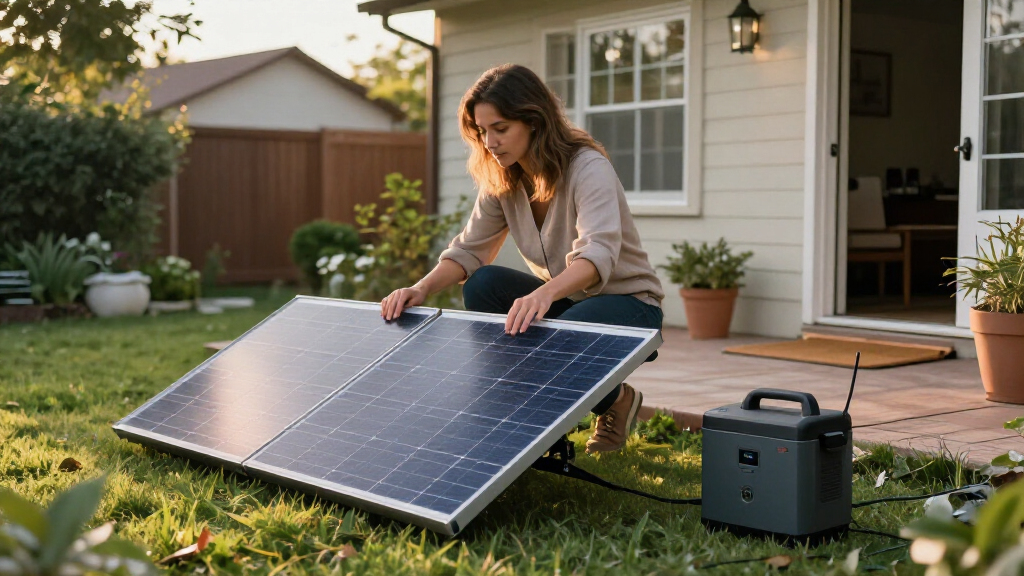
How We Picked
I ranked these picks by how well the full setup addresses home-backup needs, not by panel wattage alone. I looked at stated battery capacity where available, included solar input, whether a power station comes in the package, and how much work a buyer must do to confirm compatibility. I also weighed portability and practical use: a system that is easy to position and connect has more value during an outage than a panel whose headline output is hard to use with the buyer’s equipment.
The BLUETTI Elite 300 bundle ranks first because it pairs the largest explicitly stated battery capacity in this group with two panels. The Jackery and Anker bundles follow as integrated station-and-panel choices, while CTOLITY offers a similarly convenient bundled approach but with less clearly specified capacity in the product name. Standalone panels rank lower for whole-home backup because they do not store energy on their own; the 40W SunJack ranks as a compact charging tool, not a replacement for a generator-sized system. Where the provided product information does not state a key specification, I avoid treating it as a proven advantage.
Factors to Consider When Choosing Portable Solar Panels For Home Backup
Choosing a solar backup setup starts with the loads you want to keep running, not the biggest wattage printed on a panel. I would first work out what needs power, for how long, and whether the system must store energy for evening or cloudy periods. These checks help avoid paying for panels that a station cannot accept or buying a small station that runs out before the outage does.
Size Storage Around the Devices You Need
Make a short list of essential devices and check their wattage and expected run time. A refrigerator, router, lights, and medical equipment can add up quickly, and startup surges may exceed a device’s regular running draw. Battery capacity, usually stated in watt-hours, describes stored energy; it does not mean every device can run for that many hours at its rated wattage because conversion and operating losses reduce usable energy. A small power station may keep communication gear charged but fall short for appliances over a long outage. I would prioritize a realistic backup load estimate before choosing between a compact station and a larger bundle.
Match Panel Output to the Station’s Solar Input
A panel’s rated wattage is a laboratory-style peak, not a promise of steady daily production. Before pairing a separate panel with a station, check the station’s allowed solar-input wattage, voltage range, connector, and whether it needs a specific adapter. A panel that exceeds the station’s input limit may not charge it faster, and mismatched voltage or plugs can prevent charging altogether. Multiple panels can also need a particular series or parallel arrangement, which changes voltage and current. Bundles remove some of this uncertainty, while standalone panels give more flexibility but require careful compatibility checks.
Plan for Weather, Shade, and Charging Time
Solar backup depends on access to direct sunlight, and output can drop with clouds, poor panel angle, dirt, or shade from trees and buildings. Think about where panels can sit safely during an outage and whether you can reposition them as the sun moves. A panel’s rated output cannot tell you how quickly a battery will refill across a day; usable sunlight hours and the station’s charge limits also matter. Buyers who need power at night or through several dull days should value battery storage and another charging option, such as grid power or a compatible vehicle input. Planning around ordinary local conditions is more useful than sizing a system for ideal sunshine.
Separate Portable Backup from Whole-Home Backup
Portable solar generators generally support selected appliances and electronics, not an entire house through its existing wiring. Running hardwired circuits may require a transfer switch and a qualified electrician, and the power station must support the required output and connection method. Decide whether you want to plug individual devices directly into a station or power designated home circuits. Those are different jobs, with different equipment and safety requirements. A portable bundle can make sense for essentials, but buyers seeking whole-home coverage should verify the system’s output, integration options, and local electrical requirements before purchasing.
Choose Portability for the Way You Will Deploy It
A foldable panel is only portable if its weight, folded size, stands, and cable reach work for your setup. A larger panel may collect more energy but take more room to store and more effort to position; a very small panel is easier to carry but may contribute little to recharging a large station. Consider whether one person can set it up, whether it will be used indoors or outdoors, and how exposed connectors and fabrics are protected from weather. Waterproof claims for a panel do not automatically mean the power station or every connection can be left in rain. Match the physical setup to the people who will use it during an outage.
Pay More for Capacity or for Convenience—Not Both by Default
A bundled station and panel can save time by arriving as a matched system, but the bundle may not fit every buyer’s existing equipment or backup needs. A standalone panel can be a better use of money if you already own a compatible power station and only need more solar input. Pay for additional battery capacity when longer runtimes or overnight use matter; pay for more panel capacity when faster replenishment in good sunlight is the priority. Neither upgrade fixes a mismatch between the station’s input limits and the panels. I would compare the complete system—storage, solar input, connectors, and intended loads—rather than choosing by one headline number.
Frequently Asked Questions
Can a portable solar panel alone keep my home powered during an outage?
No. A panel produces electricity when sunlight is available, but it does not store that energy or provide household outlets by itself. For dependable use, pair it with a compatible power station or another approved storage system. The station must also supply enough continuous power and surge capacity for the devices you plan to run. For home circuits, check the required connection equipment and use a qualified electrician rather than improvising a connection.
Should I choose a larger battery or more solar-panel wattage first?
Choose based on the problem you are trying to solve. More battery capacity helps you carry energy into the evening and cover longer periods without sun, while more panel wattage can replenish a battery faster when conditions are favorable. If your outage plan includes overnight refrigerator use, storage may matter more; if you expect repeated sunny days and daytime use, panel input may deserve more attention. Check that the station can accept the panels’ combined output before adding panels. Many buyers need a balance, but neither side compensates fully for a serious shortfall in the other.
Can I combine a standalone panel with any of the power stations in this roundup?
Not automatically. The station’s solar-input voltage and current limits, connector, and supported charging method need to match the panel or its adapter. The Renogy, SunJack, and generic 400W panel are not complete backup systems on their own, so buyers should confirm their existing station can use them before ordering. Avoid assuming that a higher-wattage panel will work simply because it has a compatible-looking plug. Check the manuals for both products, and contact the manufacturers if the electrical limits are unclear.
Will a 400W portable panel recharge a power station in one day?
That depends on the station’s battery size and solar-input limit, along with sunlight, panel angle, shading, and weather. The 400W rating describes peak panel output, not the energy it will deliver throughout a typical day. A station may also limit incoming power below the panel’s rating, and charging losses reduce the energy that reaches the battery. Compare the station’s capacity and maximum solar input with realistic local sunlight rather than assuming a fixed recharge time. If the backup plan depends on a quick refill, keep a second charging method available.
Can these portable systems power my refrigerator overnight?
Possibly, but the product names alone do not establish a reliable runtime. Check the refrigerator’s energy use over a full day, its startup surge, and the station’s usable capacity and output rating. Solar panels may help replenish the battery during daylight, but clouds or shade can reduce that contribution. A larger stated battery, such as the BLUETTI bundle’s 3,014Wh capacity, offers more stored energy than a small charging panel can provide, though actual runtime still depends on the appliance and conversion losses. Test the intended setup before relying on it for food or other essential needs.
Conclusion
For most buyers seeking a ready-to-use home backup package, I would start with the BLUETTI Elite 300 bundle: its stated 3,014Wh LiFePO4 battery and two 200W panels make it the strongest overall storage-led option in this lineup. The Jackery Explorer 2000 v2 bundle is a sensible alternative for buyers who want an integrated station-and-panel setup, while the Anker SOLIX S2000 bundle offers a bundled route with a 400W bifacial panel. For value, I would compare the CTOLITY AP1000 bundle against those larger systems based on its stated capacity, output, and the devices you actually need to run; the supplied product name does not provide enough detail to assume it matches their storage. Beginners should favor a complete bundle with confirmed panel compatibility rather than starting with a standalone panel. If you already own a compatible station, the Renogy 200W or generic 400W foldable panel may suit an expansion plan, while the SunJack 40W is best kept to lightweight charging needs. Choose according to your essential loads and verify compatibility before buying.
Black Friday Picks

Sonos Era 300 Wireless Smart Speaker with Dolby Atmos, Black
As an affiliate, we earn on qualifying purchases.