📊 Full opportunity report: Recovery-percentile tracker for orthopedic surgery patients on IdeaNavigator AI — validation score, market gap, and execution plan.

Get backup power and energy gear delivered free — and shop member deals
- Fast, free delivery on millions of items
- Access to Prime Big Deal Days deals on October 6–7
- Prime Video, Amazon Music and more included
TL;DR
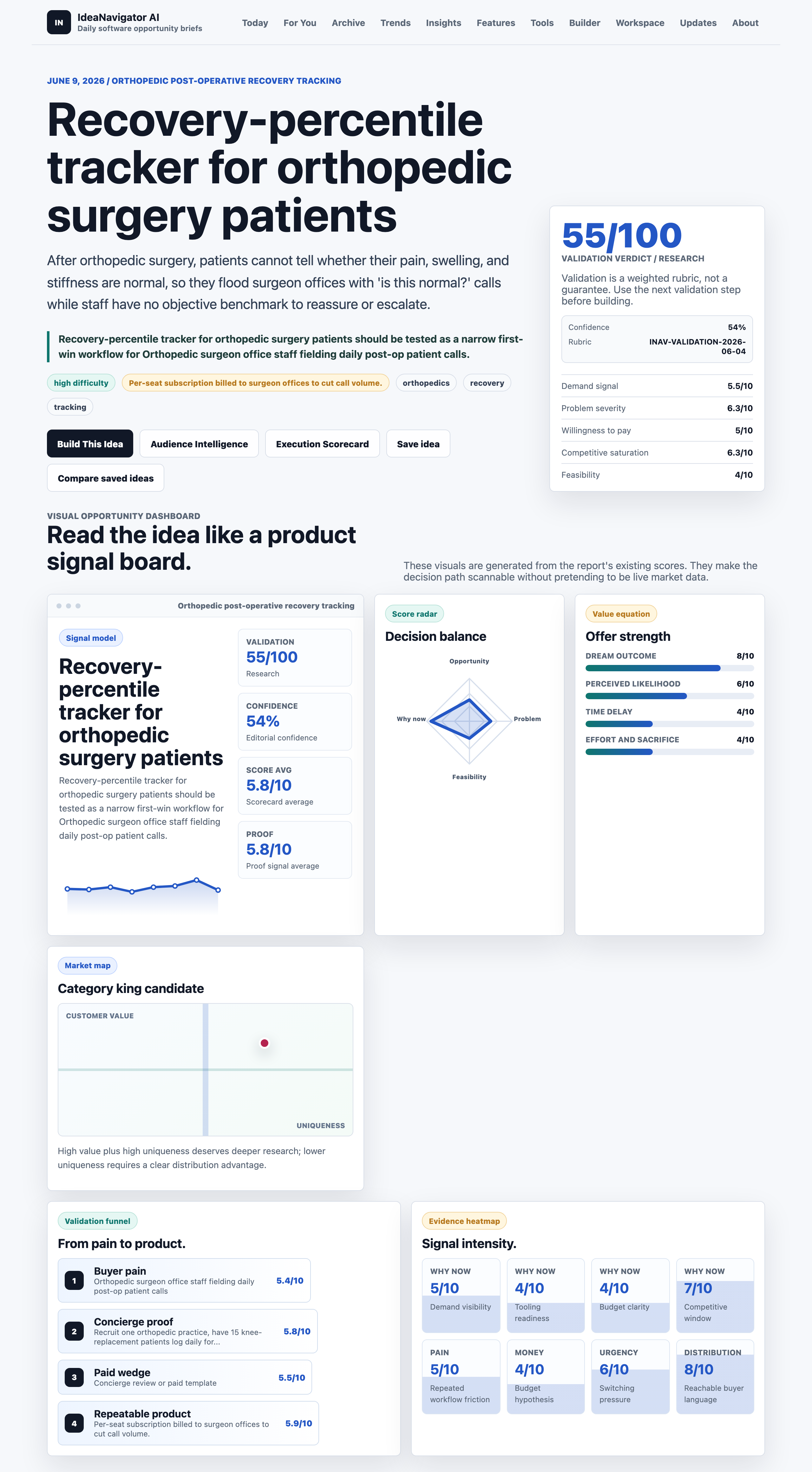
A recovery-percentile tracking system for orthopedic surgery patients is in pilot testing, aiming to help patients assess their recovery objectively and reduce post-op call volume. The initiative is being evaluated in a small practice with 15 knee replacement patients over two weeks.
A recovery-percentile tracker for orthopedic surgery patients is being tested in a pilot program to help patients evaluate their recovery objectively and reduce the volume of post-operative calls to surgeon offices. The initiative targets outpatient procedures like knee replacements and aims to address the widespread issue of patients uncertain about normal recovery symptoms.
The tracker allows patients to log daily measures such as pain levels, range of motion, and walking milestones. These data points are then plotted against anonymized recovery curves for the same surgery, providing patients with a percentile ranking of their recovery progress.
The pilot involves one orthopedic practice with 15 knee replacement patients who will log their data daily over two weeks. The goal is to determine if this tool can lower the number of ‘is this normal?’ calls compared to a control group without the tracker.
Orthopedic offices face increasing outpatient procedures and staffing shortages, leading to overwhelmed phone lines. The tracker aims to provide a data-backed reassurance mechanism, potentially streamlining post-operative communication and reducing staff workload.
Potential Impact on Post-Operative Patient Care
If successful, the recovery-percentile tracker could significantly improve patient experience by providing objective, personalized recovery benchmarks. It may also reduce the burden on office staff by decreasing unnecessary calls, especially as outpatient orthopedic procedures continue to rise. Widespread adoption could lead to more efficient post-op management and better patient outcomes.
As an affiliate, we earn on qualifying purchases.
Growing Need for Post-Op Recovery Monitoring Tools
The rise in outpatient orthopedic surgeries, such as knee and hip replacements, has increased the demand for effective post-operative monitoring solutions. Currently, many patients rely on subjective feelings and generic advice, leading to frequent calls to offices for reassurance. The concept of using data-driven recovery tracking is gaining interest as a way to address these issues, though formal validation is still underway.
Previous efforts in remote patient monitoring have focused on chronic conditions; applying similar principles to post-surgical recovery is a newer development. The pilot testing reflects a broader trend toward digital health tools that empower patients and reduce healthcare system strain.
“This tracker could provide patients with a clear, objective view of their recovery progress, helping to reduce unnecessary anxiety and calls.”
— an anonymous researcher
post-op recovery monitoring device
As an affiliate, we earn on qualifying purchases.
As an affiliate, we earn on qualifying purchases.
Unconfirmed Effectiveness and Adoption Challenges
It is not yet clear whether the tracker will significantly reduce call volume or improve patient outcomes. The pilot study is still ongoing, and results are expected within weeks. Broader adoption will depend on validation, integration into clinical workflows, and patient engagement.
orthopedic surgery patient tracking tool
As an affiliate, we earn on qualifying purchases.
As an affiliate, we earn on qualifying purchases.
Next Steps for Validation and Broader Implementation
The pilot study will conclude shortly, with initial data analysis expected soon after. If results are positive, plans include expanding testing to multiple practices and refining the platform. Long-term, developers aim to establish the tool as a standard part of post-op care for orthopedic procedures.
As an affiliate, we earn on qualifying purchases.
Key Questions
How does the recovery-percentile tracker work?
Patients log daily data such as pain, range of motion, and walking milestones. These are then compared against anonymized recovery curves to generate a percentile ranking of their progress.
Will this reduce the number of calls to the surgeon’s office?
Initial testing aims to determine if providing objective recovery data can decrease unnecessary reassurance calls. Results will clarify its impact on call volume.
Who can benefit from this tracker?
Patients undergoing outpatient orthopedic surgeries, such as knee replacements, and their healthcare providers could benefit from more objective recovery monitoring.
Is this system ready for widespread use?
Not yet. It is currently in a pilot phase with ongoing validation. Broader adoption will depend on the outcomes of initial testing and further development.
Source: IdeaNavigator AI
Fall Picks
fall essentials
As an affiliate, we earn on qualifying purchases.